
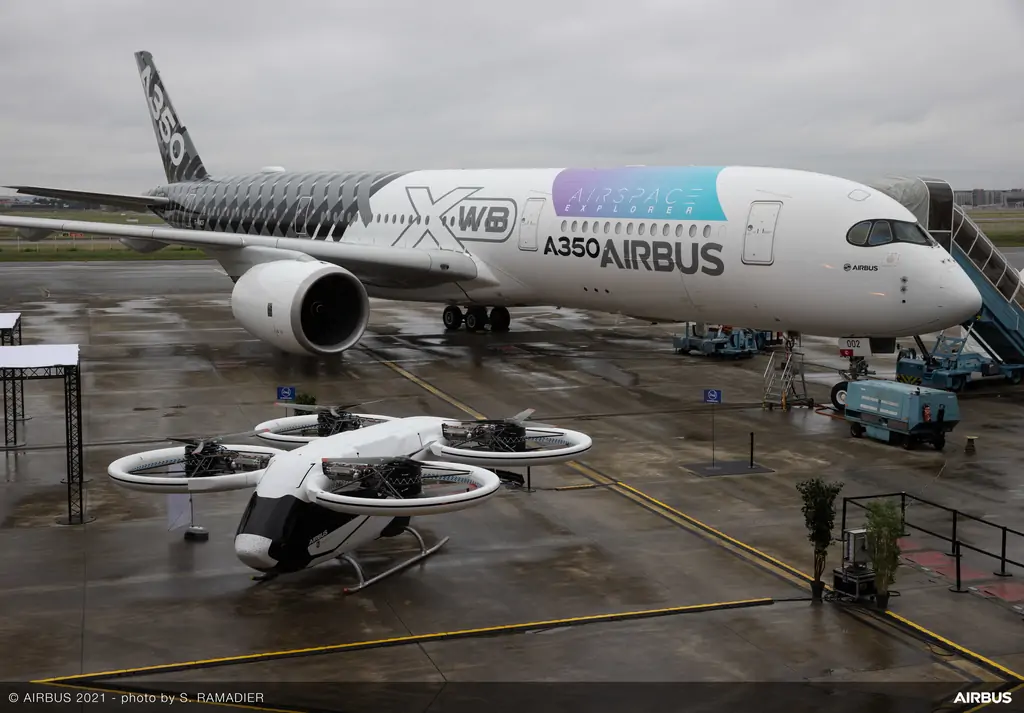
In a significant development for the aviation industry, Air France-KLM and Airbus have announced their plans to embark on an exciting joint venture that will revolutionize the maintenance and supply chain management of Airbus A350 components. This collaboration, unveiled on September 4, 2023, signifies a game-changing move in the global aerospace sector.
A New Era of Collaboration
The Genesis of the Partnership
The journey towards this groundbreaking partnership began when Air France SA ("Air France") and Airbus SAS ("Airbus") entered into exclusive negotiations. Their primary goal was to establish a joint venture dedicated to Airbus A350 component maintenance services, which includes supply chain management, repairs, and the creation of a worldwide pool of aircraft components.
A Shared Vision
The proposed collaboration takes the form of a 50-50 joint venture, with both Air France and Airbus contributing aircraft component assets into the joint venture's pool. This equal partnership demonstrates a shared vision and commitment to the success of the venture. The joint venture is expected to be operational by the first half of 2024, subject to all regulatory requirements and approval by all relevant authorities.
Key Objectives
Elevating Component Maintenance
One of the primary objectives of this partnership is to enhance the maintenance services for Airbus A350 components. This move aims to improve the overall reliability and longevity of these critical aircraft parts.
Efficient Supply Chain Management
Efficient supply chain management is crucial for the aviation industry. By pooling resources and expertise, Air France and Airbus intend to optimize the supply chain, reducing downtime and ensuring the availability of components when needed.
Cost Optimization
Costs in the aviation industry can be substantial. Through this joint venture, both companies hope to achieve cost optimization by sharing resources and streamlining operations.

Industry Implications
A Competitive Edge
This collaboration gives Air France and Airbus a significant competitive edge in the market. By offering comprehensive maintenance services for Airbus A350 components, they can attract more airlines looking for reliable solutions.
Global Reach
With a worldwide pool of aircraft components, this partnership enhances the global reach of Air France and Airbus. Airlines from around the world can benefit from their services, further solidifying their position as industry leaders.
Innovation in Aerospace
This collaboration is not just about maintenance; it's also a platform for innovation. Air France and Airbus can work together to develop advanced technologies and solutions for the aviation industry.
The Road Ahead
Navigating Challenges
While the partnership holds great promise, it is not without its challenges. The companies will need to navigate regulatory approvals, align their operational processes, and ensure a seamless transition of assets into the joint venture.
Commitment to Excellence
Both Air France and Airbus are committed to upholding the highest standards of excellence in this venture. Customers can expect top-notch service and reliability as a result.
Comments
"This project aims to bring customers the best expertise of our two companies on a product as high-tech as the A350," stated Anne Brachet, Executive Vice President Air France-KLM Engineering & Maintenance. We will be able to better adapt to market requirements and ensure long-term customer satisfaction with support solutions that are always responsive, of high-quality, and at the right price."
"We're in the business of offering the very best service to our customers," commented Cristina Aguilar, Senior Vice President Customer Services at Airbus. "As the world's A350 fleet grows, so does the necessary support." Air France-KLM Engineering & Maintenance and Airbus have a long-standing relationship and combining our complementary A350 component skills and capabilities will deliver an enhanced service."
Conclusion
The Air France-KLM and Airbus joint venture for Airbus A350 component maintenance services are a groundbreaking development that promises to reshape the aviation industry. With a shared vision, commitment to excellence, and a focus on innovation, this partnership is poised for success.
With Inputs from Airbus

Read next
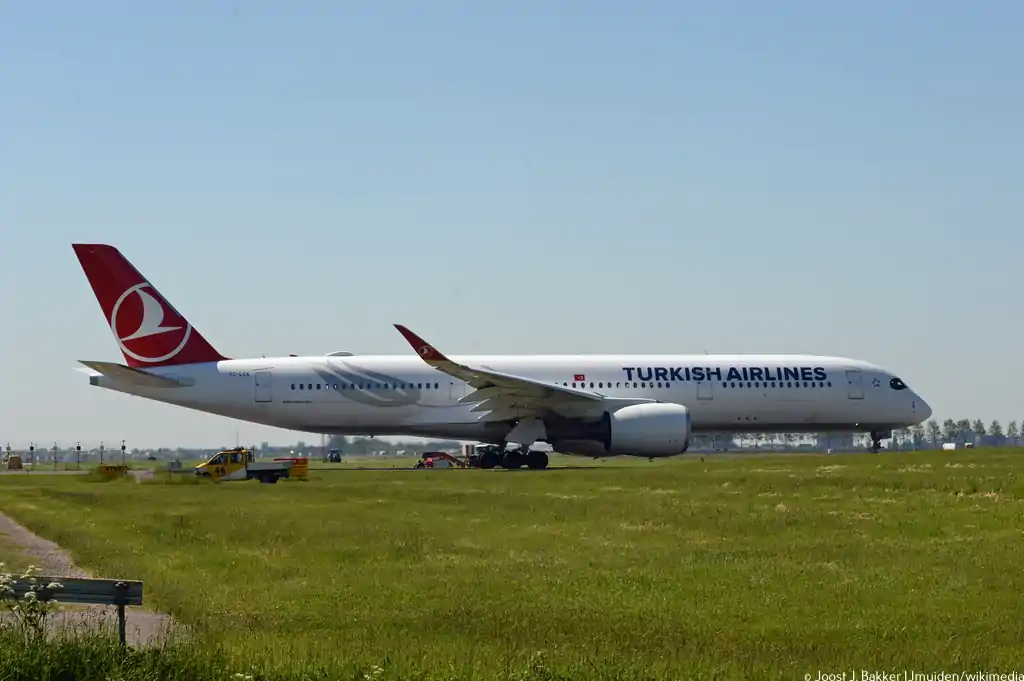
In an exciting development for aviation enthusiasts and travelers alike, Turkish Airlines has recently disclosed its plans to enhance its fleet by acquiring ten brand-new Airbus A350-900 aircraft. This strategic move, which was publicly announced to the Istanbul stock market, aligns with the airline's ambitious expansion goals. The delivery of these state-of-the-art aircraft is scheduled between 2025 and 2027, marking a significant milestone in the airline's growth trajectory.
A Step Towards Expansion
The Airlines' Vision for Growth
Turkish Airlines has long been a prominent player in the global aviation industry, known for its exceptional service and extensive network. With its continuous efforts to expand its operations and improve passenger experience, the decision to incorporate ten more Airbus A350-900 aircraft into its fleet is a testament to the airline's commitment to growth.
Meeting the Demand
The airline industry is constantly evolving, and Turkish Airlines recognizes the importance of staying ahead of the curve. By adding these ten new aircraft, the company aims to meet the growing demand for international travel, offer more routes, and provide passengers with the latest in-flight amenities and comfort.
Mega Order
However, it is unclear if the ten aircraft are the initial batch of the much-anticipated mega-order that Turkish Airlines is supposed to be planning. The impending order, which might number up to 600 aircraft, was stated by Turkish Airlines' chairman Ahmet Bolat in May 2023 as part of the airline's goal to double in size over the next decade.
Turkish Airlines is anticipated to opt for an assortment of 400 narrow-body and 200 wide-body aircraft in its final composition. The acquisition is also expected to be divided between Airbus and Boeing in accordance with the airline's existing two-supplier fleet policy, and will most likely comprise Airbus A320-family and B737 MAX aircraft, as well as Boeing 787 and 777 aircraft and Airbus A350s.
A Closer Look at the Airbus A350-900

Cutting-Edge Technology
The Airbus A350-900 is renowned for its advanced technology, making it a top choice for leading airlines worldwide. These aircraft are equipped with the latest innovations in aviation, ensuring enhanced fuel efficiency, reduced emissions, and a quieter flying experience.
Spacious Interiors
Passengers traveling with Turkish Airlines aboard the A350-900 can expect spacious and comfortable cabins. With a focus on passenger well-being, the aircraft's interiors are designed to reduce fatigue and provide a relaxing atmosphere during long-haul flights.
Turkish Airlines' Commitment to Sustainability
Reducing Environmental Impact
In today's environmentally conscious world, airlines are under increasing pressure to reduce their carbon footprint. Turkish Airlines takes this responsibility seriously and has chosen the A350-900 for its eco-friendly features. These aircraft consume less fuel and emit fewer greenhouse gases, aligning with the airline's commitment to sustainability.
Meeting Future Emission Standards
As aviation regulations become stricter regarding emissions, Turkish Airlines' decision to invest in the A350-900 demonstrates its proactive approach to meeting and exceeding these standards. By 2027, the airline will have a modern and eco-efficient fleet that complies with the latest environmental requirements.
Conclusion
Turkish Airlines' announcement of adding ten Airbus A350-900 aircraft to its fleet is a significant step forward in the airline's journey of growth and sustainability. With delivery expected between 2025 and 2027, passengers can look forward to a more comfortable and eco-friendly travel experience. Turkish Airlines remains committed to providing top-notch service while contributing to a greener future for aviation.
With Inputs from Turkish Airlines
Read next
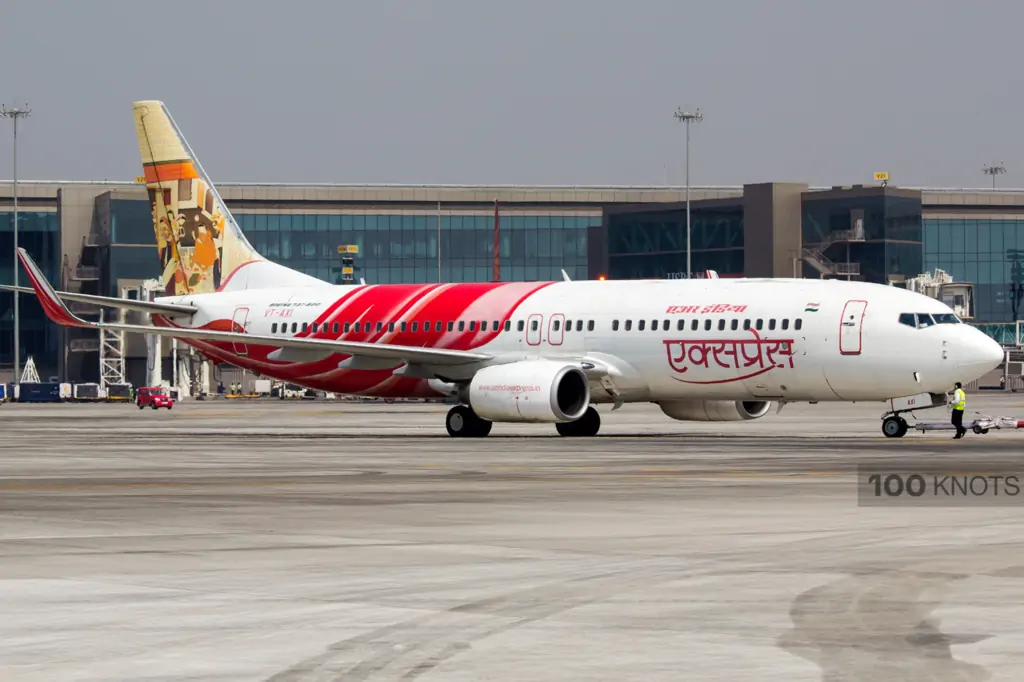
In the ever-evolving world of aviation, Air India Express, the low-cost subsidiary of Air India, is all set to embark on an exciting journey of transformation. In a press statement released on September 4, the airline announced its plans to introduce a brand-new identity in the near future.
This strategic move comes as Air India Express is in the midst of merging with AIX Connect, previously known as AirAsia India. The airline's vision is clear: to create "meaningful connections," expand its international reach, offer a distinctive Indian experience, and provide passengers with "best-in-class value" as part of its comprehensive rebranding effort.
The Genesis of Air India Express
Before we delve into the exciting changes on the horizon, let's take a moment to understand the origins and evolution of Air India Express. Established in 2004, this low-cost subsidiary has played a pivotal role in connecting people across India and the Middle East. With its headquarters in Kochi, Kerala, Air India Express has become a trusted name, synonymous with affordability and accessibility.

Aiming High: The Merger with AIX Connect
One of the most significant developments in the airline industry is the ongoing merger of Air India Express with AIX Connect. This strategic union aims to harness the strengths of both entities and create a formidable force in the aviation sector. AIX Connect, formerly known as AirAsia India, brings to the table its experience in low-cost travel and innovation.
The Promise of "Meaningful Connections"
As part of its rebranding strategy, Air India Express is committed to fostering "meaningful connections" among travelers. This goes beyond merely transporting passengers from one destination to another. It involves crafting journeys that resonate with the diverse needs and aspirations of travelers, connecting people, cultures, and experiences.
Elevating the Indian Experience
Air India Express understands the importance of preserving and celebrating its Indian heritage. In its quest to offer a "unique experience" with an unmistakable Indian touch, passengers can expect to be immersed in a world of Indian hospitality, cuisine, and culture. From the moment you step on board, you'll embark on a journey that showcases the rich tapestry of India.
Best-in-Class Value
In today's competitive aviation landscape, providing "best-in-class value" is imperative. Air India Express is dedicated to offering passengers an unparalleled travel experience at prices that remain affordable. This commitment extends to quality service, punctuality, and safety, ensuring that passengers receive exceptional value every time they choose to fly with the airline.

Comments
"Our ambitions will ride on our huge fleet and network expansion, both in the domestic India market and in the short-haul international region, unlocking synergies with the merger of the two entities," Aloke Singh, CEO of Air India Express and AIX Connect, informed employees during a virtual-cum-physical town hall meeting.
Conclusion
The transformation of Air India Express is not merely a change in appearance but a redefinition of its essence. With a focus on creating "meaningful connections," offering an enriched Indian experience, and delivering "best-in-class value," the airline is poised to set new standards in the aviation industry.
With Inputs from Money Control
Read next
Russian Airlines Keep Flying by Importing $1.2 Billion New Parts for Airbus & Boeing Aircraft

Radhika Bansal
04 Sep 2023
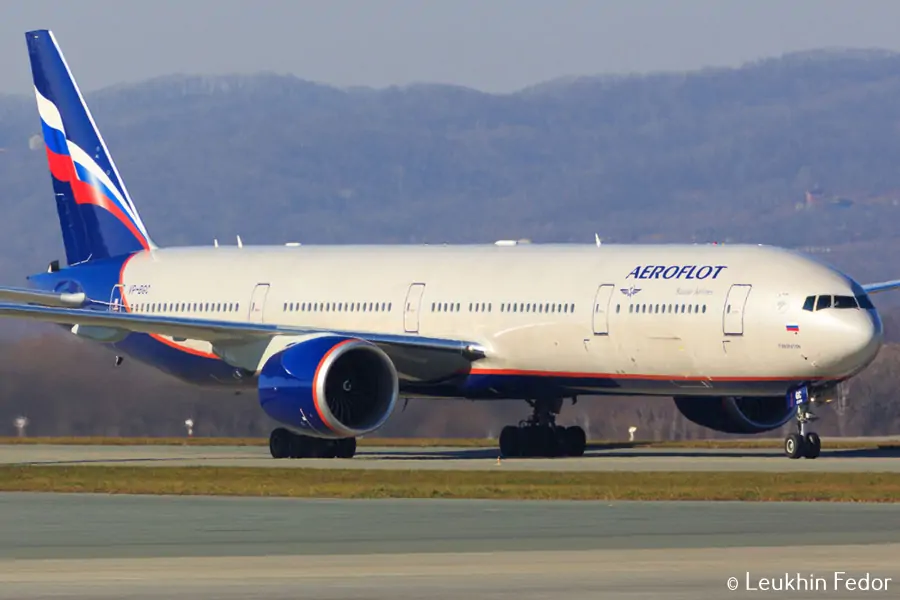
Russian airlines have been able to import parts for Airbus and Boeing aircraft worth about USD 1.2 billion since May 2022, according to a Reuters investigation. Due to this loophole, Russian-registered aircraft have been able to keep flying despite Western sanctions that were meant to prevent them from obtaining components for their Airbus and Boeing fleets.
According to the customs data obtained by Reuters, Ural Airlines has imported more than 20 pieces of US-made hardware, including Northrop Grumman gadgets, cabin pressure valves, pilot displays, landing gear, telephone headsets, and toilet chairs. These are essential for maintaining the airworthiness of Russia’s fleet of 541 Boeing, Airbus, and other Western-made aircraft. Russian airlines also operate approximately 150 domestically manufactured passenger planes.
A Ural Airlines Airbus landed in the Russian city of Yekaterinburg on November 14 last year. Then it remained grounded on the tarmac. Three days later, a spare part crucial for navigation systems with a declared value of over a quarter of a million dollars, made by U.S. company Northrop Grumman, arrived for the jet, Russian customs records show. A week later, on November 24, the A320 took off for Moscow and has been busy ferrying passengers across Russia and Central Asia ever since, according to flight tracking data.
According to the research, nations like Tajikistan, the United Arab Emirates (UAE), Turkey, China, and Kyrgyzstan helped assist these imports. None of these countries have sided with the sanctions the West has imposed on Russia.
Sanctions on Russian Carriers
Strict international sanctions have been imposed on the aviation sector as a result of Russia's invasion of Ukraine in February 2022. These restrictions have effectively prevented Russian-registered and connected aircraft from travelling through the airspace of several other nations, including the US, Canada, and Europe. Additionally, the main aircraft producers, such as Airbus and Boeing, have stopped providing spare parts for Russian aircraft. However, the Russian aviation industry continues to rely significantly on Western-made aircraft.
To put it in perspective, only 77 of the 366 aircraft that the nation's flag carrier Aeroflot Group now operates are Sukhoi Superjet 100s, Russia's domestically made narrowbody aircraft. According to Planespotters.net, S7 Airlines, another significant Russian airline, now flies 99 aircraft, none of which were made in Russia.
The Russian aviation industry has considerable safety issues while being allowed to import some of the essential aircraft components. According to El Pais, Rostransnadzor, a department of the Transportation Ministry, found through several inspections that at least 2,000 flights had operated with parts that had previously outlived their usefulness.
Additionally, according to Proekt Media's study, Aeroflot advised its flight attendants not to film in-flight problems unless the captain specifically instructed them to.
Along with finding aeroplane parts, Russia's aviation industry has also had to deal with a string of drone attacks in Moscow, the nation's capital. A tower that was being built was the target of a drone strike in August 2023. A second strike in central Moscow occurred in June 2023. Moscow has repeatedly accused Ukraine of being behind these strikes, but Ukraine has not claimed any responsibility for any attacks.
In mid-2022, aviation industry sources described how some Russian airlines were stripping some planes for parts. And Russian carrier S7 Airlines said in June last year that it had to scrap plans to launch a low-cost operator because it could not take delivery of the Airbus planes it had ordered. Like its U.S. rival Boeing, the European planemaker cut links with its Russian clients when sanctions kicked in.
But as of May 1 this year, Russian carriers had 541 Western planes in active service or under maintenance, according to data compiled by Swiss aviation intelligence provider ch-aviation. That's more or less on a par with before the war, taking into account the 75 planes being leased by Russian airlines that were repossessed by their foreign owners, the ch-aviation data show.
Russian airlines carried 10.1 million passengers in June, according to Russia's federal statistics agency Rosstat, compared to 8.87 million in June 2022 and 11.1 million in June 2021. Without Western aircraft, Russian airlines would have had to downsize massively because they only have about 150 Russian-made passenger planes in their fleets, according to ch-aviation data.
The serial number listed in Russian customs records for the Northrop Grumman device sent to Yekaterinburg last year shows the part was manufactured in October 2008, and used on different aircraft, including one in Saudi Arabia six years ago, according to an industry source with access to maintenance databases.
While the customs records don't name the company that shipped the device in November, they do show how more of the same crucial U.S. parts fitted with high-tech laser gyroscopes reached Urals Airlines during the 14 months reviewed by Reuters. In July 2022, for example, one was shipped to Ural Airlines via the UAE by Istikloliyat 20, a civil engineering company based in Tajikistan. In September 2022, another Tajik civil engineering firm, Kafolati Komil, also sent one of the parts to Russia via the UAE, the data show.
(With Inputs from Reuters)
Read next
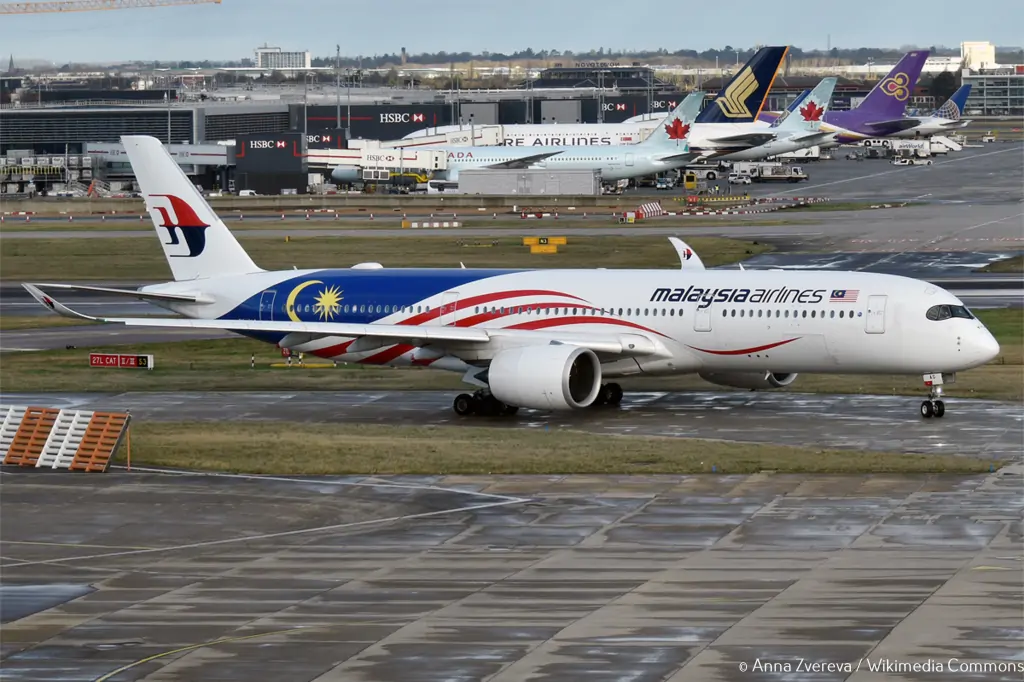
Malaysia Airlines has expanded its footprint to India with the commencement of three new services between Kuala Lumpur (KUL) to Amritsar (ATQ), Thiruvananthapuram (TRV) and Ahmedabad (AMD) effective November 8, November 9 and December 1, 2023, respectively. The new routes will be operated by the Boeing 737-800NG aircraft, equipped with 160 seats, comprising 16 seats in Business Class and 144 seats in Economy Class.
The expansion will bring Malaysia Airlines’ point-to-point connectivity from Kuala Lumpur to India to nine key hubs, thereby providing passengers with enhanced options and flexibility for travel between the two countries. The airline currently operates direct flights to New Delhi, Bengaluru, Mumbai, Chennai, Hyderabad and Kochi.
Commenting on the development, Datuk Captain Izham Ismail, Group Managing Director of Malaysia Aviation Group (MAG) said, “India remains a key market for Malaysia Airlines, hence we are delighted to introduce three new routes into our Indian network, which will provide added convenience for travellers, strengthen our presence in this core market and extend our Malaysian Hospitality service even further. Currently, our average load factor on this route is at 81% YTD July 2023 signifying the growth and confidence for travel between the two markets. We are looking at restoring our pre-COVID-19 capacity back in the Indian market by the end of this year. We will also look to increase flight frequencies to other destinations as we support seamless travels in Malaysia and beyond.”
To celebrate the new routes, Malaysia Airlines is offering fares starting from INR 16,899 for economy class tickets and INR 59,099 for business class. The airline said the tickets are on sale through September 15th for travel beginning November 8th through March 31, 2024. In addition, travellers who book their tickets during the period will reportedly receive up to 50% Bonus Enrich Points, which is part of the carrier's frequent flyer program.
Presence in India
In the Kuala Lumpur-Amritsar market, Malaysia Airlines will compete with Batik Air Malaysia and AirAsia X. However, it will be the sole operator of nonstop flights linking Malaysia’s capital with Thiruvananthapuram and Ahmedabad, data provided by OAG Schedules Analyser shows. India’s aviation market, the third largest in the world, has surprised many with its steep ascent after the lifting of the COVID-19 curbs and aided by the sharp pick-up in the country’s economy.
Malaysia Airlines served 225,000 passengers in the January to March quarter, according to data shared by the Directorate General of Civil Aviation. It was among the top 10 foreign carriers in the country based on number of passengers carried. Malaysia Airlines has a mix of different types of aircraft in its operations, including Airbus A350, A330 and Boeing 737, making it a total of 100 planes. It has placed orders for a further 45 such commercial jets which will see deliveries starting in August and stretching to 2025.
By early December, the airline will be offering 67 weekly flights from Malaysia to destinations in India, with around 24,900 two-way seats available. This compares with 55 weekly flights and 21,000 seats at present, and 60 weekly flights and 22,600 seats before the pandemic. Analysis of schedules for December 2023 reveals that India will account for about 11% of Malaysia Airlines’ international capacity, behind Australia at 11.5% and Indonesia at 15.3%. At the same time in 2019, India accounted for 9.1% of capacity, with Australia at 11.8% and Indonesia at 15.3%.
Increasing Frequencies
With increasing demands for travel, the airline will also enhance its frequencies to build dominance in other key markets, including Australia, China and ASEAN. Beginning December 2023, the airline will boost its weekly flights from Kuala Lumpur (KUL) to Melbourne (MEL) and Sydney (SYD) from 14 flights a week to 15 and 16 flights a week respectively.
Additionally, flights from KUL to Guangzhou (CAN) will be increased from five to seven flights weekly; Beijing (PKX) from three to seven flights weekly; Shanghai (PVG) from nine to 10 flights weekly; Hong Kong (HKG) from 11 to 14 flights weekly; Jakarta (CGK) from 28 to 35 flights weekly; Bangkok (BKK) from 34 to 42 flights weekly and Ho Chi Minh City (SGN) from 15 to 19 flights weekly, providing travellers with more travel flexibility and choices.
Read next
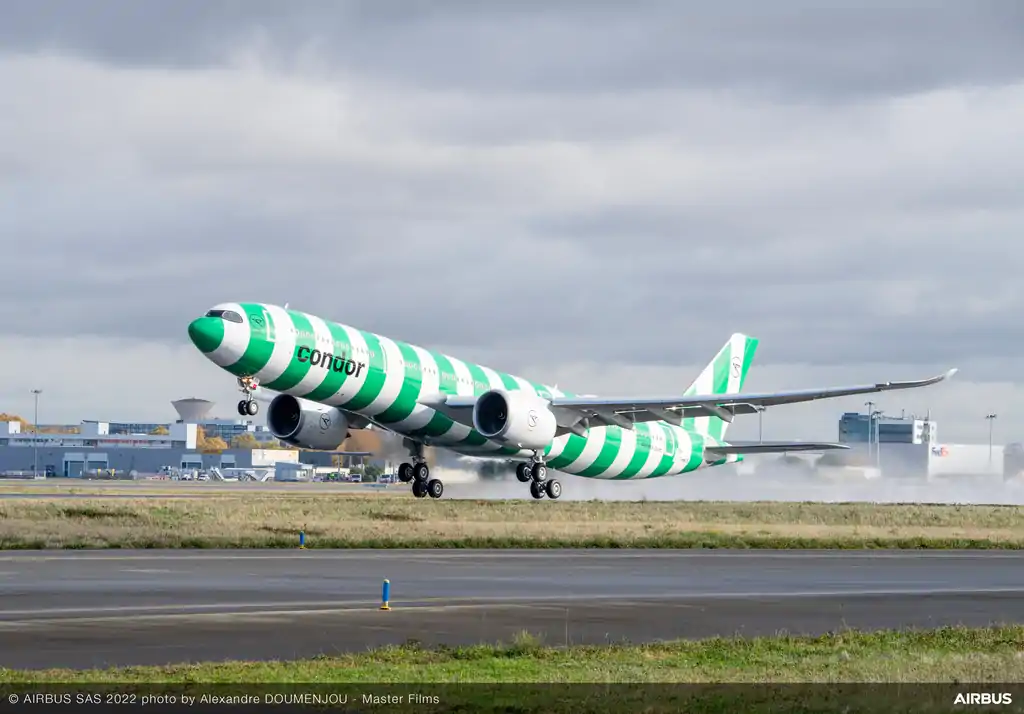
In the ever-evolving world of aviation, where innovation knows no bounds, Condor, the renowned German leisure airline, has taken yet another significant leap forward. On September 2, 2023, Condor welcomed its ninth brand-new Airbus A330neo, registered as D-ANRB, to its fleet. This state-of-the-art aircraft marked a historic moment, not just for Condor but also for aviation enthusiasts worldwide.
A Triumph of Innovation: The Arrival of D-ANRB
Condor's commitment to delivering exceptional travel experiences has been exemplified by the arrival of its ninth Airbus A330neo. This aircraft is a testament to the airline's unwavering dedication to passenger comfort, sustainability, and aesthetics.
A Splash of Blue in the Skies

One of the most striking features of this new addition is its vibrant blue livery. This marks a significant departure from Condor's previous aircraft, which sported green and beige stripes. The introduction of the color blue completes Condor's triad of colors, each representing a natural element. Green symbolizes the "island," beige or sand signifies the "beach," and blue now represents the "sea." With this harmonious blend of colors, Condor aims to transport passengers to a world of serenity and natural beauty even before they step on board.

A Date with Destiny: The Inaugural Flight
Excitement is building as Condor prepares for the inaugural commercial flight of D-ANRB. This milestone journey is scheduled to take off to Canada at the end of the following week, promising passengers a one-of-a-kind experience. Whether you're a seasoned traveler or embarking on your first long-haul adventure, Condor's commitment to safety, comfort, and exceptional service will make this flight truly memorable.
Condor's Ongoing Commitment to Excellence
Condor's acquisition of the D-ANRB is not just about aesthetics and new colors; it's a symbol of the airline's commitment to excellence in every aspect of its operations. From state-of-the-art technology to environmentally conscious practices, Condor is setting a new standard in the airline industry.
Cutting-Edge Technology
The Airbus A330neo is a marvel of modern engineering. With its advanced aerodynamics and fuel-efficient engines, it promises a quieter and more eco-friendly flying experience. Passengers can expect a smoother ride and reduced environmental impact, aligning with Condor's sustainability goals.
Passenger-Centric Design
Condor understands that the journey is as important as the destination. That's why the interior of D-ANRB has been meticulously designed to provide passengers with comfort and convenience. From spacious seating to in-flight entertainment, every detail has been considered to enhance the travel experience.
Conclusion
Condor's newest addition, the Airbus A330neo D-ANRB, signifies more than just the expansion of its fleet. It represents a commitment to innovation, sustainability, and passenger satisfaction. With its unique blue livery and upcoming inaugural flight to Canada, it's a testament to Condor's dedication to providing exceptional travel experiences.
Now, as we eagerly await the first flight of this remarkable aircraft, one can't help but feel a sense of anticipation and wonder. The skies are about to become a bit more vibrant with Condor's splash of blue, and travelers around the world are in for a treat.
Comment