
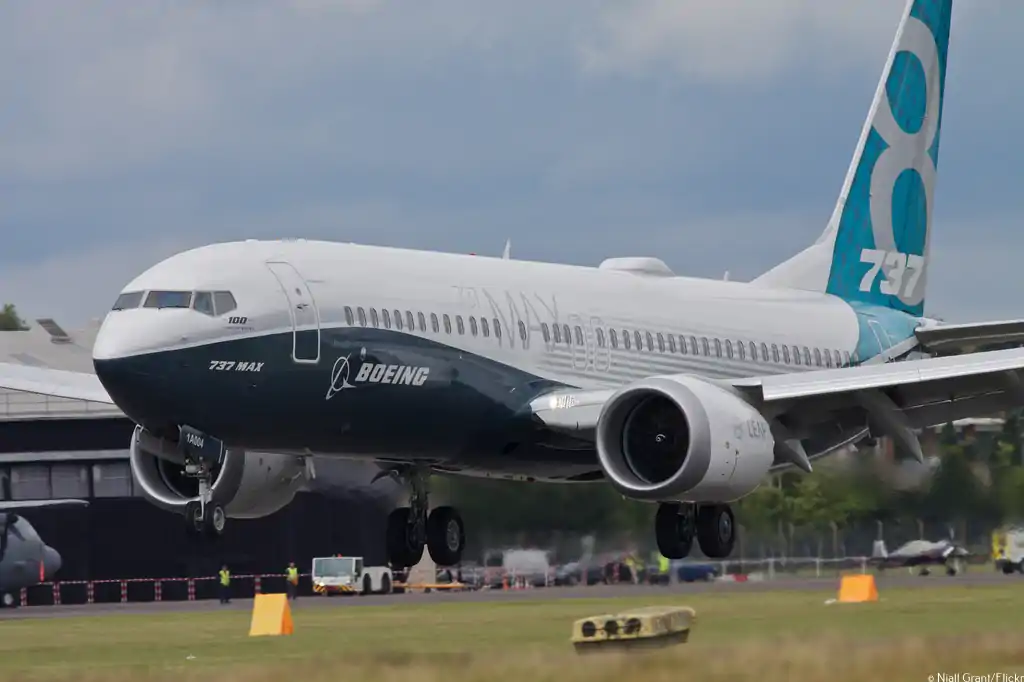
In a significant development for low-cost medium-haul flights, Air India Express is gearing up for a fleet upgrade with the impending arrival of Boeing 737 MAX 8 aircraft. The airline's passengers and aviation enthusiasts alike are eagerly anticipating this exciting transformation as the carrier prepares to welcome the first two of these new-generation narrowbodies.
Historic Aircraft Orders
Earlier this year, Air India made headlines by finalizing a historic aircraft order that sent ripples throughout the aviation industry. The order encompassed a staggering total of 470 aircraft, split between two aviation giants, Airbus and Boeing. The order with Boeing included a diverse range of aircraft, notably 20 Boeing 787-9s, 10 777-9s, 140 Boeing 737 MAX 8s, and 50 Boeing 737 MAX 10s, destined to revamp Air India's fleet.
Focus on Air India Express
While this colossal order raised eyebrows, it's worth highlighting that a significant portion of these narrowbody aircraft was earmarked for Air India's low-cost subsidiary, Air India Express. This strategic move aimed to enhance the budget carrier's capabilities and offer passengers a more comfortable and modern travel experience.
A Twist in the Tale
Initially, there was speculation about whether these aircraft would be freshly manufactured by Boeing. However, recent revelations shed light on the source of at least 55 Boeing 737 MAX 8s for Air India Express. Surprisingly, these aircraft were originally designated for Chinese carriers.
Inventory Reallocation
Deliveries to Chinese carriers had faced delays, even though the type had been reinstated into active service in the country. Interestingly, Airbus deliveries to Chinese carriers had been progressing steadily during this period. Consequently, Boeing found itself with a surplus of 737 MAX 8s in its inventory.
After fruitful discussions and permissions from the Chinese carriers, Boeing was granted the go-ahead to redesignate a portion of its surplus inventory for delivery to Air India Express, aligning with the carrier's expectations of receiving around 50 Boeing 737 MAX aircraft by the next year.
The Arrival of the First Batch
With this development, the arrival of the first batch of Boeing 737 MAX 8s for Air India Express is imminent. Recent sightings of these aircraft have further solidified this anticipation. Two of these narrowbodies are particularly noteworthy:
VT-BXA - A Former Shanghai Airlines Aircraft

The first aircraft bears the manufacturer’s serial number (MSN) 61639 and used to be registered as B-20AK. This four-year-old aircraft was originally intended for Shanghai Airlines. However, it has now been re-registered as VT-BXA, proudly displaying the Indian flag beside its new registration. Despite its new identity, the aircraft retains the red and white livery of Shanghai Airlines. VT-BXA has successfully completed test flights and is poised to make its journey to India.
VT-BXD - A Former China Eastern Airlines Aircraft

The second narrowbody carries MSN 61658 and has received the official registration VT-BXD. It once donned the China Eastern Airlines livery. This aircraft, too, will soon join the Air India Express fleet, marking a new chapter in its aviation journey.
Future Prospects
Beyond these two aircraft, Air India Express can look forward to the arrival of another eight Boeing 737 MAX 8s that were originally intended for Chinese carriers, including Okay Airways, Shanghai Airlines, China Eastern Airlines, and China Eastern Yunnan Airlines. These additions are set to bolster the airline's capabilities and enhance passenger experiences on its medium-haul routes.
Conclusion
As Air India Express gears up to welcome its first batch of Boeing 737 MAX 8 aircraft, the anticipation among both the airline and its passengers is palpable. This fleet upgrade represents a significant step forward for the budget carrier, offering enhanced comfort, efficiency, and safety. With further deliveries on the horizon, Air India Express is poised to soar to new heights in the world of low-cost medium-haul travel.
With Inputs from Aviation A2Z

Read next
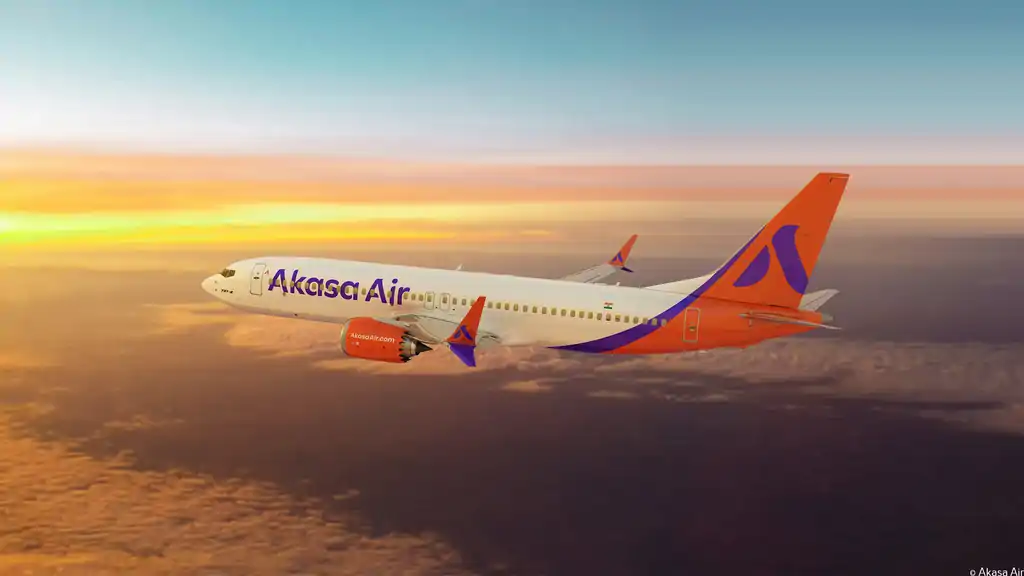
In a recent legal development, India's aviation authorities have opted not to intervene in an escalating dispute between Akasa Air, a budget airline, and its pilots. The airline has accused the Directorate General of Civil Aviation (DGCA) of inaction, leading to the resignation of over 40 of its pilots without notice. This contentious issue raises questions about employment contracts, pilot regulations, and the role of aviation authorities in resolving internal disputes within airlines.
The Resignations and Legal Battle
Akasa Air, which operates in a highly competitive market, faced a significant setback when more than 40 out of its 450 pilots resigned without serving the mandated notice period of 6-12 months. The airline responded by suing several of these pilots, alleging misconduct, and challenging the Indian authorities in court for their perceived inaction in addressing the situation.
The airline insists that its contractual obligations with the pilots should remain in force and is suing the regulator, DGCA, for not intervening in what it claims to be the public interest. However, the DGCA has argued in a recent filing at the Delhi High Court that it lacks the authority to interfere in employment contracts, stating that it "does not have any power or delegated authority to interfere in any employment contract."
Akasa Air's Warning of Shutdown
The turmoil within Akasa Air has reached a critical point, with the airline warning of a potential shutdown due to the ongoing crisis. The mass resignations of pilots resulted in 632 flight cancellations in August, which is estimated to be around 18% of the airline's usual monthly operations, affecting both passengers and the airline's financial stability.
DGCA's Response
The DGCA's response to Akasa's plea has been firm. In its court filing, it categorically denied that Akasa had provided any substantial evidence or reasons for the flight cancellations attributed to pilot resignations. According to the DGCA, only 1.17% of Akasa's flights were canceled in August, contradicting the airline's claims.
Pilot Organizations and Employee Discontent
Amidst the legal battle, the Federation of Indian Pilots, representing around 6,000 members, weighed in on the issue. They asserted that the flight cancellation numbers cited by Akasa were "unsubstantiated" and supported the DGCA's stance that it cannot interfere in the internal dispute.
The Federation also pointed out that the alleged mass resignations of pilots might indicate deeper employee discontent within the airline, highlighting a broader issue that Akasa Air needs to address to maintain its operational stability and reputation.
Conclusion
The ongoing dispute between Akasa Air and its pilots, coupled with the DGCA's refusal to intervene, has created a challenging situation in India's aviation industry. This legal battle not only raises questions about the interpretation of employment contracts and pilot regulations but also underscores the need for airlines to effectively manage employee relations to prevent operational disruptions and reputational damage.
As the legal proceedings continue, the future of Akasa Air remains uncertain. The airline's ability to resolve its differences with its pilots and ensure a smooth and reliable service for passengers will be closely monitored, and it is a stark reminder of the complexities involved in the aviation industry, where labor issues can have far-reaching consequences.
With Inputs from Reuters
Read next


Grounded Go First's revival could be derailed if a court agrees to the demands of aircraft lessors, who are seeking certain records after jet parts went missing or faced deterioration, according to legal filings from the carrier.
Foreign lessors have been locked in a legal tussle to repossess their aircraft after Go First was granted bankruptcy protection in May, which, as per Indian law, imposed a block on the recovery of 50-plus grounded Airbus planes. Earlier, three lessors had moved the plea before a single bench of the Delhi High Court and sought additional directions on the maintenance of their assets, after discovering that their parked aircraft were in poor condition during inspections.
Dubai Aerospace Enterprise (DAE) Capital and ACG Aircraft Leasing recently sought a Delhi court's intervention by complaining some parts had been allegedly "robbed" or the jets were corroding. The lessors have been locked in a legal tussle to repossess their aircraft after Go First was granted bankruptcy protection in May.
The lessors, which are only allowed an occasional inspection of the grounded leased planes, asked the court to force Go First to supply maintenance and aircraft preservation records for their jets. Go First has contested lessors’ demands in its first response in court in the matter, saying it would be a time-consuming process that would hit its revival, legal filings by its bankruptcy officer, Shailendra Ajmera, showed.
Such requests "have far-reaching implications on the day-to-day affairs of Go Air and will have a direct bearing on the going concern status of Go Air," Ajmera said in court filings, asking for the lessors' pleas to be rejected. Getting such records is a "time-consuming exercise and would significantly divert the resources" of Go First, "from the resumption of operations ... to provision/inspection of documents/records to the lessors," he added.
The world's second-largest aircraft lessor, SMBC, which also has some leased planes to Go, warned in May that India's decision to block leasing firms from reclaiming the airline's planes would jolt the market and spark a confidence crisis.
NCLT filings reveal that when filing for administration, Go First owed SMBC more than USD56.6 million for aircraft leases. An entity called SMBC Aero Engine Lease is also owed more than USD 2.1 million. The ch-aviation fleets advanced module reveals SMBC has nine Airbus narrowbodies placed at Go First. The same court filing shows Go First owes Ireland-based Engine Lease Finance over USD 8.3 million.
Go First, which ceased operations in early May but harbours hopes of a relaunch is fighting to retain aircraft and engines needed to facilitate any relaunch. However, 100% of the airline's fleet is leased, and the entire pool of Go First's aircraft lessors wants their planes back.
What Lessors are Saying?
BOC Aviation informed the court that their planes were in deplorable condition, with issues such as poor maintenance of landing gear and the main body. The planes were not only dirty, but they found the presence of algae during inspection due to the accumulation of water as the planes were not covered during unusual rains. BOC said that it found scratches on the panels and the signs of subpar maintenance were evident.
BOC further claimed their aircraft were in long-term storage in Coonoor even before the moratorium, and the engines were removed as no flight had operated since December 2022, which is only adding to the deteriorating condition of their planes.
Meanwhile, DAE 13 Ireland Designated Activity Co, in its plea, accused Go First of not paying staff salaries in August, resulting in poor plane conditions, including a dirty fuselage and corrosion in various parts like brakes. They also claimed Go First withheld essential aircraft documents, hindering airworthiness inspections.
In a separate submission, ACG raised concerns over key components missing in the leased planes, such as fan blades, and urged Go First to replace all the missing parts immediately.
In an interim order passed in July, a single-judge bench of the Delhi High Court had permitted the lessors to inspect the grounded planes. The order was later upheld by a division bench of the High Court and subsequently by the Supreme Court. The lessors, which are only allowed an occasional inspection of the grounded leased planes, asked the court to force Go First to supply maintenance and aircraft preservation records for their jets.
(With Inputs from Reuters)
Read next

The Federal Aviation Administration (FAA) has recently announced the adoption of a new airworthiness directive (AD) that will have a significant impact on Boeing Company Model 737-600, -700, -700C, -800, -900, and -900ER series aircraft. This decision comes in response to a critical safety concern discovered within the aircraft's fuselage, highlighting the FAA's unwavering commitment to ensuring air travel safety.
The Triggering Incident
The impetus for this AD can be traced back to a specific incident involving fuselage skin lap splice cracking. The troubling discovery was made between stations (STA) 767 and STA 787 during routine inspections. The cracking occurred just below the S–14R fuselage skin lap splice, where a lower skin panel buckle intersected the upper skin of the lap splice. Further inspections revealed similar cracking issues just below S–14R, but this time between STA 747 and STA 767.
The AD's Key Provisions
To address this critical safety issue, the FAA's new airworthiness directive lays out a series of mandatory actions and inspections that must be performed on the affected Boeing 737 series aircraft. Here are the key provisions:
Inspection Requirements
The AD mandates an immediate inspection for any repair at specific skin lap splice locations, including S–4, S–14, and S–24. These inspections are crucial to identifying any potential issues with the aircraft's structural integrity.
Repetitive Inspections for Buckling, Wrinkling, or Bulging
Depending on the aircraft's configuration, repetitive inspections for buckling, wrinkling, or bulging at the affected skin lap splice areas are required. These inspections are essential to detect any signs of damage that could compromise the aircraft's safety.
Repetitive Inspections for Cracking
A critical aspect of the AD involves repetitive inspections for cracking at locations common to the fuselage skin on both the left and right sides of the aircraft. Identifying and addressing cracking is vital to preventing catastrophic failures.
Repair and Alternative Inspections
The directive also outlines specific repair procedures and alternative inspections to rectify any issues identified during inspections. These actions are essential to ensuring the continued airworthiness of the aircraft.

Stakeholder Feedback
During the rulemaking process, the FAA received feedback from several stakeholders, including The Air Line Pilots Association, International, who expressed support for the Notice of Proposed Rulemaking (NPRM) without any changes. However, Boeing and other major industry players, such as Aviation Partners Boeing, Delta Air Lines (Delta), Southwest Airlines (SWA), United Airlines (UAL), and Qantas, also provided additional comments.
Boeing's Request for Wording Modification
Boeing requested a modification to a sentence in the Background section of the NPRM, suggesting that the skin lap splice cracking 'may have been the result of incorrect procedures…' rather than 'was the result of incorrect procedures…' Boeing emphasized that they have consistently maintained that the root cause of the cracking is unknown.
In response, the FAA acknowledged Boeing's request for clarification but clarified that the sentence in question is not included in the final rule, and no changes have been made in relation to this matter.
FAA's Commitment to Safety
After an extensive review of relevant data and consideration of stakeholder comments, the FAA has determined that ensuring air safety necessitates the adoption of this AD as originally proposed. This decision underscores the FAA's commitment to prioritizing the safety of passengers, crew, and aircraft operators.
Conclusion
FAA's issuance of this airworthiness directive serves as a crucial step in addressing and rectifying the identified unsafe conditions present in Boeing 737-600, -700, -700C, -800, -900, and -900ER series aircraft.
With the mandatory inspections and necessary repairs outlined in the AD, the FAA aims to enhance the safety of these aircraft, ensuring their continued reliability in the skies. Safety remains paramount in the world of aviation, and this directive reaffirms the aviation industry's dedication to safeguarding the lives of those who travel by air.
With Inputs from FAA
Read next

The aerospace industry, a critical driver of global transportation and technological advancement, is grappling with persistent challenges in its supply chains. Safran CEO Olivier Andries recently delivered a sobering assessment, stating that the difficulties plaguing the supply chain are far from resolved and are likely to persist throughout 2024. This revelation comes as a stark reminder of the ongoing turbulence in an industry that is essential for global connectivity.
Supply Chain Struggles Extend into 2024
Olivier Andries, CEO of Safran, a leading player in the aerospace industry, emphasized that the aerospace supply chain woes are not abating. These issues encompass a range of factors, each contributing to the industry's ongoing struggles.
Materials Shortages: Titanium and Steel
One of the most acute challenges facing aerospace supply chains is the shortage of essential materials like titanium and steel. These metals are vital for the construction of aircraft components, and their scarcity has led to price inflation and production delays, impacting manufacturers' ability to meet demand.
Castings and Forgings
In addition to material shortages, the aerospace industry is grappling with challenges related to castings and forgings. These processes are crucial in the manufacturing of aerospace components, and disruptions in these areas further compound the supply chain woes.
Chip Shortages Easing, Recruitment Remains a Hurdle
While there is some relief in the form of easing worldwide shortages of computer chips, recruitment difficulties persist. The pandemic led to a wave of early retirements within the industry, leaving a void in skilled labor that remains challenging to fill. This talent gap hinders the industry's ability to scale up production to meet surging demand.
Impact on Airliner Production
The supply chain shortages have a direct impact on the production of airliners. Safran's CEO pointed out that these challenges have complicated efforts to increase production rates. In particular, discussions regarding engine supplies for 2025 are still ongoing, highlighting the uncertainty that looms over the industry's future output.
CFM's Role in Aerospace Supply Chain
CFM, a joint venture between Safran and General Electric, holds a pivotal role in the aerospace industry. They are the sole engine supplier for the Boeing 737 and have a 60% share of the backlog for the Airbus A320.
Airlines can choose between engines from CFM or Pratt & Whitney for the A320. CFM's alignment with manufacturers on production plans through the end of 2024 provides some stability, but the unresolved discussions for 2025 further emphasize the lingering uncertainty in the sector.
Conclusion
The aerospace industry's supply chain challenges, as outlined by Safran CEO Olivier Andries, paint a complex picture for the future. The shortage of materials, ongoing talent recruitment hurdles, and complications in production planning all contribute to an environment of uncertainty.
As the industry seeks to recover from the pandemic's impact and meet growing demand for air travel, addressing these supply chain issues will be paramount. The aerospace sector, vital for global connectivity, must navigate these challenges to ensure it remains a cornerstone of modern transportation and technological advancement.
With Inputs from Reuters
Read next

In a significant development in the aviation industry, Brunei-based airline GallopAir has announced its intention to acquire 30 aircraft from the Chinese planemaker Commercial Aircraft Corporation of China (COMAC). This historic deal, worth a total of $2 billion, was unveiled at a regional trade convention in China and represents a major step for both GallopAir and COMAC.
The purchase includes a mix of COMAC's ARJ21 aircraft and the state-backed firm's narrow-body C919 jet, marking a significant milestone in China's efforts to establish itself as a formidable player in the global aviation market.
GallopAir's Ambitious Plans
GallopAir, a relatively unknown player in the aviation industry, made headlines with its announcement of a letter of intent to acquire a diverse fleet of aircraft from COMAC. The deal includes 15 orders for COMAC's ARJ21, which encompasses freighter and business jet variants, as well as 15 of the C919 jets. This move by GallopAir reflects its ambitious plans to expand its presence and offer flight services within the Brunei Darussalam–Indonesia–Malaysia–Philippines East ASEAN Growth Area.

COMAC's Growing Influence
The Chinese aircraft manufacturer COMAC has been striving to challenge the dominance of established giants like Airbus and Boeing. The C919, designed by COMAC to compete with Airbus SE's A320neo and Boeing Co.'s 737 MAX single-aisle jet families, completed its maiden commercial flight in May. This marked a significant milestone for COMAC and showcased China's aspirations to become a major player in the global aviation industry.
Key Deal Details
The announcement of this deal came through China-based Shaanxi Tianju Investment Group, an investor in GallopAir, in a WeChat post. The agreement stipulates that the aircraft from COMAC will undergo due diligence and certification processes by Brunei's Department of Civil Aviation before they can be delivered to GallopAir. The airline has projected that flight operations will commence in the third quarter of 2024.
GallopAir's Place in Aviation History
Once this deal is finalized and the aircraft are in service, GallopAir will become only the second international operator of Chinese-made aircraft, following Indonesian low-cost carrier TransNusa. TransNusa currently operates a small fleet of ARJ21 aircraft, which serves as a predecessor to the C919. This achievement will undoubtedly position GallopAir as a trailblazer in the global aviation industry.
Conclusion
The announcement of GallopAir's intent to purchase 30 aircraft from COMAC represents a significant step forward for both the airline and the Chinese aircraft manufacturer. It underscores China's ambitions to establish itself as a formidable player in the global aviation market and highlights the growing influence of COMAC in the industry.
As GallopAir prepares to make history as the second international operator of Chinese-made aircraft, the aviation world eagerly awaits the successful completion of this landmark deal and the subsequent entry of these aircraft into service in the East ASEAN Growth Area.
With Inputs from Reuters
Comment