Could Turkish Airlines Be Planting a Flag in Latin America by Backing Air Europa?

Abhishek Nayar
21 Aug 2025
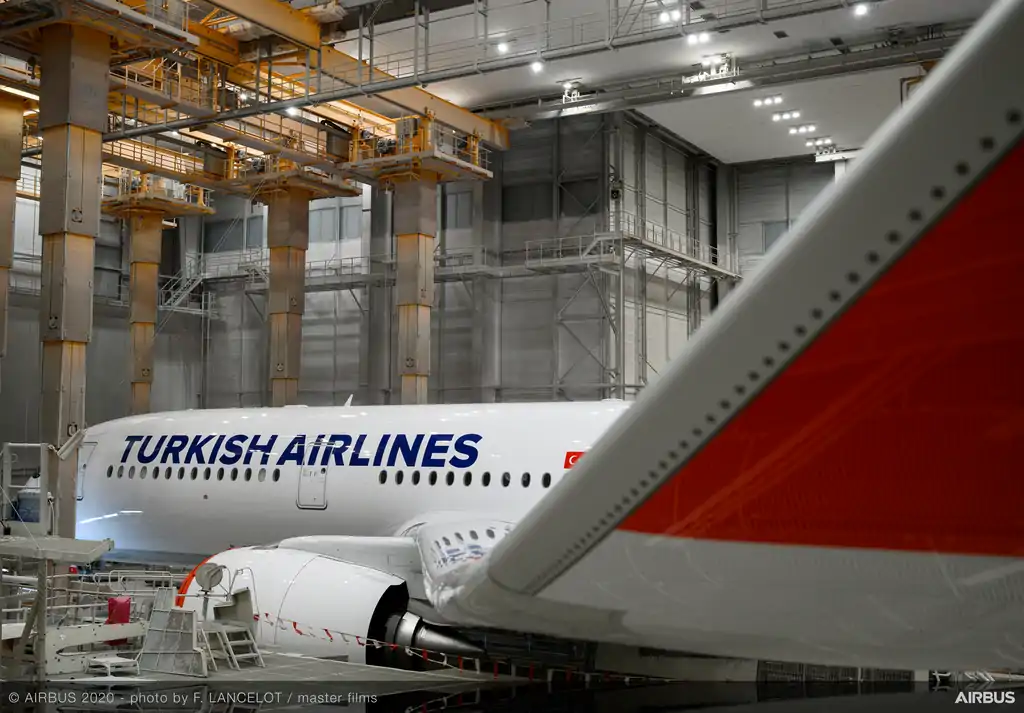
On August 19, 2025 Turkish Airlines announced that Spanish carrier Air Europa accepted its binding offer to acquire a minority stake, moving the deal into transaction documentation and closing procedures.
The money move that matters
The investment is worth 300 million euros, with the vast majority of that sum slated to be injected as fresh capital into Air Europa rather than simply buying existing shares. That cash infusion is meant to shore up balance sheets and support the airline as it expands its long haul fleet and network.
Exactly how much of Air Europa will Turkey own
Turkish Airlines did not publish a final percentage because the precise stake will be set after technical and financial adjustments at closing. Spanish media are already reporting a deal size in the mid twenties by percentage which would make Turkish Airlines a large minority owner but not a controlling shareholder.
A timeline that will test regulators and patience
Turkish Airlines said the transaction should be completed within approximately six to twelve months subject to regulatory permits and approvals. That timetable means scrutiny from Spanish authorities and competition watchdogs is likely to be a headline item before any cash changes hands.
Why this is more than finance it is strategy
Company insiders and analysts point to network complementarity as the main attraction. Air Europa brings a strong footprint in the Iberian peninsula and long haul routes across Latin America. For Turkish Airlines that translates into immediate access to markets where it wants to scale passenger and cargo flows without building the entirety of the network from scratch. Rival bidders including major European groups stepped away earlier in the process which left room for this tailored tie up.

What it could mean for passengers and competitors
For travelers this could produce simpler connections between Istanbul Madrid and Latin American cities plus new codeshare options and coordinated schedules. For competitors the move signals that global carriers are still willing to pursue cross region alliances via investment rather than full takeovers. For Air Europa the capital will help reduce legacy pandemic era debt and support fleet modernization plans being rolled out in its multi year strategy.
Risks on the taxiway
Regulatory approval is not guaranteed and the final economics will shift after audits and adjustments. Integration headaches such as aligning IT systems brand cooperation and slot coordination at busy airports could slow the partnership benefits. Also public and political views about a foreign flag carrier taking a strategic stake in a national airline may surface during approval hearings.
The human story
Beyond balance sheets there is a human element. Pilots cabin crew and ground staff in both airlines will watch carefully for changes in hiring training and route planning. Frequent flyers may gain route choice while corporate planners on both sides will look to wring efficiencies from combined sales and joint procurement.
Final flourish
This is a move that reads like a chess play rather than a quick buy. Turkish Airlines is not simply buying hardware it is buying reach reputation and a shortcut into Latin America. Air Europa gets much needed capital and an influential partner to help accelerate its recovery and growth. Whether the partnership delivers the promised synergies will depend on regulatory outcomes and how well two different corporate cultures stitch together.
TL; DR
- Turkish Airlines announced on August 19, 2025 that Air Europa accepted its binding offer to buy a minority stake.
- The investment totals 300 million euros and will largely be invested as new capital.
- The exact percentage of shares is not finalized but Spanish reports place it around the mid twenties by percentage.
- The deal is expected to close within six to twelve months subject to regulatory approvals.
- Strategic rationale is network complementarity especially for Latin America and the Iberian peninsula making this a growth play as much as a financial one.
With Inputs from Reuters
Read next
Who Is Watching the Runway? India Faces a Staff Shortage at Its Aviation Gatekeepers
Abhishek Nayar
21 Aug 2025

A parliamentary committee has issued a stark warning that India’s civil aviation safety could be undermined by a severe shortage of technical staff at the Directorate General of Civil Aviation and by mounting gaps among air traffic controllers. The finding comes as the nation reels from the June crash of an Air India Dreamliner that killed 260 people and has put regulatory robustness under the microscope.
What the committee found
Vacancies at the regulator
The report says the DGCA is operating with almost half of its sanctioned posts unfilled, a shortfall the committee described as an existential threat to the integrity of India’s aviation safety system.
Pressure on air traffic control
Lawmakers recorded that air traffic controllers are under immense pressure because of workforce planning failures. The panel flagged instances where controllers were not fully trained and where duty time rules were not being followed, raising the risk of fatigue related errors.
Safety context and recent accidents
The committee’s review was accelerated by the catastrophic Air India accident in June that killed 260 people and by a number of helicopter accidents in northern India. Those tragedies intensified scrutiny of the regulator and operational practices across airports and airlines.
Why this matters now
India is one of the fastest growing aviation markets in the world. Rapid passenger growth and fleet expansion put extra demand on oversight capacity. A regulator that is understaffed and an air traffic system that is strained increase the odds that emerging safety risks will be missed or managed too late.
Root causes flagged by the panel
The committee pointed to an outdated recruitment model in which the DGCA relies on an outside recruitment agency to hire its technical and regulatory staff. The ministry itself described that process as slow and inflexible, hindering the regulator’s ability to attract and retain highly skilled professionals.
What lawmakers recommended
The committee urged an urgent and focused recruitment campaign to plug vacancies and strengthen workforce planning. It went further and suggested that India consider creating a new regulatory authority to replace the DGCA if necessary, and it called for reforms to air traffic control staffing, training, rostering, and duty time compliance.

Government response so far
Civil aviation minister Ram Mohan Naidu told lawmakers that the government would fill 190 of the more than 500 unfilled DGCA positions by October. The ministry and the DGCA have not publicly expanded on how longer term recruitment and retention issues will be fixed.
The operational fallout at the airline level
In parallel to the regulator review, audits and inspections of carriers have flagged recurrent training and procedural gaps. Those findings add pressure on regulators and airlines as investigators continue to probe the June crash and other recent accidents.
What an urgent fix would look like
- A fast and transparent recruitment drive for technical and regulatory roles, plus market competitive pay and career paths to retain talent.
- Independent review of duty time rostering and strict enforcement so controllers and crew are not pushed beyond safe limits.
- A targeted training push to ensure controllers and regulatory staff meet modern competency standards.
- Consideration of structural reforms to the regulator to improve agility and operational independence, paired with clear accountability.
The political and reputational risk
India has been promoting aviation growth as part of broader development goals. But the committee made clear that expansion without strengthened oversight and staffing will risk safety, public confidence, and the commercial ambitions of the sector. This is both a governance challenge and a test of political will.
Bottom line
Rapid aviation growth is a success story in the making, but the safety net is fraying in places. The committee report frames a simple choice for policymakers: quickly fix recruitment, training, rostering and governance, or accept growing safety risk as traffic and complexity rise.
TL; DR
- Parliamentary committee warns DGCA nearly half of posts are vacant and calls staff shortages an existential threat to safety.
- The warning follows the June Air India Dreamliner crash that killed 260 people and several helicopter accidents.
- Lawmakers flagged understaffed air traffic control, inadequate training and violations of duty time limits for controllers.
- Committee recommends a focused recruitment campaign, better workforce planning, stricter rostering enforcement and even a new regulatory model.
- Government says 190 of over 500 vacancies will be filled by October but longer term reforms remain to be detailed.
With Inputs from Reuters
Read next
Air India Partners with Indian Oil in Landmark Sustainable Aviation Fuel Agreement

Pragya Chauhan
20 Aug 2025

Indian Oil Corporation Limited and Air India on Monday signed a Memorandum of Understanding (MoU) for the supply of Sustainable Aviation Fuel (SAF), marking a step toward reducing carbon emissions in India's aviation sector. This groundbreaking partnership represents a pivotal moment in India's transition toward sustainable aviation, positioning the country as a regional leader in green fuel adoption.
Strategic Partnership for Green Aviation
The partnership comes at a crucial time when the aviation industry faces mounting pressure to reduce its carbon footprint. Through this MoU, IOCL and Air India aim to collaborate on the supply of SAF to meet CORSIA targets and even exceeding them for international flights, ensuring a reliable, transparent, and sustainable fuel supply. This alignment with the Carbon Offsetting and Reduction Scheme for International Aviation (CORSIA) demonstrates India's commitment to meeting global environmental standards.
Panipat Refinery: India's SAF Production Hub
The foundation of this partnership lies in Indian Oil's state-of-the-art facility at Panipat, which has achieved a historic milestone in sustainable fuel production. Indian Oil Corporation Ltd (Indian Oil) has become the first in the country to receive the prestigious ISCC CORSIA Certification for Sustainable Aviation Fuel (SAF) production at its Panipat Refinery. This certification represents more than just regulatory compliance—it positions India as a serious player in the global sustainable aviation fuel market.
IOC plans to begin production of sustainable aviation fuel (SAF) from used cooking oil starting December this year at its Panipat refinery, according to Chairman Arvinder Singh Sahney. The facility is expected to produce 35,000 tonne of green fuel annually, using waste cooking oil sourced from various sources. This innovative approach transforms waste into valuable aviation fuel, creating a circular economy model that benefits both environmental sustainability and resource optimization.

Revolutionary Production from Waste Cooking Oil
One of the most remarkable aspects of this initiative is the raw material source. Cooking oil is often discarded after being used for frying at home or in restaurants. However, a refinery of IndianOil has now won a certification to use the same oil to produce sustainable aviation fuel (SAF). This transformation of waste cooking oil into high-grade aviation fuel represents a breakthrough in sustainable fuel technology and waste management.
The production process not only addresses environmental concerns but also creates new economic opportunities throughout the supply chain. By utilizing used cooking oil that would otherwise be discarded, Indian Oil has developed a sustainable feedstock source that reduces waste while producing clean aviation fuel. "The refinery will begin producing 35,000 tons per annum of SAF from the end of this calendar year," and the production capacity will be enough to meet India's requirement of blending 1% SAF with conventional jet fuel by 2027.
Meeting International Standards and Certifications
The technical achievement behind this partnership cannot be understated. The refinery's SAF unit has also secured ISCC CORSIA certification, an international standard necessary for commercial aviation fuel production. IOC is currently the only company in India holding this certification for UCO-based SAF, valid for one year. This certification ensures that the sustainable aviation fuel meets the highest international standards for environmental impact and quality.
The ISCC CORSIA certification validates that SAF meets the highest international sustainability and lifecycle carbon emission standards. This global recognition provides confidence to international airlines and aviation stakeholders that Indian-produced SAF meets world-class standards, potentially opening doors for export opportunities and international partnerships.
Air India's Fleet Modernization and Sustainability Goals
The timing of this partnership aligns perfectly with Air India's ambitious expansion and modernization plans. Air India's fleet renewal plan, with 570 new aircraft on order, will enable the airline to operate one of the lowest carbon emitting fleets in the world and its plans to establish more non-stop city-pairs will result in flights with less emissions and itineraries. This massive fleet expansion, combined with sustainable fuel adoption, positions Air India as a leader in sustainable aviation.
The integration of SAF into Air India's operations will significantly reduce the airline's carbon footprint while maintaining operational efficiency. The partnership ensures that as Air India expands its network and increases flight frequencies, it can do so while actively contributing to emissions reduction rather than adding to the problem.
Industry Leadership and Future Implications
The statements from Indian Oil's leadership reflect the strategic importance of this partnership. "This MoU with Air India represents a strategic step in India's transition to sustainable aviation. With our ISCC-CORSIA-certified SAF from Panipat, IndianOil is ready to provide a sustainable fuel solution that will help decarbonise air travel. Partnering with India's flagship carrier, we are aligning national growth with global climate goals and setting a benchmark for the industry."
This partnership sets a precedent for the Indian aviation industry and demonstrates how public sector enterprises can collaborate to achieve national sustainability goals. The success of this initiative could encourage other airlines to pursue similar partnerships, creating a multiplier effect that accelerates the adoption of sustainable aviation fuel across India's aviation sector.
Economic and Environmental Impact
The economic implications of this partnership extend beyond the immediate parties involved. By establishing a domestic supply chain for sustainable aviation fuel, India reduces its dependence on imported fossil fuels while creating new employment opportunities in the green energy sector. The utilization of waste cooking oil also creates value from what was previously considered waste, contributing to a more circular economy.
From an environmental perspective, the partnership addresses multiple sustainability challenges simultaneously. It reduces aviation emissions, decreases waste disposal problems, and demonstrates the viability of converting waste products into valuable energy sources. This holistic approach to sustainability could serve as a model for other countries looking to develop their own sustainable aviation fuel capabilities.
The Air India-Indian Oil partnership represents more than just a commercial agreement—it symbolizes India's commitment to sustainable development and its determination to lead by example in the global fight against climate change while maintaining robust economic growth in the aviation sector.
Read next
Global Aviation Fuel Market Set to Soar: Projected Growth to $751 Billion by 2032
Pragya Chauhan
20 Aug 2025

The global aviation fuel industry is experiencing unprecedented growth momentum, with market projections indicating a dramatic expansion from current valuations to an estimated $751.01 billion by 2032. This remarkable trajectory reflects the aviation sector's resilience and the increasing demand for air travel worldwide, positioning aviation fuel as one of the most dynamic energy markets in the coming decade.
Market Growth Trajectory and Projections
According to recent market analysis by SkyQuest Technology Consulting, the aviation fuel market was valued at $351.11 billion in 2024 and is expected to maintain a robust compound annual growth rate (CAGR) of 10.11% through 2032. This growth trajectory significantly outpaces many traditional energy sectors and reflects the aviation industry's rapid recovery and expansion following the global pandemic.
The market expansion is being driven by several converging factors including increased international air traffic, the resurgence of business travel, growing cargo transportation demands, and expanding aviation infrastructure in emerging markets. Multiple research firms have provided varying but consistently optimistic projections, with estimates ranging from $384 billion to over $800 billion by 2032, indicating strong consensus about the sector's growth potential.

Regional Market Dynamics and Leadership
The global aviation fuel market exhibits distinct regional characteristics, with Asia Pacific currently commanding the largest market share at 37.45% as of 2023, according to Fortune Business Insights. This dominance reflects the region's rapid economic growth, expanding middle-class population, and significant investments in aviation infrastructure.
North America maintains its position as a key market leader, particularly in sustainable aviation fuel initiatives. The U.S. aviation fuel market alone was valued at $57.9 billion in 2024 and is expected to grow at a 5.6% CAGR through 2034. The region's leadership in environmental regulations and sustainability initiatives is driving innovation in cleaner fuel technologies.

Market Segmentation and Fuel Types
The aviation fuel market encompasses various fuel grades, with jet fuel representing the dominant segment. The jet fuel grade segment was valued at $219.9 billion in 2024 and is anticipated to expand at a 7.6% CAGR through 2034. This growth is directly correlated with the expansion of commercial aviation and international cargo services.
Aviation gasoline (Avgas), while representing a smaller market segment, continues to show steady growth, with projections indicating expansion from $2.21 billion in 2024 to $3.74 billion by 2032 at a CAGR of 6.78%. This growth is primarily driven by general aviation activities and flight training operations.
Sustainable Aviation Fuel: The Future of Clean Flight
Perhaps the most exciting development in the aviation fuel sector is the rapid emergence of sustainable aviation fuel (SAF). The global SAF market was valued at $1.7 billion in 2024 and is projected to experience explosive growth at an unprecedented CAGR of 46.2% through 2034, potentially reaching $64 billion by 2033 according to some projections.
This extraordinary growth in SAF reflects the aviation industry's commitment to reducing its carbon footprint and achieving net-zero emissions by 2050. Biofuels currently dominate the SAF segment, accounting for over 71% of the market share, with production primarily utilizing biomass including plant matter and animal waste.

Industry Leaders and Market Competition
The aviation fuel market is dominated by major energy corporations with extensive refining and distribution capabilities. ExxonMobil leads the sector with expected revenues of $339.9 billion in 2024, followed by Shell ($302 billion), Total ($210.2 billion), and Chevron ($194.7 billion). These industry giants are investing heavily in both traditional fuel production capacity and sustainable fuel technologies.
Future Outlook and Market Drivers
The aviation fuel market's robust growth outlook is supported by several key drivers including the continued recovery of international travel, increasing freight transportation demands, fleet modernization initiatives, and the gradual transition to more fuel-efficient aircraft technologies. Additionally, government initiatives promoting sustainable aviation fuels and carbon reduction targets are creating new market opportunities and regulatory frameworks that support long-term growth.
The commercial aircraft segment is expected to be the primary growth driver, with increasing international air traffic contributing significantly to fuel demand. As airlines continue to expand routes and increase flight frequencies to meet pent-up travel demand, the aviation fuel market is positioned for sustained expansion throughout the forecast period.
With multiple research firms projecting consistent growth trajectories and the emergence of sustainable fuel technologies creating new market segments, the aviation fuel industry stands at the threshold of a transformative decade that will reshape how the world flies.
Read next
PSA Airlines Flight Attendants Stage Multi-Airport Protest for Fair Wages
Pragya Chauhan
19 Aug 2025
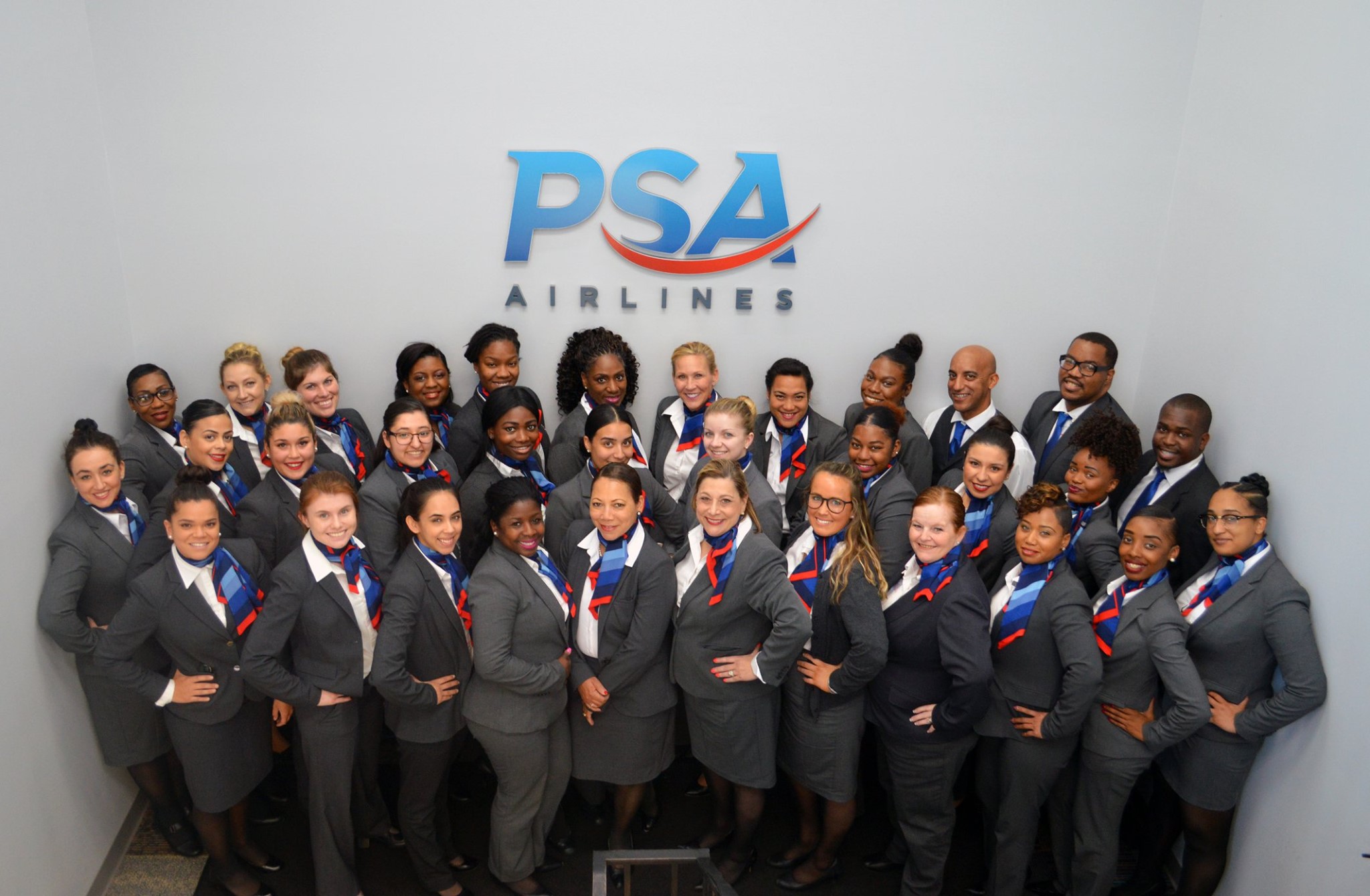
PSA Airlines cabin crew members organized coordinated demonstrations across 5 major airports as part of a nationwide "Day of Action" to demand better compensation and working conditions. The protests, which took place at Charlotte (CLT), Washington Reagan (DCA), Dallas Fort Worth (DFW), Dayton (DAY), and Philadelphia (PHL) airports, highlighted ongoing contract negotiations that have stretched on for years.
PSA Airlines Pay Disparity
The demonstrations underscore a significant pay disparity affecting PSA flight attendants, who work on flights branded as American Airlines but receive substantially lower wages. Union representatives report that PSA attendants currently earn approximately 45% less than their American Airlines counterparts, despite receiving identical training and performing the same duties.
Contract negotiations between PSA and the flight attendants' union began in 2023 but remain unresolved. The Association of Flight Attendants-CWA, representing the workers, is pushing for double-digit pay increases, retroactive pay, boarding compensation, and improved work-life balance measures.

Protest Timings
The timing of the protests during the busy travel season was strategic, aimed at drawing attention to the staffing challenges facing regional carriers. One flight attendant noted working "anywhere between 118 to 128 flight hours a month just to meet my bills," illustrating the financial strain many crew members face.
PSA Airlines, a wholly owned subsidiary of American Airlines Group, operates regional flights under the American Eagle brand. While the company has previously announced compensation improvements, union representatives argue these measures fall short of addressing the fundamental wage gap.
Bottom Line
The coordinated action represents part of a broader movement among regional airline workers seeking pay equity with mainline carriers, as the aviation industry continues to grapple with staffing shortages and recruitment challenges in the post-pandemic era.
Read next

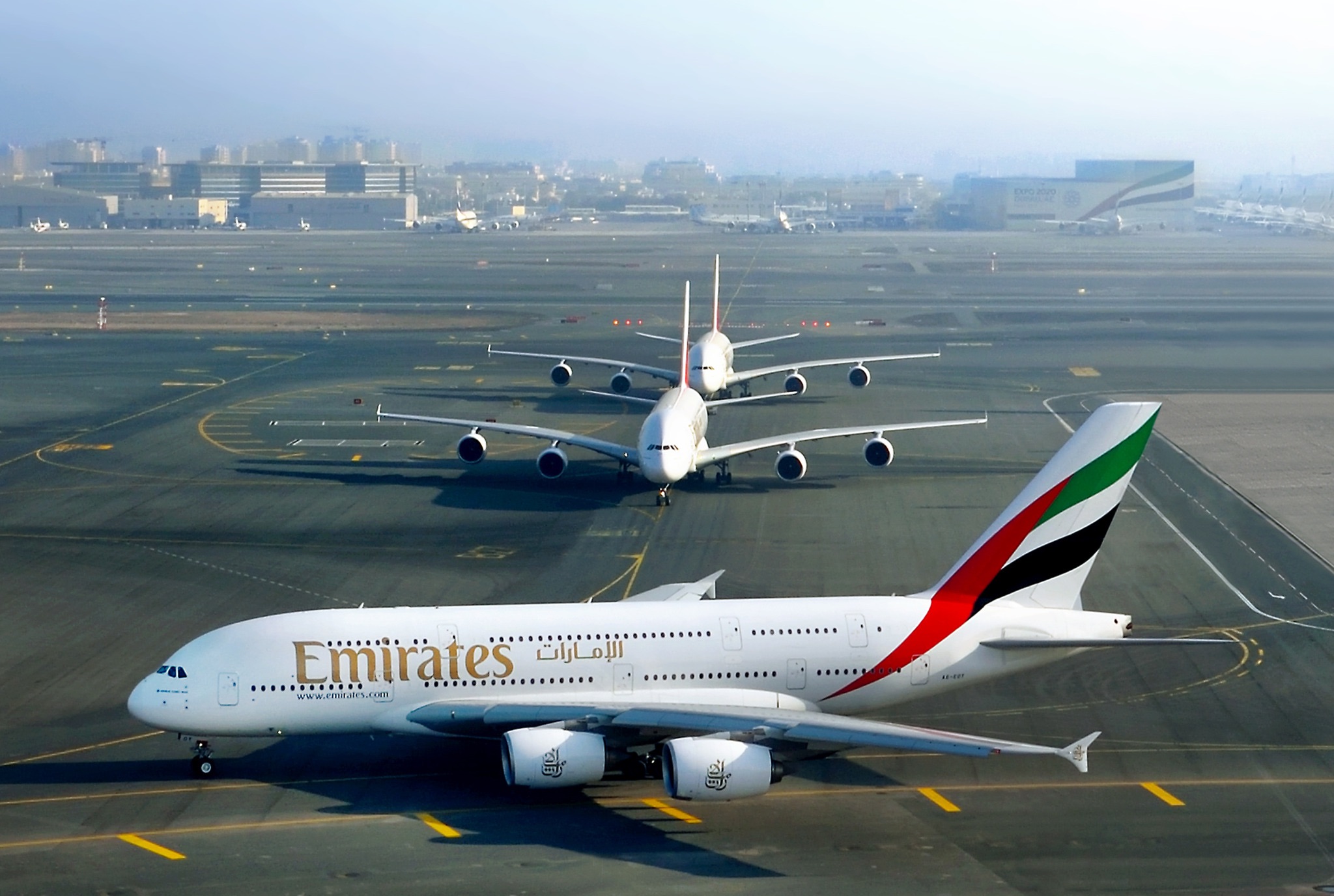
Ever wondered why you've never seen an Emirates Boeing 737 or Airbus A320 taxiing around an airport? Have you noticed that Emirates seems to have an allergic reaction to anything smaller than a Boeing 777, treating narrowbody aircraft like they're the aviation equivalent of economy cars at a luxury dealership?
What drives the world's most recognisable airline to maintain such an exclusive relationship with only the largest commercial aircraft available? This comprehensive analysis explores Emirates' strategic decision to operate the world's largest all-widebody fleet, examining how geographic positioning, operational philosophy, and a peculiar obsession with aircraft size have created an aviation empire that refuses to think small.
From their record-breaking fleet of Airbus A380s and Boeing 777s to their strategic partnership with flydubai that handles the "smaller" aircraft duties, we'll uncover why Emirates has turned aviation exclusivity into both an art form and a highly profitable business model.
History
Emirates' commitment to large aircraft didn't happen overnight – it evolved from a combination of geographic necessity and corporate ambition!
Emirates currently has 116 Airbus A380s and 141 Boeing 777s, including 22 777-200LRs and 119 777-300ERs, making it the largest operator of both types. They have recently received Airbus A350 and now operate 8 of them. This represents more than just impressive numbers; it's a deliberate strategy that began when Emirates recognised that Dubai's position as a global crossroads demanded aircraft capable of connecting distant continents without intermediate stops.
The airline's founders essentially looked at the aviation world and declared, "If we're going to fly, we're going to fly big or go home."
This philosophy has remained unchanged for decades, even as other airlines have embraced more flexible fleet strategies. The commitment is so absolute that Emirates treats narrowbody aircraft like some airlines treat first-class service – theoretically possible but practically unthinkable.

Fleet Composition
Emirates' fleet of 266 wide-body aircraft comprises the largest fleet of Airbus A380 Superjumbos and the world's largest fleets of Boeing 777-300ERs and Boeing 777-200LRs. This also includes 8 A350s. The second-largest wide-body fleet is operated by United Airlines, with approximately 226 wide-body aircraft in its inventory. This comparison reveals the sheer scale of Emirates' commitment to large aircraft, surpassing even United Airlines, which operates a mixed fleet including smaller widebodies.
The Boeing 777-300ER is the best-selling 777 variant, and Emirates is the world's largest operator with 123 examples in service. Qatar Airways has the second-largest fleet with 57 Boeing 777-300ERs in service.
What makes this even more remarkable is that Emirates shows no signs of downsizing. As of late 2023, Emirates has orders for 205 Boeing 777X family aircraft (including 777-8 and 777-9s), 35 Boeing 787 Dreamliner aircraft (20 x 787-8 and 15 x 787-10) and 65 Airbus A350-900 aircraft. These orders suggest that Emirates' love affair with large aircraft will continue well into the future, with the Boeing 777X representing the next generation of giant passenger jets.
Why Emirates Needs flydubai
Here's where Emirates' strategy becomes particularly clever – and slightly devious. Rather than operating narrowbody aircraft themselves, Emirates has essentially outsourced this responsibility to flydubai. Famously, Emirates is the world's largest airline to not operate narrowbody aircraft, although that is also partly thanks to the niche being filled by Dubai's other airline, flydubai.
When combined, Emirates and flydubai had 337 aircraft last year. Key to the partnership is, of course, each carrier's different equipment and what can be done with it. flydubai is a narrowbody-only operator. It has B737-800s and MAX aircraft, the latter with lie-flat seats, and has a significant number of aircraft on order. In contrast, Emirates only uses widebodies, and the smallest, for now, are 302-seat B777-200LRs.
This arrangement allows Emirates to maintain its widebody-only image while flydubai handles the regional routes that would require smaller aircraft. It's like having a luxury hotel that refuses to acknowledge budget accommodations exist, while quietly operating a chain of boutique inns under a different name. Emirates and flydubai set the gold standard in airline partnerships, hitting a milestone 5 million travellers flying on their joint networks.

Hub-and-Spoke Mastery
Emirates' all-widebody strategy works because Dubai International Airport functions as the world's most successful aviation living room – everyone passes through, stays briefly, then continues to their final destination.
This hub-and-spoke model, centred strategically between Europe, Asia, Africa, and Australia, creates natural demand for large-capacity aircraft on long-haul routes.
The airline's geographic positioning allows it to justify deploying 400+ seat A380s and high-capacity 777s on routes where other airlines might struggle to fill such large aircraft.
By complementing Emirates' long-haul network, FlyDubai ensures connectivity for passengers travelling to and from Dubai, enhancing its overall accessibility and supporting its status as a central global hub. This partnership ensures that passengers can connect seamlessly between flydubai's regional network and Emirates' international routes without Emirates having to compromise their widebody-only philosophy.
Economics
The economics behind Emirates' strategy reveal a sophisticated understanding of aviation profit margins. Large widebody aircraft, while expensive to purchase and maintain, offer superior economics on high-density routes when operated at high utilisation rates. Emirates has mastered the art of filling these massive aircraft consistently, turning what other airlines might see as excessive capacity into a competitive advantage.
The airline's focus on premium services, including their famous first-class suites and extensive business-class offerings, generates higher per-passenger revenue that helps justify the operational costs of large aircraft. It's essentially the aviation equivalent of selling premium real estate – fewer units, but each one commands significantly higher prices.

Operational Challenges
Operating an all-widebody fleet isn't without challenges, though Emirates has turned these complications into competitive advantages. Airport slot restrictions, gate availability, and maintenance requirements for large aircraft create operational complexities that smaller airlines might find overwhelming. Emirates has invested heavily in infrastructure and partnerships to manage these challenges, essentially building an ecosystem around its large aircraft operations.
The airline's commitment to large aircraft also creates interesting scheduling challenges. Unlike airlines with mixed fleets that can adjust capacity based on seasonal demand, Emirates must consistently fill large aircraft or face significant operational losses. This constraint has forced the airline to become exceptionally skilled at revenue management and route planning.
Bottom Line
Emirates' refusal to operate narrowbody aircraft represents one of commercial aviation's most successful examples of strategic focus taken to an almost absurd extreme. By committing exclusively to widebody aircraft, the airline has created a unique market position that competitors find difficult to replicate, while their partnership with flydubai provides the operational flexibility that narrowbody aircraft might otherwise offer.
This strategy has transformed what could have been a limiting constraint into a defining competitive advantage, proving that in aviation, as in many industries, sometimes the most counterintuitive decisions produce the most spectacular results. Whether viewed as brilliant strategic focus or elaborate corporate stubbornness, Emirates' all-widebody approach has undeniably worked, creating the world's most recognisable airline brand while demonstrating that success in aviation doesn't always require following conventional wisdom.
Comment