
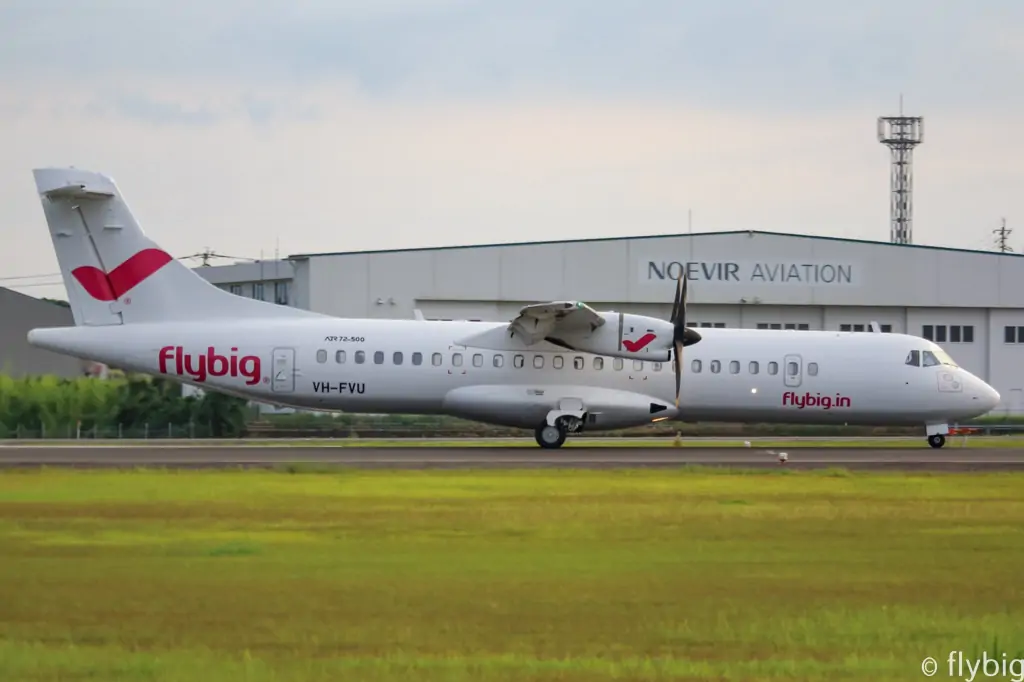
In recent developments, Indian regional airline flybig has found itself embroiled in controversy, with allegations of financial misconduct surrounding an aircraft lease escrow account. Vman Aviation Services IFSC Private Ltd. and Mumbai-based YES Bank filed separate fraud complaints in December 2023 against Big Charter Private Limited, operating under the name flybig. The accusations involve an unauthorized transfer of over INR 80 million rupees (USD 963,124) from the account using falsified paperwork.
flybig's Denial
flybig has vehemently denied the allegations, with its chairman, Sanjay Mandavia, addressing the issue in a statement on January 11, 2024. Mandavia acknowledged the existence of the complaint but rejected any claims insinuating the airline's involvement in financial fraudulent activities.
Background and Suspension of Flights
Launched in late 2020, flybig entered the market with ATRs and a DHC-8-Q400 wet-leased from SpiceJet, aiming to connect India's Tier 2 and 3 cities under the government's UDAN scheme. However, in November 2023, flybig faced a setback as Vman repossessed two ATR72s, leading to the suspension of its flights. Vman's complaint alleges that flybig misappropriated government funds meant for operating designated UDAN routes.
Vman's Claims and YES Bank's Involvement
Vman contends that flybig claimed non-receipt of promised government funding, leading to inquiries by the lessor. Vman alleges that, after a prolonged delay, it discovered the government had indeed made payments into the nominated escrow account. Shockingly, flybig had purportedly transferred these funds to its own account, using fraudulent documents and forged signatures. YES Bank, the custodian of the escrow account, reportedly filed its own complaint, hinting at potential involvement of its employees in the alleged misconduct.
flybig's Response to Repossession
Following the repossession of the ATR turboprops by Vman, flybig expressed surprise at the transfer of the aircraft, along with almost its entire flying crew, to another company. Mandavia raised concerns about a potential conspiracy to undermine competition within the UDAN project, labeling it a preplanned effort to disrupt flybig's progress in the Indian aviation industry.
Future Plans and Organizational Growth
Despite the challenges, Mandavia remains optimistic about flybig's future. He revealed ongoing discussions with other lessors and aircraft suppliers to acquire eight aircraft in the current year. Mandavia emphasized that flybig remains resolute in its pursuit of organizational growth, showcasing commitment to enhancing connectivity in the North East region of India.
Conclusion
The allegations against flybig have stirred significant controversy within the Indian aviation sector. As investigations unfold, the industry awaits clarity on the accusations and their potential impact on flybig's standing. The airline's commitment to growth, coupled with ongoing discussions for aircraft acquisition, suggests a determined effort to overcome the recent setbacks and continue contributing to India's regional connectivity goals.
With Inputs from ch-aviation

Read next


Boeing has opened its first Boeing India Distribution Center in Khurja, Uttar Pradesh.
The new India location is one of eight distribution centers around the world that holds and ships spare parts specifically for Boeing’s commercial customers. Spread over 36,000-square-foot the warehouse will help Indian airlines in maximizing fleet utilization, the firm said on Monday.
“The Boeing India Distribution Center illustrates Boeing’s commitment to supporting the growth of this market, aligned with the Government's Aatmanirbhar Bharat vision. This center will support the emergent needs of spare parts for Boeing aircraft in India, reducing lead times, improving availability, and supporting the MRO industry here,” said Salil Gupte, president, Boeing India.
Boeing had announced its investment in the distribution center less than a year ago during Aero India 2023, and the first parts were shipped to customers in December 2023. Positioned strategically along India’s Eastern Freight Corridor, with proximity to both Delhi and the upcoming Jewar airport, the distribution center is operated in collaboration with third-party logistics provider DB Schenker.
“We're excited to collaborate with Boeing on constructing an advanced aviation-focused facility in India. The complexities of warehousing and logistics, combined with Boeing's distinctive needs, provided us with a unique opportunity to build an innovative setup that meets the distinct spares support requirements of India's growing aviation industry. This initiative also underlines DB Schenker's enduring commitment to India, as we expand our local presence and tailor our services to meet the diverse needs of customers across various sectors,” said Kinjal Pande, chief executive officer at DB Schenker, Cluster India, and Indian Subcontinent.
Read next
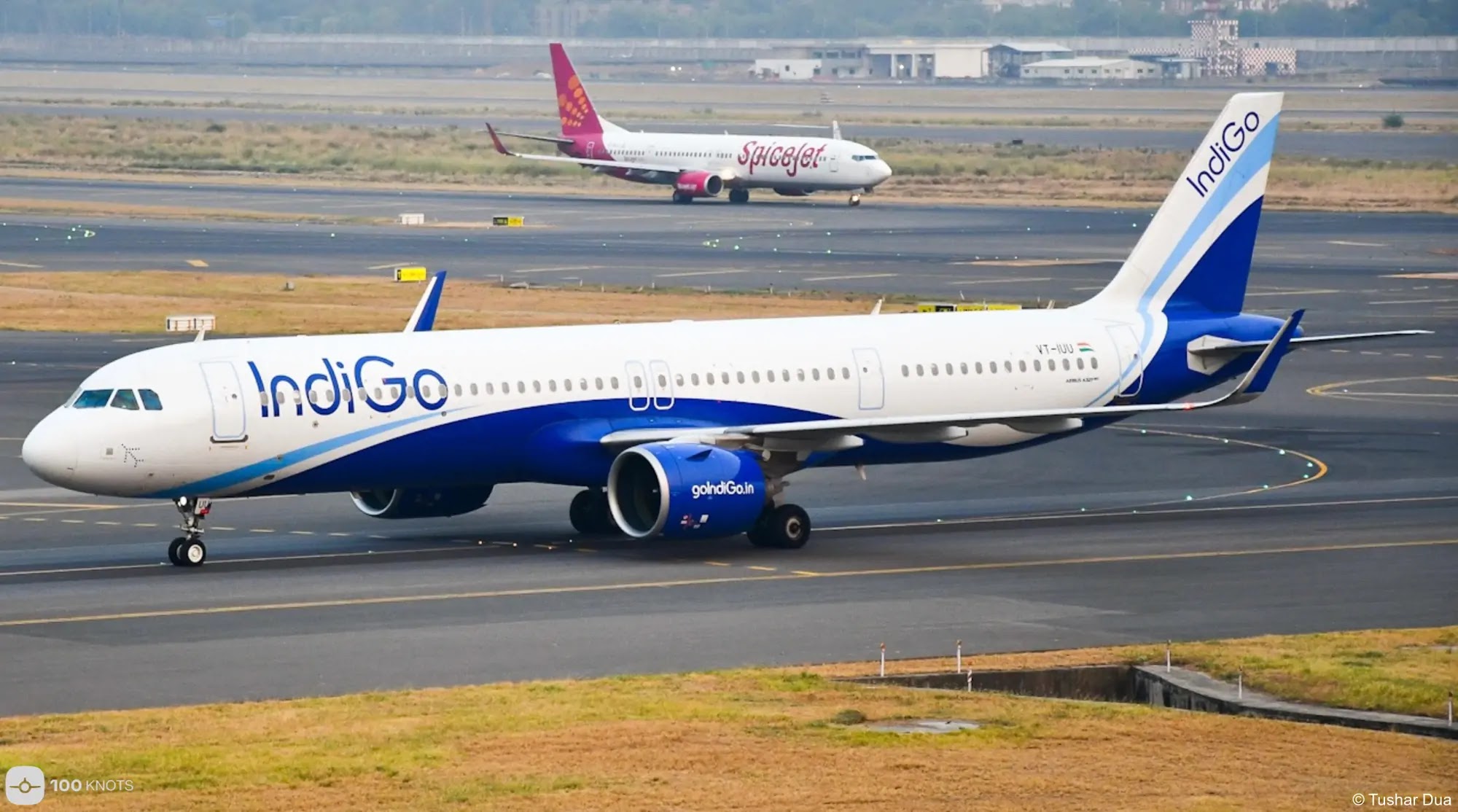
IndiGo says it crossed 100 million passengers in 2023.
India's largest airline by domestic market share, IndiGo, says it flew 100 million passengers in 2023 in a year of new records.
Of these over 90.25 million passengers flew on domestic sectors and 14.2 million passengers crossed borders to international destinations.
These included nearly 20 million corporate travellers and more than 84 million who travelled for leisure or to meet their loved ones. More than 20 million passengers headed for the coast and more than 3.8 million took to the mountains.
IndiGo also added 17 new destinations in 2023. This included exotic destinations like Tashkent, Baku, Tbilisi, Jakarta, Nairobi internationally, and Gondia, Jharsuguda, Diu, and Jaisalmer in India.
Over 1.38 million students travelled, there were also 1.75 million senior citizens and 1.03 million infants.
Delhi – Mumbai was the busiest route on its network with 73,577 takeoffs from its busiest domestic city – Delhi and 5,469 takeoffs from its busiest international destination – Dubai.
Read next
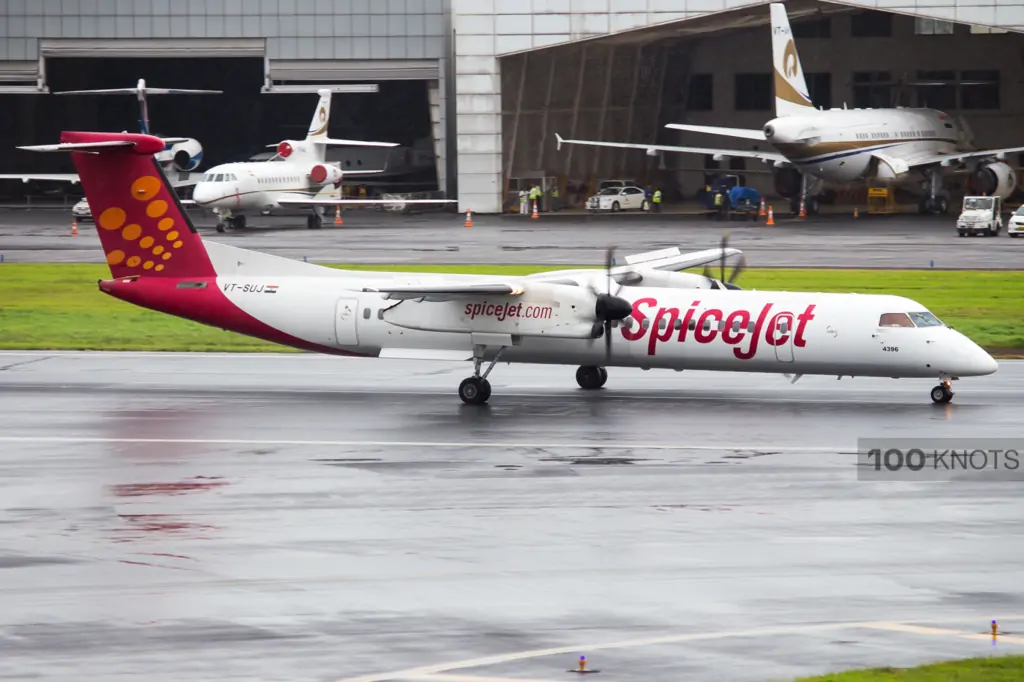
Cash-strapped SpiceJet has got in-principle approval from the Bombay Stock Exchange (BSE) for the issuance of equity shares and warrants convertible into equity shares on a preferential basis paving the way for a new fund infusion of Rs 2242 crore.
"The in-principle approval from BSE for the fund infusion is a crucial step for SpiceJet as we embark on a journey to enhance our capabilities and strengthen our position in the Indian aviation sector. We believe the fund infusion will open new avenues for SpiceJet, enabling us to capitalise on potential opportunities and contribute to the growth of the aviation sector in India,” Ajay Singh, Chairman and Managing Director of SpiceJet, said.
A significant portion of the fund infusion will be utilized to fuel the airline’s growth, expand its network, bring grounded planes back into operation.
SpiceJet has been in tough spot over the last few years with mounting dues. These include those payabale to tax authorities, employee provident fund, lessors and other vendors besides to former promoter Kalanithi Maran.
Read next
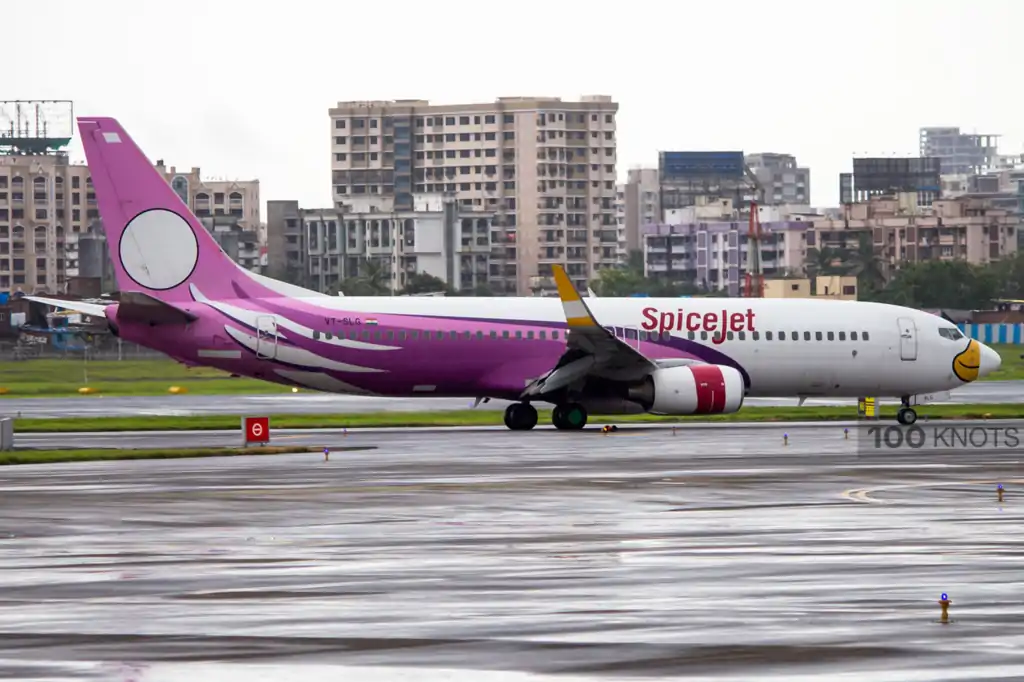
SpiceJet is set to launch non-stop flights connecting Ayodhya with Chennai, Bengaluru, and Mumbai, beginning February 1, the airline said on Monday.
It will deploy its 189-seater Boeing 737 aircraft on these routes.
"We are happy to announce the introduction of non-stop flights connecting Ayodhya with Chennai, Bengaluru, and Mumbai. These new flights align with our commitment to enhancing connectivity and providing passengers with convenient travel options. SpiceJet remains dedicated to connecting more Indian cities with Ayodhya soon, offering non-stop flights for a seamless and comfortable travel experience," Shilpa Bhatia, Chief Commercial Officer, SpiceJet, said.
Last week, SpiceJet announced it would operate a special flight from Delhi to Ayodhya on January 21, 2024 for those attending the auspicious 'Pran Pratishta' ceremony at the Shri Ram Temple on January 22.
In addition to the Ayodhya flights, SpiceJet will also start flights connecting Mumbai with Srinagar, Chennai with Jaipur, and Bengaluru with Varanasi from February 1, it added.
Read next
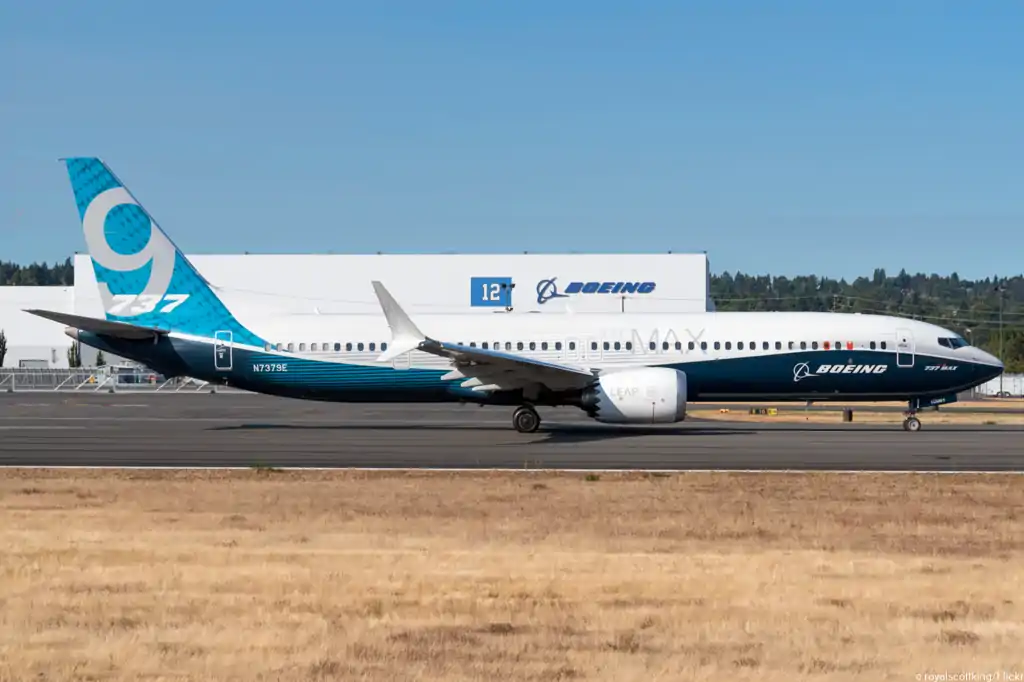
In a significant development, the U.S. aviation regulator, the Federal Aviation Administration (FAA), has extended the grounding of Boeing 737 MAX 9 airplanes indefinitely for additional safety checks. This decision comes in the wake of a recent incident where a cabin panel broke off a new jet in mid-flight. The FAA also announced heightened oversight measures for Boeing and is considering involving an independent entity in certifying the safety of new aircraft. The move has led to flight cancellations by major U.S. airlines, including United Airlines and Alaska Airlines.
Safety Concerns Prompt Indefinite Grounding
The FAA has grounded 171 Boeing 737 MAX 9 planes with the same configuration as the one involved in the mid-flight incident, emphasizing that the continued grounding is crucial "for the safety of American travelers." Initially, the plan was to lift the grounding after inspections, but the FAA now mandates a further round of inspections for 40 planes. The results will be thoroughly reviewed before considering the resumption of MAX 9 flights.
Impact on Airlines and Passengers

The grounding has compelled Alaska Airlines and United Airlines, the primary users of the affected aircraft, to cancel numerous flights. This ongoing crisis has disrupted travel plans for passengers and heightened concerns about the reliability of Boeing's aircraft.

FAA's Intensified Oversight Measures
Under the extended scrutiny, the FAA plans to conduct a comprehensive audit of the Boeing 737 MAX 9 production line and its suppliers. Additionally, there are considerations to delegate certain safety certification responsibilities to an independent entity, moving away from Boeing's direct oversight. The FAA's administrator, Mike Whitaker, expressed a growing focus on potential manufacturing issues rather than design problems, signaling a need for a thorough review of Boeing's production processes.
Boeing's Response and Pledge
Boeing, in response to the situation, pledged full cooperation with the FAA and expressed support for actions that strengthen quality and safety. The company emphasized its commitment to transparency and safety improvements across its production system. Key supplier Spirit AeroSystems also pledged support for the FAA's audit of production and manufacturing processes.
Reevaluation of FAA-Boeing Relationship
The FAA's administrator, Whitaker, suggested reexamining the longstanding practice of delegating critical safety tasks to Boeing. Considering a potential shift towards involving third-party entities, Whitaker emphasized the need for higher confidence levels and increased oversight. This move aims to address concerns over conflicts of interest and ensure the independence of safety inspections.
Boeing's Recent Quality Issue Acknowledged & Future Challenges for FAA Oversight
Boeing CEO Dave Calhoun admitted a "quality" issue regarding the MAX 9, acknowledging that allowing the aircraft to fly with the identified problem was a mistake. This admission adds to the scrutiny of Boeing's safety protocols and quality control measures.
Critics argue that strained budgets at the FAA may have led to excessive delegation of responsibilities to manufacturers like Boeing. With the recent incidents, questions arise about the FAA's long-term capacity for increased oversight. The possibility of involving third-party entities in safety inspections is seen as a highly unusual but potentially necessary step.
Conclusion
The indefinite grounding of Boeing 737 MAX 9 planes by the FAA underscores the gravity of the safety concerns and signals a reevaluation of the relationship between regulators and aircraft manufacturers. The aviation industry faces challenges in restoring confidence among passengers, airlines, and regulatory bodies as the investigation unfolds. The FAA's commitment to a thorough review and the potential involvement of independent entities in safety certification mark a significant shift in ensuring the airworthiness of Boeing's aircraft.
With Inputs from Reuters
Comment