
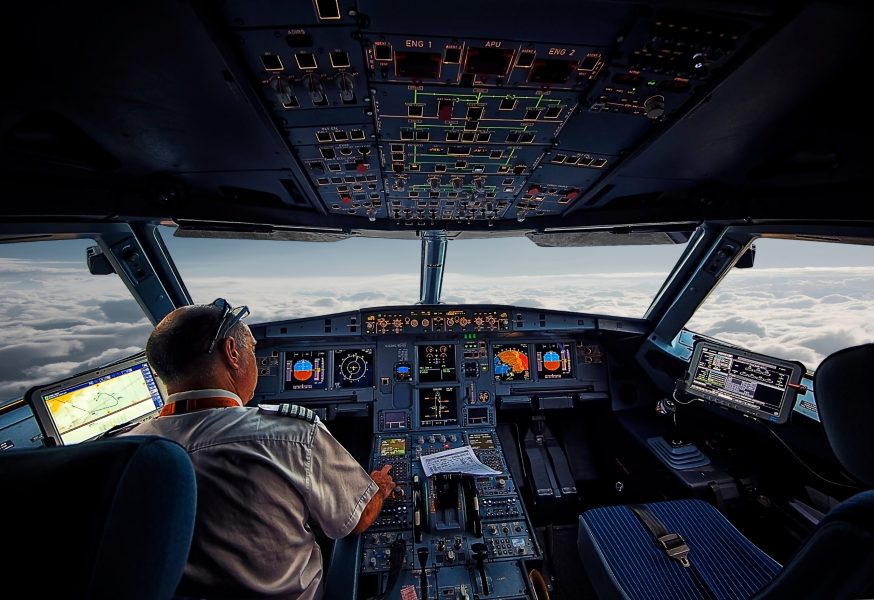
A pilot of a prominent airline has been removed from flight duty after he failed a drug test, a senior DGCA official said on Friday, August 26.
He is the fourth pilot to fail the drug test since the procedure for examination of aviation personnel for consumption of psychoactive substances came into effect on January 31. The test is done for the flight crew and ATCs on a random basis.
ALSO READ - Two pilots of leading Indian airlines fail dope tests
So far, four pilots and one Air Traffic Controller (ATC) have tested positive for psychoactive substances.
ALSO READ - ATC at Delhi Airport removed from duty by DGCA as he tests positive for psychoactive drug
The drugs to be tested for include amphetamine and amphetamine-type stimulants; opiates and metabolites; cannabis (marijuana) as THC; cocaine; barbiturates and benzodiazepine.
According to the official, a pilot of a prominent airline was subjected to a drug test in the national capital. He was found positive in the confirmatory test report received on August 23 and has been removed from flight duty. However, details about the airline or pilot were not disclosed.
The drugs to be tested for include amphetamine and amphetamine-type stimulants; opiates and metabolites; cannabis (marijuana) as THC; cocaine; barbiturates and benzodiazepine.
As per the Civil Aviation Requirement (CAR), in case the result of the confirmatory drug test is positive for the first time, then the person concerned will be referred to a de-addiction centre by the organisation concerned for de-addiction and rehabilitation.
ALSO READ - DGCA orders pre-flight alcohol tests for 50% of pilots and cabin crew daily
The urine samples are collected at the collection site, at the designated secure facility established by the airline and the test is carried out post-flight or anytime during the duty period.
The urine samples are collected at the collection site, at the designated secure facility established by the airline and the test is carried out post-flight or anytime during the duty period.
Breath analyser (BA) tests to ensure aviation personnel are sober when they report for work have been conducted for several years. The DGCA had for the first time made dope tests mandatory for pilots, cabin crew and air traffic controllers earlier this year. At least 10% of the personnel in an organisation have to undergo dope tests annually.
If the same person tests positive for the second time, then his or her licence will be suspended for three years. And if the violation happens for the third time, then the personnel's licence will be cancelled.
The DGCA had for the first time made dope tests mandatory for pilots, cabin crew and air traffic controllers earlier this year.
In the introduction to the CAR, the Directorate General of Civil Aviation (DGCA) mentioned that the worldwide spread of the use of psychoactive substances, their general availability and the ever-increasing number of addicted users is a serious concern to aviation safety.
"Their use causes behavioural, cognitive and physiological changes. This manifests in dependence, major health-related issues and negative effect on performance," it had said.
Citing a study conducted by the Ministry of Social Justice and Empowerment and a subsequent report published in February 2019, DGCA had said after alcohol, cannabis and opioids are the most commonly used psychoactive substances in India

Read next
H2FLY, a pioneer in hydrogen-electric aviation, is accelerating the transition to zero-emission commercial flight

Prashant-prabhakar
27 Aug 2022

H2FLY, a Stuttgart-based company that develops hydrogen fuel cell technologies for aircraft, announced it has achieved another step towards commercial aviation with zero emissions.
The hydrogen-electric aviation company H2FLY had announced that its cutting-edge HY4 aircraft, which is currently operated using pressurised gaseous hydrogen, will be modified to receive a new liquid hydrogen tank, which will double the HY4 aircraft's range capability, as key players in the global aviation and aerospace industries gathered for the Farnborough International Airshow (18-22 July).
The aircraft will start a rigorous programme of ground testing early in 2023 after the integration of the new tank and fuel cells, and it is anticipated that this will be the first commercial aeroplane in the world to fly utilising liquid hydrogen.
Yahoo Life UK
The team will handle liquid hydrogen on board for the first time after attaining this milestone, which will also improve the range. The development of the world's first entirely hydrogen-electric powertrain, integrating fuel cells and liquid hydrogen, is a key step towards H2FLY's objective of attaining real zero-emissions medium and long-haul flying.
H2FLY
An aircraft that uses liquid hydrogen has the potential to transform the way we travel between cities, regions and countries, delivering true zero-emissions flight on medium and long-haul flights. Liquid hydrogen has huge advantages over the alternative pressurised hydrogen gas, not least because it becomes possible to carry a far greater quantity on board an aircraft. The result is that significantly longer ranges are possible. At H2Fly we’ve always been focused on delivering and demonstrating new technology, rather than just talking about it. As we head into this exciting new phase for the company we’re looking forward to continuing that tradition and proving this important new technologyCommenting on the advantages of hydrogen-electric propulsion, Prof. Dr. Josef Kallo, co-founder and CEO of H2FLY said
Dr. Josef Kallo | Source
H2FLY has been investigating, experimenting, and perfecting for more than ten years, leading to the creation of the HY4, a four-seat aircraft with hydrogen-electric propulsion that made its debut in 2016. Over the previous two years, there have been several significant turning points, including:
In 2020, H2FLY received permission to operate the most recent HY4 model, which has a fully redundant powertrain architecture. The business successfully illustrated the use of hydrogen-electric propulsion systems in aviation during the course of more than 90 takeoffs.In order to fly a CS25 class aircraft fueled by H2FLY's hydrogen fuel cell technology, the business and aircraft manufacturer Deutsche Aircraft forged strategic cooperation in 2021. The 2025 target date for the climate-neutral regional aircraft calls for a 2,000 km range and 40 passenger seatsThe business performed the first cross-country flight using hydrogen power between two commercial airports earlier this year, travelling 77 miles from Stuttgart, Germany, to Friedrichshafen.Additionally this year, the business established what is thought to be a hydrogen aircraft global altitude record, flying at 7,230 feet, solidifying its status as a pioneer in this new category.
https://www.youtube.com/watch?v=ZtQvDUN2ukE&t=12s
H2FLY
The first certified, entirely hydrogen electric aircraft powertrain is what H2FLY GmbH, which was created by five engineers from the German Aerospace Center in Stuttgart and the University of Ulm, is aiming to bring to market. H2FLY will usher in an age of zero-emission, sustainable air transport by advancing hydrogen fuel cell technology. The business creates and tests hydrogen-electric propulsion systems for aircraft, and it is a world leader in doing so. The HY4, the first passenger hydrogen-electric aircraft in the world, had its maiden flight in 2016, proving the viability and potential of this technology for aviation in the future.
.With the assistance of German and European partnerships, H2FLY is now working to expedite the development and commercialization of its technology. It has a strong network of partners in business and science. 40 passengers are anticipated to be able to travel up to 2,000 kilometres in just a few years on the the hydrogen-electric aircraft (1,240 miles).
SOURCE(s)
COVER: electrive.com
Read next
AAI partners with a Swedish air navigation provider for smart aviation solutions

Jinen Gada
27 Aug 2022
Airports Authority of India (AAI) and Luftfartsverket (LFV), a Swedish air navigation service provider, have signed a memorandum of understanding (MoU) for building and operationalising the next generation of sustainable aviation technology by exploring smart aviation solutions.
Established in 1985, the Airports Authority of India is a statutory body functioning under the Ministry of Civil Aviation, Government of India. It is mainly responsible for creating, maintaining, upgrading, and managing civil aviation infrastructure in India.
https://twitter.com/AAI_Official/status/1562799962601455621
This pact will pave the way for the bilateral exchange of aviation expertise and technology between the two countries. It will also promote close and friendly relations between the two agencies and expand technical cooperation in airports.
This agreement will bring together two air navigation service providers, India and Sweden, with demonstrated capabilities in building and operationalizing the next generation of sustainable aviation technology, to explore smart aviation solutions.
AAI is mainly responsible for creating, maintaining, upgrading, and managing civil aviation infrastructure in India.
According to the MoU, AAI and LFV, both Government agencies of India & Sweden shall jointly collaborate on Air Traffic Management, Air Traffic Control, Remote Airport Management & Traffic Control, Airspace Design, Planning & Infrastructure, Digitalized Airport & Aviation and other fields.
The MoU was signed by M. Suresh, Member (Air Navigation Services), AAI and Magnus Corell, Deputy Director General, LFV Sweden.
“The mutual exchange in civil aviation between AAI and LFV Sweden will go a long way in building and operationalizing the next generation of smart and sustainable aviation technology.” Sanjeev Kumar, Chairman, Airports Authority of India (AAI)
State-owned Airports Authority of India and LFV Air Navigation Services of Sweden will collaborate on various areas, including air traffic control, airspace design and planning, and sustainable airports and aviation.
ALSO READ - AAI to get navigation radio equipment for 24 airports from a Russian firm
Read next
Air India to reinstate salary of all employees along with layover allowances to pre-covid levels
Radhika Bansal
28 Aug 2022
Air India told its employees on Friday, August 26 that it will restore their salaries to pre-Covid-19 levels from September. The airline is also set to restore crew layover allowances and meal arrangements for pilots and cabin crew at the same time.
Battered by the Covid-19 pandemic, Air India and other Indian carriers had cut the salaries of their employees and reduced the layover allowances and meal arrangements of their flight crew to save money.
The development comes as the new owner of the airline, the Tata Group, has begun the process of fully restoring employee salaries as part of a wider restructuring of wages and allowances to align them with those of its three other airlines.
Air India to reinstate salary of all employees along with layover allowances to pre-covid levels
Tata Sons-owned Vistara and AirAsia India restored the salaries and flying allowances of pilots to pre-pandemic levels in May.
ALSO READ - Air India begins restoring salaries to pre-pandemic levels gradually
In April, Air India restored salaries to almost 75% of the pre-pandemic level. Then, it restored 20% of the flying allowances. At present, salaries are 35% below the levels before the Covid outbreak. Special pay for pilots and wide body allowances will be restored by 25%, after having been slashed by 40%.
"While we have much to do to return to profitability and in our mission of bringing back Air India back to the heights of world aviation, sunsetting most of the Covid measures is an important and welcome milestone."Campbell Wilson, CEO, Air India
ALSO READ - IndiGo reinstates pilots and crew salaries by 8% from August 1
Earlier this month, IndiGo partially reinstated the salaries of its pilots with the stabilisation and growth in its operations. The company announced an 8% increase in salaries of pilots with effect from April. In 2020, it cut the salaries of pilots by 28%.
ALSO READ - IndiGo partially restores pilot salaries by 8% from April 1
After the pandemic hit, Air India cut its flying allowance by 35%, special pay by 40%, and wide body allowance by 40%.
The coronavirus pandemic had significantly impacted the airline industry, and the operators had resorted to cost-cutting measures, including salary reductions, to manage their financials.
After the pandemic hit, Air India cut its flying allowance by 35%, special pay by 40%, and wide body allowance by 40%. Flying and wide body allowance of cabin crew members were cut by 15% and 20% respectively.
Tatas took over INR 15,300 crore of debt of Air India and Air India Express Ltd while the remaining INR 46,262 crore loan plus an outstanding of about INR 15,000 crore towards unpaid fuel bills were paid off by the government.
Read next
US halts 26 flights by Chinese Airlines in response to China's US flight suspension
Radhika Bansal
27 Aug 2022
The US government said on Thursday, August 25 it will suspend 26 China-bound flights from the United States by four Chinese carriers in response to the Chinese government's decision to suspend some U.S. carrier flights over COVID-19 cases.
The decision will affect flights by Xiamen, Air China, China Southern Airlines and China Eastern Airlines from September 5 to September 28. The U.S. Department of Transportation (USDOT) cited the recent cancellation of 26 American Airlines, Delta Air Lines and United Airlines flights over COVID-19 cases.
The suspensions include 19 China-bound flights from Los Angeles and 7 China Eastern flights from New York. The Chinese Embassy in Washington's spokesperson Liu Pengyu said the USDOT action was "extremely irresponsible" and "groundlessly suspended Chinese airline flights."
US halts 26 flights by Chinese Airlines in response to China's US flight suspension
The embassy said China's COVID-19 "circuit breaker" measures were fair and transparent, applied both to Chinese and foreign airlines and were consistent with bilateral air transportation agreements.
USDOT said as of August 7 Chinese authorities had revised their policies so that if the number of passengers on a flight to China testing positive for COVID-19 reached 4% of the total, one flight would be suspended. If it reached 8%, two flights would be suspended.
USDOT said the U.S. has repeatedly raised objections with China, saying the rules place "undue culpability on carriers" when travellers test negative before boarding their flight from the United States only to "test positive for COVID-19 after they arrive in China."
Three U.S. airlines and four Chinese carriers typically operate about 20 flights a week between the countries, well below the figure of more than 100 a week before the pandemic.
Beijing and Washington have sparred over air services since the start of the pandemic. In January, the Transportation Department suspended 44 China-bound flights from the United States by the four Chinese carriers in response to China's decision to suspend 44 flights by U.S. carriers.
In August 2021, USDOT limited four flights from Chinese carriers to 40% passenger capacity for four weeks after Beijing imposed identical limits on four United Airlines flights.
Three U.S. airlines and four Chinese carriers typically operate about 20 flights a week between the countries, well below the figure of more than 100 a week before the pandemic.
ALSO READ - Chinese airlines orders 292 Airbus A320neo aircraft
(With Inputs from Reuters)
Read next
Airbus delivers India's second luxury Airbus H145 helicopter to Lulu Group's Yusuffali M A
Radhika Bansal
27 Aug 2022
Yusuffali M A, chairman and managing director of Lulu Group, has become the latest Indian businessman to acquire the luxury helicopter Airbus H 145, pegged to be priced at INR 100 crore.
The billionaire, who runs the Lulu stores and shopping malls in the Gulf countries, Egypt, India and the Far East, touched down in Kochi on Wednesday, August 24 in the H145 helicopter, a best-selling product in this segment from Airbus.
The rotorcraft, which was flown into Kochi, displays the LuLu Group's red-and-green logo on its body and the letter 'Y', denoting Yusuff Ali, on its tail.
Airbus delivers India's second luxury Airbus H145 helicopter to Lulu Group's Yusuffali M A
H145 is the best-selling in its segment and there are around 1,500 helicopters in service around the world and have clocked more than six million flight hours.
ALSO READ - Airbus delivers India’s first INR 100 crore luxury helicopter to Kerala billionaire
Ravi Pillai, chairman of RP Group of companies, who bought an Airbus H 145 helicopter in March this year, was the first Indian to acquire this luxury helicopter.
Airbus’ H145 is the latest member of the German company's four-tonne-class twin-engine rotorcraft product range – with designed-in mission capability and flexibility, especially in high and hot operating conditions.
H145 is the best-selling in its segment and there are around 1,500 helicopters in service around the world and have clocked more than six million flight hours.
"Compact in size, this helicopter’s small footprint and large, flexible cabin make it the aircraft of choice for a variety of civil and military missions," according to its website.
Yusuffali's acquisition of Airbus H145 comes after the helicopter he and his wife were travelling crash-landed into a marshy plot of land in Panangad, Kochi on April 11, 2021. The helicopter by Italian manufacturer AgustaWestland's 109SP was in the news recently when it was put up for sale.
Powered by 2 x Safran Arriel 2E engines, the H145 can operate at heights of up to 20,000 feet above sea level. The helicopter flies at 246 kmph.
A wide range of rapidly and easily interchangeable optional equipment – such as emergency floats, rescue hoists, searchlights, and cargo hooks – is available for the H145.
H145 can accommodate one or two pilots and up to eight passengers in the standard configuration, and one or two pilots and up to 10 passengers in a higher-density configuration.
A wide range of rapidly and easily interchangeable optional equipment – such as emergency floats, rescue hoists, searchlights, and cargo hooks – is available for the H145.
Together with its inherently versatile cabin layout, this multi-purpose rotorcraft is tailored for emergency medical services and law enforcement duties, along with aerial work and passenger transport, including private and business aviation as well as offshore operations.
Comment