
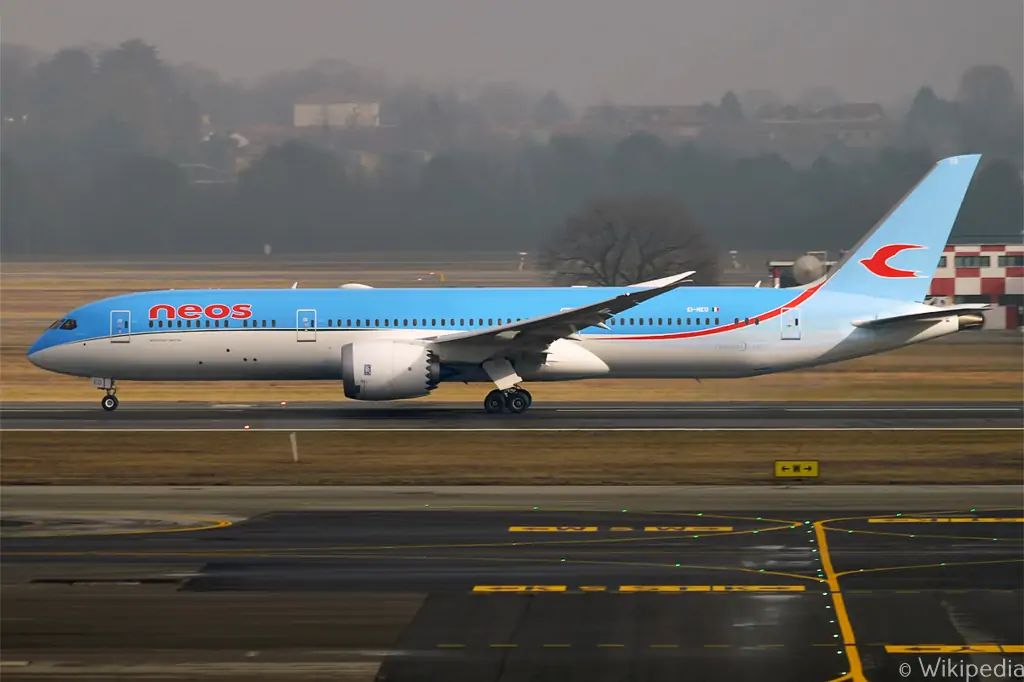
The Italian leisure carrier Neos Airline has announced the start of direct flights from Amritsar, India, to Toronto, Canada. This new route is anticipated to enhance tourism and trade between the two nations while also providing passengers with a comfortable travel alternative.
Amritsar and Toronto
During a press conference, airline CEO Stradiotti stated that the trip will fly once a week, on Thursdays, with a brief international stop in Milan, Italy. The number of flights would be gradually raised based on traveller feedback, he noted.
Flight Schedule and Route
According to the flight itinerary, Neos Airline's flight No. 3249 will depart Amritsar at 3:15 a.m. every Thursday and arrive at Milan Malpensa airport at 8:20 a.m. (local time). Following a 4hr 10m stopover, aircraft No. 4348 will depart Milan at 12:30 pm and arrive in Toronto late afternoon at 3 pm.
Boosting Tourism and Trade
The new route is anticipated to increase tourism between India and Canada. With over 215,000 Indian visitors visiting the country in 2017, Canada is a popular tourism destination for Indians. The new aircraft will make it simpler for Indian visitors to visit Canada and visit its numerous attractions, including Niagara Falls, the Rocky Mountains, and the dynamic cities of Toronto, Vancouver, and Montreal.
Conclusion
The addition of a new route from Amritsar to Toronto by Neos Airline is a good development for passengers, visitors, and companies alike. The direct flight will make travel easier for passengers while also increasing tourism and trade between India and Canada. The new aircraft is likely to be popular with Indian visitors who will be able to visit Canada's various attractions, as well as with companies who will be able to move more quickly between the two nations.
With inputs from HindustanTimes

Read next
Srinagar Airport will Upgrade its Amenities to Accommodate Increasing Footfall
Abhishek Nayar
08 Apr 2023
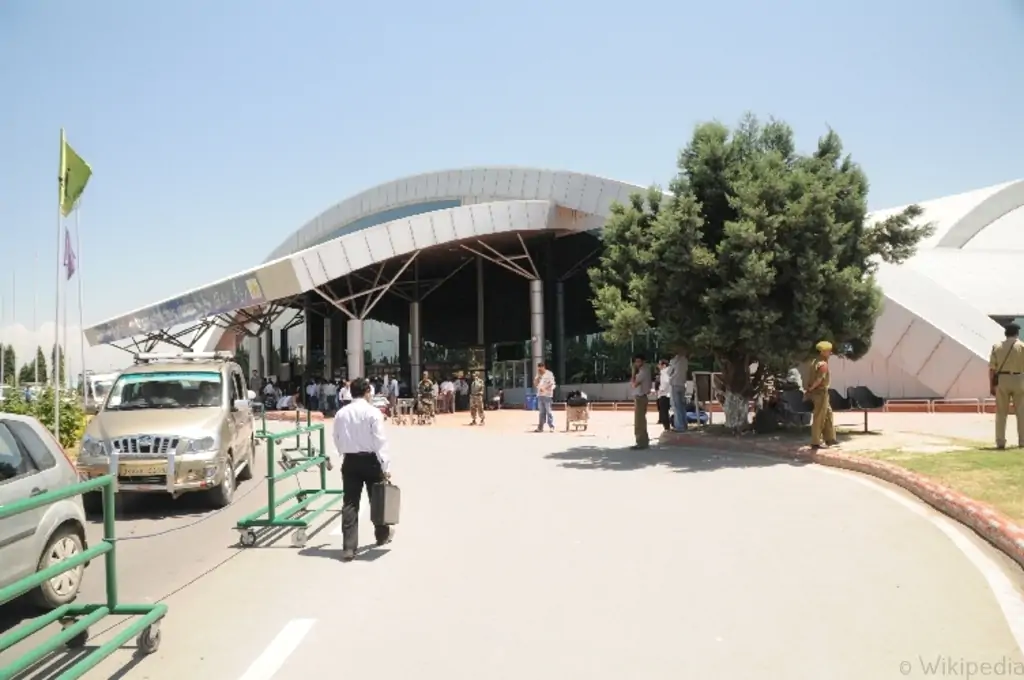
Srinagar Airport, officially known as Sheikh ul-Alam International Airport, is planning to expand its facilities in order to accommodate the growing number of travelers. The airport, which is located in the Indian state of Jammu and Kashmir, has experienced an increase in passenger traffic throughout the years. The airport officials have chosen to enhance their facilities in order to satisfy the increasing passenger demand.
Current situation at Srinagar Airport
The Airports Authority of India (AAI) operates Srinagar Airport, the principal airport in the Kashmir valley. The airport is well-connected to major Indian towns and acts as a significant gateway for visitors to the valley. The airport features a single terminal building that can handle up to 1.5 million passengers annually.
Upgrade to Srinagar Airport Amenities
Terminal Building Expansion: To meet the growing number of passengers, airport officials have chosen to enlarge the existing terminal building. The extension will be developed in two parts, the first of which is scheduled to be finished by 2024. The enlarged terminal building will be able to handle up to 3 million passengers per year.
Improved Check-in Counters: Airport officials will install new check-in counters equipped with cutting-edge technology to expedite the check-in procedure for travelers. The new check-in desks will be outfitted with self-service kiosks, allowing customers to check-in for their flights independently.
Increased Security Measures: To safeguard the safety and security of travelers, airport officials will implement enhanced security measures. Full-body scanners, bomb detection devices, and CCTV cameras will be installed as part of the additional security measures.
Passenger Amenities Would Be Improved: The airport officials want to increase passenger amenities at Srinagar Airport. For the convenience of travelers, new escalators, elevators, and travelators will be installed as part of the upgrades. Airport officials will also improve the airport's restrooms, waiting lounges, and food courts.
“Electric vehicles to ferry travelers are among the primary steps to be implemented to handle higher footfall at Srinagar's international airport ahead of G20 meetings, the Amarnath yatra and the tourism season” authorities said on Friday.
"The security audit of the airport and its surrounding premises will be conducted to neutralize any threat. It will be ensured that no passenger is over-charged for any service, including taxi services" the officials said.
It was led by Jammu and Kashmir Director General of Police (DGP) Dilbag Singh and Director General Bureau of Civil Aviation Security (BCAS) Zulfiquar Hasan, and it was attended by top civil administration and police officers, as well as members of the Central Reserve Police Force, the tourism department, and the airport.
Benefits of the Upgraded Amenities
The improved amenities at Srinagar Airport will benefit travelers in a variety of ways. The extension of the terminal building will give additional room for travellers, alleviating airport overcrowding. The renovated check-in desks will cut travellers' waiting time, making their travel experience more convenient. The increased security measures would protect the passengers' safety and security, making them feel more at ease when travelling. Passengers will have a better travel experience as a result of the increased passenger facilities, since they will feel calmer and more comfortable during their voyage.
Conclusion
The airport officials' enhancements to the amenities at Srinagar Airport are a positive development. The renovations will not only accommodate the growing number of passengers, but will also improve their travel experience. The updated facilities will assure passenger safety and security, cut waiting times, and give additional room for travelers. The improvements would assist Srinagar Airport in becoming a more efficient and passenger-friendly airport, serving as a gateway to the stunning Kashmir valley.
Read next
What you need to Know
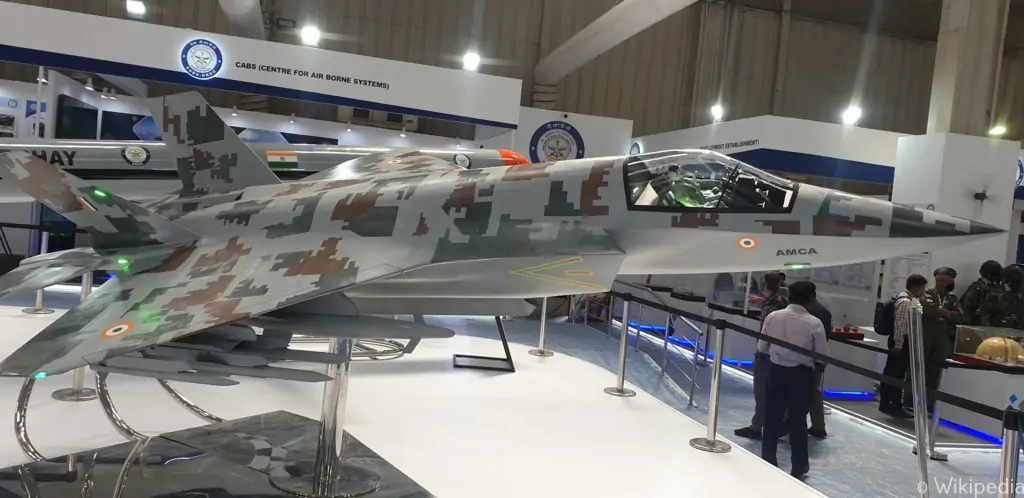
Under the aegis of the Defense Research and Development Organization (DRDO), the Aeronautical Development Agency (ADA) is developing the Advanced Medium Combat Aircraft (AMCA) for the Indian Air Force (IAF). The AMCA is a fifth-generation fighter jet that will be wholly designed and constructed in India, and it is intended to be one of the world's most sophisticated combat aircraft. The DRDO recently approached the Cabinet Committee on Security (CCS) for approval of the AMCA project, which is a critical step towards the aircraft's development and ultimate deployment., chaired by Prime Minister Narendra Modi, for approval of twin-engine advanced medium combat aircraft (AMCA). The first GE-414-powered AMCA prototype is scheduled to arrive in 2026.
The DRDO launched the AMCA project in 2008, and it has been in development for over a decade. The aircraft is anticipated to be a stealthy, multi-role fighter capable of a variety of missions such as air dominance, ground assault, and electronic warfare. It will also include cutting-edge avionics and weapons systems, and it will be powered by two indigenous Kaveri engines created by the Gas Turbine Research Establishment (GTRE).

DRDO Contacts CCS for Clearance: What does it Mean?
The DRDO's decision to seek funds from the CCS comes at a time when Prime Minister Modi has directed the institution to focus on its core competencies and prevent schedule delays and cost overruns. After the conclusion of air intake test certification in France in May-June this year, the LCA Tejas Mark II with GE-414 engine is likely to be released next year.
Conclusion
Throughout the years, the AMCA project has suffered several problems and setbacks, including delays in the development of the Kaveri engine, a vital component of the aircraft. The DRDO, on the other hand, has persisted and continued to work on the project, and it has made tremendous progress in recent years. The fact that the AMCA has now progressed to the point where the DRDO is seeking CCS approval is a credit to the hard work and devotion of the scientists and engineers who have worked on the project.
Considering this, the Modi administration is also looking into engine design, development, and joint production with France, as well as the prospect of building Rafale aircraft in India for export to other nations. The United States has also offered to relocate its F-18 production line to India in exchange for F-15 EX aircraft.
With inputs from Hindustan Times
Read next

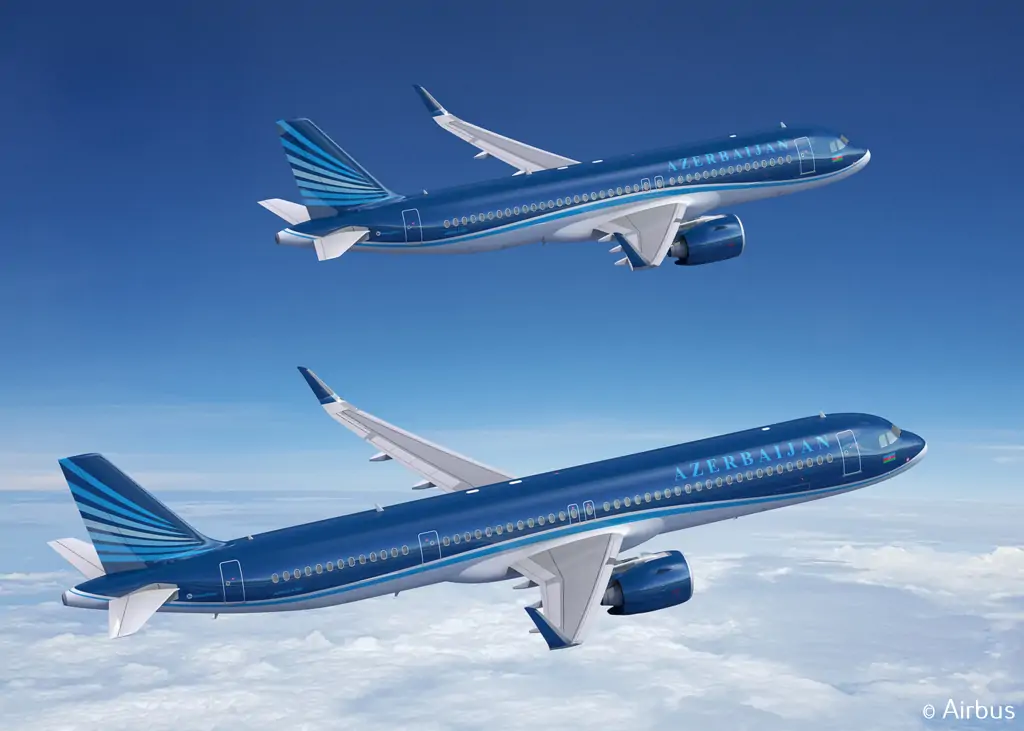
The Azerbaijan flag carrier, Azerbaijan Airlines, has placed a firm order with Airbus for 12 A320neo Family aircraft including A320neo and A321neo. The contract was signed at a ceremony held in Baku.
These latest generation A320neo Family aircraft are part of the company’s fleet renewal strategy to operate the most modern and fuel-efficient aircraft and increase operational efficiency and competitiveness while offering passengers excellent comfort throughout its fleet. The engine choice will be announced by the airline at a later stage.
“We are pleased to continue mutually beneficial cooperation with Airbus on the modernization program of our fleet and intend to strengthen the bilateral partnership. The signed contract will provide our passengers with the most modern and comfortable single-aisle aircraft," First Vice-President of AZAL CJSC Samir Rzayev said.

This order marks an important milestone in the fruitful relationship between Airbus and Azerbaijan Airlines,” said Christian Scherer, Airbus' Chief Commercial Officer and Head of International. “The A320neo Family continues to be a top choice for airlines looking for fuel-efficient and cost-effective fleet solutions. This order is a testament to our customer's trust in our aircraft's performance and reliability. We are confident that this choice will further boost the sustainable growth of Azerbaijan Airlines.”
Currently, Azerbaijan Airlines operates a fleet of 15 Airbus aircraft (4 A319ceo, 6 A320ceo,
2 A340s and since the beginning of the year, 3 new generations of A320neo). The airline plans. to deploy efficient A320neo Family aircraft to develop its domestic and international route network further.
The A320neo Family incorporates the latest technologies including new generation engines and Sharklets, which deliver at least 20% fuel burn and CO2 emission saving. With some 8,700 orders from 135 customers, the A320neo Family is the world’s most popular aircraft.
Fleet of Azerbaijan Airlines
Azerbaijan Airlines operates a diverse fleet of aircraft, with Boeing, Embraer, and Airbus all appearing in its ranks. The carrier also operates one Airbus A340-600, with two -500s parked, plus three Boeing 767-300s, one 777-200, and two 787-8s. Azerbaijan Airlines signed a Memorandum of Understanding for four more 787-8s at last year’s Farnborough Airshow and said back then that it wants to grow the Dreamliner fleet to ten aircraft by 2030.
Azerbaijan Airlines (AZAL) is the national carrier of Azerbaijan. The airline was formed after the country's independence in 1991, before which the airline operated as a part of Russian airline Aeroflot. Today, Azerbaijan Airlines operates scheduled service to destinations across China, the CIS, the Middle East and Europe. Buta Airways operates as the airline's low-cost unit.
Read next
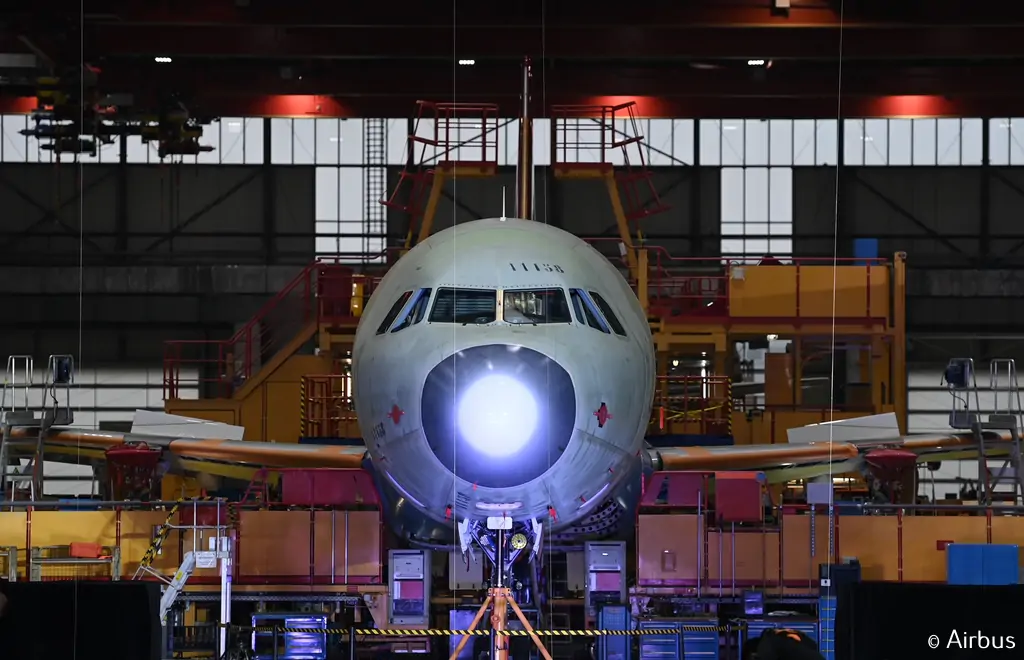
On Thursday, European aircraft manufacturer Airbus announced that it will double its production capacity in China as it looks to expand its presence in a key market and avoid potential geopolitical dangers. Both Airbus and its American counterpart Boeing are concentrating their efforts on Asia, with China being a particular focus. These companies are aiming to take advantage of the fast-growing demand for air travel among the middle class.
"It makes a lot of sense for us, as the Chinese market keeps growing, to be serving local for the Chinese airlines, and probably some other customers in the region," Guillaume Faury said during a trip to China he is accompanying French President Emmanuel Macron.
Faury later signed a framework agreement to build a second final assembly line (FAL) at its factory in Tianjin, northeast China, for Airbus's hugely popular A320 family of medium-haul jets, at a ceremony attended by Macron and Chinese President Xi Jinping. The new assembly line will begin operations in late 2025.

"It's a way to be probably more in sync with the way the world is developing, with tensions and with more complexities of doing business," Faury said. "We are delivering more planes in China than what we can produce in China, but the lines are capable of serving other customers," he added.
The world's largest planemaker, which has overtaken Boeing as a supplier to China amid tensions between Washington and Beijing, also got the go-ahead to deliver 160 jets already sold but failed to win new orders during a French state visit. In the past, China has tended to split jet purchases between Airbus and Boeing but deals with the U.S. planemaker have slowed significantly in recent years amid trade or political tensions.
Plans for an assembly line in China are likely to capture the attention of India, a growing economic and strategic rival whose aviation minister last month called on both Airbus and Boeing to set up local jetliner assembly following record plane orders.
The new Chinese site was part of Airbus's goal of raising its global annual production of A320 and A321 jets to 75 a month in 2026, up from 43 last year. The company has an order backlog of around 7,300 planes, with customers often having to wait years for delivery. Airbus's first assembly site in Tianjin, opened in 2008, is turning out four A320s a month, and the company aims to up that to six a month this year. - Huge potential - China is also pouring money into state-run manufacturer Commercial Aircraft Corporation of China (COMAC), which is developing a narrow-bodied C919 jet to potentially rival Airbus's A320 and Boeing's B737.
FAL Asia
The Tianjin Final Assembly Line, known as FAL Asia, has assembled over 600 Airbus A320 Family aircraft since it began operations in 2008. Airbus began retrofitting the assembly line to produce the larger variant last year and began production in November. The site delivered its first A321neo aircraft from the line last month, with the narrowbody going to Chinese carrier Juneyao Air, which expects four more of the type.
While in China, Airbus also signed a General Terms of Agreement with the China Aviation Supplies Holding Company to firm up a purchase of 160 Airbus commercial aircraft. The agreement covers previously announced orders worth $17 billion. The deal includes 150 A320 family aircraft and ten Airbus A350-900 widebody aircraft orders, reflecting Chinese carriers' strong demand in all market segments. Despite hopes to the contrary, the manufacturer has not obtained any additional orders on this trip.
The country represents over 20% of the worldwide aircraft market and saw its first Airbus enter the Chinese market nearly 40 years ago when an A310 was first delivered to China Eastern Airlines in 1985. China's air traffic is forecast to grow at a rate of 5.3% annually over the next 20 years, significantly faster than the world average of 3.6%. This growth will lead to a demand for 8,420 passenger and freighter aircraft over the next twenty years.
In the meantime, Chinese carriers are big plane buyers, with Air China, China Eastern, China Southern and Shenzen Airlines announcing last July an order of 292 A320s. The Chinese market represents one-fifth of global passenger air traffic, and Airbus expects growth of 5.3% a year through 2041, well above the 3.6% growth forecast at the global level. That would put China's need for more efficient, less polluting planes over the next 20 years to around 8,500 models, Airbus says.
Boeing's Presence in China
Meanwhile, Boeing, which builds all its planes at US factories, has seen Chinese sales crumble since 2019. It delivered just 12 planes to Chinese customers last year, compared to 95 for Airbus, and has booked just 18 new orders in China since 2018.
In October, Boeing chief Dave Calhoun said that his firm is "clear-eyed about the geopolitical risks that are out there, and we are not going to impart new risks on our investors". Boeing’s best-selling plane, the 737 Max, which is a competitor to the A320 family that Airbus is finishing in China, has had trouble re-entering the Chinese market following a 20-month grounding that started in March of 2019 following two fatal crashes that killed a total of 346 people.
China was one of the last countries to allow the plane to fly in its airspace once again, and, even with that clearance, none of the Chinese customers of the plane has accepted deliveries of the 138 Boeing built for them during the grounding that is still sitting in the aircraft maker’s inventory. Boeing has been forced to try to find other buyers for some of those aircraft at discounted prices. The 737 Max has been losing the competition with the A320 family outside of China as well, but it’s not the total shutout that Boeing is experiencing in China.
With the new Tianjin expansion, Airbus will have 10 final assembly lines (FAL) worldwide -- two at its headquarters in Toulouse, southwest France; four in Hamburg, Germany; two in Mobile, Alabama and the two in China.
Read next

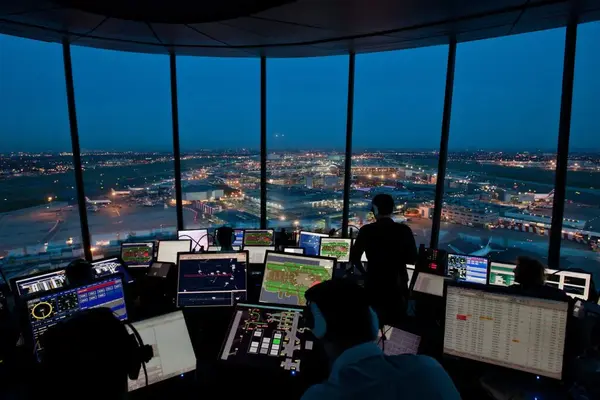
Air travel has been one of the most affected industries during the COVID-19 pandemic, but it is now facing another challenge: air traffic control shortages. The United States is currently facing a shortage of air traffic controllers, causing more airlines to cancel flights. This shortage has been building up for years now. Major U.S. airlines are planning schedule cuts mostly in New York City area airports ahead of peak summer air travel season as air-traffic controller shortages simmer.
Airlines have until the end of the month to make federal aviation regulators aware of any schedule adjustments as a result of a waiver related to closely guarded “slots,” or authorization to use airports in the area, and some have already said they would be cutting down on flights for now. The Federal Aviation Administration (FAA) is responsible for managing air traffic control in the United States. According to the FAA, air traffic control staffing levels are at their lowest in 30 years.
The FAA has stated that the current shortage is due to a combination of factors, including retirements, the pandemic, and a decrease in the number of people entering the field. The shortage has been felt by airlines across the United States. This has caused chaos for passengers and airlines, as they struggle to keep up with the demand for air travel.

Airlines have been forced to cancel flights due to the shortage, which has resulted in lost revenue and increased costs. The cost of cancelling flights can be significant for airlines, as they have to pay for things like fuel and crew salaries, even if the flight is cancelled.
In 2022, due to ATC shortages alongside other operational difficulties, led to nearly half of JetBlue’s flights to face disruption. And conditions became worse, in summer, when at least one in five flights across the US were delayed between June and September. The shortage has also raised safety concerns. Air traffic controllers are responsible for ensuring that planes are safely guided through the skies. A shortage of controllers could lead to errors and potentially dangerous situations.
The FAA has acknowledged the shortage and is taking steps to address the issue. The agency has launched a recruitment campaign to attract more people to the field. The FAA is also offering incentives for current controllers to stay in their positions, such as bonuses and flexible scheduling.
The air traffic control shortage in the United States is a significant problem that is causing more airlines to cancel flights. The shortage has had a significant impact on airlines, passengers, and smaller airports. The FAA is taking steps to address the issue, but it will take time for these efforts to have an impact.
Pic credit - ABC News.
Comment