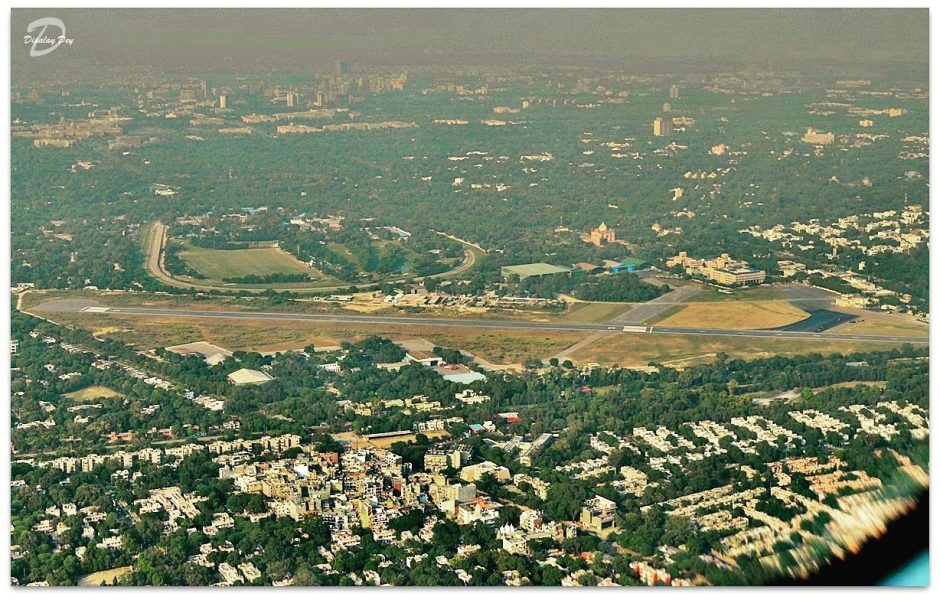
Safdarjung Airport or Willingdon Airfield, as it was first known, was named after Lord Willingdon, the Viceroy and Governor-General of India (1931–36). Operations as an Aerodrome began in 1929, making it India's second Airport after Juhu Aerodrome, Mumbai. It remained Delhi's main Airport till 1962 when operations shifted to Palam Airport to accommodate bigger Jets. Safdarjung Airport was functional until 2001 when 9/11 related security concerns forced the government to close the airport for all flying activities.
A Douglas C53-DO registration VT-ATI was pictured standing on the tarmac of Willingdon Airfield (now Safdarjung Airport, VIDD) 1948. Safdarjung Tomb can be seen in the background. (Image Courtesy - Tashi Tobyal on Twitter)
After the terrorist attacks of September 11th, 2001, and the success of the larger, more convenient Indira Gandhi International Airport, the Ministry of Home Affairs decided to close Safdarjung to the public and use it as a secure emergency escape option for the President and the Prime Minister.
The government closed the airport to all public flying activities in 2002, and all Delhi Flying Club flights were rerouted to Hisar Airport. When the PM goes on a foreign trip, he receives his send-offs from his cabinet members and other dignitaries here, rather than at the main airport, since the early 2000s.
But DFCs ouster from the premises began much earlier and was led by AAI which in 1996 had begun demanding INR 65,511 per month as rent from the club. Before AAI’s arrival – the authority was formed in 1995 – the DFC paid only a nominal rate of INR 1 per year with ancillary payments amounting to a monthly licence fee of INR 1,079.
The flying club and AAI went back and forth on this argument. By 2018, the AAI claimed that the club owed INR 8.3 crore. AAI took the club to court and won eventually evicting DFC.
(Image Courtesy - Atlas Obscura)
Nevertheless, It is still used for a variety of interesting things, such as VVIP helicopter transits of cabinet members, dignitaries, and state chief ministers, as well as aircraft maintenance courses, and it once served as a park-and-ride facility during the Commonwealth Games in 2010. The airport also houses the hangar for the Mi-17 series of choppers of the Border Security Force.
The Airport Authority of India, which is part of the Ministry of Civil Aviation and manages most of India's airports, as well as the ministry itself, are both housed in Rajiv Gandhi Bhawan on the airport grounds. The Delhi liaison office of the Indira Gandhi Rashtriya Uran Akademi is located in the airport's administrative block. The DGCA's headquarters are also located directly across the street from the airport.
The Prime Minister's residence, 7 RCR (now 7 LKM), has a special link to Safdarjung Airport. A 1.5 km long tunnel connects the PM's residence to Safdarjung Airport, where VVIP helicopters land. When VVIPs travel out of Delhi, Safdarjung Airport serves as a conduit to Indira Gandhi International Airport.
The photo was taken on the occasion of the departure of the delegates to the World Forestry Congress for Srinagar from Safdarjung Airport, New Delhi on December 5, 1954. (Image Courtesy - Public.Resource.Org)
IAF now operates VIP flights for PM and President from a small part of the airport, which sits in a corner behind Safdarjung Tomb and has its access that does not disturb the city traffic.
The airstrip is also used by state chief ministers' small planes, such as those of Punjab and Haryana, resulting in 80 to 90 helicopter movements per month, as well as by the Airport Authority of India and Pawan Hans, a helicopter service company.
Indian politician and elder son of Indira Gandhi, Sanjay Gandhi died in an air crash near Safdarjung Airport in New Delhi on June 23, 1980. He was flying a new Delhi Flying Club aircraft when he lost control and crashed while performing a loop over his office. Captain Subhash Saxena, the plane's only passenger, was also killed in the crash.
(Image Courtesy - The Times of India)
A report in TOI reported, While the idea of giving this open green space back to the city for recreational purposes was mooted and examined in 2003, why it died is not public knowledge. It can be converted into a public green space as minimal operations take place in the area. More than 150 acres of land which is not used by IAF, has been taken up by a private racecourse and a golf course which is clearly out of bounds for the common man.
Hergé's Tintin in Tibet, a part of The Adventures of Tintin, takes place at Safdarjung Airport. Tintin, Snowy, and Captain Haddock fly to India for a stopover, departing from Willingdon Airfield (now Safdarjung Airport).
Feature Photo - Dipalay Dey (Twitter)

Read next
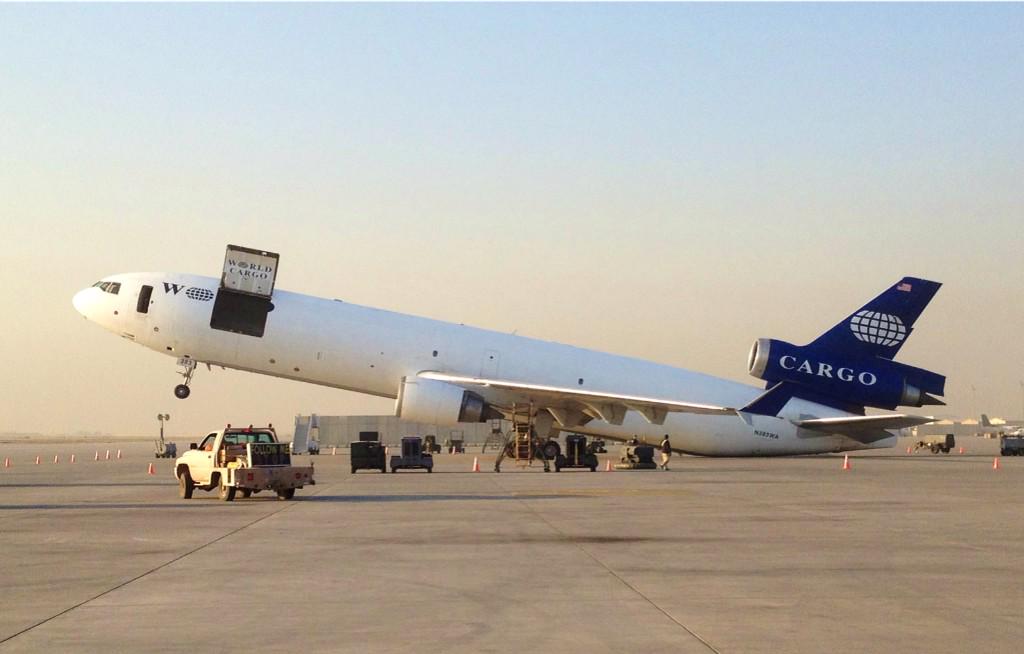
In an ideal world, airplanes should not do this. Realistically, it does occur and when it does, it's a bunch of problems for the airline.Take a look at this Delta B737 tipping on its tail.
https://www.youtube.com/watch?v=JLWxD0gY__A
The above clipping shows a Delta B737 tipping slowly on its tail while being parked at the gate. As amusing as it may seem to look, for airlines it's a serious affair. Such occurences can likely put the aircraft out of service for further inspection regarding the tail, assuming it made contact with the ground and also the forward passenger doors to ensure no damages were sustained at the gate.
So, why does this occur?
To better understand this, let's visualise an aircraft as a large seesaw with a fulcrum at the centre. Technically, by design, the centre of gravity of an aircraft lies near the landing gear. As the aircraft is loaded, and this includes the fuel, passengers and the cargo at different weights for every flight, the centre of gravity shifts (as it's not a constant). For a safe flight, the centre of gravity has to be well within the limits established by the manufacturer and approved by the regulator.
As can be seen in the clipping above, most of the passengers and cargo were offloaded from the front of the aircraft as compared to the back. This resulted in a "tail-heavy" situation and the aircraft slowly lifted off of its nose and tilted back on its tail. Such incidents are more prevalent in cargo flights as compared to passenger flights.
Very recently, an United Airlines UA B737-900 tipped on its tail after landing at Idaho airport, USA. Apparently, the incident occurred while passengers were being deplaned.
United flight 2509 flying from Los Angeles, California to Lewiston, Idaho, landed without incident. However, due to a shift in weight and balance during the offloading process, the tail of the aircraft tipped backwards. No ground personnel, customers, or crew reported any injuryUnited Airlines
https://www.youtube.com/watch?v=ks7PsTOsIiI
What can be done to prevent it?
Improper offloading procedures and non compliance to SOPs can lead to such incidents. Weight and balance, therefore, is so critical that the FAA has issued a guide for operators, and is a part and parcel of every pilot training right from the get-go.
For this very purpose, airlines hire load planners who are license-holders, and plan the expected and actual load of the aircraft. Keeping the weights within the operational limits is so paramount and this applies to aircrafts up in the air as well.
In 2003, an Air Midwest Beechcraft airplane stalled and crashed as too much weight had been put in the rear cargo hold of the airplane, rendering it unstable.
Air Midwest / Cockpit Voice Recorder Database
From the launch of its first variant, to the -900 now, the B737s have been stretched so much until reaching the 138 feet and two inches mark now. This extended length has been a cause of worry for certain operators with the United Airlines asking its crew to deplane in an expeditious manner making sure passengers stop moving forward to deplane.Alternatively, a mechanical device known as a "tail stand" can be used to prevent an aircraft tipping on its tail. It is essentially a large pole, situated at the aft baggage hold, that can be deployed once the aircraft taxi-ies to the gate.
Tail Stand / Reddit
On some special, lightly loaded B737-900 and Dash-8 aircrafts, the dispatch team might request ballast/sand bags to be loaded into the front cargo hold.
"Tail Strike"
REPRESENTATIVE / Pinterest
In July 2019 an Air India Express IX382 from Dammam to Kozhikode suffered a ‘tail strike’ at Kozhikode Airport after its tail touched down the runway during landing.Now is a "tail strike" and "tipping on tail" the same? Well, though it's easy to get confused between the two, they are essentially different.Tail strikes can be attributed to a lot of reasons, some of which are:
1.Improperly Set Elevator Trim or Mis-Trimmed Stabiliser2.Rotation at Incorrect Speed3.Excessive Rotation Rate 4.Unstabilised Approach5.Crosswinds
Tail strikes often occur during take-off and landing when the tail comes in contact with the runway.
COVER: Twitter
Read next

Malaysia's AirAsia has reached a deal with Airbus to restructure an outstanding order for hundreds of A320-family passenger jets, industry sources said on Friday, September 17.
Asia's largest low-cost airline group is one of the European planemaker’s biggest customers but deliveries to the airline have been disrupted in the wake of the coronavirus crisis. The AirAsia deal does not involve cancelling the roughly 400 jets on order but includes a new delivery schedule and price cuts or other improvements in terms, the sources said.
According to Reuters, Airbus declined to comment, while AirAsia did not immediately reply to a request for comment. The agreement caps intense negotiations between AirAsia and Airbus after steadily worsening relations had cast a pall over one of the industry’s closest pairings.
AirAsia said last year it would stop taking deliveries of all Airbus jets and review remaining orders. Industry sources said it had also stopped sending progress payments to Airbus, prompting the planemaker to suspend plans to produce jets on order pending the new restructuring deal.
Industry sources said it had also stopped sending progress payments to Airbus, prompting the planemaker to suspend plans to produce jets on order pending the new restructuring deal.
The deal comes as other airlines in Asia that have ordered hundreds of jets to secure their growth are in the midst of restructuring or are expected to press for relief. Other suppliers are also expected to come under pressure to negotiate new conditions, one of the sources said.
AirAsia is a low cost carrier based at Kuala Lumpur International Airport, Malaysia. The carrier, which was formed out of Tune Air in 2002, is led by CEO Tony Fernandes and pioneered the cross-border joint venture in Asia, establishing Thai and Indonesian units with bases in Bangkok and Jakarta. The airline has also partnered with other airlines and investors to create ventures in the Philippines, India and Japan. AirAsia's extensive domestic and regional network includes services within Malaysia and to China, Southeast Asia and the Subcontinent.
Read next
Canada’s national carrier and largest airline, Air Canada, has resumed operations in India after a four-month-long suspension due to the COVID-19 pandemic.
Responding to a passenger’s query on resumption of flights to India, Air Canada on Twitter said it is resuming flight to Delhi. ”Yes, the route is resuming,” Air Canada replied to a Twitter user.
The airline said that the passengers who plan to travel to Canada (Toronto) must carry an RT-PCR test or Rapid PCR test that took not more than 18 hours before departure.
"The only accepted COVID-19 tests are an RT-PCR test or a rapid PCR test that must be taken no more than 18 hours before your departing Air Canada flight to Canada from the COVID-19 Testing Centre & Lounge across from Terminal 3 at Indira Gandhi International Airport in Delhi. Air Canada requires either of these specific tests like no other test from any other clinic within India will be accepted, even if you are connecting from a different city.You may also be able to travel if you provide proof of a certified positive PCR test result taken between 14 and 180 days before your scheduled departure flight to Canada."Air Canada
Now with Air Canada listing new travel requirements from India, the third country transit option will no longer need to be exercised. The first post-resumption flight AC 42 (Toronto-Delhi) is going to land at the destination around 9 PM on Monday, September 27 to fly passengers from here starting Tuesday, September 28. Air India could soon start Delhi-Vancouver and Delhi-Toronto nonstops.
The only accepted COVID-19 RT-PCR tests are from the COVID-19 Testing Centre & Lounge across from Terminal 3 at Indira Gandhi International Airport in Delhi
Canada had banned direct flights from India in April as the Delta-driven second wave of the Covid-19 pandemic raged across the country. Since then, people going from India to Canada would do so via some other country and they were required to get a Covid negative test report from that transit country before taking off for their destination.
Read next
Entire Air India business class cabin booked by a woman for her fur buddy
Radhika Bansal
20 Sep 2021
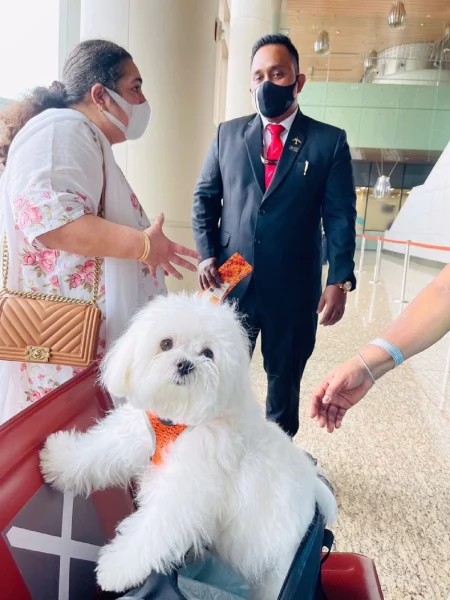
A dog owner booked an entire business class cabin of an Air India flight for his pet to travel in luxury. The dog boarded the Air India flight AI-671 early on Wednesday, September 15 morning.
The owner would have spent more than INR 2.5 lakh for the two-hour-long flight from Mumbai to Chennai. The fare for a business class seat on Air India Mumbai-Chennai flight is around INR 20,000.
In this not-so-unique incident, a woman passenger who was travelling with her pet Maltese, Bella, from Mumbai to Chennai on an Air India flight booked an entire business class cabin for her dog to travel in. It was surely the trip of a lifetime for the furball who had the entire cabin to itself.
Between June and September of last year, Air India flew 2,000 pets on its domestic flights.
While the airline officials couldn’t share further details due to company policy, they did confirm the episode. The aircraft was an Airbus A321 which had 12 business class seats. As per Air India’s pet policy, it allows for a maximum of only two pets per domestic flight.
Dogs have travelled in Air India business class before, however, this is probably the first time that an entire business cabin was booked for a pet.
Air India is the only Indian carrier that lets domestic pets in the passenger cabin. A maximum of two pets are allowed on a flight and the pet is seated in the last row of the booked class.
Between June and September of last year, Air India flew 2,000 pets on its domestic flights.
Read next
TATA Lockheed Martin, Hyderabad is now manufacturing C-130 empennages for every Hercules produced today
Prashant-prabhakar
20 Sep 2021
Business Standard
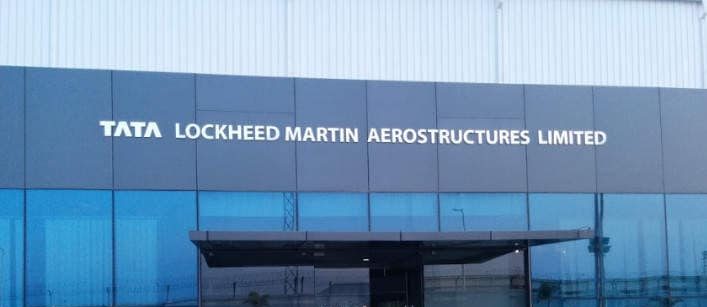
In what can be termed as yet another push for the government's "Make in India" campaign, Tata Lockheed Martin Aerostructures Limited (TLMAL) has bagged the honour of being the only global source of C-130J Super Hercules empennage assemblies.
Early beginnings
The foundation stone was laid in 2010 with the sole purpose of manufacturing defense equipment and aircraft parts locally. Also, it was around this time that the IAF had procured for its first six C-130J-30 Super Hercules airlifters.
8 years hence, in April of 2018, India’s first metal-to-metal bonding facility was established in Adibatla, Hyderabad. Spread over 4700 square metres, adding a new cutting-edge capability to the Indian aerospace industry, this facility also enables TASL to use this technology for complex aero-structures manufacturing. This would also, essentially, magnify the indigenisation of C-130 manufacturing by transitioning the production of approximately 2,000 previously imported empennage parts to Tata Sikorsky Aerospace (TSAL), another Tata-Lockheed Martin joint venture located in the vicinity.
How is it in line with the "Make in India" initiative?
The parts were earlier manufactured by foreign entities and with this facility established in India, it is estimated to provide employment for scores of people. TLMAL currently produces 24 C-130 empennages annually and around 85 TLMAL-built empennages have been installed on C-130Js delivered by Lockheed Martin to its global customers, including the Indian Air Force( as of April 2018). Additionally, more than 400 C-130Js have been delivered to operators in 18 nations around the world.
The empennage units built by TLMAL are installed on all new Super Hercules aircraft produced in Marietta, Georgia, in the US. The empennage components include the aircraft’s horizontal and vertical stabilizers along with leading edges and tip assemblies. These empennages are also installed in LM-100J, the commercial variant of the Super Hercules.
The TASL – Lockheed Martin partnership is a true demonstration of collaborated workmanship in aerospace and defense manufacturing in India. The manufacturing and operational excellence achieved by the team through this decade-long partnership, has led India to become the only supplier of C-130J Super Hercules empennage, globallySukaran Singh, managing director and CEO, TASL
The New Indian Express
According to the company, all the C-130 Hercs we see around the world has its empennages built in Hyderabad and it further plans of increasing the indigenisation from 85% to about 95% by Q1 of 2022.
On September 15, the company announced the the delivery of the 150th empennage from its manufacturing facility in Hyderabad. It therefore, hosted an event highlighting the milestone which was attended by Telangana’s minister for industries and information technology KT Rama Rao and senior officials from the state government and TLMAL.
While C-130Js are flown by a multitude of operators around the world, each empennage is a product of India and reflects the ‘Make in India’ initiativeKiran Dambala, CEO, TLMAL
COVER: The Tech Outlook
Comment