
SpiceJet to begin flights to Delhi, Mumbai and others from Kushinagar airport

Radhika Bansal
21 Oct 2021

Flights from Delhi, Mumbai and Kolkata will soon operate to Kushinagar airport, which was inaugurated on Wednesday, October 20.
Union Civil Aviation Minister Jyotiraditya Scindia said that Kushinagar airport will connect Buddhist pilgrim sites. As many as 54 new airports have come up in the last 7 years, the minister said while speaking at the inaugural event for the Kushinagar International airport.
According to him, Delhi-Kushinagar flights will be operated four times a week from November 26. Besides, there will be flights connecting Mumbai and Kolkata.
SpiceJet will deploy Boeing 737 and Q400 aircraft on these routes.
In a release, SpiceJet said flights on the Delhi-Kushinagar-Delhi sector will operate four times a week on Mondays, Wednesdays, Fridays and Sundays. The services will begin on November 26.
https://twitter.com/flyspicejet/status/1450732807790084096
"The airline will be connecting Kushinagar with two more key metros - Mumbai and Kolkata - starting 18th December 2021," the release said.
Ajay Singh, Chairman and Managing Director of SpiceJet, said the launch of new UDAN flights to Kushinagar airport will give an impetus to tourism of this holy city where Lord Buddha attained Mahaparinirvana.
At present, SpiceJet has the largest regional presence in India, operating UDAN flights on multiple routes.
Spicejet serves 51 domestic destinations and 13 international destinations in 11 countries, as of October 2021.
Read next
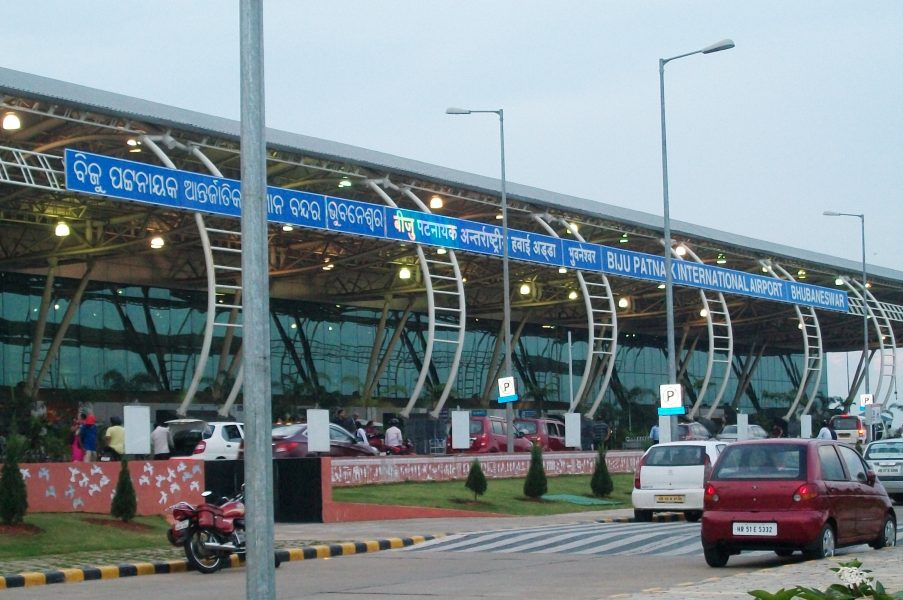
On Saturday, October 16, Union Civil Aviation Minister Jyotiraditya Scindia announced that direct flight services between Bhubaneswar, the capital of Odisha, and Jaipur, the capital of Rajasthan, will begin on November 2. Scindia stated in a recent letter to Union Education Minister Dharmendra Pradhan that three IndiGo flights will operate on the Bhubaneswar-Jaipur route every week.
“I hope that the connectivity between Temple City, Bhubaneswar and Pink City, Jaipur would not only enhance tourist footfall but would also provide a boost to economic activities in both the states," Scindia said.
(Image Courtesy - Hindustan Times)
The Odisha government has been requesting direct flights between Bhubaneswar and Jaipur to attract tourists to the eastern state. On September 17, Union Education Minister Dharmendra Pradhan wrote to Scindia, requesting his help in launching flight services between the two cities.
The state government will pay the airliner INR 75,000 per round trip. Flights will be available on three days per week: Tuesday, Thursday, and Saturday.
“M/s Indigo is commencing flights between Bhubaneswar and Jaipur with three frequencies per week w.e.f November 2, 2021,” the Union Civil Aviation Minister’s letter read. The Odisha Government has extended the initial incentive to IndiGo for the commencement of the referred route.
The Lord Jagannath temple in Puri is located in the eastern part of the country (Odisha). Similarly, the Shekhawati region, which includes Churu, Sikar, and Jhunjunu, is the country's most important industrial belt. Previously, the lack of direct flight connectivity between Bhubaneswar and Jaipur, Rajasthan, caused problems for many travellers and devotees.
Khatu Shyamji, Salasar, Jeen Mata, Sakambari, and Rani Sati Dadi temples are among the many temples in the region, and lakhs of devotees visit each year. The new flights are expected to help the state's tourism industry grow even more.
Daily direct flights will also operate between Bhubaneswar and Goa from December.
Goa Airport (Image Courtesy - AAI)
In another development, the Director of Biju Patnaik International Airport (BPIA) Pravat Ranjan Beuria informed that ahead of the New Year, daily direct flights between Bhubaneswar and Goa will commence in December. IndiGo airlines will carry out the operations and its flight will depart daily from BPIA at 10:30 PM and the return flight is scheduled at 1:35 AM. “There was a demand to start direct flight operations to Goa and Jaipur. Currently, 33 flights are operating in BPIA daily,” Beuria said.
Cover Image - Sambad English
Read next
SBI board requests letter of support from the government before approving Jet Airway's resolution plan
Radhika Bansal
20 Oct 2021
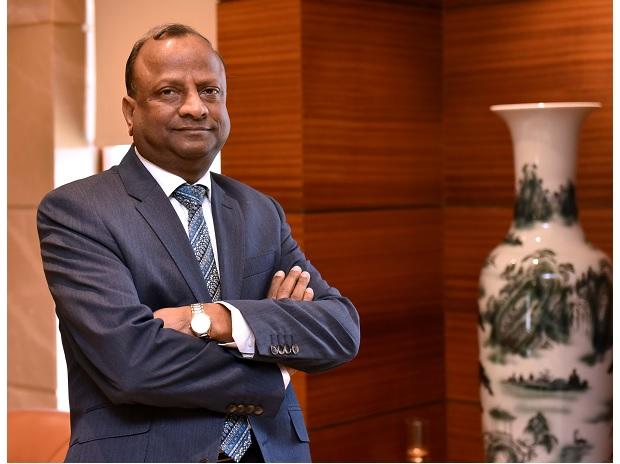
SBI board members wanted a letter of support from the government before approving Jet Airways' resolution plan, according to Rajnish Kumar, the bank's former chairman.
Kumar said dealing with the Jet Airways issue was one of the most difficult assignments he had faced during his eventful term as the country's largest lender in his book 'The Custodian of Trust.'
(Image Courtesy - CNBC TV 18)
Most banks were extremely hesitant to support a resolution plan for Jet Airways, he wrote, recalling the events surrounding the airline's resolution plan, which unfortunately did not go through because the promoters were unable to meet the required conditions in the time allotted.
Eventually, the company ceased operations on April 17, 2019, marking a sad day in Indian civil aviation history when one of the country's best airlines had to be grounded, according to Kumar in his book published by Penguin Random House India (PRHI).
"For me too, this was one of the most challenging cases with even the SBI board being uncomfortable in backing me on this issue, not because I did not enjoy their support or goodwill but because they felt that it posed a huge risk to the reputation of the bank.Consequently, they did not want to be a party to such a decision without receiving an explicit letter of support from the Department of Financial Services (DFS) or the MoCA (Ministry of Civil Aviation). I had not faced such a difficult situation throughout my two-year-long tenure at the helm of affairs at SBI, but I viewed it as a major learning experience that came in handy in resolving the YES Bank crisis.Unlike the RBI, which has wide-ranging powers for rescuing a financial entity, the aviation sector has no such authority. The financing of airlines remains a high-risk business for banks, as has been repeatedly proven by the losses incurred by banks in high-profile cases like the failures of Kingfisher Airlines and Jet Airways."Rajnish Kumar in his book 'The Custodian of Trust'
In June 2019, the NCLT's Mumbai bench admitted an insolvency petition filed by a lender's consortium led by the State Bank of India against Jet Airways (SBI). Jet Airways owed a consortium of lenders led by SBI over INR 8,000 crore, in addition to liabilities of over INR 25,000 crore to its vendors.
Kumar added that he has little hope for the airline's revival. It has few assets to back it up because its planes are mostly leased and its slots are owned by airports. He pointed out that reviving a grounded airline has almost no precedent.
Kumar had an eventful three-year tenure (October 2017-October 2020) as the head of the SBI, which alone has over 20% market share. In the book, he said the period during which he took charge cannot be termed as 'normal' under any circumstances.
When he took over the reins of SBI, the Indian banking industry was going through one of its most tumultuous phases as non-performing assets (NPAs) were at a record high level after Asset Quality Review (AQR).
Non-performing loans (NPLs) had a significant impact on bank balance sheets and profitability, and the failure of a few prominent non-banking financial companies (NBFCs) and the near-collapse of the country's fourth-largest private sector lender, Yes Bank, posed a serious threat to the country's private sector banking system, he wrote in the book.
Kumar's memoir recounts his "amazing journey" as a banker, from joining SBI as a probationary officer in 1980 to becoming its chairman in 2017, capturing the many changes he witnessed in India's banking sector.
Before he was appointed chairman, he was managing director (National Banking Group) at SBI, overseeing the retail business and digital banking. He was instrumental in ensuring cash to every corner of the country through the vast network of the bank during demonetisation.
The book has received endorsements from the stalwarts of India Inc and the banking industry. While Tata Sons Chairman Emeritus Ratan Tata called the book "a chronicle of contemporary economic history", Uday Kotak, CEO of Kotak Mahindra Bank, said the book has the potential to be a "Bollywood blockbuster".
Kumar currently serves as a director on the boards of HSBC Asia Pacific, L&T Infotech Ltd and Lighthouse Communities Foundation. Last month, he was appointed as an economic advisor by the Andhra Pradesh government for two years. He has been accorded a cabinet rank position.
(With Inputs from PTI)
Cover Image - Business Standard
Read next
IndiGo on Tuesday, October 19 cautioned candidates to be cognizant of fake job offers, saying certain people are using the name of airline's employees to demand money in exchange for interviews, jobs or training.
In a statement, the airline stated: "The airline does not charge any money for conducting interviews, providing jobs, or imparting training on joining."
IndiGo "strictly" advises reporting the matter to the police if someone asks for money and promises a job at the airline.
"IndiGo is also taking appropriate actions for cases that get reported, along with spreading awareness," the statement mentioned.
The carrier said it is conducting an anti-fake jobs campaign across social media to raise awareness on how certain people claiming to represent IndiGo are misusing the brand name and the names of its employees to demand money in exchange for jobs, interviews or training.
It has also collaborated with several job portals to spread awareness against such postings. IndiGo senior VP and head of human resources Raj Raghavan believes that this can be curbed completely only when job seekers don’t fall prey to such people.
"We believe that as the market leader, it is our responsibility to identify and control such malpractices that not just impact IndiGo but also other companies in the sector.We have been working in close collaboration with the law enforcement department to identify these offenders with success in the past. We hope to put an end to this menace with support from the police department and awareness amongst people."Ronojoy Dutta, CEO, IndiGo
IndiGo is a low-cost carrier based in Gurgaon, India that commenced operations in August 2006. The carrier, which is owned by Rahul Bhatia’s InterGlobe Enterprises, operates an extensive domestic network and international services to South Asia, Southeast Asia, Europe and the Gulf.
Read next
What is IndiGo's game plan against emerging top dogs of the aviation industry?

Prashant-prabhakar
20 Oct 2021
Flight Global
Indigo, known for its fierce industrial strategies, and which has worked well so far for the brand, has stood tall even in the face of harshest adversaries like the COVID-19 pandemic- which almost brought the whole industry to a stand-still.
In a marketplace, that has decimated players like Kingfisher airlines and the soon-to-be revived Jet Airways, Indigo has been quick to adapt to the evolving changes. The no-frills carrier is currently the largest in the country in terms of market share and fleet size.
The acquisition of Air India by its true owners have come as welcome news for many, while not so for many others. Why?The million-dollar acquisition of Air India by the Tatas gives them immediate access to valuable flying and landing rights that will be critical in regaining its market share from rivals.The airline was once synonymous with lavish air travel and stellar service until the 2000s when the reputation went for a toss.
That said, the road to a successful comeback wouldn't be devoid of any obstacles and the Tatas would have to beat all odds to bring the ailing airline back to the level of a Maharaja.
The Economic Times
Tata's experience in hospitality with the Taj hotels could serve as a booster to revamp staff and service.
The hospitality businesses will help them hugely in setting the image right. The Taj fits in very well with the kind of Air India culture of early yearssaid Dilip Cherian, an image consultant
If reports are to be believed, chances are, the Tatas might well integrate Air India, Vistara and Air Asia India under a single entity. Such integration would only gain the airline a competitive edge over others in terms of striking deals with aircraft manufacturers, engine makers, lessors and the likes.
Indigo takes note
Indigo, who is currently at the top, remains unfazed although it has taken critical stock of the situation.
Republic World
The competitive landscape is going to get much more intense. There are three new potential entrants. The most formidable force of course will be Air India, Vistara and Air Asia India. They'll emerge as a strong player. No question about that.Ronojoy Dutta, CEO of IndiGo
He further mentioned there is Akasa and finally Jet 2.0 both of which would only intensify the competition.
Our first line of defense is that we have the lowest cost structure in the world. Besides, our engines are getting more fuel-efficient. Then there is our service standard and third is the traction with our customers in terms of network. Build a great network, build great connectivity and make sure you have high on-time frequencies with major destinationsRonojoy Dutta
Additionally, the airline also sees "code-sharing" agreements with different operators as a catalyst for further expansion of the network providing passengers with a wider range of destinations. Indigo, had only very recently entered into a code-share with American Airlines-a US-based airline.
American Airlines Newsroom
Internationally, code shares are important. We have code-share agreements with Qatar Airways and Turkish Airlines. We are looking to add more.Dutta
Furthermore, he stated that air travel has started to pick up and is optimistic about its gradual growth in the days to come.
COVER: Live from a Lounge
Read next
India records highest post-pandemic domestic air traffic as festive season approaches
Radhika Bansal
19 Oct 2021
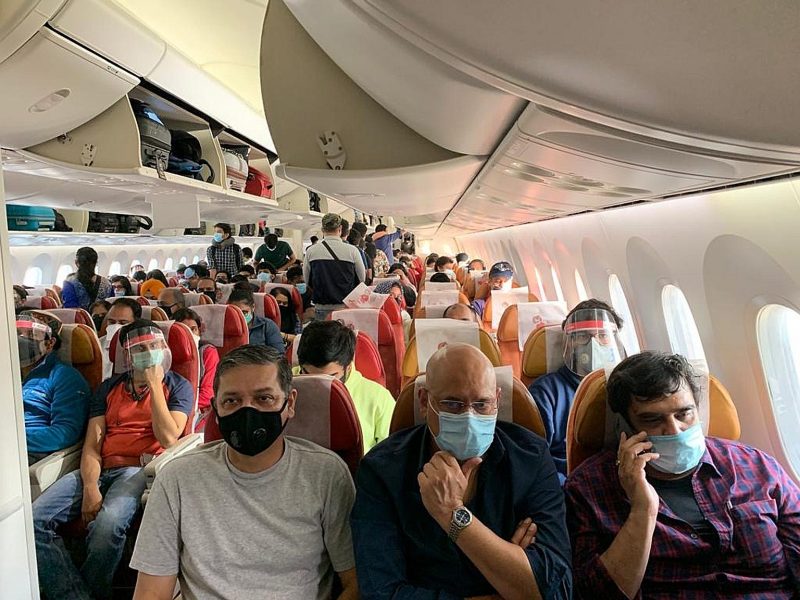
Domestic air traffic reached its highest level on Sunday since the start of the COVID-19 pandemic last year, thanks to the Centre's proactive policies, Civil Aviation Minister Jyotiraditya Scindia said on Monday, October 18.
On Sunday, October 17, a total of 3,27,923 passengers flew on 2,372 flights within India, he said.
India's daily domestic air traffic was around 4.25 lakh passengers before the pandemic struck. When travel was prohibited during the first wave, this number had dropped to near zero. However, air traffic has been steadily increasing in recent months.
The Indian aviation industry is seeing a steady month-on-month recovery, according to credit rating agency ICRA. The agency said there has been a sequential growth of 30-31% as the Covid-19 infection trajectory dropped. In August, domestic passenger traffic registered improvement at 65-66 lakh, compared to 50.1 lakh in July 2021, a y-o-y growth of around 131%.
The Centre had suspended all scheduled domestic flights from March 25, 2020, to May 25, 2020, as part of the coronavirus-induced lockdown.
"Owing to the constructive policies of the government, domestic air traffic has seen the highest level, post the onset of the pandemic," Scindia tweeted.
"The civil aviation sector in India thrives amidst unprecedented challenges, whilst we make every effort to return to normalcy as early as possible," he added.
Jyotiraditya Scindia, Union Minister of Civil Aviation
When the government resumed scheduled domestic services on May 25, 2020, it permitted airlines to operate just 33% of their pre-Covid domestic flights. This capacity was gradually increased with time.
Ultimately, on October 12, the Centre announced that airlines can operate domestic flights without any capacity restriction from October 18 onwards.
On October 10, domestic passenger numbers clocked at 3.04 lakh crossing the 3 lakh per day mark for the first time since February 28 this year, when 3.14 lakh passengers had travelled on domestic flights.
(Image Courtesy - Mint)
Considering the rising demand, the two biggest airports in the country — Delhi and Mumbai — had announced the reopening of terminals that were closed on account of low footfall earlier. Delhi Airport announced that operations at Terminal 1 would resume from October 31, almost 18 months after closure, with IndiGo and SpiceJet.
Mumbai Airport, which witnessed chaos and flight delays earlier this month on account of a sudden increase in traffic, preponed the resumption of its Terminal 1 to October 13 from the earlier date of October 20.
For September, airlines carried 70.66 lakh passengers on domestic routes, according to passenger traffic data released by the Directorate General of Civil Aviation (DGCA) Monday. This figure had fallen to 21.15 lakh in May this year, after which it grew to 31.13 lakh in June, 50.07 lakh in July, and 67.01 lakh in August.
Cover Image - Tamil Murasu
Comment