Tibet Airlines and COMAC Collaborate on High-Altitude C919 Variant Development

Abhishek Nayar
18 Dec 2023
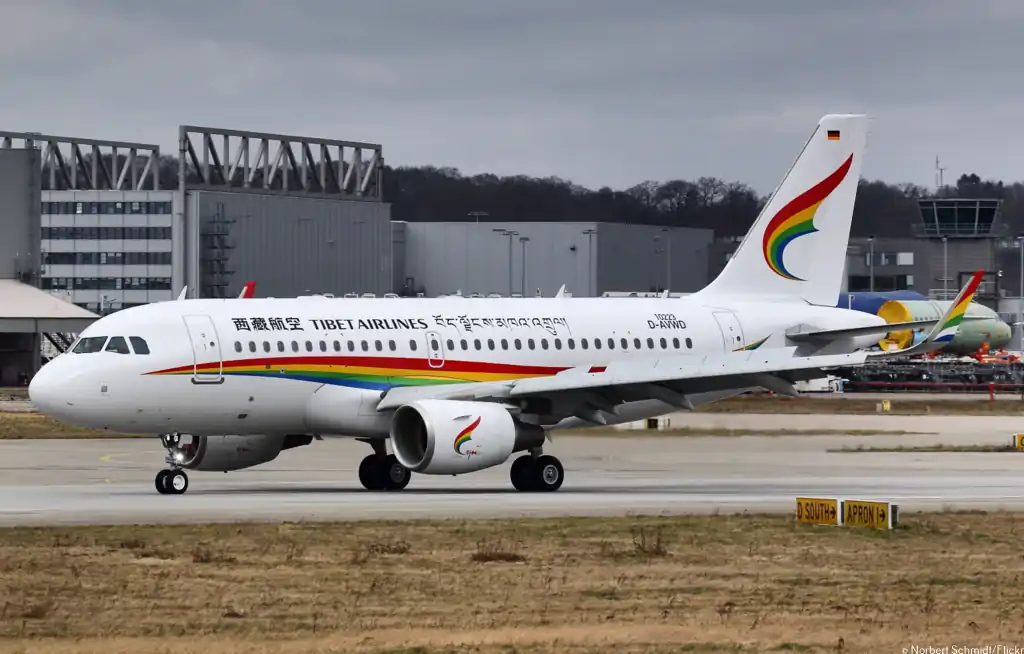
On Sunday, December 17, 2023, Tibet Airlines and the Commercial Aircraft Corporation of China (COMAC) signed a pivotal agreement to collaboratively research and develop a variant of China's narrow-body C919 jet designed specifically for high-altitude plateaus.
The partnership aims to contribute to the advancement of domestically produced passenger jets, emphasizing the importance of safeguarding national security and border stability. This development comes as a significant step forward for the Chinese aviation industry, with potential implications for global competition against established players like Airbus and Boeing.
Partnership Objectives
Tibet Airlines, in a statement shared on its WeChat account, highlighted the strategic significance of the collaboration with COMAC. The partnership is expected to yield a specialized variant of the C919, addressing the unique challenges posed by high-altitude plateaus. The statement quoted Tibet region's vice-chairman, Wei Xiuchang, who emphasized the importance of this initiative in bolstering domestic capabilities in passenger jet manufacturing.
National Security and Border Stability
Tibet Airlines underscored the role of the new C919 variant in enhancing national security and border stability. Given Tibet's unique geographical characteristics, which include high-altitude plateaus, having an aircraft tailored to such conditions is crucial. The collaboration between Tibet Airlines and COMAC aligns with broader national interests, emphasizing the strategic importance of this venture beyond commercial considerations.
Development Plans

While the agreement has been formalized, no specific timeframe has been provided for the development of the new C919 variant. The absence of a timeline suggests that both companies are committed to thorough research and development, prioritizing precision over expediency. The careful approach is indicative of the complexities involved in adapting the C919 for high-altitude operations.
COMAC's Recent Showcases
Recent reports from Chinese media indicate that COMAC, a state-backed enterprise, has showcased two variants of the C919 at an aviation exhibition in Shanghai. These include a stretched model and a shortened version designed specifically for plateau operations. The unveiling of these variants showcases China's dedication to diversifying its commercial aircraft offerings and competing on a global scale.
Global Competition
The C919, often touted as a formidable rival to established single-aisle jet families such as the Airbus A320neo and Boeing 737 MAX, underscores China's ambition to become a major player in the global aviation market. The collaboration between Tibet Airlines and COMAC further positions China as a serious contender, with a focus on developing aircraft tailored to specific regional needs.
Conclusion
The collaboration between Tibet Airlines and COMAC to develop a high-altitude plateau variant of the C919 represents a significant milestone in China's pursuit of a robust and competitive domestic aviation industry. As the partnership progresses, it will be essential to monitor developments, including the unveiling of a detailed timeline for the new variant's development and eventual commercial availability.
The implications of this collaboration extend beyond commercial interests, highlighting the intersection of aviation, national security, and regional adaptability in the dynamic landscape of global aerospace.
With Inputs from Reuters
Read next
Shanghai Airlines' All-Boeing Fleet Transition and Potential for Chinese-Made Aircraft
Abhishek Nayar
18 Dec 2023
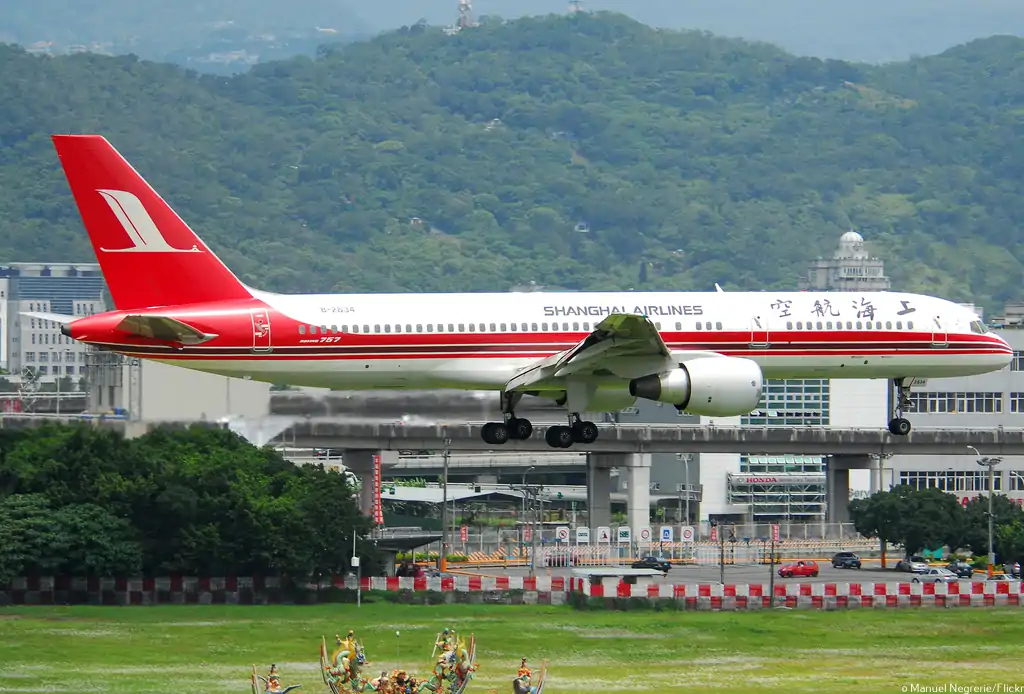
Shanghai Airlines, a prominent Chinese carrier based at Shanghai's Pudong International Airport (PVG), has recently undergone a significant transformation in its fleet composition, bidding farewell to its Airbus A330-300s. This move signals a shift towards an all-Boeing fleet and holds implications for the airline's long-haul strategy.
Shanghai Airlines: A Brief History
Established in 1985, Shanghai Airlines quickly became a leader in premium services and maintained an exemplary safety record. However, the airline underwent a substantial change in 2009 when it was acquired by the Chinese aviation giant, China Eastern Airlines. While Shanghai Airlines retained some autonomy, the acquisition led to a comprehensive overhaul of its route network, fleet structure, and alliance affiliations, shifting from Star Alliance to becoming a SkyTeam Alliance affiliate member.
Fleet Evolution and the Airbus A330 Retirement
Historically, Shanghai Airlines operated a diverse fleet comprising aircraft from both Boeing and Airbus. Recently, the carrier bid farewell to its Airbus A330-300s, marking a transition to an all-Boeing fleet. The retirement of the A330s is part of the airline's broader strategy to simplify its fleet and replace aging aircraft with more fuel-efficient and modern jets.
In October, the airline retired its final A330-300 (B-6083), transferring official ownership to parent company China Eastern. Notably, this aircraft continues to serve Shanghai Airlines routes through a wet-lease (ACMI) arrangement. In total, four A330s were returned to China Eastern, with one converted into a freighter for Air Hong Kong.
Boeing 787 Dreamliner: A Key Element in Long-Haul Strategy

Shanghai Airlines' long-haul strategy revolves around the Boeing 787 Dreamliner. The carrier has an order for 10 Dreamliners, and seven have already been delivered. As new 787s join the fleet, the retirement of A330s accelerates. The Dreamliner's fuel efficiency and advanced features align with Shanghai Airlines' commitment to modernizing its operations.
The All-Boeing Fleet and Future Orders
As of now, Shanghai Airlines is poised to operate an all-Boeing fleet, consisting of Boeing 787 and 737 family jets. In addition to the 787, the carrier maintains outstanding orders for the Boeing 737 MAX 8, reinforcing its commitment to Boeing's modern and technologically advanced aircraft.
Potential Disruption: Chinese-Made Aircraft from COMAC

While Shanghai Airlines appears set on an all-Boeing future, a potential disruption looms. The Commercial Aircraft Corporation of China (COMAC) is set to deliver ARJ21-700 regional jets to the airline. With parent company China Eastern already operating the C919, there is a possibility that domestically manufactured narrowbodies could find a place in Shanghai Airlines' fleet, challenging the carrier's all-Boeing trajectory.
Conclusion
Shanghai Airlines' transition to an all-Boeing fleet marks a significant chapter in its corporate history. The retirement of Airbus A330s aligns with the carrier's commitment to modernization and efficiency. However, the pending delivery of COMAC's ARJ21-700 introduces an intriguing element, potentially diversifying the airline's fleet with Chinese-made aircraft. As the aviation industry continues to evolve, Shanghai Airlines' strategic choices will play a crucial role in shaping its future trajectory.
Read next
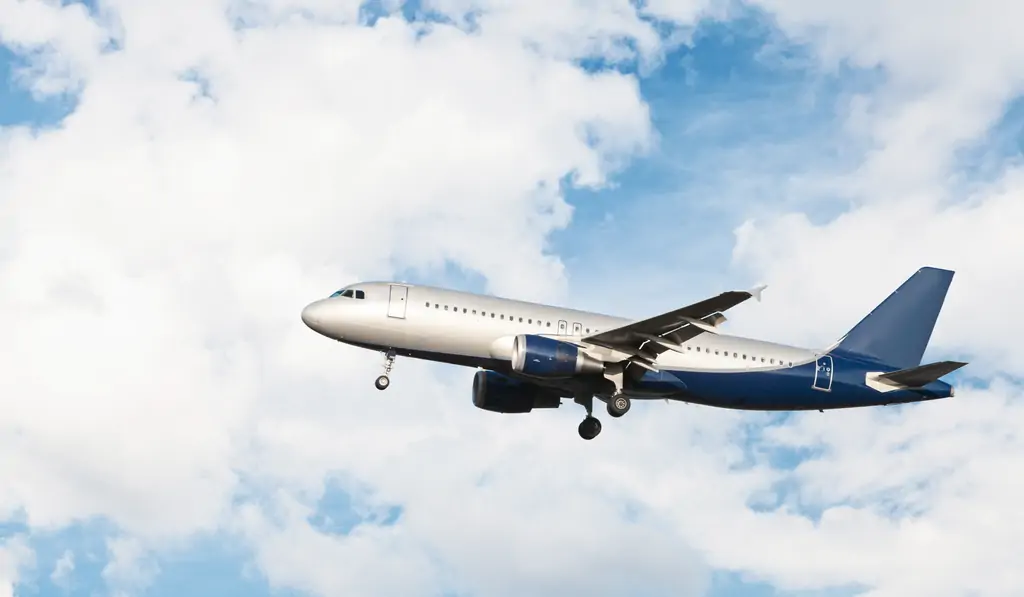
Russia plans to produce more than 1,000 passenger planes by 2030, President Vladimir Putin told an annual press conference on Thursday, December 14. He added that the Russian market is currently "overloaded" with foreign-made aircraft.
The rouble climbed to a near two-week high on Thursday, December 14, approaching the 89 threshold to a weaker dollar after dovish comments from the U.S. Federal Reserve, while the Russian market awaited an expected interest rate hike to 16 per cent on Friday.
The dollar was under pressure on December 14 after the Fed's latest economic projections indicated that the interest rate hike cycle has come to an end and lower borrowing costs are coming in 2024.
According to Russian news outlet Tass, Putin plans to produce Irkut MC-21 passenger jets and switch over to Russian engines for certain aircraft.
Impact of Sanctions on Russia
The Russian aviation industry has struggled to operate effectively since Western sanctions were put in place after Putin launched an invasion of Ukraine. Russian airlines have been unable to legally obtain the Boeing and Airbus parts that are desperately needed to keep their aircraft in good order. It is understood that, until now, Russia has relied on the black market to source parts and has even set out plans to manufacture replica Boeing and Airbus components.
The impact of sanctions extends beyond seized aircraft, affecting the overall capacity of the Russian airliner fleet. Boeing and Airbus halted servicing Russian operators, compounding the challenges. At the onset of the conflict, over half of Russian airlines' airliners were leased, with a significant number registered in Bermuda or Ireland. Russia's refusal to return these leased aircraft has resulted in a legal battle, further restricting the operational capabilities of Russian carriers.
As of November 2023, Russian airlines find themselves severely constrained in terms of international operations. Only 11 countries, which have provided guarantees against potential seizures, are accessible for Russian carriers. This limited scope has significantly curtailed the global reach of Russian airlines, impacting both their profitability and connectivity.
The Russian commercial aircraft fleet, comprising 1,302 aircraft, with 1,176 dedicated to passenger transportation, has undergone significant changes since 2022. Over 800 aircraft have been re-registered in Russia, reflecting the industry's efforts to navigate the challenges posed by sanctions and ownership disputes. However, the process of re-registration is a complex and time-consuming endeavour.
Lower capital outflows since October
Ensuring stability and predictability in financial markets is the priority, President Vladimir Putin said, whose decree obliging some exporters to convert a portion of their foreign currency revenues into roubles has reduced capital outflows since October.
The capital controls, which he said were temporary, were needed because Russia now receives limited information about the movement of capital concerning exports.
"The government and central bank do not see what is happening with the volumes of funds our exporters are making from exports," Putin said. "We ... have a legitimate desire to see how roubles are accumulated, how they move around, where they go and in what volumes." Putin, who last week said he would run again for election next year, faces numerous economic challenges.
Read next
Turkish Airlines to Expand its Fleet with an Additional Order for 220 Airbus Aircraft

Radhika Bansal
16 Dec 2023
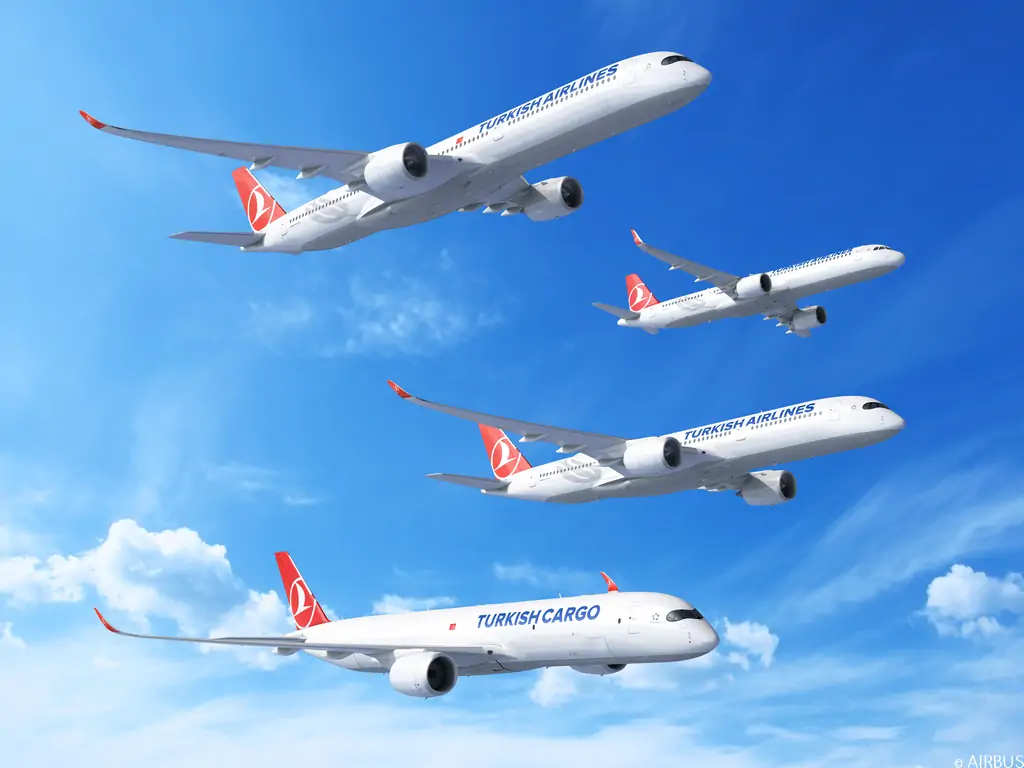
Türkiye’s national carrier, Turkish Airlines, will expand its fleet with an order for 220 Airbus aircraft, made up of 150 Airbus A321 and 70 A350 widebody aircraft (50 A350-900s, 15 A350-1000s and 5 A350F freighters). This follows two orders from the airline for 10 A350-900s in September and four A350-900s in July 2023. This latest order will take Turkish Airlines’ total orderbook for Airbus aircraft to 504, of which 212 are already delivered.
Throughout 2023, rumours have circulated about Turkish Airlines preparing to order up to 600 aircraft to fuel its continued growth. As recently as November 2023, some media outlets reported that the Turkish flag carrier was about to place a 355 aircraft order with Airbus, though this deal failed to materialize.
On the new order, Turkish Airlines Chairman of the Board and the Executive Committee, Prof. Dr. Ahmet Bolat stated: “This landmark order is more than an expansion; it’s a testament to our dedication to innovation, operational excellence, and a sustainable future. The addition of these advanced Airbus aircraft to our fleet will not only enhance our operational capabilities but also significantly contribute to our environmental goals. This investment is a crucial milestone in the further evolution of Türkiye’s aviation industry. By modernising our fleet with more efficient and environmentally friendly aircraft, we are reinforcing our leading position in global aviation and contributing to the nation’s prominence as an aviation hub.”
"This order for the latest generation aircraft is a demonstration of the bold vision of Turkish Airlines. The A350-900, A350-1000, A350F and A321 will all be flagship aircraft in their respective category and efficiency drivers to shape the airline’s future and sustainable expansion, with more range, less fuel, noise and emissions and best cabin in class," says Christian Scherer, Airbus Chief Commercial Officer and Head of International. “The opening into the A350-1000 and the A350F highlights the cross-model value of the A350 family and reinforces our long-lasting partnership with Turkish Airlines and Türkiye’s aviation sector. We are proud to accompany Türkiye's connection to the world with our state-of-the-art aircraft."
However, before today’s announcement, there has been a constant trickle of smaller orders placed by the Turkish flag carrier this year. The recent order adds to the 10 A350-900s it purchased in September and the four it ordered in July.
Turkish Airlines' Fleet
In addition, Turkish Airlines has been sourcing aircraft elsewhere too. In November 2023, Turkish Airlines disclosed also that it was leasing 21 aircraft (20 narrow bodies and one widebody of an undisclosed type) from several lessors and in October it closed a deal to lease another 28 Boeing aircraft from AerCap (3 Boeing 787-9 and 25 737 MAX 8).
According to data from ch-aviation, Turkish Airlines currently has a fleet of 442 aircraft. The carrier has a mix of Airbus and Boeing jets, although the company's future orders heavily rely on the European manufacturer. Boeing must only deliver six 737 MAX 8s and eight 787-9 Dreamliners to Turkish Airlines.
Turkish Airlines has two A310-300Fs, six A319-100s, 19 A320ceos, nine A320neos, 72 A321cceos, 55 A321neos, 13 A330-200s, 12 A330-200Fs, 36 A330-300s, and 16 A350-900s. From Boeing, it operates 30 MAX 8s, 85 737-800s, five MAX 9s, 15 737-900ERs, two 747-400(BDSF)s, eight 777-200Fs, 35 777-300ER, and 22 Dreamliner 9s.
Turkish Airlines, which is 49% owned by the country’s sovereign wealth fund, is among the country’s crown jewels. It is seeking to grow significantly over the next decade, with plans to add 54 new routes — including 22 to Europe, 13 to the Far East & Asia and nine to the Americas. The group is also expanding the international reach of its low-cost carrier Anadolu Jet. Turkish Airlines earned USD 2.8bn in net profits in the first nine months of 2023, up by nearly a quarter from the same period last year. Its Istanbul-listed shares have risen 16 per cent this year in US dollar terms, ahead of the broader stock market, according to FactSet data.
The Aircraft Specialities
The A321neo is the largest aircraft in Airbus’ A320neo Family, offering unparalleled range and performance. By incorporating new generation engines and Sharklets, the A321neo brings a 50% noise reduction and more than 20% fuel savings and CO? reduction compared to previous generation single-aisle aircraft. Having the widest single-aisle cabin in the sky, the aircraft is the perfect contender for maximising comfort. To date over 5,600 A321neos have been ordered by more than 100 customers across the globe.
The A350 is the world’s most modern and efficient widebody aircraft and the long-range leader in the 300-410 seater category, flying efficiently on any sector from short-haul to ultra-long-haul routes up to 9,700nm. Its clean sheet design includes state-of-the-art technologies, aerodynamics, lightweight materials and latest-generation engines that together deliver a 25% advantage in fuel burn, operating costs and CO? emissions, as well as 50% noise reduction compared to previous-generation competitor aircraft. This makes the aircraft a good neighbour and global citizen wherever it flies.
The A350 Family has two versions: the A350-900, and the longer fuselage A350-1000, both offering an ultimate passenger experience even on the longest of flights. Its innovative design delivers a true feeling of spaciousness, with wide seats, high ceilings and alluring ambient lighting. By the end of November 2023, the A350 Family had won 1,072 orders from 57 leading customers from all around the globe.
The A350F features the largest main deck cargo door and a fuselage length optimised for cargo operations. Over 70% of the airframe is made of advanced materials, which together with efficient Rolls-Royce engines generate an advantage of at least 20% lower fuel burn and CO? emission over its current closest competitor.
With this latest endorsement by Turkish Airlines, the A350F orderbook stands at 50 orders from nine customers following its launch at Dubai Airshow two years ago.
Read next
Air Transat Reaches Agreement with Flight Attendants, Avoiding Holiday Season Strike
Abhishek Nayar
16 Dec 2023
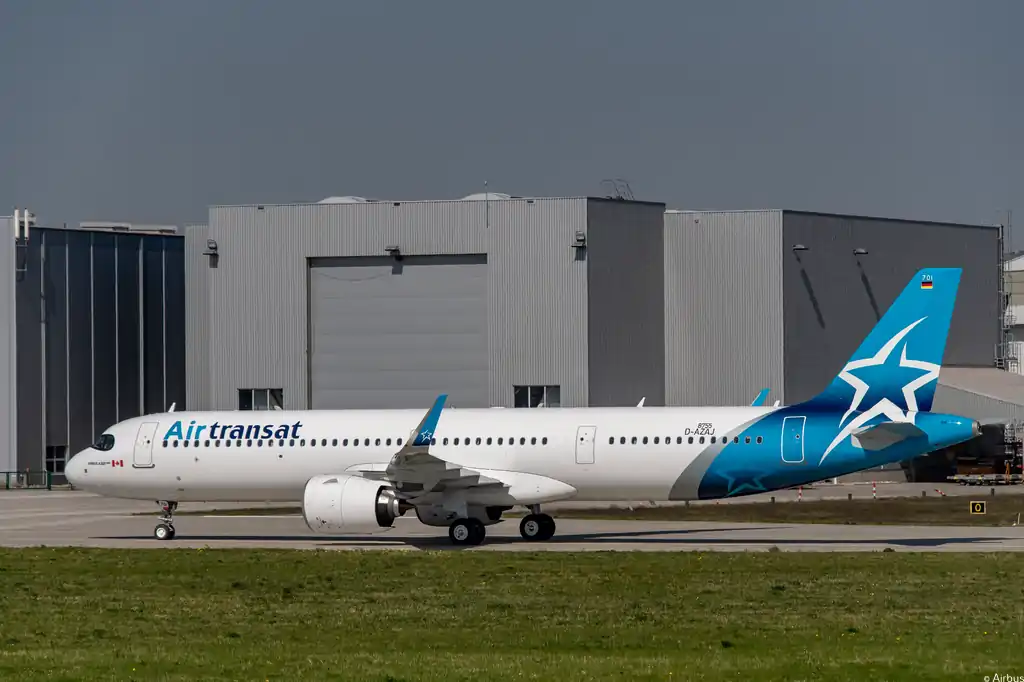
In a significant development on Thursday, December 14, 2023, Canadian leisure carrier Air Transat announced that it had reached an in-principal agreement with the union representing its flight attendants. The timely resolution averts the looming threat of a strike during the busy holiday travel season, ensuring smooth operations for the airline.
Background
The agreement focuses on the renewal of the Transat collective labor agreement, a crucial element in maintaining harmonious relations between the airline and its workforce. The deal is currently awaiting a vote by the members of the union, with details of the agreement set to be presented to them in the coming days.
Industry Context
This development comes amid ongoing protests by flight attendants at several U.S. carriers, including United Airlines, who are advocating for better pay and improved work rules in their new contracts. A key point of contention is the industry practice of not compensating flight attendants for their time during boarding and waiting periods between flights.
United Airlines Demonstrations
United Airlines flight attendants staged nationwide demonstrations on the same day as the Air Transat announcement. The protests, echoing the sentiments of their counterparts at other carriers, demand an end to the practice of not paying for time spent during boarding and airport downtime. Notably, Delta Air Lines stands out as the only U.S. carrier currently remunerating flight attendants during boarding.
Southwest Airlines Contract Vote
Earlier this month, Southwest Airlines' flight attendants voted against a tentative five-year contract deal that would have made them the highest-paid cabin crews in the industry. The agreement, which did not include provisions for boarding pay, reflects the growing emphasis on comprehensive compensation packages in the industry.
Canadian Union of Public Employees (CUPE) Involvement
Representing the 2,000 Transat workers, the Canadian Union of Public Employees (CUPE) has maintained confidentiality regarding the specifics of the contract. Details will be disclosed and discussed with members in the near future, respecting the necessary processes and protocols.
Conclusion
The resolution between Air Transat and its flight attendants is a positive development for both the airline and its workforce, especially during the crucial holiday travel season. As industry dynamics continue to evolve, the focus on fair compensation and improved working conditions remains a central theme in the ongoing negotiations and protests within the aviation sector. Travelers can now enjoy their plans with the assurance of operational stability during this festive period.
With Inputs from Reuters
Read next
Southwest Airlines Flight Attendants Union Calls for New Vote Amidst Data Leak Concerns
Abhishek Nayar
16 Dec 2023
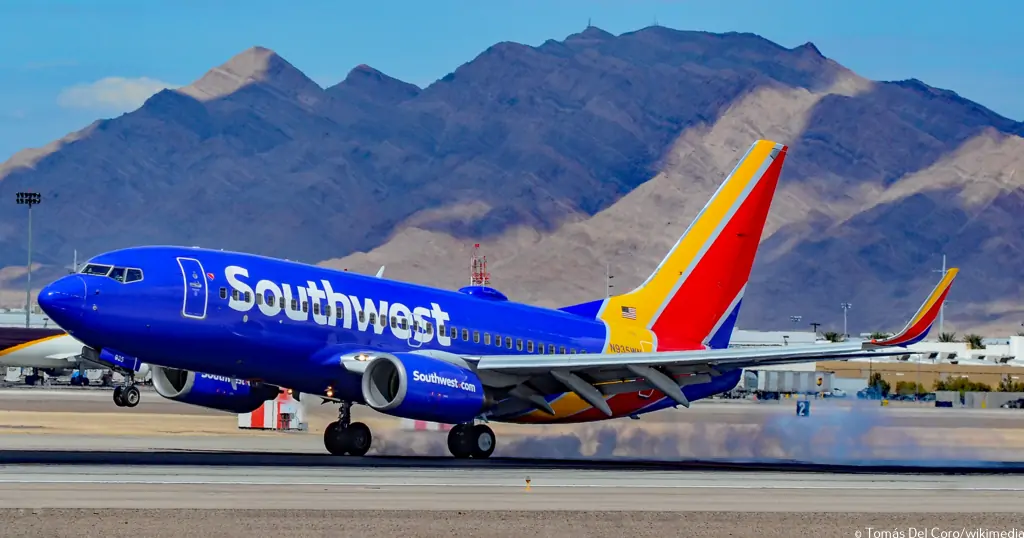
In a surprising turn of events, the Transport Workers Union Local 556, representing flight attendants of Southwest Airlines, has called for a new vote to ratify the company's contract offer. This decision comes after the union's voting service provider, True Ballot, revealed a data leak, raising concerns about the security and integrity of the voting process.
Data Leak Revelation
The president of Transport Workers Union Local 556 addressed union members in a video posted on the union's Facebook page, expressing concerns over True Ballot's security vulnerabilities. According to the union leader, True Ballot informed them that their system was unsecured, potentially exposing sensitive data to unauthorized access.
Call for a New Vote
In response to the data leak revelation, the union has taken a proactive stance by calling for a new vote on Southwest Airlines' contract offer. While the union has not yet set a specific date for the re-vote, they have committed to conducting a comprehensive legal investigation into the matter to ensure the security and fairness of the voting process.
Union's Demands
The backdrop of this development is the ongoing negotiations between Southwest flight attendants and the airline regarding their new contracts. One of the primary issues at the forefront of these negotiations is the demand for higher pay and a better work-life balance by the flight attendants.
Southwest Airlines' Response
As of now, Southwest Airlines has not issued a public statement in response to the union's call for a new vote and the associated data leak concerns. It remains to be seen how the airline will address these developments and whether they will take any actions to address the security vulnerabilities identified by True Ballot.
The Path Forward
The union's decision to conduct a full legal investigation indicates a commitment to ensuring the integrity of the voting process and addressing any potential concerns raised by the data leak. The outcome of this investigation may have significant implications for the ongoing negotiations between the flight attendants and Southwest Airlines.
Conclusion
The Southwest Airlines Flight Attendants Union's call for a new vote and the revelation of a data leak by True Ballot adds a layer of complexity to the already delicate contract negotiations. As both parties navigate these challenges, the aviation industry will be closely watching to see how this situation unfolds and whether it will impact the future working conditions and contracts of Southwest Airlines flight attendants.
With Inputs from Reuters
Comment