

In the complex ecosystem of commercial aviation, few regulatory mechanisms carry as much financial weight and strategic importance as airport slots.
At London Heathrow (LHR), the world's most slot-constrained airport, the time-specific permissions to operate flights have evolved into assets worth tens of millions of dollars. IndiGo's successful acquisition of Heathrow slots represents not just an operational milestone but a testament to the value and scarcity of access to one of the world's premier aviation hubs!
Understanding Airport Slots
An airport slot represents a specific authorisation granted to an airline to conduct a take-off or landing at a particular airport within a designated time window. While this may sound like routine administrative procedure, at capacity-constrained airports like London Heathrow (LHR), slots become the primary gateway controlling market access and competitive positioning.
Airport slots are categorised into 3 levels under the Worldwide Airport Slot Guidelines (WASG).
Level 1 airports operate without slot restrictions
Level 2 airports may require schedule adjustments during peak periods
Level 3 airports—where demand significantly exceeds capacity—require full slot coordination for all scheduled flights
London Heathrow operates as a Level 3 slot-coordinated airport, meaning every single commercial flight requires a specific slot allocation.
At Heathrow, slots are allocated through Airport Coordination Limited (ACL), which manages the complex process of distributing approximately 480,000 annual slot movements across summer and winter scheduling seasons. The allocation process follows established priority rules. Grandfather rights protect existing operators while reserving limited opportunities for new entrants and route development.

The 80/20 Rule: Use it or Lose it
Central to slot management is the internationally recognised "use it or lose it" principle, commonly known as the 80/20 rule.
This regulation requires airlines to utilise their allocated slots at least 80% of the time during a scheduling season to retain their rights for the subsequent period. The rule serves dual purposes: preventing slot hoarding and ensuring optimal utilisation of scarce airport capacity.
The 80/20 rule creates operational pressure on airlines, sometimes forcing them to operate flights that may not be immediately profitable—so-called "ghost flights"—simply to maintain their valuable slot portfolio. However, the regulation includes provisions for extraordinary circumstances, as demonstrated during the COVID-19 pandemic when usage requirements were temporarily relaxed to support industry recovery.
This mechanism transforms slots from simple operational permissions into strategic assets that require careful management and long-term planning, adding layers of complexity to airline network strategies and financial planning.
Slot Trading and Commercial Value
While technically allocated rather than owned, airport slots function as commercial assets in practice, with an active secondary market for trading, leasing, and transferring slot rights. These transactions require regulatory approval and must comply with competition law, but they represent a crucial mechanism for airlines to adjust their network strategies and optimise their slot portfolios.
The commercial nature of slot trading has created a sophisticated market where airlines regularly buy, sell, and lease slots to achieve strategic objectives.
Virgin Atlantic (VS) pioneered an innovative approach in 2015, securing a £220 million bond using their Heathrow slots as collateral to finance Boeing 787-9 acquisitions!

London Heathrow: The World's Most Valuable Airport Slots
London Heathrow's position as the world's most slot-constrained major airport stems from its unique combination of factors-
- Operating at 98% capacity with only 2 runways
- Serve as a global hub connecting 84 countries
- Maintains Grandfather rights that protect incumbent airlines
This creates an environment where slots command unprecedented valuations and strategic importance!
The airport's capacity constraints are physical and seemingly permanent. Despite decades of expansion discussions, Heathrow operates approximately 1,300 daily movements across its 2 runways—a figure that represents the practical maximum given current infrastructure and air traffic control capabilities. This limitation, combined with sustained demand growth and London's position as a global financial and commercial centre, creates the perfect conditions for extreme slot scarcity.
Morning slots at Heathrow carry a particular premium due to their optimal positioning for business travellers and onward connections. These periods allow airlines to maximise aircraft utilisation, capture high-yield traffic, and integrate effectively with global hub-and-spoke operations.
Biggest Heathrow Slot Deal Ever
The record for the most expensive airport slot transaction in history belongs to Oman Air's 2016 acquisition of a morning slot pair at Heathrow for $75 million!
Initially rumoured to have been purchased from Air France-KLM, but later confirmed to have come from Kenya Airways. This extraordinary sum—equivalent to the cost of purchasing a new wide-body aircraft—illustrates the strategic value airlines place on Heathrow access.
The Oman Air transaction was particularly significant as it coincided with the country's launch of its 25-year National Tourism Strategy to increase international arrivals and boost GDP, demonstrating how slot acquisitions often align with broader national economic objectives rather than simple airline profitability calculations.
Other notable transactions include American Airlines paying $60 million to Scandinavian Airlines in 2015 and Etihad's $70 million purchase of 3 Jet Airways slots in 2013, which were then leased back to the Indian carrier.
How Did IndiGo Secure Its Heathrow Slot?
IndiGo's path to Heathrow represents a masterclass in strategic patience and regulatory navigation. Unlike the high-profile slot purchases that typically dominate headlines, IndiGo appears to have secured its access through the complex regulatory framework governing slot allocation rather than through the secondary trading market.
The key mechanism appears to be the ongoing European Commission requirements stemming from IAG's 2012 acquisition of British Midland (bmi), which obligated IAG to release specific London Heathrow slot pairs to address competition concerns.
These released slots become available through a structured allocation process managed by Airport Coordination Limited, providing opportunities for new entrants that might otherwise be locked out of the Heathrow market.
While the exact details of IndiGo's slot acquisition remain undisclosed, the timing suggests the airline successfully navigated this regulatory framework to secure access without paying the astronomical sums typical of secondary market transactions. This approach demonstrates a sophisticated regulatory strategy and represents a significant competitive advantage in IndiGo's European expansion plans.

IndiGo to London Heathrow: Finally Arriving
IndiGo's announcement of London Heathrow service represents a watershed moment for India's largest airline and the broader Indian aviation market. Operating with Boeing 787-9 aircraft leased from Norse Atlantic, the service positions IndiGo alongside Air India as the only Indian carriers with Heathrow access—a status that carries enormous prestige and commercial significance!
The Heathrow route represents the culmination of IndiGo's methodical international expansion strategy. Having established itself as India's dominant domestic carrier and expanded across Asia and the Middle East, the airline's entry into one of Europe's premier destinations signals its evolution into a genuine full-service international network carrier.
The timing proves particularly strategic as European aviation faces increasing environmental scrutiny and potential growth restrictions. IndiGo's entry now ensures access to this critical market before potential future limitations on new aviation capacity or routes.
Significance of IndiGo's Heathrow Achievement
IndiGo's Heathrow slot acquisition transcends operational significance to represent a fundamental shift in competitive dynamics between Indian carriers and within the India-UK aviation market.
For decades, this route remained the exclusive domain of British Airways, Virgin Atlantic, and Air India, with a new entry seemingly impossible due to slot scarcity.
The achievement validates IndiGo's international strategy and provides a platform for competing directly with established carriers on one of the world's most prestigious and profitable routes. London-Delhi and London-Mumbai rank among the highest-yielding long-haul markets globally, generating premium revenues that can justify the substantial costs of operating wide-body aircraft and accessing premium airports.
Bottom Line
IndiGo's successful acquisition of London Heathrow slots represents far more than operational expansion—it demonstrates the complex interplay of regulation, strategy, and commercial acumen that defines modern aviation. In securing access to the world's most slot-constrained airport, IndiGo has achieved what many established international carriers have failed to accomplish despite decades of effort and investment.
The achievement highlights the evolution of airport slots from administrative necessities to strategic assets that can determine an airline's success or failure. As global aviation continues to grow while infrastructure constraints persist, the importance of slot management and acquisition will only intensify, making IndiGo's Heathrow success a template for strategic thinking in an increasingly slot-constrained world.
For the Indian aviation market, IndiGo's entry into Heathrow represents a new chapter in the country's global connectivity, providing additional competition on a route long dominated by a few established players. As the airline prepares for daily service to one of the world's most prestigious destinations, it joins an exclusive club of carriers with access to the ultimate prize in global aviation real estate.

Read next

Air Canada’s cabin crew, represented by the Canadian Union of Public Employees (CUPE), are set to return to contract talks on Friday after overwhelming their company’s latest offer—and winning a near?unanimous strike mandate that could see walkouts begin as early as August 16, 2025, with just 72 hours’ notice required. With more than 10,000 flight attendants in the mix, this showdown may redefine how airlines worldwide value every minute of cabin?crew labor.
More Than Just Boarding
Traditionally, most airlines only pay flight attendants from the moment doors close and the plane taxis. But North American unions have started to click the clock earlier. Under recent contracts at American Airlines and Alaska Airlines, pay begins when passengers board—and Delta went even further in 2022, offering half pay during boarding as part of an effort to head off union drives. United’s crews are pushing for similar terms after rejecting a tentative deal last month.
Why CUPE Wants Every Minute Counted
“It’s not just helping passengers stow bags,” says CUPE’s Air Canada president Wesley Lesosky. “Air Canada requires us to show up an hour early for safety checks and briefings—and we want pay for that ground work, too”. With 99.7% percent of members voting for strike authorization, the union is sending a clear message: unpaid pre?flight and between?flight hours must end.
The Cost of Fair Compensation
Air Canada’s own numbers paint a tough backdrop: a drop in second?quarter profit, hit by sluggish traffic to its largest U.S. markets, means any extension of paid hours will raise labor costs. Yet management insists its current compensation model aligns with most global carriers and was union?endorsed—while also stressing there’s still time to avoid any travel chaos.
The Road Ahead
Negotiations began in December over a contract that expired in March 2025, and both sides say they’d rather strike a deal than cripple Canada’s flag?carrier. But with a 72 hour strike notice now in the union’s pocket—and a strike day possible on August 16—time is ticking.
TL; DR
- CUPE’s 10,000+ Air Canada flight attendants could strike from August 16 with 72 hours’ notice.
- They want pay to start when boarding begins, plus compensation for pre?flight checks and ground duties.
- U.S. carriers American, Alaska, and Delta have already moved pay clocks earlier.
- Air Canada’s Q2 profit drop makes extra labor costs a tough sell—but talks resume Friday.
- Negotiations began in December; the old contract expired in March 2025.
With Inputs from Reuters
Read next
First Strike in 30 Years: Boeing Defense Workers Walk Off Job in Missouri and Illinois

Pragya Chauhan
07 Aug 2025

Historic Walkout Shuts Down Critical Defense Production
Thousands of unionized workers at Boeing facilities in Missouri and Illinois went on strike early Monday after failing to reach an agreement on a labor contract. Roughly 3,200 workers at sites in St. Louis, St. Charles, Mo., and Mascoutah, Ill., began striking at midnight local time. This marks the first time in almost three decades that Boeing defense workers have taken such drastic action, highlighting the depth of their frustration with the aerospace giant's latest contract proposals.
The strike has immediate implications for U.S. defense capabilities, as the walkout halts production of key military aircraft like F-15s and F/A-18s. These facilities are critical to Boeing's defense operations, producing some of America's most advanced fighter jets used by both domestic and allied forces worldwide.
Workers Reject "Best and Final" Offer
Approximately 3,200 highly-skilled IAM Union members at Boeing facilities voted on Sunday, Aug. 3, 2025 to reject a modified four-year labor agreement with Boeing. This came after they rejected the first contract on July 27. The rejection came despite Boeing's characterization of the offer as their "best and final" proposal.
Boeing had offered a 20% general wage increase, a $5,000 ratification bonus and other improvements. The company also claimed the deal would increase average compensation by 40%, though union members clearly found these terms insufficient to address their concerns.
The contract negotiations had been particularly contentious over workplace scheduling issues. The company's updated terms include withdrawing the Alternative Workweek Schedule proposal, which union members said was a point of concern in the original contract. Despite this concession, workers remained unsatisfied with the overall package.
Economic Pressures Drive Worker Frustration
The strike reflects broader economic anxieties facing American workers as they grapple with persistent inflation and rising living costs. Workers cited insufficient pay, lost pensions, and job security amid inflation as key factors in their decision to reject Boeing's offer and walk off the job.
An employee making $75,000 a year would make $102,600 in four years under Boeing's proposal, representing the promised 20% increase over the contract term. However, union members apparently felt this wasn't adequate given current economic conditions and the skilled nature of their work building advanced military aircraft.
The workers' concerns about pension security are particularly significant, as many American companies have moved away from traditional defined-benefit pension plans in recent decades. For skilled aerospace workers who have dedicated their careers to Boeing, the erosion of retirement benefits represents a fundamental breach of the traditional employer-employee compact.
Company Downplays Strike Impact
Boeing's leadership has attempted to minimize the significance of the work stoppage, particularly in comparison to the company's recent commercial aviation troubles. "The order of magnitude of this is much, much less than what we saw last fall," Ortberg said. "So we'll manage through this."
This reference points to Boeing's commercial airplane factory workers ended a seven-week strike that hobbled the company's aircraft output in November, after approving a contract with 38% raises over four years and other improvements. The commercial strike was far more extensive and costly to the company, affecting Boeing's primary revenue-generating operations.
However, the defense strike poses different challenges. While smaller in scale, it affects critical government contracts and national security priorities. The production halt of F-15 and F/A-18 aircraft could impact delivery schedules to both U.S. forces and international customers who rely on these platforms.

Union Solidarity and Worker Voices
Boeing machinists went on strike on Monday morning, after the union rejected the company's contract offer for the second time in two weeks. The decisive rejection of two separate proposals demonstrates the workers' solidarity and their determination to secure better terms.
Workers on the picket lines have expressed frustration with what they see as Boeing's failure to recognize their value to the company. One worker's sentiment captured in recent reporting reflected the broader mood: "They're not being fair," highlighting the perception that Boeing's offers don't adequately compensate for the specialized skills required to build advanced military aircraft.
"They deserve nothing less than a contract that keeps their families secure and recognizes their unmatched expertise" represents the union's position that these highly skilled workers warrant compensation commensurate with their critical role in national defense manufacturing.
Looking Ahead: Uncertain Timeline for Resolution
With no scheduled talks between the company and union, the strike's duration remains uncertain. The work stoppage represents a significant escalation in labor tensions at Boeing, coming at a time when the company is already facing scrutiny over quality control issues and production challenges across its operations.
The strike's resolution will likely depend on Boeing's willingness to improve its wage and benefit offerings significantly, or the union's assessment of how long its members can sustain the financial impact of the walkout. Given that this is the first defense worker strike in nearly three decades, both sides may be testing each other's resolve in what could become a prolonged standoff.
For the broader aerospace industry, the strike serves as a reminder of the critical role skilled manufacturing workers play in national defense capabilities and the ongoing tension between corporate profit margins and worker compensation in an inflationary economy.
Read next
Have You Ever Imagined Flying Out of Saharsa or Valmiki Nagar All the Way to Kathmandu?

Abhishek Nayar
07 Aug 2025

In a move set to redefine regional travel in eastern India, Spirit Air on Tuesday unveiled its much-anticipated flight operational blueprint for Bihar under the Ministry of Civil Aviation’s UDAN scheme. From connecting small towns to major metros to eventually opening up international routes, this plan promises to bring accessible air travel to millions of Biharis for the very first time.
Taking Off from Bihar’s Newer Airports
Phase I Domestic Connections
Spirit Air will launch services in carefully phased stages from eight soon-to-open airports across Bihar:
- Birpur and Saharsa
- Munger and Madhubani
- Muzaffarpur and Raxaul
- Valmiki Nagar and Bihta
These will link directly to three domestic hubs:
- Varanasi, for onward flights to Delhi, Mumbai and Ahmedabad
- Bangalore, with seamless connections onward to Hyderabad and Chennai via partner carriers
- Bihta, offering quick access to Patna and direct hops to Jamshedpur and Bokaro
Subodh Verma Meets the Bihar Government
A high level sit down between Spirit Air promoter Subodh Verma and Additional Chief Secretary S. Siddharth set the wheels in motion. They delved deep into flight schedules, slot coordination with the Airports Authority of India and strategies to ensure smooth operations from day one.
Beyond India’s Borders in Phase Two
International Routes to Nepal
In an exciting second phase, Spirit Air will pioneer cross-border connectivity from Bihar into Nepal, including:
- Muzaffarpur to Kathmandu and Janakpur
- Birpur to Rajbiraj and Biratnagar
- Valmiki Nagar to Kathmandu and Bhairahawa
- Bihta to Kathmandu
This bold step not only fosters tourism and trade with our Himalayan neighbour but also brings cultural exchange within arm’s reach for residents of Bihar’s hinterlands.

A Fleet Built for Versatility
Twin—Islander BN2T—4S—STOL
- Short takeoff and landing capability
- Multi—role adaptability for passengers, cargo and emergency medevac missions
King Air 250
- Pressurized cabins for comfort at higher altitudes
- High performance with multi-mission flexibility
By blending these aircraft types, Spirit Air can operate from short runways while guaranteeing reliability and passenger comfort.
Backing from State and Central Governments
Infrastructure Investment
On June 17, 2025, Bihar’s cabinet approved an MoU between the state Directorate of Aviation and the Airports Authority of India to develop six greenfield airports. A total budget of Rs.150 crore—Rs.25 crore per site—has been earmarked to upgrade runways, terminals and air traffic facilities.
UDAN’s Promise
Launched to democractise air travel, UDAN (Ude Desh Ka Aam Nagrik) subsidizes regional routes, ensuring ticket prices remain affordable. Spirit Air’s entry under this flagship scheme underscores the government’s vision to connect underserved corners of India directly to the national and international grid.

What This Means for Bihar
Boost to Local Economies
- Easier movement of goods and people will energize tourism, agriculture and small businesses across these districts.
Employment Opportunities
- From airport staff to ground handling crews, a slew of jobs will be created locally.
Enhanced Accessibility
- Residents will save hours of road travel, making healthcare, education and business travel faster and more comfortable.
Regional Pride
- Flying out of your hometown airport fosters a new sense of belonging and opportunity for Biharis everywhere.
TL; DR
- Spirit Air to operate in eight new airports in Bihar under UDAN
- Phase I links to Varanasi, Bangalore and Bihta with onward connections to major metros
- Phase II opens international routes to multiple cities in Nepal
- Fleet includes Twin—Islander BN2T—4S—STOL and King Air 250 for versatile operations
- Bihar cabinet’s Rs.150 crore airport development fund underpins the plan
- Anticipated economic boost, job creation and enhanced accessibility for local communities
Read next
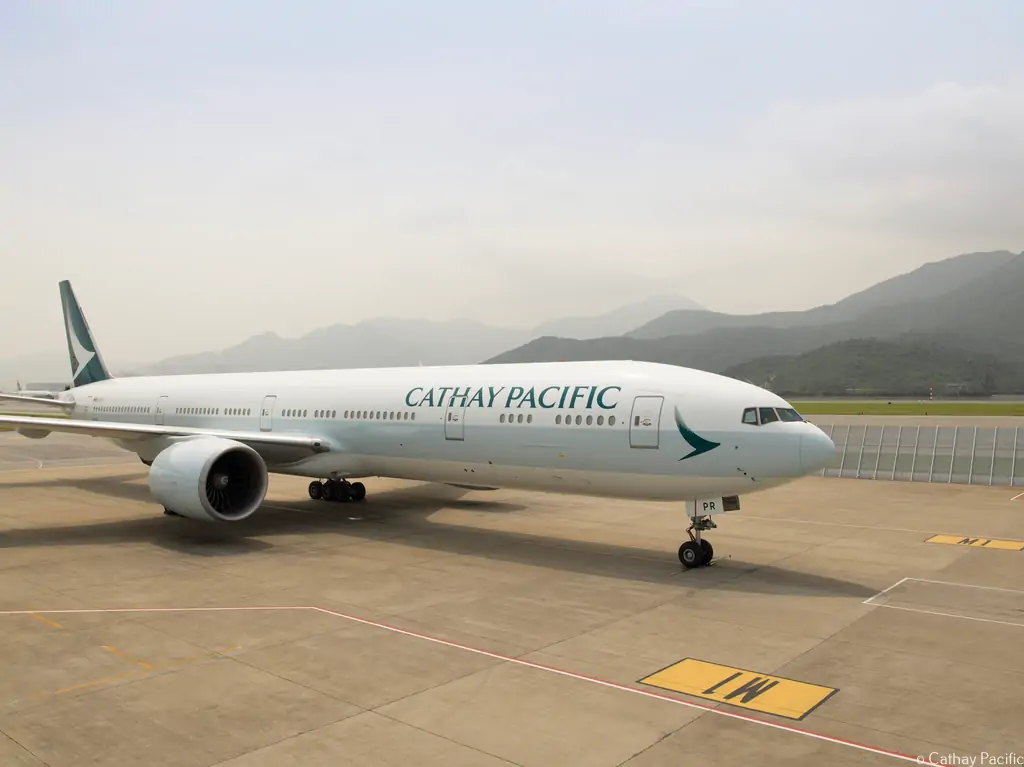
Cathay Pacific Airways has just pressed “go” on 14 more Boeing 777X jets and posted a modest rise in profit, but what’s really driving this high-stakes play?
A Big Order Built on Old Promises
In a move that doubles down on a deal struck back in 2013, Cathay Pacific tapped options to acquire 14 additional Boeing 777X aircraft, with rights to buy another seven down the road. At list prices those jets clock in at a staggering eight point one billion US dollars, though as with most major carriers the sticker price takes a significant haircut in real life. The question is not price but timing: Boeing has yet to secure certification for its latest widebody model, and deliveries are not expected until next year at the earliest.
Squeezing Out Margins with a Steady Profit Pulse
Despite lingering questions about jet certification and looming economic headwinds, Cathay reported a one percent uptick in first half profit, reaching Hong Kong dollars three point six five billion (about four hundred and sixty five million US dollars). Passenger traffic is on a rising arc, fuel costs remain comparatively low, and cargo volumes have held steady — a trifecta that kept the bottom line ticking higher even as the airline cautioned about choppy waters ahead in freight markets and short term hurdles at its budget arm HK Express.
The Long Wait for the First Delivery

Boeing’s 777X has been delayed time and again, with flight tests still underway and formal FAA certification yet to arrive. Boeing leadership is optimistic that airlines will start receiving deliveries next year, but Cathay itself is penciling in early 2027 as the moment its first jet touches down in Hong Kong . For an airline that built its reputation on punctuality and reliability, betting on a jet still waiting for regulatory blessing is a bold stretch.
What It Means for Cathay’s Fleet Strategy
Adding 14 more of the same type lets Cathay streamline pilot training, maintenance protocols, and parts inventories. It also signals confidence that next-gen ultra-long haul flying will be vital for reconnecting Asia with North America and Europe at scale. Yet with new Airbus A350 and A330neo arrivals on the way, Cathay faces a complex juggling act: balancing modern efficiency gains against the risk of further delays in rolling out its Boeing Dreamliner successor.
Cargo Concerns and the Low-Cost Question
While widebody passenger operations are slated for growth, Cathay Cargo’s outlook is less certain. Global freight demand has cooled since the pandemic surge, and price competition is fiercer than ever. On top of that, HK Express continues to grapple with regional market slowdowns and margin squeeze. The airline group’s cautionary note about these areas hints at possible strategic shifts — perhaps more code shares, route pruning, or even fleet reallocation if cargo volumes stay weak.
The High Engagement Takeaway
What makes this story tick is the blend of daring expansion and prudent caution. Cathay Pacific is doubling down on a plane that may define the next decade of ultra-long haul travel, yet it is also keeping a watchful eye on profit drivers that could force a strategic pivot. For anyone fascinated by how legacy carriers evolve in a fast-changing world, this gambit offers a front-row seat.
TL; DR
- Cathay activated options to buy 14 more Boeing 777X jets, on top of a 2013 agreement
- The order carries a list value of US $8.1 billion, but real price is heavily discounted
- First half profit rose 1 percent to HK $3.65 billion (US $465 million) thanks to strong passenger growth and low fuel
- Boeing hopes to win FAA approval soon, with deliveries to customers scheduled from next year; Cathay expects its first in early 2027
- Cargo market uncertainty and HK Express challenges pose downside risks for the airline group
With Inputs from Reuters
Read next

In the unique intersection of aviation and medicine, few aircraft capture the imagination quite like the Orbis Flying Eye Hospital. The MD-10 represents one of aviation's most extraordinary applications—transforming a cargo aircraft into a fully-equipped ophthalmic teaching facility that flies hope around the world!
For aviation enthusiasts, the Flying Eye Hospital showcases how aircraft engineering, flight operations, and humanitarian missions can seamlessly merge to create something truly extraordinary.
What is the Orbis Flying Eye Hospital?
The Orbis Flying Eye Hospital is a one-of-a-kind aircraft that serves as a fully accredited ophthalmic teaching facility housed within a converted McDonnell Douglas MD-10.
Unlike conventional medical flights or air ambulances, this aircraft is specifically designed as a mobile training centre for eye care professionals in developing countries.
The Flying Eye Hospital brings training to doctors and nurses in developing countries with little access to professional development and training. Classrooms, operating theatres and laser rooms are aboard the aircraft, and the local medical personnel can watch live surgeries as well as simulations.
From an aviation perspective, the aircraft operates under Part 125 of the federal aviation regulations, which is designed for large aircraft not used for "common carriage." This specialised regulatory framework allows the aircraft to function as both a hospital and an educational facility while maintaining the highest safety standards expected in commercial aviation.

Headquarters and Operations Base
Orbis International is headquartered in New York, with offices spanning globally, including Toronto, London, Dublin, Hong Kong, Macau, Shanghai, Singapore, Cape Town, and Addis Ababa. However, the Flying Eye Hospital's operational base is closely tied to FedEx's infrastructure, leveraging the logistics giant's worldwide network for maintenance, parts, and operational support.
Origins and Founding Vision
The story of Orbis begins in 1982 when the organisation was founded with a grant from the U.S. Agency for International Development (USAID) and private donors.
The program's inaugural aircraft was a Douglas DC-8 donated by United Airlines (UA), with United pilots volunteering for missions. This marked the beginning of a unique partnership between commercial aviation and humanitarian medicine.
The vision came from Dr. David Paton, an ophthalmologist who recognised that bringing advanced medical training directly to underserved regions would be more effective than requiring medical professionals to travel for education—a concept that required innovative thinking about aircraft utilisation and conversion.

Aircraft Evolution
First Generation: DC-8 Era (1982-1994)
The original Flying Eye Hospital was a Douglas DC-8-21 (registration N220RB) donated by United Airlines (UA). While groundbreaking, the ageing aircraft faced increasing maintenance challenges as replacement parts became scarce and expensive by the late 1980s.
Second Generation: DC-10 Transition (1994-2016)
Recognising the need for a more capable platform, Orbis purchased a DC-10 in 1992 using private donations. This aircraft offered twice the interior space of the DC-8, allowing for expanded training facilities and more sophisticated medical equipment. After a two-year conversion period, it entered service in 1994, with its inaugural mission to Beijing marking a new chapter in medical aviation.
Third Generation: The Current MD-10 (2016-Present)
The current Flying Eye Hospital represents the pinnacle of medical aviation engineering.
The current Flying Eye Hospital, an MD-10, can fly nearly twice as far as its predecessor and requires only 2 pilots rather than 3. This efficiency improvement is crucial for humanitarian operations, as it reduces operational costs while extending range capabilities.
The aircraft features modular hospital suites—the first time such units have been implemented on an aircraft. The conversion process took 6 years, transforming the cargo aircraft into a sophisticated medical facility complete with operating rooms, classrooms, and recovery areas.

Global Flight Operations
The Flying Eye Hospital operates on a carefully planned schedule, visiting countries where eye care training is most needed. Flight operations are complex, requiring extensive coordination with local aviation authorities, airports, and medical institutions.
All Orbis pilots must be current and qualified on the MD-10 to participate. As one pilot acknowledged, "We do a lot of prep work since we aren't dispatched like an airline. We must be ready to handle any situation we might face."
The aircraft typically spends 2-3 weeks in each location, during which it serves as both a training facility and an operational hospital. Flight routes are determined by medical need, local infrastructure capabilities, and aviation safety considerations.
Mission and Purpose
The Flying Eye Hospital's primary mission extends beyond providing direct patient care—it focuses on building local capacity for sustainable eye care. The aircraft serves as a training platform where local medical professionals can learn advanced surgical techniques, observe live procedures through 3D filming systems, and participate in hands-on training.
Since 1982, Orbis capacity-building programs have enhanced the skills of 325,000 eye care personnel and provided medical and optical treatment to more than 23.3 million people in 92 countries. The aircraft's unique design allows for live surgical broadcasts, enabling training to extend beyond the aircraft itself to local hospitals and even international locations.
Flight Crew: The Volunteer Pilots
One of the most remarkable aspects of the Flying Eye Hospital operations is its pilot corps.
FedEx donated the MD-10 aircraft and provides aircraft parts, maintenance, and pilot training at no cost to Orbis. FedEx provides the recurrent training for the 19 volunteer pilots.
These volunteer pilots are all qualified MD-10 pilots who donate their time and expertise to the mission. The partnership with FedEx is particularly significant from an aviation perspective—it provides access to a pool of highly experienced pilots familiar with the aircraft type, while ensuring proper maintenance and training standards.
The flight crew experiences something unique in aviation: "With this mission we see kids who can't see on Monday and on Wednesday they can. Wow! Where else can you do that?" as one pilot noted, highlighting the extraordinary nature of this humanitarian aviation mission!

Current Focus: The Rwanda Project 2025
The most recent mission exemplifies the Flying Eye Hospital's operational complexity and impact. On July 18, 2025, the aircraft landed in Kigali, Rwanda, marking the first time this unique aircraft visited the country. The two-week program, conducted in partnership with the Rwanda International Institute of Ophthalmology (RIIO) at Kibagabaga Hospital, demonstrates the intricate planning required for such operations.
Week One: Advanced Simulation Training
The first week focused on simulation-based learning, utilising virtual reality (VR) tools developed by Orbis in partnership with FundamentalVR. Local medical teams are trained in 2 types of cataract surgery: manual small-incision cataract surgery (MSICS) and phacoemulsification. This technology transfer approach ensures that training capabilities remain in-country after the aircraft departs.
Week Two: Live Surgical Training
The second week transitioned to hands-on surgical training, with the aircraft welcoming patients for screening and surgery. The focus areas included pediatric strabismus and oculoplastics, providing Rwandan eye health professionals with advanced surgical skills.
Maurice Geary, Flying Eye Hospital Director, emphasised the collaborative nature of the mission, acknowledging support from Rwanda's Ministry of Health and the Rwanda Airports and Aviation Authority. This highlights the complex coordination required between medical, aviation, and governmental entities.

The Aviation-Medicine Convergence
The Orbis Flying Eye Hospital represents a remarkable achievement in specialised aircraft design and operations!
The aircraft's technical specifications—including backup generators, water treatment plants, air conditioning systems, and sophisticated broadcast capabilities—showcase the engineering challenges involved in creating a mobile medical facility that can operate independently in diverse international environments.
Bottom Line
As the Flying Eye Hospital continues its missions worldwide, it stands as a testament to aviation's potential for humanitarian impact. The program has not only restored sight to millions but has also created sustainable training programs that continue long after the aircraft departs. For aviation professionals and enthusiasts, the Flying Eye Hospital represents the ultimate expression of how flight can serve humanity's most pressing needs.
This unique aircraft continues to demonstrate that aviation is not merely about transportation—it's about connecting people, delivering hope, and creating possibilities that would otherwise be impossible. In the case of the Orbis Flying Eye Hospital, aviation literally brings light to darkness, one flight at a time!
Comment