
UPS Offers Early Retirement to Pilots Amidst Air Freight Challenges: What's Behind the Move?

Abhishek Nayar
02 Sep 2023
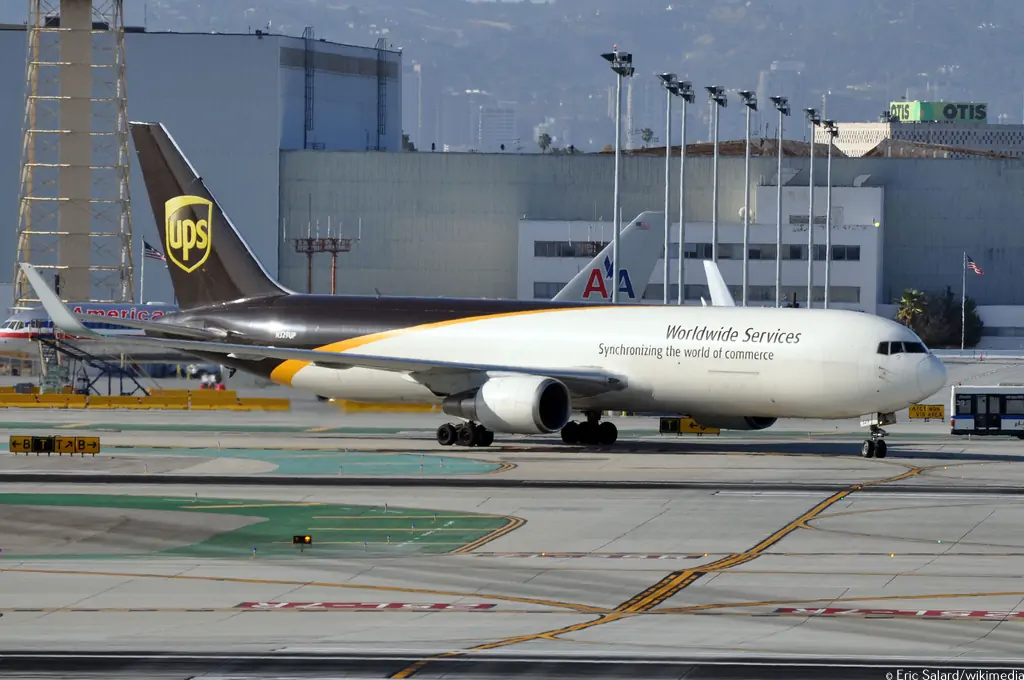
In a bid to adapt to the ever-evolving dynamics of the global air freight market and address soaring labor costs, United Parcel Service (UPS), the world's largest package delivery company, recently unveiled its early retirement program for pilots.
On Thursday, August 31, 2023, UPS announced its proactive strategy, hoping that 167 of its pilots will opt for this voluntary separation offer, which encompasses attractive financial incentives and comprehensive healthcare benefits. Currently, the company employs around 3,400 pilots.
Understanding UPS's Motivation
The Sluggish Air Freight Market
The first and foremost aspect that triggered this move by UPS is the sluggishness in the air freight market. In recent years, the aviation industry has been grappling with turbulence due to a myriad of factors, including the global economic landscape, pandemic-related disruptions, and supply chain challenges. These factors have collectively impacted the demand for air freight services, leading to reduced revenues for companies like UPS.
Soaring Labor Expenses
Another significant concern for UPS has been the escalating labor expenses. Attracting, training, and retaining skilled pilots can be a costly endeavor. The airline industry, in particular, faces a constant battle to strike a balance between competitive compensation packages for pilots and cost-cutting measures to remain profitable. UPS's decision to offer early retirement aims to address this ongoing financial challenge.
UPS's Voluntary Separation Offer
Financial Incentives
UPS has designed an enticing early retirement package for its pilots, featuring substantial financial incentives. This offer is aimed at motivating experienced pilots to consider retirement as a viable option. The financial benefits provided by UPS could act as a cushion for pilots as they transition into their retirement phase.
Comprehensive Healthcare Benefits
In addition to financial incentives, UPS is extending comprehensive healthcare benefits to pilots who choose the early retirement path. This commitment to healthcare coverage can alleviate concerns about post-retirement medical expenses, providing peace of mind to retiring pilots and their families.
UPS's Statement
In a statement regarding this strategic move, UPS asserted, "We regularly assess our operations and make adjustments to better serve our customers." This statement reflects the company's commitment to adapt to changing market conditions while prioritizing its customer-centric approach.
The Broader Implications
Impact on UPS's Operations
The acceptance rate of the voluntary separation offer will significantly impact UPS's operations. A successful outcome could lead to a leaner, more cost-effective pilot workforce. However, it may also pose challenges in terms of ensuring adequate staffing levels and maintaining operational efficiency.
Industry-Wide Reflection
UPS's decision to offer early retirement to its pilots serves as a reflection of broader trends within the aviation industry. Airlines across the globe are continually reassessing their strategies to remain competitive and financially resilient in a dynamic market.
Conclusion
In conclusion, UPS's offer of early retirement to its pilots is a proactive response to the challenges posed by a sluggish air freight market and escalating labor expenses. By offering attractive financial incentives and comprehensive healthcare benefits, UPS aims to strike a balance between cost-cutting and employee welfare. This strategic move may have broader implications for both UPS's operations and the aviation industry at large.
With Inputs from Reuters
Read next
London Company's Jet Engine Scandal: Deceptive Components Threaten Airbus A320 and Boeing 737 Safety
Abhishek Nayar
02 Sep 2023

Safety is critical in the ever-evolving world of aviation. The trust passengers place in aircraft manufacturers and regulatory bodies is immeasurable. However, recent revelations have shaken this trust to its core.
European aviation regulators have uncovered a disturbing truth - an obscure London-based company, AOG Technics, was involved in selling fraudulent components for jet engine maintenance, affecting numerous older-generation Airbus A320 and Boeing 737 flights.
The AOG Technics Scandal Unveiled
A Soaring Scandal Emerges

The scandal involving AOG Technics began to unravel when public regulatory filings and letters to operators were obtained by Bloomberg. These documents revealed a shocking web of deceit surrounding the maintenance of CFM56 engines, which are commonly used in older Airbus A320 and Boeing 737 aircraft. The allegations centered around forged certification documents and the distribution of unapproved parts by AOG Technics.
A Culprit in the Shadows
AOG Technics, a London-based company that had flown under the radar until now, was at the heart of this controversy. The company's involvement in supplying fraudulent components sent shockwaves through the aviation industry. Questions emerged about how a seemingly obscure entity could jeopardize the safety of countless flights.
In an industry where every component has verifiable provenance to ensure aircraft safety — it is difficult to assess whether uncertified components would be as durable under stress — the proliferation of undocumented or potentially counterfeit parts into the engine supply chain is rare and treated with utmost severity. Manufacturers and authorities issued the alert weeks ago, sparking a global scramble to track down AOG Technics-supplied parts and identify affected aircraft.
The Role of Manufacturing Partners
General Electric and Safran: Unlikely Investigators
Amid the turmoil, two major players in the aerospace industry, General Electric and Safran, stepped into the spotlight. These manufacturing giants were thrust into the investigation, leaving many to wonder how such established companies could become embroiled in this scandal.
Assisting in the Investigation
General Electric and Safran were not the perpetrators but rather the ones seeking justice. They played an instrumental role in assisting aviation regulators in their quest to unearth the truth. Their involvement showcased a commitment to ensuring the safety of the skies.
This month, EASA advised operators to quarantine parts backed by counterfeit paperwork. It stated on Thursday that AOG Technics has yet to provide details as to the precise whereabouts of the suspicious parts.
The Civil Aviation Authority of the United Kingdom stated in an August 4 safety notice that it was examining "a large number of Suspect Unapproved Parts" provided by AOG Technics. According to the filing, several components with fraudulent airworthiness release certificates were discovered on engines installed to aircraft registered in the United Kingdom.
Implications for Passenger Safety
The Unseen Threat
Passenger safety is non-negotiable in aviation. The fraudulent components supplied by AOG Technics posed a significant threat to the unsuspecting travelers on Airbus A320 and Boeing 737 flights. The potential consequences of using these counterfeit parts were dire, raising concerns about the industry's ability to maintain the highest safety standards.
Restoring Trust
As the investigation continues, the aviation industry must work tirelessly to regain the trust of passengers. Restoring faith in the safety of these older-generation aircraft will be no small task, but it is an essential one.
Conclusion
The AOG Technics scandal has shaken the foundations of aviation safety, revealing a shadowy world of fraudulent components and compromised aircraft maintenance. With General Electric and Safran leading the charge in the investigation, the industry is taking steps to rectify the situation. However, the road to restoring passenger trust will be challenging. Safety must always remain the top priority in aviation.
With Inputs from The Japan Times
Read next
Skybound Surges: Labor Day Weekend Travel Boom Sets New Records in the US
Abhishek Nayar
02 Sep 2023

Labor Day, celebrated annually on the first Monday in September, marks the unofficial end of summer in the United States. As the holiday approaches, airlines and airports across the nation are gearing up for a bustling weekend. Travelers are eager to explore overseas destinations and cooler getaways one last time before the fall season kicks in.
Increased Travel Demand
The Labor Day weekend traditionally sees a spike in travel, as families and individuals take advantage of the long weekend to embark on a getaway. However, this year's travel expectations are exceptionally high. According to travel booking service Hopper, more than 20 million travelers are expected to fly out of US airports between Thursday and Tuesday, reflecting a remarkable 14 percent increase compared to the same period last year.
According to the travel company AAA, international bookings for flights, hotels, rental cars, and cruises for the Labor Day weekend were up 44% over the previous year, while domestic bookings were up 4%.
Larger international travel operators have reported strong earnings, with businesses ranging from Airbnb to Marriott anticipating strong future demand due to robust global travel and increasing accommodation rates.
Hopper's Predictions
Hopper's travel insights have become increasingly valuable for both travelers and the travel industry. Their data-driven predictions have highlighted significant trends, and their Labor Day forecast is no exception. The 14 percent year-on-year increase in travelers signifies a resurgence in international travel, showcasing the growing confidence in global mobility.
TSA's Role
The Transportation Security Administration (TSA) plays a pivotal role in ensuring the safety and security of air travel. With the expected surge in passengers, TSA is fully prepared to handle the increased footfall. Between September 1 and September 6, TSA expects to screen more than 14 million passengers. Their robust security protocols and dedicated staff will ensure that travelers experience safe and efficient security checks.
"We anticipate that this Labor Day holiday weekend will be busy, with passenger volumes nearly 11% higher than last year—volumes that have already exceeded 2019 Labor Day holiday travel volumes," said TSA Administrator David Pekoske in a statement.
Airline Measures

Airlines are also stepping up their game to accommodate the high demand. They are increasing the frequency of flights, deploying larger aircraft on popular routes, and optimizing schedules to ensure smooth operations. This proactive approach aims to minimize delays and enhance the overall travel experience.
Airport Preparations
Airports are bracing for the influx of travelers by beefing up their services. Enhanced cleaning and sanitation procedures are in place to maintain a hygienic environment. Additionally, airport staff are trained to provide guidance and support to passengers, making their journeys stress-free.
Conclusion
As Labor Day approaches, airlines and airports in the United States are fully prepared to handle the surge in travel demand. Hopper's predictions highlight the renewed interest in international travel, while TSA's commitment to safety ensures passengers can embark on their journeys with confidence. By following a few travel tips, passengers can make the most of this busy weekend while keeping their stress levels in check.
With Inputs from Reuters
Read next

In the dynamic and safety-critical world of aviation, providing accurate and comprehensive data to pilots is vital. While traditional Notices to Air Missions (NOTAMs), which are alphanumeric messages with constraints, have been the standard means of conveying important information to aviators, a more detailed and illustrative approach has emerged to assist pilots in developing more accurate mental models of critical data. This innovative method is known as an AIP Supplement, and it is included in the Aeronautical Information Publication (AIP).
The Evolution of AIP Supplements
The AIP is a comprehensive document published by aviation authorities around the world. It contains essential information for pilots, air traffic controllers, and other aviation professionals. The AIP covers a wide range of topics, including airspace structure, airport facilities, air navigation aids, and flight procedures.
While NOTAMs have traditionally been used to convey time-sensitive information, they have limitations when it comes to providing detailed and illustrative data. AIP Supplements were introduced to address these limitations and enhance the quality of aeronautical information available to the aviation community.
NOTAMs and AIP Supplements are used to make temporary modifications to the information contained in AIP, like AIP Canada. While NOTAMs are used for dynamic changes and have a message length restriction, AIP Supplements are used for longer-term changes (3 months or more) or shorter occurrences when the inclusion of an illustration or other pertinent information is necessary to explain what is going on more accurately.
AIP Supplements: Structure and Content
AIP Supplements are designed to provide detailed information and illustrations to assist pilots in better understanding critical data. These supplements are typically structured to include the following components:
Title and Identification: Each AIP Supplement begins with a clear title and identification number for easy reference.
Effective Date: The supplement specifies its effective date, ensuring that pilots are aware of when the information becomes applicable.
Objective: A clear statement of the supplement's objective is provided to convey the purpose and importance of the information it contains.
Background: AIP Supplements often include background information to provide context for the data presented. This may include the reasons for the supplement's issuance and any relevant historical information.
Detailed Information: The core of the supplement consists of detailed information presented in a structured and organized manner. This information can cover a wide range of topics, including changes to airspace structure, new procedures, or alterations to airport facilities. To enhance clarity, this section may include charts, diagrams, and illustrations.
References: AIP Supplements provide references to related documents, such as NOTAMs or regulatory documents, allowing pilots to access additional information if needed.
Contact Information: In case pilots require further clarification or have questions related to the supplement, contact information for the relevant authorities or agencies is provided.
Contributions to Aviation Safety
AIP Supplements significantly contribute to aviation safety in several ways:
Improved Situational Awareness: By offering detailed and illustrative information, AIP Supplements help pilots develop a clearer mental picture of critical data, enhancing their situational awareness during flights.
Reduced Ambiguity: AIP Supplements reduce ambiguity and misunderstanding by presenting information in a structured and organized format. This clarity is essential for making informed decisions in the cockpit.
Timely Updates: While NOTAMs remain vital for conveying time-sensitive information, AIP Supplements allow for more comprehensive and less time-sensitive updates, ensuring that pilots have access to accurate data even when time is not of the essence.
Regulatory Compliance: Pilots are required to adhere to regulations and procedures outlined in the AIP. AIP Supplements ensure that this information is readily available and easily accessible.
Conclusion
In the ever-evolving field of aviation, the need for accurate and comprehensive information is paramount. AIP Supplements have emerged as a valuable tool for providing detailed and illustrative data to assist pilots in developing more accurate mental models. These supplements, included in the Aeronautical Information Publication, enhance situational awareness, reduce ambiguity, and contribute to overall aviation safety. As aviation authorities continue to prioritize safety, AIP Supplements will remain a critical component of the information ecosystem, ensuring that the skies remain safe for all.
With Inputs from Nav Canada, AIP Canada Supplement
Read next

The United States Congress has approved the collaborative effort between GE Aerospace and Hindustan Aeronautics Limited (HAL) to manufacture fighter jet engines for the Indian Air Force. This agreement, which was initially formulated during Prime Minister Narendra Modi's visit to the US in June, is poised to elevate the defence cooperation between India and the US. The partnership entails the local production of F-414 jet engines for the light combat aircraft (LCA) Mk2, which is under development.
With an estimated value of around USD 1 billion, the deal involves an 80% transfer of technology (ToT). This arrangement is expected to result in a substantial increase in indigenous content for the new fighter jet, reaching approximately 75%. This figure stands in stark contrast to the 55-60% indigenous content of LCA Mk-1A and 50% in the existing variants, reported Hindustan Times (HT).
“It is all clear from the legislative end. The sale was approved before Prime Minister Narendra Modi’s visit itself. But, as per the process, the State Department notified the House and Senate Foreign Relations Committee on July 28. There has been no objection. The administration can go ahead with the next steps," an official familiar with developments on Capitol Hill was quoted as saying by Hindustan Times.
The final agreement with GE Aerospace is anticipated to cover the production of 99 F-414 engines under licence and is likely to be finalised during the current fiscal year. The first batch of these engines is projected to be manufactured in India three years from now. The scope of ToT encompasses 11 critical areas, a marked departure from a decade ago when discussions between GE and India’s Aeronautical Development Agency (ADA) first began. In the past, only 58% of technology transfer was agreed upon, withholding key engine technologies from India's access.
The F-414 engine itself is an evolution of the F-404 engine, which currently powers the LCA Mk1 and Mk1A. The Indian Air Force had earlier signed a contract for 83 Mk-1A jets in February 2021, which brought the total orders of LCA variants to 123. The earlier LCA Mk-1s are in varying stages of operational clearance. The forthcoming LCA Mk-2 is poised to play a pivotal role in the Indian Air Force's future combat capabilities, and there are plans to build 130 of these fighter jets.
IAF’s 40 earlier LCA Mk-1s ordered are in the initial operational clearance (IOC) and the more advanced final operational clearance (FOC) configurations. The LCA Mk-2 will form an important element of IAF’s future combat capabilities as India is planning to build around 130 such fighter jets.
Upgraded LCA Mk2
Last year, the government gave its nod to developing the LCA Mk-2 and sanctioned INR 10,000 crore for the project. The Mk-2 fighter will be the most advanced LCA variant to be designed and developed indigenously. Apart from the more powerful GE-414 engine, it will be equipped with superior radar, better avionics and electronics, and will be capable of carrying a higher weapons payload.
Under the deal, the complex engine technologies that will be transferred to India include machining and coating for single crystal turbine blades, fabrication of powder metallurgy discs, inertia friction welding for fan and afterburner, laser drilling technology for combustor, special coatings for corrosion and erosion, machining and coating of ceramic matrix composites for nozzle guide vanes. flaps and other parts, machining of thin-walled titanium casing, polymer matrix composites for bypass duct and bottle boring of shafts, the officials said.
The LCA Mk2 will have improved range, enhanced survivability, better situational awareness for pilots, network-centric capabilities, and the ability to quickly switch from one role to another, the officials added. The 17.5-tonne fighter will have a maximum speed of 1.8 Mach, compared to the 13.5-tonne LCA Mk-1A which has a top speed of 1.6 Mach. The new aircraft will come with a payload capacity of 6.5 tonnes (compared to 3.5 tonnes for the Mk1A) and it will carry a mix of weapons including beyond visual range air-to-air missiles, air-to-ground missiles, heavy precision-guided weapons and conventional bombs.
Benefits of the Deal
The deal also includes the co-production of 99 jet engines, which will cost less because of the technology transfer. The partnership is considered a “big game changer” as it forms the basis for future indigenous engines that will power military jets. US-based GE Aerospace is regarded as the world's leading provider of jet engines, components and systems for commercial and military aircraft. The deal becomes all the more significant because the US never shares similar tech, even with its closest allies. The fact that Washington is willing to share such information with New Delhi suggests that it has high hopes from India in the region.
The approval by Congress paves the way for the implementation of the agreement with HAL, which includes unprecedented technology transfer, manufacturing of jet engines in India and licensing arrangements. GE Aerospace, which has been working with India for more than four decades, will also get a boost to its facilities here, including providing engines, avionics, services, engineering, manufacturing, and local sourcing. The US giant has previously said it would continue to collaborate with the Indian government on the AMCA Mk2 engine programme.
An anonymous source familiar with developments within Capitol Hill, the headquarters of the US Congress, told HT that all legislative requirements have been met. The approval process was initiated before Prime Minister Narendra Modi's visit, and the necessary notifications were made to the House and Senate Foreign Relations Committee on July 28. With no objections raised during the subsequent 30 days, the deal received the green light. Discussions surrounding the agreement are expected to progress during President Biden's visit to India for the upcoming G20 Summit in September.
While a US administration official refrained from confirming the status of the Congressional process, they expressed optimism about the forward momentum of the agreement. “We are working towards and expecting the necessary steps on both sides to be able to move forward on this historic agreement,” the official commented.
(With inputs from Hindustan Times)
Read next
Jet Airways gets INR 100 Crore from Jalan Kalrock Consortium for its Revival Plan

Radhika Bansal
01 Sep 2023

Jalan Kalrock Consortium, the successful bidder for financially challenged Jet Airways, stated in a press release issued on August 31 that it has deposited INR 100 crore into the airline. This action follows the National Company Law Appellate Tribunal's (NCLAT) directive permitting the execution of the revival strategy.
With this recent contribution, JKC's total investment in Jet Airways has reached INR 250 crore, the consortium noted. The consortium's commitment now revolves around providing the remaining INR 100 crore by September 30 to take control of the airline.
On August 28, the NCLAT granted an extension of time to Jet Airways' successful resolution applicant, the Jalan Kalrock Consortium, to make a payment of INR 350 crore to its lenders. JKC expressed gratitude to stakeholders for their unwavering support and expressed confidence in the triumphant revival of Jet Airways.
On August 21, JKC informed the court of its intention to deposit INR 100 crore by August 31 and another INR 100 crore by September 30. The consortium urged the Committee of Creditors (CoC) to encash a performance bank guarantee (PBG) of INR 150 crore towards the remaining amount. However, the CoC of Jet Airways argued that the performance bank guarantee was a backup and could not be utilized at this stage. The case is scheduled for further consideration on October 4.
“We thank all our stakeholders for their continued support. We are confident that this progress will lead to a successful resurgence of Jet Airways and we look forward to bringing the JOY back to our guests”, the consortium's statement added.
Timeline for JKC
On July 31, the JKC announced that the Directorate General of Civil Aviation (DGCA) had renewed the airline's air operator certificate. The Air Operator Certificate (AOC) was re-issued on May 20, 2022. However, since the airline did not start operations, AOC expired on May 19, 2023. In a statement, the Jalan-Kalrock Consortium (JKC) said it has "successfully obtained renewal for AOC of Jet Airways from the Directorate General of Civil Aviation (DGCA) on July 28, 2023".
A committee of creditors is formed once a company is admitted to insolvency. It is a body of financial creditors representing the interests of stakeholders. The voting percentage on the panel is proportional to the amount a financial institution has lent to the company in insolvency.
On January 13, the NCLT allowed the transfer of the beleaguered airline to the consortium led by London-based Kalrock Capital and UAE-based entrepreneur Murari Lal Jalan. However, the CoC took the matter to the NCLAT, opposing the transfer.
Jet Airways was grounded in April 2019 due to mounting losses and a debt of about INR 8,000 crore. In October 2020, the airline's CoC approved the revival plan submitted by the Jalan-Kalrock consortium. The airline’s lenders called the Committee of Creditors (CoC) had approved the resolution plan jointly submitted by Dubai-based businessmen Murari Lal Jalan and German serial entrepreneur Florian Fritsch in October 2020. JKC emerged as the winning bidder for the grounded Jet Airways after an insolvency resolution process. However, the ownership transfer to JKC is yet to happen amid persisting differences between JKC and the lenders of the airline.
Comment