
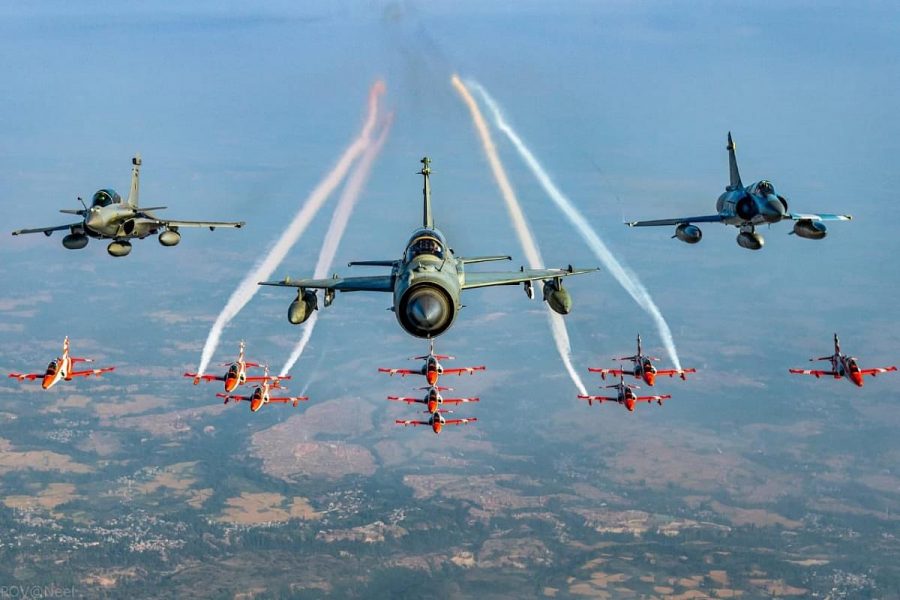
The Republic Day parade on the Rajpath in 2022 will see the "grandest and largest" flypast ever with a total of 75 aircraft to mark the Azadi ka Amrit Mahotsav celebrations, an IAF official said on Monday, January 17.
The flypast will conclude with seven jaguar fighter aircraft flying in the "Amrit" formation to commemorate the 75 years of Independence.
"The flypast this year will be the grandest and largest with 75 aircraft from IAF, Army and Navy flying during the Republic Day parade. This is in line with the Azadi ka Amrit Mahotsav celebrations.The flypast will include Tangail formation which will have one Dakota and two Dornier flying in Vic formation. This is a tribute to the Tangail airdrop operations of the 1971 War. There will also be Meghna formation of 1 Chinook and four Mi-17s."Wing Commander Indranil Nandi, PRO, Indian Air Force
The flypast will begin with "Dhwaj" formation with four Mi-17 aircraft, followed by "Rudra" and "Rahat" formations with 4 and 5 Advanced Light Helicopters (ALH), respectively.
Among the other aircraft that will display their might at the parade are Rafale, Indian Navy's MiG29K, P-8I surveillance aircraft and Jaguar fighter jets.
All air assets of the IAF, excluding single-engine assets like the Light Combat Aircraft and the MiG-21, will feature in the flypast, which will also commemorate the Golden Jubilee of India’s victory in the 1971 War with the Megha and Tangail formations.
IAF's Chinook Helicopters
While the Meghna formation will feature a Chinook CH-47 heavy-lift helicopter in the lead along with four Mi-171V helicopters in an Arrow shape, the Tangail formation will feature the vintage Dakota escorted by two Dornier-228 aircraft. Operations at Meghna and Tangail signify important landmarks in the 1971 War.
'Transformation for the Future' will be the theme of the IAF Tableaux at the Parade. It will feature models of the MiG-21 and Gnat fighters which were the highlight of the use of airpower by India in the 1971 War.
The tableaux will also feature the Light Combat Helicopter and its weapon, the Dhruvastra Anti-Tank Guided Missile. The Aslesha Mk 1 3D low-level radar which detects threats flying at low and medium altitudes is also a highlight of the display, as is the GSAT 7A satellite which is the backbone of the IAF’s network-centric capabilities.
Indian Air Force Band
The Rafale fighter and its weaponry, including the Scalp ground attack cruise missile and the Meteor and Mica air-to-air missile will also be displayed on the tableaux.
A 96-member marching contingent at the Parade will be led by Squadron Leader Prashant Swaminathan while the 72-member IAF band will be led by Flight Lieutenant Roop Chander.
India will celebrate its 73rd Republic Day on January 26 this year, honouring the historic date when the country completed its transition towards becoming an independent republic after the Constitution came into effect. As part of the celebrations, an annual Republic Day parade is held in Delhi's Rajpath.
Meanwhile, a contingent of five Central Asian nations - Kazakhstan, Kyrgyzstan, Tajikistan, Turkmenistan, and Uzbekistan, who will be chief guests for Republic Day 2022 celebrations, has arrived in Delhi to participate in the event.
List of the aircraft participating in the flypast on Republic Day 2022.
Let's understand about the Indian Air Force and Flypast
The Indian Air Force (IAF) is the air arm of the Indian Armed Forces. Its complement of personnel and aircraft assets ranks fourth amongst the air forces of the world. Its primary mission is to secure Indian airspace and to conduct aerial warfare during armed conflict. It was officially established on 8 October 1932 as an auxiliary air force of the British Empire which honoured India's aviation service during World War II with the prefix Royal.
After India gained independence from the United Kingdom in 1947, the name Royal Indian Air Force was kept and served in the name of Dominion of India. With the government's transition to a Republic in 1950, the prefix Royal was removed.
The President of India holds the rank of Supreme Commander of the IAF. As of 1 July 2017, 1,39,576 personnel are in service with the Indian Air Force. The Chief of the Air Staff, an air chief marshal, is a four-star officer and is responsible for the bulk of operational command of the Air Force.
There is never more than one serving ACM at any given time in the IAF. The rank of Marshal of the Air Force has been conferred by the President of India on one occasion in history, to Arjan Singh. On 26 January 2002, Singh became the first and so far, the only five-star rank officer of the IAF.
A flypast is a ceremonial or honorific flight by a group of aircraft or a single aircraft. The term flypast is used in the United Kingdom and the Commonwealth. Since India is a Commonwealth nation, we use the term Flypast. In the United States, the terms flyover and flyby are used.
In many countries including India, flypasts, normally performed by the precision aerobatic team of a country's air force, are an integral part of Republic Day or National Day celebrations.
In October 2006, the Indian Air Force celebrated its Platinum Jubilee with a flypast of around 78 aircraft, including the Sukhoi 30 MKI, the Mirage 2000, and MiG-25 attack aircraft.
Flypasts are often tied in with Royal or state events, anniversaries, celebrations - and occasionally funerary or memorial occasions. Sometimes flypasts occur in special situations, to honour someone or to celebrate certain types of aircraft.
They have affinities with parades, of which they form the aerial component. Often they occur in purely display contexts at airshows, but it is the flypasts linked with civic, ceremonial and national pride, that imprint themselves on a nation's memory. Some flypasts have been described in broadcast and print media as "historic".
Let's have a look at some major aircraft of IAF
Dassault Rafale - It the latest addition to India's aircraft arsenal; India has signed a deal for 36 Dassault Rafale multirole fighter aircraft. As of October 2021, 29 Rafale fighters are in service with the Indian Air Force.
IAF's Dassault Rafale
Sukhoi Su-30MKI - It is the IAF's primary air superiority fighter, with additional air-to-ground (strike) mission capability, is the Sukhoi Su-30MKI. 272 Su-30MKIs have been in service as of January 2020 with 12 more on order with HAL.
IAF's Sukhoi Su-30MKI
Mikoyan MiG-29 - The MiG-29, known as Baaz, is a dedicated air superiority fighter, constituting the IAF's second line of defence after the Su-30MKI. There are 69 MiG-29s in service, all of which have been recently upgraded to the MiG-29UPG standard, after the decision was made in 2016 to upgrade the remaining 21 MiG-29s to the UPG standard.
IAF's Mikoyan MiG-29
Dassault Mirage 2000 - The Mirage 2000, known as Vajra in Indian service. The IAF currently operates 49 Mirage 2000Hs and 8 Mirage 2000 TH all of which are currently being upgraded to the Mirage 2000-5 MK2 standard with Indian specific modifications and 2 Mirage 2000-5 MK2 are in service as of March 2015. The IAF's Mirage 2000 are scheduled to be phased out by 2030.
Dassault Mirage 2000
HAL Tejas - IAF MiG-21s are to be replaced by domestically built HAL Tejas. The first Tejas IAF unit, No. 45 Squadron IAF Flying Daggers, was formed on 1 July 2016, followed by No. 18 Squadron IAF "Flying Bullets" on 27 May 2020. Initially stationed at Bangalore, the first squadron was then to be transferred to its home base in Sulur, Tamil Nadu. In February 2021, the Indian Air Force ordered 83 Tejas, including 40 Mark 1, 73 single-seat Mark 1As and 10 two-seat Mark 1 trainers. Total 123 ordered.
IAF's HAL Tejas
SEPECAT Jaguar - The Jaguar, known as the Shamsher, serves as the IAF's primary ground attack force. The IAF currently operates 139 Jaguars. The first batch of DARIN-1 Jaguars are now going through a DARIN-3 upgrade being equipped with EL/M-2052 AESA radars, and an improved jamming suite plus new avionics. These aircraft are scheduled to be phased out by 2030.
IAF's SEPECAT Jaguar
Mikoyan-Gurevich MiG-21 - The MiG-21 serves as an interceptor aircraft in the IAF, which phased out most of its MiG-21s and planned to keep only the 125 aircraft upgraded to the MiG-21 Bison standard. The phase-out date for these interceptors has been postponed several times. Initially set for 2014–2017, it was later postponed to 2019. Current phase-out is scheduled for 2021–2022.
IAF's MiG-21
History behind the 'Nicknames' of Aircraft
For nearly five decades, till the early 1990’s the IAF bestowed almost all its imported combat and transport aircraft and helicopters and indigenously developed platforms, with catchy and robust local appellations that were shortlisted by a senior officers committee at Air Headquarters in New Delhi, and finally approved by the air chief.
Expectedly, this committee delved into India’s rich animal world, mythology and history, before deciding on appealing names which, in many instances also depicted the designated platforms’ capabilities.
Thereafter, the practice of nicknaming platforms gained currency. The French Alouette III light utility helicopter that was inducted into service in the early 1960s was christened Chetak whilst the Aerospatiale SA-315B rotorcraft that followed over a decade later became Cheetah.
A more advanced version of the former rotorcraft, developed much later by Hindustan Aeronautics Limited, was called Cheetal, while the indigenously designed Advanced Light Helicopter was called Dhruv, or constant, in Sanskrit.
Parallel to this, India’s first indigenously designed fighter-bomber in 1961, the HF (Hindustan Fighter)-24 was nicknamed Marut or Spirit of the Tempest, while the licence-built derivative of the British Folland Gnat light attack fighter and trainer, that joined IAF service in 1977, was called Ajeet.
IAF's Tejas
Over two decades later, the locally designed Light Combat Aircraft was baptised as Tejas, meaning brilliantly lustrous. Fortunately, that’s a name that’s in popular use in and out of the IAF.
Soviet fighters began joining the IAF in 1964, with MiG-21M variants being commissioned into service as Trishul (trident), while the more advanced MiG-21 BIS was christened Vikram (valorous). The subsequent MiG-23BN strike fighter and its MiG-23MF air defence variant, inducted during the IAF’s ‘golden era’ of inductions in the early 1980s, were named Vijay (victory) and Rakshak (protector) respectively.
Moreover, the IAF’s classified MiG-25 reconnaissance platform was christened Garuda, after the mythological bird-like creature whose purported activities were as mysterious and enigmatic as those of the aircraft.
Indian Air Force Ilyushin IL-76 - Gajraj
Later IAF additions, like the ground attack Jaguars were baptised Shamsher (Sword of Justice), the MiG-29 as Baaz (Eagle) and the French Mirage-2000Hs, also made by Dassault, was called Vajra, meaning thunderbolt of the gods, a name the fighter has lived up to in many recent missions.
The IAF’s Russian Ilyushin IL-76 transport aircraft was befittingly called Gajraj, whilst the smaller Antonov An-32s were dubbed the Sutlej. Rotorcraft like the medium-lift Russian Mil Mi-8 helicopter was named Rana, and its subsequent upgraded version was the Mil Mi-17 Pratap, subtly combined the names of the 16th-century legendary Rajput warrior Maharana Pratap on two platforms.
The Mil Mi-25/35 attack helicopter was cheekily nicknamed Akbar, after the Mughal potentate who defeated the Mewar Maharana at Haldighati in 1568.

Read next
The world's largest airplane will soon launch Mach-6 capable hypersonic aircraft into space

Prashant-prabhakar
18 Jan 2022
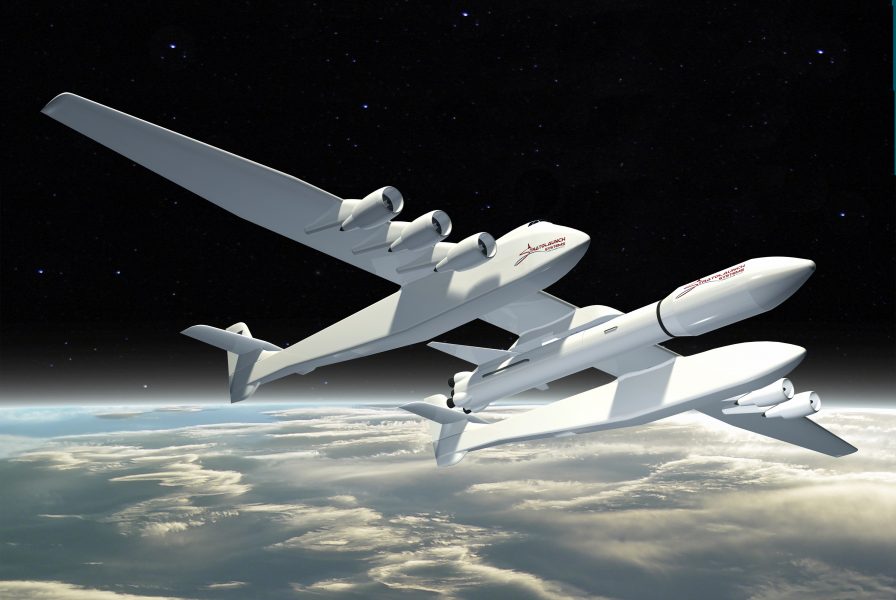
Stratolaunch LLC, the brainchild of Microsoft co-founder Paul Allen, who steered the company until his last breath, is an American aerospace company providing high-speed flight services.
The Drive
Stratolaunch- the massive aircraft, resembling two giant Boeing jets flying side-by-side, will be used to launch rockets and space vehicles from high atmospheric locations, into the stars.
Our hypersonic testbeds will serve as a catalyst in sparking a renaissance in hypersonic technologies for our government, the commercial sector, and academia.said Jean Ford, Stratolaunch's CEO, in a statement on the company's website
The original idea for the company was to use flying launchpad aircraft to launch satellites and other space-bound vehicles, as well as facilitate the collection of data on spaceflight.
The Stratolaunch first flew in April 2019, at which point it became the world's largest aircraft to fly in terms of wingspan. The Stratolaunch carrier is powered by six engines and has a wingspan of 385 feet (117 meters), longer than an American football field.
Stratolaunch is advancing our nation’s ability to be a worldwide leader in the hypersonic marketStratolaunch Systems Chief Technology Officer Daniel R. Millman said in a statement.
Stratolaunch describes the carrier aircraft as “a revolutionary launchpad for hypersonic and aerospace vehicles", designed to carry launch vehicles that can travel at hypersonic speeds reaching Mach 6, with a reusable Talon-A vehicle. The Talon-A is being designed to fly at 7,406 km per hour.
Talon A | Stratolaunch
The carrier aircraft first flew in April 2019, at the Mojave Air and Space Port, reaching 15,000 ft (4,600 m) and 165 km (305 km/h) in a 2 h 29 min flight while the second flight was performed on 29 April 2021.
The aircraft won't be seen flying passengers or cargo. Rather, a vehicle will be affixed to the centre wing and launched when airborne. The enhanced size of the Stratolaunch enables larger hypersonic vehicles to be affixed and deploy from the carrier, as well as multiple smaller vehicles.
Live Science
The Stratolaunch can carry three of the 11.3-foot wide Talon-A aircraft under its wing, enabling multiple flights at a time. Once deployed from the airborne carrier, the Stratolaunch can return to base and pick up a new load as the hypersonic aircraft don't require the carrier to return to Earth and will be capable of autonomous landing.
Furthermore, the company also lists a reusable space plane called Black Ice among the vehicles in development.
Black Ice | Representative | The Drive
SOURCE(s)
COVER: Space.com
Read next
After the deployment of 5G, US FAA has cleared 45% of the commercial plane fleet
Radhika Bansal
18 Jan 2022

The U.S. Federal Aviation Administration (FAA) said Sunday, January 16 it had cleared an estimated 45% of the U.S. commercial airplane fleet to perform low-visibility landings at many airports where 5G C-band will be deployed starting Wednesday.
The FAA has warned that potential interference could affect sensitive airplane instruments such as altimeters and make an impact on low-visibility operations.
U.S. passenger and cargo airlines have been sounding the alarm to senior government officials that the issue is far from resolved and could severely impact flights and the supply chain.
After the deployment of 5G, US FAA has cleared 45% of the commercial plane fleet.
"Even with the approvals granted by the FAA today, U.S. airlines will not be able to operate the vast majority of passenger and cargo flights due to the FAA's 5G-related flight restrictions unless action is taken before the planned Jan. 19 rollout," said Airlines for America, a trade group representing American Airlines, Delta Air Lines, FedEx and other carriers.
The FAA approved two radio altimeter models used in many Boeing and Airbus planes, including some Boeing 737, 747, 757, 767, MD-10/-11 and Airbus A310, A319, A320, A321, A330 and A350 models. The announcement came just days before AT&T and Verizon launch the new 5G service on Wednesday, January 19. The FAA said it expects to issue more approvals in the coming days.
The FAA said the aircraft and altimeter approvals open "runways at as many as 48 of the 88 airports most directly affected by 5G C-band interference." But the agency warned that "even with these new approvals, flights at some airports may still be affected."
Reuters reviewed the 36-page list of the runways covered by the approvals that have not yet been made public - and it does not include many larger U.S. airports.
The FAA told Boeing in a letter Sunday, January 16 that it was granting approvals for specific runways and planes with certain altimeters "because the susceptibility to interference from 5G C-band emissions has been minimized."
AT&T and Verizon, which won nearly all of the C-Band spectrum in a USD 80 billion auction in 2021, on January 3 agreed to buffer zones around 50 airports to reduce interference risks and take other steps to reduce potential interference for six months. They also agreed to delay deployment for two weeks, averting an aviation safety standoff.
The FAA Thursday, January 13 issued nearly 1,500 notices detailing the extent of the potential impact of 5G services. "Passengers should check with their airlines if the weather is forecast at a destination where 5G interference is possible," the FAA said.
On January 7, the FAA disclosed the 50 U.S. airports that will have 5G buffer zones, including in New York City, Los Angeles, Chicago, Las Vegas, Minneapolis, Detroit, Dallas, Philadelphia, Seattle and Miami. But airlines warn those buffer zones may not be enough to prevent flight disruptions at those airports.
On Thursday, January 13, Airports Council International-North America urged a delay 5G implementation to avoid widespread disruption across the U.S air transportation system.
On Friday, January 14, the FAA said it would require Boeing 787 operators to take additional precautions when landing on some wet or snowy runways.
ALSO READ - AT&T and Verizon turn down requests from the US to delay the rollout of 5G wireless technology
ALSO READ - 5G and Airline Safety – What is the buzz and Where exactly does the case stand today?
(With Inputs from Reuters)
Cover Image - PCMag
Read next
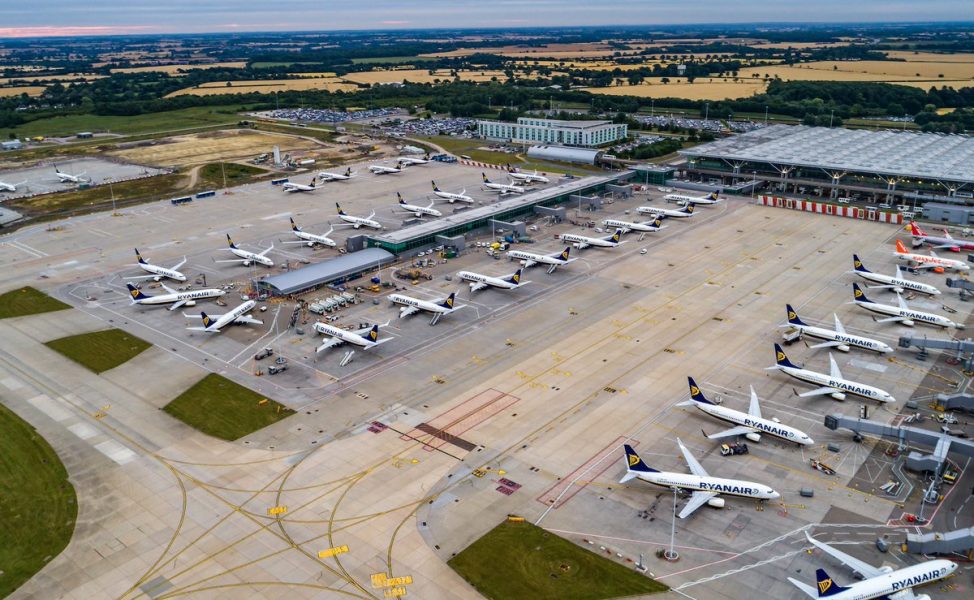
India's domestic air travel had its best month since the epidemic began in November 2021, but the Omicron variety has sped up the recovery process. The authorities had decided to allow ordinary international flights to and from India starting in December, but the permission was revoked due to an increase in infections.
In the first week of January, domestic passenger counts fell by 25%. Rising gas prices are expected to put additional strain on the industry since gas accounts for up to 45% of the cost of operations for Indian airlines.
BUDGET RECOMMENDATIONS
Bringing gas below GST (Decision to convey jet gas below GST could be taken by the GST Council)Consider incentives in phrases of tax breaks or reduction in tax for the sector. The airline industry says that they’re taxed as excessive as 21% however there is no such thing as a provision for entering tax credit score, as there’s with different sectorsSuspension of minimum alternate tax (MAT) for aviation and airport sector for at the very least two years, or reduction in MAT from about 18% to 5%Extend concessional charge of GST@5% for earthworks pertaining to airports’ development by the non-public sector tooBaggage allowance needs to be elevated from the prevailing INR 50,000/- to INR 100,000/-for buying from a duty-free store in IndiaThe increased allowance will assist Indian airports to enhance their enterprise revenues and consequential advantages can be an Increase in overseas change earnings, amongst others
"Airports are the most adversely affected in the present Omicron situation. On one hand, revenues (aero+non-aero) have completely dried up, (on the other) airports continue incurring high fixed costs. Any relief measures provided in the budget for airport construction and its business operations would help in reducing the cost of airport infrastructure projects. The lesser cost would be passed on to customers, which would lower the cost of rendering the services and resolve the cash flow issues."Satyan Nayar, Secretary General, Association of Private Airport Operators
The industry has asked the government to consider lowering both import duty and value-added tax (VAT) on air turbine fuel (ATF) and reduce airport, landing, parking, and navigation charges, given the deteriorating financial health of the airline companies. While the Centre can decide on lowering import duties, VAT changes have to be decided by individual states.
Airport operators have sought a reduction of the goods and services taxes (GST) for services at airports and doubled the limit of duty-free liquor to 4 litres to improve their bottom line. There is also an expectation that the government will take measures to remove bottlenecks that were preventing more aircraft lessors from setting up shop in India.
The aviation sector is hopeful that the government increase tax incentives for companies that are willing to set up shop at the International Financial Services Centre (IFSC) in GIFT City (Gujarat) in a bid to attract foreign aircraft lessors.
Read next
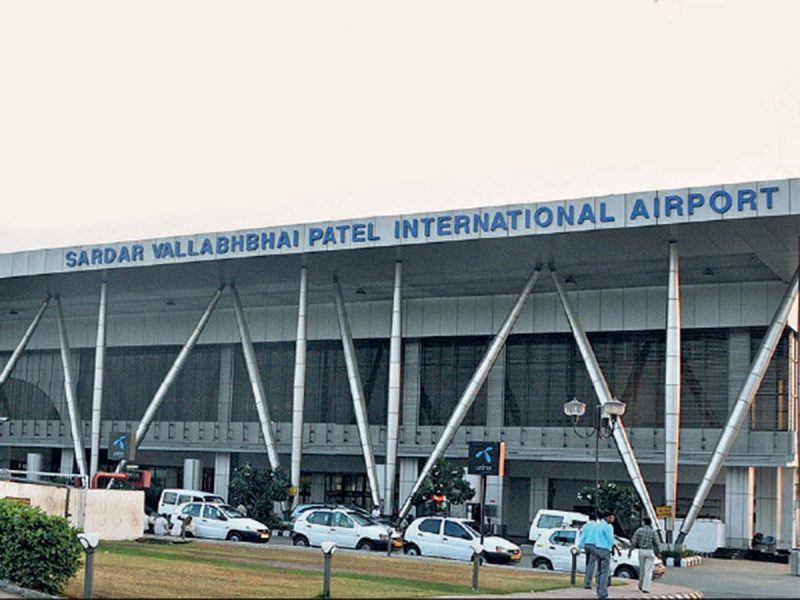
Ahmedabad's Sardar Vallabhbhai Patel International Airport will be closed for nine hours every day from January 17 onwards till May 31, 2022, due to planned 'recarpeting work' on the runway. At least 52 flights arriving and departing from the airport will be rescheduled during the entire duration.
Ahmedabad Airport tweeted the same on January 15 that the work will happen every day from 9 AM to 6 PM, barring Sundays and public holidays.
https://twitter.com/ahmairport/status/1482224369560866823?ref_src=twsrc%5Etfw%7Ctwcamp%5Etweetembed%7Ctwterm%5E1482224369560866823%7Ctwgr%5E%7Ctwcon%5Es1_&ref_url=https%3A%2F%2Fwww.moneycontrol.com%2Fnews%2Findia%2Fahmedabad-airport-to-remain-shut-for-9-hours-everyday-from-today-heres-why-7947331.html
The work was supposed to begin in November 2021 but got delayed due to the festive season. Airport officials have taken steps to ensure that minimal revision of flight schedules takes place during this time so that passengers do not face inconvenience. Once their tweet officially floated, people started to make their queries and enquire about further information on the same.
The airport authorities, replying to tweets on this thread, said that passengers must check with their respective airlines regarding their flight schedules. Along with this, the authorities apprised that relevant stakeholders were consulted and given notice in advance to revise their schedules so that passenger inconvenience could be minimized.
“The work will include runway overlaying, runway strip grading and slope assessment, runway end safety area (RESA) grading and slope assessment, along with storm water drain construction and reinstallation of signages in the maneuvering area".Spokesperson, Ahemdabad Airport Authority
Earlier on 16 September 2021, the Mint had reported that Adani Group has asked the Directorate General of Civil Aviation (DGCA) to shorten the time frame for partial shutting of operations at the Ahmedabad airport, which was initially scheduled to take place between November 2021 and May 2022.
The Adani Group had reached out to the DGCA in September to delay the partial shutdown of the airport because of an expected revival in passenger traffic during this year’s festive season.
It had then said that the rehabilitation work will focus on runway overlaying, runway strip grading and slope assessment, runway end safety area (RESA) grading and slope assessment, along with stormwater drain construction and reinstallation of signages on manoeuvring area, the Mint report added.
Meanwhile, Gujarat registered 10,150 fresh coronavirus positive cases on January 18, raising the state tally to 9,26,240, the health department stated. There were eight Covid-19 fatalities, one of the highest tolls in a single day since October 2021. With this, the death toll climbed to 10,159 in Gujarat including two each in Ahmedabad, Rajkot and Bhavnagar and one death each was reported from Vadodara and Tapi districts.
Read next
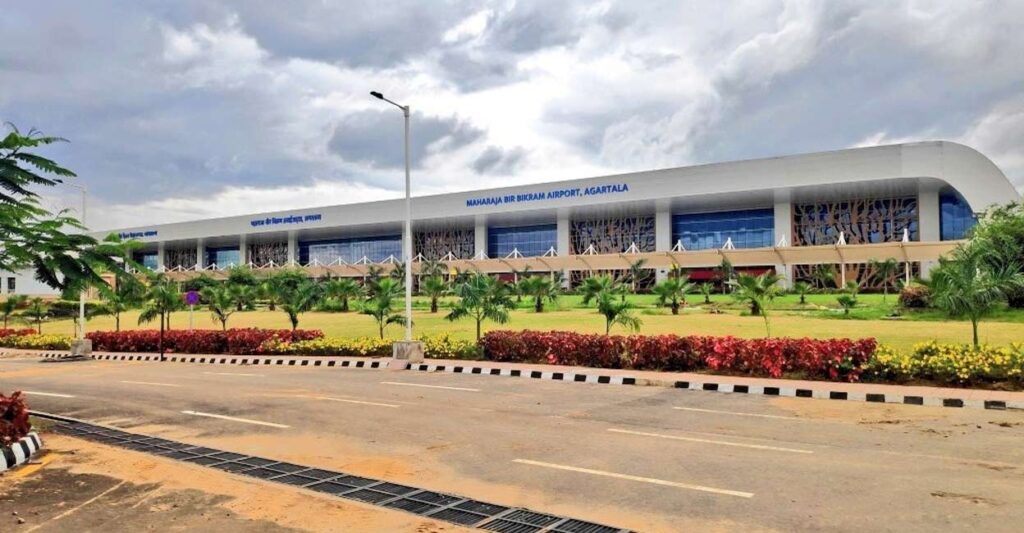
The Airports Authority of India recently declared that in the future, Agartala's Maharaja Bir Bikram Airport (MBB) will provide flights to Bangkok via Guwahati, as well as Chittagong and Dhaka, Bangladesh.
The airport is located 20 kilometres north of Tripura and is the second busiest in India's northwestern area. After the Guwahati airport in Assam and the Bir Tikendrajit International Airport in Imphal, Manipur, the MBB airport is the third international airport in the northeast.
Maharaja Bir Bikram Airport (MBB), Agartala ( Picture Credit: Inside)
"During the Second World War, King Bir Bikram supported and helped the Allied powers, especially Great Britain. He deployed a contingent of the Tripura Army to assist Great Britain. During that time Agartala, Kailashahar and other airports were built to facilitate the Allied powers."Pannalal Roy, Historian & Writer
Prime Minister Narendra Modi inaugurated the MBB airport on January 4. With 143 passengers on board, its inaugural flight arrived from Kolkata. A new terminal building was inaugurated at the airport. During the ceremony, a cultural performance was hosted here, with tribal women performing the iconic Hojagiri tribal folk dance. The up-gradation is expected to be completed by mid-2025. After becoming operational, flights from Agartala to Dhaka, Sylhet, Chittagong, Bangkok, and likely to Singapore will be operated.
The airport was built at INR 500 crore, and the new terminal is planned to hold 1500 people during peak hours, with 200 international travellers. The new terminal facility is being hailed as one of the best in the northeast, with all of the modern conveniences.
Prime Minister Narendra Modi inaugurated the MBB airport on January 4
The new terminal of the airport has 20 check-in counters, six parking bays, four aerobridges, conveyor belts, and passenger-friendly modern facilities and amenities like In-Line Baggage System (ILBS), Escalators, Lifts, etc. In addition to the new terminal building, a new parallel taxiway to the runway and two new hangars are being built.
The airport was earlier known as Singerbill Airport and was renamed only in July 2018. The airport sees a massive footfall of Bangladeshi tourists who come to travel the country. The airport is equipped with all modern amenities and is up to international standards.
The commissioning of the new airport terminal was attended by Pratima Bhoumik, the Minister of State. Talking to the media she said that I am delighted to be a part of this historic moment and very fortunate to travel amongst the first passengers.
The Hon'ble minister expressed happiness over the commissioning of NITB for the people of Tripura and said that very soon International flights will start to Dhaka, Bangkok from here. She was among the first passengers to embark from the Airport. A local folk dance HOJAIGIRI by the artists was also performed on the occasion. Minister along with Airport Director greeted the first arriving passengers with packed sweets.
This airport will now cater to about 1500 passengers during peak hours, which is three times the old capacity. This will enable over 5000 passengers’ footfall per day in the coming days. The check-in counters are now increased to 20 were In-Line Baggage Screening (ILBS) system will provide a hassle-free luggage drop facility.
The airport is equipped with four aerobridges for seamless embankment and dismemberment. It also has six parking bays, more than double the previous one. The much-awaited international tag to the airport will soon be a reality once mandatory clearance comes. It will be the third International Airport in North East India after Guwahati and Imphal.
Comment