

There were no hull losses or fatal accidents involving passenger jets in 2023 but a turboprop crash resulted in many deaths, the International Air Transport Association (IATA) said in its annual safety report for global aviation this week.
On January 15, 2023, an ATR 72 plane operated by Yeti Airlines crashed in the Seti river gorge near Pokhara, Nepal, killing all 72 people on board
This is however a drop from five fatal accidents in 2022 and an improvement on the five-year average (2019-2023) which was five, Iata noted.
The report also says that the accident rate was 0.80 per million sectors in 2023 (one accident for every 1.26 million flights), an improvement from 1.30 in 2022 and the lowest rate in over a decade.

This rate outperformed the five-year (2019-2023) rolling average of 1.19 (an average one accident for every 880,293 flights).
The fatality risk improved to 0.03 in 2023 from 0.11 in 2022 and 0.11 for the five years, 2019-2023. At this level of safety, on average a person would have to travel by air every day for 103,239 years to experience a fatal accident.
IATA said its member airlines and IATA Operational Safety Audit (IOSA) registered airlines experienced no fatal accident in 2023.
"2023 safety performance continues to demonstrate that flying is the safest mode of transport. Aviation places its highest priority on safety and that shows in the 2023 performance. Jet operations saw no hull losses or fatalities. 2023 also saw the lowest fatality risk and ‘all accident’ rate on record. A single fatal turboprop accident with 72 fatalities, however, reminds us that we can never take safety for granted. And two high-profile accidents in the first month of 2024 show that, even if flying is among the safest activities a person can do, there is always room to improve. This is what we have done throughout our history. And we will continue to make flying ever safer,” said Willie Walsh, IATA’s Director General.
With IOSA’s recent transition to a risk-based model focusing on pertinent safety risks while maintaining a baseline of safety, IOSA will become an even more powerful tool to help airlines and regulators to maintain and improve very high levels of safety performance, Walsh added.

Read next
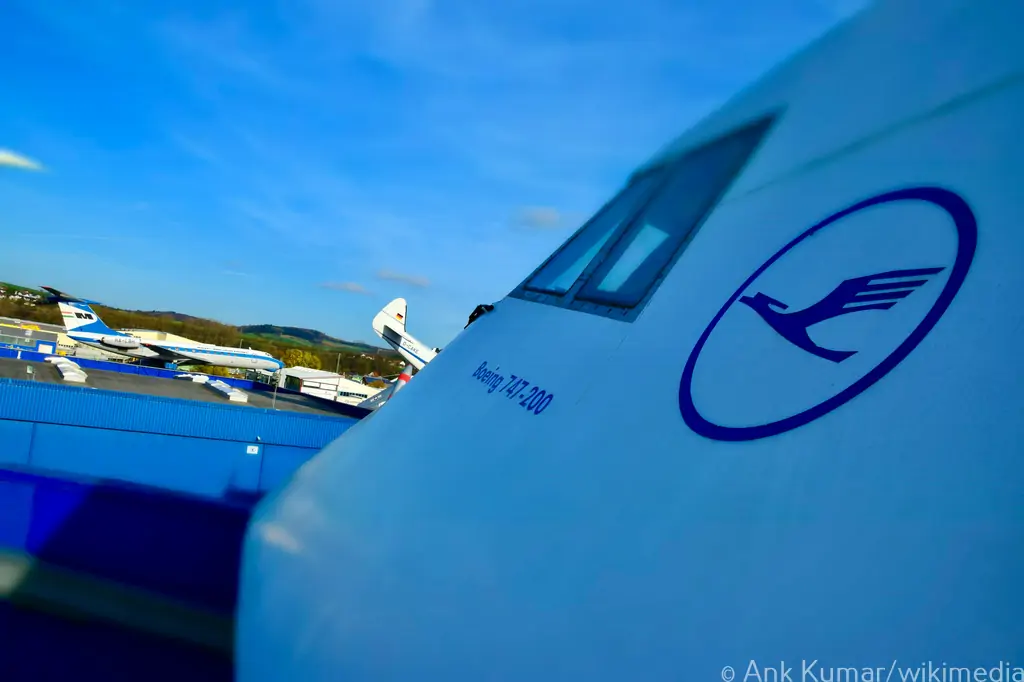
German airline giant Lufthansa finds itself in the midst of labor unrest as the Verdi union calls for a three-day nationwide strike from February 28 to March 1. Despite assurances that the strike will occur away from passengers, tensions loom over the potential impact on the airline's operations.
Strike Details & Minimal Impact Expected
Verdi's call for strike action encompasses not only Lufthansa's core operations but also its subsidiaries, including Lufthansa Technik, Lufthansa Aviation Training, and Lufthansa Technical Training. The union's decision stems from dissatisfaction with Lufthansa's stagnant pay offer amid ongoing collective bargaining negotiations.
Lufthansa has downplayed concerns regarding flight disruptions, asserting that the strike, particularly on Wednesday, is not likely to significantly affect the flight schedule. However, uncertainties persist regarding the potential ramifications on Thursday and Friday, prompting the airline to closely monitor the situation.
Stalemate in Negotiations & Company's Response
The strike comes against the backdrop of stalled pay negotiations between Lufthansa and Verdi. Despite Lufthansa's desire for a swift resolution to avoid further disruptions, Verdi remains steadfast in its demand for an improved offer before returning to the bargaining table.
In response to the strike threat, Lufthansa emphasized its commitment to reaching a mutually beneficial agreement with the unions. The airline underscored the urgency of resolving the impasse to prevent further disruptions to its operations and mitigate potential financial repercussions.
Looking Ahead
As the strike unfolds, both Lufthansa and Verdi face the challenge of balancing their respective interests while minimizing inconvenience to passengers and ensuring the sustainability of the airline's operations. The outcome of the strike and its impact on future negotiations remain uncertain, underscoring the importance of swift and constructive dialogue between the parties involved.
With Inputs from Reuters
Read next

American Airlines is on the brink of finalizing a significant deal for approximately 100 narrowbody jets, sparking anticipation in the aviation industry. The negotiations, split between Airbus SE and Boeing, underscore the carrier's strategic move to fortify its fleet amidst evolving market dynamics. As the countdown to the announcement accelerates, stakeholders eagerly await the outcome of this high-stakes battle between two aviation giants.
The Deal Unveiled
Sources familiar with the talks revealed to Reuters that American Airlines is on the cusp of sealing a deal for a fleet of Airbus A321 and Boeing 737 MAX 8 jets. The impending announcement, scheduled to coincide with an investor meeting on March 4th, signals a pivotal moment for the airline as it navigates through a landscape shaped by shifting priorities and unforeseen challenges.
Tug-of-War: Airbus vs. Boeing
Amidst the negotiations, the allocation of orders between Airbus and Boeing emerges as a focal point. Insider reports suggest that Airbus is poised to secure a slightly higher number of orders, intensifying competition in a market driven by innovation, performance, and customer preferences. With both manufacturers vying for supremacy, every order becomes a battleground for market share dominance.
Boeing's Certification Woes
The backdrop of Boeing's recent certification setbacks, underscored by a January incident involving an Alaska Airlines 737 MAX jet, adds a layer of complexity to American Airlines' decision-making process. The aftermath of this incident reverberates across the industry, prompting carriers to reassess their procurement strategies amidst concerns over safety, reliability, and delivery timelines.
Ripple Effects in the Industry
The ripple effects of American Airlines' procurement strategy extend beyond its operational sphere. Rival United Airlines, already engaged in talks with Airbus, intensifies the competition for scarce production slots, setting the stage for a potential mega-order to replace existing commitments with Boeing. This strategic maneuvering reshapes the competitive landscape, with implications reverberating throughout the aviation ecosystem.
Navigating Uncertainties
American Airlines' Chief Financial Officer, Devon May, underscores the importance of prudence amidst ongoing turbulence in the industry. Balancing the allure of new acquisitions with the realities of Boeing's challenges, the carrier remains vigilant, cognizant of the evolving dynamics shaping its future fleet composition. The decision-making process underscores the delicate equilibrium between short-term gains and long-term sustainability.
Conclusion
As American Airlines inches closer to finalizing its deal for 100 narrowbody jets, the aviation industry braces for a watershed moment. The outcome of this high-stakes negotiation not only shapes the carrier's trajectory but also reverberates across the competitive landscape, signaling a new chapter in the enduring Airbus vs. Boeing saga. Amidst uncertainties and challenges, one thing remains certain – the stakes have never been higher.
With Inputs from Reuters
Read next
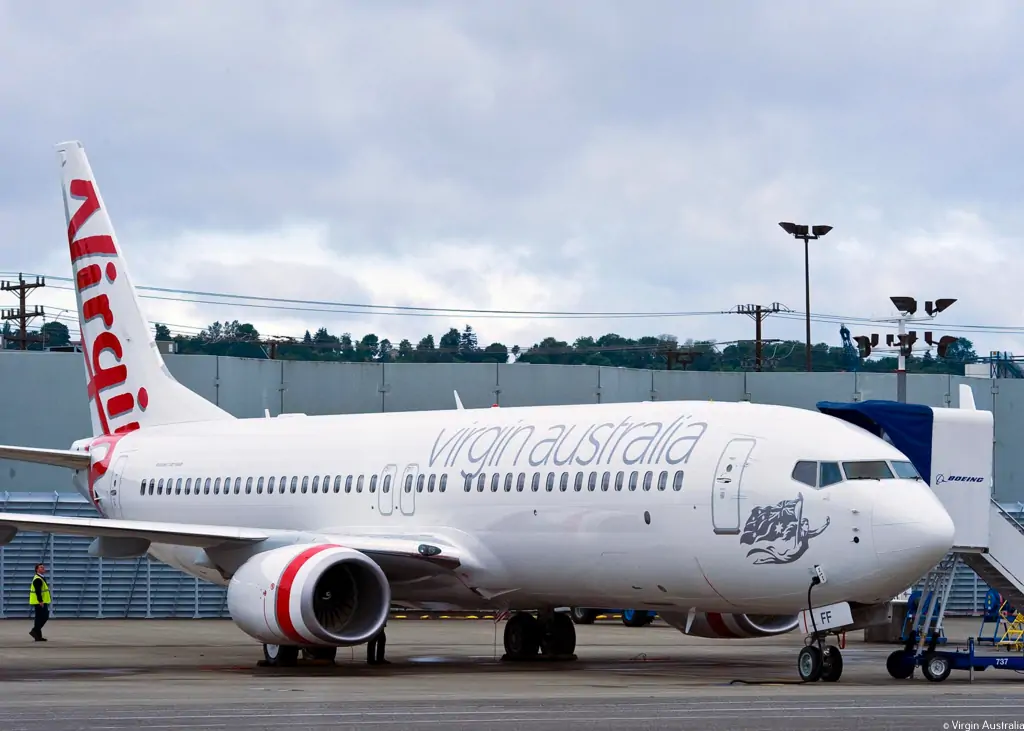
The sudden departure of Virgin Australia's CEO, Jayne Hrdlicka, has thrown a wrench into the airline's plans for an Initial Public Offering (IPO) in the foreseeable future. Australian business media reports indicate that the likelihood of any IPO in the short to medium term has been scuttled due to this development. Instead, Bain Capital, the current owners of Virgin Australia, is reportedly considering a trade sale as an alternative strategy.
Bain Capital's Acquisition and Change in Plans
Bain Capital acquired Virgin Australia for AUD 3.5 billion in late 2020, following the airline's collapse earlier that year. The initial plan was to partially float the airline via an IPO, with hopes to capitalize on the recovered profitability of the carrier. However, with changing market conditions and the exit of CEO Jayne Hrdlicka, Bain's strategy has shifted towards exploring a trade sale.
Challenges, Operational Issues, CEO Departure and Bain's Discontent
Despite showing signs of profitability, Virgin Australia faces challenges in expanding its market share, particularly against its major competitor, the Qantas Group. The airline also grapples with significant reliability issues, further complicating its path towards growth and market dominance.
Hrdlicka's resignation comes amidst reports of discontent from Bain Capital regarding her performance over the past year. Allegedly, Bain had been unhappy with her leadership for quite some time, citing missed opportunities to capitalize on Qantas' difficulties in 2023. Additionally, her involvement in Tennis Australia as chairwoman, particularly during the Australian Open, was perceived as a distraction by Bain.
Failed IPO Attempts and Profitable Exit Strategy
Previous attempts to initiate an IPO were thwarted when investor roadshows were abruptly canceled last April due to Hrdlicka's personal leave. However, despite the setback, Bain Capital managed to pocket almost AUD 730 million in May, roughly equivalent to its initial cash investment in the airline. This has positioned Bain favorably for a profitable exit, even without an IPO.
Future Leadership and Strategies
With Hrdlicka's departure, Virgin Australia has enlisted the services of Korn Ferry to find its next CEO. Meanwhile, Bain Capital remains tight-lipped about its future plans concerning the airline, declining to comment on potential strategies.
The sudden resignation of Virgin Australia's CEO has cast doubt on the airline's IPO prospects in the near future. While the carrier remains financially stable, operational challenges and market sentiment have dampened any immediate plans for going public. Instead, Bain Capital seems inclined towards a trade sale, offering the private equity firm a viable exit strategy. As the search for a new CEO commences, the future trajectory of Virgin Australia remains uncertain, awaiting clarity on Bain's strategic direction.
With Inputs from ch-aviation
Read next
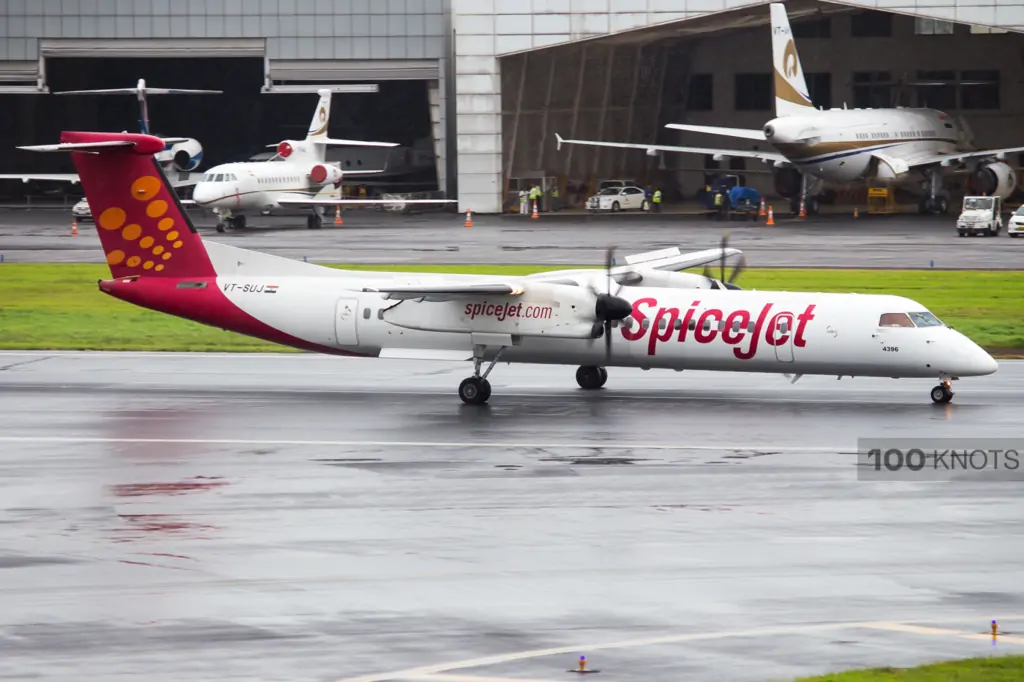
SpiceJet, one of India's leading low-cost carriers, finds itself at a critical juncture as it navigates both financial challenges and legal battles. Despite raising significant capital through equity shares and warrants, the airline faces court orders demanding the resolution of long-standing disputes with creditors. Let's delve into the latest developments shaping SpiceJet's trajectory.
Raising Capital
In a move to bolster its financial position, SpiceJet recently completed another round of capital infusion. The airline allotted equity shares and warrants to investors, including Aries Opportunities Fund Limited and Payal Nitin Magiya. This strategic decision aims to raise a total of INR 22.5 billion (USD 271.5 million), reaffirming investor confidence in SpiceJet's growth prospects.
Legal Challenges
Amidst its capital-raising efforts, SpiceJet grapples with two significant legal disputes. The first involves a longstanding battle with Credit Suisse over unpaid maintenance, repair, and overhaul (MRO) debts dating back a decade. The Supreme Court of India ruled that SpiceJet must pay USD 1.25 million to Credit Suisse by March 15, emphasizing the airline's obligation to honor its financial commitments.
In a separate legal ruling, the Delhi High Court ordered SpiceJet to return an engine to Engine Lease Finance BV by March 10. The court's directive underscores the urgency of resolving disputes related to unpaid leases and maintenance costs. Despite SpiceJet's assurance of returning the engine by mid-March, challenges persist, including pending customs clearance.
Challenges Ahead
SpiceJet's ability to overcome these legal challenges while maintaining its financial stability will be crucial for its future operations. The airline's expansion plans and operational capabilities hinge on resolving these disputes efficiently. Chairman and Managing Director Ajay Singh remains optimistic, citing the recent capital infusion as a testament to investor confidence.
However, the resolution of legal battles and the airline's compliance with court orders will determine its credibility and financial health in the eyes of stakeholders. As SpiceJet strives to navigate turbulent waters, its ability to honor financial obligations and uphold contractual agreements will shape its trajectory in the competitive aviation industry.
Conclusion
SpiceJet's recent capital infusion signals a commitment to fortifying its financial standing amidst ongoing legal disputes. While the airline faces challenges in resolving longstanding debts and contractual obligations, its strategic decisions and investor confidence provide a glimmer of hope for future growth. As SpiceJet strives to overcome hurdles and chart a course toward stability, industry observers await further developments with keen interest.
With Inputs from ch-aviation
Read next
Can Jet Airways Take Flight Again? NCLAT's Decision Looms Over Payment Dispute

Abhishek Nayar
29 Feb 2024
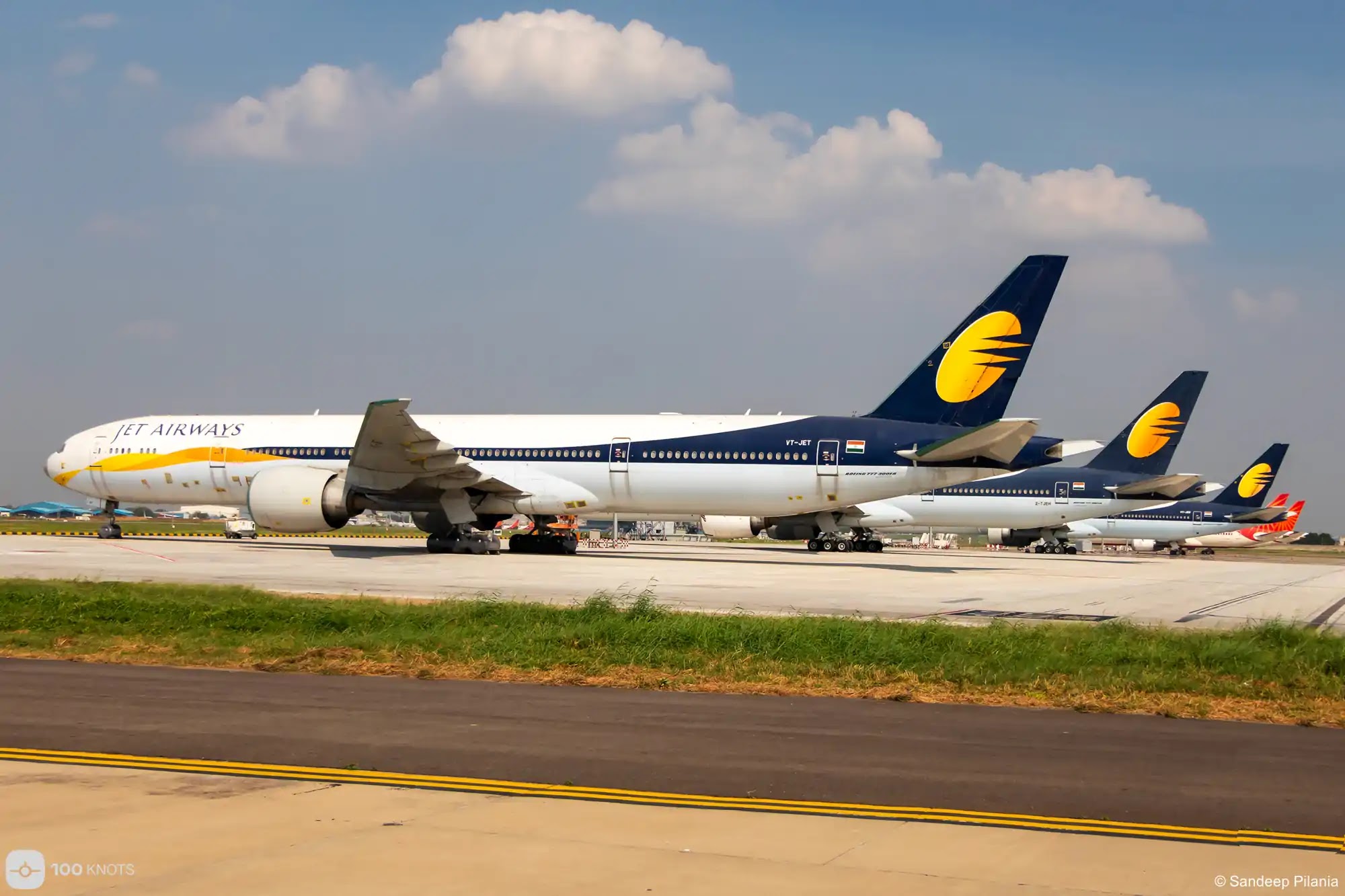
Jet Airways, once a stalwart of the Indian aviation industry, faced a turbulent downfall in April 2019, sending shockwaves through the sector. Now, with potential saviors waiting in the wings, the fate of this erstwhile giant hangs in the balance as India's National Company Law Appellate Tribunal (NCLAT) deliberates over a critical payment dispute between the Jet Airways committee of creditors (CoC) and the Jalan Kalrock consortium (JKC), the proposed new owners of the beleaguered airline.
The Dispute Unraveled
The heart of the matter lies in a payment dispute stemming from the 2021 resolution agreement. Under this agreement, the Jalan Kalrock consortium was slated to acquire Jet Airways, with the understanding that they would settle all creditor claims amounting to INR 3.5 billion (USD 42.2 million). However, as of January 31, 2024, INR 1.5 billion (USD 18.1 million) remained outstanding, sparking contention between the CoC, led by the State Bank of India, and the Jalan Kalrock consortium.
Legal Maneuvers and Contention
The recent hearing before the NCLAT saw both sides presenting their arguments. The CoC contended that the consortium had failed to fulfill its payment obligations as per the terms of the resolution agreement, while the Jalan Kalrock consortium maintained that they had met all requirements and any delays were a result of interference and legal disputes instigated by the CoC.
Courtroom Drama & Supreme Court Intervention
Justices Ashok Bhushan and Barun Mitra, presiding over the case, declined to rule immediately on the appeal by the CoC. Instead, they allowed both parties to submit briefs outlining their positions within a week, leaving the final decision hanging in suspense. The absence of a specified date for the next hearing only adds to the uncertainty surrounding Jet Airways' future.

The saga took another turn when India's Supreme Court intervened, ordering the Jalan Kalrock consortium to deposit the outstanding INR 1.5 billion into a State Bank of India-controlled escrow account by January 31. Failure to comply risked forfeiting their right to acquire the airline, further heightening the stakes in this high-stakes legal battle.
Credibility Concerns and Financial Transparency
Amidst the legal wrangling, questions regarding the provenance of the funds used by the Jalan Kalrock consortium have emerged. Lenders have raised doubts about the source of at least one of the payments, casting shadows over the consortium's financial transparency and adherence to the resolution plan.
A Glimmer of Hope or Further Turbulence?
As the NCLAT ponders its decision, the aviation industry watches with bated breath. Can Jet Airways rise from the ashes under the stewardship of the Jalan Kalrock consortium, or will the payment dispute and lingering doubts about financial transparency ground these ambitions? The verdict holds the key to Jet Airways' resurrection or demise, shaping the trajectory of India's aviation landscape.
Conclusion
Jet Airways' fate hangs in the balance as the NCLAT's decision on the payment dispute looms large. With legal battles raging and financial transparency under scrutiny, the airline's future remains uncertain. Whether it will soar once more or remain grounded depends on the outcome of this courtroom drama, with stakeholders across the industry anxiously awaiting the final verdict.
With Inputs from ch-aviation
Comment