
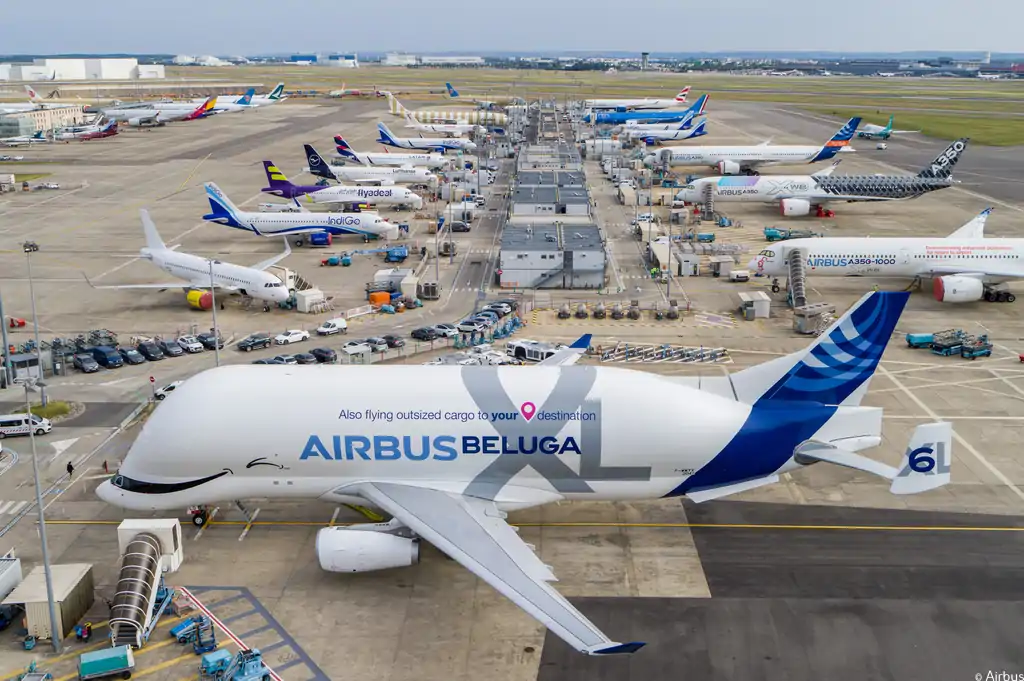
Airbus, the European aerospace giant, has reported a stellar performance in 2023, securing record annual jet orders and confirming an 11% increase in deliveries, thus maintaining its position as the leading aircraft manufacturer for the fifth consecutive year. This success comes as airlines rush to update their fleets, capitalizing on increased travel demand.
Order Details & CEO's Perspective
According to Airbus, the company has secured a remarkable 2,319 gross orders and 2,094 net orders after cancellations. This substantial order volume demonstrates the continued trust of airlines in Airbus products. The company delivered a total of 735 airplanes in 2023, contributing to a robust order backlog that now stands at 8,598 aircraft.
Airbus CEO Guillaume Faury expressed satisfaction with the company's performance, highlighting the challenges faced at the beginning of the year due to tight supply chains. Faury mentioned the achievement of "increased flexibility and capability" in the industrial system, showcasing Airbus's ability to adapt and overcome obstacles. He expressed confidence in meeting the target of assembling 75 A320neo family jets per month by 2026.
Outlook, Challenges, 2024 Targets & Supply Chain Dynamics
While acknowledging the surge in orders beyond pre-pandemic levels, Faury tempered expectations regarding the possibility of reaching the record delivery levels seen in 2019. The CEO attributed this cautious approach to the ongoing challenges in the supply chain, noting improvements but emphasizing the need for continued vigilance.
Airbus plans to announce its 2024 targets in February, reflecting the company's strategic outlook and expectations for the coming year. Faury highlighted the ongoing tension in the supply chain, emphasizing that improvement is evident but cautioning that challenges persist as Airbus ramps up production in 2024.

Industry Recovery, Commitment & Boeing's Standing
Christian Scherer, CEO of Airbus's core commercial aircraft business, remarked on the unexpectedly swift recovery of the aviation industry from the COVID-19 pandemic, particularly in the large widebody segment. He emphasized the responsibility of living up to the commitment to deliver the existing backlog of 8,600 aircraft on time and with high quality.
In comparison, Boeing, Airbus's major rival, is still recovering from setbacks such as the safety grounding of its 737 MAX and subsequent production issues. Boeing reported 528 aircraft deliveries in 2023 and booked 1,314 net new orders after accounting for cancellations. Airbus's strong performance further solidifies its position as the top player in the global aerospace market.
Future Prospects and A321XLR
Scherer noted that Airbus is sold out for single-aisle jets until the end of the decade and for widebodies until 2028. He reaffirmed that the highly anticipated A321XLR, Airbus's latest and longest-range single-aisle jet, is scheduled for its first delivery in the second quarter of the coming year, further adding to the company's positive outlook.
Conclusion
Airbus's record annual jet orders and sustained manufacturing lead against Boeing underscore its resilience and adaptability in a challenging market. As the aerospace industry continues its recovery, Airbus's strategic vision, commitment to quality, and ability to navigate supply chain complexities position the company for continued success in the years ahead.
With Inputs from Reuters

Read next
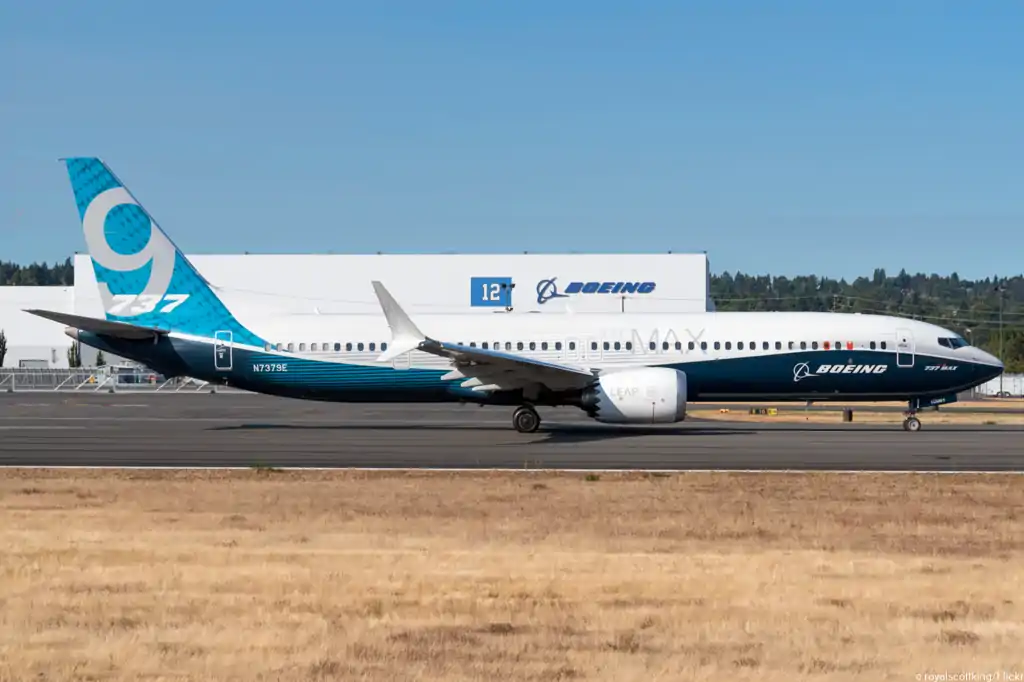
In recent events, a cabin blowout at 16,000 feet has triggered the grounding of more than 170 Boeing 737 MAX jets, leading to widespread frustration among airlines. This incident has exposed Boeing's struggle to address a series of safety and supply crises, leaving industry officials and experts concerned about the company's ability to contain these issues.
Airlines Bear the Brunt & CEO Acknowledges Mistakes
Alaska Airlines and United Airlines, collectively holding 70% of the MAX 9 fleet, have been forced to cancel hundreds of flights. With provisional checks revealing loose bolts in some grounded planes, the return to service faces potential delays, impacting the earnings of both carriers. Analysts have already adjusted first-quarter profit estimates for Alaska and United, underscoring the financial toll of Boeing's ongoing challenges.
Boeing CEO Dave Calhoun, in a Tuesday address to staff, admitted mistakes and expressed being "shaken to the bone." He emphasized the need for Boeing to earn back the confidence of customers and stakeholders. Calhoun's acknowledgment reflects a recognition of the severity of the situation, but the true test lies in the actions Boeing takes to rectify the issues.
Industry-Wide Frustration & Calls for Action
Frustration with Boeing had been mounting prior to the recent safety incident. Delays in aircraft deliveries due to production problems have plagued Boeing, making it challenging for airlines to meet growing demand. While Airbus faced its own challenges in 2022, the aviation industry's overall supply chain struggles persist due to parts and labor shortages.
American Airlines' pilots’ union spokesman, Dennis Tajer, expressed concerns over a "deeper systemic problem at Boeing." Some airlines, including American, have publicly voiced their discontent, with American Airlines CEO Robert Isom urging Boeing's senior management to "get their act together." The dissatisfaction has led to contemplation of direct approaches to Boeing's board or even industry-wide initiatives, although no concrete steps have been taken.
Impact on Airlines and Market Dynamics
United Airlines, compelled to ground 79 jets, faces frustration with a supplier linked to its corporate roots. The incident may prompt increased pressure for Boeing to offer discounts to secure new sales. However, the tight market for new planes, coupled with long lead times, suggests that prices may rebound after a temporary dip.
Southwest Airlines' Dilemma

Even Boeing's loyal customer, Southwest Airlines, experienced setbacks last year, trimming growth plans due to delivery delays. The recent incident may further affect the certification of the smaller MAX 7, potentially forcing Southwest to adjust its plans again. This underscores the ripple effects of Boeing's challenges across the aviation industry.
Conclusion
Boeing finds itself in a precarious position as it grapples with safety concerns and supply chain issues. The impact on airlines, ranging from cancellations and financial losses to potential shifts in growth plans, highlights the urgency for Boeing to address these challenges promptly. The aviation industry is watching closely as Boeing works to regain trust and stability in the wake of these setbacks.
With Inputs from Reuters
Read next
SpiceJet Faces Insolvency Challenge as Alterna Capital Partners Joins Lessor Queue
Abhishek Nayar
12 Jan 2024
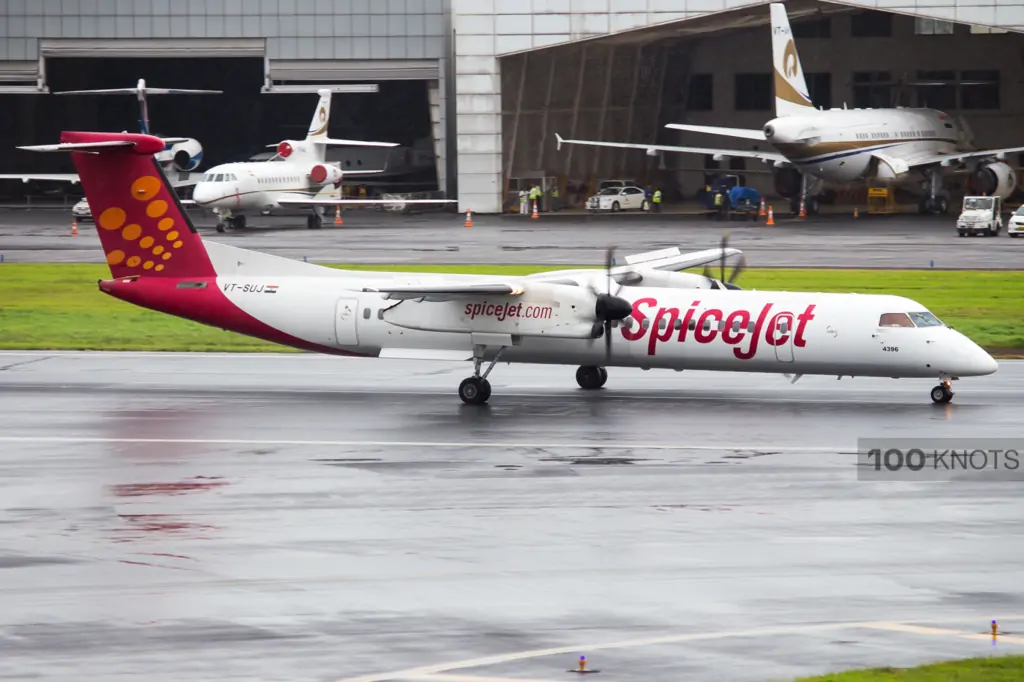
In a new twist to the ongoing financial challenges faced by SpiceJet, Alterna Capital Partners has entered the fray seeking the insolvency of the Indian airline. Alterna, through a special purpose vehicle (SPV), is attempting to enforce a UK High Court judgement, adding to the growing list of lessors pursuing insolvency petitions against SpiceJet.
Alterna's Claim and Background
The matter at hand, titled Alterna Aircraft V B Limited v. SpiceJet Limited, was filed on December 23 and was brought before the Delhi bench of the National Company Law Tribunal (NCLT) on January 4. The lessor is seeking to recover a substantial sum of USD 11.1 million and GBP 265,000 (USD 337,850) awarded by the UK High Court on March 2, 2023. The dispute centers around two Boeing 737-800 aircraft, one of which is currently stored at Hyderabad International.
Legal Proceedings and Arguments
Kevic Setalvad, representing Alterna in Delhi, informed the NCLT that SpiceJet had neither appealed the UK court's order nor made the required payments. Setalvad argued that, as per India's Insolvency and Bankruptcy Code (IBC), the judge's order had "attained finality," categorizing the award as a financial debt. Consequently, Alterna sought the declaration of SpiceJet's insolvency to facilitate the recovery of the outstanding amount.
In response, SpiceJet's counsel, Krishnendu Datta, contended that Alterna's petition was not maintainable under the IBC and should be dismissed. Datta emphasized that the IBC is not a vehicle for the direct recovery of funds.
Lessor Landscape at NCLT
Alterna Capital Partners joins other lessors, including Aircastle, Celestial Aviation Services, and Wilmington Trust SP Services, in seeking insolvency petitions against SpiceJet. Aircastle, currently with three separate petitions, and Wilmington Trust with two, are part of the legal challenge landscape surrounding the Indian carrier. SpiceJet has previously settled some claims and successfully defended against others, showcasing the complexity of its financial situation.
High Court Lawsuits and Overall Impact
In addition to the NCLT proceedings, lessors have initiated four lawsuits against SpiceJet in Delhi's High Court, aiming to enforce orders or recover assets. Approximately half of SpiceJet's fleet, consisting of 65 aircraft, is leased from a total of 13 lessors, underscoring the significance of the legal challenges faced by the airline.
Upcoming Hearing and Conclusion
Alterna Aircraft V B Limited v. SpiceJet Limited is scheduled for a hearing on February 8, where the NCLT will weigh the arguments presented by both parties. The outcome of this case may have broader implications for SpiceJet's financial stability and the resolution of similar disputes with other lessors.
As SpiceJet navigates this intricate legal landscape, the aviation industry will closely watch the developments, anticipating the potential ripple effects on the leasing sector and the broader implications for airline insolvency proceedings in India.
With Inputs from ch-aviation
Read next

In a strategic move to alleviate its financial burden, Spirit Airlines, an all-Airbus A320-family carrier, has completed the sale and leaseback of 25 aircraft, according to a filing with the US Securities and Exchange Commission (SEC) last week. The ultra-low-cost carrier (ULCC) has been grappling with substantial debt, recently reporting a net loss of over $157 million for Q3 2023.
Details of the Transaction
On January 3, 2024, Spirit Airlines concluded a series of sale-leaseback transactions, effectively using the proceeds to repay approximately $465 million in debt related to the 25 aircraft involved. The net cash proceeds from the sale amount to around $419 million, a significant injection that is poised to bolster the airline's financial standing.
Financial Implications
Breaking down the numbers, the sale translates to approximately $16.75 million per aircraft. This financial maneuver aligns with Spirit Airlines' ongoing efforts to address its debt obligations and streamline its financial structure. The move reflects the airline's commitment to strategic financial management amid challenging market conditions.
Background and Context
Spirit Airlines has not disclosed the specific aircraft included in the sale and leaseback agreement. However, this is not the first time the carrier has opted for such financial arrangements. In the past, Spirit has engaged in sale and leaseback agreements with various lessors, including Avolon, GECAS (prior to its acquisition by AerCap), and a deal with Aircraft Leasing & Management (ALM) in the previous year covering five A320neos.
Industry Trends and Challenges
The aviation industry has been significantly impacted by the COVID-19 pandemic, with many carriers facing financial constraints. Sale and leaseback agreements have become a prevalent strategy for airlines to generate immediate cash flow and address debt obligations. Spirit Airlines' recent transaction aligns with broader industry trends of leveraging aircraft assets to navigate economic challenges.
Conclusion
Spirit Airlines' sale and leaseback of 25 aircraft represent a strategic financial move to address its debt woes and strengthen its financial position. The aviation industry continues to adapt to evolving market conditions, with carriers employing innovative strategies to ensure sustainability. As Spirit navigates the dynamic landscape, the industry will closely watch the outcomes and potential ripple effects of such financial decisions in the broader context of the aviation sector.
Read next
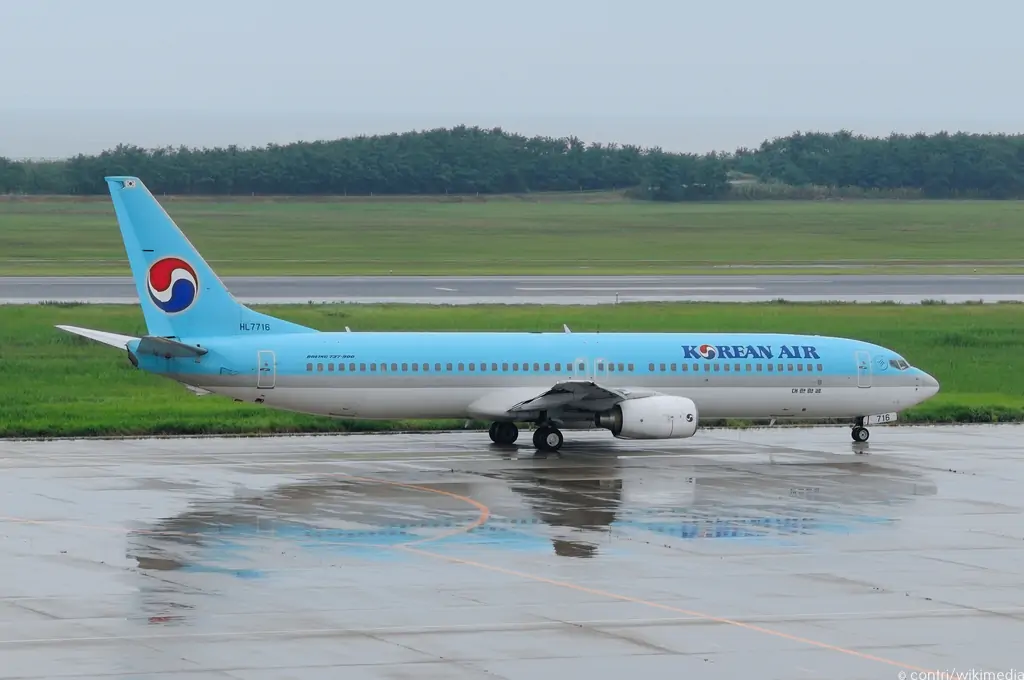
In the ever-evolving landscape of global aviation, the Asia-Pacific region has witnessed a gradual but uncertain recovery for its international airlines throughout 2023. Despite the removal of travel restrictions and the reintegration of China into global aviation, the road to pre-COVID traffic levels remains elusive, as evident from the November results.
November 2023: Progress and Puzzles
According to Association of Asia Pacific Airlines (AAPA)'s analysis, the international airlines of Asia-Pacific carried 25.1 million passengers in November 2023, marking a robust 77% growth from the same period in 2022. However, this figure falls short of the 30 million passengers carried in 2019, indicating that a complete recovery to pre-pandemic levels is still distant. The cumulative data for January to November reveals that the airlines transported 250 million passengers, significantly surpassing the 90 million in 2022 but remaining below the 328 million in 2019.
September saw international traffic reach 81% of 2019 levels, a figure that marginally increased to 83% in October and held steady in November. While this signals progress, it is essential to note that five million fewer international passengers traveled on Asia-Pacific airlines in November 2023 compared to 2019. The passenger load factors, at 79.6%, also lagged slightly behind the 80.6% recorded in 2019.
AAPA Director General's Insight
AAPA Director General Subhas Menon, a consistent voice in forecasting the industry's trajectory, maintains that a full recovery is not anticipated until 2024. The trends observed in 2023, he suggests, point towards a later recovery in the year. Menon highlights the significant growth between January and November 2023, attributing it to pent-up demand in the post-pandemic recovery period. Despite global economic slowdowns and geopolitical tensions, Menon remains optimistic about the positive outlook for air travel demand, emphasizing a return to pre-pandemic levels in 2024.
Cargo Growth Amid Passenger Challenges
While passenger numbers continue to grapple with the effects of the pandemic, the cargo sector presents a contrasting picture. November witnessed a notable growth in cargo volumes, propelled by increased demand for consumer goods ahead of the year-end festivities. International air cargo demand, measured in freight tonne kilometers (FTK), surged by 8.4% compared to November 2022. However, the international freight load factor eased slightly to 62%, reflecting an 11% expansion in offered freight capacity.
Looking Ahead: December and Beyond
As the year draws to a close, December's passenger numbers are anticipated to provide insights into the industry's trajectory. Hopes are high for a substantial jump on the road to recovery, but the journey for Asia-Pacific airlines appears to be an ongoing challenge. Intensifying competition, coupled with vigilance over costs amidst oil price fluctuations and exchange rate volatility, underscores the complexities that airlines in the region continue to navigate.
Conclusion
The tale of Asia-Pacific airlines in 2023 is one of resilience and adaptation. While the passenger sector grapples with the remnants of the pandemic, the cargo sector offers a glimmer of hope. AAPA's data paints a detailed picture of the industry's progress and challenges, with the outlook for a full recovery in 2024 remaining cautiously optimistic. As the world watches and waits, the skies above the Asia-Pacific region continue to be a dynamic arena where airlines strive to soar above the challenges and reach new heights.
Read next

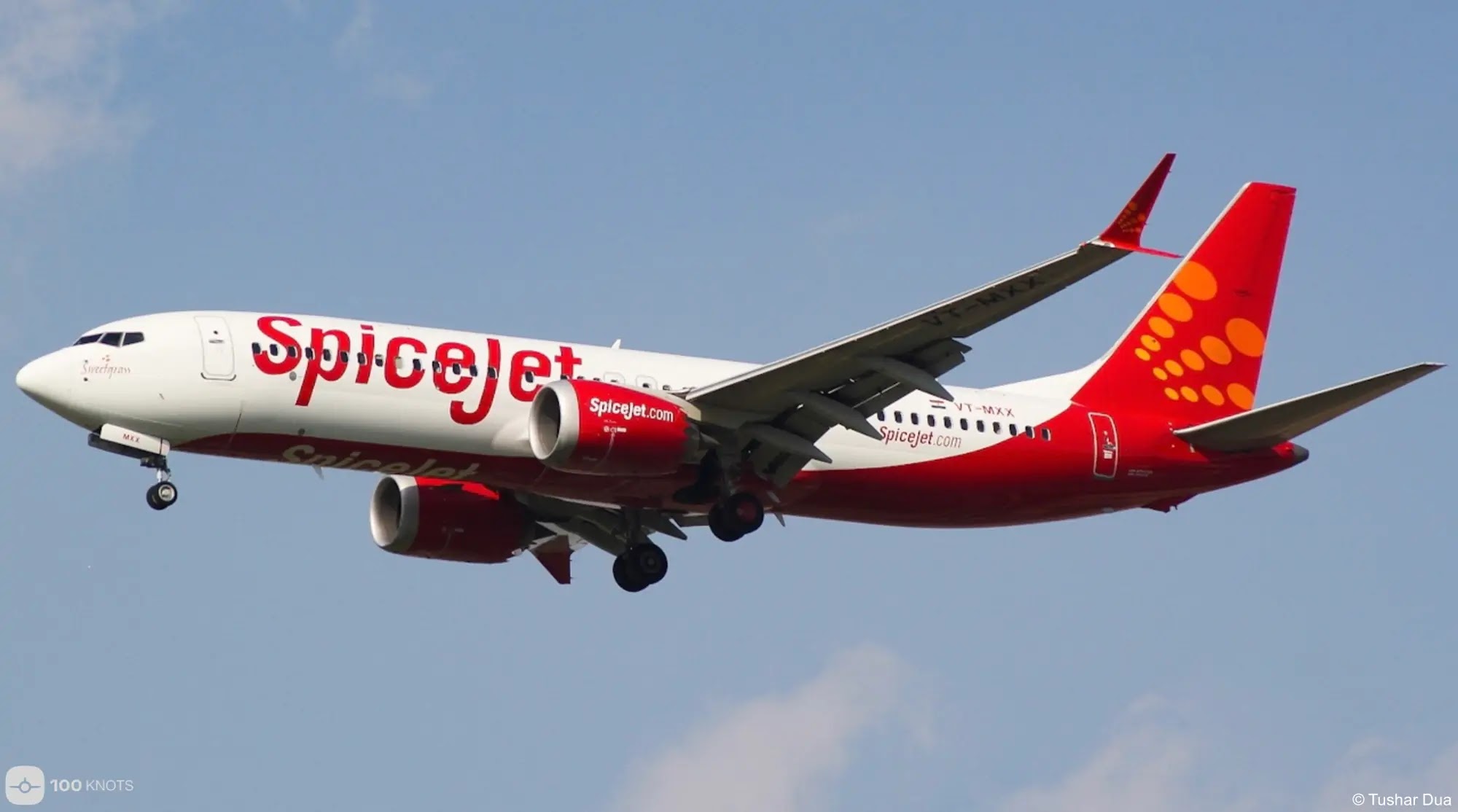
SpiceJet to fly to Lakshadweep, Ayodhya soon.
SpiceJet has exclusive rights to fly to Lakshadweep and will be launching flights to Agatti Island soon, the airline's chairman Ajay Singh, told its Annual General Meeting on Wednesday.
The budget airline will also start flights to Ayodhya and the funds it is hopeful of getting soon will be used to bolster the airline's network.
Laskhadeep has been in the limelight this month after PM Narendra Modi's visit and remarks by some Maldives government official about the same.
The current Maldives government is said to pro-China and Modi's visit was seen by some to push Indians to travel to Lakshadweep and bypass Maldives.
Cash-strapped SpiceJet got a lifeline in the form of investment from a clutch of funds and high net-worth individuals last month. The Rs 2,254-crore investment is expected to be pumped in over the next few months by 64 investors including funds like Elara India Opportunities Fund, Aries Opportunities Fund and Prabhudas Lilladher, Nexus Global and Mumbai-based businessman Harihara Mahapatra and Arjun Juneja of Mankind Pharma.
Singh's 56.5 % stake in SpiceJet will be reduced and could fall to around 45%.
Comment