
Bell 525 Relentless - World's first commercial Fly-By-Wire helicopter

Prashant-prabhakar
08 Jan 2022

The Bell 525 Relentless is the world’s first commercial helicopter to incorporate fly-by-wire flight controls, which delivers ‘superior handling qualities and an increased level of safety. It also features, among other things, characteristics that stabilise the aircraft without the need for input from the pilot.
The 007 World!
Fly-by-wire (FBW) is a system that replaces the conventional manual flight controls of an aircraft with an electronic interface that provides a level of control previously unseen in a commercial helicopter.
Reportedly, the system will aid pilot situational awareness and reduce accidents. In this design, sidesticks are mechanically connected to eliminate two pilots inadvertently fighting each other's control inputs. Though the lack of mechanical linkages elsewhere is touted as a safety advantage as it “results in fewer parts and fewer mechanical repairs”.
A pilot can initiate a turn and even retrim the aircraft on the way into it and the helicopter will maintain the attitude, heading, altitude and speed even if you are nowhere near the controls. It will prove particularly beneficial in high-workload situations where task saturation becomes an issue. you can very easily put the aircraft into a very safe operating condition and put eyes out of the window with less worry than you might normally have. Tactile cues, like those found on modern fixed-wing transport aircraft, have also been added to the controls, allowing the pilot to receive simple feedback about what the helicopter is doingBell senior vice-president of commercial programmes Matt Hasik
With a luxurious 88-square-foot cabin and space to fit 20 passengers in boardroom-style comfort, the Bell 525 Relentless features a four-display system and incorporate Bell’s new awareness, reactive and control (ARC) cockpit. Bell designed and built the flight control system, which runs on three BAE Systems flight control computers and Moog electrohydraulic actuators.
Bell 525 Cockpit with Garmin G5000H touch screens | Bell
It is also the first commercial craft of its kind to include the Garmin G5000H, a glass touchscreen avionics suite for the flight deck that replaces knobs and switches with what they say are simpler controls and information, such as weather, charts, traffic, terrain and Global connectivity options, for the pilot. For the 525 it’s been rebranded as the ARC Horizon system.
Cabin Interiors | Robb Report
With three flight control computers and triplex electro-hydraulic actuators, the digital FBW control system provides full-authority stability, control and guidance; offering reduced pilot workload in pitch, roll, yaw and lateral and vertical motion.
In case of a double engine failure, the controls give the pilot a head start. If the pilot fails to lower the collective pitch to keep the rotor turning fast enough, the 525’s flight controls automatically lower the collective pitch immediately, ensuring rotor rpm will remain at or above 100%.
SOURCE(s)
COVER: Bell Flight
Read next
Madras HC extends the stay on a single judge order against SpiceJet until January 11

Radhika Bansal
07 Jan 2022
The Madras High Court on Thursday, January 6 extended till January 11, the operation of an interim stay on the verdict of a single judge, which ordered the winding up of private airliner Spicejet for non-payment of USD 24 million to a Switzerland-based stock corporation.
This follows a remittance of USD 5 million, as directed by the single judge, earlier.
Meanwhile, Spicejet preferred an appeal challenging the judgment dated December 6 of the single judge R Subramanian, which ordered the winding up of the private carrier and directed the Official Liquidator attached to the High Court to take over its assets.
While allowing a company petition from Credit Suisse AG, the stock corporation registered under the laws of Switzerland, the judge on December 6 had held SpiceJet had miserably failed to satisfy the three-pronged test suggested by the Supreme Court in a similar case and hence had rendered itself liable to be wound up for its inability to pay its debts under Section 433 (e) of the Companies Act 1956.
The company petition had prayed for winding up of SpiceJet under the provisions of the Companies Act, 1956 and appoint the Official Liquidator of the High Court as the Liquidator of SpiceJet with all powers under Section 448 of the Companies Act to take charge of its assets, properties, stock in trade and books of accounts.
According to the petitioner, SpiceJet, a private sector airline, had availed the services of SR Technics, Switzerland, for maintenance, repair and overhauling of aircraft engines, modules, components, assemblies and parts, which were mandatory for its operations.
Madras High Court
An agreement for such services for 10 years was entered into between SpiceJet and SR Technics on November 24, 2011. The terms of payments were also agreed upon. On August 24, 2012, a supplemental agreement was also entered into to change certain terms of the agreement.
The amendments included an extension of time for payment of money due under various invoices raised by SR Technics and also a deferred payment scheme. As there was a general increase in the cost, the 2012 supplemental agreement included adjustment of flight hour rates and escalation provisions were also made. The petitioner had been making repeated requests to SpiceJet to make payments under the various invoices.
Since it did not honour its commitment under the agreements with the SR Technics and that it was not in a position to meet its financial obligations, the petitioner issued a statutory notice. As there was no response, it preferred the company petition before the High Court to wind up SpiceJet and obtain a favourable order.
SpiceJet contended that it had agreed with the Swiss company for 10 years in 2011.
Aggrieved, Spicejet preferred the appeal. When it came up on Thursday, a division bench of Justices Paresh Upadhyay and Sathi Kumar Sukumara Kurup adjourned the matter till Monday, January 10. The operation of the interim stay will hold good till January 11, it added.
However, midway, it was discovered that the aircraft maintenance company did not have a valid authorisation from the Director-General of Civil Aviation between January 1, 2009, and May 18, 2015. The single judge had wrongly assumed SpiceJet had entered into the agreement despite knowing about the absence of DGCA approval and held that it could have terminated the agreement midway once it came to know of the absence of the official authorisation.
Termination was not a mandatory requirement. Once it (SpiceJet) came to know the fact, it stopped payments. There was no finding in the arbitral award that the air carrier was aware of the non-approval even before agreeing, the appeal said adding that an 'illegal claim' for dues would not come under the definition of 'debts' as stated in the Companies Act.
Read next

The Delhi international airport has been installing an integrated cart system (ICS) at its Terminal-1 for baggage handling that has high speed, high capacity and more reliability, DIAL said on Friday, January 7.
"The radio frequency identification (RFID) enabled ICS ensures error-less sorting of baggage," Delhi International Airport Limited (DIAL) said in a statement. The new hi-tech system will operate at a speed of 2.1 metres per second and sort up to 6,000 bags per hour, it mentioned.
The radio frequency identification (RFID) enabled ICS ensures error-less sorting of baggage.
"The existing conveyor system i.e., traditional belt system operates at a speed of 0.5 metres per second," it noted. Each baggage stays completely within the confines of its carrier tray (cart) throughout the transportation process - from check-in islands to baggage make-up area, the DIAL said.
This significantly reduces the risk of loss and damage to baggage and disruption to the system, due to the strap or other baggage related causes, it added.
"The highly automated and complex system of ICS also enhances passengers' experience by ensuring that the right baggage reaches the right flight seamlessly and safely soon after a passenger hands over its baggage," it mentioned.
A few days ago, DIAL had finished the refurbishing work on the 09/27 runway at the IGI airport as well as handed over the facility to ATC for commercial operations in December. It will now help in reducing the runway operations time. The newly rehabilitated runway complies with the Category I Instrument Landing System.
This assists pilots during an aircraft’s landing in low visibility conditions. The rehabilitation work of IGI Airport’s runway 09/27 (first runway) was undertaken by Delhi International Airport Limited as part of the Phase 3A expansion project of the Delhi Airport.
Read next
125 passengers on a chartered flight from Italy to Amritsar tested positive for Covid-19
Radhika Bansal
07 Jan 2022
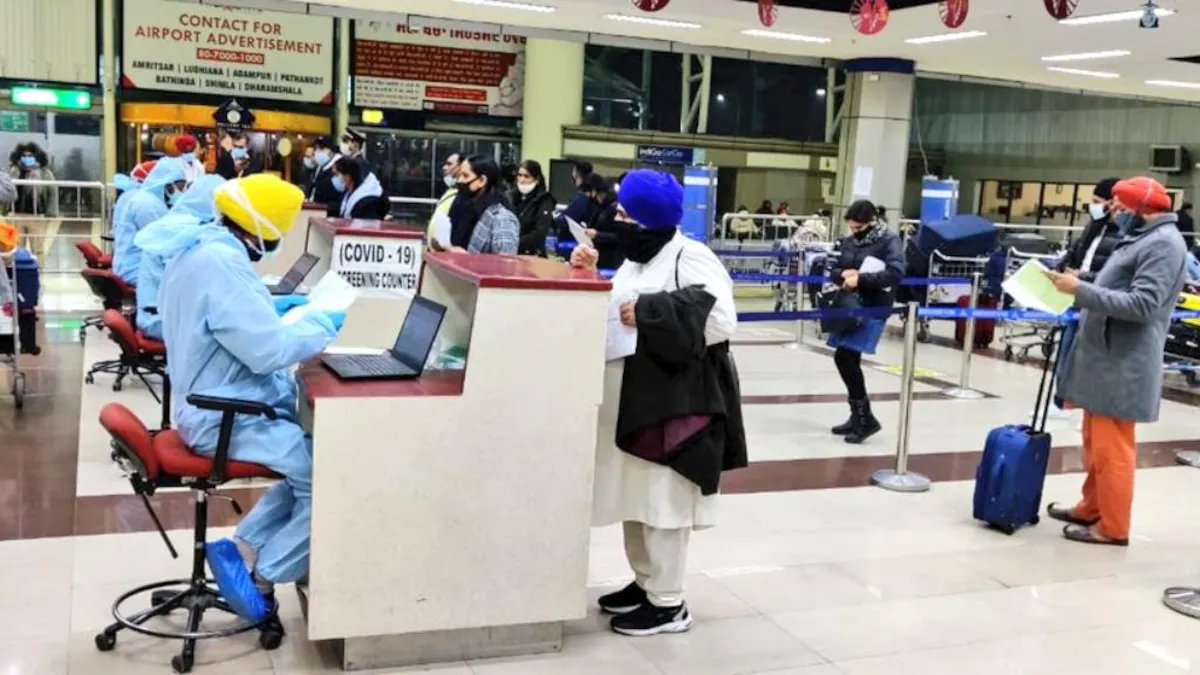
A total of 125 passengers on a Milan-Amritsar charter flight were found to be Covid-positive when tested on arrival, government officials said on Thursday, January 6.
According to Airport Director V K Seth, there were a total of 179 passengers on the charter flight that landed at the Amritsar airport around 11.30 AM on Thursday, January 6.
Since Italy is one of the "at-risk" countries according to the Union Health Ministry, all eligible passengers - 160, in this case, were tested for COVID-19 and 125 of them were found to be positive, they mentioned.
Out of a total of 179 passengers, 19 were children or infants so they were exempt from on-arrival RT-PCR testing, they said.
The charter flight YU-661 between Milan in Italy and Amritsar in Punjab was operated by Portuguese company EuroAtlantic Airways, they mentioned.
The Amritsar airport authorities stated on Twitter said that they have taken all necessary actions to stop the spread of COVID-19.
"In today's flight all 125 pax tested positive, are being attended by state health officials. Rest 35 pax tested negative have been advised self-monitoring and would be under supervision," the airport noted.
125 passengers on a chartered flight from Italy to Amritsar tested positive for Covid-19. (Image Courtesy - Getty Images)
After the test reports came in, a number of the passengers were not satisfied with the results and created a hue and cry at the terminal building. Purported video clips circulating on social media showed some passengers arguing with the authorities.
The passengers who tested positive for COVID-19 were reluctant for admission in the isolation ward of any of the city hospitals and were pressing upon the authorities to let them go.
Officials from the health department tried to convince them to get admission in the isolation ward in any of the hospitals they desired in Amritsar.
District Assistant Civil Surgeon Dr. Amarjit Singh said all the positive patients will be shifted to isolation wards in hospitals. When asked about the allegations of the passengers, he said, “We tested all the passengers and there were many who tested negative. There is no conspiracy.”
According to the international arrival guidelines specified by the Ministry of Health and Family Welfare, passengers from at-risk countries are required to submit their samples for a “self-paid” Covid-19 test at the point of arrival. Italy is among “countries in Europe including The United Kingdom”, besides 11 other countries, from where travellers flying to India will have to mandatorily test for Covid.
Read next
Boeing unveils new Hypersonic Aircraft model at the AIAA SciTech aerospace forum this week
Prashant-prabhakar
07 Jan 2022
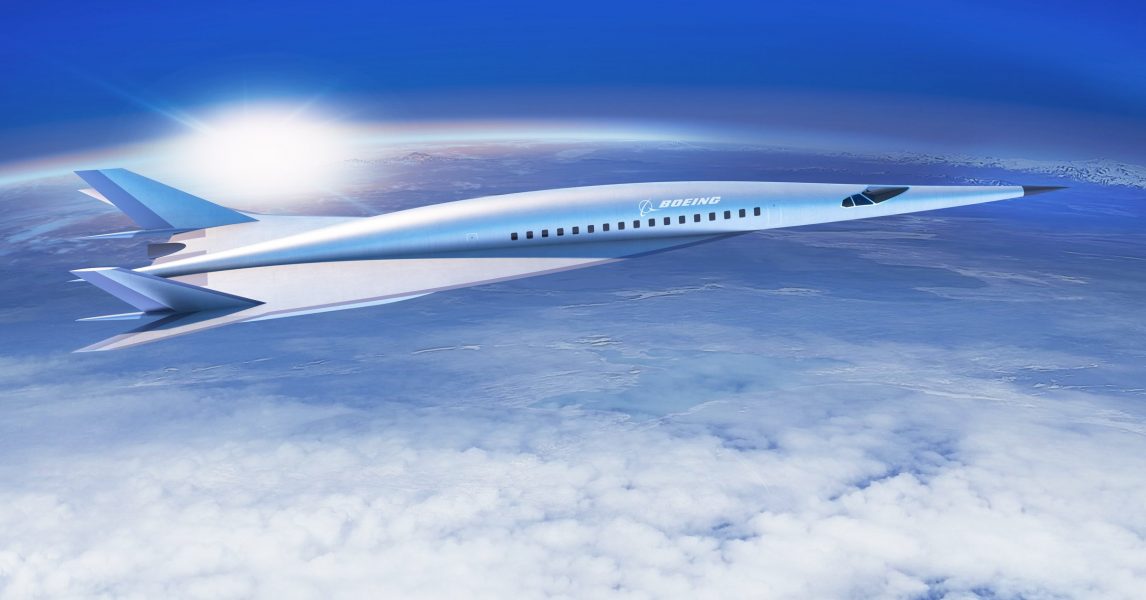
In what can be termed as a futuristic model of a reusable hypersonic aircraft, Boeing unveiled a model and an artist's rendering of the concept delta-wing jet at the AIAA SciTech aerospace forum this week.
Representative | ArtStation
Acting as a spiritual successor to the Mach 3 SR-71 Blackbird, the hypersonic concept by Boeing could, theoretically, fly at five times the speed of sound, owing to a "waverider" configuration that would see the aircraft use its own shock waves produced during flight to increase lift and reduce drag.
Boeing X-51A Waverider | Wikipedia
Boeing has internally named the aircraft "Valkyrie II", though Boeing has yet to reveal any substantial official information, and the aircraft is very much in the concept stage.According to Aviation Week
Reportedly, the design is an evolution of concepts that were first displayed 4 years ago, with potential applications in military and commercial operations, including a space launch mothership.
Valkyrie II is an evolution of Boeing's 2018 concept, called Valkyrie, for a hypersonic commercial aircraft that could travel between London and New York in just two hours. The hypersonic concept draws comparisons to Lockheed Martin's own SR-72 project- which would be the literal successor to its SR-71 Blackbird.
SR-71 Blackbird | The National Interest
Lockheed Martin and Boeing's designs utilize a combined-cycle engine to reach speeds of Mach 3 before switching to a dual ramjet to accelerate to hypersonic speeds. Typically, Ramjets and Scramjets do not work optimally, at lower speeds and hence a "combined cycle" concept is being studied to put into practical application. The concept would combine traditional jet turbines with ramjets or scramjets to produce highly complex viable TBCC (turbine-based combine cycle) engine arrangements, which is highly touted to be the next big leap in technology when it comes to designing viable reusable hypersonic aircraft that can take off and land using existing runway infrastructure.
It is a refined, more realistic Mach 5 reusable air-breathing design targeting military and space launch roles. Mach 5 is the accepted threshold for hypersonic speedAviation Week's Norris said on Twitter
https://twitter.com/AvWeekGuy/status/1478491208452227072?s=20
Guy Norris | @AvWeekGuy | Twitter
Boeing's interest in such designs for various applications in commercial and military operations isn't new as the last time the company toyed with a similar idea was for a supersonic design back in 1958- The Boeing B2707 touted to be the future of supersonic travel. Unfortunately, due to several obvious reasons- economics majorly and bad marketing, the project never saw the light of the day.
The annual AIAA SciTech Forum and Exposition, which commenced on the 3rd, ends today, in San Diego, California.
SOURCE(s)
COVER: WIRED
Read next
From Christmas to New Year's Day, 1 pilot and 3 cabin crew failed breathalyser tests
Radhika Bansal
07 Jan 2022
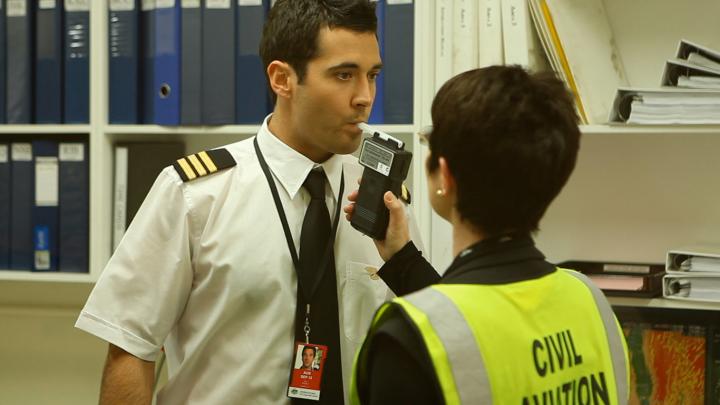
Three cabin crew personnel and a pilot failed the breath analyser test between Christmas and January 1. The four individuals belonged to different airlines. Directorate General of Civil Aviation sources stated that all the incidents were reported from the Delhi airport.
One cabin crew member failed the breath analyser detection test on Christmas, another failed the next day and the third on January 1, according to India Today Television. The pilot failed the breath analyser test on December 29 at the Delhi airport.
The civil aviation regulator revised its guidelines on breath analyser tests for the flight crew on December 20.
Three cabin crew personnel and a pilot failed the breath analyser test between Christmas and January 1.
The DGCA asked airlines to make their doctors, paramedics or emergency medical technicians conduct breath analyser tests for the crew. The regulator also asked them to conduct post-flight breath analyser tests on aircraft upon arrival.
The regulator in its order stated that low alcohol blood levels also disturb sensor-motor, visual and cortical reaction. “Consumption of alcohol results in significant deterioration of psychomotor performance and decreases the amount of mental capacity available to deal with many essential tasks involved in the conduct of the safe flight,” it had stated.
In the revised Civil Aviation Requirements (CAR), the regulator mandated all scheduled airlines, operating flights originating in India to conduct tests to detect alcohol levels in the blood for all flight crew.
All the incidents were reported from the Delhi airport.
During the pandemic, authorities have been striking a balance between the need to test crew members and the risk of catching the novel coronavirus while doing so. The percentage of crew members tested has varied based on the Covid situation.
In late March 2020, aviation personnel, including pilots and cabin crew, were temporarily exempted from BA tests in the wake of the coronavirus pandemic for some time.
Comment