
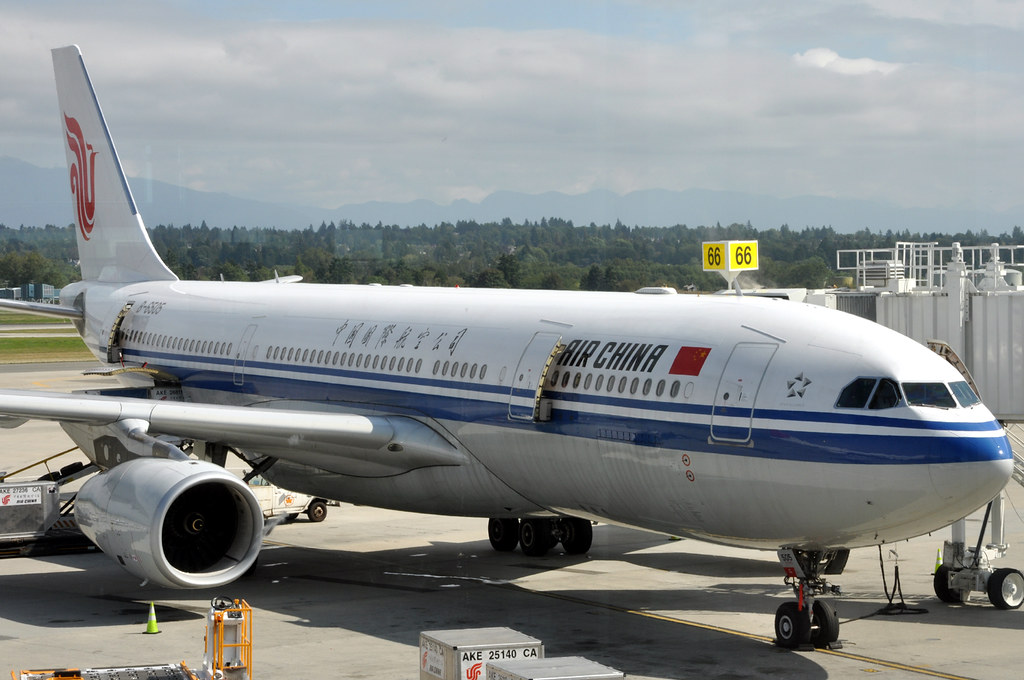
After nearly half a decade of suspended operations, the aviation landscape between India and China is witnessing a pivotal transformation. The silence in the skies that began with the pandemic's onset in 2020 and was further complicated by border tensions is finally being addressed. This renewed interest in restoring direct air connectivity represents more than just resumed flight schedules—it signals a broader diplomatic and economic thaw between two of Asia's largest economies.
Chinese Airlines Request to DGCA
Three Chinese airlines, including one specialised cargo operator, have formally submitted applications to India's Directorate General of Civil Aviation (DGCA) requesting permission to restart direct flight operations. This represents the first tangible effort by Chinese carriers to re-establish their presence in the Indian aviation market since operations ceased.
The application process follows established protocols, with DGCA approval serving as the initial requirement before airlines can proceed to secure landing slots at India's premier airports, including New Delhi, Mumbai, and Kolkata. Aviation industry insiders indicate that once regulatory clearance is obtained, formal slot allocation procedures will commence.

Bilateral Cooperation
Both nations are working collaboratively to expedite the restoration process. Indian airlines are simultaneously preparing to relaunch services to major Chinese destinations, including Beijing, Shanghai, and Guangzhou. To streamline operations, both governments have established a framework that limits initial flight frequencies to 2019 levels, thereby eliminating the need for complex bilateral aviation agreement renegotiations.
A senior Indian delegation recently travelled to China to resolve outstanding regulatory challenges, demonstrating the commitment from both sides to restore air connectivity.
Historical Context
The suspension of direct flights began in early 2020 due to the global pandemic, though connections to Hong Kong resumed earlier. The situation became more complex following the Galwan Valley border conflict later that year, which effectively froze any immediate prospects for resumption of service.
Recent diplomatic engagement, including the meeting between Prime Minister Modi and President Xi Jinping, has created momentum for renewed cooperation. India's embassy in Beijing has also resumed processing tourist visas for Chinese citizens after a five-year hiatus.

Economic Opportunities Ahead
Aviation analysts anticipate significant economic benefits from resumed operations. Before the suspension, India-China routes maintained exceptional profitability with load factors reaching 90 per cent. Currently, approximately one million passengers travel between the countries annually through connecting flights via Singapore, Bangkok, and Dubai.
Industry projections suggest passenger traffic could nearly triple to three million annually once direct services resume, driven by student travel, business requirements, and tourism demand. This restoration is expected to benefit various sectors, including e-commerce, pharmaceuticals, and manufacturing.
Looking Forward
The resumption of China-India direct flights marks a significant milestone in bilateral relations, promising to restore vital connectivity that supports trade, tourism, and educational exchanges. With regulatory processes underway and strong market demand evident, the aviation bridge between these neighbouring giants appears set for a robust revival, ending one of the most prolonged service suspensions in recent aviation history.

Read next
Etihad’s Big Leap: 27 New Cities, 20 Planes — and AED 1.12bn Smiles to Prove It

Abhishek Nayar
04 Sep 2025

Etihad Airways posted its most profitable first half ever — a net profit of 1.12 billion UAE dirham (about $304.96 million) — a 32% jump versus a year earlier.
During the six months to June 30, the airline carried 10.2 million passengers, up 17% year-on-year, even as the Middle East navigated regional frictions that disrupted travel.
How did Etihad pull off the trick?
Expansion, expansion, expansion (and yes — execution)
Chairman Mohamed Ali Al Shorafa credited the surge to an aggressive international push: 27 new destinations launched or announced since January, and the fleet grew by 20 aircraft over the past 18 months — a network-and-capacity strategy that fed both demand and revenue.
Running toward opportunity, not away from risk
That growth came despite a jittery geopolitical backdrop — Reuters noted disruptions across the region, including a 12-day air conflict in June between Israel and Iran that had broader impacts on carriers in the Middle East. Against that noise, Etihad’s marketing and schedule moves appear to have found steady demand.
IPO talk: ready, but not rushing to the gate
CEO Antonoaldo Neves told Reuters Etihad is ready for an initial public offering, but there are no immediate plans to go public; the carrier says it can self-fund a $20 billion expansion strategy over the next 10 years. In other words: IPO-capable, IPO-optional.
That positions Etihad in a comfortable strategic spot — it can tap public markets if the timing and valuation are right, but for now it doesn’t have to. Think of it as having a well-charged phone and not needing to use a power bank just yet.
The engine behind revenue: more than just seats sold
- Network effect: New routes create more point-to-point travelers and feed transfer traffic into Abu Dhabi — which helps tourism, hotel stays, and hub economics (stopovers aren’t just scenic; they’re lucrative).
- Fleet strategy: Adding 20 aircraft in 18 months is bold. Newer, more fuel-efficient types (Etihad has been modernizing with A350s and others) help cut unit costs and improve schedules.
- Load factors & utilization: Higher seat-fill and clever timetabling turn more flights into profit-makers — the data show improved utilization and demand rebound.
The risks Etihad is balancing (because planes don’t fly on optimism alone)

- Geopolitical shocks — the region isn’t always calm; quick reroutes and contingency planning are expensive and operationally heavy.
- Fleet financing & delivery timing — ordering hundreds of millions of dollars of jets is a long-lead play; delivery schedules, engine issues across the industry, and leasing markets can be a headache.
- Competition — Dubai and Doha aren’t sleeping. Abu Dhabi needs to keep differentiating — whether on product, pricing, or connecting flows.
(If airlines had mood rings, Etihad’s would be “optimistic amber.”)
Why this matters beyond the balance sheet
Etihad’s growth helps Abu Dhabi’s broader strategy: turning the emirate into a global travel hub, diversifying the economy, and boosting tourism and commercial connections. When an airline grows this deliberately, the benefits ripple through hotels, ground handling, aviation services, and the local jobs market.
Plus — a mildly selfish but fun thought — more Etihad routes = more excuses for wanderlust. And who doesn’t need another reason to fly somewhere with better coffee and fewer layovers?
What to watch next
- Will Etihad convert IPO readiness into a listing? The decision likely depends on ADQ (the shareholder) and market timing.
- Fleet delivery cadence and any new long-haul orders (777X, A350 variants, lease deals) — these will shape capacity and unit costs.
- Passenger mix: business vs leisure vs connecting traffic — the margin story differs across those buckets.
Final served with a wink
Etihad has taken a bold growth posture and, for now, the numbers show the gamble paying off. The airline looks like a chess player who’s already moved several pieces ahead — while smiling politely and offering you a surprisingly good cup of in-flight coffee.
TL; DR
- Net profit H1 2025: AED 1.12 billion (~$305 million), +32% y/y.
- Passengers H1 2025: 10.2 million, +17% y/y.
- Expansion engine: 27 new destinations launched/announced since January; 20 aircraft added in ~18 months.
- IPO status: Etihad says it’s ready for an IPO but has no immediate plans, and believes it can self-fund $20bn of growth over 10 years.
- Context: Strong results came despite regional tensions (including a June 12-day Israel-Iran air conflict affecting regional travel)
With Inputs from Reuters
Read next
Can a budget Indian carrier and Bahrain’s flag-carrier turn Bahrain into your shortcut to the world?
Abhishek Nayar
04 Sep 2025
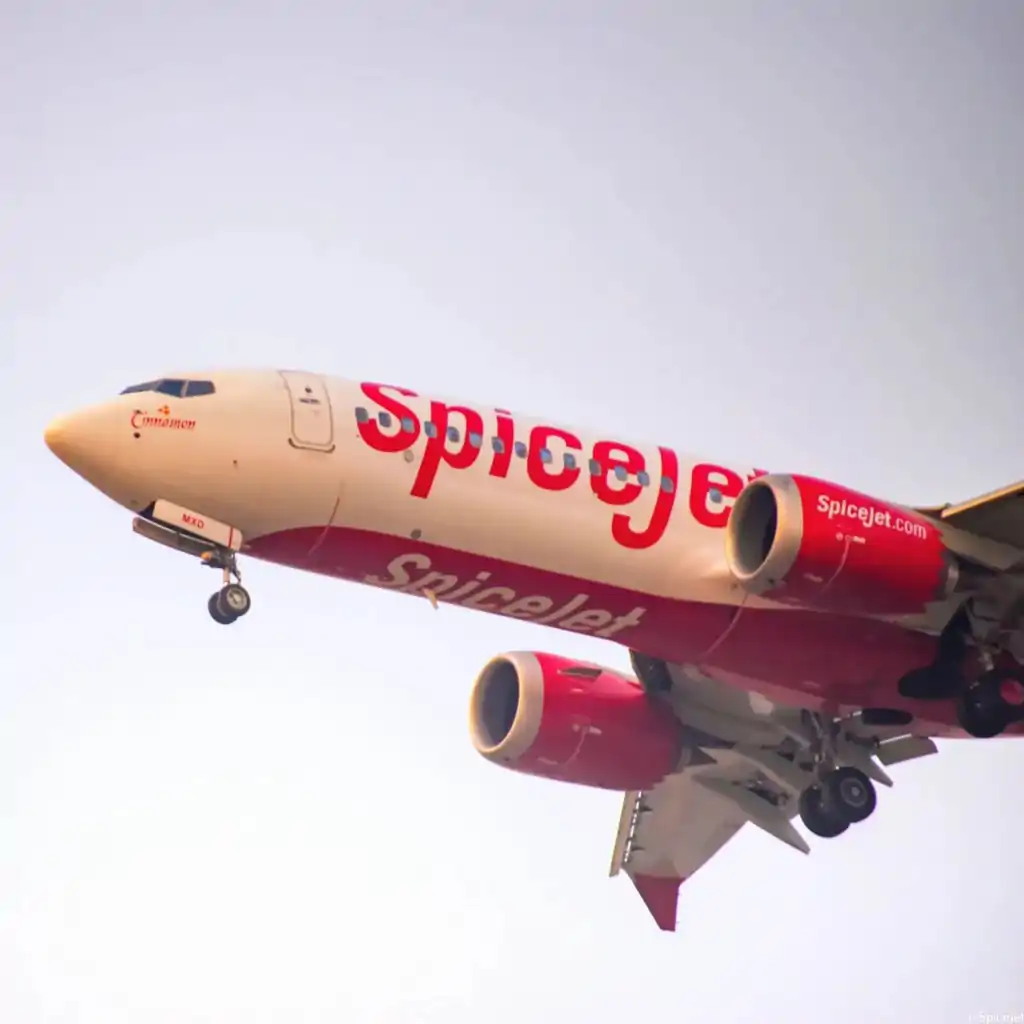
They just did — sort of. SpiceJet and Gulf Air have signed an interline agreement that stitches the two networks together so passengers can buy a single itinerary and connect through Bahrain to a much wider set of destinations.
The headline — what happened
On 4 September 2025 SpiceJet announced an interline agreement with Bahrain’s national airline, Gulf Air. The deal lets SpiceJet passengers access Gulf Air’s routes across the Middle East, Africa, Europe and Central Asia via Bahrain, while Gulf Air flyers gain easier access to India through SpiceJet’s domestic network. Ticket sales under the new agreement are expected to begin early next year.
Why this matters (aka the passenger perks)
- One ticket, one journey. You’ll be able to book connecting flights on a single itinerary across both airlines — simpler baggage handling and fewer checkout headaches.
- More destinations, less fuss. SpiceJet can now “borrow” Gulf Air’s long-haul reach via Bahrain; Gulf Air can feed more Indian travelers onto SpiceJet’s dense domestic map.
- Business and leisure benefits. Faster, more commercial connections for business travelers and more affordable leisure options for travelers who previously needed separate tickets or awkward stopovers.
The corporate soundbites
- Ajay Singh (SpiceJet) framed the tie-up as a milestone that expands SpiceJet’s global reach and “gives passengers more travel options than ever.” In short: SpiceJet wants to be the domestic ladder into Gulf Air’s international closet.
- Jeffrey Goh (Gulf Air) called it an enhancement of travel options and highlighted Bahrain’s hub role plus SpiceJet’s strong domestic coverage — a classic “you bring the passengers; I’ll bring the destinations” partnership.

What to expect when booking
- When: Ticket sales planned to start early next year — watch airline booking engines and travel agents.
- How it works: You’ll be able to search for a multi-leg itinerary that mixes flights from both carriers and pay for it as one booking (so connections and baggage are coordinated).
- Not the same as codeshare: This announcement is an interline agreement (coordinated tickets + connections). It may be followed by deeper ties like codeshares or joint schedules later, but for now it’s primarily about connectivity and convenience.
Quick “hot takes” for travelers and frequent flyers
- Frequent flyers: don’t expect immediate shared mileage credit rules unless a loyalty agreement is later announced — interline ? full loyalty integration. (Watch both airlines’ frequent-flyer pages.)
- Price hunters: better route options often create short windows of competitive fares; early next year might be a good time to scan fares for new one-ticket itineraries via Bahrain.
- Airport lovers: Bahrain becomes a more interesting transfer hub for India-Europe/Africa trips — think shorter overall travel times if connections line up.
Bigger picture — why airlines do this
Interline agreements are low-friction ways for carriers to expand their market without committing aircraft or launching new routes. For SpiceJet, it’s a cheap passport to global reach; for Gulf Air, it’s a way to plug into India’s huge domestic market. Expect more bilateral deals like this as airlines chase traffic and feeding opportunities.

The cheeky summary
Think of SpiceJet as the friendly village bus that just made a deal with the international express: one ticket, more stops, fewer headaches — and Bahrain gets to be the meetup point
TL; DR
- SpiceJet and Gulf Air signed an interline agreement on 4 Sept 2025 to link networks via Bahrain.
- Passengers will be able to book connecting flights under a single itinerary; luggage and connections should be smoother.
- Ticket sales for these combined itineraries are expected to start early next year.
- Gulf Air already flies direct to eight Indian cities (Delhi, Mumbai, Bengaluru, Chennai, Hyderabad, Goa, Kochi, Thiruvananthapuram), which strengthens Bahrain-India links.
- Senior executives from both carriers called the pact a boost to connectivity and convenience — deeper collaboration (codeshares/loyalty ties) could follow.
Read next
Who Just Woke Up the ULCC Market? — How Frontier Rode Spirit’s Second Bankruptcy to a 15% Rally
Abhishek Nayar
03 Sep 2025

On September 2, 2025, Frontier Group’s stock popped roughly 15% as investors rushed to price in the possibility that the ultra-low-cost carrier (ULCC) could scoop up passengers and routes from rival Spirit Airlines, which filed for bankruptcy protection for the second time in under a year.
The move sent Frontier to its best single-day performance in months and sparked fresh debate over who actually wins when one low-cost player stumbles.
Why the market cheered
- Network vacuum = opportunity. Spirit said it will shrink parts of its network and cut fleet to lower leases and debt — a self-inflicted capacity reduction that leaves holes on certain city pairs. That kind of sudden capacity removal often benefits nearby rivals able to quickly add seats.
- Overlap matters. Deutsche Bank’s analysis says Frontier already overlaps with about 35% of Spirit’s routes this quarter (and that could rise toward ~40% after Frontier’s expansion), which makes Frontier a clear short-term beneficiary. The brokerage upgraded Frontier from hold to buy and raised its price target, backing the stock move.
- Frontier is already expanding. The airline recently announced a slate of new winter routes (about 20 new routes) and has been rolling out marketing offers and loyalty incentives aimed at pulling passengers from competitors — effectively giving investors a plausible playbook for quick market-share grabs.
The not-so-simple reality behind the numbers

Before you start imaging Frontier as the new sovereign of cheap seats, a few real-world brakes exist:
- ULCC economics are fragile. The ultra-low-cost model depends on very tight unit costs. Rising fuel, airport fees, or lease costs can quickly erode margins — and Spirit’s repeated woes are partly a reminder of how thin the margins can be. (Analysts who cheered the stock still warn about sustainability of ULCC margins.)
- Full-service carriers push back. Big airlines like United and Delta can and do respond with capacity or pricing in key markets; they also have broader product options that can blunt ULCC market share gains on routes where business demand matters.
- Regulatory and operational frictions. Even if Frontier wants to take routes, airport slots, gate access, crew and aircraft rotations, and lease negotiations take time — and airports don’t automatically reassign gates just because one airline shrank. So, market share gains may be meaningful but gradual.
What Deutsche Bank actually said (and why traders listened)
Deutsche Bank’s note — summarized by market outlets — framed Frontier as best positioned to benefit because of significant route overlap and Frontier’s planned new service. The upgrade (from hold to buy) and the boost to the price target signaled to investors that sell-side confidence had shifted, which in volatile airline stocks can be an immediate trigger for a momentum move.
The short playbook for Frontier (what they can — and can’t — do fast)
- Fill the gaps Spirit abandons: add frequencies on overlapping routes and launch promotions to capture price-sensitive flyers.
- Leverage the marketing moment: advertise low fares and simple loyalty perks to convert Spirit’s frequent flier base.
- Watch costs tightly: resist overpaying for capacity that later becomes redundant — remember, capacity added too fast can erode fares and margins.
What to watch next (real signals, not noise)

- Spirit’s restructuring plan details: timeline, which routes are cut, and whether Spirit slices frequency only or pulls out of whole markets. (If Spirit keeps flying selectively, ripples are smaller.)
- Frontier’s capacity announcements: are the 20 routes the start or the full plan? Are fare promotions sustained or one-offs?
- Ticket prices on overlapping routes: rising fares suggest capacity tightening; falling fares suggest a price war. Markets hate uncertainty — and price trends will tell the tale.
The investor angle — quick take
Traders bid Frontier up on the prospect of market-share capture, not guaranteed profits. Upgrades and overlap statistics give the rally logic legs — but long-run success depends on Frontier converting incremental passengers into sustained, profitable seat miles without a messy price war.
Final thought (fun, but grounded)
Airline chess is always played on a moving runway: one carrier’s bankruptcy can open windows of opportunity — but airports, passengers, and competitors move faster than regulatory paperwork. Frontier’s 15% thrill ride on September 2, 2025, is the market betting the airline is nimble enough to sprint through that window. Whether it stays there depends on execution, costs, and how long Spirit’s footprint shrinks.
TL; DR
- Frontier shares jumped ~15% on Sept 2, 2025 after Spirit filed for bankruptcy again.
- Deutsche Bank upgraded Frontier to Buy, citing ~35% route overlap with Spirit (rising toward ~40% as Frontier expands).
- Frontier has announced ~20 new winter routes, positioning it to pick up displaced Spirit traffic.
- Short term: Frontier likely benefits; long term: success depends on cost control, competition from big carriers, and execution.
With Inputs from Reuters
Read next
What happens when a ground handler earns a DGCA “safety passport” — and why did AISATS get there first?
Abhishek Nayar
03 Sep 2025

India’s ground-handling world just got a new headline: Air India SATS Airport Services (AISATS) has become the first ground handling company in India to receive the Directorate General of Civil Aviation’s (DGCA) newly mandated Safety Clearance — Certificate No. GHSP/001. That’s not a small paperwork tick; it’s a formal stamp that says a company’s safety systems, people and infrastructure meet the regulator’s new bar.
Why this feels like a big deal (hint: it’s about systematizing what used to live in checklists)
Ground handling — everything from marshalling aircraft and loading cargo to ground equipment maintenance and ramp safety — is intensely operational and highly consequential. The DGCA’s new clearance regime brings formal regulatory teeth to that function by requiring handlers to prove they have functioning Safety Management Systems (SMS), named accountable and safety managers, regular recurrent training, and ready infrastructure. In short: the regulator moved ground handling from “industry best practices” to regulated safety requirements.
This step also aligns India with ICAO guidance and, regionally, makes India only the second country after Malaysia to implement such a comprehensive ground-handling safety framework — a notable APAC milestone.
What the DGCA asked for (the new checklist that matters)
- A documented and functioning Safety Management System (SMS) — not just a manual on a shelf.
- Designated Accountable Manager and Safety Manager(s) with clear responsibilities.
- Recurrent training programs and evidence of staff competence across stations.
- Demonstrable infrastructure readiness: equipment, vehicles, airside procedures and facilities that reduce risk.
These are the pillars the DGCA evaluated during their documentation reviews and on-site inspections.
Why AISATS appears to have been first in line
According to the regulator’s inspections and AISATS’ own disclosures, AISATS presented detailed, station-by-station documentation and training programs that inspectors flagged as industry benchmarks. The DGCA’s certificate number (GHSP/001) signals the company’s trailblazer status under the new CAR framework. CEO Ramanathan Rajamani framed it as a recognition of culture and continuous training — and AISATS leaned heavily on its existing programmatic investments (people + docs + facilities) to clear the bar.
A quick look at AISATS’ runway: where they operate and what they’re building
AISATS already runs ground and cargo operations across six airports — Bengaluru (BLR), Delhi (DEL), Hyderabad (HYD), Mangalore (IXE), Ranchi (IXR), and Thiruvananthapuram (TRV) — and operates the BLR Logistics Park at Bengaluru. The company is also developing an 87-acre Multi-Modal Cargo Hub (MMCH) at Noida International Airport, a project billed as one of India’s largest integrated cargo facilities. Those footprints and investments in infrastructure and cargo capability likely strengthened their safety case.
So…what changes for passengers, airlines and ground-handling competitors?
- Passengers: Safer ramp operations and a reduced chance of ground incidents that can delay flights or damage aircraft.
- Airlines: More predictable ground turnaround, potentially fewer disruptions and clearer accountability when things go wrong.
- Other ground handlers: Expect the DGCA to roll out inspections and clearances to others — this will be a competitive advantage for those who already have strong SMS and training regimes. The policy flips the playing field from voluntary best practice to regulated requirement.
What to watch next
- Speed of roll-out: How quickly will the DGCA inspect and grant the same clearance to other ground handlers? (Regulatory capacity and industry readiness will dictate the pace.)
- Practical impacts: Will airlines demand only DGCA-cleared handlers for key routes or premium services? That could reshape contracts and cost models.
- Cargo ecosystem: AISATS’ MMCH and BLR park mean safety-cleared handling at large cargo hubs — a boon for pharma and perishables that need high standards.
The human line: a quick quote
Ramanathan Rajamani, CEO of AISATS, said: “We are honored to be the first ground handler in India to secure DGCA’s Safety Clearance. Safety and quality have always been the cornerstone of AISATS’ operations. This recognition reflects our strong culture of accountability, continuous training, and operational excellence.” That one-liner sums up both PR and reality: safety is cultural, but the regulator wanted documentary proof.
Bottom line (the fun part — a tiny ground-handling manifesto)
If you’re in aviation — airline exec, cargo customer, or ground operator — think of DGCA’s new Safety Clearance as a passport: it doesn’t eliminate risk, but it signals that passport-holders have passed border control for safety systems. AISATS got the first stamp; others will follow or play catch-up. The immediate winners are passengers and cargo shippers who prefer predictability and accountability.
TL; DR
- AISATS became the first ground handler in India to receive DGCA Safety Clearance (GHSP/001).
- DGCA’s new rules formalize Safety Management Systems, named safety/accountable managers, recurrent training and infrastructure readiness for ground handlers.
- India is now the second APAC country after Malaysia to implement such a framework; the move aligns with ICAO norms.
- AISATS operates at six airports, runs the BLR Logistics Park, and is developing an 87-acre Multi-Modal Cargo Hub at Noida — all factors that strengthened its case.
- Implication: safer ground operations, clearer accountability for incidents, and a regulatory bar that will reshape competition among ground handlers.
Read next
The Northern Bias: Why Most Flights You See on the FlightRadar24 Stay North of the Equator?

Sakshi Jain
03 Sep 2025
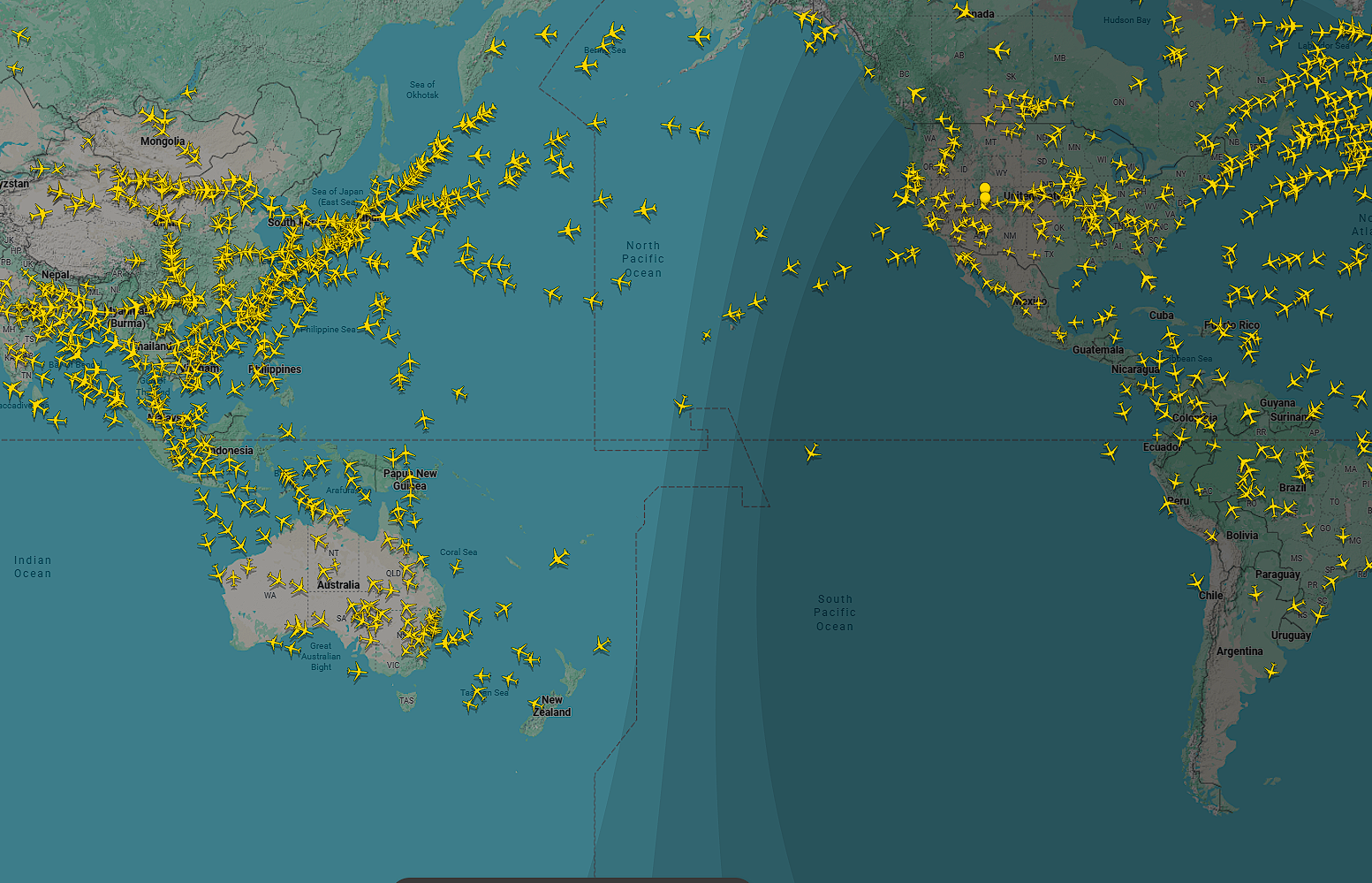
When you trace the world's busiest flight paths on a global map, a striking pattern emerges: the vast majority of commercial aviation occurs north of the equator.
Asia-Pacific accounts for 33.5% of global passenger traffic, Europe 26.7%, and North America 22.9%, while the Southern Hemisphere remains remarkably quiet in terms of transoceanic flights.
This isn't coincidence—it's the result of geography, regulation, economics, and safety considerations that collectively create what aviation professionals call the "Northern Bias" in global air transport.
Why do flights from Sydney to Los Angeles route through Asia, adding hours to the journey? Why can't you easily fly direct from South Africa to Australia across the Southern Indian Ocean? The answers lie in a complex web of aviation regulations, infrastructure limitations, and economic realities that have shaped modern commercial aviation into its current form.

Most Flights Follow Routes Above the Equator
The concentration of flights above the equator isn't accidental—it reflects where people live, work, and want to travel. With over 104,000 commercial flights operating daily worldwide, the overwhelming majority connect cities in the Northern Hemisphere, where roughly 90% of the world's population resides.
8 of the Top 10 busiest domestic routes are in Asia, with the Jeju to Seoul route alone handling 14.2 million seats annually. This concentration creates a self-reinforcing cycle: airlines build networks where demand exists, infrastructure develops to support these networks, and alternative routes remain underdeveloped.
The infrastructure challenge extends beyond passenger demand to include essential aviation support systems. Northern Hemisphere routes benefit from:
- Extensive radar coverage and air traffic control systems
- Comprehensive weather monitoring networks
- Abundant diversion airports with full emergency services
- Well-established maintenance and fuel supply chains
- Dense communication networks for real-time flight monitoring
In contrast, the Southern Hemisphere presents vast oceanic expanses with limited infrastructure.
The Southern Pacific, Southern Atlantic, and Southern Indian Oceans offer few intermediate airports suitable for emergency diversions, creating significant operational challenges for airlines.

Exceptions
Despite the challenges, several carriers do operate significant Southern Hemisphere services, driven by geography and market necessity rather than operational preference.
Qantas leads Southern Hemisphere operations with its famous "Kangaroo Route" concept. The Kangaroo Route, trademarked by Qantas since 1944, refers to commercial passenger routes between Australia and the United Kingdom via the Eastern Hemisphere. However, even Qantas routes its longest flights through Asia rather than directly across the Pacific.
South African Airways and Air Mauritius operate some of the world's most challenging Southern Hemisphere routes, including flights across the Southern Indian Ocean. These operations require extensive ETOPS certification and careful route planning around limited diversion options.
LATAM and Aerolíneas Argentinas operate South American routes that sometimes cross into Southern Hemisphere oceanic airspace, particularly when connecting South America with Oceania. However, these remain relatively rare compared to Northern Hemisphere operations.
Air New Zealand operates one of the few regular trans-Pacific Southern Hemisphere routes, connecting Auckland with various South American destinations, though these flights often require technical stops or route through the United States.
The key difference is that these airlines operate Southern routes out of necessity to serve their home markets, not because these routes offer operational advantages. The challenge is not the overall distance but the lack of acceptable diversion airports for medical emergencies or technical issues.

ETOPS/EDTO Requirements
Extended-range Twin-engine Operational Performance Standards (ETOPS), now known as Extended Diversion Time Operations (EDTO), form the regulatory backbone that governs how far twin-engine aircraft can fly from suitable airports. These regulations significantly impact Southern Hemisphere route planning.
Engines must have an in-flight shutdown rate better than 1 per 20,000 hours for ETOPS-120, 1 per 50,000 hours for ETOPS-180, and 1 per 100,000 hours for beyond ETOPS-180.
These stringent reliability requirements mean that not all aircraft can operate extended overwater flights.
For ETOPS certification, manufacturers must demonstrate that aircraft can fly with one engine and be manageable for flight crews, while airlines must show that their flight crew training and maintenance procedures meet acceptable standards.
The practical impact on Southern Hemisphere routes is severe. Southern Pacific routes might use NZCH (Christchurch), NTAA (Tahiti), and SCEL (Santiago) as ETOPS diversion airports, but the distances between these airports often exceed ETOPS limits for many aircraft types.
EDTO approvals require reporting of any "EDTO Relevant Event" - any system malfunction or degradation that requires crew decisions about whether to turn back, divert, or continue under increased alertness. This reporting requirement, combined with limited diversion options in the Southern Hemisphere, makes these routes operationally complex and potentially costly.
The regulatory framework essentially creates a hierarchy of routes based on diversion airport availability:
- ETOPS-120: Maximum 120 minutes flying time to a suitable airport
- ETOPS-180: Maximum 180 minutes flying time to a suitable airport
- ETOPS-240: Maximum 240 minutes flying time to a suitable airport
- ETOPS-330: Maximum 330 minutes flying time to a suitable airport
Most Southern Hemisphere oceanic crossings require ETOPS-240 or higher certification, significantly limiting aircraft options.

Aircraft Designed for Extended Southern Operations
Modern aircraft technology has gradually expanded the possibility of Southern Hemisphere operations, though challenges remain significant. The Boeing 737 flew 10 million flights with 2.4 trillion Available Seat Kilometers in 2024, followed by the Airbus A320 with 7.9 million flights, but these workhorses of global aviation are primarily designed for shorter routes with readily available diversion airports.
Boeing 777 Series: The 777-200ER and 777-300ER hold up to ETOPS-330 certification, making them capable of the longest oceanic flights. These aircraft enable routes like Air New Zealand's Auckland to Buenos Aires service, though such routes remain rare.
Boeing 787 Dreamliner: With ETOPS-330 capability and exceptional fuel efficiency, the 787 has opened some new Southern Hemisphere possibilities. Its advanced systems and reliability make it suitable for routes with limited diversion options.
Airbus A350: Similarly rated for ETOPS-370 operations, the A350 represents the cutting edge of extended-range capability. Some reports suggest Airbus was seeking a 420-minute ETOPS rating in 2014, though this remains unconfirmed, as ICAO guidance limits maximum diversion time to 180 minutes for EDTO.
Boeing 777X (upcoming): Expected to receive ETOPS-330+ certification, potentially enabling new ultra-long-range Southern Hemisphere routes.
The reality is that while aircraft technology now enables longer Southern Hemisphere flights, the infrastructure and economic factors remain limiting. Even with 330-minute ETOPS capability, the vast Southern Pacific still presents challenges that make northern routing through Asia more attractive for most carriers.
Advanced GPS, satellite communications, and weather radar systems have made Southern Hemisphere operations safer and more reliable, though they cannot eliminate the fundamental challenge of limited diversion airports.
Looking Ahead
The future of Southern Hemisphere aviation will likely be shaped by several converging trends: climate change impacts on northern routes, advancing aircraft technology, and growing economic ties between Southern Hemisphere nations.
Climate Considerations: As climate change affects traditional northern routes—potentially making polar routes more viable while creating new weather challenges—Southern Hemisphere routes may become relatively more attractive. Extreme weather events in the Northern Hemisphere could push airlines to develop more diverse routing options.
Economic Growth: Current US-Australia services show strong growth, with United and Delta operating twice-daily services on their busiest routes. As economies in the Southern Hemisphere continue developing, particularly in South America, Africa, and Oceania, passenger demand for direct Southern Hemisphere connections will likely increase.
Aircraft Technology Evolution: Next-generation aircraft with even longer ETOPS ratings and improved reliability may eventually make direct Southern Hemisphere crossings economically viable. The development of sustainable aviation fuels and more efficient engines could change the economic calculus of these longer routes.
Infrastructure Development: Investment in Southern Hemisphere airport infrastructure, particularly in remote islands that could serve as diversion airports, could gradually open new route possibilities. Projects like expanded facilities in places like Easter Island or the Falklands could provide crucial waypoints for Southern oceanic crossings.
Regulatory Evolution: As aircraft become more reliable and technology improves, aviation authorities may eventually extend ETOPS limits beyond current maximums, though safety will always remain paramount.
The Southern Hemisphere's aviation landscape will likely remain challenging for decades to come. While technology continues advancing and economic incentives may eventually support more direct Southern routes, the fundamental geographic and infrastructure realities mean that the Northern Hemisphere will continue dominating global aviation networks. For now, passengers traveling from Australia to the Americas will continue taking the "long way" through Asia, and the vast Southern oceans will remain among the quietest airspace on Earth. But as the aviation industry evolves, these empty skies may eventually see more activity, connecting the Southern Hemisphere's scattered continents more directly than ever before.
Comment