
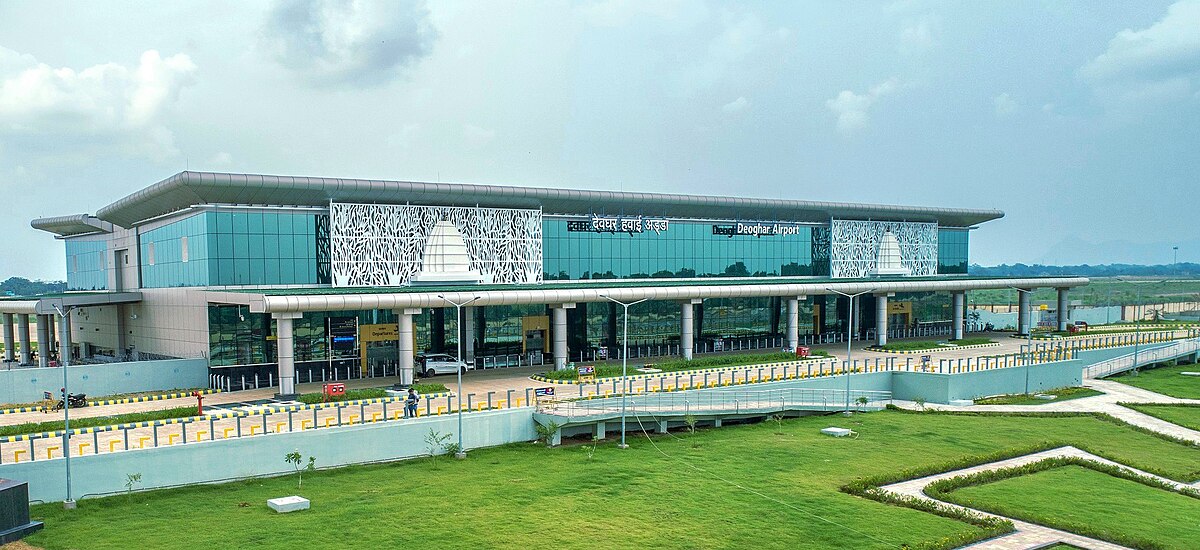
In the heart of Jharkhand, a remarkable aviation project is taking shape that represents more than just modern infrastructure – it's a testament to India's ability to harmonize ancient spiritual heritage with contemporary design. Deoghar Airport, nestled in the sacred town of Deoghar, is emerging as a unique architectural marvel that pays homage to one of Hinduism's most revered pilgrimage sites while serving the practical needs of modern air travel.
The Sacred Setting: Deoghar's Spiritual Significance
Deoghar, literally meaning "abode of the gods," holds an unparalleled position in Hindu spirituality. The town is home to the Baba Baidyanath Temple, one of the twelve sacred Jyotirlingas dedicated to Lord Shiva, making it a destination of profound religious importance. This sacred site uniquely represents both a Jyotirlinga and one of the 51 Shakti Peethas, creating a rare confluence of Shiva and Shakti worship.
The temple complex, steeped in millennia of devotion, attracts millions of pilgrims annually, particularly during the Shravan month when the famous Kanwar Yatra brings devotees from across the subcontinent. According to religious tradition, the temple was built by Vishwakarma, the divine architect of the gods, adding to its mythological significance and architectural importance.
This spiritual backdrop has profoundly influenced the design philosophy of Deoghar Airport, creating a unique opportunity to celebrate local heritage while facilitating modern connectivity.
Architectural Inspiration: Temple-Inspired Design
Drawing from Divine Architecture
The most striking feature of Deoghar Airport is its terminal building design, which draws direct inspiration from the structure of the Baba Baidyanath Temple. This architectural homage represents a thoughtful approach to airport design that respects and celebrates local identity rather than imposing generic modernist structures.
The terminal's facade echoes the temple's distinctive silhouette, with carefully crafted elements that mirror the sacred architecture's proportions and aesthetic principles. This design choice ensures that visitors arriving at Deoghar immediately understand they have reached a place of profound spiritual significance.
Scale and Scope
Spread across a vast area of 650 acres, the airport represents a significant infrastructure investment in the region. The generous land allocation allows for both current operational needs and future expansion, while providing space for the architectural elements that celebrate local culture.
Cultural Integration: Art, Craft, and Heritage
Showcasing Local Artistry
The terminal building serves as a canvas for local tribal art, featuring paintings, handicrafts, and images of regional tourist destinations. This integration of local artistry transforms the airport from a mere transit point into a cultural exhibition space, offering travelers an immediate immersion into Jharkhand's rich artistic traditions.
The inclusion of tribal art is particularly significant, as it acknowledges and celebrates the indigenous communities of the region, whose artistic traditions have often been overlooked in major infrastructure projects. By prominently featuring these works, Deoghar Airport becomes a platform for cultural preservation and promotion.
Tourist Destination Highlights
The interiors prominently display pictures and artistic representations of local tourist destinations, highlighting the cultural richness of the region. This approach serves dual purposes: educating visitors about local attractions while potentially boosting regional tourism by creating awareness of destinations beyond the primary spiritual sites.
Modern Facilities Within Traditional Aesthetics
Balancing Function and Heritage
Despite its traditional aesthetic inspiration, the terminal is equipped with modern, state-of-the-art passenger facilities. This balance between heritage design and contemporary functionality represents the best of both worlds – passengers enjoy modern conveniences while experiencing a uniquely cultural environment.
The challenge of maintaining operational efficiency while incorporating cultural elements has been addressed through careful planning and design integration. Modern amenities, security systems, and passenger flow management are seamlessly incorporated within the culturally-inspired framework.
Environmental Considerations
The airport features an environment-friendly architectural design, reflecting contemporary concerns about sustainability. This commitment to environmental responsibility aligns with traditional Indian architectural principles that emphasized harmony with nature, creating a structure that honors both ancient wisdom and modern environmental consciousness.
Strategic Connectivity: Serving Pilgrims and Progress
Regional Connectivity Enhancement
Under the Government's Regional Connectivity Scheme (UDAN), IndiGo has been selected to operate flights from Deoghar to Ranchi, Kolkata, and Patna. This connectivity enhancement will significantly improve accessibility for the millions of pilgrims who visit annually, reducing travel time and increasing convenience.
The routes chosen reflect practical connectivity needs, linking Deoghar to state capitals and major urban centers, thereby facilitating both religious tourism and business travel. This strategic approach ensures the airport's viability while serving its primary purpose of enhancing pilgrimage accessibility.
Economic Impact
The airport's development represents more than infrastructure improvement; it's an economic catalyst for the region. Enhanced connectivity will boost local businesses, create employment opportunities, and potentially attract investment in hospitality and service sectors. The cultural integration aspect may also position Deoghar as a unique destination, differentiating it from other regional airports.

Construction Progress and Future Prospects
Development Timeline
Construction activities are expected to commence in late 2025, marking the beginning of a transformative phase for regional connectivity. The timeline reflects careful planning and preparation, ensuring that the final product meets both operational requirements and cultural aspirations.
Broader Implications for Indian Aviation
Deoghar Airport's culturally-integrated design represents a potential model for future airport development in India. Rather than adopting generic international airport aesthetics, this approach demonstrates how aviation infrastructure can celebrate local identity while maintaining world-class functionality.
The project challenges the conventional wisdom that modernization requires cultural compromise, instead showing how thoughtful design can enhance both functionality and cultural value.
Challenges and Considerations
Balancing Tradition and Technology
The integration of traditional design elements with modern aviation requirements presents ongoing challenges. Issues such as maintenance of cultural displays, preservation of artistic elements, and ensuring that heritage features don't compromise operational efficiency require continuous attention.
Managing Increased Visitor Flow
The airport's success in improving connectivity may lead to increased tourist and pilgrim volumes, requiring careful management to prevent overcrowding at religious sites and ensure sustainable tourism development.
Bottomline : A New Paradigm for Aviation Architecture
Deoghar Airport stands as a pioneering example of how modern infrastructure can honor and celebrate local heritage. By drawing inspiration from the sacred Baba Baidyanath Temple and incorporating local artistic traditions, the airport creates a unique identity that serves both practical and cultural purposes.
This approach offers valuable lessons for future aviation projects across India and beyond. It demonstrates that airports can be more than functional transit points – they can be cultural ambassadors, educational spaces, and celebrations of local identity. As Deoghar Airport prepares for completion, it represents not just improved connectivity for a sacred destination, but a new paradigm for culturally-conscious infrastructure development.
The project embodies the best of Indian aviation's future: technologically advanced, culturally rooted, and spiritually aware. When completed, Deoghar Airport will serve as a gateway not just to a destination, but to an experience that honors the past while embracing the future.

Read next

JetBlue and United Airlines have just cleared the U.S. Department of Transportation’s review of their ambitious “Blue Sky” partnership, giving both carriers the green light to move from planning to execution as early as this fall. After JetBlue’s previous Northeast Alliance with American Airlines was scuttled by court order in 2023, this new deal promises a lighter-touch, interline-based model designed to sidestep past antitrust pitfalls.
What’s in the Blue-Sky Collaboration?
Seamless Booking & Reciprocal Rewards
Under Blue Sky, travelers will soon be able to search and book flights on either carrier’s website or mobile app, with loyalty members earning and redeeming TrueBlue points or MileagePlus miles across both networks — complete with corresponding priority boarding, preferred seating, and same?day standby perks.
JFK Slot Access: A New Takeoff in 2027
As part of a net?neutral exchange, JetBlue will grant United access to up to seven round?trip slots per day at New York’s notoriously congested JFK International Airport beginning in 2027. In return, United will swap eight Newark Liberty Airport timings back to JetBlue, balancing capacity at both East Coast hubs.
Why Now? From NEL to Blue Sky
Regulatory Climate: From Stricter Scrutiny to Swift Approval
Antitrust officials under the Trump administration have demonstrated a more permissive stance toward airline collaborations, approving over 100 deals with abbreviated reviews so far this year. By focusing on a straightforward interline agreement—rather than the revenue?sharing and joint scheduling that doomed its Northeast Alliance—JetBlue and United have crafted a partnership more likely to sail through regulators.
Spirit Airlines’ Objection: Competitive Concerns
In June, Spirit Airlines formally urged the DOT to block Blue Sky, warning it would cement advantages for the two carriers and spur similar alliances among other large airlines, potentially squeezing out low?cost competitors. Despite these concerns, the DOT concluded the pact didn’t trigger serious antitrust red flags.

What to Expect for Travelers
Phased Rollout Starting Fall 2025
Both airlines will begin rolling out Blue Sky benefits in phases this autumn. Initially, loyalty integration and reciprocal booking will take center stage, with additional perks—like shared status benefits—dropping in subsequent months.
Impact on Frequent Flyers
TrueBlue and MileagePlus members can look forward to enhanced flight options on partner routes, opening up hundreds of new connections. The ability to earn and redeem points interchangeably also simplifies long?haul travel planning and rewards optimization across two complementary networks.
Looking Upward: The Future of Mid?Sized Alliances
Blue Sky marks a potential blueprint for other mid?sized carriers seeking growth without running afoul of antitrust regulators. By sticking to a classic interline framework, JetBlue and United may have unlocked a replicable, low?risk model that balances competitive concerns with customer?centric benefits.
TL; DR
- DOT Cleared: DOT approval received July 29, 2025, after a streamlined review process.
- Booking & Rewards: Seamless booking on both sites plus reciprocal loyalty earning/redeeming.
- JFK Access: JetBlue to provide United seven round?trip JFK slots daily starting in 2027; United returns eight Newark slots.
- Profit Boost: Expected to add ~$50?million in incremental operating profit.
- Rollout: Phased launch of benefits begins fall 2025.
- Competitive Context: Designed to avoid past antitrust triggers; Spirit Airlines had objected but DOT saw no major concerns.
Ready to chase more horizons? With Blue Sky on the ascent, both airlines are betting you’ll find the smoother, broader travel options simply… uplifting.
With Inputs from Reuters
Read next
Flight Crew Flips the Script: United’s Attendants Say “Not Today” to Big-Pay Pact

Abhishek Nayar
31 Jul 2025

In a dramatic show of unity, 71% of United Airlines’ 28,000 flight attendants voted against ratifying the tentative contract agreement reached this May—despite estimating a hefty 40% financial boost in the first year. Talk about turbulence on the bargaining floor!
The Big Vote: Numbers That Soared
- Turnout: A staggering 92% of eligible attendants cast ballots—far outperforming most corporate votes—demonstrating just how invested crew members are in their careers and quality of life.
- Rejection: Of those ballots, 71% said “no thanks” to the proposed terms.
What Was on the Table: The May Agreement
United and the Association of Flight Attendants–CWA had touted this deal as “historic,” including:
- A 40% average pay increase in year one, with additional raises in subsequent years.
- Retroactive pay dating back to the last raise in 2020.
- New compensation for all working hours, including time spent on the ground between flights.
- Promises of more flexible scheduling and improved work rules.
Why They Voted No: Demands Left Unmet
Union President Ken Diaz summed it up bluntly: the pact “didn’t go far enough to address” years of sacrifices made by the cabin crew. What’s still on their Wishlist?
- Double-digit base pay hikes to keep pace with inflation and industry peers.
- Ground-time pay that truly values every minute of service.
- Stronger work?rule protections—including fairer overnight accommodations and rest periods.
- More predictable schedules so crew can plan life beyond the aircraft.
Back to the Negotiation Table
Rather than accepting a “good but not great” deal, attendants are gearing up for round two of bargaining. The union plans to survey members immediately to pinpoint non?negotiables, then head back to the table with fresh demands—and the leverage of a tried?and?true mandate from 28,000 voices.
The Bigger Picture: Industry Context
While most major U.S. carriers have recently settled updated contracts for flight attendants, United’s crew remains the outlier—operating under pandemic?era pay scales since 2020. Their bold rejection sends a message: in today’s tight labor market, sky?high morale matters as much as sky?high pay.
TL; DR
- Vote Stats: 92% turnout, 71% against ratification.
- Proposed Gain: 40% average pay bump in year one (plus retroactive raises).
- Key Grievances: Base pay too low, insufficient ground?time pay, scheduling headaches, and weak work rules.
- Next Steps: Union member survey ? fresh bargaining sessions ? a re?vote on a revamped deal.
With Inputs from Reuters
Read next

India's aviation sector is experiencing unprecedented growth, and 2025 promises to be a landmark year with the launch of three ambitious new carriers. Air Kerala, Shankh Air, and Alhind Air – all founded in 2024 – are expected to start their operations in 2025, marking a significant milestone in Indian aviation's evolution. These new entrants are poised to enhance domestic connectivity, introduce innovative service models, and intensify competition in an already dynamic market.
Air Kerala: India's First Ultra-Low-Cost Carrier
The Revival of a Dream
Air Kerala, headquartered in Kochi, is backed by a group of Dubai-based Malayali entrepreneurs and is reviving a dream that originated in 2005 as a government-led initiative but was stalled due to regulatory hurdles. Now operating as a private venture under Zettfly Aviation Pvt. Ltd., the airline is positioning itself to fill a crucial gap in the Indian market.
Pioneering the ULCC Model
Air Kerala aims to become India's first ultra-low-cost carrier, launching domestic operations in 2025 and international flights in 2026. This ultra-low-cost carrier (ULCC) model represents a new category in Indian aviation, promising even more affordable fares than existing low-cost carriers by stripping down services to absolute essentials.
Fleet and Operations
The airline will begin with three ATR 72-600 aircraft, focusing initially on regional connectivity within Kerala and neighboring states. Initial routes will cover key connections such as Kochi–Thiruvananthapuram–Calicut, providing much-needed intra-state connectivity for Kerala's passengers.
The strategic focus on ATR turboprops makes sense for Air Kerala's market positioning, as these aircraft are ideal for short-haul regional routes and offer lower operating costs – essential for maintaining the ULCC model's economics.

Shankh Air: Uttar Pradesh's Aviation Pioneer
Breaking New Ground
Shankh Air will be the first scheduled airline to originate from the state of Uttar Pradesh, positioning itself as a hub over Lucknow and Noida. This represents a significant development for India's most populous state, which has been underserved by home-grown aviation options.
Ambitious Fleet Plans
The airline plans to commence services with five Airbus A320-200 aircraft in its first year, with plans to induct five A320-200s in 2025 and a further ten in 2026. Shankh Air plans to take its first flight in May 2025, subject to receiving its Air Operator's Certificate (AOC) from the DGCA.
Route Network Strategy
Initial routes will connect Lucknow, Varanasi, Gorakhpur, and major metros including Delhi, Mumbai, and Bengaluru. This strategy addresses the connectivity gap for tier-2 cities in Uttar Pradesh while ensuring access to major business centers.
The airline plans to develop a full-service carrier with a two-cabin class configuration, differentiating itself from the predominantly low-cost carrier model that dominates Indian aviation.

Alhind Air: Regional Focus with Global Ambitions
Leveraging Travel Industry Expertise
Alhind Air, emerging from the established Alhind Group of travel agencies, plans to start with two ATR 72-600 aircraft and scale up to seven within a year. This background in travel services provides the airline with valuable insights into customer preferences and market dynamics.
Strategic Market Positioning
Positioned primarily as a regional commuter airline, Alhind Air is focusing on connecting underserved markets. In its first phase, the airline will focus on short-haul regional routes, connecting tier-2 and tier-3 cities like Pondicherry, Madurai, and Mangalore.
International Expansion Plans
The airline has ambitious growth plans beyond domestic operations. International expansion, particularly to the Gulf, is on the horizon within 18 months of its launch. By 2027, Alhind Air aims to add narrow-body aircraft to support its international route ambitions.

Market Impact and Industry Implications
Addressing Regulatory Momentum
Both Air Kerala and Alhind Air have received operational permits from the Ministry of Civil Aviation (MoCA) and are awaiting their final AOC approvals from the DGCA. This regulatory progress indicates the government's supportive stance toward new aviation entrants.
Enhancing Regional Connectivity
These three airlines collectively address a critical need in Indian aviation – improved regional connectivity. While major carriers focus on high-density routes between metros, these new entrants are targeting underserved tier-2 and tier-3 cities, potentially transforming travel patterns across the country.
Competitive Dynamics
The entry of these airlines comes at a time when India's aviation market is dominated by established players like IndiGo, which holds over 60% market share. The new entrants' focus on niche segments – ultra-low-cost (Air Kerala), regional full-service (Shankh Air), and commuter routes (Alhind Air) – suggests a strategy of market differentiation rather than direct competition.
Challenges and Opportunities Ahead
Infrastructure and Operational Challenges
All three airlines face the typical challenges of new aviation ventures in India: securing aircraft on lease, recruiting qualified pilots and crew, establishing maintenance capabilities, and navigating complex regulatory requirements. The ongoing global aircraft supply chain constraints add another layer of complexity to their launch timelines.
Market Timing
The timing of these launches coincides with India's robust aviation recovery post-pandemic. With domestic passenger traffic showing strong growth and government initiatives like UDAN (Ude Desh ka Aam Nagrik) promoting regional connectivity, market conditions appear favorable for new entrants.
Bottom Line
The launch of Air Kerala, Shankh Air, and Alhind Air in 2025 represents more than just new airline services – it signifies the maturation of India's aviation ecosystem. Each airline brings a unique value proposition: Air Kerala's ultra-low-cost model, Shankh Air's focus on Uttar Pradesh's connectivity needs, and Alhind Air's regional expertise.
India's aviation industry is set for an unprecedented transformation with the launch of these three carriers, driving growth and connectivity in 2025. Their success will depend on execution, regulatory approvals, and their ability to differentiate themselves in an increasingly competitive market.
As these airlines prepare for takeoff, they carry the hopes of improved connectivity, competitive pricing, and enhanced service options for Indian travelers. Their journey will be closely watched as indicators of the Indian aviation market's continued evolution and its capacity to support diverse business models in the years ahead.
Read next


India's domestic aviation market has experienced remarkable growth over the past decade, establishing itself as one of the world's largest airline markets by passenger volume. India is today the world's third-largest airline market by seat capacity, behind only the U.S. and China.
As the country's aviation network continues to expand, understanding the longest domestic routes becomes crucial for both passengers and industry stakeholders seeking to comprehend the scope and scale of India's aerial connectivity.
Based on Cirium aviation analysis data, we examine the 5 longest domestic flight routes operating within India, providing detailed insights into distance, operating airlines, aircraft configurations, and operational patterns that define these critical air corridors.
Complete Route Analysis Table
| Rank | Airline | Origin | Destination | Distance (Miles) | Flight Number | Aircraft Type | Seats | Departure Terminal | Arrival Terminal | Departure Time | Arrival Time | Block Time (Minutes) | Operating Days | Operations/Week |
|---|---|---|---|---|---|---|---|---|---|---|---|---|---|---|
| 1 | Air India (AI) | Delhi (DEL) | Port Blair (IXZ) | 1,542 | AI 485 | Airbus A320 | 150 | 3 | - | 05:45 | 09:25 | 220 | Mon, Tue, Thu, Fri, Sat, Sun | 6 |
| 2 | IndiGo (6E) | Delhi (DEL) | Tiruvanathapuram (TRV) | 1,382 | 6E 2156 | Airbus A320 | 186 | 1 | 1 | 20:10 | 23:30 | 200 | All days | 7 |
| 3 | Air India (AI) | Delhi (DEL) | Tiruvanathapuram (TRV) | 1,382 | AI 2617 | Airbus A320 | 180 | 3 | 1 | 03:25 | 06:50 | 205 | All days | 7 |
| 4 | IndiGo (6E) | Bangalore (BLR) | Jammu (IXJ) | 1,353 | 6E 6495 | Airbus A320 | 186 | 1 | - | 07:05 | 10:20 | 195 | Mon, Wed, Fri | 3 |
| 5 | IndiGo (6E) | Delhi (DEL) | Madurai (IXM) | 1,291 | 6E 6064 | Airbus A320 | 232 | 1 | - | 05:15 | 08:25 | 190 | Mon, Wed, Fri, Sun | 4 |
Detailed Analysis of India's Top 5 Longest Domestic Routes
1. Delhi to Port Blair (1,542 Miles) - Air India AI 485
The longest domestic route in India spans 1,542 miles, connecting the national capital Delhi with Port Blair, the capital of the Andaman and Nicobar Islands. Operated by Air India flight AI 485, this route utilises an Airbus 320 aircraft configured with 150 seats. The flight departs from Terminal 3 at Delhi's Indira Gandhi International Airport at 05:45 and arrives in Port Blair at 09:25, with a total block time of 220 minutes (3 hours 40 minutes). This route operates 6 days a week, serving as a crucial link between mainland India and the strategically important island territory.
The Delhi-Port Blair route serves both tourism and administrative purposes, connecting India's political centre with the remote island territory. The flight covers a distance of approximately 2,496 km and takes around 3.5 hours, with Air India being the main operator on this route. This route is particularly significant for passengers travelling to the pristine beaches and coral reefs of the Andaman Islands, while also facilitating essential administrative connections between the central government and the Union Territory administration.

2. Delhi to Thiruvananthapuram- IndiGo 6E 2156 (1,382 Miles)
The second-longest domestic route connects Delhi with Thiruvananthapuram (Trivandrum), Kerala's capital city, covering 2,224 miles. Air India operates this route with flight AI 2156 using an Airbus A320 aircraft with 186 seats. The evening departure at 20:10 from Terminal 1 arrives in Trivandrum at 23:30, with a block time of 3 hours and 20 minutes. This daily service operates throughout the week, providing consistent connectivity between India's political and administrative centres.
This route serves a diverse passenger base, including government officials, business travellers, and tourists heading to Kerala's southern regions. The route's strategic importance lies in connecting the national capital with Kerala's seat of government, facilitating official travel and strengthening administrative ties between the central and state governments.
3. Delhi to Thiruvananthapuram- Air India AI 2617 (1,382 Miles)
Air India operates a similar service on the Delhi-Trivandrum route with flight AI 2617, also covering 1,382 miles but with different timing and operational characteristics. This early morning service departs at 03:25 from Terminal 3 and arrives at 06:50, with a slightly longer block time of 205 minutes. The aircraft used is also an Airbus A320, configured with 180 seats, operating daily throughout the week.
The dual service on this route demonstrates the high demand for connectivity between Delhi and Kerala's capital. The early morning departure caters to passengers who prefer to arrive in Trivandrum during morning hours, allowing for full day utilisation upon arrival. This scheduling strategy maximises passenger convenience and operational efficiency.
4. Bangalore to Jammu - IndiGo 6E 6495 (1,353 Miles)
IndiGo's service from Bangalore to Jammu represents the fourth-longest domestic route at 1,353 miles. Flight 6E 6495 operates using an Airbus 320 aircraft with 186 seats, departing from Terminal 1 in Bangalore at 07:05 and arriving in Jammu at 10:20. With a block time of 195 minutes, this route operates three days a week (Monday, Wednesday, Friday), reflecting specific market demand patterns.
This route serves a unique market segment, connecting India's IT capital with Jammu, the winter capital of Jammu and Kashmir. The route facilitates connectivity between South India's technology hub and the northern region, supporting both business travel and tourism. Besides leisure passengers visiting Kashmir's scenic destinations, this route supports India's tech and business ecosystem by providing connectivity between Bangalore's corporate sector and the emerging opportunities in Jammu and Kashmir. The limited frequency suggests specialised demand, possibly catering to tourism, business development, or administrative travel.
5. Delhi to Madurai - IndiGo 6E 6064 (1,291 Miles)
Rounding out the top 5 is IndiGo's Delhi to Madurai route, covering 1,291 miles. Flight 6E 6064 operates using an Airbus 320 aircraft with a high-density configuration of 232 seats. The early morning departure at 05:15 from Terminal 1 arrives in Madurai at 08:25, with a block time of 190 minutes. This route operates four days a week, providing regular connectivity between India's capital and Tamil Nadu's cultural capital.
The Delhi-Madurai route serves both business and pilgrimage markets, connecting the national capital with one of Tamil Nadu's most important cultural and religious centres. Madurai, known as the "Athens of the East," is famous for the historic Meenakshi Amman Temple and serves as a major pilgrimage destination. The route facilitates travel for devotees, cultural tourists, and business travellers, while also supporting trade connections between North India and Tamil Nadu's textile and agricultural sectors.

Future Outlook
These longest domestic routes play a crucial role in India's aviation network by connecting major metropolitan areas with regional centres, facilitating economic development, tourism growth, and cultural exchange. The routes demonstrate India's vast geographic diversity and the aviation industry's role in making distant destinations accessible within reasonable travel times.
As India's economy continues to grow and urbanisation spreads to tier-2 and tier-3 cities, these long-haul domestic routes are likely to see increased demand.
The success of these routes also paves the way for potential new long-distance domestic connections, particularly as airports in smaller cities upgrade their infrastructure to handle larger aircraft.
The data reflects a mature approach to route planning, with airlines carefully balancing capacity, frequency, and market demand to optimise these challenging long-distance domestic operations that require significant fuel investment and operational expertise.
Bottom Line
As the country's aviation market continues its upward trajectory, these longest domestic routes will remain essential components of India's air transportation infrastructure, facilitating economic growth, tourism development, and national integration.
Analysis based on Cirium aviation data and industry sources (for scheduled flights in August 2025), reflecting current operational patterns and market dynamics in India's domestic aviation sector.
Comment