
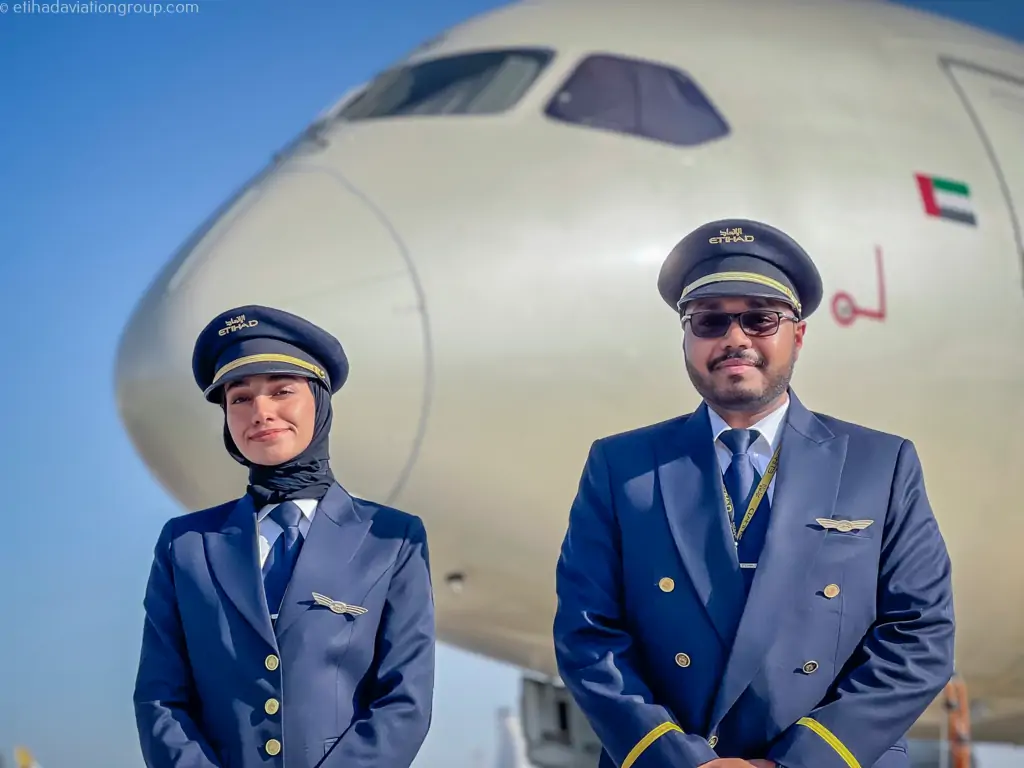
Etihad Airways was among the first airlines in the world and the first in the Middle East to begin a Multi-Crew Pilot License Program (MPL) on the Boeing 787 fleet for the UAE's national cadet pilot program. The MPL program, which was introduced by Boeing in 2006, is a comprehensive training program that emphasizes the development of non-technical skills such as communication, teamwork, decision-making, and leadership, in addition to technical skills. The program is designed to produce pilots who are well-equipped to handle the challenges of modern aviation, including the increasingly complex and sophisticated aircraft used today.
Under the guidance of a certified instructor, cadet pilots are trained in take-offs and landings during 'Base Training' flights. After this, the cadet pilots will continue their training on the market's most efficient and innovative wide-body aircraft, the Boeing 787 Dreamliner. The Boeing 787 Dreamliner MPL program, which was launched in October 2020 in partnership with IATA and the GCAA, was created to fulfill the industry's expanding demand for highly qualified pilots.
"Etihad's UAE national cadet pilots are the first to accomplish this critical milestone on one of the world's first Boeing 787 Dreamliner MPL programs," stated Mohammed Al Bulooki, Chief Operational Officer of Etihad Airlines. "This success demonstrates Etihad's dedication to consistently invest in and nurture our UAE national talent via the use of cutting-edge training approaches." Etihad's cadet pilots will acquire the most advanced commercial aviation training through this program as we prepare for continuous development in 2023 and beyond."
Second Officers Aya Saleh Alaudhli and Abdulla Rasheed Alsheebani flew the base training flight under the direction of Captain Suraj Weerasekera. “Due to our leadership and their trust in Emirati women, I am happy and blessed to be in the first batch of Boeing 787 Dreamliner MPL Program that Etihad has successfully pioneered,” stated Second Officer Aya Saleh Alaudhli.
In addition to the MPL program, Etihad Airways has also implemented a number of other innovative programs to enhance its operations and services. The airline has invested heavily in the latest technology and infrastructure, such as state-of-the-art aircraft, advanced navigation systems, and sophisticated communication networks.
The completion of the MPL program is a significant achievement for Etihad Airways, as it demonstrates the airline's commitment to providing its pilots with world-class training and development opportunities. The Dreamliner is a state-of-the-art aircraft that requires highly skilled pilots to operate it effectively, and the MPL program has helped Etihad Airways develop a team of pilots who are capable of doing just that. Moreover, the successful completion of the MPL program is expected to have a positive impact on the aviation industry in the Middle East. It is expected that other airlines in the region will follow Etihad Airways' lead and adopt the MPL program, which will help raise the overall standard of pilot training in the region.
With inputs from Etihadaviationgroup

Read next
Aviation Leasing Watchdog Issues Warning on Vietnam after Lease Disagreement
Abhishek Nayar
07 Apr 2023
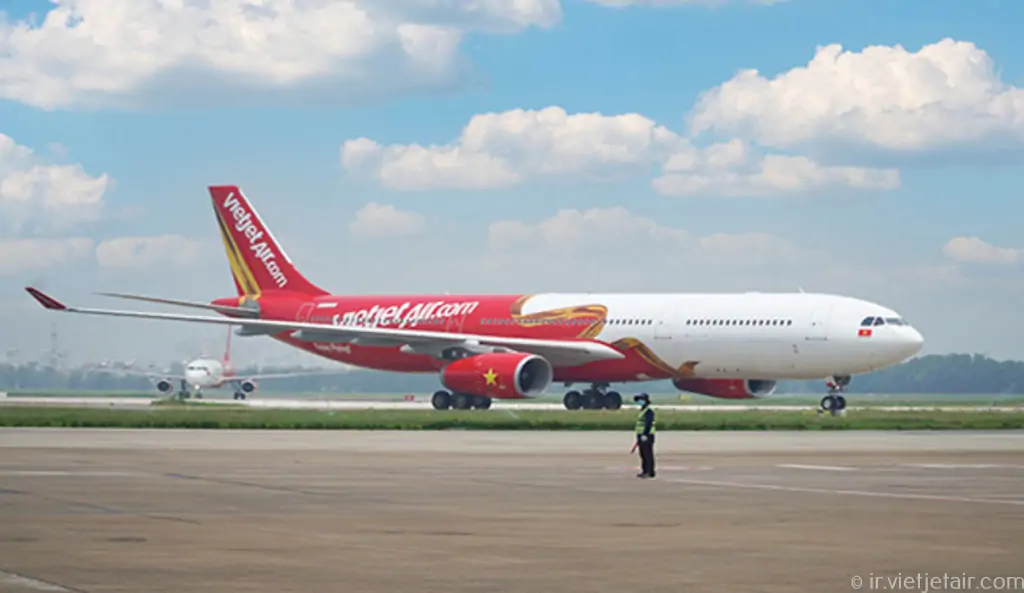
The aviation industry has always been an essential mode of transportation, connecting people and businesses across the globe. One of the key players in this industry is the aviation leasing market, which provides aircraft on lease to airlines worldwide. However, recent disagreements between airlines and aviation leasing companies have led to warnings from industry watchdogs.
During a disagreement over the repossession of four planes, an aviation industry association issued a warning regarding Vietnam's compliance with international aircraft leasing regulations, raising concerns about the expense of financing future deliveries. According to the International Air Transport Association (IATA), Vietnam is one of the world's fastest-growing air travel economies, with hundreds of aircraft on order and air transport accounting for 5% of GDP.
It did not identify the airline, but an updated version of the warning was uploaded on its website along with a link to a file titled "Update No. 1 re: VietJet." .
Airlines are able to achieve cheaper financing rates under the Cape Town Convention (CTC), of which Vietnam is a part, in exchange for their countries making it simpler for lessors to seize planes in the event of missed payments. In the case of a valid request from the lessor, the treaty permits jets to be de-registered, or withdrawn from the host country's aircraft registration, and placed on an international register, allowing the owner to fly the aircraft away.
According to the AWG, the anonymous lessor sought this action between November and January, which was supported by a court order in England, where courts have authority over the lease deal. Vietnam's regulator decided to de-register the planes, but a Hanoi court overturned that decision in February following a lawsuit filed by one of the airline's shareholders, according to the report. The lessor's request and the unfavourable Hanoi court verdict "are major events that impact CTC compliance in Vietnam," according to the AWG bulletin. Vietnam's aviation regulator and foreign ministry did not reply to demands for comment. Airbus declined to comment, while Boeing could not be reached for comment.
The warning from the AWG is a reminder of the importance of maintaining high standards in the aviation industry. The industry relies on trust and transparency, and any breaches of these principles can have serious consequences. It is important for all parties involved in aircraft leasing to adhere to international standards and to work together to resolve any disputes that may arise.
With inputs from Reuters
Read next

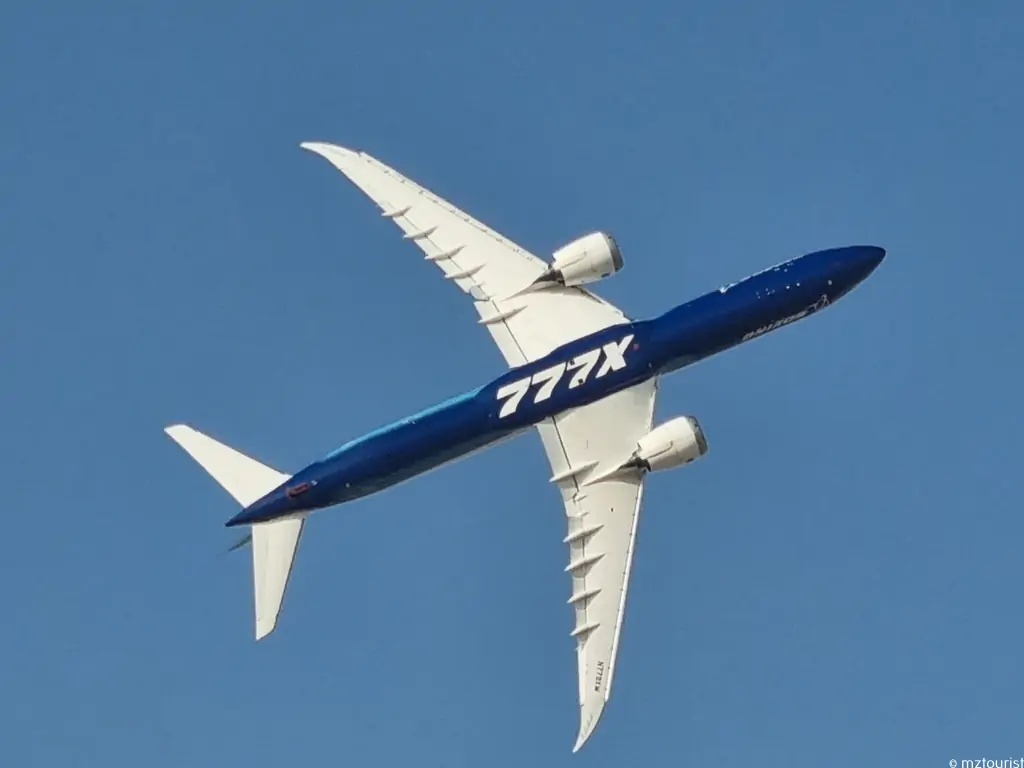
Boeing, recently made headlines for scrapping CEO David Calhoun's performance bonus for the 777X project. Saying that CEO will not receive a USD 7 million bonus due to the company's failure to enter the 777X into service by the end of 2023.
The 777X is a long-range, wide-body aircraft that was first announced in 2013, with a projected entry into service date of 2020. However, the program has faced several delays, including issues with the plane's engines and the COVID-19 pandemic's impact on the aviation industry. As a result, the plane has yet to enter commercial service.
Calhoun was appointed CEO of Boeing in January 2020, at a time when the company was reeling from the fallout of two fatal crashes of its 737 Max aircraft. Calhoun was tasked with overseeing the company's efforts to regain public trust and restore its reputation. As part of his compensation package, Calhoun was eligible for a bonus tied to the 777X program's performance. However, in February 2021, Boeing's board of directors announced that they had decided to withhold the bonus due to the program's continued delays.
Boeing's board of directors said Calhoun "substantially achieved, or is on track to substantially achieve" most of the award's performance goals, which include the return to service of the 737 MAX in 2020. The board also praised Calhoun's leadership in the filing, saying the CEO made several decisions on the 777X program that were in the company's long-term interests but came at the expense of the goal being met.

Boeing's actions demonstrate that it takes its responsibilities as a leading aerospace company seriously. The company's leadership understands that its decisions and actions have a significant impact on the aviation industry and the millions of people who rely on it every day. The decision to withhold Calhoun's bonus is not the first time that Boeing has taken steps to hold its leadership accountable. Moving forward, Boeing will need to continue to focus on meeting its commitments to customers and shareholders while also addressing the challenges it faces in the aviation industry.
Boeing's decision to withhold CEO David Calhoun's bonus for the 777X program's performance reflects the company's commitment to holding its leadership accountable for delivering results. This decision sends a clear message that Boeing is serious about meeting its commitments to customers and shareholders and that it takes its responsibilities as a leading aerospace company seriously. As the company moves forward, it will need to continue to focus on meeting its commitments and addressing the challenges it faces in the aviation industry.
Read next

Deutsche Lufthansa AG (Lufthansa) has agreed to sell the remaining LSG Group business to private equity firm AURELIUS. The European LSG Sky Chefs activities were previously sold to GateGroup in 2019. The divestment of the catering division is part of the Lufthansa Group's future aim to focus more on its aviation operations. The deal is intended to improve Lufthansa Group's operating margin and capital return.
Germany based AURELIUS Group, which specializes in investing in firms that need to enhance their operations, intends to utilize its experience to assist LSG Group in becoming more efficient and lucrative. The investment group has a track record of effectively turning around troubled firms, and it sees tremendous potential in the operations of LSG Group. The firm has a portfolio of more than 100 companies across various industries, including healthcare, chemicals, and technology. AURELIUS Group is known for its hands-on approach to portfolio management, working closely with portfolio companies to help them improve their operations and achieve sustainable growth. The arrangement was announced without the sum being disclosed by either party. Still, the LSG Group (LSG Sky Chefs and Retail InMotion) had a combined revenue of €1.96 billion ($2.15 billion) at the end of fiscal year 2022. The most recent estimates show a 75% increase over 2021 and equal 85% of the company's pre-pandemic revenues in 2019.
The LSG Group, located near Frankfurt, Germany, distributes around 275 million traditional airline catering meals in 49 countries. The transaction includes all of the LSG Group's traditional catering, onboard retail, and food commerce activities and brands, as well as all 131 LSG Sky Chefs Customer Service Centers (CSCs) in the Americas (U.S. and Latin America), Emerging Markets (EMMA), and Asia-Pacific regions, as well as onboard retail expert Retail InMotion (RiM) based in Europe and SCIS Air Security Services based in the United States. It employed 19,000 people worldwide and has 36 partner ventures throughout the world. With the assistance of its new owner, the LSG Group will be able to focus on implementing its ambitious three-pillar plan to harness growth prospects and lead the market in innovation after the transaction is completed.
"We are delighted to have identified the ideal investor for the LSG Group in the future, who also has the full backing of the LSG Group management. We are certain that AURELIUS will position the LSG Group effectively in the next few years. As a result, we will be able to focus even more on increasing the profitability and capital returns of the Lufthansa Group's core business," stated Remco Steenbergen, Chief Financial Officer of Deutsche Lufthansa AG." This purchase solidifies AURELIUS' position as a global industry leader in performing very complicated company carve-outs. Our operational experts will help the LSG Group maintain its market-leading position. AURELIUS will collaborate with the LSG Group's experienced management team to realize the company's development possibilities. We look forward to working closely with the LSG Group team and beginning on an exciting road to becoming an even more successful stand-alone company," says Dr. Dirk Markus, AURELIUS' Founding Partner.
Subject to appropriate external clearances and internal carve-out operations, the acquisition is scheduled to completion in Q3 2023. AURELIUS Group's acquisition of LSG Group is not its first in the aviation business. The investment group previously purchased Servisair, a UK-based in-flight services business, which it eventually sold to Swissport.
Thus, the purchase of LSG Group by AURELIUS Group represents a significant move in the airline catering and in-flight services business. The investment firm's expertise in turning around troubled firms, as well as its prior success in the aviation sector, position it ideally to assist LSG Group in navigating the current problems and emerging stronger. The purchase will provide the LSG Group with more resources and experience to invest in technology and innovation, while also assisting the Lufthansa Group in streamlining its operations and focusing on its core business. The acquisition's entire impact will be obvious in time, but it constitutes a substantial strategic move for both organisations.
With inputs from Lufthansagroup, Lsg-group
Cover Image - lsg-group.com
Read next
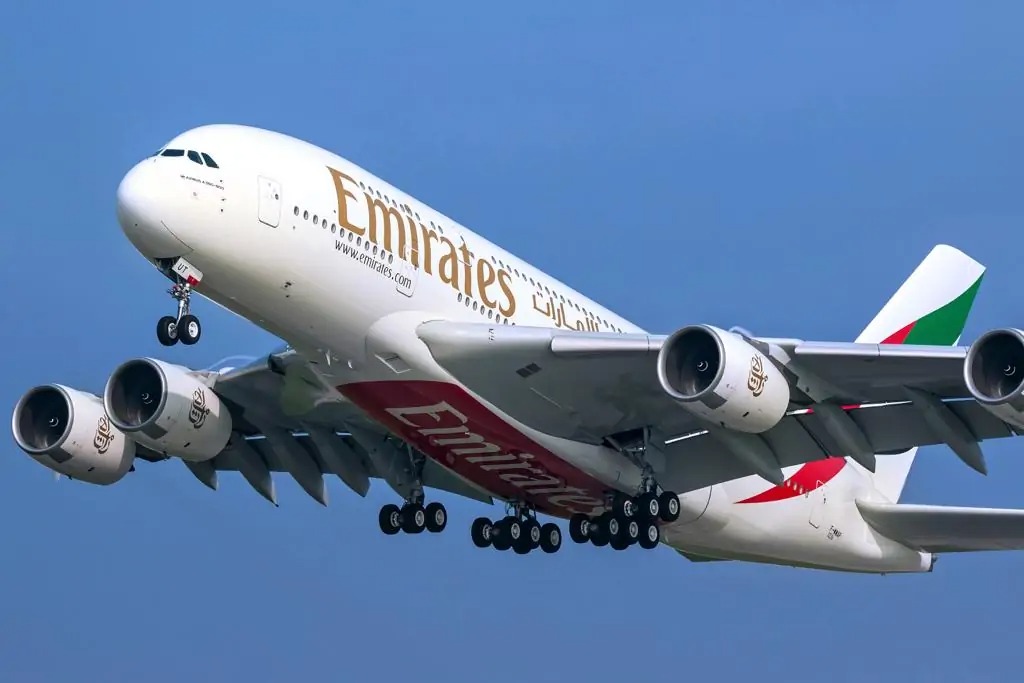
Emirates, one of the world's largest and most luxurious airlines, has announced that it will operate the first A380 route to Bali, a popular tourist destination in Indonesia. This move is expected to significantly boost tourism in the region and provide a more comfortable and convenient travel experience for passengers.
Thus far, the airline has flown over 49,000 flights and carried over 9 million passengers between Dubai and Indonesia. EK presently serves Indonesia with 28 weekly flights to Bali and Jakarta; the airline provides connectivity to another 29 domestic locations via the two hubs through its partners Garuda Indonesia and Batik Air.
Routes
Dubai-Denpasar will have 1,043 available seats daily, which is 22% more than before the change. It isn't any more since the leisure-heavy route is served by its highest-density 777-300ER. There are two classes and 428 seats available.
Dubai to Denpasar: EK368; 03:25-16:35 (9 h 10m); A380
Dubai to Denpasar: EK398; 09:10-22:20 (9 h 10m); 777-300ER
Denpasar to Dubai: EK399; 00:05-05:05 (9 h); 777-300ER
Denpasar to Dubai: EK369; 19:40-00:45+1 (9 h 5m); A380
Adnan Kazim, Emirates' Chief Commercial Officer, highlighted the deployment of the world's largest passenger aircraft to Bali, saying, "The Emirates A380 is synonymous with our fly better promise and world-class products and services, and we're excited to offer our travelers the opportunity to experience its uniqueness and unrivalled beauty on flights to and from Bali. Needless to say, we've been collaborating closely with our colleagues at Bali's Ngurah Rai International Airport to ensure that our A380 operations go well. We'd like to express our gratitude to the authorities and our partners for their assistance.”
“Bali is one of the most popular tourist destinations in our network and in critical Southeast Asian markets, and the Emirates A380's debut in Indonesia demonstrates our long-standing commitment to the country's travel and tourism industry. We look forward to increasing incoming traffic to the island while also providing more chances for leisure and business travelers to connect to Dubai and beyond to destinations throughout Europe and the Americas via Emirates' broad global network."
Overall, the arrival of the A380 to Bali is a big step forward for both Emirates and the Indonesian tourism industry. The move is anticipated to increase the number of tourists to Bali while also providing travelers with a more sophisticated and pleasant travel experience.
With inputs from Emirates
Cover Image - emirates.com
Read next

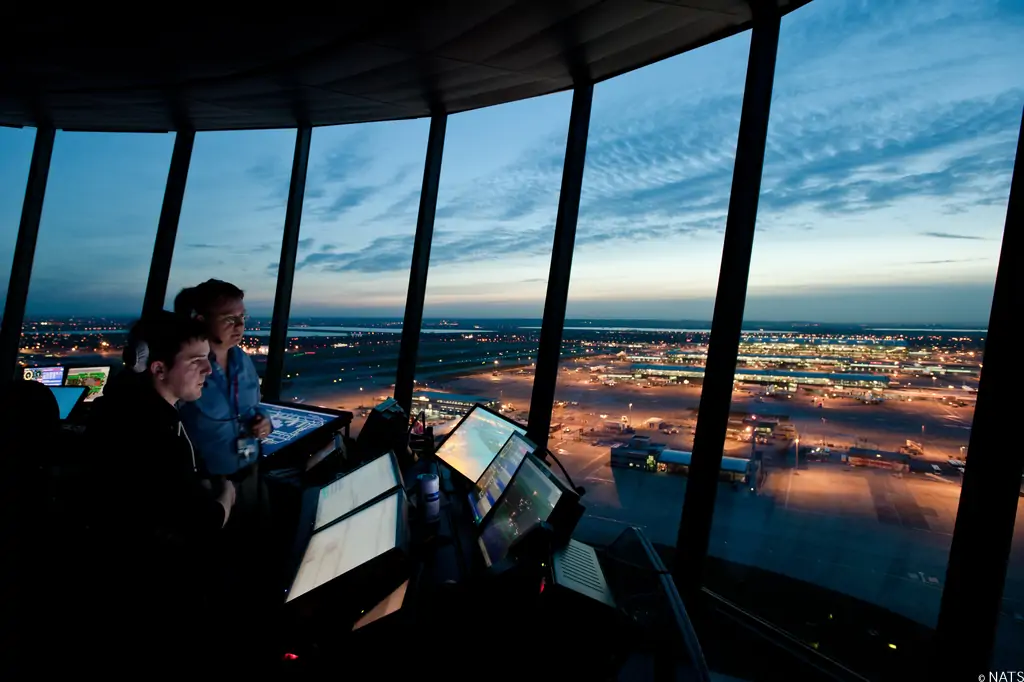
As Indian aviation reaches record traffic levels, the government has set out to address a shortage of air traffic control officers (ATCOs) by filling 80% of vacant posts in the next six months, according to a report by Mint. The Airports Authority of India is in the process of hiring 356 of the 519 ATCO vacancies by August-September, two officials said.
In most cases, a recruit must undergo mandatory training of about nine months, followed by on-the-job training of 18 to 24 months. Record orders for planes and passenger growth in the Indian market have brought in the sense of urgency in the government to ensure enough controllers to guide the new aircraft.
The AAI has three training institutes -- Civil Aviation Training College (CATC) in Prayagraj; Hyderabad Training Centre (HTC); and the National Institute of Aviation Training And Management (NIATAM), Gondia. The existing combined capacity of the above training institutes is 575 for freshers/new recruits which is sufficient to cater to the requirements of AAI.
"Given the size of aircraft orders that have been placed by Indian airlines and the growth potential, it is expected that the hiring of various key personnel including air traffic controllers will be ramped up over the next two years as they are a critical component for aviation infrastructure. In addition, they will also be needed as the government is planning to expand flight operations at Tier-2,3 cities as well," an official told the Mint.
The report also highlights the shortage of air traffic controllers in India, with 3,692 ATCOs on active duty against the required current strength of 4,211. This means that 519 more personnel are required to keep operations smooth.
Meanwhile, the AAI has asked some retired controllers to come back as consultants until adequately experienced controllers can be placed. In March, the agency issued an advertisement requiring 27 retired ATCOs for a one-year term for 10 airports, but mostly for Delhi (DEL) and Mumbai (BOM).
The DGCA plans to hire 1,000 employees by 2030, increasing the count to 1,600-1,700 from its current strength of nearly 650 people, as it realizes the need to keep up with India's rapidly growing fleet size.
The AAI had also initiated steps for filling up another 356 posts of ATCOs through direct recruitment on December 9, 2022. Further, to cope with the increasing demand, the Ministry of Civil Aviation has initiated the process of creating of 456 more posts of ATCOs in AAI at different levels.
(With Inputs from Mint)
Comment