Boeing has submitted details to the Indian Navy for an assessment of the Super Hornets fighter aircraft produced by the company, a senior official of the firm has said. Boeing Defense, Space and Security, India business development head, Alain Garcia told PTI the company has handed over the details and the Indian Navy is also interested in acquiring six more P-8 patrol aircraft.
"Right now, we have submitted all of the information to the Indian Navy, for them to make an assessment. We are just ready and waiting for them to make a decision and an announcement to tell us where that stands," Garcia said at the ongoing Aero India-2023.
ALSO READ - Boeing calls F/A-18 Super Hornet “the best deck-based aircraft” for the Indian Navy
Regarding P-8 aircraft, Garcia said it has been a great platform for the Indian Navy. "They have flown the (P-8) aircraft many hours over the years to a point where it's really benefiting their capability and maritime surveillance in patrol and anti-submarine capabilities," he added.
Indian Navy expresses interest in Boeing F-18 Super Hornet fighter jets
Garcia said along with P-8 aircraft, Boeing can also help with some more Apache helicopters. He pointed out that the Indian Army has acquired six Apaches, and it is waiting for the first six to be delivered. "That first one just rolled out of our assembly production line. We build all the Apache fuselages here in India in Hyderabad with a joint venture with Tata called Tata Boeing Aerospace Limited (TBAL)," the Boeing official added.
Regarding the call for a 'self-reliant India', Garcia said there are a lot of avenues for it. Boeing has the largest facility outside the United States in Bengaluru with over 4,000 engineers, according to him. Apart from Bengaluru, the aviation company has 5,000 more employees in other parts of India. "We are growing our footprint here even more and helping the Indian aerospace industry grow," Garcia said.

Read next
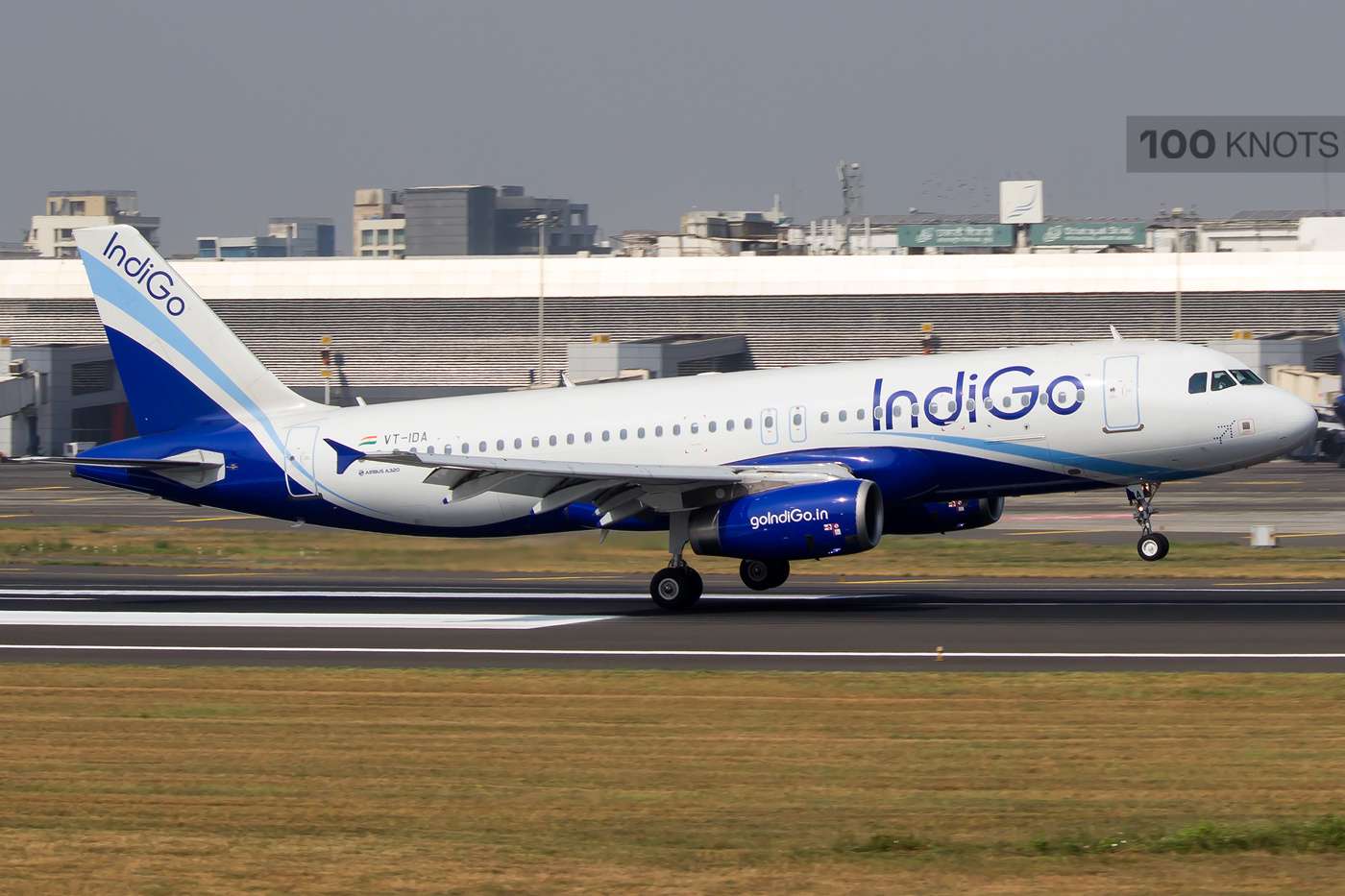
Shobha Gangwal, the wife of IndiGo co-promoter Rakesh Gangwal, will sell shares amounting to a four percent stake in the aviation company via a block deal, CNBC TV-18 reported on February 15, citing sources.
The block deal, as per the report, has been launched for 1.56 crore shares. The total deal size is of Rs 2,930 crore, the source who are privy to the development said.
The maximum discount will be up to 5.6 percent of the current market price, the sources added, further noting that the floor price has been set at Rs 1,875 per share.
Goldman Sachs is the banker assigned to broker the block deal, CNBC TV-18 reported. There will be a 150-day lock-up period post-block deal for the investors, it added.
IndiGo's promoter and promoter group presently hold a total of 71.92 percent stake or 27.72 crore shares in the company, as per the shareholding pattern disclosed with the BSE.
Rakesh Gangwal, along with Rahul Bhatia, had co-founded IndiGo airlines in 2006. In February last year, Gangwal resigned from the board of directors, and had announced that he would gradually reduce his stake in the company.
In September, Gangwal and his wife had offloaded a 2.74 percent stake in InterGlobe Aviation, the parent firm of IndiGo, for Rs 2,005 crore through open market transactions.
The shares of Interglobe Aviation settled at Rs 1,986 apiece at the market closing hours of February 15. The closing price was 2.5 percent lower as against the previous day's close.
The block deal comes days after the company reported a 1,000 percent surge in net profit during the third quarter of fiscal year 2022-23.
The airline's profit came in at Rs 1,422.6 crore in Q3 FY23 as against a profit of Rs 129.8 crore in the year-ago period. Revenue from operations surged 61 percent to Rs 14,932 crore in the third quarter as against Rs 9,294 crore a year ago.
Read next
Ministry of Civil Aviation identifies 25 airports for the second phase of privatisation
Radhika Bansal
15 Feb 2023

In a major development in the aviation sector, the Ministry of Civil Aviation has identified as many as 25 airports for the second phase of airport privatisation. The ministry is currently finalising the terms and conditions for the bidding process. The 25 airports identified for privatisation include some big ones like Chennai, Varanasi, and Kolkata.
The aviation ministry is planning to adopt a new formula for the Public-Private Partnership (PPP) model in the second phase. Under this plan, one big airport could be with one smaller airport and then floated for bidding as one single unit, sources told ET NOW. For example, the Varanasi Airport could be clubbed with Kushinagar Airport. Chennai Airport could be clubbed with a nearby smaller airport.
Using this technique, the government is hoping to attract more private players for the bidding process. In addition to this, Centra also hopes that it will be able to receive more than Rs 10,000 crore as an upfront payment. The bidding formula will be the same as it was during phase 1 of airport privatisation i.e. per passenger fees or the revenue.
The process for the second phase of airport privatisation is on and it is likely that the entire project and the Cabinet note will be ready within two months, which will soon be floated for Cabinet approval.
Last year in December, Civil aviation minister Jyotiraditya Scindia said that the government is looking to lease out 11 more airports for 50 years. The minister shed light on the status of the airport privatisation plan.
“Our plan is to lease out the assets for a period and gain cash flow, which will then be reinvested to build out more airports in tier 2 and tier 3 cities. Our plan is to lease out another 11 airports. So, that process is on and shortly you will be hearing about that,” he had said.
In 2019, the government had leased 6 airports - Lucknow, Ahmedabad, Mangalore, Jaipur, Guwahati and Thiruvananthapuram – and industrialist Gautam Adani-led Adani Group won the bid for all six airports.
(With Inputs from ET Now)
Read next
Tata Boeing Aerospace Limited ships the first vertical fin structure for B737
Radhika Bansal
15 Feb 2023
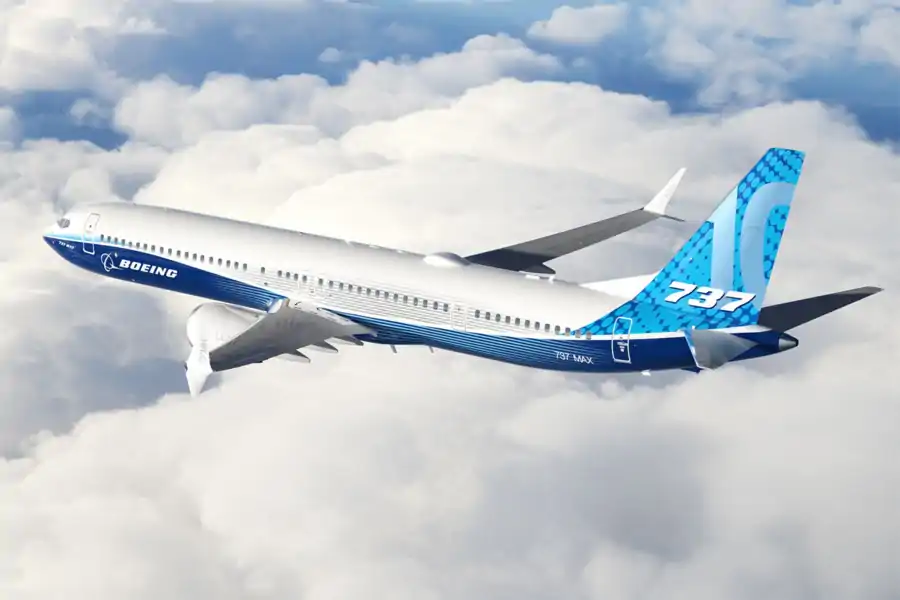
Tata Boeing Aerospace Limited (TBAL) on Tuesday, February 14 said it has shipped the first vertical fin structure for the Boeing 737 aircraft from its state-of-the-art facility in Hyderabad.
The vertical fin will be delivered to the Boeing manufacturing facility in Renton, WA, for integration into the final Boeing 737 aircraft, a Tata Advanced Systems Limited (TASL) statement said.
Tata Boeing Aerospace Limited ships the first vertical fin structure for B737
In 2021, TBAL added a new production line to manufacture vertical fin structures for the 737 family of airplanes. The expansion marked a significant milestone for the joint venture. It also created additional employment while enabling skill development.
"Tata Boeing Aerospace Limited is an example of Boeing's commitment towards the co-development of integrated systems in aerospace and defence in India for the world, and a reflection of the country's Aatmanirbhar Bharat capabilities. The speed and quality with which the first vertical fin has been manufactured is a testament to TBAL's skilled workforce, engineering talent, and world-class manufacturing prowess."
Salil Gupte, President, Boeing India
A vertical fin is a vertical stabilising surface mounted on the tail of an aircraft, providing stability and control in yaw, or the movement of the aircraft from side to side, preventing side-slip and maintaining a straight and level flight. The new production line utilizes cutting-edge robotics, automation, and advanced aerospace concepts like full-scale determinant assembly in its manufacturing processes.
“Successful shipment of the first vertical fin structure for the Boeing 737 aircraft is a result of the hard work and seamless collaboration by the teams at TBAL. This positions TBAL and India as an important manufacturing base in overall Boeing operations. We stay committed towards progression of indigenous aerospace manufacturing with a strong focus on quality and timely delivery.”
Sukaran Singh, Managing Director and Chief Executive Officer, Tata Advanced Systems Limited (TASL)
Spread over 14,000 square meters, the joint venture between Boeing and Tata Advanced Systems Limited (TASL) employs over 900 engineers and technicians. It has been producing aero-structures for Boeing’s AH-64 Apache helicopter, including fuselages, secondary structures, and vertical spar boxes for customers worldwide. Earlier this year, TBAL also delivered the first fuselage for the first of the six Indian Army AH-64 Apache attack helicopters on order.
ALSO READ - Boeing receives the 200th CH-47 crown & tail cone from Tata Advanced Systems
Read next
IndiGo restores annual increments for around 4500 pilots after the Q3 FY23 profit
Radhika Bansal
15 Feb 2023
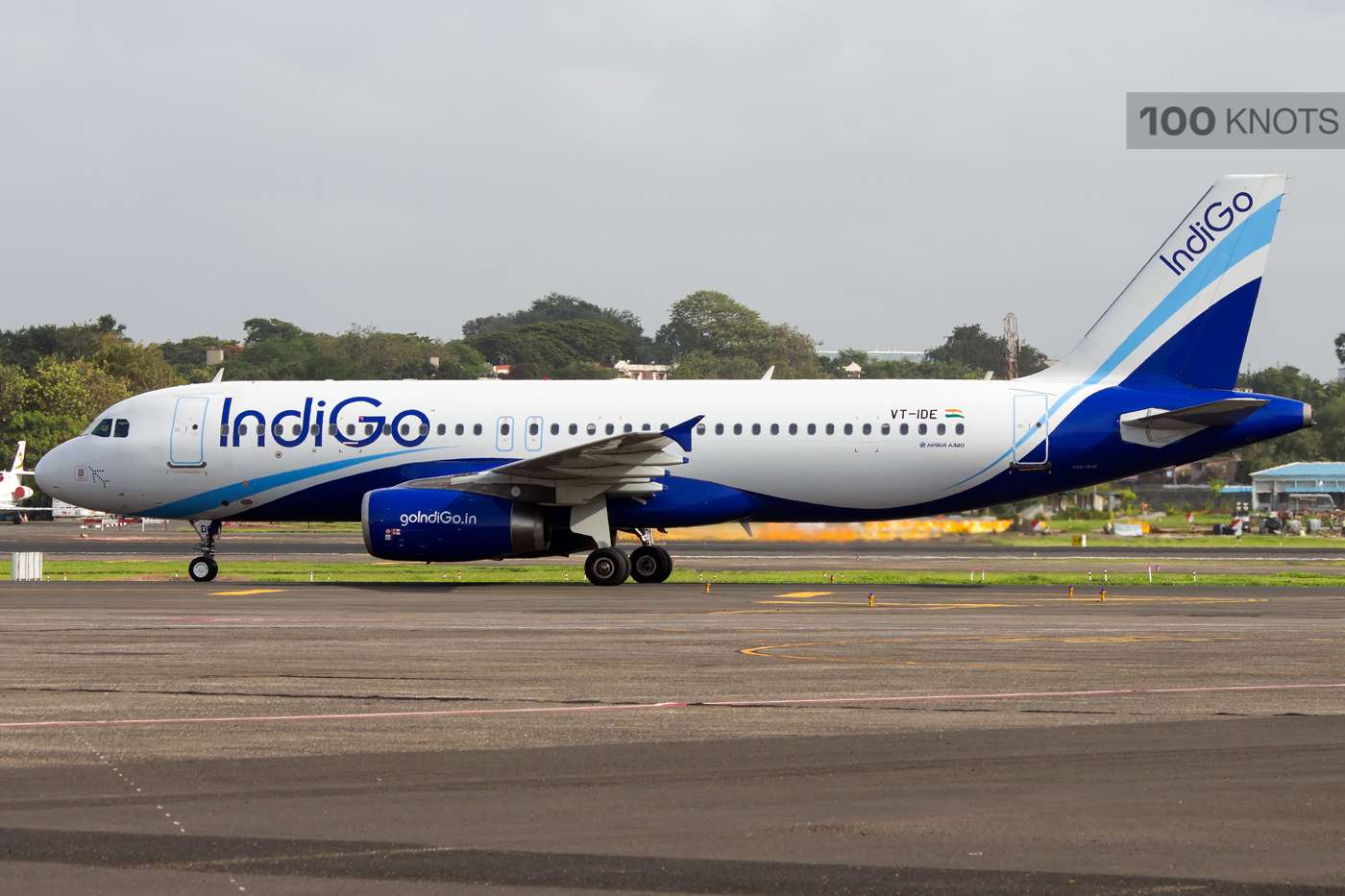
IndiGo has restored annual increments for more than 4,500 pilots as a financial turnaround helped the airline make a profit in Q3 FY23 after three-quarters of loss.
An email from the airline’s management last week informed pilots of the restoration from April.
"The component of annual increment for Indian captains (Rs 10,000 per month) and Indian first officers (Rs 5,000 per month) on the Airbus and ATR fleet which was stopped due to Covid will restart from April 1, 2023," the airline’s senior vice president (flight operations) Ashim Mitra said in the staff email.
IndiGo plans revising the salaries of first officers flying the ATR aircraft. Such officers are paid less than their counterparts on the Airbus fleet. "Details are being worked out and will be shared in due course," Mitra said.
The airline restored pilot salaries to pre-pandemic level from last November. Annual increments are being introduced again, but certain allowances are yet to be restored. Pilots clocking a stipulated number of hours were paid for flying red-eye flights: that allowance has stopped. Certain instructor allowances too have not been revised to pre-pandemic rate, it is learnt.
“We had stopped the increments for pilots during the pandemic but now we have restarted them as the business is picking up. The airline continues to fly 1600-1700 flights daily and is also building up capacity by training its pilots,” said an Indigo official.
IndiGo swung to a record net profit of Rs 1,422 crore in Q3FY23, after three consecutive loss-making quarters. For the same period last year, the airline posted a net profit of Rs 129 crore.
The airline’s best quarterly profit came on the back of 60.7 per cent year-on-year (YoY) growth in revenue from operations, which stood at Rs 14,933 crore, driven by high passenger loads and strong yield.
Read next

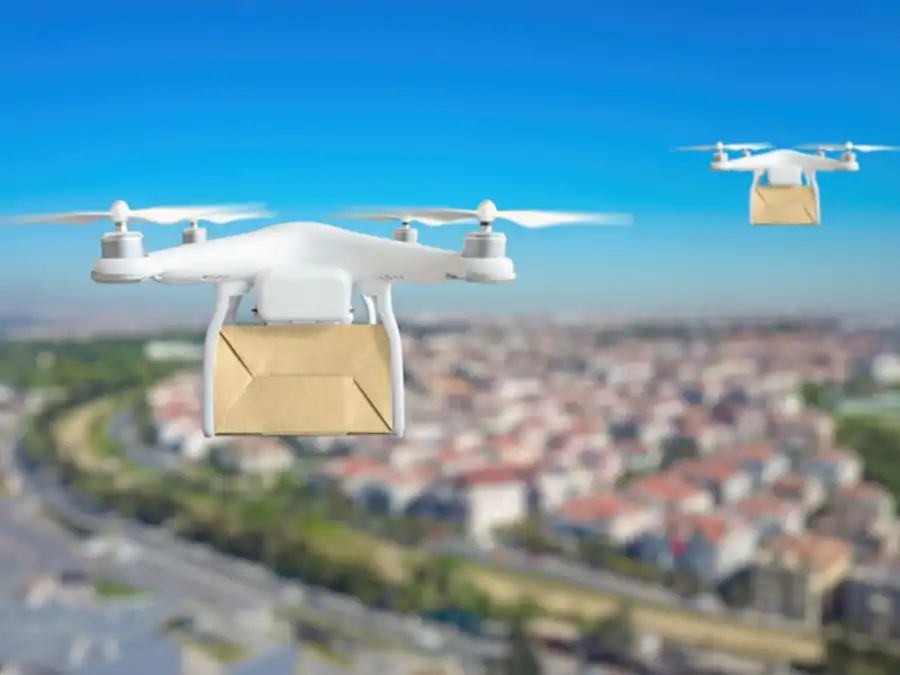
Delhivery, one of India's leading logistics companies, has recently announced its plans to monetize the intellectual property (IP) developed for its drone delivery services during the fiscal year 2023-24.
The company's CEO, Sahil Barua, made the announcement during an interview with a leading financial news outlet, highlighting the company's continued efforts to innovate and bring cutting-edge technology to the logistics sector.
Delhivery has been working on drone technology for several years now, with successful test runs conducted in various parts of the country. The company has developed its drone technology in-house, creating an IP portfolio that includes multiple patents and trademarks.
The IP is related to various aspects of drone operations, including hardware, software, and operational procedures.
Barua explained that the monetization of the company's IP will be done through licensing agreements with other companies, allowing them to use Delhivery's drone technology in their operations. This will include the use of the company's drones for last-mile deliveries, which is a crucial area for many logistics companies.
The licensing agreements are expected to generate significant revenue for Delhivery, as the company's drone technology is unique and offers many advantages over traditional delivery methods.Barua also stated that the company plans to expand its drone operations in the coming years, with a focus on improving the technology and increasing its operational reach.
Delhivery is currently awaiting approval from the Indian government to expand its drone operations beyond the current testing phase, and the company is optimistic about receiving the necessary clearance soon.
The move to monetize its drone IP is part of Delhivery's broader strategy to leverage technology to improve its operations and gain a competitive edge in the logistics industry. The company has been investing heavily in technology, including artificial intelligence, machine learning, and automation, to streamline its operations and enhance the customer experience.
Overall, Delhivery's plans to monetize its drone IP are a positive development for the company and the logistics industry as a whole. The move will not only generate significant revenue for the company but also drive innovation and progress in the sector.
With the logistics industry poised for rapid growth in the coming years, the use of drone technology is expected to become increasingly widespread, making Delhivery's IP portfolio even more valuable.
Comment