

The Directorate General of Civil Aviation (DGCA) has mandated the immediate closure of Nanded Airport after discovering critical safety violations during an inspection. The violations were classified as Level 1 (L1) infractions, representing the most serious category of safety concerns that pose direct threats to flight safety and passenger security.
Understanding DGCA Violation Categories
The DGCA classifies safety violations into two main categories:
1.Level 1 (L1) Violations: Critical safety risks that directly compromise flight safety and require immediate corrective action. These violations can lead to immediate regulatory actions, including suspension or revocation of operating licenses.
2.Level 2 (L2) Violations: Less critical safety concerns that still require attention but do not pose immediate threats to flight operations.
The Nanded Airport closure falls under L1 violations due to the severity of the infrastructure deficiencies discovered during the inspection.
Critical Infrastructure Failures Identified
Runway Damage
Inspectors found large potholes on the runway that directly threatened the safety of planes landing or taking off. These structural damages to the runway surface created hazardous conditions for aircraft operations and compromised the fundamental safety requirements for aviation infrastructure.

Power System Deficiencies
The airport lacks power backup systems, meaning critical operational systems would not function during power outages. This absence of backup power creates a serious vulnerability, as essential airport operations including lighting, communication systems, and safety equipment require uninterrupted electricity supply.
Fire Safety Concerns
The inspection also revealed gaps in fire safety measures at the facility, adding another layer of risk to airport operations and emergency response capabilities.
Airport Operations Background
Nanded airport operates for seven hours daily and is serviced by Star Air, making it an important regional connectivity hub. The closure affects daily passenger services and regional air connectivity in the area.
The DGCA's decision to close the airport demonstrates the authority's commitment to maintaining aviation safety standards. The closure will remain in effect until all identified safety violations are addressed and the airport infrastructure meets the required safety and operational standards.

Impact on Services
The immediate shutdown affects all flight operations at Nanded Airport, disrupting regional air connectivity. Airlines operating from this airport will need to make alternative arrangements for passengers and reschedule flights until the facility is deemed safe for operations again.

Read next
Malaysia Airlines Manchester United Livery Jet: Registration, Routes, Tracking and more!

Sakshi Jain
23 Aug 2025

For those rare breeds who live at the intersection of aviation obsession and Manchester United fanaticism—who can recite both aircraft registration numbers and United's starting eleven from memory—Malaysia Airlines had delivered the ultimate gift back in April 2025!
The airline has unveiled a Manchester United-themed livery on its Airbus A330-300, creating a flying tribute that combines Malaysian pride with Red Devils passion. This article explores the origins, specifications, routes, and significance of this unique aircraft that has aviation enthusiasts and football fans alike tracking flight paths with unprecedented enthusiasm.
Manchester United Livery Malaysia Airlines: When and Why?
Malaysia Airlines unveiled its Manchester United special livery in April 2025 as part of its role as the Official Commercial Airline Partner of the legendary football club. The timing coincided perfectly with Manchester United's post-season Asia tour, serving both practical and promotional purposes!
The livery represents more than mere branding—it symbolises the airline's commitment to connecting cultures and communities through shared passions. The design merges Malaysia Airlines' traditional Jalur Gemilang flag livery with Manchester United's iconic red, creating dynamic red lines that flow from the Malaysian flag into the club's signature colour.
This visual metaphor represents harmony, strength, and unity between aviation and sports, two forces that inspire and connect people worldwide!
The partnership reflects Malaysia Airlines' strategic positioning as the "gateway to Asia and beyond," while Manchester United's global reach provides the perfect platform for showcasing Malaysian hospitality to an international audience.

Aircraft Registration and Special Features
The star of this collaboration is 9M-MTL, an Airbus A330-300 that has been transformed into a flying masterpiece. Originally delivered to Malaysia Airlines via ferry flight from Toulouse to Kuala Lumpur on March 18-19, 2013, this aircraft has undergone several configurations throughout its service life.
Initially configured as "C36Y247" (36 Business Class, 247 Economy seats) until March 2016, the aircraft was later reconfigured to "C27Y263" (27 Business Class, 263 Economy seats) to optimise passenger capacity. The Manchester United livery was applied in 2025, giving this already distinguished aircraft a completely new identity.
While specific details about special interiors weren't extensively documented, the aircraft maintains Malaysia Airlines' signature cabin standards, delivering the airline's renowned Malaysian Hospitality. The exterior design is the primary transformation, featuring bold red accents that make it instantly recognisable among the airline's standard fleet.
Routes and Flight Operations
The primary mission for 9M-MTL during the livery's debut was Manchester United's post-season Asian tour. The aircraft operated a special charter flight from Manchester (MAN) to Kuala Lumpur (KUL) on May 26, 2025, officially launching the tour and the partnership.
Following this, the aircraft was scheduled to transport the team to Hong Kong on May 30, 2025, for their next match. This route provided excellent opportunities for aviation spotters at Hong Kong International Airport to witness this unique livery firsthand.
Post-tour, 9M-MTL is expected to return to regular scheduled or charter service, potentially operating on routes throughout Malaysia Airlines' extensive Asian network, including destinations like Bangkok, Singapore, Jakarta, and Tokyo.
Flight tracking enthusiasts can monitor 9M-MTL's movements through various flight tracking platforms and social media channels, as the aircraft continues its service beyond the special charter duties.

Tracking and Flying on 9M-MTL
For planespotters eager to catch this special livery in action, monitoring flight tracking platforms is essential. According to FlightAware data, 9M-MTL operates regular services from Kuala Lumpur to various international destinations, providing multiple spotting opportunities across Asia-Pacific.
Key destinations where 9M-MTL has been tracked flying from Kuala Lumpur during July-August include: Incheon (South Korea), Taiwan, Beijing, Mumbai, Melbourne, Sydney, Ngurah Rai (Bali), Delhi, Guangzhou, Tokyo Narita, Hamad (Doha), Adelaide, Shahjalal (Dhaka), Kansai (Osaka), Perth, and Shanghai.
Planespotters at these airports should monitor Malaysia Airlines' A330 schedules and cross-reference with flight tracking apps to maximize their chances of capturing this unique livery.
For travelers hoping to experience the Manchester United livery firsthand, the key is checking aircraft assignments before booking. While airlines cannot guarantee specific aircraft on commercial routes, passengers can monitor which aircraft is scheduled for their desired flight using FlightAware or similar platforms. Booking flights on the Kuala Lumpur routes mentioned above offers the best opportunity to fly aboard 9M-MTL, though schedules may vary based on operational requirements.
Credits: FlightAware for flight tracking data and route information.
Bottom Line
Malaysia Airlines' Manchester United livery on 9M-MTL represents more than a marketing collaboration—it's a celebration of how aviation and sports can unite people across cultures and continents!
From its stunning visual design to its operational significance during the team's Asian tour, this aircraft embodies the shared values of excellence, passion, and global connectivity that define both organizations. Whether you're tracking flight paths or match results, this flying tribute to the Red Devils serves as a remarkable intersection of two worlds, creating memories and connections that extend far beyond the football pitch or airport tarmac.
Read next
Could a 500 Plane Deal between Boeing and China Rewrite the Rules of Global Aviation?

Abhishek Nayar
23 Aug 2025

Boeing is reportedly in talks to sell as many as 500 aircraft to Chinese buyers. If it happens, this would be Beijing’s biggest purchase of Boeing aircraft in years and could signal a thaw in a long cool patch for the US planemaker in the Chinese market.
What the talks actually say
Sources say the two sides are still haggling over the usual heavy hitters: which airplane models, how many of each, and when deliveries would take place. Those details will decide whether this is a splashy letter of intent or a program that reshapes airline fleets across Asia. Investors reacted immediately with Boeing shares ticking up in pre market trade.
Why this matters for Boeing
Market comeback: Boeing has had a sparse run of major new sales into China since 2017. A big order would reverse years of stagnation and help the company catch up after Airbus made deep inroads.
Scale and backlog: Hundreds of jets translate into long term production schedules and supplier work. That can be a lifeline not only for Boeing but for engine makers and the broader aerospace supply chain.
Why China might say yes
China’s aviation market is still growing fast. Domestic carriers need aircraft to expand routes and replace older jets, and Beijing has strategic reasons to balance relationships with western makers and to support its own planemaker COMAC. A large Boeing purchase can be part of a diplomatic and economic package that serves several domestic goals at once.

The Airbus factor and the home team maker
Airbus has been the favored supplier in recent years and has been reported to be in talks for large Chinese orders of its own. Meanwhile China’s COMAC continues to develop the C919 and other types but still relies on Western technology in key areas. That trio of suppliers means any mega deal is also a geopolitical chess match, not just a commercial negotiation.

The diplomatic wrinkle
Multiple reports suggest the Boeing discussions are tied to broader US China trade and diplomatic talks. In recent months aircraft purchases have been woven into high level visits and bilateral outreach. Big airplane deals can therefore double as symbols of warming ties or bargaining chips in larger trade talks.
Risks and friction points
- Approval and export issues: Technology and export licensing matters can slow or scuttle even signed contracts.
- Delivery schedules: Boeing production capacity and logistics mean deliveries on a 500 aircraft program would likely be years long.
- Politics: Any rise in bilateral tension could reverse momentum quickly.
What this would mean for travelers and airlines
If finalized, airlines would get modern fleets that could open nonstop routes, boost frequency, and lower per seat costs. Consumers could see more options, especially on domestic Chinese routes and China to global hubs. For the industry it would be a sign that large scale international fleet investment is returning to normal after a volatile few years.
Bottom line
This potential 500 plane negotiation is big news not just because of the number but because it sits at the intersection of commerce diplomacy and industrial strategy. For Boeing it could be a career changing win in its second largest market. For China it could be a pragmatic way to secure capacity while continuing to support indigenous aviation ambitions. For the rest of the world it is a reminder that airplanes are rarely just airplanes.
TL; DR
- Boeing is in talks to sell up to 500 jets to China.
- Report details such as model mixes and delivery timetables are still under negotiation and Boeing shares rose in pre market trade.
- The move would be Boeing’s biggest China breakthrough since 2017 and could help close a gap with Airbus which has been strong in China.
- The Qatar wide body deal valued at about 96 billion shows how jet sales are increasingly tied to diplomacy.
- Any final deal will depend on political, export and production realities so watch diplomacy and licensing as much as signed contracts.
Read next

On January 8, 2024, ten people, including a pilot, escaped an overturned Cessna aircraft after it crashed during takeoff from Lizard Island, a remote resort destination on Australia's Great Barrier Reef, at approximately 7:30 am. The aircraft carried nine adults and one 14-year-old girl, with two passengers sustaining minor injuries - one suffering a head injury and lacerations, while another sustained an arm injury.
All occupants were successfully airlifted to Cairns Hospital following the accident. The incident involved a Cessna 208B Grand Caravan operated by East Air, which had been conducting a charter flight from the exclusive island resort when the emergency occurred.
What Happened
The East Air-operated aircraft had taken off from Lizard Island for a planned flight to Cairns when disaster struck during the climb phase. The pilot heard a distinct change in the engine sound and noticed that the aircraft was accelerating unexpectedly, with gauges showing engine torque and temperature readings above the redline, while the gas generator speed and fuel flow indicators provided no readings.
Faced with uncontrollable excessive engine power, the pilot made the critical decision to return to Lizard Island. Still, the malfunction resulted in a high-speed approach that caused the aircraft to touch down too far along the short runway. Despite applying maximum braking, the aircraft overran the runway end at 92 knots, continued across sandy terrain and low vegetation until its left wingtip struck the ground, causing the plane to spin, flip, and come to rest upside down 127 meters from the runway end.

ATSB Investigation Findings: Fuel Control Unit Failure
The Australian Transport Safety Bureau (ATSB) conducted a comprehensive investigation into the accident, reaching significant conclusions about the cause and broader safety implications. ATSB Director Transport Safety Kerri Hughes stated that the investigation concluded the uncommanded engine acceleration was likely due to a malfunction of the engine's fuel control unit.
This finding proved particularly concerning when placed in a broader context. Data provided by engine manufacturer Pratt & Whitney Canada revealed that uncommanded engine acceleration events historically occur more frequently than 'roll back to idle' malfunctions, yet the aviation industry's training protocols had not adequately addressed this more common but lesser-known emergency scenario.
Critical Training Gap Identified
The investigation uncovered a significant gap in pilot training that has widespread implications for aviation safety. Hughes explained that while pilots of PT6A turbine single-engine aircraft receive training for 'roll back to idle' malfunctions, they are not trained for uncommanded engine acceleration malfunctions.
This training deficiency has resulted in "limited awareness by pilots and operators of how to safely respond to an uncommanded engine acceleration event in aircraft powered by PT6A engines," as demonstrated in this accident. The consequences of this knowledge gap became evident in the Lizard Island incident, where the pilot faced an emergency scenario for which standard procedures provided little guidance.
Industry-Wide Safety Response
Following the investigation's conclusions, the ATSB took decisive action to address the identified safety risks. The bureau issued a safety advisory notice to single-engine PT6A-powered aircraft operators, encouraging them to consider potential responses to uncommanded engine acceleration malfunctions across different flight phases, document appropriate emergency actions, and implement pilot training for such scenarios.
ATSB consultation with Cessna Caravan training organisations confirmed limited awareness of these events within the industry. This finding highlighted the need for immediate action to prevent similar incidents from occurring elsewhere.

Understanding the Malfunction's Severity
While uncommanded engine acceleration might initially seem less threatening than complete engine failure, the ATSB emphasised its serious nature. Hughes noted that "while not as immediately dire as an engine failure or rollback to idle, an uncommanded engine acceleration is alarming and requires prompt action to control the aircraft and prevent overstress of the engine and airframe".
The Lizard Island incident demonstrated how this type of malfunction can quickly escalate into a dangerous situation, particularly when combined with challenging landing conditions such as short runways at remote locations.
Procedural Changes
The accident prompted immediate action from the involved operator. Hughes acknowledged changes implemented by East Air, including publishing a temporary revision to its Quick Reference Handbook for the Cessna 208B to include an emergency item specifically addressing unscheduled power increases during flight.
This proactive response represents the type of immediate safety enhancement that the ATSB hopes to see implemented across the industry following their safety advisory notice.
Bottom Line
The Lizard Island accident, while resulting in only minor injuries, has catalysed important changes in aviation safety protocols. The ATSB's investigation revealed that what appeared to be an isolated incident actually represented a broader systemic issue affecting PT6A-powered aircraft operations worldwide.
By identifying the training gap and issuing comprehensive safety advisories, aviation authorities have taken crucial steps toward preventing similar emergencies. The incident serves as a reminder that aviation safety depends not only on aircraft maintenance and pilot skill but also on comprehensive training programs that prepare crews for the full spectrum of potential emergency scenarios they might encounter during flight operations.
Read next
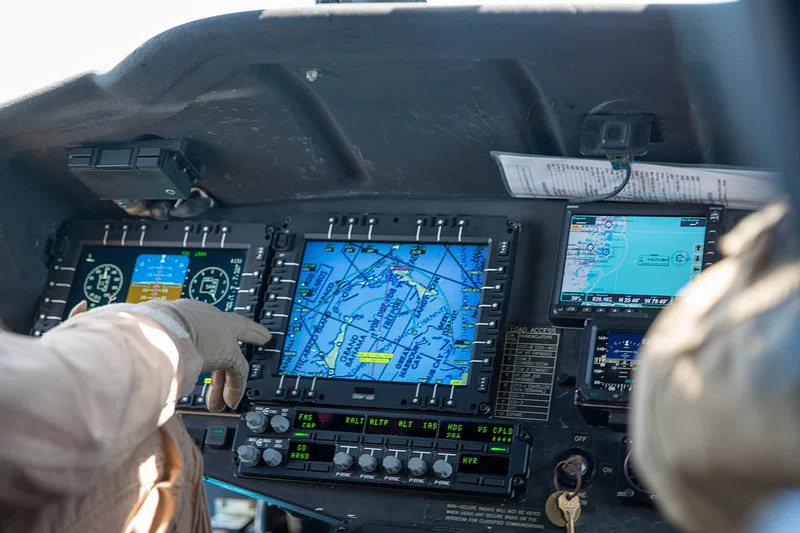
The global aviation industry faces an escalating cybersecurity threat from GPS jamming and spoofing attacks, which compromise aircraft navigation systems.
Modern commercial aviation relies heavily on Global Navigation Satellite Systems (GNSS), including GPS, Galileo, GLONASS, and BeiDou, for precise positioning and navigation.
This article examines the critical differences between GPS jamming, interference, and spoofing, analyses their impact on commercial aviation, reviews significant incidents from 2024 to 2025, and explores the collaborative solutions being developed by international aviation organisations IATA and ICAO to address this growing menace.
Difference Between GPS Jamming, Interference, and Spoofing
GPS Jamming
GPS jamming involves saturating GPS receivers with unknown signals to render them unusable, effectively degrading everyone's ability to use GPS for navigation. This can occur accidentally when GPS receivers are located near high-power transmitters, or deliberately through illegal devices used in vehicles and homes. While GPS jamming is illegal in countries like the US and UK, it remains unregulated in many regions worldwide.
GPS Spoofing
GPS spoofing represents the most sophisticated threat, consisting of transmitting look-alike signals that deceive GPS receivers into reporting incorrect position and time data. Spoofing can only be caused by purpose-built devices, which have their origins in military operations or can be built by individuals with nefarious intent. Unlike jamming, spoofing is always a deliberate, malicious action designed to mislead navigation systems.
Natural Interference and Technical Failures
Natural phenomena such as solar storms can temporarily interrupt or degrade GPS signals. Similarly, GPS equipment failures represent expected technical challenges that commercial aviation is designed to handle through redundant systems and established protocols. These benign disruptions pose minimal safety risks and are considered routine operational challenges.

Impacts on Flight Tracking and Commercial Aviation
The aviation industry's dependence on GNSS creates vulnerabilities that affect both flight operations and tracking systems.
Aircraft use ADS-B (Automatic Dependent Surveillance-Broadcast) technology, which broadcasts GPS-derived position data to ground stations and other aircraft. When GPS signals are compromised, this creates cascading effects throughout the aviation ecosystem.
Commercial aircraft flying in the Middle East and northern Europe have been caught up in a spate of GPS spoofing incidents, which have thrown onboard navigation systems off course and pose an increasing risk to air travel the world over.
However, commercial aviation maintains multiple backup systems, including the Wide Area Augmentation System (WAAS) for general navigation and the Ground Based Augmentation System (GBAS) for precision airport approaches.
What Does GPS Spoofing Look Like on Flightradar24?
GPS spoofing manifests on flight tracking platforms like Flightradar24 as aircraft appearing in locations where they are not actually flying. When aircraft stop broadcasting accurate position updates due to spoofing, the system estimates their course toward intended destinations, often showing flights travelling through areas they are not actually traversing.
The effects are particularly visible over conflict zones like the Black Sea, where spoofed aircraft may appear to follow great circle paths that don't reflect their actual routes. Once aircraft exit spoofing zones, they typically resume accurate position broadcasting, though backup navigation systems may provide degraded position accuracy for extended periods.
To check out the GPS Jamming map, check out this link- GPS Jamming Map

Incidents Associated This Year
India's Border Region Crisis
India has experienced significant GPS interference, with 465 incidents reported between November 2023 and February 2025, primarily in the Amritsar and Jammu regions near the Pakistan border. The government has issued Notice to Airmen (NOTAM) warnings and implemented Standard Operating Procedures (SOPs) to help airlines manage these incidents.
Global Escalation
This year, a 500% increase in spoofing has been observed. On average, 1500 flights per day are now spoofed, versus 300 in Q1/Q2 of 2024. The incidents are not confined to active conflict zones, with spoofing experiences near Beijing, and over Myanmar and India being reported regularly.
Notable Cases
United Airlines flight UA84 was a victim of GPS spoofing in March 2024, with an incorrect diversion from Tel Aviv to Beirut plotted on tracking systems. Many reports of jamming and spoofing come from conflict zones, particularly areas around Ukraine, Russia, Iraq, and the eastern Mediterranean Sea.
Future Problems
The exponential growth in GPS spoofing incidents presents several concerning trends for aviation safety. The sophistication of spoofing attacks is increasing, with perpetrators developing more advanced techniques to deceive navigation systems.
Climate change may exacerbate the problem by increasing reliance on precision navigation systems during severe weather events.
The proliferation of spoofing technology and techniques through online tutorials poses risks for widespread adoption by malicious actors. As conflicts continue globally, the weaponisation of GPS spoofing as a defensive and offensive tool threatens to expand beyond traditional conflict zones into major commercial aviation routes.

Solutions: IATA and ICAO Initiatives
IATA's Comprehensive Approach
The International Air Transport Association (IATA) is pushing for standardised procedures across the globe, emphasising that aircraft manufacturers must provide guidance and standard operating procedures for airlines to tackle GPS interference situations. IATA is collaborating with the European Union Aviation Safety Agency (EASA) to develop coordinated responses to GPS spoofing issues.
IATA advocates for better communication and coordination between civil and military stakeholders to improve efforts in tackling interference incidents. The organisation represents over 350 airlines globally and is working to establish unified protocols for reporting and responding to GPS threats.
ICAO's Regulatory Framework
The International Civil Aviation Organisation (ICAO) is developing future-proof navigation technologies designed to resist interference while establishing standardised protocols for states to notify flight crews of interference events. ICAO's best practices are being promulgated through the Directorate General of Civil Aviation (DGCA) circulars and guidelines to the industry.
Ground-based navigation infrastructure is being retained and modernised to ensure aviators can resume normal navigation when experiencing GPS interference. This includes continuous upgrades to air traffic management systems to meet growing aviation demands while maintaining safety standards.
Bottom Line
GPS jamming and spoofing represent one of the most significant emerging threats to global aviation safety and efficiency. The dramatic increase in incidents—from 300 daily spoofed flights in early 2024 to 1,500 by year's end—demonstrates the urgent need for comprehensive countermeasures.
The implications for the future are profound: as aviation becomes increasingly dependent on satellite navigation, the potential for widespread disruption grows exponentially.
Future challenges include the democratisation of spoofing technology, expansion beyond conflict zones, and integration with other cyber threats. The aviation industry's response through IATA and ICAO collaboration offers hope, but success will require sustained international cooperation, technological innovation, and regulatory adaptation. The ability to maintain safe, efficient global air travel in an era of electronic warfare will ultimately depend on the industry's capacity to stay ahead of evolving threats while preserving the interconnected nature of modern aviation.
Comment