

In the aftermath of the COVID-19 pandemic, the global aerospace industry is grappling with a perfect storm of challenges. Executive Chairman Greg Hayes of aerospace and defense leader RTX sounded the alarm during the Global Aerospace Summit, warning that supply chains are far from recovery. His message, echoed by industry peers, highlights how labor shortages and geopolitical risks are shaking the foundations of the aviation sector, just as demand for new aircraft and engine production soars.
The Lingering Aftershocks of COVID-19 on Supply Chains
Despite a resurgence in air travel and demand for new aircraft, the aerospace industry continues to feel the ripple effects of the pandemic. Key production lines are suffering from parts shortages and a critical lack of qualified labor.
Greg Hayes of RTX stressed that the supply chain disruption, which started during the pandemic, is far from resolved. "The supply chain has not recovered," Hayes stated at the summit hosted by the U.S. Chamber of Commerce, underscoring the significant delays the industry continues to face. Aerospace companies are scrambling to keep up with the growing backlog of orders for new planes, while simultaneously maintaining the older fleets still in operation.
Labor Exodus and the Search for Skilled Workers
The aviation industry experienced an exodus of skilled labor during the pandemic, and this loss continues to haunt production facilities. The struggle to replace the highly specialized workforce in a rapidly growing industry is proving to be an enormous hurdle.
“Today, it’s still a huge challenge to find qualified folks to work on some of these products,” Hayes noted, highlighting the stark contrast between the surging demand for jets and the sluggish recovery of the labor market. This shortage is compounded by the global demand for similar parts in repair shops, as airlines work to maximize the operational capacity of their fleets.
Olivier Andries, CEO of French aerospace giant Safran, emphasized the industry’s unprecedented pressures: “We are in a period where there has never been such a tension between very strong demand and a supply chain that has been under pressure and suffered many shocks.”
Geopolitical Tensions Add Fuel to the Fire
Geopolitical instability is exacerbating supply chain vulnerabilities. RTX’s Greg Hayes warned of the potential fallout from rising tensions between the U.S. and China. The company, which currently relies on 2,000 suppliers in China, is actively seeking alternatives in the event of sudden political deterioration.
“We're also trying to minimize the geopolitical risk by saying, ‘OK, we've got 2,000 suppliers in China today. What happens if...?’” Hayes said, emphasizing the need for dual sourcing to protect against potential disruptions. With the memory of Russia's invasion of Ukraine still fresh, which led to a swift exit from Russian suppliers, aerospace companies are acutely aware of how quickly geopolitical shifts can upend global trade.
The Energy Crisis and Raw Material Shortages
Adding to the industry’s woes are the surging costs of raw materials and energy. Higher energy prices, a result of the Russia-Ukraine war, have significantly impacted manufacturing and production capabilities. The aerospace sector, which relies on precision manufacturing and high-quality materials, is facing steep cost increases that further strain supply chains.
Andries pointed out that these shocks to the industry, from labor shortages to supply disruptions, will persist for several years, predicting further challenges well into 2025.
The Balancing Act: Meeting Demand While Navigating Uncertainty
As airlines ramp up operations to meet the booming demand for travel, aerospace companies are caught in a precarious balancing act. On one hand, the demand for new planes and engines has never been higher; on the other, the supply chain is buckling under the pressure of labor and parts shortages.
At the heart of the struggle is the challenge of ramping up production fast enough to meet demand while ensuring the reliability and safety of the parts being produced. RTX’s Hayes revealed that his company closely monitors its 14,000 suppliers around the world, not only for their ability to deliver quality parts but also for their financial stability and staffing levels.
“We monitor them every single day,” Hayes said, highlighting how crucial supplier relationships are in keeping aerospace manufacturing on track.
Looking Ahead: Navigating a Fragile Recovery
The aerospace industry is navigating uncharted waters. While air travel demand continues to rebound, the global supply chain remains fragile, and companies are racing to find solutions to ensure consistent production and delivery. With the added complexity of geopolitical risks and rising costs, aerospace companies must remain agile and prepared for whatever challenges lie ahead.
As the world anticipates more demand for planes, engines, and parts, the industry’s ability to recover and adapt will be tested in the coming years. Solutions like dual sourcing, skilled labor recruitment, and alternative supplier strategies will be essential for ensuring the long-term resilience of the aviation sector.
In this period of unprecedented tension between demand and supply, the aerospace industry’s ability to soar above these obstacles will define the future of aviation.
With Inputs from Reuters

Read next
Is Frontier Airlines Set for a Third-Quarter Turnaround? Here’s What You Need to Know
Abhishek Nayar
13 Sep 2024

In a significant update that sent shares soaring by 11%, Frontier Airlines revealed its expectation of improved third-quarter margins. The no-frills U.S. carrier's decision to slash capacity appears to be paying off, effectively offsetting the challenges posed by weakening domestic travel demand. But what exactly is behind this sudden shift? Let’s dive into the details.
Margin Forecast Boosts Investor Confidence
In its latest forecast, Frontier raised its adjusted pre-tax margin outlook to a range of down 2% to flat. This is a significant improvement from its earlier prediction of down 4% to down 6%. Such an upgrade suggests that the airline is effectively managing its resources, even as it navigates a tricky domestic market where travel demand has been moderating.
Strategic Capacity Cuts Drive Results
A notable shift in Frontier’s strategy has been the reduction of its capacity growth forecast. Initially, the airline had projected a growth rate of 4% to 6%, but it has now revised this to between 4% and 5%. This decision reflects a broader trend among airlines, which had ramped up seat capacity post-COVID, only to find that domestic demand wasn't keeping pace.
By adjusting its capacity, Frontier is avoiding over-saturating the market with seats, a move that is critical in a price-sensitive environment. Overcapacity tends to push airfares down, especially in the lower-cost segment, where competition is fierce.
Changes in Flight Network Set to Bring High-Fare Gains

One of the most significant drivers behind Frontier’s improved outlook is the carrier's targeted approach to expanding in more lucrative markets. CEO Barry Biffle highlighted in April that the airline planned to add flights to “high-fare” markets. These are destinations where competition is thinner, and Frontier can charge higher prices.
By moving into markets where they face less pressure from other carriers, the airline expects to benefit from higher margins. This strategy is particularly beneficial as it allows Frontier to move away from the highly competitive, low-margin domestic routes that have been underperforming due to subdued demand.
Capacity vs. Demand: A Delicate Balance Post-Pandemic
The entire airline industry has faced a complex challenge in the aftermath of the COVID-19 pandemic. Many airlines, including Frontier, added more seats in an attempt to capture demand as travel restrictions eased. However, this led to an oversupply in the domestic market, putting pressure on airfares, especially in the budget sector.
Now, Frontier’s capacity cuts indicate a more cautious approach. This shift is essential as airlines must find a balance between maintaining operational efficiency and not flooding the market with excess capacity.
Can Frontier Sustain Its Momentum?
The airline’s proactive approach in trimming capacity and tapping into higher-fare markets bodes well for its future. However, the big question remains—will this strategy allow Frontier to continue improving margins in the long term? While the third quarter looks promising, the broader economic landscape and fluctuating travel demand could still pose challenges.
Conclusion: A Strategic Shift Paying Off
Frontier Airlines has made a bold move by adjusting its capacity forecasts and focusing on high-fare markets. These changes are not only improving its third-quarter outlook but also signaling a potential shift in how the airline operates in the future. As the airline continues to fine-tune its operations, all eyes will be on whether it can maintain this momentum and thrive in a post-pandemic world.
With investor confidence rising and shares gaining, Frontier’s strategic shift could be the key to overcoming the current headwinds in the domestic travel market.
With Inputs from Reuters
Read next
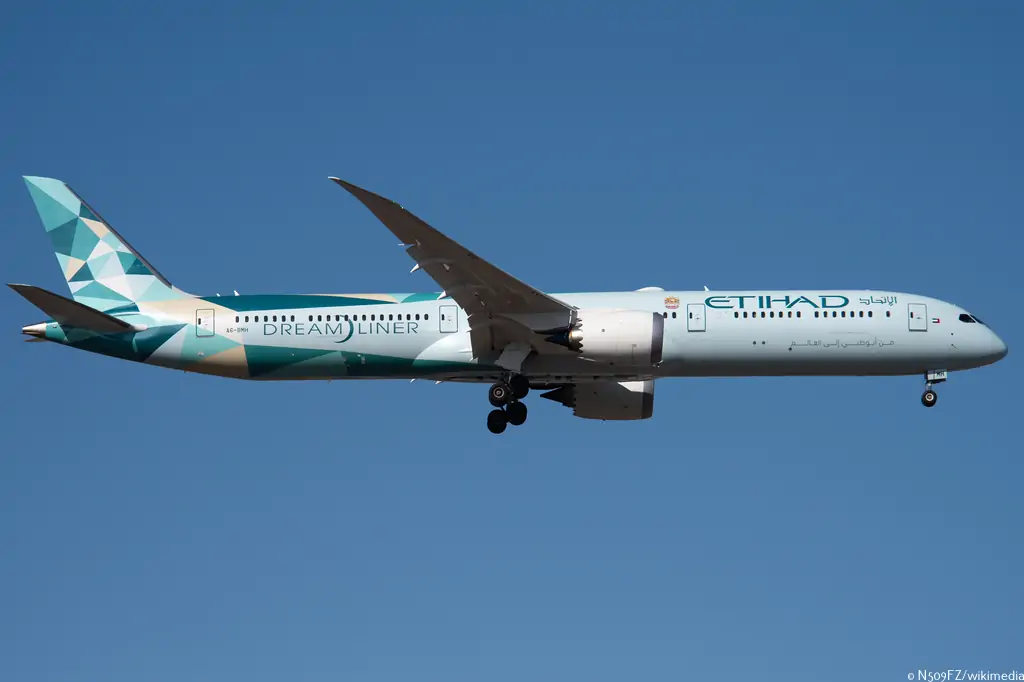
Etihad Airways, Abu Dhabi's flagship carrier, is set to soar into new territory with plans to make its stock market debut no sooner than 2025. This move could mark the first IPO by a major Gulf airline, placing Etihad in the spotlight as the UAE capital intensifies its efforts to become a global travel hub. With strong financial results expected in 2024 and an ambitious growth strategy, Etihad aims to solidify its role as a key player in international aviation.
Etihad’s IPO Ambitions: A Strategic Move
Listing Plans Delayed for Financial Strength
Initially considering an IPO in 2023, Etihad has opted to delay its stock market debut until it can present robust 2024 financial results. This decision reflects the airline's focus on showcasing sustainable profitability to potential investors. Furthermore, geopolitical instability in the region has played a role in postponing the listing, according to sources familiar with the matter.
Etihad’s IPO would not only be a milestone for the airline but also a significant event for the Middle Eastern aviation sector. It follows regional government initiatives aimed at diversifying economies away from fossil fuels by privatizing state assets.
From Crisis to Recovery: Etihad’s Journey
Past Strategy and Setbacks
Founded in 2003, Etihad spent years building a global network by acquiring minority stakes in other carriers, aiming to compete with its Gulf rivals, Emirates and Qatar Airways. However, this aggressive expansion backfired when several of its partner airlines faced financial difficulties, leading Etihad to scale back its operations significantly.
Management Shake-up and a New Vision
A turning point came with a leadership change and the appointment of CEO Antonoaldo Neves, under whom Etihad began a remarkable transformation. Under Neves' leadership, the airline adopted its "Journey 2030" strategy, which focuses on bolstering Abu Dhabi’s role as a key connector between Asia and Europe.
"Journey 2030": A Blueprint for Growth
Fleet and Network Expansion

Etihad has set its sights on expanding its destination network to over 125 airports by 2030, up from around 70 today. To support this, the airline plans to increase its fleet to over 160 aircraft, nearly doubling its current count of 90 planes. However, delays from Airbus and Boeing in delivering new aircraft pose challenges to these growth plans, forcing Etihad and other airlines to adjust their short-term strategies.
Strengthening Abu Dhabi as a Global Hub
The airline's growth aligns with Abu Dhabi's broader ambitions to strengthen its position as a premier international travel hub. The recent opening of a multibillion-dollar terminal at Zayed International Airport, which tripled the airport's annual passenger capacity to 45 million, is a key component of this plan.
Neves emphasized the importance of delivering exceptional customer service and achieving sustainable profitability as the foundation for Etihad’s contribution to Abu Dhabi's aspirations. The airline’s increasing passenger numbers and profitability reflect its progress towards these goals.
Financial Performance: Setting the Stage for 2025 IPO
Impressive Profit Growth
Etihad’s financial performance has seen a sharp uptick in recent years. The airline posted a 48% increase in half-year after-tax profits, with passenger numbers rising 38% to 8.7 million. This followed two consecutive years of net profits in 2022 and 2023, underscoring the airline's recovery from previous setbacks.
Improving Governance and Transparency
Neves has been focused on improving governance, transparency, and Etihad's balance sheet in preparation for a potential IPO. These efforts aim to reassure investors and enhance the airline’s market appeal. While ADQ, Etihad’s owner, has yet to make a final decision on the listing, the groundwork is being laid for a successful public offering.
Etihad in a Booming Gulf Aviation Market
Riding the Wave of Travel Demand
The Gulf region is experiencing a surge in international travel demand following the pandemic. Governments are capitalizing on this trend to reform their economies, and airlines are at the heart of these efforts. Etihad’s potential listing would add to a growing list of IPOs in the region, including Flynas in Saudi Arabia, which is eyeing a listing this year. Dubai's Emirates has also been exploring the possibility of an IPO since 2021.
Competition with Regional Airlines
While Etihad seeks to establish itself as a leader in the global aviation market, it faces stiff competition from regional heavyweights like Emirates and Qatar Airways. However, the airline’s strategic focus on sustainability, profitability, and customer experience positions it well to compete and potentially outshine its rivals.
Conclusion: The Sky’s the Limit for Etihad
As Etihad Airways prepares for its anticipated IPO in 2025, the airline is undergoing a remarkable transformation. With an ambitious growth strategy, improved financial performance, and a vision to make Abu Dhabi a premier travel hub, Etihad is well-positioned to attract investor interest and take flight as a global aviation leader. The next few years will be critical in determining the airline’s future, but if current trends continue, Etihad is set to soar to new heights in the world of aviation.
With Inputs from Reuters
Read next

In a significant setback for SpiceJet, the Delhi High Court's division bench has rejected the airline’s plea to overturn a single-bench order that mandated the grounding of two aircraft engines leased from Team France 01 SAS and Sunbird France 02 SAS. This ruling could have severe operational and financial consequences for the cash-strapped airline, raising questions about its future stability.
Court Ruling: Division Bench Upholds Grounding Order
On Wednesday, the division bench, led by Justice Rajiv Shakdher, dismissed SpiceJet’s appeal against a prior ruling issued on August 14. This single-bench order had directed the airline to ground the two planes by August 16 and return the leased engines within 15 days for inspection. Despite SpiceJet’s efforts to challenge the ruling, the court stood firm, advising the parties to seek a settlement.
Justice Shakdher underscored the fairness of the original order, stating that SpiceJet was utilizing "someone else’s property" without fulfilling its financial obligations. "You can’t use it without paying the rent. He’s [the lessor] in the business of letting out that property. Which court allows you to use property without paying?" the judge remarked during the hearing.
Impact on SpiceJet’s Operations
The division bench’s decision means that SpiceJet will now have to ground the two planes in question, further straining its limited resources. The airline currently operates a fleet of 21 aircraft, and losing two of them could significantly disrupt its flight schedules and service offerings.
SpiceJet emphasized in court that grounding the planes would severely impact its already struggling operations. With the airline fighting to remain afloat in a challenging market environment, this additional burden could slow down its recovery efforts.
Financial Struggles: A Long-Standing Issue

The financial instability of SpiceJet is no secret. The airline has been facing mounting debts and operational challenges, with the court also pointing out its inability to meet payroll obligations. Justice Shakdher questioned the airline’s solvency, remarking that SpiceJet wouldn’t be defending itself in court if it had the financial means to meet its commitments.
The high court's ruling highlights not only the airline’s legal troubles with its lessors but also its broader financial instability. SpiceJet’s ongoing struggles to pay its employees and lessors are emblematic of a deeper crisis that could pose long-term challenges to its survival.
SpiceJet’s Proposal: A Lifeline or Too Little, Too Late?
In an effort to ease tensions with its lessors, SpiceJet has offered a series of financial securities, including a pledge of shares from its directors to cover outstanding dues. The airline proposed using encumbered aircraft or shares as collateral, with a promise to top these up if the stock’s value drops. Furthermore, SpiceJet committed to making weekly payments of $160,000 and monthly installments of $1.2 million as part of its obligations.
However, the court expressed scepticism over whether these assurances would be enough, given SpiceJet’s financial track record. The ruling signals that without a robust financial turnaround plan, the airline’s efforts to regain the trust of its lessors may fall short.
What Lies Ahead for SpiceJet?
While SpiceJet can still appeal to the Supreme Court, the immediate future looks challenging. The high court’s ruling adds pressure on an airline already grappling with a volatile aviation market, rising operational costs, and stiff competition. The grounding of two planes will certainly hurt its day-to-day operations, but the bigger question is whether the airline can recover financially in the long term.
The outcome of this legal battle may serve as a critical indicator of SpiceJet’s future. Will the airline be able to navigate these turbulent times, or will this be the beginning of a more significant downturn in its fortunes?
Conclusion: Seeking a Solution in a Tough Environment
SpiceJet’s legal troubles and financial struggles underscore the difficulties that Indian airlines face in today’s challenging economic climate. The airline’s management has some tough decisions ahead, and only time will tell whether its efforts to secure financial stability will succeed or lead to further turbulence in the skies.
In the meantime, industry watchers and passengers alike will be keeping a close eye on the unfolding developments, wondering whether this is merely a temporary setback or a sign of deeper issues yet to come.
With Inputs from Live Mint
Read next
Will Open-Rotor Engines Redefine Aviation Efficiency? Airbus, Boeing, and the Future of Jet Engines
Abhishek Nayar
12 Sep 2024

The aviation industry is on the cusp of a technological revolution, with engine manufacturers experimenting with innovative designs that promise to enhance fuel efficiency and reduce emissions. Among these new technologies is the open-rotor engine, which could reshape air travel for decades to come.
However, industry leaders remain divided on its future, particularly regarding its commercial viability. At the recent Global Aerospace Summit, hosted by the U.S. Chamber of Commerce, Airbus Chief Executive Guillaume Faury provided insights into the ongoing testing of open-rotor technology, as well as the broader challenges facing the aviation sector.
The Promise of Open-Rotor Engines
CFM International, a joint venture between GE Aerospace and France's Safran, is currently testing open-rotor technology through its RISE (Revolutionary Innovation for Sustainable Engines) program. This radical engine design features a larger, more visible fan that captures more air, potentially reducing fuel consumption by up to 20%. This advancement aligns with the global aviation industry's commitment to improving efficiency and reducing environmental impact.
Faury expressed optimism about the potential of open-rotor technology, highlighting its possible fuel savings. "We hope it's going to be the case, because it has the potential to be by far more fuel-efficient," he stated. However, he also emphasized that the technology is still in the testing phase, and critical aspects like noise and vibration performance are being evaluated.
Challenges to Commercial Viability
While the potential benefits of open-rotor engines are clear, there are significant hurdles to overcome before they can become commercially viable. Faury remarked that “the jury is out” on whether these engines will be ready for the market. Noise and vibration concerns remain central to the evaluation, and industry insiders indicate that Boeing, one of the world's largest aircraft manufacturers, is less enthusiastic about the near-term viability of open-rotor technology.
A recent Aviation Week report suggested that Boeing may lean towards a more traditional engine design for its next-generation aircraft. This decision could reflect concerns about integrating open-rotor engines into existing airframes and operational constraints, particularly in noise-sensitive areas such as urban airports.
Supply Chain Woes and LEAP Engine Delays

Apart from testing cutting-edge technology, engine makers like CFM are grappling with significant supply chain issues. Faury confirmed that deliveries of CFM’s current LEAP engines, which power all Boeing 737 MAX jets and about half of Airbus’s A320neo fleet, are delayed. These delays have contributed to Airbus lowering its 2024 aircraft delivery target by 30 units, down to 770 aircraft.
Larry Culp, CEO of GE Aerospace, acknowledged the ongoing challenges, citing shortages from top-tier suppliers. Despite the difficulties, he highlighted the progress made in recent months to resolve these constraints, with GE working closely with suppliers to break bottlenecks.
A Fork in the Road: Airbus and Engine Architecture Choices
As Airbus prepares to launch the development of a new aircraft by the end of the decade, the decision on which engine architecture to adopt could shape air travel for years. While CFM leads the charge with its open-rotor design, other manufacturers like Pratt & Whitney and Rolls-Royce are exploring geared turbofan technologies housed in traditional nacelles.
If Airbus chooses to pursue open-rotor engines, it may limit itself to a single supplier, which could affect competition in the market. Historically, Airbus has relied on multiple engine manufacturers to power its aircraft, allowing airlines greater flexibility. However, Faury noted that Airbus might consider going with a single supplier if CFM’s open-rotor technology proves viable.
"We will need from (CFM) a contract, an offer that works in the long term," Faury stated. "If it's not the case, we might be back to more traditional technologies, where two manufacturers compete with each other."
The Stakes Are High for Airbus, Boeing, and the Industry
Decisions made by Airbus and Boeing in the coming years will shape the future of aviation, particularly as medium-haul aircraft remain the most popular products in the market. With China mounting a growing challenge to the duopoly held by Airbus and Boeing, both manufacturers are under pressure to offer innovative solutions that can meet environmental targets while remaining cost-effective for airlines.
Engine architecture, a key component of aircraft design, will play a critical role in determining who leads the aviation market. Analysts suggest that the competition between open-rotor and traditional geared turbofan technologies will drive innovation, but also poses significant risks, as the wrong choice could lead to commercial setbacks.
The Road Ahead: Optimism or Uncertainty?
As CFM celebrates its 50th anniversary, the spotlight is on its open-rotor technology and whether it can deliver on its promise. The aviation industry, including major players like Airbus, remains cautiously optimistic. Testing will continue, but the final verdict on whether open-rotor engines will redefine air travel efficiency remains uncertain. For now, the industry must grapple with both the potential of groundbreaking technologies and the challenges posed by a turbulent supply chain.
The future of jet engines is up for debate, but one thing is clear: the choices made today will shape the aviation industry for generations to come.
With Inputs from Reuters
Read next
Lufthansa Eyes Potential Stake in airBaltic: A Strategic Move in European Airline Consolidation
Abhishek Nayar
12 Sep 2024

The European airline industry has been on a journey of consolidation over the past two decades, and the latest development hints at further integration. German airline giant Lufthansa is reportedly considering acquiring a stake in Latvia's state-owned carrier, airBaltic, ahead of its highly anticipated Initial Public Offering (IPO). This move, still in its early stages, could signify yet another shake-up in the competitive aviation market of Europe.
Lufthansa’s Strategic Interest in airBaltic

According to sources close to the matter, Lufthansa is exploring its options concerning airBaltic's IPO, a significant event expected to impact the European airline landscape. The news, first reported by Bloomberg and confirmed by Reuters, suggests that Lufthansa is in the preliminary stages of evaluating a potential investment.
The acquisition of a stake in airBaltic aligns with Lufthansa’s long-term strategy of strengthening its network through strategic acquisitions and partnerships. Over the years, Lufthansa has absorbed several regional and national airlines, including Swiss and Austrian Airlines, boosting its capacity to compete against low-cost and legacy carriers.
A Fragmented European Airline Industry
Europe's airline sector has undergone gradual consolidation in the past two decades, but it remains fragmented. While industry giants like Lufthansa and the International Airlines Group (IAG) dominate, smaller national carriers struggle to stay afloat, often battling against rising operational costs and increasing competition from budget airlines such as Ryanair and easyJet.
The potential Lufthansa-airBaltic deal would highlight the continuous consolidation trend, with larger airlines absorbing smaller, regional competitors to ensure greater network efficiency and market share.
airBaltic’s Position: A Valuable Regional Asset

Latvian carrier airBaltic has carved out a niche as a leading player in the Baltic and Northern European markets. The airline, under the leadership of CEO Martin Gauss, has successfully expanded its routes and modernized its fleet, becoming one of the most reliable carriers in the region.
In a March interview with Reuters, Gauss expressed openness to airBaltic becoming part of a larger airline group, referencing Lufthansa and IAG’s past acquisitions of Swiss and Iberia, respectively. “We are a successful regional carrier with a solid foundation, and being part of a larger group could benefit both airBaltic and its future stakeholders,” Gauss said.
airBaltic's Upcoming IPO: A Turning Point
airBaltic's planned IPO could be a pivotal moment in its corporate history, opening the door for new investors to capitalize on the airline’s growth trajectory. An investment from Lufthansa, especially before the IPO, would be a game-changer, potentially making airBaltic an even more attractive option for public and private investors.
If Lufthansa moves forward with acquiring a stake, it could trigger further consolidation across Europe’s aviation market, encouraging other major carriers to explore similar investments.
A Broader Industry Impact
Lufthansa’s potential interest in airBaltic comes amid a wave of changes across Europe’s aviation landscape. With an increasing focus on cost efficiency, network synergies, and sustainability, the industry is rapidly evolving. Consolidation allows major airlines to optimize their operations while extending their geographical reach.
In the context of these industry shifts, a Lufthansa-airBaltic partnership could redefine air travel in Northern Europe. The alliance would provide passengers with access to a broader route network and enhance the overall customer experience while providing airBaltic with the financial backing and resources to remain competitive in the increasingly crowded skies.
Final Thoughts: Will Lufthansa Seal the Deal?
While Lufthansa is only in the early stages of evaluating its stake in airBaltic, the possible investment has already garnered significant attention in the aviation community. With Europe’s airlines still adjusting to post-pandemic recovery efforts and navigating complex economic pressures, a strategic partnership like this could have wide-reaching effects.
As the industry continues to consolidate, all eyes are on whether Lufthansa will move forward with this high-stakes investment, potentially setting the stage for the next big chapter in European airline consolidation.
With Inputs from Reuters
Comment