
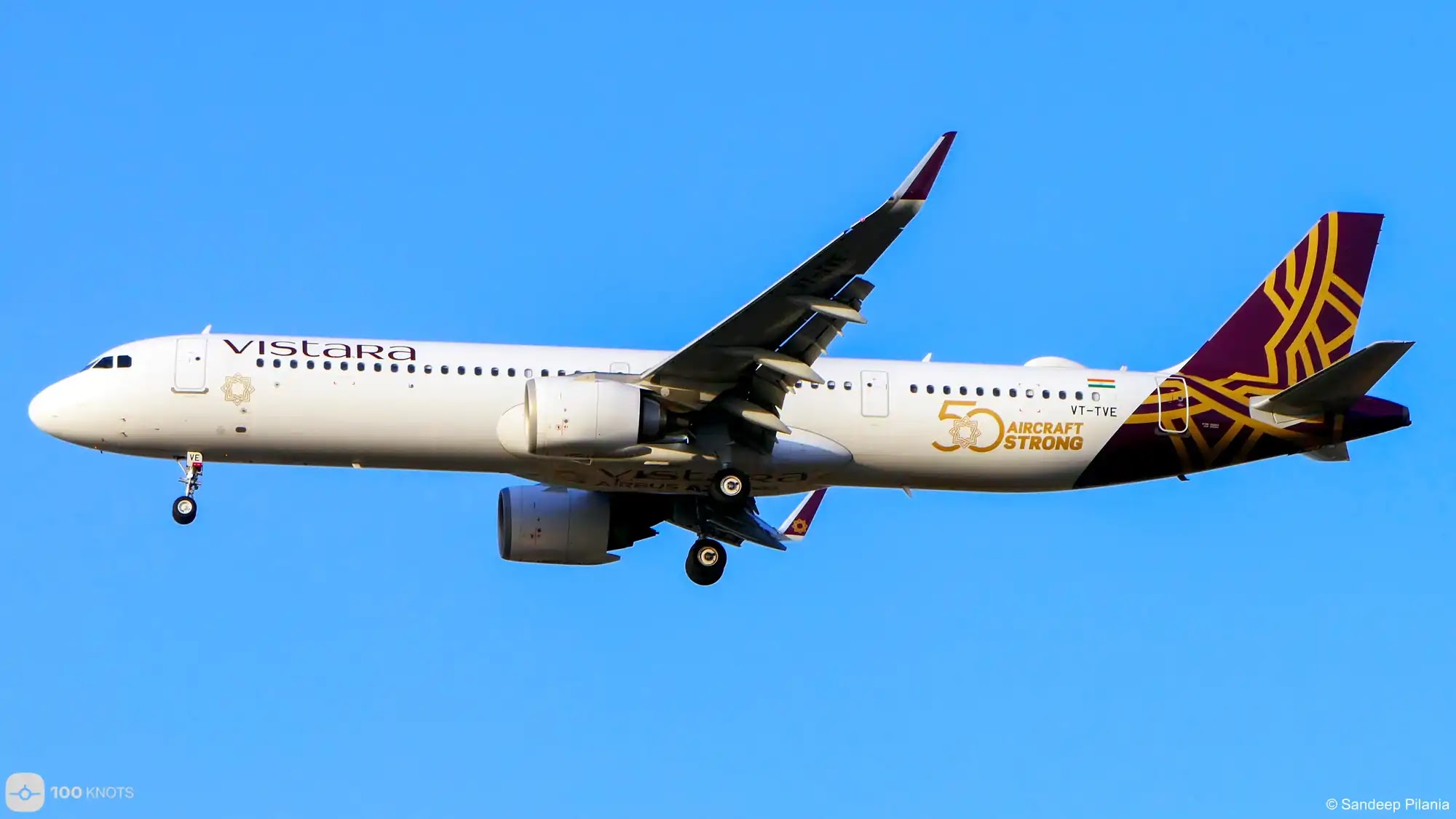
The ex-gratia payout will be a lump sum based on the employee's current grade as of March 31st and is being paid because of the airline's improved performance.
The same will be applicable for those who will be completing one year or more with the organization as of 31st Mar 2024, and not serving a notice period on the date of disbursement.
According to sources, this amount could be Rs 30,000 for executives, Rs 50,000 for senior executives, Rs 75,000 for assistant managers, Rs 1 lakh for managers, Rs 2 lakh for senior managers and Rs 2.8 lakh for deputy general managers etc.
Vistara has been plagued with sudden mass sick leave by pilots that has impacted its flight operations in the last few weeks.
Over a dozen flights had to be cancelled and many more delayed because pilots have expressed dissatisfaction over a new contract that they are being made to sign.
Vistara is merging with Air India and therefore contracts are being aligned.
The airline currently has a fleet of 67 aircraft, including 51 Airbus A320neo, 10 Airbus A321, and 6 Boeing 787-9 Dreamliner.

Read next

This was done because bankers worried that they would need to take a deep haircut if such low bids were accepted, according to sources.
Sharjah-based Sky One is also in the race to take the airline.
The budget carrier which went bankrupt last year owes around Rs 6000 crore to creditors. The bankruptcy court NCLT had on February 13 extended the deadline by another 60 days to complete Go First’s resolution process post these two interests.
Bankers will now discuss the matter at a meeting early next week.
Read next

Chhatrapati Shivaji Maharaj International Airport (CSMIA) will see an 8% increase in summer flights this year compared with the same time last year, the airport has said.
The summer schedule is effective from 31st March until 26th October.
The summer schedule will increase services to international destinations including Paris, Doha, and Hanoi and to the newly introduced route - Tashkent.
CSMIA will experience 951 daily movements, an increase from approximately 882 in the previous summer schedule of 2023. With over 6,657 movements weekly, there will be an observed hike of over 8% in weekly flight operations in 2024 compared to 2023.
IndiGo will account for 1,255 weekly departures, while Air India and Vistara will contribute to 539 and 519 weekly departures, respectively. The summer schedule will also introduce enhanced connectivity with additional flight frequencies to various destinations.
Among the notable increases, flights to Delhi will see a substantial rise with 27 additional weekly flights. Other key destinations with notable frequency additions include Srinagar with 28 additional weekly flights, Ayodhya with 14, and Kolkata with 9, respectively.
Travellers will experience 682 domestic and 269 international movements to international destinations including the newly introduced routes.
Additionally, Vistara will fly to Paris 5 times a week, Akasa Air to Doha 4 times weekly, and Uzbekistan Airways to Tashkent twice a week. Vistara will also operate daily flights to Hanoi.
Read next
Boeing Delays Deliveries, Disrupting Virgin Australia's Fleet Expansion Plans

Abhishek Nayar
20 Mar 2024

Boeing's recent announcement of production delays has sent ripples through the aviation industry, notably impacting Virgin Australia's ambitious fleet expansion strategy. With the delivery timeline for its B737-8s and B737-10s pushed back, the airline faces challenges in its efforts to modernize its fleet and enhance operational efficiency. This article delves into the details of the delay, its implications for Virgin Australia, and the broader context within which these developments unfold.
Boeing's Production Delays
According to reports from The Sydney Morning Herald, Boeing has notified Virgin Australia of delays in the delivery of its B737-8s and B737-10s, slated for this year and the next. These delays come amidst Boeing's efforts to strengthen its production processes and ensure the delivery of high-quality aircraft meeting regulatory standards.
Virgin Australia's Revised Timeline
Virgin Australia, which had initially anticipated the arrival of most of its ten B737-8s this year and twenty-five B737-10s from 2025, now faces a significant setback. The airline has disclosed that Boeing has revised its delivery schedule, with only four B737-8s expected this year, the remainder in the following year, and no B737-10s before the start of the 2026 financial year.
Impact on Operations
The delayed delivery of aircraft poses operational challenges for Virgin Australia, impacting its fleet renewal and expansion plans. The B737 MAX aircraft are central to the airline's strategy to phase out older models like the B737-800s and B737-700s, enhance route networks, and boost capacity on existing services. With fewer new aircraft entering its fleet as initially planned, Virgin Australia may face constraints in optimizing its operations and meeting evolving market demands.
Response from Virgin Australia and Boeing
In response to inquiries, a Virgin Australia spokesperson stated the airline's commitment to minimizing the impact of the delay on its schedule. Meanwhile, Boeing emphasized its dedication to ensuring the production of high-quality aircraft while maintaining close communication with its customers regarding delivery issues and remedial actions.
Current Fleet Status & Conclusion
Despite the setback, Virgin Australia currently operates four B737-8s, primarily servicing the Cairns - Tokyo Haneda route along with select domestic and short-haul international flights. These aircraft represent a crucial component of the airline's efforts to modernize its fleet and enhance passenger experience.
Boeing's production delays have thrown a curveball at Virgin Australia's fleet expansion plans, necessitating a reassessment of its timeline and operational strategies. As the airline navigates through these challenges, it remains imperative for both Virgin Australia and Boeing to collaborate closely to mitigate disruptions and ensure the timely delivery of high-quality aircraft. The aviation industry will be closely watching how Virgin Australia adapts to these developments and adjusts its course accordingly in the coming months.
With Inputs from ch-aviation
Read next
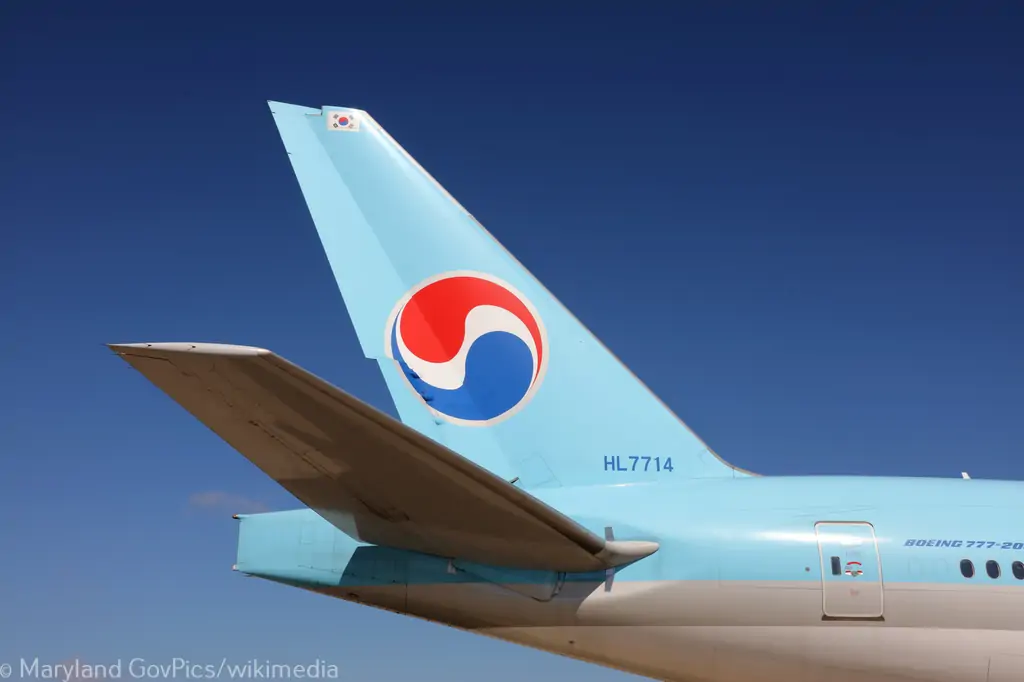
Korean Air, one of South Korea's premier airlines, is on the brink of a significant fleet expansion, according to reports from Bloomberg News. The carrier, based in Seoul Incheon, is allegedly finalizing plans to acquire around twenty Airbus A350 aircraft, a move that could potentially reshape its operations in anticipation of its impending merger with Asiana Airlines.
New Orders on the Horizon & Rationale Behind Fleet Streamlining
Unnamed sources familiar with the matter have disclosed to Bloomberg News that Korean Air is poised to announce a substantial order for approximately twenty Airbus A350s. This decision is purportedly aimed at rationalizing its fleet as it prepares for the much-anticipated merger with Asiana Airlines. The order's announcement is expected to be imminent, pending the outcome of a crucial board meeting scheduled for March 21.
The reported interest in streamlining its fleet underscores Korean Air's strategic approach to fleet management amidst its ongoing merger proceedings with Asiana Airlines. By consolidating its aircraft types, the airline aims to achieve operational efficiencies and synergies that would position it favorably in the fiercely competitive aviation landscape.
Evaluation of Boeing B777X & Potential Expansion with A321-200neo
While Korean Air has reportedly explored the possibility of incorporating aircraft from the Boeing B777X family into its fleet, recent statements from CEO Walter Cho suggest a cautious approach. Cho indicated in 2021, amid the challenges posed by the Covid-19 pandemic, that the airline was skeptical about the demand justification for introducing an entirely new aircraft type. This deliberation reflects the airline's prudent assessment of market dynamics and its commitment to prudent financial management.
In addition to the A350s, Korean Air is purportedly considering bolstering its fleet with more Airbus A321-200neo aircraft. This strategic move underscores the airline's focus on fleet modernization and optimization, aligning with industry trends favoring more fuel-efficient and versatile narrow-body aircraft for short to medium-haul routes.
Implications of Merger with Asiana Airlines
Korean Air's fleet expansion initiatives are closely intertwined with its long-planned merger with Asiana Airlines, pending regulatory approvals. The consolidation of these two major carriers is poised to reshape the aviation landscape in South Korea and beyond, creating a formidable entity with enhanced operational scale and network reach.
Conclusion
As Korean Air inches closer to finalizing its fleet expansion plans, the aviation industry eagerly awaits the formal announcement of the A350 order and the subsequent developments stemming from its merger with Asiana Airlines. These strategic maneuvers underscore the airline's commitment to fortifying its competitive position in the global aviation market while navigating the complexities of a post-pandemic recovery phase.
With Inputs from ch-aviation
Read next
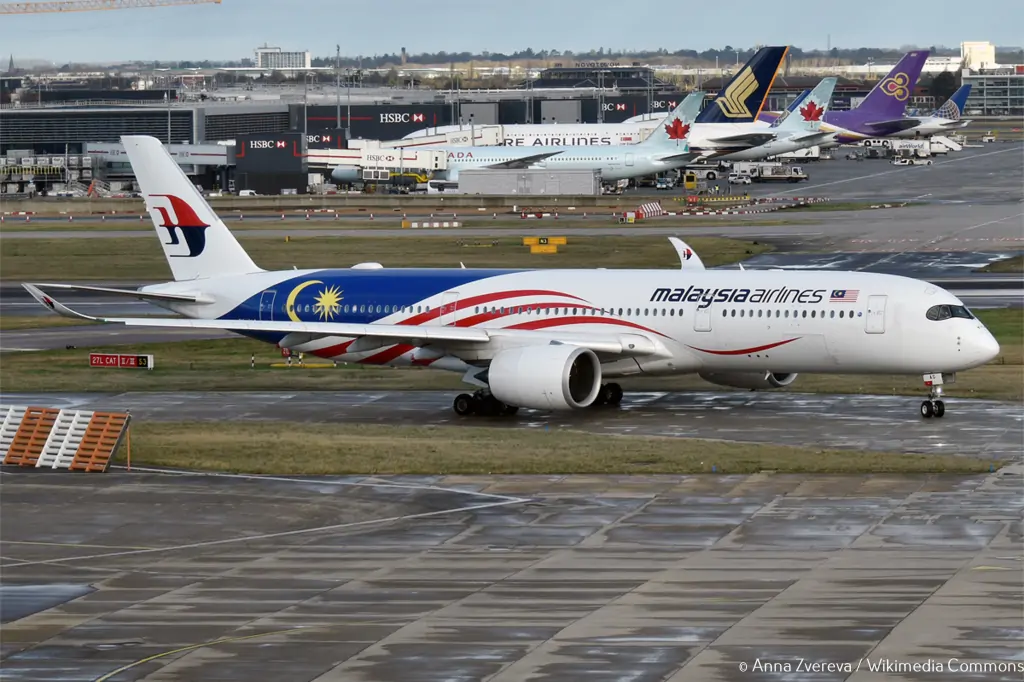
In a recent revelation by Izham Ismail, the Executive Director of Malaysia Aviation Group and Chief Executive of Malaysia Airlines, a strategic push towards expanding joint venture partnerships has been underscored as pivotal for the airline's future trajectory. Is the pursuit of joint ventures the key to unlocking growth for Malaysia Airlines?
Strategic Imperative: Joint Ventures in Malaysia Airlines' Future
Izham Ismail, in a podcast interview with Aviation Week Network earlier this month, emphasized the significance of joint ventures (JVs) in shaping Malaysia Airlines' operational strategy moving forward. As the airline concludes its fifth and most comprehensive restructuring program, Ismail outlined that well-crafted JVs could offer substantial business opportunities for the carrier.
Currently, Malaysia Airlines' sole JV partnership exists with Japan Airlines (JAL). However, Ismail expressed ambitions to expand this portfolio significantly, highlighting the potential for growth and collaboration with multiple airlines.
Resurrecting Partnerships: The Cathay Pacific Saga
Of particular note is the aborted JV talks between Malaysia Airlines and Cathay Pacific, a deal that could have reshaped the competitive landscape of the aviation industry. While Ismail acknowledged the setback due to regulatory concerns, he remains optimistic about revisiting negotiations with Cathay Pacific in the foreseeable future.
Last year, discussions between the two carriers ceased following apprehensions raised by Malaysian authorities regarding the competitive implications of the proposed JV. The envisioned agreement encompassed various facets, including network planning, pricing coordination, joint sales, and marketing efforts, among others.
Despite the setback, Ismail is keen on renewing talks with Cathay Pacific and other potential partners. He described ongoing discussions with three undisclosed carriers, hinting at the possibility of forging new alliances to bolster Malaysia Airlines' market presence.
Navigating Regulatory Hurdles and Technicalities
Ismail characterized the concerns raised by the Malaysian Aviation Commission as "technicalities," underscoring the airline's commitment to addressing regulatory challenges while pursuing growth opportunities. The intricacies of regulatory approval remain a critical aspect in shaping the trajectory of Malaysia Airlines' partnership endeavors.
Charting a Path Forward
As Malaysia Airlines embarks on its journey towards rejuvenation and growth, the pursuit of strategic joint ventures emerges as a cornerstone of its business strategy. Collaborative efforts with global partners not only enhance network connectivity but also drive operational efficiencies and customer experience enhancements.
The forthcoming months are poised to witness intensified efforts from Malaysia Airlines in revitalizing existing partnerships and forging new alliances. The airline's ability to navigate regulatory complexities and strike mutually beneficial agreements will undoubtedly shape its competitive position in the global aviation landscape.
In conclusion, the question remains: Can Malaysia Airlines' joint ventures propel its future success? With a steadfast commitment to collaboration and strategic partnerships, the airline aims to carve a path towards sustained growth and prominence in the aviation industry.
With Inputs from ch-aviation
Comment