

Air India's Airbus A350-900 fleet is set to maintain an extensive network of domestic and international routes throughout August 2025, with the airline's six operating aircraft scheduled to complete 286 flights during the month. According to Cirium aviation analytics data, the deployment strategy demonstrates Air India's commitment to offering premium long-haul connectivity while maintaining strategic domestic trunk routes with its flagship widebody aircraft.
Strategic Route Network Deployment
Air India's A350-900 deployment in August 2025 reflects a carefully balanced approach between high-capacity international routes and critical domestic connections. The airline's network spans from short-haul domestic sectors to ultra-long-haul transatlantic services, maximising the aircraft's versatility and operational efficiency.
The A350-900 has been strategically deployed on premium international routes since its introduction, including the Delhi-New York JFK route launched in November 2024 and the Delhi-Newark route that began operations in January 2025. This expansion continues Air India's modernisation efforts under the Tata Group ownership.
Air India A350-900 Scheduled Routes (August 2025)
| Route | Flights | Route Type |
|---|---|---|
| Delhi (DEL) - London Heathrow (LHR) | 62 | International Long-haul |
| London Heathrow (LHR) - Delhi (DEL) | 62 | International Long-haul |
| Delhi (DEL) - New York JFK (JFK) | 27 | International Ultra Long-haul |
| New York JFK (JFK) - Delhi (DEL) | 27 | International Ultra Long-haul |
| Delhi (DEL) - Dubai (DXB) | 20 | International Regional |
| Dubai (DXB) - Delhi (DEL) | 20 | International Regional |
| Delhi (DEL) - Newark (EWR) | 17 | International Ultra Long-haul |
| Newark (EWR) - Delhi (DEL) | 17 | International Ultra Long-haul |
| Bangalore (BLR) - Delhi (DEL) | 8 | Domestic Trunk |
| Delhi (DEL) - Bangalore (BLR) | 8 | Domestic Trunk |
| Mumbai (BOM) - Delhi (DEL) | 5 | Domestic Trunk |
| Delhi (DEL) - Mumbai (BOM) | 5 | Domestic Trunk |
| Hyderabad (HYD) - Delhi (DEL) | 4 | Domestic Trunk |
| Delhi (DEL) - Hyderabad (HYD) | 4 | Domestic Trunk |
| Total Monthly Flights | 286 |
The Delhi-London Heathrow route emerges as Air India's flagship A350-900 operation with 124 total flights (62 each direction) scheduled for August. Air India introduced the A350-900 on the Delhi-London Heathrow route in September 2024, transforming the passenger experience on this twice-daily service with additional frequency increases planned. This route represents 43% of total A350-900 operations, highlighting its strategic importance for Air India's European network and the substantial demand from business travellers and the Indian diaspora in the UK.
Air India's North American operations account for 88 monthly flights across two major US gateways. The Delhi-JFK route with 54 total flights (27 each direction) serves as the primary gateway to the US East Coast, while the Delhi-Newark route contributes 34 flights monthly. These routes cater to the growing business and leisure travel demand between India and the United States, supported by the aircraft's ultra-long-range capabilities and premium cabin offerings.
Regional and Domestic Operations
The Dubai route represents Air India's regional Middle Eastern strategy with 40 monthly flights, serving both point-to-point demand and connecting traffic through Dubai's hub. Meanwhile, domestic operations on trunk routes to Bangalore, Mumbai, and Hyderabad totalize 34 flights, demonstrating the A350-900's deployment on high-density domestic sectors where premium cabin demand justifies widebody operations.
Passenger Experience
Air India's A350-900 fleet offers a transformative passenger experience across all cabin classes. The aircraft features 28 business class suites, 24 premium economy seats, and 264 economy seats, creating a premium-focused configuration. The business class experience includes private suites with 79-inch full flatbeds, privacy doors, personal wardrobes, and gourmet dining served on bespoke tableware. Passengers enjoy 21-inch HD entertainment screens, Ferragamo amenity kits, and universal power outlets.
Premium Economy passengers benefit from 38-inch seat pitch, 18.5-inch width, four-way adjustable headrests, and 13.3-inch HD touchscreens with TUMI amenity kits. Even Economy class passengers experience elevated comfort with 31-inch seat pitch, 12-inch HD screens, and full-course hot meals, representing a significant upgrade from Air India's legacy products.
The A350-900 fleet features an immersive entertainment system with over 3,000 hours of content, including 1,400 hours of movies, 850 hours of television programming, and 1,000 hours of audio content. Internet connectivity is available on select routes, enabling passengers to remain connected during long-haul flights.
Fleet Utilisation
With six operational A350-900s completing 286 flights monthly, Air India achieves an average of 47.7 flights per aircraft, indicating intensive utilisation rates typical of premium long-haul operations. This deployment strategy maximises revenue potential while establishing Air India as a serious competitor in international premium markets.
Strategic Market Positioning
Air India's A350-900 network positioning reflects the airline's transformation under Tata Group ownership, focusing on premium international markets while maintaining domestic trunk route presence. The concentration on London, New York, and Dubai routes targets high-yield business travellers and diaspora traffic, essential for the airline's profitability and brand repositioning.
The August 2025 schedule demonstrates Air India's commitment to consistent, reliable service on these premium routes while building passenger confidence in the airline's renewed operational standards. As the airline continues expanding its A350 fleet, this deployment pattern provides a foundation for further international growth and market share expansion in key global destinations.
The strategic deployment of Air India's A350-900 fleet in August 2025 represents a balanced approach to maximising both international connectivity and domestic trunk route efficiency, positioning the airline for continued growth in premium travel segments.

Read next

According to the latest analysis from the International Air Transport Association (IATA), the Asia-Pacific region is set to be the powerhouse of global aviation in 2025. With a projected year-on-year (YoY) growth of 9%, Asia-Pacific will account for a remarkable 52% of the entire industry's growth, fueled by a strong resurgence in international travel demand.
Global Aviation: Slower Growth, High Efficiency
Globally, the air travel industry is forecasted to expand by 5.8% in terms of Revenue Passenger Kilometers (RPK) in 2025. This is a downward revision from the previously projected 8.0% in December 2024, attributed largely to slower global GDP growth and mounting trade policy challenges. Despite the tempered outlook, airlines are expected to achieve an all-time high passenger load factor (PLF) of 84%, underscoring improved operational efficiency.
Regional Performance Snapshot
Asia-Pacific: Emerging as the fastest-growing region, Asia-Pacific is riding the wave of renewed international travel and improving connectivity. Its 9% YoY growth underscores the region’s pivotal role in global aviation recovery and expansion.
Europe: The continent follows closely with 6% YoY growth, contributing 28% to global growth. Low-cost carriers have regained momentum after overcoming engine-reliability issues from 2024, enabling continued expansion in this mature market.
Middle East: With a projected growth rate of 6.4%, the Middle East benefits from strategic positioning and significant government investment, bolstering its role as a global aviation hub.
Latin America: Expected to grow by 5.8%, Latin America is aligning with the global average but faces challenges from adverse macroeconomic conditions and currency instability.
North America: Surprisingly, North America will see minimal growth at just 0.4%—a steep drop from the 3.0% forecast in December 2024. This slowdown reflects the region's sensitivity to economic policy volatility both at home and abroad.
Africa: Though often underrepresented in global aviation discussions, Africa will contribute more additional RPK than North America in 2025, highlighting a modest but noteworthy growth shift.
Air Cargo Outlook: Dimming Prospects
The cargo segment paints a less optimistic picture. Global growth in Cargo Tonne-Kilometers (CTK) is expected to rise by only 0.7% in 2025. Contributing factors include the end of the U.S. de minimis exemption for parcels under USD 800—dampening Asia-U.S. trade—as well as plummeting ocean freight rates that make air cargo less competitive. Consequently, the cargo load factor (CLF) is expected to fall slightly to 45%, from 45.9% in 2024.
While economic headwinds and trade uncertainties loom, the global aviation industry remains on a growth trajectory in 2025, led decisively by the Asia-Pacific region. With high load factors and increasing operational resilience, the industry is adapting well to new global dynamics—even as the cargo sector faces turbulence ahead.
Source: IATA Economics, June 2025
Read next
Air Canada Soars to the Top of North America ‘On Time Performance’ Rankings While US Carriers Stumble; As Per Cirium
Sakshi Jain
22 Jul 2025

The aviation industry in North America has witnessed a significant shift in ‘on-time performance’ rankings, with Air Canada emerging as an unexpected leader. While this development appears positive on the surface, industry experts suggest that the underlying factors paint a more complex picture of the region's air travel landscape and operational challenges.
Overview
Recent data from aviation analytics firm Cirium positioned Air Canada at the forefront of North American carriers for on-time performance during June 2025. The airline achieved a 77.15 per cent on-time arrival rate, narrowly surpassing Spirit Airlines' 75.77 per cent and Delta Air Lines' 75.62 per cent. This ranking included major competitors such as United Airlines, Southwest Airlines, American Airlines, and domestic rival WestJet Airlines, which secured seventh place with a 71.73% share.
The achievement represents a remarkable turnaround for Air Canada, considering the carrier recorded only 54.36 per cent on-time performance in January 2023.
Operational Changes
Air Canada's rise to the top stems from several strategic operational modifications implemented across their network. The airline adopted earlier boarding closure procedures and adjusted departure protocols to minimise delays. Additionally, they implemented a controversial practice of proactive flight cancellations and rescheduling to maintain statistical performance.
When flights face potential significant delays, Air Canada cancels the original service and reassigns passengers to new flight codes departing approximately one hour later, while maintaining their original seat assignments. This approach, while improving on-time statistics, raises questions about the true nature of service reliability and passenger experience.
The carrier's performance peaked during October and November, achieving 80.45% and 80.43%, respectively. However, these figures still lagged behind American carriers during those months, highlighting the seasonal nature of operational challenges in the aviation industry.

American Carriers Stumbles
Industry experts emphasise that Air Canada's success partly results from declining performance among traditionally stronger American airlines. Major US carriers experienced significant operational difficulties due to several interconnected factors affecting their ability to maintain punctual service.
The primary challenge facing American aviation involves extreme air traffic controller shortages, with an estimated 5,000 positions remaining unfilled nationwide. This shortage has created substantial bottlenecks in air traffic management, leading to widespread cancellations and delays across the country. The situation reached tragic proportions with several deadly accidents, including a January collision over the Potomac River between a military helicopter and an American Airlines aircraft that claimed 67 lives.
American carriers also operate at significantly higher volumes compared to their Canadian counterparts. Delta completed 158,294 flights during the reporting period, United Airlines managed 148,620 flights, and American Airlines handled 197,703 flights. In contrast, Air Canada and Spirit Airlines completed 33,473 and 19,656 flights respectively, highlighting the scale differences and operational complexities involved.
Completion Rates Tell Different Story
While Air Canada celebrated its punctuality achievement, other performance metrics reveal areas requiring attention. The airline ranked second-last in completion factor, which measures actual departures against scheduled services.
This statistic suggests that despite improved on-time performance, Air Canada continues struggling with flight cancellations and service reliability.
CIBC Capital Markets analyst Ken Chiang noted that May marked Air Canada's first top ranking since data collection began in January 2023. Historically, the carrier ranked between seventh and tenth positions, making recent improvements particularly noteworthy for investors and industry observers.
Global Context and Regional Comparisons
North American carriers face significant disadvantages when compared to other global regions.
As per data from Cirium, Latin America achieved the highest regional on-time performance at 83.90 per cent, followed by Asia Pacific at 82.06 per cent, Europe at 81.41 per cent, and Middle East & Africa at 80.65 per cent. North America's average of 73.30 per cent placed it last among global regions, with no North American carrier reaching the top-ten global rankings.
Industry experts attribute these regional disparities to North America's congested airspace and high flight volumes. The region operates more aircraft and flights than any other global market, creating inherent operational challenges that impact punctuality across all carriers.
Historical Performance
Air Canada's recent success contrasts sharply with its historical reputation. As recently as late 2024, AirHelp Inc. ranked the carrier 91st among 109 global airlines. This ranking considered multiple factors including customer service claims, on-time performance, and passenger feedback regarding food quality, comfort, and crew service from over 54 countries.
The dramatic improvement from this low ranking to leading North American punctuality demonstrates the airline's commitment to operational excellence and customer service enhancement.

Looking Forward
The sustainability of Air Canada's improved performance remains uncertain given the complex factors affecting aviation operations. While the airline's strategic initiatives show promise, external challenges including air traffic control shortages, weather disruptions, and increasing passenger volumes continue threatening consistent service delivery.
Industry observers will closely monitor whether Air Canada can maintain its leading position as American carriers address their operational challenges and potentially regain their historical performance levels. The airline's success story offers valuable lessons for the industry while highlighting the ongoing need for systematic improvements across North American aviation infrastructure.
Air Canada's achievement represents both operational success and the broader challenges facing North American aviation. While the airline deserves recognition for its improvements, the underlying factors contributing to this ranking reveal systemic issues requiring industry-wide attention and long-term solutions.
Read next
Could Premium Cabins Be the Secret Fuel Powering Airlines Through a Slump?

Abhishek Nayar
22 Jul 2025
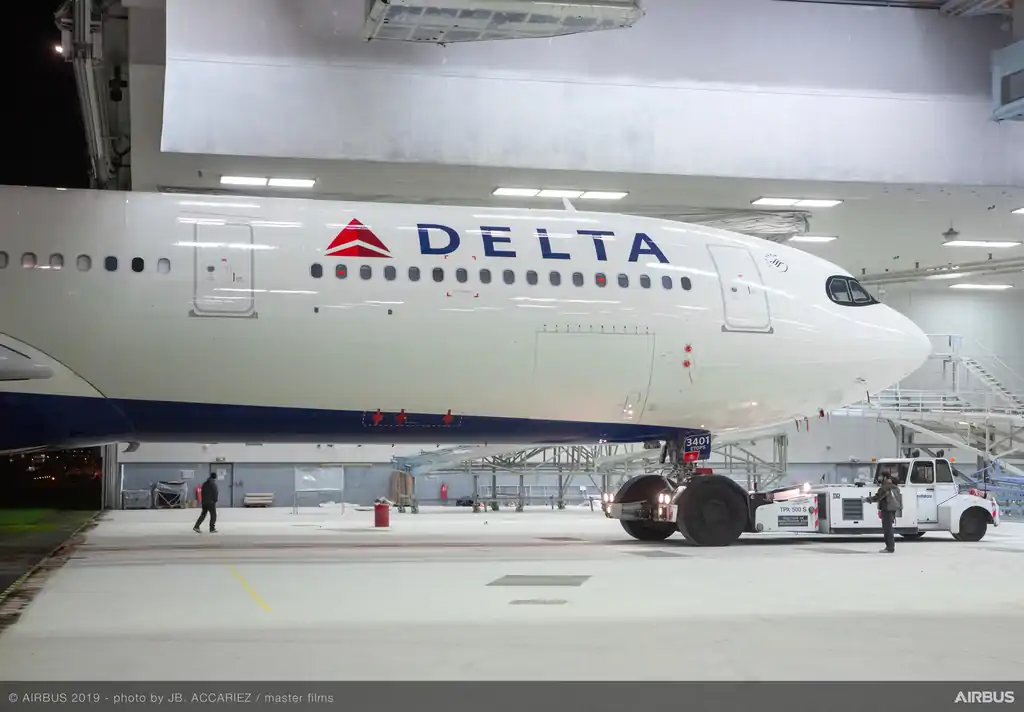
U.S. carriers doubled?down on premium travel after the pandemic to shore up profits and inoculate themselves against economic headwinds. Delta Air Lines saw premium ticket revenue climb 5% year?on?year, while its main cabin revenue fell 5%—the largest gap since 2020—helping it post double?digit margins in Q2 2025. United Airlines enjoyed similar resilience: its premium cabins delivered a 5.6% revenue uptick in the June quarter, versus a modest 1.1% gain in overall passenger revenue.
Main Cabin Malaise: The Squeeze on Economy Fares
While the well?heeled kept flying, budget?minded travelers hit pause. Bank of America data shows middle? and higher?income households held steady in June, but spending by lower?income travelers went negative. Low?fare jetters aren’t immune: JetBlue warned staff that soft demand makes a breakeven operating margin in 2025 “unlikely” and is planning new cost cuts. Frontier and Spirit have slashed flights rather than slash fares to avoid a discount spiral.
Investing in Luxury: Suites, Lounges and Caviar
If you can’t beat ‘em on price, woo them with extravagance.
- United has rolled out private?door suites on its 787?9s, complete with 27?inch screens, luxury skincare kits and curated caviar and wine pairings.
- Alaska Airlines plans to boost its premium seat share to 29% by next summer, up from 26% today.
- JetBlue, Frontier and Spirit—once paragons of no?frills flying—are retrofitting first?class rows and debuting lounges in New York and Boston, chasing fatter margins.
Warning Signs: Is There Too Much of a Good Thing?
The rush to luxury isn’t without risk. Premium seats in the U.S. domestic market have grown 14% since 2019, more than three times the growth of economy seats. That surge is already straining aircraft deliveries and could trigger a supply glut that undercuts pricing power.
What’s Next? Balancing the Cabin Mix
Delta forecasts premium cabin revenue will eclipse main cabin sales by 2027, cementing luxury as its core profit driver. Yet the smartest airlines will need to juggle capacity, experience and price so that filling first class doesn’t leave economy echoing with empty seats.
TL; DR
- Premium revenue resilience: Delta +5% vs. main cabin –5% in Q2 2025.
- United’s uplift: Premium cabins ?5.6%, overall passenger revenue ?1.1%.
- Economy squeeze: Lower?income spend turned negative; JetBlue warns of breakeven risk.
- Luxury upgrades: United suites, Alaska’s 29% premium target, JetBlue/Frontier/Spirit rebranding.
- Oversupply alert: Premium seats +14% since 2019; aircraft delivery logjams risk price wars.
- Future forecast: Delta expects premium sales to overtake economy by 2027.
With Inputs from Reuters
Read next


India is flying high—literally. With one of the fastest-growing aviation sectors globally, its skies are crowded with planes, yet most of them are borrowed. Nearly 80% of India’s commercial aircraft are leased from overseas. But as demand skyrockets and airlines expand, questions arise: Is India doing enough to manage its leased fleet wisely?
Jaideep Mirchandani, Group Chairman of Sky One, offers a blunt reality check: India needs to up its game—urgently.
The Rise of Operating Leases in India: Flexibility First
Gone are the days when airlines raced to own aircraft. Today, operating leases have taken centre stage, especially in India, where they offer:
- Lower upfront investment
- Financial flexibility
- Easier fleet renewal
These leases allow airlines to quickly adopt modern, fuel-efficient aircraft, which aligns perfectly with the sector’s dual goals: lowering operational costs and reducing carbon emissions.
The Regional Shift: Small Jets, Big Potential
Another significant shift is visible: a move toward narrow-body and regional jets, perfect for India’s short-haul and domestic sectors. This strategic change ensures:
- Better connectivity between Tier-2 & Tier-3 cities
- Higher frequency on busy routes
- Improved route economics
Legal Boost: Protection of Interests Act and the Cape Town Convention
One of the biggest recent wins for India’s leasing ecosystem is the Protection of Interests Act. It’s a game-changer that improves:
- Compliance with the Cape Town Convention
- Legal predictability for lessors
- Global investor confidence
According to Mr Mirchandani, this law could lower leasing costs, bringing India closer to global standards in aircraft leasing.
What Do Lessors Really Want?
Before they even consider a lease deal, international lessors will check for:
- Airline’s ability to pay
- Creditworthiness
- Fleet age and maintenance record
- Existing partnerships with MROs
- India’s political, economic, and regulatory stability
Any red flags here? Lease denied.
Lessee’s Checklist: Don’t Just Lease—Manage Smartly
Indian carriers must step up their internal systems. Mr. Mirchandani stresses a strong operational risk management plan that includes:
- Maintenance based on manufacturer’s guidelines
- Timely engine inspections, routine checks, and repairs
- Adherence to lease agreement terms and regulatory mandates
Why? Because passenger safety, reliability, and reputation are at stake.
India’s Next Move: Adopt Best Practices, Build Systems
To evolve from a reactive to a proactive leasing market, Indian airlines need:
- Comprehensive lease management systems
- Data-driven tools for risk forecasting
- Standardized fleet maintenance protocols
- Training for legal and engineering teams in lease-related compliance
Only then can India emerge not just as a growing market, but a trusted, mature leasing destination.
Final Thoughts: India Must Think Like a Lessor
As Mirchandani rightly puts it, India is a lessee’s market, but if it doesn’t evolve its strategies and systems, it risks losing favor with global lessors—especially at a time when aircraft demand is surging and supply chains are tight.
Better leasing = safer skies = cheaper fares = happier flyers. It’s time to fly smart.
TL; DR: What You Need to Know (and Do)
- 80% of Indian aircraft are leased — leasing isn’t optional, it’s critical.
- Operating leases dominate due to cost efficiency and flexibility.
- India’s leasing policy reforms (like the Protection of Interests Act) are attracting global attention.
- Lessors check everything — from airline credit scores to India’s legal environment.
- Airlines must manage leases better, with strict maintenance, documentation, and compliance.
- To grow sustainably, India must adopt global best practices in aircraft lease management.
- No shortcuts — smart leasing is as important as safe flying.
Want India’s aviation dreams to take off smoothly?
Lease smart. Fly safer. Think long-term.
Read next


Mumbai, July 21, 2025 - An Air India Airbus A320neo aircraft experienced a runway excursion while landing at Chhatrapati Shivaji Maharaj International Airport (CSMIA) in Mumbai during intense monsoon rainfall on Monday morning, causing temporary runway closure and aircraft damage.
Incident Details
Flight AI2744, operating from Kochi International Airport to Mumbai, encountered the incident at approximately 9:27 AM local time during landing on Runway 27. The aircraft, carrying passengers and crew on a routine domestic service, veered off the paved runway surface onto a grassy area due to adverse weather conditions.
The incident occurred during heavy monsoon downpours that had made the runway surface extremely wet and slippery. Weather conditions at the time included intense rainfall and crosswinds, creating hazardous landing conditions that contributed to what aviation experts describe as aquaplaning or hydroplaning - a phenomenon where water buildup prevents proper tire contact with the runway surface.
Safety Response and Passenger Welfare
All passengers and crew members aboard the flight safely disembarked after the aircraft taxied to the gate following the excursion. Air India confirmed in an official statement that no injuries were reported among those on board. The airline's emergency response protocols were immediately activated, ensuring passenger safety remained the top priority.
CSMIA's emergency response teams were quickly deployed to manage the situation and secure the affected area. The swift response helped prevent any escalation of the incident and ensured normal airport operations could resume with minimal disruption.
Aircraft and Infrastructure Damage
The runway excursion resulted in damage to both the aircraft and airport infrastructure. The Air India A320neo sustained damage to the underside of one of its engines, with visible cracks observed in the outer engine casing. Television footage from local news outlets showed the extent of the engine damage, highlighting the severity of the excursion.
Reports indicate that three tires on the aircraft burst during the incident, further emphasizing the challenging conditions during landing. The aircraft has been grounded for comprehensive technical inspections and repairs before it can return to service.

Operational Impact
The incident caused brief disruption to Mumbai airport operations, one of India's busiest aviation hubs. Airport authorities quickly shifted operations to the secondary runway while conducting damage assessment and initiating repairs to the primary runway. This contingency planning helped minimize delays and maintain flight schedules during the peak monsoon travel period.
Mumbai airport officials worked efficiently to restore normal operations, demonstrating the airport's preparedness for handling such incidents during the challenging monsoon season when weather-related disruptions are more common.
Weather-Related Aviation Challenges
The incident highlights the ongoing challenges faced by aviation operations during India's monsoon season. Heavy rainfall creates hazardous landing conditions, with wet runways significantly increasing the risk of runway excursions and other weather-related incidents.
Aquaplaning, the primary factor in this incident, occurs when a layer of water builds up between aircraft tires and the runway surface, reducing friction and making it difficult for pilots to maintain directional control during landing and rollout. This phenomenon is particularly dangerous during heavy rainfall when runway drainage systems may be overwhelmed.
Investigation and Follow-up
Air India has grounded the affected aircraft for thorough technical inspections to assess all damage and ensure airworthiness before return to service. The airline is cooperating fully with airport authorities and aviation regulators in documenting the incident and implementing any necessary corrective measures.
While no formal investigation has been announced, such incidents typically undergo review by aviation safety authorities to identify contributing factors and prevent future occurrences. The lessons learned from this incident will likely inform safety protocols and procedures during monsoon operations.

Industry Context
This incident serves as a reminder of the operational challenges faced by airlines during India's monsoon season, when airports across the country deal with increased weather-related disruptions. Mumbai, being a coastal city, is particularly susceptible to heavy monsoon rainfall that can create difficult operating conditions for aviation.
The professional handling of this incident by both Air India crew and Mumbai airport emergency response teams demonstrates the effectiveness of established safety protocols and emergency procedures in ensuring passenger safety during adverse weather operations.
This incident occurred on July 21, 2025, and all passengers and crew members were safely evacuated with no reported injuries. The aircraft remains grounded pending technical inspections and repairs.
Comment