
Why the Miniature Panes? The Intriguing Secret Behind Tiny Aircraft Window!

Abhishek Nayar
27 Nov 2023

Airplane windows have come a long way since the early days of aviation. From the square windows of the past to the now-iconic round shapes, the design of these crucial components has undergone a significant transformation. This evolution is not merely an aesthetic choice; it is rooted in lessons learned from tragic events, advancements in technology, and a delicate balance between passenger comfort and aircraft safety.
Historical Shift

The shift from square to round windows was catalyzed by the de Havilland Comet incidents in 1954. The square window design of the Comet, the first jetliner of its time, proved to be fatal as the sharp edges of the squares couldn't withstand the pressure, leading to catastrophic mid-air breakups, claiming the lives of 56 passengers. This tragic event prompted a reevaluation of window design, setting the stage for the adoption of round windows.
Aerodynamics and Safety

The small, round shape of airplane windows serves a crucial purpose in enhancing safety. These windows reduce aircraft weight, strengthen the fuselage, and minimize the risk of catastrophic pressure differences if a window were to fail during flight. The round shape allows for an even distribution of pressure across the window, making it more resilient to the stress of repeated pressurization cycles.
Cargo Planes and Windowless Design

Cargo planes, designed without the need for passenger windows, prioritize structural integrity and weight distribution. Windows on the sides of the fuselage require additional reinforcement, adding significant weight. In cargo planes, the absence of windows allows for a more efficient and robust design, emphasizing the importance of function over aesthetics.
Drawbacks of Windows
Weight Considerations
While the round window design enhances safety, it does come with drawbacks. The triple-layered acrylic windows, although relatively lightweight, add a substantial weight to the aircraft – about 8lbs per window. With an average of 80 or more windows on a passenger plane, this results in an added weight of approximately 640lbs. Larger windows would exacerbate this weight gain, impacting fuel efficiency and overall aircraft performance. In an industry where weight directly influences flying distance, fuel efficiency, balance, and climb performance, the trade-off is carefully considered.
Fuselage Strength
The fuselage, a critical component of any aircraft, is compromised by the presence of windows. While modern materials like lightweight aluminum alloy provide strength, the need for additional structure around windows weakens the overall fuselage. Larger windows would exacerbate this issue, necessitating even more structural support. The shift to all-composite fuselages, as seen in Boeing's innovations, has influenced how larger windows can be incorporated without compromising structural strength.
Pressurization Dangers
Airplane windows play a vital role in regulating pressure differences as the aircraft ascends and descends. The specific design of smaller, round windows minimizes the risk of explosive vacuum effects in the event of a window detachment. Larger windows, however, could lead to more severe consequences, posing a threat to both passengers and the aircraft itself.
Conclusion
The 70-year prevalence of round windows in airplanes is not a mere design choice but a result of lessons learned from tragic incidents and a commitment to passenger safety. While the drawbacks of windows, including their weight and impact on fuselage strength, are significant considerations, the aviation industry continues to prioritize safety without compromising the overall flying experience. As technology advances, future aircraft designs may find innovative solutions to mitigate these drawbacks, but the fundamental principle of prioritizing safety will undoubtedly remain at the forefront of aviation evolution.
With Inputs from The Guardian, Pilot Teacher, Engineering World Channel
Read next
India to Boost Domestic Demand by Blending Compressed Biogas with Natural Gas
Abhishek Nayar
27 Nov 2023

In a significant move towards achieving sustainability goals and reducing reliance on natural gas imports, the Indian government announced on November 25, 2023, that it would commence blending compressed biogas (CBG) with natural gas. This strategic initiative aims to not only bolster domestic demand but also contribute to the country's commitment to achieving net-zero emissions by 2070.
Mandatory Phased Introduction: A Step-by-Step Approach
Commencement at 1% - April 2025
The government's plan involves a mandatory phased introduction, starting with a 1% blend of compressed biogas in natural gas for use in automobiles and households. This initial phase is set to begin in April 2025. The infusion of biogas into the energy mix represents a proactive approach to diversifying energy sources, minimizing environmental impact, and cutting down on the costs associated with natural gas imports.
Incremental Increase to 5% - 2028
As part of a progressive strategy, the mandatory blending percentage is slated to increase gradually, reaching around 5% by the year 2028. This measured escalation underscores the government's commitment to a sustainable and responsible transition while giving industries and consumers the necessary time to adapt to the evolving energy landscape.
Reducing Reliance on Gas Imports: An Economic and Environmental Imperative
India's Energy Import Landscape
India, being one of the world's largest importers of oil and gas, currently sources approximately half of its overall gas consumption through imports. The government's move to blend compressed biogas with natural gas is a strategic response to reduce dependency on external sources and mitigate the economic vulnerabilities associated with the importation of fossil fuels.
Cost-Effective and Eco-Friendly Solutions
Beyond the economic considerations, the initiative aligns with global efforts to curb carbon emissions. Compressed biogas, derived from organic waste, presents a more sustainable and eco-friendlier alternative. By integrating biogas into the energy mix, India seeks to address environmental concerns, promote circular economy practices, and contribute to the global fight against climate change.

Sustainable Aviation Fuel Targets: A Parallel Thrust
1% SAF in Aircraft Turbine Fuel by 2027
In tandem with the CBG blending initiative, the Indian government also outlined targets for the integration of sustainable aviation fuel (SAF) into aircraft turbine fuel. The plan entails achieving a 1% inclusion of SAF by 2027, with the target doubling to 2% in 2028. Initially applicable to international flights, this step aims to reduce the aviation sector's carbon footprint, aligning with broader goals of sustainable development.
Pathway to Net-Zero Emissions: Government's Vision for 2070
Strategic Steps for a Sustainable Future
The announced measures mark a pivotal moment in India's journey towards a greener and more sustainable future. By introducing mandatory blending of compressed biogas with natural gas and setting ambitious targets for sustainable aviation fuel, the government demonstrates its commitment to achieving net-zero emissions by 2070.
Global Relevance and Collaboration
As nations worldwide intensify their efforts to combat climate change, India's initiatives hold global relevance. The phased introduction of eco-friendly energy sources aligns with international objectives and paves the way for collaboration in sustainable development practices. The government's commitment to environmental stewardship positions India as a proactive participant in the global transition to cleaner energy.
Conclusion
India's decision to blend compressed biogas with natural gas represents a strategic and forward-thinking approach to energy diversification. The phased introduction and incremental increases underscore a commitment to responsible energy transitions. Concurrently, the focus on sustainable aviation fuel aligns with broader environmental objectives. As India charts a course towards net-zero emissions by 2070, these initiatives signal a determined stride towards a more sustainable and resilient energy future.
With Inputs from Reuters
Read next

The aftermath of Russia's invasion of Ukraine in February 2022 has left a significant mark on its commercial aviation industry. Recent statements from the Russian Transports Minister, Vitaly Savelyev, reveal a challenging scenario with 76 commercial aircraft seized abroad due to international sanctions.
Unpreparedness and Seizures
Minister Savelyev acknowledged that his ministry was ill-prepared for the situation at hand, leading to the seizure of 76 aircraft temporarily outside of Russia. These aircraft, engaged in activities such as maintenance or commercial services, became collateral damage as sanctions were implemented, making their return to Russian territory impossible.
Capacity Constraints and Restricted Operations
The impact of sanctions extends beyond seized aircraft, affecting the overall capacity of the Russian airliner fleet. Boeing and Airbus halted servicing Russian operators, compounding the challenges. At the onset of the conflict, over half of Russian airlines' airliners were leased, with a significant number registered in Bermuda or Ireland. Russia's refusal to return these leased aircraft has resulted in a legal battle, further restricting the operational capabilities of Russian carriers.
Ongoing Legal Battles and Ownership Changes
The refusal to return leased aircraft led to a protracted legal battle, preventing the smooth operation of Russian airlines. While some affected aircraft have been purchased from lessors by Russian firms, the resolution of ownership disputes is still ongoing. This legal quagmire adds a layer of complexity to the recovery process for the Russian commercial aviation industry.
International Flight Restrictions
As of November 2023, Russian airlines find themselves severely constrained in terms of international operations. Only 11 countries, which have provided guarantees against potential seizures, are accessible for Russian carriers. This limited scope has significantly curtailed the global reach of Russian airlines, impacting both their profitability and connectivity.
Fleet Statistics and Re-Registration Efforts
The Russian commercial aircraft fleet, comprising 1,302 aircraft, with 1,176 dedicated to passenger transportation, has undergone significant changes since 2022. Over 800 aircraft have been re-registered in Russia, reflecting the industry's efforts to navigate the challenges posed by sanctions and ownership disputes. However, the process of re-registration is a complex and time-consuming endeavor.
Conclusion
The repercussions of the sanctions imposed on Russia following the Ukraine invasion have profoundly affected its commercial aviation sector. From seized aircraft abroad to legal battles over leased planes, the industry is grappling with unprecedented challenges. The ongoing struggle for resolution and the limited international operational capacity highlight the complexities faced by Russian airlines. As the legal battles persist and geopolitical tensions continue, the path to recovery for the Russian commercial aviation industry remains uncertain.
Read next

Noida International Airport (NIA) signed a Memorandum of Understanding (MoU) with IndiGo on November 24, designating the domestic budget carrier as the inaugural or launch carrier for the airport.
Under this arrangement, NIA and IndiGo will collaborate to develop and strengthen air connectivity within Uttar Pradesh and beyond. The partnership aims to explore new and innovative ideas to enhance operational efficiency and customer experience, as stated in the airline's release.
The collaboration is expected to provide a broad route network to flyers and create new business opportunities in the region. Christoph Schnellmann, Chief Executive Officer of Noida International Airport, expressed excitement about the partnership, highlighting the potential for bolstering air connectivity and ensuring an exceptional customer experience.
Pieter Elbers, Chief Executive Officer of IndiGo, emphasized that their operations at NIA will offer seamless connectivity across their extensive network, benefiting the people of Uttar Pradesh. He also expressed anticipation for the inauguration of the new airport in 2024 and the ongoing collaboration with NIA management to explore innovative ways to deliver an affordable, on-time, and hassle-free travel experience across the 6E network. "We look forward to the inauguration of the new airport in 2024 and will continue to work with NIA management to explore innovative ways to deliver an affordable, on-time, and hassle-free travel experience across the 6E network," he added.
The first phase of Noida International Airport is set to be operational by the end of 2024, featuring one runway and one terminal with a capacity to handle 12 million passengers annually. Upon completion of the fourth phase, the airport will have the capability to manage 70 million passengers per year.
The greenfield airport is located in the Jewar area of Gautam Buddh Nagar district in western Uttar Pradesh, about 75 km from Delhi. Once operational, it will be the second international and overall third commercial airport in the National Capital Region (NCR). The authorities concerned are also in talks with some more airlines, both Indian and foreign, which will start their operations at the airport later.
Commercial Operations at Noida International Airport
The upcoming airport will begin commercial operations with as many as 65 flights, according to government officials. The first phase of the airport, which last month received its unique IATA code DXN, has an October 2024 commissioning deadline.
Out of 65 flights under consideration, 25 would be of the ‘domestic’ category and connect to significant destinations like Mumbai, Kolkata, and Bengaluru. In addition to this, a total of 37 trips would fall under the "Regional" category; these flights would go to smaller cities where planes fly less frequently. Apart from that, 2 international flights and one cargo jet will also begin operating from Noida airport, according to reports.
For International carriers, airlines operating from Dubai and Singapore are under consideration. “If the attempt to select two foreign airlines does not work out, Indian airlines will be chosen for international travel from Noida Airport,” said an official.
In its initial year, the Noida Airport is expected to be used by about 5 million people, according to the Techno-Economic Feasibility Report (TEFR). “The challenge will be to attract passengers, to develop a complete environment so that people choose Jewar in place of IGI Airport for their travel,” said the official.
It is projected that 5 million passengers will use the Noida International Airport by the end of the first year of operations. The projected annual footfall for the first phase is 12 million passengers. Construction of the proposed second runway will commence once the airport reaches 80% of this capacity.
Spread across 1,334 hectares in Jewar, the site is strategically connected to NCR and Western UP: It is 72 km from IGI Airport, 40 km from Noida, and 130 km from Agra. It is also about 30 km from State Highway 22A (which connects Palwal and Aligarh) and 700 metres from the Yamuna Expressway.
Read next
Jet Airways Lenders Ask Jalan Kalrock Consortium to Submit Air Operator Certificate

Radhika Bansal
25 Nov 2023

Lenders to Jet Airways told the Jalan-Kalrock Consortium (JKC), the successful bidder for the revival of the grounded carrier, to produce the Air Operator Certificate (AOC) in the next hearing at the National Company Law Appellate Tribunal. The request for the AOC, a prerequisite for flight operations, was made during the hearing in a case at the National Company Law Appellate Tribunal (NCLAT).
JKC is led by UAE-based businessman Murari Lal Jalan and London-based Kalrock Capital. The troubled airline’s AOC, revalidated by the Directorate General of Civil Aviation (DGCA) on May 20 of the previous year, expired on May 19, hinting that the airline is unlikely to commence commercial flights shortly.
India’s aviation regulator renewed the airline’s AOC for over a month till September 3. The lenders have now told the airline to produce the flying permit to prove their intention of a revival. The next date of hearing is December 11. Earlier, the lenders of Jet Airways had questioned the source of payment of JKC, saying it is not compliant with the Resolution Plan.
Additional Solicitor General (ASG) N Venkatraman, representing the lenders led by the State Bank of India (SBI) in NCLAT, said last month the source accounts from which the payments were made were questionable. "Till now they (JKC) were taking us for a ride, now they are taking this court for a ride," Venkatraman had said.
According to the payment schedule approved by the NCLAT in August, JKC was required to pay INR 100 crore by August 31, another INR 100 crore by September 30, and the rest Rs 150 crore was to be adjusted against the performance bank guarantee. The lenders, however, said INR 13 crore of the INR 200 crore payment towards the dues came from “other sources” in contravention of the resolution plan.
JKC has refuted the allegations levelled against it by the lenders on the source of funding for reviving Jet Airways. "We highly question the lenders' intent to transfer the ownership of the company in favour of JKC after JKC has executed all its obligations under the court-approved resolution plan by paying the full amount of INR 350 crore. This is in light of the latest application filed by the COC (Committee of Creditors) to stay the implementation of the approved resolution plan recently in NCLT," it said.
What is Happening With Jet Airways?
On August 28, NCLAT permitted the consortium to pay INR 200 crore by September 30 and permitted the adjustment of an existing bank guarantee towards INR 150 crore.
Earlier in August, the lenders told NCLAT that they may choose to not pursue the appeal against the transfer of the airline's ownership to Jalan Kalrock Consortium if it pays INR 350 crore towards fulfilling condition precedents. In May 2023, NCLAT granted the consortium, which emerged as a successful bidder to take over Jet Airways, more time to make payments to the State Bank of India (SBI).
While the National Company Law Tribunal (NCLT) approved the transfer to Jalan Kalrock in January, the decision was challenged in NCLAT, which ruled in favour of the consortium on March 3, 2023. Hence, the Jalan Kalrock Consortium was entitled to exclude the November 16, 2022-March 3, 2023 period, during which the ownership hearing was on, to comply with the payment deadline.
On January 13, NCLT allowed the transfer of the beleaguered airline to the consortium led by London-based Kalrock Capital and UAE-based entrepreneur Murari Lal Jalan. The lenders approached the NCLAT, opposing the ownership transfer, saying the consortium had not fulfilled its obligations.
Jet Airways was grounded in April 2019 over growing losses and a debt of about INR 8,000 crore. In October 2020, the airline's Committee of Creditors (CoC) approved the revival plan submitted by the Jalan-Kalrock consortium. However, ownership transfer has been hanging fire amid continuing differences between the lenders and the consortium. On 22 June 2021, the NCLT approved the resolution plan for Jet Airways.
Lenders had also expressed apprehensions about the consortium's foreign partner Florian Fritsch after his properties were searched in 2022 as part of a larger fraud and money laundering probe.
Read next
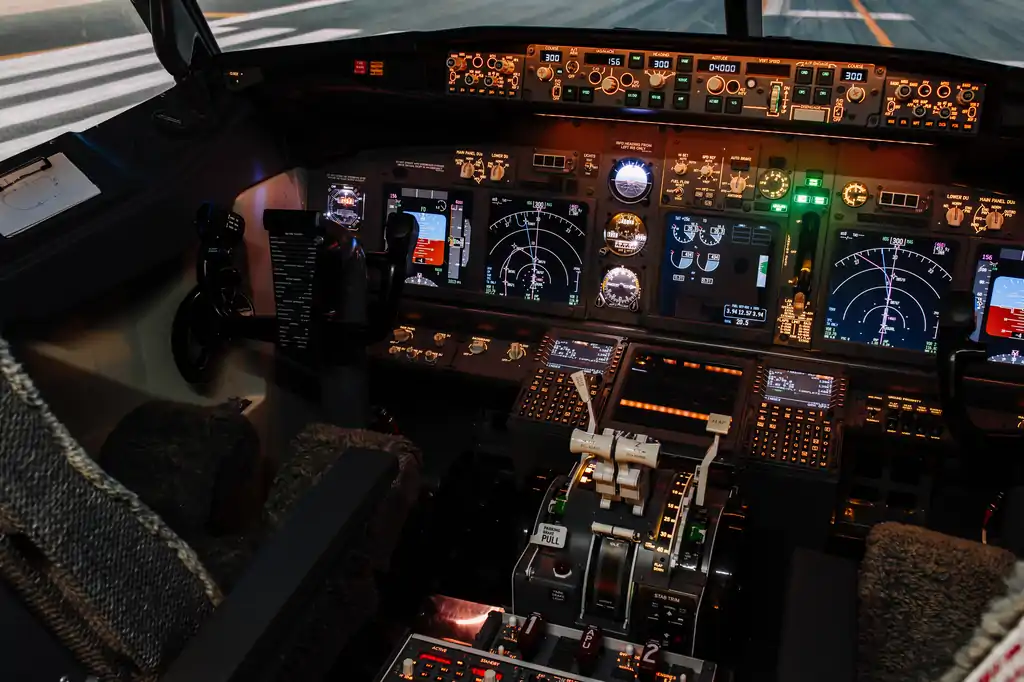
In response to a rising number of incidents involving GPS spoofing and jamming affecting Indian airlines and aircraft flying over the Iraq-Iran area, the Directorate General of Civil Aviation (DGCA) in India has taken proactive measures. The aviation regulator has recently released a circular directed at airlines and the Airports Authority of India (AAI) to address the emerging threat posed by fake GPS signals.
Background
The DGCA formed an internal committee on October 4 to investigate the increasing reports of interference with the Global Navigation Satellite System (GNSS) over airspace in the Middle East. This committee has been actively involved in assessing the situation, raising awareness among operators, and engaging with global experts to formulate an effective response to the challenge.
Recommendations and Best Practices
The circular issued by the DGCA is based on the recommendations of the internal committee. It reflects the best practices identified through consultations with international experts and aligns with guidance provided by the International Civil Aviation Organization (ICAO). The aim is to equip airlines, pilots, the AAI, and air traffic controllers with comprehensive mitigation measures and action plans.
Mitigation Measures Outlined in the Circular
- Contingency Procedures: The circular emphasizes the development of contingency procedures in coordination with equipment manufacturers. This includes strategies to detect and counteract GPS spoofing, ensuring that aircraft systems can quickly adapt to any interference.
- Risk Assessment: To address the operational risk associated with GPS interference, the circular suggests conducting safety risk assessments. This involves evaluating the potential impact of spoofing on flight paths and implementing measures to minimize risks to aviation safety.
- Operator and Pilot Awareness: The DGCA highlights the importance of sensitizing operators and pilots to the threat of GPS spoofing. Awareness programs are recommended to ensure that aviation professionals are well-informed and capable of responding effectively to potential incidents.
- Collaboration with Stakeholders: The circular underscores the need for collaboration among stakeholders, including airlines, the AAI, and air traffic controllers. By fostering communication and cooperation, the aviation industry can collectively address the challenges posed by GPS interference.
Conclusion
The DGCA's proactive approach to addressing the growing threat of GPS spoofing demonstrates a commitment to ensuring the safety and security of Indian airspace. By incorporating international best practices and leveraging expert guidance, the circular provides a comprehensive framework for mitigating the risks associated with GNSS interference. As the aviation industry continues to evolve, such measures are crucial to maintaining the integrity of navigation systems and safeguarding the well-being of passengers and crew.
With Inputs from Economic Times
Comment