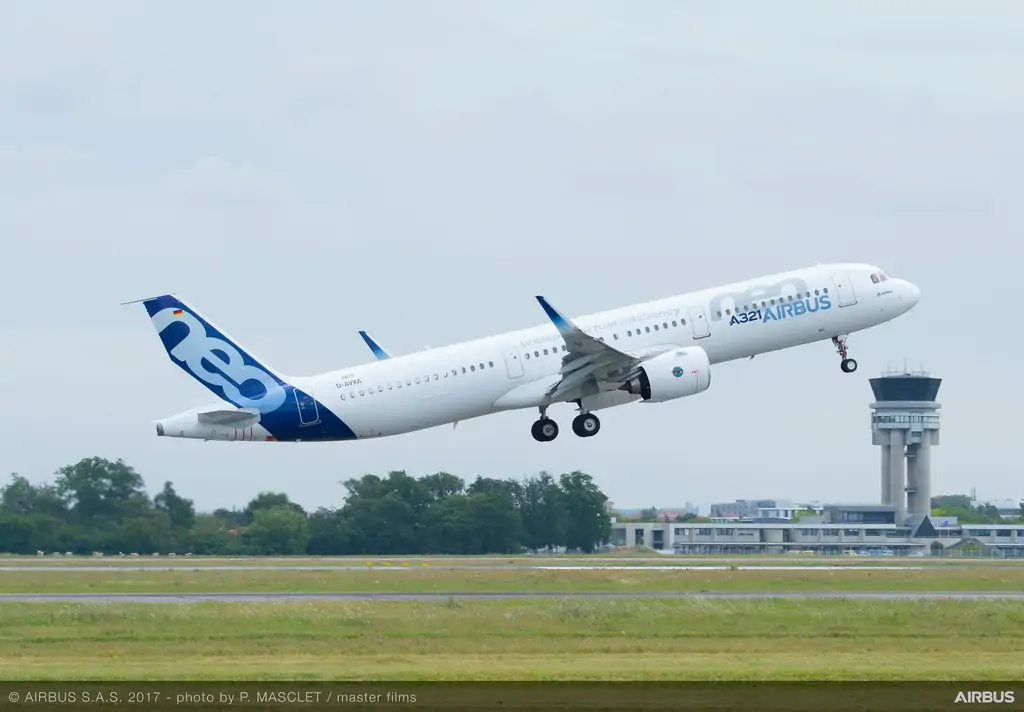
In the dynamic world of aviation, where technological advancements and customer preferences drive innovation, the Airbus A321neo has emerged as a trailblazer. Thirty years after the first flight of the Airbus A321, the A321neo has taken the aviation industry by storm, becoming the airframer's most popular individual model across its entire aircraft line. With a staggering number of orders, the A321neo has proven its mettle as a game-changer for both airlines and passengers alike.
A Legacy of Excellence
The Airbus A321neo, an upgraded version of the highly successful A321, showcases Airbus's commitment to continuous improvement and innovation. Equipped with the latest technological advancements, enhanced fuel efficiency, and increased passenger capacity, the A321neo has become the go-to choice for airlines looking to elevate their operations and meet the evolving demands of the industry.
The A321neo Takes Flight: Surpassing Predecessors
The A321neo's monumental success is evident from its exceptional order figures. According to Airbus's half-year backlog figures, the A321neo has received orders for a staggering 5,163 aircraft, surpassing its predecessor, the A320, which held the record with 4,763 orders. This significant milestone highlights the industry's recognition of the A321neo's superiority in terms of performance, efficiency, and passenger experience.
Unleashing Unmatched Efficiency
One of the key factors contributing to the A321neo's popularity is its exceptional fuel efficiency. The aircraft is equipped with state-of-the-art Pratt & Whitney's PurePower PW1100G-JM or CFM International's LEAP-1A engines and aerodynamic enhancements, enabling it to deliver substantial fuel savings. These engines are designed to minimize fuel consumption and reduce carbon emissions, addressing the growing concern for environmental sustainability within the aviation industry.
Enhanced Passenger Experience
In addition to its economic advantages, the A321neo prioritizes passenger comfort and experience. The aircraft's larger size compared to its predecessors allows airlines to offer more spacious cabins, enabling passengers to enjoy a comfortable journey. With advanced in-flight entertainment systems, mood lighting, and ergonomic seating arrangements, the A321neo provides an enhanced travel experience for passengers across various flight durations.
Expanding Market Opportunities
As carriers recognized the advantages offered by the A321neo, the aircraft successfully expanded into new markets and routes. Its increased range and capacity enable airlines to explore previously untapped destinations and cater to growing travel demands. The A321neo's versatility has opened up opportunities for both established and emerging airlines to expand their operations and connect people around the world like never before.
Impact on Airline Business Models
The introduction of the A321neo has had a significant impact on airline business models. With its increased capacity and improved efficiency, airlines can optimize their operations and achieve higher profitability. The A321neo enables airlines to transport more passengers while reducing costs, leading to improved financial performance and a competitive edge in the industry.
The Airbus A321neo vs. Competitors
In the fiercely competitive aviation market, the Airbus A321neo faces competition from other aircraft manufacturers offering similar models. However, the A321neo's impressive fuel efficiency, extended range, passenger capacity, and advanced features give it a competitive advantage. Airlines value the aircraft's superior performance and operational flexibility, making it the preferred choice for many carriers.
Revolutionizing Air Travel
The rise of the A321neo represents a pivotal moment in the aviation industry. Its unmatched performance, fuel efficiency, and passenger comfort have redefined the standards for narrow-body aircraft. By incorporating cutting-edge technology and design, Airbus has created a revolutionary aircraft that sets new benchmarks for the industry.
Conclusion
Thirty years after its inception, the Airbus A321neo has risen to prominence, surpassing its predecessors, and becoming Airbus's most popular individual model. With its exceptional order figures and remarkable technological advancements, the A321neo has proven to be a game-changer in the aviation industry. This aircraft embodies the perfect balance of efficiency, passenger comfort, and market adaptability, cementing its position as a frontrunner in the rapidly evolving world of aviation.
With Inputs from FlightGlobal

Read next
Trip Report : Star Air leading the Regional Air Connectivity with the Newly Inducted Embraer E175LR

Utkarsh Thakkar
07 Jul 2023
As a seasoned traveler, I have had the privilege of experiencing numerous airlines, but none have left me as consistently impressed and satisfied as this one. The attention to detail, impeccable service, and unwavering commitment to passenger comfort were apparent in every aspect of my journey. From the warm and welcoming smiles of the flight attendants to the state-of-the-art amenities and the seamless flight operations, Star Air surpassed all my expectations.
Check-in

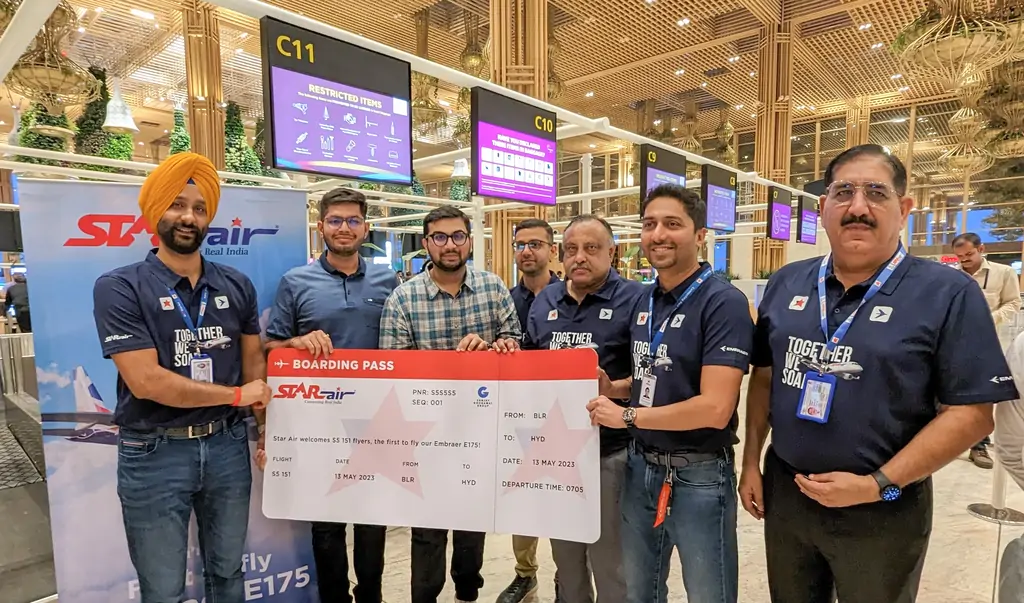
All Star Air flights operate from Bangalore Airport Terminal 2, also known as Garden Terminal. Since it was an early morning flight, there was no rush at the airport, and I stayed near Bangalore Airport. The Star Air counters were decorated in the brand's colors to celebrate the first flight. The CEO of Star Air, Simran Singh Tiwana, and other officials from Star Air and Embraer, were present for the occasion. We headed straight to our gate after the lamp lighting and cake cutting. The airport felt like a shopping mall after passing through the security area and heading toward the gates. Due to the celebration at the counters, I couldn't visit the Bangalore Airport Terminal 2 lounge. Currently, the airport has limited options for food.
Boarding Gate
For today's flight, we had a bus boarding gate. Global Aviation handles Star Air's ground operations at Bangalore and Hyderabad Airport.
Aircraft


Star Air expanded its fleet by adding two Embraer E175LR aircraft. During the Farnborough Air Show last year, Star Air signed a Letter of Intent (LOI) with Nordic Aviation Capital for two E175LRs. In December 2022, they finalized the agreement for an additional two aircraft.
In February this year, Star Air took delivery of its first E175LR, which landed at Bengaluru airport. Following that, in May, Star Air successfully completed its proving flight as S5-170 from Bengaluru to Hyderabad airport. Then, on May 13, 2023, they commenced their first revenue flight with the E175LR aircraft.
Seating


The E175LR has a seating capacity of 76 passengers in a two-class configuration. Economy class has 64 seats, while business class has 12 seats. It's worth mentioning that Star Air is the only regional airline in India that provides a business class cabin, complete with delectable hot meals and a spacious 1x2 seating arrangement with a luxurious 36" seat pitch.
During my first flight on the E175LR, I was seated in economy class and was pleasantly surprised by the comfort of the seats, which featured a generous pitch of 31 inches. For aviation enthusiasts, I suggest selecting a seat located behind the wings for the perfect opportunity to capture stunning wingtip shots.
Crew and Service
The crew was friendly and continuously checked on the passengers from start to end. Although the sector was short, the crew members did their best to ensure a comfortable experience. Overall, I have always found Star Air's crew members to be friendly and warm, and treat passengers like family. The menu had a decent selection, and I highly recommend trying their cookies—they are a must-try! However, they don't offer pre-booked sandwiches onboard. We covered the distance from Bengaluru to Hyderabad in almost 45 minutes, and the experience was incredibly comfortable and enjoyable. I didn't want to leave the aircraft. Although I didn't get a chance to experience the business class this time, based on my economy class experience, I can only imagine how much more luxurious the journey would be in their business class cabin.
After Landing

It was the first commercial flight of the E175 at Hyderabad airport, but we didn't receive a water cannon salute. Our aircraft was parked at a remote bay, so we had to travel by bus to the terminal. Thanks to the bus boarding/deboarding process, I took more pictures of this beautiful aircraft. I believe all aviation enthusiasts will appreciate bus boarding.
Overall, Star Air's E175LR aircraft has revolutionized regional air travel, and I wholeheartedly recommend flying with them for a truly unique and memorable experience. I extend my sincerest gratitude to Star Air for providing an unforgettable flight that will forever hold a special place in my memory. I hope to soon see Star Air's E175 on most of their routes at my home airport.
About Star Air
Star Air is a regional carrier owned by the Sanjay Ghodawat Group, based in Kolhapur, Maharashtra. Star Air's headquarters is located in Bangalore.
Read next
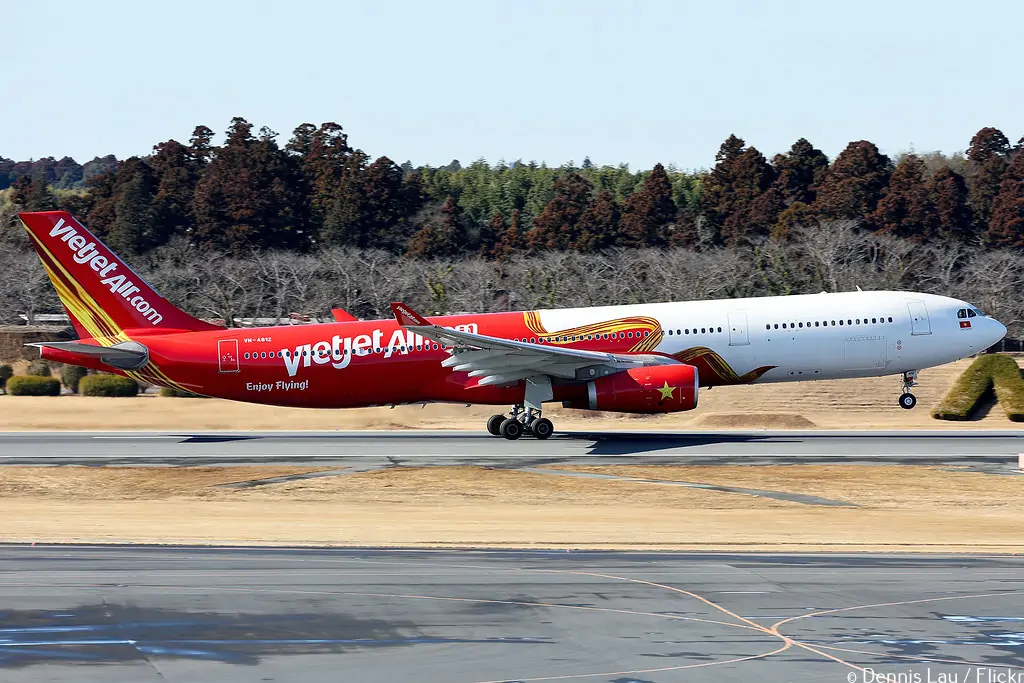
VietJet has officially introduced a direct route between Ho Chi Minh City (Vietnam) and Kochi (India) which will start flying on August 12, 2023. The first-ever direct route from Kerala to Vietnam marks an important milestone for the development of Kochi airport and the tourism industry of the two countries. VietJet will now be operating a total of 32 flights a week between India and Vietnam. It is expected to further promote tourism, economic and trade cooperation, and the development of bilateral relations between Vietnam and India.
Furthermore, VietJet expands its fleet to meet growing travel demand: Receives 6th A330 and Adds 3 A321 neo-ACF Aircraft in May 2023. The new additions prioritize fuel savings, emission reduction, and environmental protection. These modern aircraft will replace older ones, enhancing operational efficiency, and cost savings, and delivering exceptional flight experiences to passengers at affordable fares.
In its strategic plan to expand connectivity between India with Vietnam, the Kochi – HCMC route will be operated with a frequency of 4 flights/week every Monday, Wednesday, Friday, and Saturday. The flights from Kochi will depart at 23:50 (local time) and land in Ho Chi Minh City at 06:40 (local time). The return flights will depart from Ho Chi Minh City at 19:20 (local time) and arrive in Kochi at 22:50 (local time). Additionally, Indians can fly to Vietnam on VietJet flights from Mumbai, New Delhi, and Ahmedabad to Hanoi and Ho Chi Minh City.
In the first five months of 2023, India has 141 thousand visitors to Vietnam, which is expected to reach 500,000 visitors annually. Previously, in 2022, the number of Indian visitors to Vietnam grew impressively, reaching 137,900 arrivals, ranking 9th in the 10 markets sending tourists to Vietnam the most. VietJet's new route is expected to bring about 10,000 more passengers from the southern region of India to Vietnam in 2023.
Officials' Comments
Speaking at the event, Vietnamese Ambassador to India, Nguyen Thanh Hai said, “The opening of the route connecting Kochi and Ho Chi Minh City by VieJjet is a breakthrough, creating a new impetus for economic - trade - tourism cooperation and people-to-people exchanges between Viet Nam and South India. With the favourable geographical location of Ho Chi Minh City in particular, and Viet Nam in general, visitors will easily explore destinations across Viet Nam as well as from Viet Nam to other countries and regions around the world. Congratulate VietJet, the airline operating the most air routes between our two countries, on pioneering in connecting the Indian Tier 2 cities with Viet Nam.”
"We are very happy to announce a direct flight service from Kochi airport to Ho Chi Minh City," said S Suhas, Managing Director, Cochin International Airport Limited (CIAL), "We are confident that the launch of this new air route between Kerala and Vietnam from CIAL will be a significant milestone in the tourism industry, providing travellers with a convenient and direct transportation option to meet their requirements. Also, the opening of a new air route marks a pivotal moment in the history of airport operations, which will help our company in opening up new avenues for economic growth and cultural exchange", he added.
Speaking at the event, Jay L Lingeswara, Vice President of Commerce, VietJet said, “With this new route, VietJet will fundamentally increase connectivity between Vietnam and India. We expect that VietJet will significantly contribute to the tourism growth of Kerala, India and Vietnam via its wide range of products and services accompanied by competitive and reasonable fares.”
About the Airline
VietJet is a Vietnamese low-cost airline based in Hanoi. It was the first privately-owned new-age airline to be established in Vietnam, being granted its initial approval to operate by the Vietnamese Minister of Finance in November 2007. As of its launch in December 2011, it became the second private airline to offer domestic service in Vietnam, as well as the fifth airline overall to offer civil domestic flights. VietJet Air is owned by Sovico Holdings, HDBank, other organisational investors, and individual stakeholders. The carrier's launch was beset by long delays attributed to various causes, such as a global economic slowdown and regulatory issues. Despite the setbacks, VietJet Air's first flight was operated on 25 December 2011, flying from Ho Chi Minh City to Hanoi. The carrier carried its 10 millionth passengers in December 2014, and its 25 millionth passengers in December 2015. The carrier began operations initially with 3 A320 aircraft to Ho Chi Minh City and Da Nang. VietJet had planned to utilise the AirAsia brand after receiving an investment from the Malaysian LCC but went ahead with the VietJet brand after AirAsia was denied regulatory approvals.
Read next
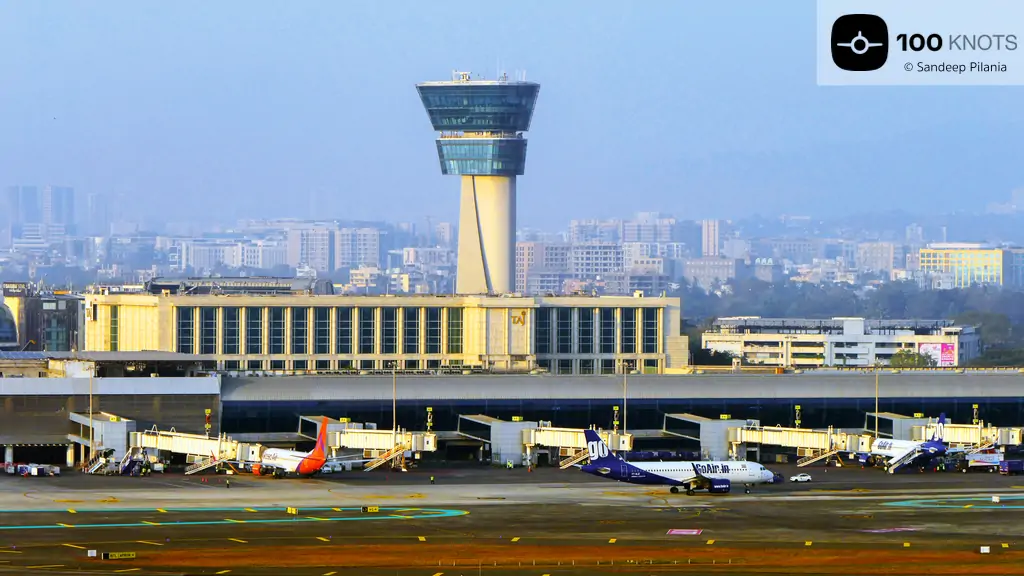
The Indian government has created an additional 1,222 new posts in the Directorate General of Civil Aviation (DGCA), Airports Authority of India (AAI), and Airports Economic Regulatory Authority (AERA). To beat the shortage of air traffic control officers (ATCOs), the Union Aviation Ministry has created 796 positions since July 2021. For the aviation safety regulator and AERA, the government created a total of 416 and 10 new positions, respectively.
The domestic aviation industry continues to witness a recovery, with air passenger traffic logging around 60% growth at 13.60 crore passengers in FY23 annually. The Indian carriers had flown a total of 8.52 crore passengers on local routes in the year ended March 2022, as per ICRA. In FY23, the overall airlines' capacity deployment was higher by 38% as compared to FY22.
Hiring Soars After Mega Aircraft Deals
The mega aircraft deal where Air India placed an order for 470 passenger planes worth USD 80-100 billion from Airbus and Boeing, is expected to open up numerous jobs for pilots, cabin crew and engineers. Moreover, other Indian airlines such as IndiGo, Akasa Air, Vistara, and Go Air together have around 1,100 planes on order — which means the aviation market and allied sectors will have several job openings shortly.
IndiGo has also announced a 500-aircraft deal with Airbus, a record in aviation history. The agreement has topped the 470-aircraft deal recently signed by Air India and sparks a race to capitalise on India’s growing base of fliers and vast expat population. The deal was signed on June 19 at the Paris Air Show in the presence of Chairman of the Board of IndiGo V Sumantran, CEO of IndiGo Pieter Elbers, CEO of Airbus Guillaume Faury, and, Airbus' Chief Commercial Officer and Head of International Christian Scherer.
The order for 500 A320 Family aircraft sets the "record for the biggest single purchase agreement in the history of commercial aviation," Airbus said in a statement. With its fleet of over 300 aircraft, IndiGo is currently operating over 1.800 flights a day and connects 78 domestic destinations and over 20 international destinations. It also has orders that are yet to be delivered, taking up the current strength of its fleet to 480.
Akasa Air, founded by late billionaire Rakesh Jhunjhunwala, Vinay Dube and Aditya Ghosh has announced expansion of its fleet after it placed an order for another four Boeing 737 Max aircraft at the ongoing Paris Air Show. The airline which currently operates a fleet of 19 737 Max aircraft had placed an order for 72 aircraft before it started operations in August last year. The new order for additional aircraft is a follow-up order which will take its fleet size to 76 aircraft over the next four years with the inclusion of 53 high-capacity 737-8-200 aircraft apart from 23 737-8s.
In 2022, the Ministry of Civil Aviation said in the Lok Sabha that the Indian aviation industry will likely give employment to 1,00,000 people by 2024. The Directorate General of Civil Aviation (DGCA) reported that after the Covid-19 crisis in 2020 and 2021, aviation passenger traffic in India grew by 47% to 123.2 million passengers in 2022.
Directorate General of Civil Aviation (DGCA)
DGCA serves as the aviation safety regulator, responsible for regulating air transport services to, from, and within India. The DGCA is entrusted with enforcing civil air regulations, maintaining air safety and airworthiness standards, as well as overseeing the licensing and training of aviation personnel. It became a statutory body under the Aircraft (Amendment) Act, of 2020. The Government of India is planning to replace the organisation with a Civil Aviation Authority (CAA), modelled on the lines of the American Federal Aviation Administration (FAA). The CAA has been envisaged as an autonomous regulatory body which will replace the DGCA and will meet standards set by the UN's International Civil Aviation Organization (ICAO). The CAA will have separate departments to deal with safety, economic regulation and grievance resolution, as well as a full-fledged environment department. It will also have an independent accident investigation bureau. The Authority will also have the autonomy to recruit staff. Currently, the DGCA is understaffed and does not have any recruitment powers. The CAA will have administrative and financial powers similar to those of the American FAA. These powers will redefine the regulator's role and better equip it to face the challenges of the growing Aviation sector in the country. Employees working with DGCA will be transferred to the CAA.
Airports Authority of India (AAI)
The AAI is a statutory authority responsible for the management, development, and operation of airports throughout the country. It plays a vital role in the infrastructure development of airports across India and is the sole provider of air navigation services, which is a sovereign function entrusted to AAI. AAI currently manages a total of 137 airports, including 34 international airports, 10 Customs Airports, 81 domestic airports, and 23 Civil enclaves at Defence airfields. AAI also has ground installations at all airports and 25 other locations to ensure the safety of aircraft operations. AAI covers all major air routes over the Indian landmass via 29 Radar installations at 11 locations along with 700 VOR/DVOR installations co-located with Distance Measuring Equipment (DME). 52 runways are provided with Instrument landing system (ILS) installations with Night Landing Facilities at most of these airports and an Automatic Message Switching System at 15 Airports. The department deals with providing various facilities for the passengers such as Retail, F&B, Duty-Free, Money Exchange, Car Rental, Vehicle Parking etc.
Airports Economic Regulatory Authority (AERA)
The AERA is an independent regulatory body tasked with overseeing the economic regulation of airports in India. Its main objectives include creating a level playing field, fostering healthy competition among major airports, promoting investment in airport facilities, and regulating tariffs for aeronautical services. Traditionally, most of the Airports in India were under the ownership and control of the Government of India. In 1997, the Government of India formulated Airport Infrastructure Policy, which provided for the private sector’s participation in improving quality, efficiency and increasing competition. As a result of this initiative, Greenfield airports in Public-Private Partnership came up in Bangalore and Hyderabad. This trend indicated growing competition and a requirement for a level playing field amongst different categories of airports in future. The Airports Authority of India then performed the role of airport operator as well as regulator, which resulted in a conflict of interest.
Thereafter the Government of India set up Naresh Chandra Committee to prepare the road map for the civil aviation sector. The Committee recommended for setting up of an independent regulatory authority. To implement the recommendations of the Committee it was felt that an independent economic regulator may be established. Accordingly, the Airports Economic Regulatory Authority Bill, 2007 was passed by the Parliament in 2008 and received assent from the President on December 5, 2008. The Airports Economic Regulatory Authority Act, 2008 (27 of 2008) came into effect on January 1, 2009, except Chapter III and Chapter VI of the AERA Act, 2008 which came into effect on September 1, 2009. By the AERA Act, 2008 the Central Government established the Airports Economic Regulatory Authority of India to regulate tariffs and other charges for aeronautical services rendered at airports.
(With Inputs from CNBC TV18)
Read next
Akasa Air Claims No Cabin Crew Resignation; Expects 3500 Employees by 2023 End

Radhika Bansal
07 Jul 2023
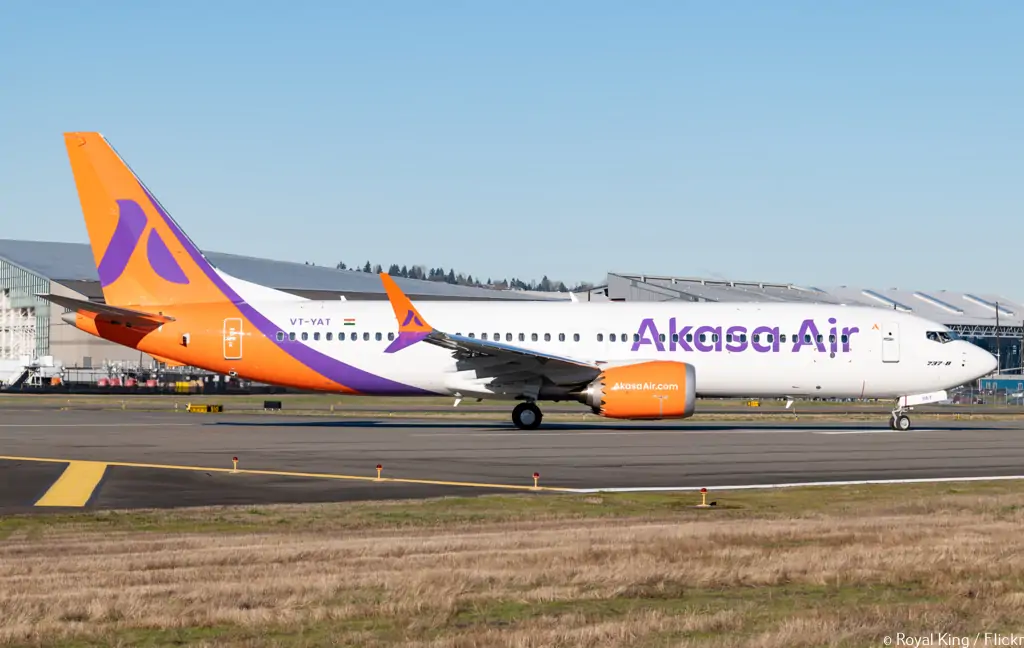
Akasa Air has one of the lowest attrition rates in the industry and expects to have around 3,500 employees by the end of this year, amid reports that scores of cabin crew have put in their papers. Earlier in March, Akasa Air reportedly had said it was planning to take staff strength by another 1,000 employees by March 2024.
Currently, the carrier, which started flying in August last year, operates more than 900 flights every week. It also plans to start international operations by the end of 2023. Akasa Air carried 6.29 lakh passengers in May, and the domestic market share stood at 4.8%.
"At Akasa, we have one of the lowest attrition rates and the fastest-growing network in the industry. Today, we have 3,000 employees and expect to grow to approximately 3,500 employees in 2023," it said in the statement. Akasa Air, the newest entrant in the world's fastest-growing aviation market and backed by late ace investor Rakesh Jhunjhunwala, said in a statement that it was on course to announce another significant three-digit aircraft order by the end of 2023. It expects to have a total of 72 aircraft by March 2027.
The airline, which currently has 19 planes, expects to have a total of 72 aircraft by March 2027. Last month, the airline announced it will acquire four more Boeing 737 Max planes and said it was looking at a three-digit aircraft order by the end of this year. "The speculation on cabin crew resignations at Akasa is factually incorrect and baseless as is the statement on the reduction of capacity. In fact, the reality is quite the opposite," the carrier said on Thursday.
No Cabin Crew Resignation
Vinay Dube, founder and CEO at Akasa Air, denied reports about the airline facing cabin crew resignations and said that the airline has "one of the lowest attrition rates" in the industry. The statement came in denial of reports on social media that some 200 cabin crew have flown out from Akasa Air to other domestic carriers. Rumours are also doing rounds that Akasa was looking to trim its flight network by withdrawing from certain routes, which it is operating at present.
He said that the budget carrier expects to grow to 3,500 employees by 2023-end as compared to 3,000 employees at the moment. "Today, we have 3,000 employees and expect to grow to approximately 3,500 employees in 2023. We operate over 900 flights per week across our network and are on track with our plans to start international operations by the end of this year," said Dube.
Akasa Air to Raise USD 75-100 Million
Akasa Air is looking to raise USD 75-100 million by offering fresh shares to expand its business, a report has said. The airline, founded in December 2021, wants the money to make pre-delivery payments for aircraft, the Economic Times quoted sources as saying. The Mumbai-based airline ordered 72 Boeing 737 Max, of which 19 have been delivered. The move to raise funds will dilute the Jhunjhunwala family’s 46% stake in the airline. The family holds this stake through a trust and despite the potential dilution, it will remain the largest shareholder.
The airline, which commenced operations less than a year ago, has reached out to potential investors, including PE firms and high-net-worth individuals, for raising capital. Any infusion of capital will be based on a USD 650-million valuation. US-based hedge fund PAR Capital Management is one of the names doing the rounds and may subscribe to the shares to add to its existing 6% stake in the low-cost airline. Brokerage firm ICICI Securities said on June 12 the outlook for airlines remained strong due to healthy traffic growth, declining jet fuel prices and ticking ticket values.
As per the report, the airline initially received a startup capital injection of USD 50 million from the Jhunjhunwala family, and with additional gains from aircraft sale and leaseback arrangements, the venture secured a capital base of USD 300-350 million, enabling its successful launch.
Comment