
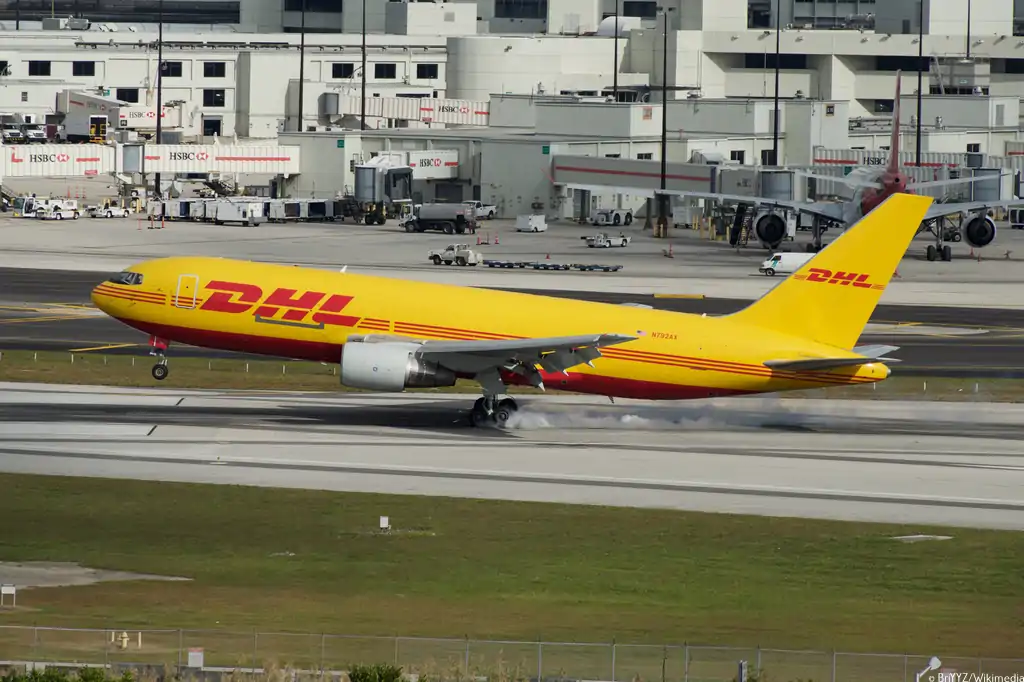
In a significant move aimed at diversifying its aircraft fleet, DHL Air (Austria) recently took delivery of its first Boeing 767-300ER(BDSF) aircraft. This momentous event marked a strategic shift for the Austrian-based cargo carrier as it previously operated an all-Boeing 757 fleet.
A New Addition: OE-LYA
The Boeing 767-300ER(BDSF) in question, bearing the registration OE-LYA and manufacturer serial number (MSN) 21762, is not a fresh-off-the-line aircraft. This 23.5-year-old aircraft was retired by its sister carrier, DHL Air (East Midlands), on September 22, 2023. Following its retirement, the aircraft was ferried to Budapest for maintenance and underwent re-registration in Austria.
On October 13, 2023, OE-LYA was positioned to Leipzig/Halle, from where it embarked on its maiden revenue flight for DHL Austria to Bologna, Italy, on October 16, 2023. These developments signify a seamless transition for this veteran aircraft into DHL Air (Austria)'s operational fold.
DHL Air (Austria): A Brief Overview
DHL Air (Austria) is the Austrian-registered production carrier of DHL Express, which was launched in 2021. The acquisition of the Boeing 767-300ER(BDSF) is a part of the company's strategy to enhance its capabilities and better serve its expanding customer base. Prior to this addition, the airline primarily operated an impressive fleet of eighteen Boeing 757-200(PCF) aircraft.
The introduction of the Boeing 767-300ER(BDSF) represents a significant milestone for DHL Air (Austria), as it enables the carrier to tap into the extended range, larger cargo capacity, and enhanced capabilities of this wide-body aircraft, thus improving its ability to meet the demands of global cargo logistics.

DHL's Global Air Network
DHL's global air operations are extensive and diverse. In addition to DHL Air (Austria), the larger DHL network includes several in-house carriers such as EAT Leipzig (Germany), Air Hong Kong, DHL Aero Expreso (Panama), DHL de Guatemala, and DHL International Aviation Middle East (Bahrain).
Moreover, DHL's aviation presence extends to strategic partnerships, including a 50% stake in AeroLogic, a cargo airline jointly owned with the Lufthansa Group. This diverse portfolio of airlines allows DHL to provide comprehensive and efficient global logistics solutions.
The Broader Context
DHL's decision to diversify the fleet of DHL Air (Austria) by adding a Boeing 767-300ER(BDSF) aligns with the company's commitment to staying at the forefront of the air cargo industry. With the new addition, the carrier can offer an even more versatile and reliable service to meet the increasing demands of its customers.
The Boeing 767-300ER(BDSF) is a proven workhorse in the world of air cargo, known for its efficiency, range, and capacity. It is a strategic asset in DHL's mission to facilitate international trade and deliver shipments around the world efficiently.
Conclusion
DHL Air (Austria)'s recent acquisition of its first Boeing 767-300ER(BDSF) signifies a strategic shift toward diversification and enhanced operational capabilities. This move underscores DHL's commitment to providing efficient and comprehensive logistics services to its customers. It also highlights the company's position as a key player in the global cargo industry, with a diverse and modern fleet to meet the evolving needs of the market.
With Inputs from ch-aviation

Read next

American Airlines, one of the leading carriers in the United States, recently released its third-quarter financial results and adjusted its profit forecast for the year, largely due to the impact of higher fuel prices. The aviation industry has seen a resurgence in travel post-COVID, especially for international destinations. However, despite this recovery, American Airlines, like its peers, has faced challenges, including lower fares compared to the previous year.
Q3 Performance and Profit Forecast
In its Q3 financial report, American Airlines reported a loss of $545 million, equivalent to 83 cents per share. This marked a significant downturn from the same period in the previous year, when the company recorded a profit of $483 million, or 69 cents per share. It's worth noting that this is American Airlines' first loss since the first quarter of 2022. The increase in capacity by 7% from a year ago was one of the contributing factors to this shift in performance.
The carrier's CEO, Robert Isom, acknowledged the challenges the company faced, particularly the significantly higher fuel costs that impacted their earnings in the third quarter. Despite these hurdles, he expressed confidence in the company's ability to navigate the environment, stating, "Our team continues to excel at controlling what we can control, which will make us successful no matter the environment."
When adjusting for the higher costs associated with the pilots' new labor agreement, American Airlines reported earnings of $263 million, equivalent to 38 cents per share. This figure reflects a marginal increase of 0.1% in revenue compared to the year-ago period.
Profit Forecast Revision
In response to the challenges posed by increased fuel prices and other operational factors, American Airlines revised its profit forecast for the full year. The company now expects to earn between $2.25 and $2.50 a share on an adjusted basis for the year. This is a significant decrease from the estimate provided in July, which ranged from $3 to $3.75 per share. The revised forecast, however, is largely in line with analyst expectations.
The carrier also revised its full-year adjusted operating margin forecast, reducing it to 7% from a previous forecast that anticipated a margin as wide as 10%. Additionally, American Airlines estimated that it would break even in the fourth quarter.

Market Expectations vs. Actual Performance
American Airlines' Q3 performance relative to market expectations was a mixed bag. The following points highlight this comparison based on the average of analysts' estimates compiled by LSEG, formerly Refinitiv:
- Adjusted Earnings per Share: The company reported 38 cents per share, exceeding the market expectation of 25 cents.
- Total Revenue: American Airlines' total revenue for the third quarter stood at $13.48 billion, slightly below the expected $13.52 billion.
Challenges and Prospects
While the aviation industry has experienced a rebound in travel demand as the COVID-19 pandemic has waned, challenges remain. Notably, fares have seen a general decrease compared to the previous year. American Airlines has forecasted a decline in unit revenue for the fourth quarter, ranging from 5.5% to 7.5% year-over-year. Unit costs, excluding fuel, are expected to rise between 5% and 7% year-over-year, with capacity increasing by 4.5% to 6.5% compared to the same period in 2022.
Conclusion
American Airlines' recent financial results reflect the complex and evolving nature of the aviation industry in the post-pandemic era. Despite facing challenges, the airline remains committed to adapting to the changing environment and striving for success.
The revision of its profit forecast for the year underscores the impact of higher fuel prices on the industry, and American Airlines' response to this challenge. As the airline industry continues to navigate through various headwinds and tailwinds, stakeholders will closely monitor the strategies employed by carriers like American Airlines to maintain financial stability and adapt to market dynamics.
With Inputs from CNBC
Read next
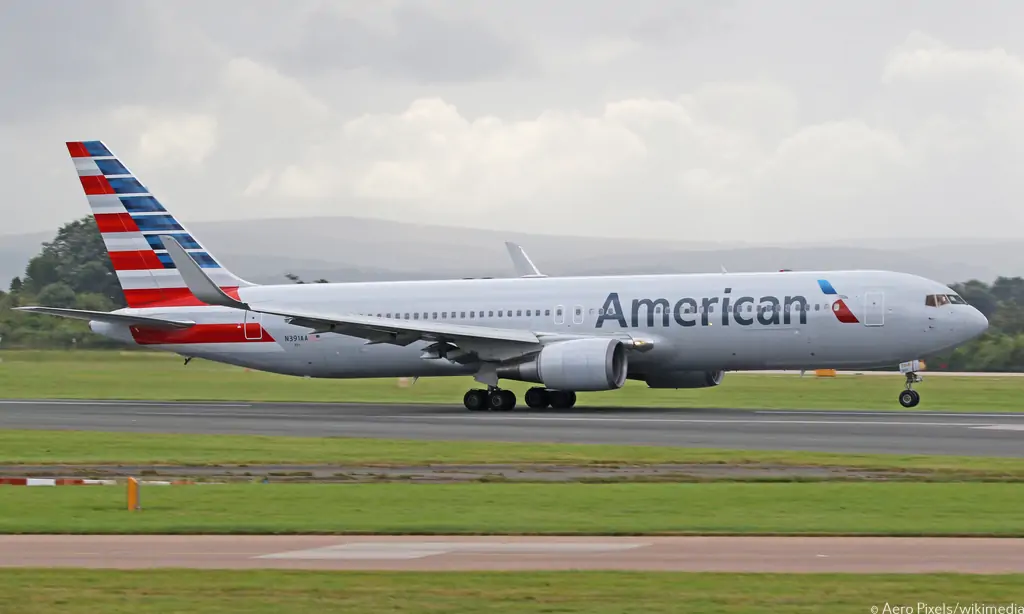
American Airlines' recent firm order for four Embraer E175 jets to operate under its subsidiary, Envoy Air, marks an important milestone in the recovery of the U.S. regional aviation market. This order, announced on October 19, 2023, is the second this year following the purchase of seven E175s in June. The move reflects the growing demand for regional aircraft, with positive implications for both Embraer and the broader aviation industry.
The Significance of American Airlines' Order
The order for four Embraer E175 jets represents a significant step in the revitalization of the regional aviation sector. As the U.S. emerges from the challenges posed by the COVID-19 pandemic, American Airlines' investment underscores the growing confidence in the regional market's resurgence.
Impact on Embraer
Embraer, the Brazilian aircraft manufacturer, saw a boost in its stock price, rising as much as 1.2% following the announcement of American Airlines' order. This is a clear indicator of the positive market sentiment and the belief in Embraer's future success. The company has been diligently working to increase its commercial backlog, and this order demonstrates that their efforts are paying off.

Demand for E1 E-Jets in the U.S.
The order's significance extends beyond just new deliveries. The demand for the first generation of E-Jets (E1) remains robust among U.S. regional carriers. This demand is crucial as Embraer's E1 series continues to serve as the backbone of the regional network in the United States. Santander analysts noted that this order could be indicative of an upward trend in E1 demand.
Envoy Air's Expanding Fleet
With this order, Envoy Air, American Airlines' subsidiary, will increase its E-Jets fleet to more than 150 aircraft by the end of the next year. This expansion highlights Envoy Air's commitment to growth and aligns with the recovery of the U.S. domestic and regional markets, which have faced several challenging years.
Embraer's Growing Backlog
Embraer announced that the order, valued at over $230 million at list price, will be added to its fourth-quarter backlog. Deliveries are expected to take place in the fourth quarter of 2024. This addition to the backlog, along with the recent order from Nigeria's Air Peace and other carriers like Luxembourg's Luxair and Aerolineas Argentinas, reflects Embraer's growing market presence. JPMorgan analysts suggest that Embraer's backlog is expanding and that the "book-to-bill" ratio is approaching 1.0x, alleviating concerns about demand for the E2 and E175 aircraft.
Conclusion
American Airlines' order for four Embraer E175 jets signals a promising recovery for the U.S. regional aviation market. The growing demand for regional aircraft, especially Embraer's E1 E-Jets, suggests a positive outlook for both the company and the broader aviation industry. This investment reaffirms the resilience of the aviation sector and its ability to adapt to the challenges posed by the COVID-19 pandemic, setting the stage for a bright future in the years to come.
With Inputs from Reuters
Read next
Boeing to Provide Funding to Spirit AeroSystems to Stabilise 737 MAX & 787 Production

Radhika Bansal
19 Oct 2023
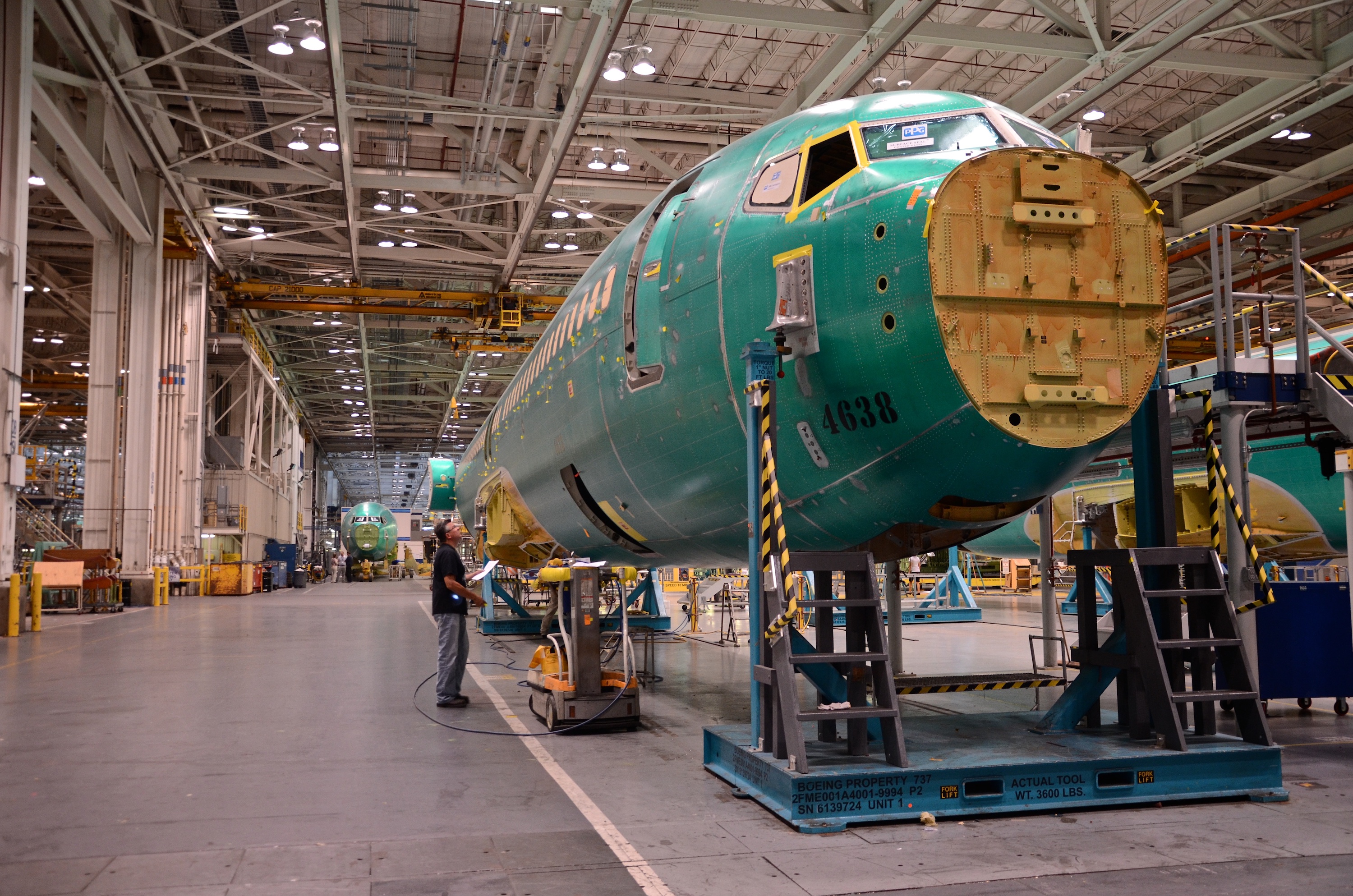
Boeing has reached an agreement with struggling aerostructures firm Spirit AeroSystems under which it will provide a funding boost to stabilise and support future 737 MAX and 787s production rate rises, sending its shares up 23%. Spirit shares closed up at USD 21.16. Boeing closed flat at USD 185.69.
Spirit, one of the industry's major manufacturers of large aircraft structures, has struggled with cash flow problems over the past few quarters and quality issues surrounding the fuselages it makes for Boeing's 737 narrowbody jets. Under the agreement announced on Wednesday, Spirit will get a higher price for near-term deliveries of the forward fuselage and other components it makes for the 787 Dreamliner, while 737 unit prices will be cut from 2026 to 2033.
Spirit AeroSystems says the new collaboration deal strengthens its strategic relationship with Boeing “for the long-term to fulfil operational commitments and airline expectations”. Spirit has been beset by production challenges since the pandemic, most recently a quality issue involving the aft pressure bulkhead impacting 737 MAX fuselages.
Spirit AeroSystems chief executive Patrick Shanahan, who took the helm on an interim basis after the resignation of former chief Tom Gentile at the start of the month, says: “Our collective teams will focus on further generating supply chain performance and resiliency. This united effort to synchronise our production systems will enable greater market responsiveness and delivery assurance.”
Benefits of the Agreement
The agreement between these two companies is a strategic move to improve their financial and operational stability. It is also a testament to the importance of collaboration and strategic partnerships in navigating challenging times.
A Spirit securities filing shows that under the agreement Boeing will provide funding ”for tooling and capital through 2025 for certain planned and potential 737 and 787 rate increases”, a portion of which – USD 100 million – will be received within 10 business days of the deal being finalised. The partners aim to finalise the deal on 17 November.
The agreement establishes new pricing, increasing prices Boeing will pay Spirit for 787 components in the near term and reducing prices paid for 737 MAX shipments delivered from 2026 onward. Those changes should lift Spirit’s revenue by USD 455 million between 2023 and 2025, and reduce its revenue by USD 265 million between 2026 and 2033.
Repeated manufacturing defects in the 737 fuselages Spirit produces for Boeing drove Spirit to a USD 206 million loss in the second quarter of 2023. Components affected by the production failings included 737 vertical fins and fastener holes on aft pressure bulkheads. The issues are forcing Boeing to inspect thousands of holes on some 165 737 Max 8 fuselages that had already been delivered to Boeing.
About Spirit AeroSystems
Spirit AeroSystems is one of the world's largest manufacturers of aerostructures for commercial airplanes, defence platforms, and business/regional jets. With expertise in aluminium and advanced composite manufacturing solutions, the company's core products include fuselages, integrated wings and wing components, pylons, and nacelles. We are leveraging decades of design and manufacturing expertise to be the most innovative and reliable supplier of military aerostructures, and speciality high-temperature materials, enabling warfighters to execute complex, critical missions. Spirit also serves the aftermarket for commercial and business/regional jets. Headquartered in Wichita, Kansas, Spirit has facilities in the U.S., U.K., France, Malaysia and Morocco.
Read next
Akasa Air Receives Nod to Operate Flights to Riyadh, Jeddah, Doha & Kuwait
Radhika Bansal
19 Oct 2023
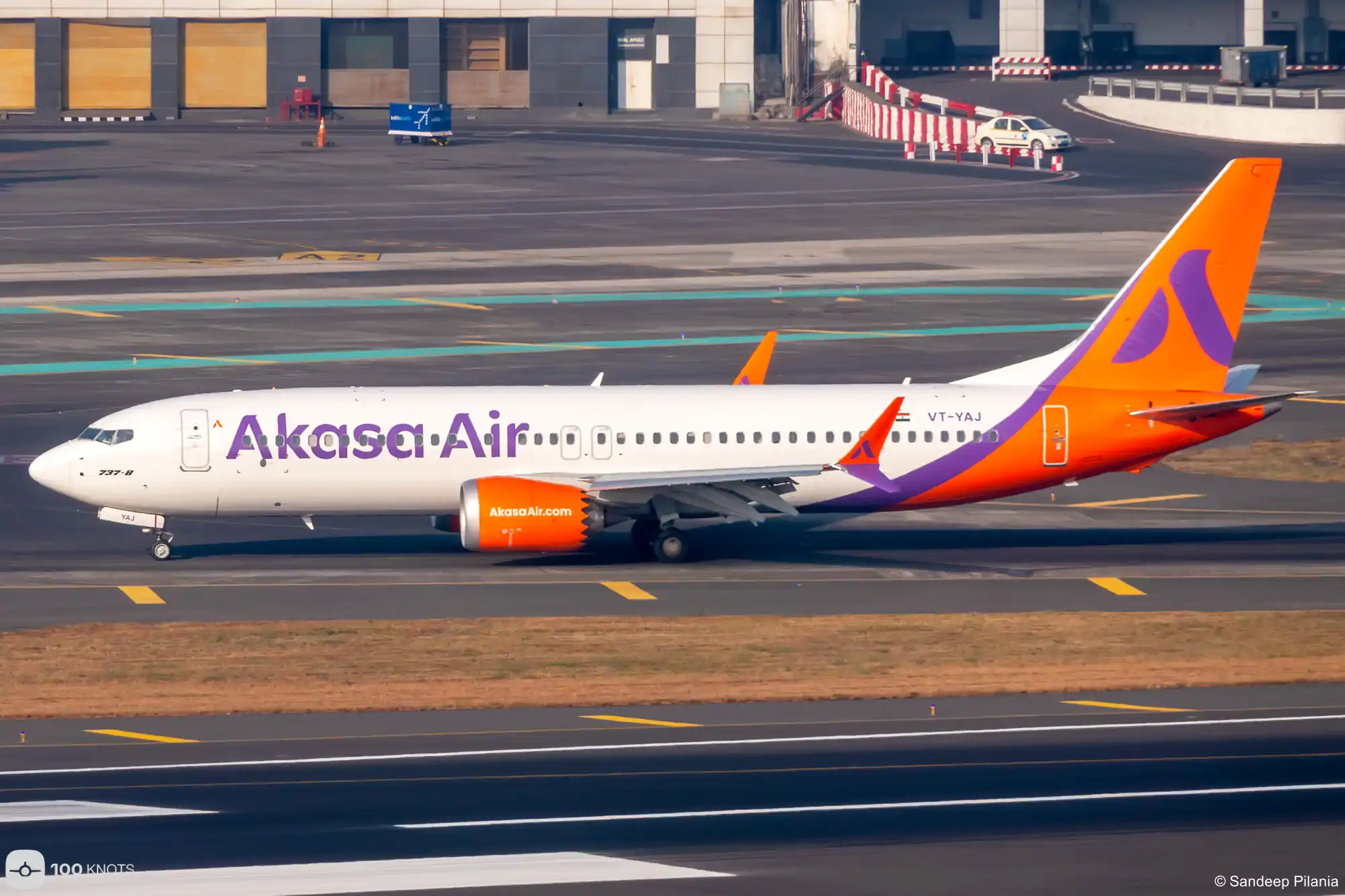
Akasa Air, which is in a "very exciting phase", has received approval from the government to operate flights to Riyadh, Jeddah, Doha and Kuwait, and expects to start international services "soon enough", according to its chief Vinay Dube.
Currently, the airline which completed its first year of operations in August, has a fleet of 20 Boeing 737 MAX aircraft and 2 more planes are expected to be inducted into its fleet by the end of this year. Asserting that Akasa Air is in a "growth mode" with strong financials, Dube said the airline will announce a triple-digit aircraft order in 75 days or by the end of this year.
"We have just been given traffic rights for Riyadh, Jeddah, Doha and Kuwait. The process will take time... we will let the process unfold. We continue to be in a very very exciting phase in our lives now. We are doing well financially. We have a good cash position," he said in an interview.
The carrier has received approval from the civil aviation ministry for rights to operate flights to Riyadh and Jeddah (Saudi Arabia), Doha (Qatar) and Kuwait. Now, the airline will work with the foreign governments concerned for various other approvals to start international operations and that will take some time.
On when the first international flight is likely to commence, the Akasa Air Founder and CEO said it will be a little difficult at this point for the airline to nail down the timeline. "The Indian government is extremely efficient but then we have to work with various foreign governments, (in) three different countries. Timelines for approvals from these countries will vary... It is soon enough," he said.
Akasa Air is in the process of recruiting 110 pilots in the coming days and increasing connectivity by 30-35% by the end of the current fiscal by improving weekly flight operations. The abrupt resignation of pilots over the months had hit flight operations, with cancellation rates hitting 1.17% in August, which later decreased to 0.37% in September, according to data from the Directorate General of Civil Aviation (DGCA).
While Akasa Air suspended its Bengaluru-Chennai flight services in June because of the ‘network optimization process’, the airline has temporarily cut its operations between Bengaluru and Hyderabad given the ‘capacity’ of pilots following the abrupt resignations. Many flyers were left inconvenienced over the past several weeks with the airline cancelling flight services on some routes, including Benglauru-Chennai and Bengaluru-Hyderabad. Some customers also took to social media, complaining that the airline had charged them the cancellation fee when the cancellation was done by the airline itself.
Akasa Air currently operates around 700 weekly flights and flies to 16 cities. In September, the airline carried 5.17 lakh passengers and had a domestic market share of 4.2%, according to the latest official data.
To a query about rumours that the airline is facing funding issues, Dube said, “We are cash flow positive... we continue to add to our reserves. We don't need funding to place a triple-digit order in the next 75 days. We also hear rumours about the Jhunjhunwala family leaving which are absurd and the family says that they are invested with us for the long run," he added.
Akasa Air’s Pilot Issue
Recently, Akasa Air faced pilots' issues after some of them left without serving the required notice period which resulted in the cancellation of various scheduled flights. The airline has moved the court against those pilots. According to a statement by the airlines, Akasa has a current strength of over 450 pilots and 20 aircraft. In addition, the airline has 110 signed commitments from pilots who are in various stages of their notice period and will join them upon completion.
When asked about the issue, Dube said, “The matter is behind us and really now, we are squarely in growth mode". While the airline did encounter some challenges, particularly related to pilot resignations that led to the suspension of certain routes, Dube reassured that these issues have been effectively resolved with the cooperation of relevant authorities.
Akasa Air presently has a pilot force of 450 and anticipates the addition of another 120 pilots over the next 2-4 months. As the festive season approaches, the airline is optimistic about heightened demand, driven in part by its affordable airfare offerings.
India is one of the fastest growing civil aviation markets in the world and domestic airlines have placed significant plane orders as they look to expand their operations.
In June, the airline ordered four additional Boeing 737-8 jets. It was in addition to the order for 72 aircraft that was placed with Boeing. Together, Akasa Air will have 76 aircraft, including 23 Boeing 737-8s and 53 Boeing 737-8-200s, mostly by mid-2027.
Read next
Embraer and Royal Jordanian Airlines Forge Strategic Partnership to Support E2 Fleet
Abhishek Nayar
19 Oct 2023
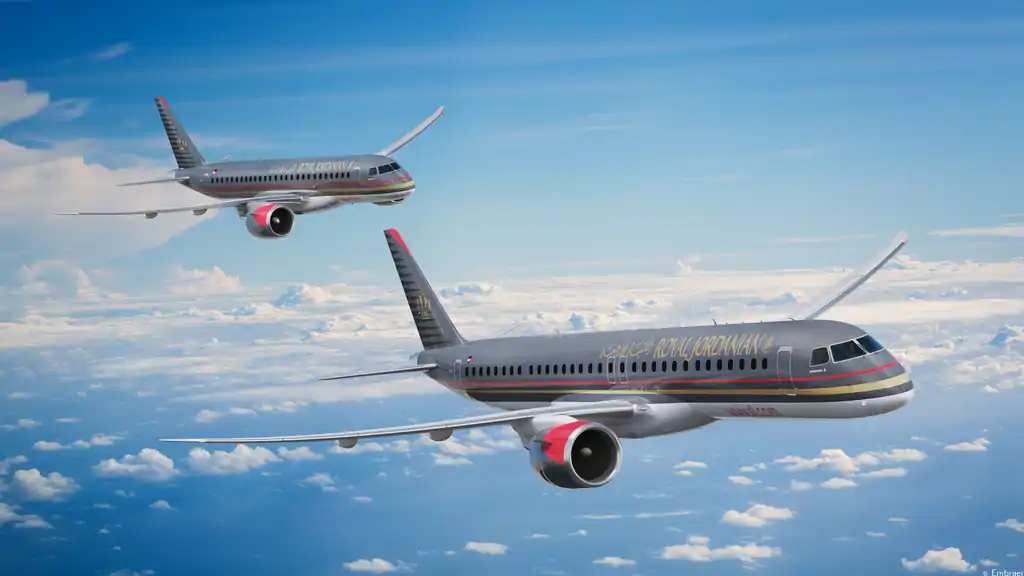
Amidst the aviation industry's ever-evolving landscape, Embraer, the renowned Brazilian aerospace company, has inked a groundbreaking multi-year agreement with Royal Jordanian Airlines (RJ), signaling a new era of partnership between the two companies.
The deal focuses on offering comprehensive support for Royal Jordanian's fleet of eight E190-E2 and E195-E2 jets through Embraer's Pool Program. This initiative will extend to encompass a wide range of repairable components for the airline's burgeoning E2 fleet, further strengthening the existing cooperation between the two entities.
Embraer's Global Reach Through the Pool Program
Embraer's Pool Program, a stalwart in the aviation industry, already serves over 60 airlines worldwide, underlining its proven track record of providing efficient, cost-effective, and practical solutions. The program is a comprehensive service offering that extends a helping hand to airlines by ensuring a seamless and cost-efficient operational experience. Through this initiative, airlines can effectively manage their aircraft component inventory, reduce maintenance costs, and maximize the operational readiness of their fleets.
Royal Jordanian Airlines' Endorsement of Embraer
The CEO and Vice Chairman of Royal Jordanian Airlines, Samer Majali, expressed enthusiasm regarding the strengthened partnership with Embraer. Majali highlighted the enduring relationship between the two entities and their collective efforts to ensure the smooth entry into service of the E2 jets.
"For the new generation E2 jets, we have been working with Embraer on all the supporting functions that go into having a smooth entry into service targeted by the end of this year," Majali stated. He further elucidated that the pool program agreement was seen as a natural fit that provides a cost-effective and practical parts solution, accompanied by Embraer's invaluable expertise and support.
Embraer's Commitment to Royal Jordanian Airlines
Embraer, a global leader in the aviation industry, expressed its deep commitment to this strategic partnership with Royal Jordanian Airlines. Carlos Naufel, the President and CEO of Embraer Services & Support, voiced his excitement about this new chapter in their relationship, particularly regarding the E2 family of aircraft.
Naufel underlined that the Pool Program would serve to enhance the entry into service of RJ's E2 fleet, thereby helping to reduce costs in repair and inventory, all the while leveraging Embraer's extensive global footprint. This renewed collaboration exemplifies Embraer's dedication to offering world-class support and services to its customers.
A Boon for Royal Jordanian Airlines
The Pool Program by Embraer is set to be a significant boon for Royal Jordanian Airlines. As they continue to expand their fleet with the E2 jets, the airline will benefit from the robust and established support network provided by Embraer. This partnership will ensure that RJ's operations run efficiently, helping them reduce maintenance costs and minimize aircraft downtime.
Conclusion
The agreement between Embraer and Royal Jordanian Airlines marks a pivotal moment in the aviation industry. By supporting RJ's growing E2 fleet, the Pool Program by Embraer demonstrates its value as a trusted and cost-effective solution for airlines looking to maximize the efficiency of their aircraft operations.
With the end-of-year target for the entry into service of Royal Jordanian's E2 fleet approaching, the collaboration between these two companies is poised to set new standards for aircraft support services in the industry. This partnership serves as a testament to the enduring bonds between aviation industry leaders and their commitment to delivering excellence to their customers.
With Inputs from Embraer
Comment