

Aviation safety continues to face mounting challenges as global flight volumes recover to pre-pandemic levels and beyond. The International Civil Aviation Organisation's (ICAO) 2025 Safety Report reveals concerning trends that demand immediate attention from industry stakeholders worldwide!
With 95 accidents involving scheduled commercial flights in 2024—a significant increase from 66 in 2023—and a rising global accident rate of 2.56 accidents per million departures compared to 1.87 in 2023, the aviation industry must confront emerging risks!
This article examines the current state of aviation safety, analyses key risk factors including turbulence, Global Navigation Satellite System interference, and wildlife strikes, and explores initiatives being implemented to address these challenges.
The analysis draws from ICAO's comprehensive 84-page safety report and industry data to provide insights into regional variations, technological solutions, and the critical importance of international cooperation in maintaining aviation safety standards.

Current Aviation Safety Statistics
The latest ICAO safety data presents a complex picture of global aviation safety trends. The Safety Report 2025 — State of Global Aviation Safety details 95 accidents involving scheduled commercial flights, up from 66 in 2023. More concerning, 10 of these accidents were fatal, resulting in 296 deaths compared to 72 the year before. The global accident rate also rose to 2.56 accidents per million departures, from 1.87 in 2023.
However, industry experts caution against drawing hasty conclusions from these statistics.
AirlineRatings CEO Sharon Petersen noted that excluding the anomalous low-traffic years of 2020 and 2021 reveals a more positive long-term trend when comparing data from 2019 to 2023 and onwards. Between 2019 and 2024, the highest number of accidents was recorded in 2019, with 114 accidents, suggesting that despite the increase in 2024, the overall trajectory remains relatively stable.
Regional Safety Performance Analysis
Regional analysis reveals significant variations in safety performance across different parts of the world. The Asia-Pacific and Europe/North Atlantic regions each recorded 3 fatal accidents during the reporting period, while one event in South America resulted in 62 fatalities. The Asia-Pacific region had the highest overall fatality count, followed by South America and the European and North Atlantic regions.
This regional disparity highlights the importance of tailored safety approaches that account for local operational challenges, infrastructure limitations, and regulatory frameworks.
Emerging Risk Factors
Turbulence: The Leading Cause of Serious Injuries
ICAO's analysis reveals that turbulence was responsible for almost 75% of serious injuries in 2024, making it a critical safety concern.
This trend is particularly alarming given scientific research indicating that clear air turbulence is likely to increase in both intensity and frequency due to climate change and strengthened jet streams.
The aviation industry is responding with advanced technological solutions. The global rollout of Automatic Dependent Surveillance–Broadcast (ADS-B) version 3.0 will enhance real-time exchange of turbulence data, enabling aircraft to avoid high-risk areas. Additionally, ICAO is developing the Hazardous Weather Information Services (HWIS), which will use System Wide Information Management (SWIM) technology to provide timely, harmonised short-term forecasts for hazardous weather phenomena.
Wildlife Strikes: A Persistent Ground-Level Threat
Bird strikes emerged as the leading cause of fatalities in 2024, with wildlife strikes remaining a significant hazard, especially during takeoff and landing phases. Between 2016 and 2021, 24% of strikes occurred during takeoff and 46% during descent, approach, or landing roll—critical moments when aircraft are most vulnerable.
ICAO has strengthened its wildlife strike reporting system, with national focal points now established in 66% of states. Over 273,000 wildlife strike reports were received during the 2016-2021 period, representing a 280% increase from the previous eight years, indicating improved reporting mechanisms and awareness.
Global Navigation Satellite System Interference
The vulnerability of Global Navigation Satellite Systems (GNSS) has emerged as a critical safety concern. GNSS provides positioning, navigation, and timing information, serving as the backbone of modern aviation, but its low transmission power makes it susceptible to interference through jamming and spoofing attacks.
ICAO has been developing recommendations and guidance on GNSS radio frequency interference since 2003, recognising that while complete resolution in the short term is unlikely, effective mitigation strategies are essential. The organisation encourages member states to anticipate potential disruptions, regulate through clear guidelines, and maintain networks of conventional navigation aids to ensure uninterrupted air navigation services.

Technological Solutions
Enhanced Weather Forecasting Systems
The World Area Forecast System (WAFS), operated by forecast centres in London and Washington, is implementing advanced numerical weather forecasting capabilities. From November 2025, next-generation WAFS forecasts will offer finer horizontal, vertical, and temporal resolution for adverse en-route weather, including new products that indicate the likelihood of clear air turbulence and mountain-induced turbulence separately.
Global Aeronautical Distress and Safety System (GADSS)
As of January 1, 2025, all new aircraft must be equipped with technology capable of detecting distress situations and automatically transmitting the aircraft's position at intervals of one minute or less. This represents a major milestone in aviation safety, ensuring rapid location identification within six nautical miles after serious events such as total loss of engine thrust or unusual airspeed conditions.
Runway Safety Enhancements
ICAO has amended Annexe 14 to include runway distance remaining signs, providing real-time runway distance data to help pilots make critical decisions regarding go-arounds, braking adjustments, and rollout optimisation. This initiative addresses the persistent challenge of runway excursions and incursions identified as leading causes of aviation incidents.
Data Reporting and Investigation Improvements
The importance of timely accident investigation and reporting cannot be overstated. ICAO data shows significant improvement in final report publication rates, with 76% of reports published for investigations completed between 2017 and 2022, compared to only 41% for accidents between 1990 and 2016.
The Accident/Incident Data Reporting System (ADREP), established in 1976, continues to serve as the global repository for safety data, using a harmonised taxonomy to enable effective information exchange and analysis. This systematic approach to data collection and sharing enables the identification of emerging trends and the development of targeted safety interventions.
Civil-Military Cooperation
The increasing importance of civil-military cooperation in aviation safety has become particularly evident in the current global security environment. ICAO promotes dynamic airspace allocation models, such as the flexible use of airspace (FUA) concept, which allows restricted military zones to be opened for civilian flights during low activity periods.
Coordination between civil and military authorities has proven essential during armed conflicts for issuing Notices to Airmen (NOTAMs), rerouting flights, and managing complex airspace scenarios. This cooperation is becoming increasingly critical as geopolitical tensions affect air traffic routing and safety considerations.
Mental Health and Human Factors
Marking the 10th anniversary of the Germanwings accident in March 2025, ICAO continues to prioritise mental health in aviation through its Mental Health Working Group, which meets monthly to share best practices and address safety-related mental health issues. This focus on human factors recognises that technological solutions alone cannot address all safety challenges.
Future Challenges
ICAO is developing comprehensive frameworks to integrate unmanned aircraft systems and advanced air mobility vehicles into conventional airspace. This represents one of the most significant challenges facing aviation safety in the coming decade, requiring careful balance between efficiency, safety, and national sovereignty in increasingly complex airspace environments.
The integration of drones and advanced air mobility solutions necessitates new safety protocols, traffic management systems, and regulatory frameworks. As airspace becomes busier and drone operations increase exponentially, this work is becoming increasingly critical for maintaining overall aviation safety standards.
Bottom Line
The implications of aviation safety extend far beyond the industry itself. It affects global economic connectivity, emergency response capabilities, and public confidence in air transportation.
The identification of turbulence as the leading cause of serious injuries and the growing threat of GNSS interference highlight how climate change and geopolitical tensions are creating new safety paradigms that require innovative solutions.
Moving forward, the success of aviation safety initiatives will depend on sustained international cooperation, adequate funding for safety infrastructure, and the industry's ability to adapt to rapidly evolving technological and operational environments. The integration of unmanned aircraft systems and advanced air mobility vehicles represents both an opportunity and a challenge that will define aviation safety for the next generation.
Only through continued collaboration between international organisations, national regulators, industry stakeholders, and technology providers can the aviation industry maintain its position as one of the world's safest modes of transportation.

Read next
Are You Getting Paid to Smile? Why Air Canada Cabin Crew Took Their Case to the Terminals

Abhishek Nayar
12 Aug 2025
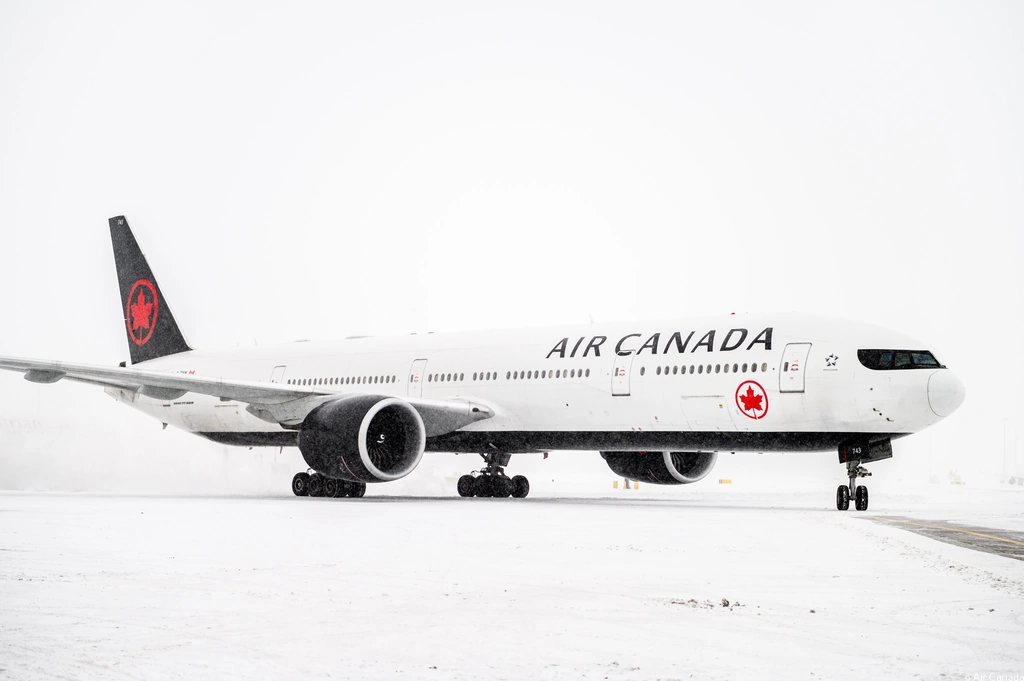
On August 11, 2025, Air Canada flight attendants took their uniforms and their message to the public, staging a National Day of Action at major airports across Canada to highlight what they call the rampant abuse of unpaid work and the untenable wages facing junior crew members. The actions were peaceful, visible, and loud enough to make a negotiating table look very small in comparison.
What happened today at airports
Crew gathered at Toronto Pearson, Montreal Pierre Elliott Trudeau, Vancouver International and Calgary International airports in coordinated pickets and media actions. The demonstrations, timed to coincide with a critical bargaining window, were designed to raise public awareness about duties that are not paid under the current contract like boarding and deplaning assistance, many safety related checks, and long airport waits that do not count as paid time. Reports say the actions did not disrupt flights but drew large crowds and strong media attention.
Why this is boiling over now
Flight attendants represented by the Canadian Union of Public Employees or CUPE say the present contract, which expired on March 31, 2025, left crew squeezed by rising costs and inflation over the past 10 year period. Junior flight attendants working full time can be earning as little as one thousand nine hundred and fifty two dollars a month before taxes according to union figures, an amount CUPE describes as poverty pay and in many cases below provincial minimum living wage calculations. Those figures helped push members to authorize strike action in an overwhelmingly one sided vote earlier this month.
The bargaining backdrop and the strike clock
CUPE reports that more than ten thousand Air Canada flight attendants have the union behind them; members gave a near unanimous strike mandate which allows the union to issue a 72 hour strike notice as early as August 16 if talks fail to produce an agreement. Union leaders say their goal is simple and framed plainly by president Wesley Lesosky: pay workers for all the hours they work and pay wages that allow a life with dignity. Air Canada and union negotiators continue to meet and say they prefer a negotiated outcome over disruption.

What the union is asking for in plain language
CUPE wants two headline changes. First, they want all time that flight attendants are required to be at work to be paid. That includes many airport based activities that the union says are de facto unpaid labor. Second, they want changes to base pay for junior crew that reflect the cost of living and the skills and safety responsibilities flight attendants carry. The union points to healthy airline profits in recent years as a reason the company can afford a fair contract.
Why passengers should care beyond the obvious
Flight attendants are the onboard safety net. When they say they are working unpaid hours that include safety critical tasks, it is not just a labor issue. It is also a safety and operational issue. Moreover, if junior workers cannot afford housing or turn to food banks, retention and morale suffer which can ripple into service reliability for travelers. The pickets today were as much about dignity as they were about dollars.
How this could play out over the next few days
If the union issues a 72 hour strike notice, airlines typically prepare contingency plans while calling for last minute talks. A strike during the busy late summer travel period would cause real disruption for passengers and complexity for the airline. Both sides have incentives to avoid that, but timing and trust are fragile in high stakes bargaining. For now the union is using public pressure to push for real movement at the table.

Voices from the picket line
Members who spoke with reporters emphasized pride in their work and frustration at not being fairly compensated for the full scope of their duties. “We put safety first,” said union leadership in public statements, “but the days of doing it for free or for poverty wages must end.” That language echoed across picket signs, interviews, and social posts as the National Day of Action unfolded.
The optics for Air Canada
Air Canada can try to frame this as a difficult cost negotiation, or it can treat this as a reputational moment. The company has repeatedly said it values its people and wants to reach a deal that supports long term growth. From the union perspective, the optics of a carrier showing strong profits while crew cite poverty level pay is a powerful story to sway the public and political attention.
TL; DR
- Air Canada flight attendants staged a National Day of Action on August 11, 2025 at major Canadian airports to protest unpaid work and low pay.
- The crew are represented by CUPE and more than ten thousand members gave an almost unanimous strike mandate earlier this month
- The union says junior full time flight attendants can earn about $1,952 per month before taxes and that many required duties are unpaid.
- Pickets took place in Toronto, Montreal, Vancouver and Calgary and did not disrupt flights, while negotiations continue.
- If talks fail, the union can issue a 72 hour strike notice as early as August 16 which could cause major travel disruption.
With Inputs from CUPE
Read next

Imagine a crowded control room in a fast growing airline. Pilots are swapping offers across borders like cricket cards. New Delhi takes the problem to the UN aviation body asking for a code of conduct to slow the shuffle. The pilot’s union says stop right there this smells like labor control not sensible policy. Sparks fly.
What New Delhi put on the ICAO table
India submitted a working paper to the International Civil Aviation Organization asking member states to consider a model code of conduct on the cross border movement of skilled aviation workers. The paper paints a picture of foreign carriers repeatedly recruiting Indian pilots cabin crew and engineers without adequate notice and in ways that disrupt domestic operations and planned growth. The submission did not include detailed enforcement mechanisms.
Why India says it needs to act
India’s aviation sector is growing rapidly and the government sees a stable skilled workforce as essential to that expansion. The working paper argued that repeated departures of trained staff force airlines to spend time and money on replacement and on training new recruits which could slow fleet expansion and service scaling. The paper referenced projections and growth targets that underline how acute the talent need could become in the coming decade.
Why the pilot’s union fired back
The Airline Pilots Association of India or ALPA India called the proposal a misdiagnosis of the problem. In a letter to Civil Aviation Minister Ram Mohan Naidu the union argued that the real reasons pilots leave are domestic issues such as poor working conditions job insecurity limited career growth and inconsistent pay structures. The union warned that targeting outbound employment via an international code risk creating conditions akin to bonded labor and runs counter to international norms on workforce mobility. ALPA India urged the government to withdraw the working paper and to hold urgent consultative talks with stakeholders.
The rules at home that matter here
At present Indian regulations require pilots to give a minimum of six months’ notice and to obtain a no objection certificate from their airline before joining a rival. Those requirements are already being challenged in court by pilot bodies who argue they restrict labor mobility. Any international code that echoes or strengthens such restrictions would amplify domestic controversy.

What a global code could actually look like and why that matters
Because the working paper did not specify enforcement details a model code could take many forms. It might ask countries to agree to common notice periods prior consultation between recruiting airlines and sending airlines or guidelines on recruiting during critical operational windows. But without careful design such rules could be used by employers or states to limit individual freedoms in the name of planning and stability. That tension between orderly growth and individual rights is the heart of the dispute.
Real world trade offs and unexpected side effects
- Orderly growth versus free movement If well drafted a code could reduce last minute disruptions by encouraging advance coordination. If poorly drafted it could become a tool to lock workers in place.
- Training costs and absorptive capacity India trains many professionals who then take jobs abroad. A code that only restricts movement will not solve root causes of migration such as pay and working conditions. ALPA India says fixing those root causes would be a more constructive route.
- International precedent and reciprocity Once a state asks for cross border hiring limits other countries could raise similar demands across different sectors creating complex diplomatic friction.
A practical road map that might actually work
If the goal is to keep aircraft flying and careers healthy the policy toolbox needs both domestic fixes and international cooperation. Possible elements include
- Improve pay transparency and create clearer career ladders so talent has reasons to stay.
- Create agreed notification protocols between airlines for large scale recruitment drives so airlines can plan and recruit responsibly.
- Make training partnerships and retention bonuses part of a national workforce plan so investment in training remains sustainable.
- Use the ICAO forum for voluntary best practice sharing rather than binding rules that could restrict individual mobility.

What to watch next
- Will New Delhi clarify the working paper with implementation details or withdraw it for a consultative rewrite?
- Will pilots unions pursue court challenges to domestic notice and no objection certificate rules and will that shape India’s bargaining position internationally?
- Will ICAO members favor voluntary principles on ethical recruitment or push for a binding code that crosses into labor law territory?
Why this debate matters beyond aviation
This is not just about who flies where. It is a test case for how fast growing economies protect national infrastructure while respecting individual rights in a global labor market. If governments lean too hard on restrictions, they risk international pushback and domestic unrest. If they do nothing the cost of rapid turnover could slow growth and frustrate passengers and investors.
TL; DR
- India asked ICAO to consider a code of conduct on cross border hiring of aviation staff to tackle what it calls rampant poaching.
- ALPA India slammed the move calling it a misdiagnosis and warning it could create conditions similar to bonded labor.
- India currently requires pilots to give six months’ notice and a no objection certificate to leave which is under legal challenge.
- A balanced solution should combine domestic labor reforms on pay and working conditions with international best practice on responsible recruitment.
- Watch for whether the working paper is clarified withdrawn or becomes a platform for voluntary guidelines rather than binding restrictions.
With Inputs from Reuters
Read next
American Airlines' New Airbus A321XLR: A Game-Changer for Long-Haul Operations

Pragya Chauhan
08 Aug 2025

American Airlines is preparing to revolutionise its route network with the introduction of the Airbus A321XLR, marking a significant milestone in the evolution of single-aisle aircraft capabilities. With 50 aircraft on order and first delivery expected in 2025, this next-generation aircraft represents America's strategic vision for opening new markets and enhancing operational efficiency.
The A321XLR: Redefining Single-Aisle Capabilities
The Airbus A321XLR (Xtra Long Range) represents a breakthrough in narrowbody aircraft design. Flying up to 4,700 nautical miles with a maximum seating capacity of 244 passengers, the aircraft extends the reach of single-aisle jets into traditional widebody territory. This range of up to 8,700 kilometres allows the aircraft to carry a full payload over distances usually reserved for widebody aircraft.
The aircraft achieves this remarkable range through several key innovations. The key structural addition is the rear centre tank with a capacity of 12,900 litres of fuel, which extends the A321XLR's maximum range to 4,700 nautical miles or 11 hours of flying time. Beyond range, the XLR delivers impressive efficiency gains, offering 30% lower fuel burn per seat compared with previous generation competitor aircraft, as well as reduced NOx emissions and noise.

American Airlines' Strategic Vision
American Airlines was the first US-based airline to order the A321XLR type, signalling its commitment to pioneering new route possibilities in the American market. The airline's initial deployment strategy focuses on premium transcontinental services, with plans to use the A321XLR on premium transcontinental routes currently served by its A321T.
However, America's ambitions extend far beyond domestic operations. As more XLRs come online, the Dallas-based carrier will explore flying the aircraft to Europe, as well as to Latin America from Miami. This expansion capability opens unprecedented opportunities for Americans to serve previously uneconomical routes with a more efficient aircraft type.
Delivery Timeline and Challenges
The path to service entry has faced some obstacles typical of new aircraft programs. America expects its first delivery at some point in 2025, amid production delays at Airbus. More recently, American Airlines is set to take delivery of its first Airbus A321XLR on July 29, 2025, but due to delays in seat deliveries and certification, the aircraft will initially be stored in Czechia.
Despite these initial hurdles, American remains committed to its A321XLR program. The Fort Worth, Texas-based legacy carrier and Airbus plan to deliver 50 examples between 2025 and 2029, providing a steady stream of new capacity for route expansion.
Airlines Already Operating the A321XLR
American Airlines won't be pioneering the A321XLR alone. Spanish flag carrier Iberia became the world's launch operator in October 2024, taking delivery of the first A321XLR. Iberia initially deployed the aircraft on European routes before launching its first transatlantic service from Madrid to Boston in November 2024, followed by a Washington-Dulles service.
Wizz Air, the first ultra-low-cost carrier to order the XLR, expects its first aircraft in March 2025 for a new seven-hour daily service from London Gatwick to Jeddah. The budget carrier plans to configure the XLR with 239 seats in an all-economy layout, with early routes also including Milan to Abu Dhabi.
Other major operators joining the A321XLR club include Qantas, which expects its first delivery in April 2025 to replace Boeing 737s, and Aer Lingus, which has also placed orders for the type. These early adopters are proving the aircraft's versatility across different business models and route networks.

Market Impact and Proven Success
The A321XLR represents a significant shift in the aviation landscape, with early operations already demonstrating its potential. Iberia's successful launch of transatlantic services from Madrid to Boston and Washington proves the aircraft's capability to operate profitably on routes previously requiring larger aircraft. Wizz Air's planned London Gatwick to Jeddah service promises fares up to 70% lower than traditional carriers, showcasing the aircraft's ability to democratise long-haul travel.
The aircraft's versatility is being proven across different business models—from Iberia's premium transatlantic services with a J14Y168 configuration to Wizz Air's high-density 239-seat all-economy layout, demonstrating that the A321XLR can adapt to various market segments and operational strategies.
As American Airlines prepares to welcome its first A321XLR into service, the aviation industry watches with keen interest. The aircraft's success could reshape route planning strategies across the industry, opening new possibilities for point-to-point long-haul services that were previously economically unfeasible. For Americans, the A321XLR represents not just operational efficiency, but a pathway to growth in an increasingly competitive aviation market.
Read next

On June 12 2025, Air India Flight 171—a Boeing 787-8 en route from Ahmedabad to London—plunged into a college hostel shortly after takeoff, killing 260 people (including 19 on the ground). In the days that followed, shockwaves rippled through the cockpit: on June 16 alone, 112 pilots called in sick (51 commanders and 61 first officers) as many grappled with post-traumatic stress.
To help its flying staff and their families process that collective trauma, Tata Group–owned Air India has unveiled a dedicated emotional and mental well-being mobile app.
A Toolkit for Mind and Mood
Designed by experts in psychology and psychiatry, the app gives users instant access to over 600 self-care techniques—ranging from guided breathing exercises to sleep-support routines. Beyond these modules, crew members can:
- Book one-to-one therapy or psychiatry sessions with professionals selected to match their comfort and needs
- Journal thoughts and emotions, track mood swings and personal goals over time
- Chat with an AI-powered companion for coping tips, stress-busting prompts, or simply an empathetic ear
Booking Comfort One Tap Away
Rather than a one-size-fits-all rollout, the platform’s booking engine lets users choose therapists or psychiatrists based on language preference, specialty (e.g., trauma, anxiety, burnout), and even session format (video or in-person). This personalization aims to reduce the stigma around seeking help, especially in a profession where admitting vulnerability can feel career-jeopardizing.
Government And DGCA Support
When members of Parliament pressed the government about the spike in pilot sick leaves, it downplayed the trend as “a minor increase,” even as regulators moved to tighten mental health safeguards. A 2023 DGCA circular already mandates that airlines train flight crews and air traffic controllers to identify and address early warning signs of psychological distress. In July 2025, Minister of State for Civil Aviation Murlidhar Mohol reiterated this directive—urging carriers to set up confidential, non-punitive Peer Support Programmes so crews can lean on each other during crises.
Charting A Healthy Flight Path
With fatigue, isolation, and high-stakes decision-making baked into every flight, aviation is finally confronting the invisible toll it takes on its people. By embedding self-care tools, professional counselling and peer networks into a seamless app experience, Air India is betting that prevention—and early intervention—can turn future turbulence into smoother skies for its most valuable passengers: the pilots and cabin crew themselves.
TL; DR
- Air India launched a dedicated mental well-being app after the June 12 Ahmedabad crash, which killed 260 people and triggered a wave of pilot sick leaves.
- The app features 600+ expert-designed self-care techniques, one-to-one therapy and psychiatry bookings, journaling, mood and goal tracking, plus an AI chatbot.
- On June 16, 112 pilots (51 commanders, 61 first officers) reported sick, prompting regulatory scrutiny and a government statement downplaying the spike.
- A 2023 DGCA circular requires airlines to train crews on mental health; in July 2025, MoS Murlidhar Mohol urged implementation of confidential Peer Support Programmes.
- Industry experts view this initiative as a landmark step toward proactive, personalized mental health care for aviation professionals.
Read next

In the complex ecosystem of commercial aviation, few regulatory mechanisms carry as much financial weight and strategic importance as airport slots.
At London Heathrow (LHR), the world's most slot-constrained airport, the time-specific permissions to operate flights have evolved into assets worth tens of millions of dollars. IndiGo's successful acquisition of Heathrow slots represents not just an operational milestone but a testament to the value and scarcity of access to one of the world's premier aviation hubs!
Understanding Airport Slots
An airport slot represents a specific authorisation granted to an airline to conduct a take-off or landing at a particular airport within a designated time window. While this may sound like routine administrative procedure, at capacity-constrained airports like London Heathrow (LHR), slots become the primary gateway controlling market access and competitive positioning.
Airport slots are categorised into 3 levels under the Worldwide Airport Slot Guidelines (WASG).
Level 1 airports operate without slot restrictions
Level 2 airports may require schedule adjustments during peak periods
Level 3 airports—where demand significantly exceeds capacity—require full slot coordination for all scheduled flights
London Heathrow operates as a Level 3 slot-coordinated airport, meaning every single commercial flight requires a specific slot allocation.
At Heathrow, slots are allocated through Airport Coordination Limited (ACL), which manages the complex process of distributing approximately 480,000 annual slot movements across summer and winter scheduling seasons. The allocation process follows established priority rules. Grandfather rights protect existing operators while reserving limited opportunities for new entrants and route development.

The 80/20 Rule: Use it or Lose it
Central to slot management is the internationally recognised "use it or lose it" principle, commonly known as the 80/20 rule.
This regulation requires airlines to utilise their allocated slots at least 80% of the time during a scheduling season to retain their rights for the subsequent period. The rule serves dual purposes: preventing slot hoarding and ensuring optimal utilisation of scarce airport capacity.
The 80/20 rule creates operational pressure on airlines, sometimes forcing them to operate flights that may not be immediately profitable—so-called "ghost flights"—simply to maintain their valuable slot portfolio. However, the regulation includes provisions for extraordinary circumstances, as demonstrated during the COVID-19 pandemic when usage requirements were temporarily relaxed to support industry recovery.
This mechanism transforms slots from simple operational permissions into strategic assets that require careful management and long-term planning, adding layers of complexity to airline network strategies and financial planning.
Slot Trading and Commercial Value
While technically allocated rather than owned, airport slots function as commercial assets in practice, with an active secondary market for trading, leasing, and transferring slot rights. These transactions require regulatory approval and must comply with competition law, but they represent a crucial mechanism for airlines to adjust their network strategies and optimise their slot portfolios.
The commercial nature of slot trading has created a sophisticated market where airlines regularly buy, sell, and lease slots to achieve strategic objectives.
Virgin Atlantic (VS) pioneered an innovative approach in 2015, securing a £220 million bond using their Heathrow slots as collateral to finance Boeing 787-9 acquisitions!

London Heathrow: The World's Most Valuable Airport Slots
London Heathrow's position as the world's most slot-constrained major airport stems from its unique combination of factors-
- Operating at 98% capacity with only 2 runways
- Serve as a global hub connecting 84 countries
- Maintains Grandfather rights that protect incumbent airlines
This creates an environment where slots command unprecedented valuations and strategic importance!
The airport's capacity constraints are physical and seemingly permanent. Despite decades of expansion discussions, Heathrow operates approximately 1,300 daily movements across its 2 runways—a figure that represents the practical maximum given current infrastructure and air traffic control capabilities. This limitation, combined with sustained demand growth and London's position as a global financial and commercial centre, creates the perfect conditions for extreme slot scarcity.
Morning slots at Heathrow carry a particular premium due to their optimal positioning for business travellers and onward connections. These periods allow airlines to maximise aircraft utilisation, capture high-yield traffic, and integrate effectively with global hub-and-spoke operations.
Biggest Heathrow Slot Deal Ever
The record for the most expensive airport slot transaction in history belongs to Oman Air's 2016 acquisition of a morning slot pair at Heathrow for $75 million!
Initially rumoured to have been purchased from Air France-KLM, but later confirmed to have come from Kenya Airways. This extraordinary sum—equivalent to the cost of purchasing a new wide-body aircraft—illustrates the strategic value airlines place on Heathrow access.
The Oman Air transaction was particularly significant as it coincided with the country's launch of its 25-year National Tourism Strategy to increase international arrivals and boost GDP, demonstrating how slot acquisitions often align with broader national economic objectives rather than simple airline profitability calculations.
Other notable transactions include American Airlines paying $60 million to Scandinavian Airlines in 2015 and Etihad's $70 million purchase of 3 Jet Airways slots in 2013, which were then leased back to the Indian carrier.
How Did IndiGo Secure Its Heathrow Slot?
IndiGo's path to Heathrow represents a masterclass in strategic patience and regulatory navigation. Unlike the high-profile slot purchases that typically dominate headlines, IndiGo appears to have secured its access through the complex regulatory framework governing slot allocation rather than through the secondary trading market.
The key mechanism appears to be the ongoing European Commission requirements stemming from IAG's 2012 acquisition of British Midland (bmi), which obligated IAG to release specific London Heathrow slot pairs to address competition concerns.
These released slots become available through a structured allocation process managed by Airport Coordination Limited, providing opportunities for new entrants that might otherwise be locked out of the Heathrow market.
While the exact details of IndiGo's slot acquisition remain undisclosed, the timing suggests the airline successfully navigated this regulatory framework to secure access without paying the astronomical sums typical of secondary market transactions. This approach demonstrates a sophisticated regulatory strategy and represents a significant competitive advantage in IndiGo's European expansion plans.

IndiGo to London Heathrow: Finally Arriving
IndiGo's announcement of London Heathrow service represents a watershed moment for India's largest airline and the broader Indian aviation market. Operating with Boeing 787-9 aircraft leased from Norse Atlantic, the service positions IndiGo alongside Air India as the only Indian carriers with Heathrow access—a status that carries enormous prestige and commercial significance!
The Heathrow route represents the culmination of IndiGo's methodical international expansion strategy. Having established itself as India's dominant domestic carrier and expanded across Asia and the Middle East, the airline's entry into one of Europe's premier destinations signals its evolution into a genuine full-service international network carrier.
The timing proves particularly strategic as European aviation faces increasing environmental scrutiny and potential growth restrictions. IndiGo's entry now ensures access to this critical market before potential future limitations on new aviation capacity or routes.
Significance of IndiGo's Heathrow Achievement
IndiGo's Heathrow slot acquisition transcends operational significance to represent a fundamental shift in competitive dynamics between Indian carriers and within the India-UK aviation market.
For decades, this route remained the exclusive domain of British Airways, Virgin Atlantic, and Air India, with a new entry seemingly impossible due to slot scarcity.
The achievement validates IndiGo's international strategy and provides a platform for competing directly with established carriers on one of the world's most prestigious and profitable routes. London-Delhi and London-Mumbai rank among the highest-yielding long-haul markets globally, generating premium revenues that can justify the substantial costs of operating wide-body aircraft and accessing premium airports.
Bottom Line
IndiGo's successful acquisition of London Heathrow slots represents far more than operational expansion—it demonstrates the complex interplay of regulation, strategy, and commercial acumen that defines modern aviation. In securing access to the world's most slot-constrained airport, IndiGo has achieved what many established international carriers have failed to accomplish despite decades of effort and investment.
The achievement highlights the evolution of airport slots from administrative necessities to strategic assets that can determine an airline's success or failure. As global aviation continues to grow while infrastructure constraints persist, the importance of slot management and acquisition will only intensify, making IndiGo's Heathrow success a template for strategic thinking in an increasingly slot-constrained world.
For the Indian aviation market, IndiGo's entry into Heathrow represents a new chapter in the country's global connectivity, providing additional competition on a route long dominated by a few established players. As the airline prepares for daily service to one of the world's most prestigious destinations, it joins an exclusive club of carriers with access to the ultimate prize in global aviation real estate.
Comment