Pratt & Whitney’s Turbofan Engine to Require 30 Days Inspection on A320 Neo Aircraft - FAA

Radhika Bansal
21 Aug 2023
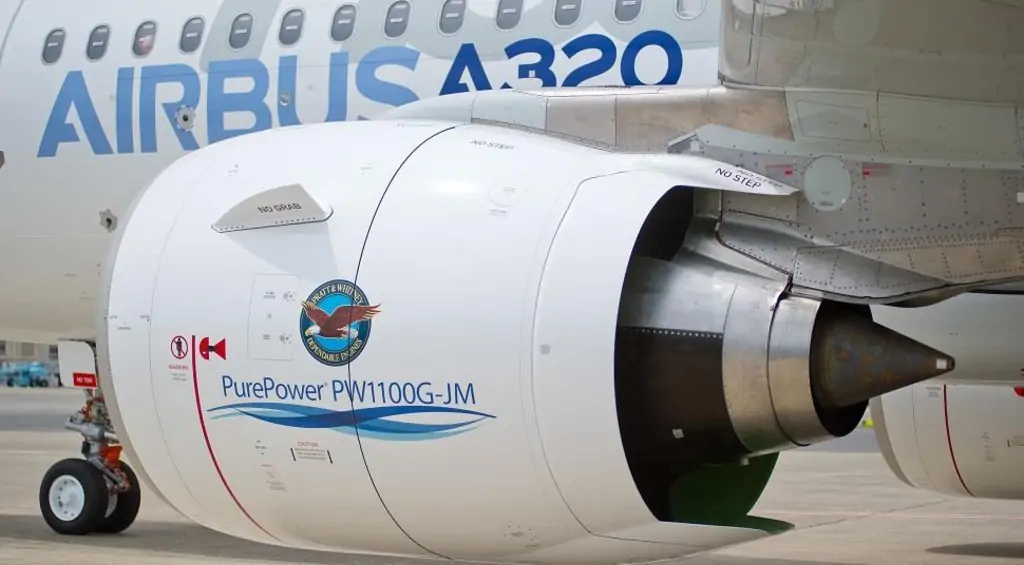
The Federal Aviation Administration said on Friday, August 18 that Pratt & Whitney’s geared turbofan engine would require some users to conduct inspections within 30 days to prevent a part failure that could damage the airplane.
Pratt & Whitney parent RTX Corp announced in July that a "rare condition" in powdered metal meant 1,200 of more than 3,000 engines, built for the twin-engined Airbus A320neo between 2015 and 2021, have to be taken off and inspected for micro cracks. The FAA said it acted after further analysis of an engine shutdown last December that required pilots of an Airbus A320neo to abort a takeoff. Neither the agency nor Pratt would identify the airline.
In an airworthiness directive published on Friday, August 18, the FAA requires an ultrasonic inspection of the first- and second-stage high-pressure turbine disks within 30 days. If the disks show signs of fatigue, they must be replaced before further flight, the agency said. The FAA said the directive, which is effective immediately, affects 20 engines on U.S.-registered aircraft and 202 engines worldwide.
The US government on 18 August released an FAA airworthiness directive (AD) that builds on previous agency efforts to address a “material anomaly” issue affecting components in both PW1000Gs and International Aero Engines (IAE) V2500s. P&W part-owns IAE and supplies V2500 high-pressure turbines and compressors.
After a December 2022 incident where a failure of the GTF's high-pressure compressor resulted in an aborted takeoff, RTX conducted an analysis that found the disks were more susceptible to failure "much earlier" than previously believed, the airworthiness directive said. Pratt & Whitney instructed operators on August 4 to expedite the inspection of the disks. "Material anomalies" such as microcracking in the disks "could lead to premature fracture and uncontained failure, which indicates an immediate safety of flight problem," the directive states.
Details of the Incident
In December 2022, an incident took place where a failure of the GTF's high-pressure compressor resulted in an aborted takeoff. Following this, RTX conducted an analysis that found the disks were more susceptible to failure "much earlier" than previously believed, the airworthiness directive said. Pratt & Whitney instructed operators on August 4 to expedite the inspection of the disks.
That jet’s pilots rejected the take-off due to failure of a “seventh-stage integrally bladed rotor” in the high-pressure turbine (HPT) of a PW1100G, the FAA’s order says. “Following this event, the manufacturer conducted a records review of production and field-returned parts and re-evaluated their engineering analysis methodology. The new analysis identified HPT first-stage hubs and HPT second-stage hubs that are susceptible to failure much earlier than previously determined,” it adds.
The FAA does not disclose more detail about the 24 December 2022 event, but a report from French aviation safety investigation agency BEA says pilots of an A320neo operated by Mexican carrier Viva Aerobus rejected take-off at Guadalajara on that day due to an engine failure.
The FAA’s order requires airlines to complete ultrasonic inspections of the high-pressure turbine first- and second-stage hubs” in PW1100Gs, which power A320neos, and PW1400Gs, which P&W developed for Russian firm Irkut’s MC-21. (Sanctions, however, have led Russia to focus on powering that jet with Russian-made Aviadvigatel PD-14 engines.)
The FAA says the latest inspection requirements apply to only 20 powerplants installed on US-registered aircraft, but that engines outside the USA could be affected. It declines to say how many. Airlines will need to complete the inspections within 30 days of when the order is published in the USA’s federal register, which is scheduled for 22 August.
The issue with Engines
In July, the engine maker disclosed that some 1,200 GTFs will need inspections over the next year, citing the risk that components in high-pressure turbine disks might have been manufactured using “contaminated” powered metal, Greg Hayes, chief executive of P&W parent RTX, said on 25 July. That news came as P&W was already under immense pressure to address operational issues. In June, P&W president Shane Eddy said durability problems and other issues had left about 10% of PW1100G-powered A320neos out of service. The FAA had previously sought to address a similar metal contamination issue with other ADs targeting PW1100Gs and V2500s.
The Airbus A320neo family's geared turbofan engines have received airworthiness directives before. Such was the case with CFM engines having similar HPT issues. CFM is a partnership between General Electric Aerospace and Safran Aircraft Engines. There are also ongoing problems with all Pratt & Whitney geared turbofans. Although the GTFs reduce the need for jet fuel per trip by 20%, the engines must be airworthy.
Go First Issues With Pratt & Whitney Engine
Earlier this year, crisis-hit carrier Go First, which had filed for voluntary insolvency proceedings, had blamed engine maker Pratt & Whitney for its situation. “Go First has had to take this step due to the ever-increasing number of failing engines supplied by Pratt & Whitney’s International Aero Engines, LLC, which has resulted in Go First having to ground 25 aircraft (equivalent to approximately 50% of its Airbus A320neo aircraft fleet) as of 1 May 2023,” said the airline in a statement.
“The percentage of grounded aircraft due to Pratt & Whitney’s faulty engines has grown from 7% in December 2019 to 31% in December 2020 to 50% in December 2022. This is despite Pratt & Whitney making several ongoing assurances over the years, which it has repeatedly failed to meet,” it added.
Read next
Kuwait Airways Sets Sights on the Future: Leasing 8 Airbus Jets for a Decade!

Abhishek Nayar
21 Aug 2023
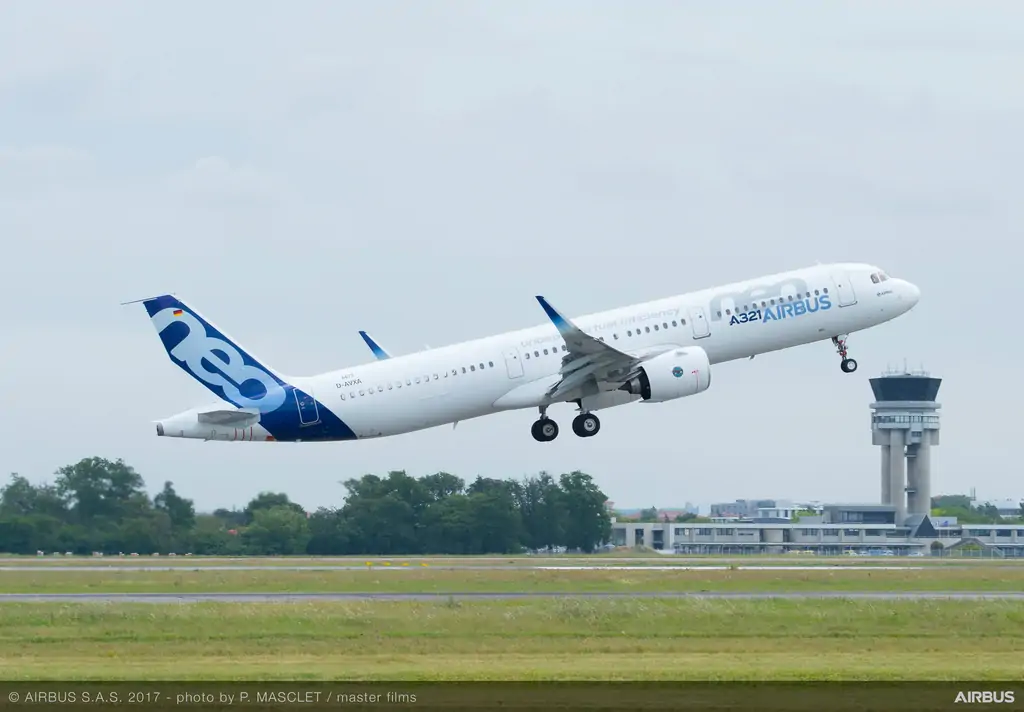
In a significant development, Kuwait Airways Chairman Ali Aldokhan announced on Sunday, August 20, 2023, the airline's ambitious plan to lease eight Airbus passenger aircraft over the next decade. This strategic move is poised to reshape the airline's fleet and enhance its operational capabilities.
A Strategic Move for Kuwait Airways
Expansion Plans Take Flight
Kuwait Airways, a state-owned carrier, has long been eyeing expansion opportunities to meet the growing demand for air travel. The decision to lease eight Airbus passenger aircraft underscores the airline's commitment to modernizing its fleet and improving passenger services. This expansion aligns with Kuwait Airways' larger vision of becoming a prominent player in the global aviation sector.
Airbus Partnership
Kuwait Airways' choice of Airbus as its aircraft supplier is not new. In 2022, the airline entered into a multibillion-dollar agreement with Airbus to acquire 31 planes. Impressively, 18 of these planes have already been delivered, marking a successful partnership. The decision to lease additional Airbus aircraft solidifies this relationship, emphasizing the reliability and performance of Airbus aircraft.
The Details of the Lease
Airbus A321neo Aircraft
The eight aircraft earmarked for lease are all Airbus A321neo models. These aircraft are renowned for their fuel efficiency, advanced technology, and passenger comfort. Kuwait Airways' decision to opt for the A321neo reflects its commitment to sustainability and delivering a superior flying experience to its customers.
Lease Duration
One of the key aspects of this leasing arrangement is the contract duration, which will span between eight and ten years. This timeframe allows Kuwait Airways to have a stable fleet while maintaining the flexibility to adapt to changing market dynamics. The extended lease period is a strategic move to ensure the airline's operational continuity and growth over the next decade.

The Implications
Enhanced Route Network
The addition of eight Airbus A321neo aircraft will enable Kuwait Airways to explore new routes and expand its existing network. Passengers can look forward to more destination choices and increased flight frequencies, fostering greater connectivity.
Competitive Edge
In a fiercely competitive aviation industry, having a modern and fuel-efficient fleet is paramount. Kuwait Airways' decision to lease Airbus A321neo aircraft positions it favorably against competitors. These aircraft are renowned for their cost-effectiveness, which can translate into competitive pricing for passengers.
Increased Fuel Expenses
While the COVID-19 epidemic severely impacted airlines worldwide, several Gulf carriers have enjoyed a rapid increase in demand and are significant actors in their governments' efforts to diversify their economies into industries such as tourism.
According to Aldokhan, the cost of jet fuel for Kuwait Airways has climbed 38% year on year since the beginning of 2023. Kuwait Airways CEO Maen Razouqi stated at the same news conference that the airline is in talks with Kuwait Petroleum Corporation for a discount mechanism that would decrease the carrier's jet fuel expenditures.
Conclusion
Kuwait Airways' Chairman Ali Aldokhan's announcement regarding the leasing of eight Airbus passenger aircraft signifies a bold step towards the airline's growth and modernization. The choice of Airbus A321neo aircraft, coupled with flexible lease durations, showcases the airline's commitment to delivering excellence in air travel. With a strengthened fleet, Kuwait Airways is poised to provide enhanced services, explore new horizons, and stay competitive in the ever-evolving aviation industry.
With Inputs from Reuters
Read next
Revolutionizing Indian Cargo: SpiceXpress Unveils Boeing 737-800(BDSF) - A Hiatus Ends
Abhishek Nayar
21 Aug 2023
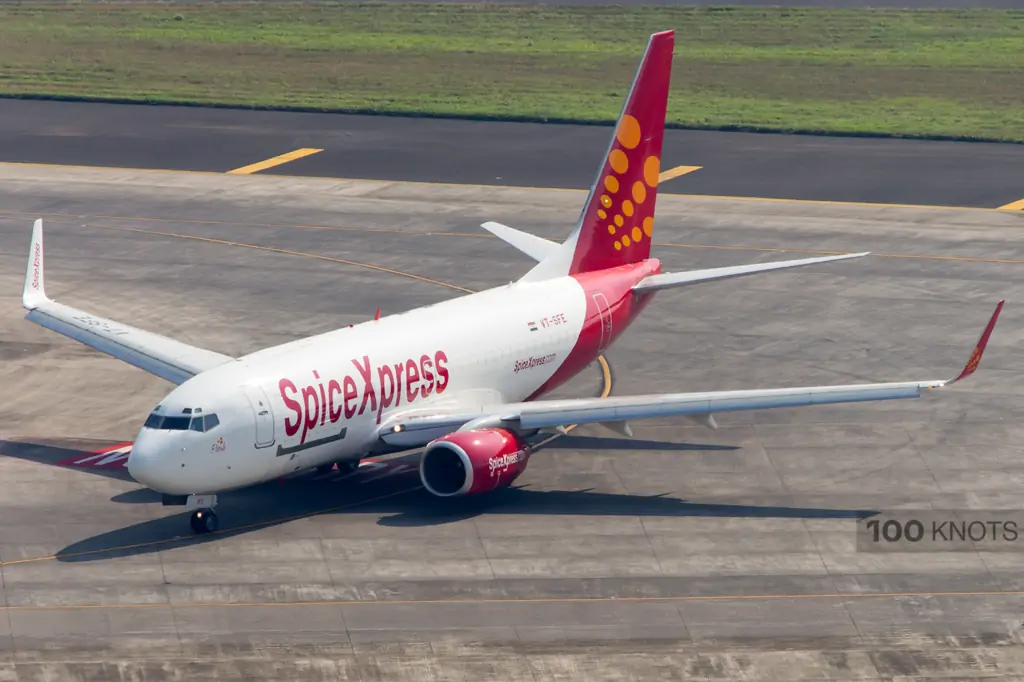
SpiceXpress, SpiceJet's cargo branch, is making headlines in the ever-changing world of cargo transportation with its latest acquisition - the Boeing 737-800(BDSF). After a nearly year-long break, the -800-freighter version has triumphantly returned to the Indian cargo market. SpiceXpress, noted for its dedication to efficiency and innovation, provides clients with a smooth and precise cargo monitoring experience.
The Resurgence of Boeing 737-800(BDSF)
SpiceXpress Takes the Lead
SpiceXpress has long been a frontrunner in the Indian cargo industry, and their latest move solidifies their position at the top. They have acquired an 18.9-year-old Boeing 737-800(BDSF) aircraft, which was originally operated by Virgin Australia (VA) and is currently owned by World Star Aviation, according to Cargo Facts.
This aircraft, with the registration N340WS and the manufacturer serial number (MSN) 34014, is undergoing a significant transformation at the Bedek Lingyun (Yichang) Aircraft Maintenance Engineering facility.
According to the Ch-aviation fleet ownership module, SpiceXpress expects to acquire further Boeing 737-800(BDSF) aircraft from World Star Aviation, which presently has two more units undergoing conversion at the Yichang facility.
These are expected to be the first 737-800 conversions from Israel Aerospace Industries that will operate in India. SpiceXpress, a SpiceJet subsidiary, previously operated two 737-800(BCF) aircraft, which were withdrawn in August and September 2022. As the Ch-aviation fleet advanced module stated, attention turned to the carrier's fleet of three 737-700(BDSF) aircraft.
A Technological Marvel
Cutting-Edge Conversion
What sets SpiceXpress apart from the competition is its relentless pursuit of cutting-edge technology. The Boeing 737-800(BDSF) is currently undergoing a passenger-to-freighter (P2F) conversion that will equip it with state-of-the-art features. This conversion will not only enhance its cargo-carrying capabilities but also make it more environmentally friendly, aligning with global sustainability goals.
Tracking Your Cargo with Precision
SpiceXpress prides itself on providing an exceptionally efficient door-to-door service. With the introduction of the Boeing 737-800(BDSF), this service will reach new heights. Customers will have the ability to accurately track their cargo's journey at every stage, from the moment it leaves the sender's location to its final destination. This level of transparency and control is a game-changer for the cargo industry.

The Impact on Indian Cargo
Efficiency and Speed
The reintroduction of the Boeing 737-800(BDSF) by SpiceXpress will have a profound impact on cargo transportation in India. Its efficiency and speed in delivering goods across the country will enable businesses to streamline their operations and meet customer demands more effectively.
Meeting the Growing Demand
In a world where e-commerce and online shopping are booming, the demand for efficient cargo services is at an all-time high. SpiceXpress is well-positioned to meet this growing demand and ensure that essential goods reach their destinations swiftly and securely.
Conclusion
SpiceXpress is ushering in a new era for cargo transportation in India with the introduction of the Boeing 737-800(BDSF). This move showcases their commitment to innovation and efficiency, setting a high standard for the industry. As businesses and consumers alike benefit from faster and more reliable cargo services, SpiceXpress is undoubtedly on the path to revolutionizing Indian cargo transport.
With Inputs from Aviation A2Z
Read next
Taking Flight: Air New Zealand and NMIT Join Forces to Transform Aviation Engineering Education
Abhishek Nayar
21 Aug 2023
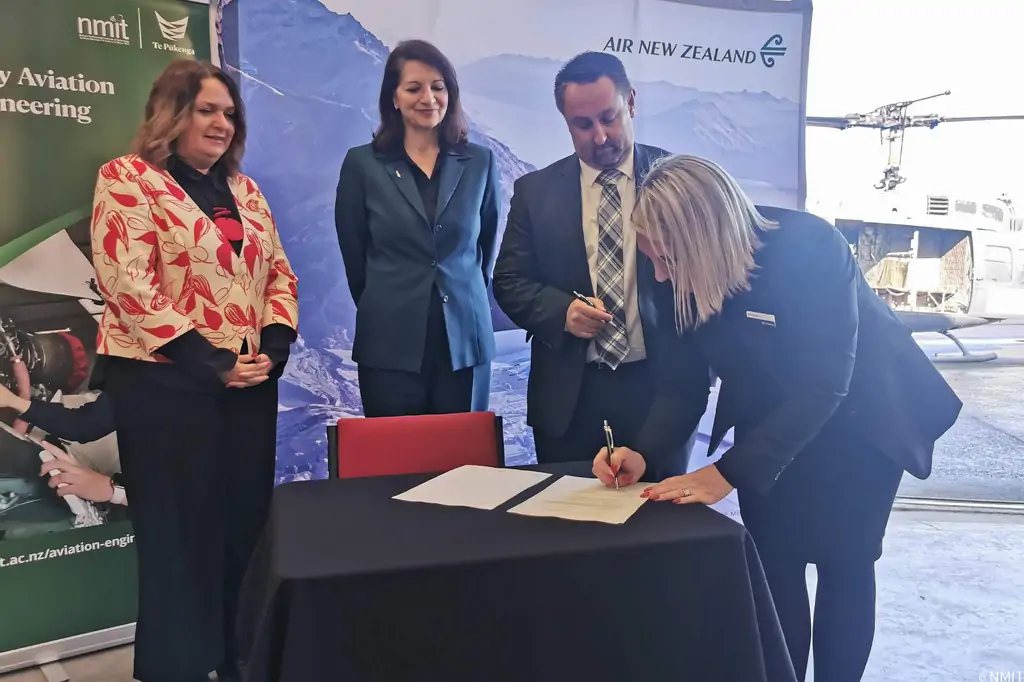
In a landmark development that is set to reshape the landscape of aviation education and employment in New Zealand, Air New Zealand and the Nelson Marlborough Institute of Technology (NMIT), also known as Te Pukenga, have joined hands.
This groundbreaking collaboration, solidified with the signing of a Memorandum of Understanding (MoU) on Saturday, August 19, 2023, aims to bridge the gap between aviation engineering education and industry demands.
A Vision Unveiled: The MoU Signing
Air New Zealand and NMIT Unite for Aviation Excellence
The MoU signing ceremony on August 19, 2023, marked the official commencement of this innovative partnership. Air New Zealand, the country's national airline, and NMIT, a renowned institution for higher education, have embarked on a mission to revolutionize aviation engineering education.
Addressing Skills Shortage in the Aviation Industry
One of the primary objectives of this collaboration is to address the growing skill shortage in the aviation industry. With rapid advancements in aviation technology, there is an increasing demand for highly skilled aviation engineers. Air New Zealand recognizes the need for a steady stream of talent to maintain its position as a leader in the aviation sector.
What Does the MoU Entail?
The MoU outlines several key areas of cooperation, including curriculum development, student mentorship programs, and access to state-of-the-art aviation facilities. Both parties are committed to nurturing the next generation of aviation engineers by providing them with a comprehensive and industry-relevant education.

NMIT: A Hub of Aviation Excellence
About NMIT
NMIT, also known as Te Pukenga, is a name synonymous with excellence in education. With a history spanning several decades, NMIT has consistently produced graduates who excel in their respective fields. The institution's aviation engineering program is no exception.
NMIT's Aviation Engineering Program
NMIT's aviation engineering program has earned a reputation for producing graduates who are not only well-versed in theory but also possess hands-on practical skills. The program's curriculum is designed to align seamlessly with the evolving needs of the aviation industry.
Tutors at NMIT / Te Pukenga Aviation School of Engineering train more than 150 students each year to build, repair, and maintain an array of aircraft. Reid Carnegie, Curriculum Area Manager for Engineering, Construction, and Infrastructure, stated, "It was great to be working closely with Air NZ to foster the industry's talent pipeline."
How Will Students Benefit?
Students aspiring to become aviation engineers stand to gain immensely from this collaboration. The partnership with Air New Zealand means that students will have access to real-world training opportunities, internships, and mentorship programs, thereby enhancing their employability upon graduation.
Beginning next year, a group of Year 12 and 13 students will have the opportunity to learn the concepts of aviation and engineering on remote controlled planes while completing NCEA.
Air New Zealand: Committed to Nurturing Talent
Air New Zealand's Role in the Partnership
Air New Zealand, with its rich history and commitment to excellence, is set to play a pivotal role in shaping the future of aviation engineering education in New Zealand. The airline is not just a partner but a mentor, providing valuable insights and industry expertise to students.
Real-World Exposure
Through this partnership, Air New Zealand will open its doors to students, allowing them to experience the inner workings of a world-class aviation organization. This exposure will be invaluable as students embark on their careers.

A Win-Win Situation
Mutual Benefits of the Collaboration
The collaboration between Air New Zealand and NMIT is a true win-win situation. While NMIT students gain access to top-notch aviation facilities and mentorship from industry experts, Air New Zealand secures a pipeline of skilled aviation engineers who are well-prepared to meet the demands of the modern aviation sector.
Comments
Air New Zealand's chief operating officer, Alex Marren, stated that "The airline now has more than 70 aircraft maintenance positions available around the country, in addition to its annual graduate recruitment program."
"The collaboration with NMIT will help students build a career path and make it easier for Air New Zealand to employ NMIT graduates."
"Having the engineering and maintenance workforce to meet our operational needs is critical." The worldwide employment market for aviation engineers is extremely competitive, and the memorandum of understanding will assist in ensuring that we cultivate local talent here in Aotearoa."
Conclusion
The partnership between Air New Zealand and NMIT represents a significant leap forward in the realm of aviation engineering education. Aspiring aviation engineers can now look forward to a holistic education that combines academic rigor with practical industry experience. This collaboration not only addresses the skills shortage in the aviation industry but also paves the way for a new generation of aviation professionals who are ready to soar to new heights.
With Inputs from Radio New Zealand, NMIT
Read next
Jalan Kalrock Committee Seeks Extension to Make Payments to CoC of Jet Airways
Radhika Bansal
19 Aug 2023
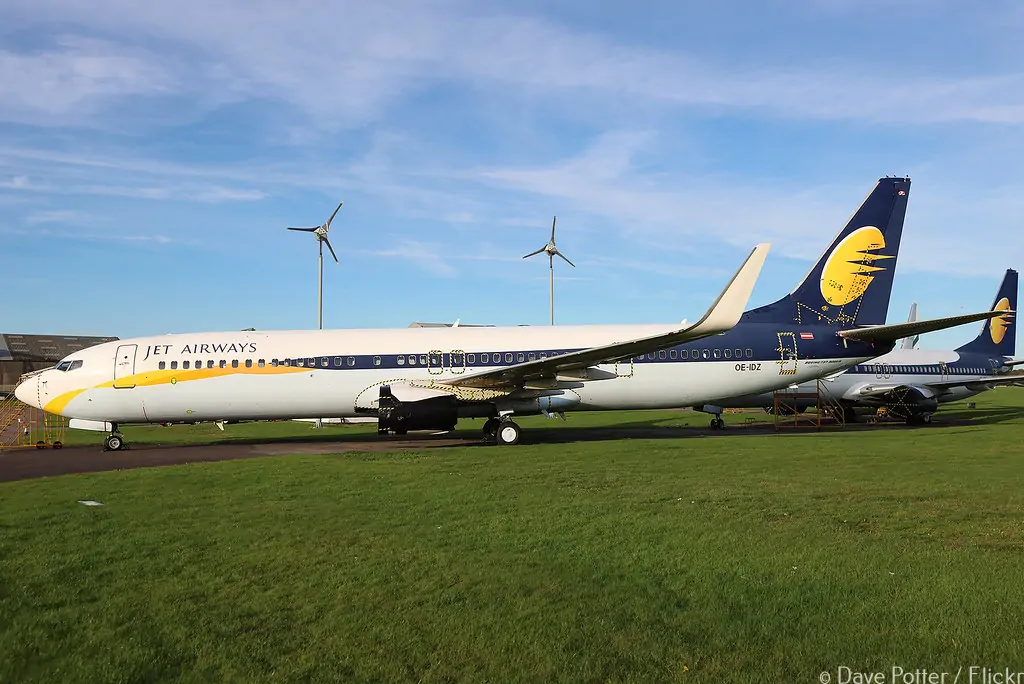
The Jalan Kalrock Committee has sought an extension to make payments to the Committee of Creditors of bankrupt airline Jet Airways. The National Company Law Appellate Tribunal (NCLAT) has asked the JKC to file an application stating the conditions for seeking an extension to make the payments. The committee has said that it will deposit INR 100 crore by August 31, and INR 100 crore by September 30 and the CoC can encash bank guarantee of INR 150 crore immediately.
The CoC had earlier said that it may not pursue its filed appeal with the NCLAT if the consortium paid the INR 350 crore due. “Once they deposit INR 350 crore, we may not be inclined to go ahead with the appeal,” the counsel informed the appellate tribunal, stating that "we also want the plan to work."
Matter with Creditors
The application filed by the State Bank of India, the primary lender, and others pertain to the transfer of ownership of the airline to JKC, the winning bidder for Jet Airways. The NCLAT on Friday, August 18 sought to know the conditions for JKC filing an extension appeal. Cash-strapped Jet Airways stopped flying on April 17, 2019.
On the other side, additional solicitor general N Venkatraman, representing the lenders, including State Bank of India (SBI), countered that the infusion of INR 350 crore is merely the first step towards payment of dues. He added that after this initial payment, three more tranches of money are to be paid to the lenders, with the final step being the transfer of equity shares.
Challenging JKC’s argument, Venkatraman stated that the bank guarantee of INR 150 crore cannot be considered a part of the INR 350 crore payment, as it was executed for a different segment of the resolution plan. On May 26, the NCLAT granted JKC 107 days to pay the lenders’ share. “The SRA (successful resolution applicant) is ready and willing to infuse the first tranche of INR 175 crore, and to demonstrate the bonafide of the SRA, it shall infuse INR 50 crore within 30 days and the rest within the allowed time,” noted the order. The court directed that, until this time (107 days, until August 30), the bank guarantee of INR 150 crore should not be invoked by SBI.
JKC was earlier allocated 180 days, from November 16, 2022, to May 15, 2023, to pay the dues to the lenders. The court observed, “After considering the facts and sequence of events in the present case, we are of the view that the SRA is entitled to exclusion of the period from November 16, 2022, till March 3, 2023, when this tribunal in the present appeal passed an order declining the interim relief as prayed by the lenders.”
This means that JKC has obtained an extension of over three months to deposit dues to the lenders since 107 days were excluded from the period of 180 days. NCLAT issued the order on JKC’s application to prevent SBI from invoking the guarantee. The public sector lender had told the tribunal in an earlier hearing that JKC had not paid dues that were due on May 15. JKC informed the court that on May 13, it received a letter from SBI, requesting the infusion of amounts referred to in the letter. SBI's letter further detailed the identified bank account and warned that if the payment obligations were not met by May 15, lenders might exercise their rights and remedies under the law, including the invocation of the performance bank guarantee.
The court noted that lenders should, instead of invoking the performance bank guarantee, take steps to aid the implementation of the Resolution Plan and achieve its objective. “The Resolution Plan has been approved with the intent and purpose to revive the corporate debtor (Jet Airways),” the court added. According to the resolution plan, JKC needed to deposit a PBG of INR 150 crore with the lenders in two tranches: the first of INR 47.5 crore upon approval of the resolution plan by the committee of creditors, and the second tranche of INR 102.5 crore on the "effective date" when all conditions precedent were fulfilled.
A refundable earnest deposit of INR 15 crore was made to the lenders in July 2020 when JKC submitted its resolution plan. The first performance bank guarantee tranche of INR 47.5 crore was deposited in October 2020 upon the committee of creditors approving the resolution plan. The remaining sum of INR 87.5 crore was deposited in the second PBG tranche on May 20 last year, termed the “effective date,” when all conditions were met.
Story so Far
On July 10, the CoC told the Supreme Court the airline be wound up as the resolution plan approved by the NCLT was not workable. A committee of creditors is formed once a company is admitted to insolvency. It is a body of financial creditors that represents the interest of stakeholders. The voting percentage in the panel is proportional to the amount a financial institution has lent to the company in insolvency.
The counsel informed that the consortium has, time and again, failed on its promise. The deadline to pay INR 350 crore was extended by the National Company Law Tribunal in May. Aviation safety regulator DGCA has renewed with conditions the Air Operator Certificate (AOC) of Jet Airways until September 3. The AOC was re-issued on May 20, 2022. However, since the airline did not start operations, it expired on May 19 this year.
Jet Airways, which stopped operations due to financial crunch, went through lengthy insolvency proceedings and the JKC emerged as the winning bidder. However, the transfer of ownership to JKC is yet to happen amid persisting differences with the airline's lenders. In October 2020, the airline's Committee of Creditors (CoC) approved the revival plan submitted by the consortium of Dubai-based Murari Lal Jalan and the UK's Kalrock Capital. In June 2021, JKC's bid was approved under the insolvency resolution process. However, the implementation of the plan is getting delayed. The consortium appointed Sanjiv Kapoor as its interim CEO in April 2022, who quit the carrier in April this year.
Comment