Saudia Unveils New Brand Identity & Livery; Enters New Digital Transformation Era

Radhika Bansal
04 Oct 2023
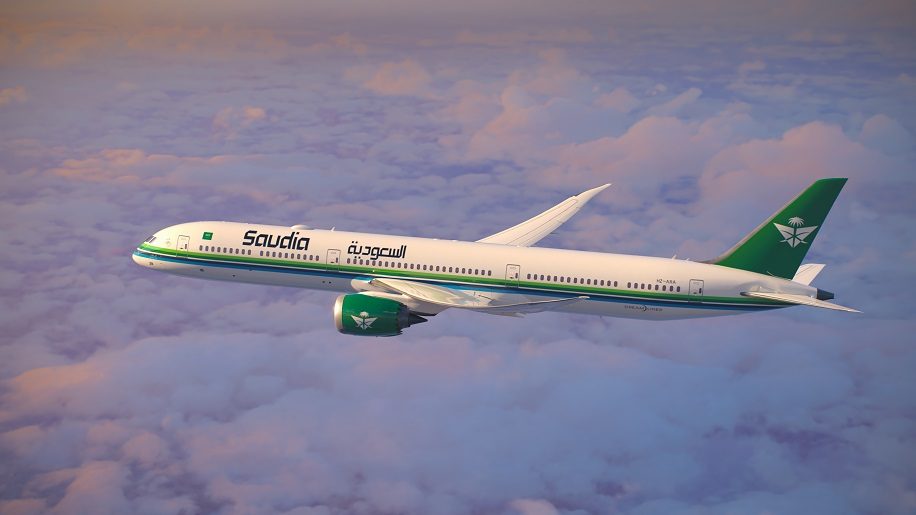
Saudi Arabian flag carrier Saudia has unveiled a new colour scheme, updated as part of the kingdom’s broader modernisation effort known as Vision 2030. The date of the launch, September 30, was chosen to commemorate the anniversary of the late King Abdulaziz’s first flight aboard a “Saudi Arabian” DC-3 aircraft from Afif to Taif.
The airline unveiled the new livery during an event in Jeddah. It features a green base colour, with shades of blue and sand, and retains the Saudia palm-and-swords logo. The new brand colour identity, comprised of green, blue, and sand, represents Saudia’s aim to expand its fleet and destinations, connecting the world to Saudi Arabia, and emphasizing the Kingdom’s authenticity and deep-rooted values.
The rebrand marks the beginning of a new era for Saudia, introducing innovative concepts in terms of customer services with a strong focus on digital aspects and enhancing the guest experience by celebrating Saudi culture. This transformation reinforces Saudia’s national identity as it reimagines all products and services to engage all five senses. Guests can anticipate an authentic Saudi experience during their journey, showcasing the very best of Saudi Arabia and its rich culture. This includes a distinctive fragrance and sonic identity, locally inspired cuisine, all crafted by skilled Saudi craftsmen. This new identity mirrors Saudi Arabia’s welcoming spirit, leaving guests with a deep sense of the country’s warmth and hospitality while promoting a deeper appreciation of Saudi culture for both nationals and visitors. The rebrand also encompasses new uniforms for cabin crew and ground staff.
“The name and logo of Saudia are integral parts of the kingdom’s aviation history and development, and our people share a special emotional connection with the brand,” says Saudia Group director general Ibrahim Al-Omar. “We have incorporated this rich heritage into our new identity, adding elements that reflect our visionary approach.” He further adds, "The name and logo of Saudia are integral parts of the Kingdom's aviation history and development, and our people share a special emotional connection with the brand. We have incorporated this rich heritage into our new identity, adding elements that reflect our visionary approach, poised to captivate the world."
Saudia operates a fleet of some 140 aircraft and aims to expand a network that covers more than 100 destinations. “The rebrand marks the beginning of a new era for Saudia, introducing innovative concepts in terms of customer services with a strong focus on digital aspects and enhancing the guest experience by celebrating Saudi culture,” it adds.
Saudia states that the kingdom has a national aviation strategy which aims to transform the airline into a “leader in the global industry”, and support the ambition to bring 330 million visitors to the country by the end of the decade.
Saudia's Digital Transformation
In parallel with its rebranding, Saudia has undertaken a significant digital transformation to entirely enhance the customer’s digital experience. The airline’s generative Artificial Intelligence (AI)-powered virtual assistant, known as “SAUDIA,” is among the first of its kind across the region. As part of the transformation, the airline aims to enable guests to complete their entire transaction through its efficient process by year-end. Saudia launched generative Artificial Intelligence as a virtual assistant for passengers named "SAUDIA." The new AI service is designed to address all information and travel-related needs. This new service will leverage the capabilities of OpenAI's ChatGPT 4.
Saudia is the national flag carrier of the Kingdom of Saudi Arabia. Established in 1945, the company has grown to become one of the Middle East’s largest airlines. Saudia has invested significantly in upgrading its aircraft and currently operates one of the youngest fleets. The airline serves an extensive global route network covering around 100 destinations across four continents, including all 28 domestic airports in Saudi Arabia.
A member of the International Air Transport Association (IATA) and the Arab Air Carriers Organization (AACO), Saudia has also been a member airline in SkyTeam, the second largest alliance, since 2012. Saudia was recently awarded the ‘World Class Airline 2024’ for the third consecutive year at The APEX Official Airline Ratings™ awards. Saudia has also advanced 11 places in the Skytrax Airlines ranking of the World Best Airlines 2023. The Airline also ranked top among global airlines for best on-time performance (OTP) according to a report by Cirium.
Read next
RTX Joins Boeing and NASA in Advancing Sustainable Aviation with X-66A Flight Demonstrator

Abhishek Nayar
04 Oct 2023
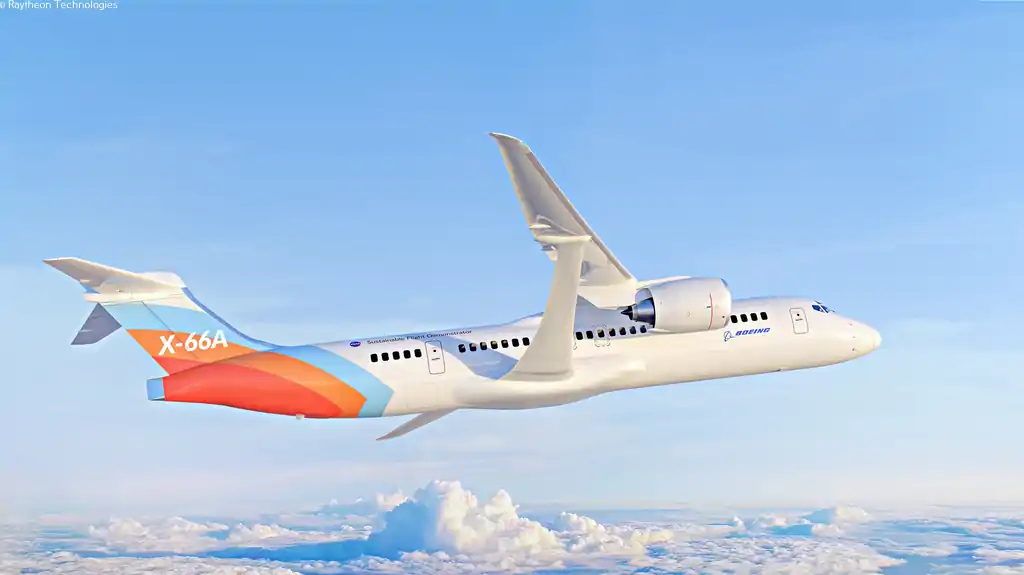
Boeing, a pioneer in aerospace technology, has chosen Raytheon Technologies Corporation (RTX) as a crucial collaborator for its X-66A flight demonstrator project, an integral part of NASA's Sustainable Flight Demonstrator initiative.
This partnership between Boeing and RTX, with two of RTX's business units - Pratt & Whitney and Collins Aerospace, will aim to revolutionize the aviation industry by focusing on sustainable aviation solutions. The X-66A program seeks to develop the Transonic Truss-Braced Wing (TTBW) concept, which holds the potential to significantly enhance fuel efficiency and reduce emissions for next-generation single-aisle aircraft.
Boeing's X-66A Program: Pioneering Sustainability

The X-66A program, led by Boeing, is at the forefront of sustainable aviation technology. Its primary objective is to advance the Transonic Truss-Braced Wing (TTBW) concept, a design innovation poised to revolutionize the aviation industry. By integrating the expertise of RTX's Pratt & Whitney and Collins Aerospace units, Boeing aims to leverage cutting-edge technologies that could lead to remarkable improvements in fuel efficiency and a significant reduction in emissions. These advancements are pivotal in the development of next-generation single-aisle aircraft, which will play a critical role in reducing the environmental footprint of commercial aviation.
RTX's Contribution: Pratt & Whitney's GTF Engines and Collins Aerospace Innovations
Under this collaboration, RTX brings two of its business units into the fold: Pratt & Whitney and Collins Aerospace. Pratt & Whitney will supply the revolutionary Geared Turbofan (GTF) engines, renowned for their industry-leading fuel efficiency and sustainability benefits.
Collins Aerospace, another integral part of the RTX collaboration, will contribute nacelles and engine accessories. Collins Aerospace's nacelles are constructed using lightweight and durable composite and metallic materials, serving multiple functions including engine protection, airflow control, noise reduction, and thrust reversal for aircraft landings. Additionally, Collins provides critical control system components for the GTF engine, further enhancing its efficiency and performance.
The Significance of the Sustainable Flight Demonstrator Initiative
NASA's Sustainable Flight Demonstrator initiative is part of the broader Sustainable Flight National Partnership, a concerted effort dedicated to developing the technologies required to achieve net-zero CO2 emissions in commercial aviation. This partnership exemplifies the power of public-private collaboration in driving technological breakthroughs. By working hand-in-hand with Boeing, RTX, and NASA, this initiative is poised to reshape the aviation industry's future.
Looking Forward: The Impact on Decarbonizing Aviation
Dr. Todd Citron, Boeing's Chief Technology Officer, emphasizes the importance of the learnings from the Sustainable Flight Demonstrator and the X-66 program in the industry's efforts to decarbonize aviation. This collaboration between Boeing and RTX stands as a testament to the dedication of the aerospace industry to address climate change challenges head-on. By harnessing innovation and expertise, they aim to usher in an era of sustainable aviation, ultimately reducing the environmental impact of air travel.
"The learnings from the Sustainable Flight Demonstrator, X-66, and the partnership with NASA are important elements in the industry's efforts to decarbonize aviation," said Dr. Todd Citron, Boeing's Chief Technology Officer. "We're grateful for the support from RTX on this critical effort."
Conclusion
Boeing's selection of Raytheon Technologies Corporation (RTX) as a collaborator on the X-66A flight demonstrator project signifies a pivotal moment in the journey towards sustainable aviation. With Pratt & Whitney's GTF engines and Collins Aerospace's cutting-edge contributions, this partnership holds the promise of transforming the future of commercial aviation.
Through initiatives like the Sustainable Flight Demonstrator, the aviation industry is taking bold steps towards achieving net-zero CO2 emissions, paving the way for a more sustainable and environmentally responsible future in air travel.
With Inputs from RTX
Read next
Dubai International Airport Nears Capacity Limits, CEO Reveals Expansion Challenges
Abhishek Nayar
04 Oct 2023
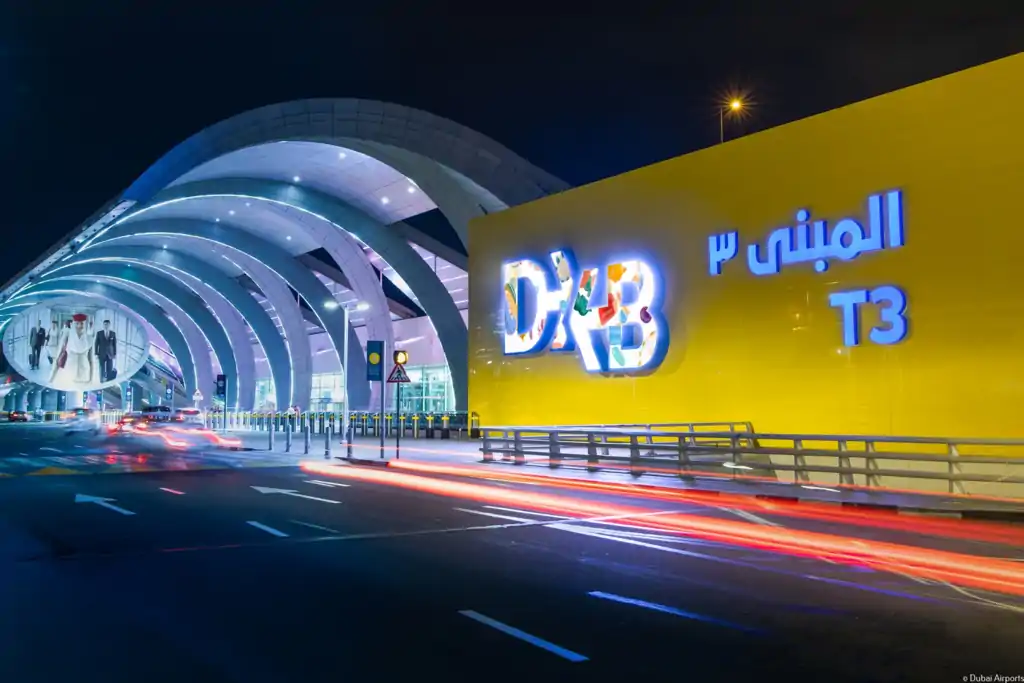
Dubai International Airport (DXB), one of the world's busiest and most prominent airports, is approaching its capacity threshold. Paul Griffiths, CEO of Dubai Airports, recently discussed the airport's future prospects and expansion plans during the World Aviation Festival 2023.
With a history of remarkable growth, Dubai's aviation industry has faced unprecedented challenges in the wake of the COVID-19 pandemic. However, the city's swift recovery and changing passenger dynamics have prompted a reevaluation of DXB's potential.
Unwavering Growth Trajectory
DXB has been on a remarkable growth journey, and despite hitting impressive passenger numbers in the past, the airport continues to push boundaries. In August 2023, Griffiths announced a H1 2023 passenger forecast of 85 million, a mere 1.6% below DXB's annual traffic in 2019. However, he now believes DXB can reach its 2018 record of 89 million passengers. The optimism stems from the airport's resilience and the city of Dubai's swift recovery from the pandemic's impacts.
A Swift Recovery from the Pandemic
One of the key factors contributing to the quick recovery of Dubai's airports, according to Griffiths, is the city's ability to rebound swiftly from the impact of the COVID-19 pandemic. Dubai's status as a global business and tourism hub, coupled with effective health measures, played a crucial role in restoring passenger confidence.
Before the pandemic, Dubai Airport saw approximately 60% of transfer passengers and 40% of point-to-point travelers. However, this dynamic has reversed, with 60% now being point-to-point traffic. Griffiths believes this trend may continue but expects a more balanced distribution of passengers once more capacity comes online and international markets, particularly in Asia, open up further.

Expansion Prospects and Technological Advancements
While Griffiths acknowledges that DXB still has room for growth, he emphasizes that this growth is finite. He estimates that DXB has the potential to unlock another 20 million passenger capacity. To achieve this, the airport has been investing in increasing passenger throughput, enabling travelers to move through the airport more efficiently.
Griffiths also highlights the importance of technology investments over new physical infrastructure. By doubling the throughput with the same infrastructure, DXB can effectively double its capacity, making it a cost-effective approach, especially in a constrained site like DXB.
Future Investments and DWC's Phase 2
Griffiths anticipates that Dubai Airports will fully utilize all available capacity at DXB by the middle of the next decade. As a forward-looking measure, the company is considering the development of a completely new passenger-focused airport as part of the Dubai World Central (DWC) Phase 2 project. Currently, DWC primarily serves cargo flights.
While DXB maintains its competitive edge over airports in neighboring countries like Saudi Arabia, Qatar, and Turkey, Griffiths emphasizes the need to keep an eye on developments in these regions. He believes that Dubai's advantage lies in its commitment to providing exceptional service quality to passengers, a reputation that has earned several prestigious awards for Dubai Airports. The CEO also emphasizes that understanding and exceeding passenger expectations are critical elements in staying ahead.
Griffiths, who is also a musician, stated that “there are more parallels between music and running an airport than most people realize”.
“If you are part of an orchestra or you are directing, you are trying to bring together many discrete component parts, each of which has their own orientation and you are trying to get them to work in harmony,” he concluded.
Conclusion
As Dubai International Airport approaches its capacity threshold, CEO Paul Griffiths remains optimistic about its future. The city's ability to bounce back from the challenges of the COVID-19 pandemic, coupled with strategic investments in technology and infrastructure, positions DXB for continued growth.
Moreover, the possibility of a new passenger-centric airport through DWC's Phase 2 project underscores Dubai's commitment to maintaining its status as a global aviation leader. As Dubai's airports look to the future, providing exceptional passenger experiences and staying ahead of the competition remain at the forefront of their priorities, ensuring that Dubai's aviation industry continues to soar to new heights.
Read next
United Airlines' Massive Aircraft Order Signals Global Expansion Ambitions
Abhishek Nayar
04 Oct 2023
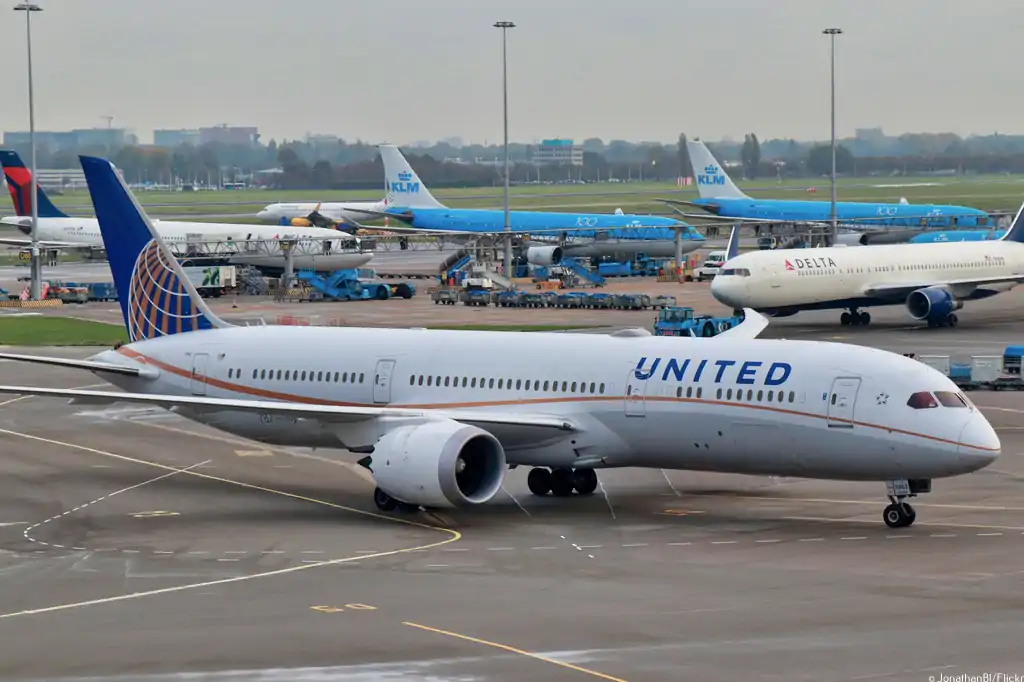
United Airlines announced a significant aircraft order on October 3, 2023, in a strategic move aimed at expanding its international network and addressing supply-chain bottlenecks. This order underscores the airline's commitment to enhancing its global reach and strengthening its position in the competitive aviation industry.
The Aircraft Order
United Airlines has placed an order for a total of 110 aircraft from two major aircraft manufacturers, Boeing and Airbus. These new additions to their fleet are scheduled for delivery beginning in 2028, marking a substantial investment in the airline's future growth. The order comprises 50 Boeing 787-9 Dreamliners with delivery dates spanning from 2028 to 2031 and 60 Airbus A321neos scheduled for delivery between 2028 and 2030.
In addition to these firm contracts, United has secured options for up to 50 additional Boeing 787s and purchase rights for another 40 Airbus A321neo aircraft towards the end of the decade. These options provide flexibility for further expansion should market conditions and demand warrant it.

Reasons Behind the Order
One of the key motivations behind this significant aircraft order is to address the ongoing supply-chain challenges that have delayed aircraft deliveries. United Airlines, like many other carriers, has faced disruptions due to these bottlenecks, which have, in turn, impacted its flight operations.
Furthermore, infrastructure difficulties, including runway, airspace, and gate capacity constraints at major airports, have led to a reduction in flights. To mitigate these issues, United plans to deploy larger aircraft with more seats, expecting that average seats per departure in North America will grow by 40% in 2027 compared to pre-pandemic levels.
Expanding International Reach
United Airlines places a strong emphasis on higher-margin international travel, which currently accounts for approximately 39% of its passenger revenue. This is a significant increase from the pre-pandemic period, highlighting the airline's commitment to global expansion.
According to United Chief Commercial Officer Andrew Nocella, the airline anticipates that global long-haul flying will play a vital role in its growth strategy in the second half of this decade. This move aligns with the recent trend of airlines focusing on long-distance widebody aircraft to accommodate the rising demand for international travel.

United's Aircraft Strategy
This order represents United Airlines' second major aircraft acquisition in the past year. In December, the airline announced a substantial order for 100 Boeing 787 Dreamliners and 100 737 MAXs. The company's commitment to the Boeing 787 Dreamliner family reflects confidence in its operating economics and reliability.
The Airbus A321neo, known for its fuel efficiency, smaller carbon footprint, and lower maintenance and operating expenses, is expected to be a "game changer" for United Airlines, according to Airbus Chief Commercial Officer Christian Scherer.
Challenges and Outlook
While United Airlines is bullish on its long-term prospects, the timing of this significant order has raised questions about the future of the airline's outstanding contracts for 45 Airbus A350s, which have already been deferred to at least 2030. Nocella clarified that the A350 remains a valuable asset, but the airline is currently focused on its growing 787 fleet, intending to deploy these aircraft on routes currently served by Boeing's 767.
Analysts have raised concerns about the airline industry's pricing power and the potential impact of economic downturns on travel demand. However, Nocella downplayed these concerns, stating that United's investors can have confidence in the airline's commitment to achieving long-term profit margin goals.
Conclusion
In summary, United Airlines' substantial aircraft order underscores its determination to expand its global network, address supply-chain challenges, and enhance its position in the industry. With an eye on long-haul international travel, the airline is poised for growth in the coming decade, leveraging a diverse and modern fleet to meet evolving passenger demands.
With Inputs from Reuters
Read next
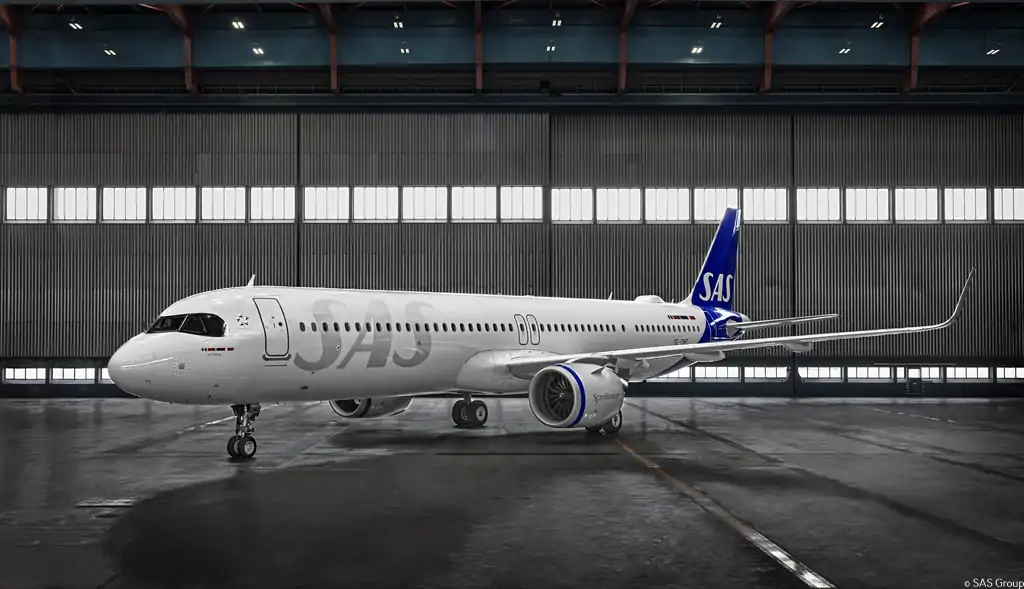
Scandinavian Airlines System (SAS), the largest carrier in Scandinavia, has unveiled a new ownership structure following its successful emergence from bankruptcy proceedings.
On Tuesday, October 3, 2023, SAS announced that US investment firm Castlelake, Air France-KLM, and the Danish state would become key shareholders in the airline. This significant development comes after years of financial struggle, exacerbated by the COVID-19 pandemic, which led to SAS filing for bankruptcy protection in the United States in mid-2022.
New Ownership Distribution
The restructuring of SAS's ownership sees Castlelake taking a substantial 32% stake in the company, making it the largest shareholder. Air France-KLM will control approximately 20% of the airline, and the Danish state will retain a significant ownership stake of around 26%. Additionally, Lind Invest, a Danish investment firm, will continue to hold 8.6% of equity in SAS.
Financial Injection
The total investment injected into the reorganized SAS amounts to 12.9 billion Swedish crowns, which translates to approximately $1.16 billion. This financial infusion is a crucial component of SAS's transformation plan, designed to provide the airline with a solid financial foundation for future growth.
Air France-KLM's Investment
Air France-KLM has committed to investing $144.5 million in SAS. Of this amount, $109.5 million will be allocated to common shares, while $35 million will be directed towards secured convertible bonds. Importantly, Air France-KLM has indicated its intention to potentially expand its shareholding to gain control after a minimum of two years, contingent upon regulatory conditions and the airline's financial performance.

SAS's Long Struggle
SAS has faced significant challenges for over a decade, as it sought to compete with low-cost rivals in Europe's highly competitive aviation market. Despite once being named the world's best airline in the 1980s, the company struggled with high expenses and reduced demand from travelers, particularly during the COVID-19 pandemic.
Future Prospects
The entrance of Castlelake and Air France-KLM as major shareholders is expected to provide SAS with the necessary resources and strategic backing to navigate the complex and ever-changing aviation landscape. This influx of capital will enable SAS to execute its transformation plan and position the airline for a brighter future.
Apollo Global Management's Aspirations
Notably, Apollo Global Management, a US-based private equity firm, has expressed interest in acquiring a controlling share in SAS, according to Reuters. The evolving ownership landscape of SAS may continue to attract attention from potential investors and partners, further shaping the airline's future direction.
Conclusion
The announcement of new key shareholders and a substantial financial infusion marks a turning point for Scandinavian Airlines System. As the airline emerges from bankruptcy proceedings with renewed vigor, the partnership with Castlelake and Air France-KLM, alongside continued support from the Danish state and Lind Invest, sets the stage for SAS to embark on a path of recovery and growth in the competitive aviation industry. The coming years will be instrumental in determining the success of SAS's transformation and its ability to regain its former status as a leading player in the European aviation market.
Read next
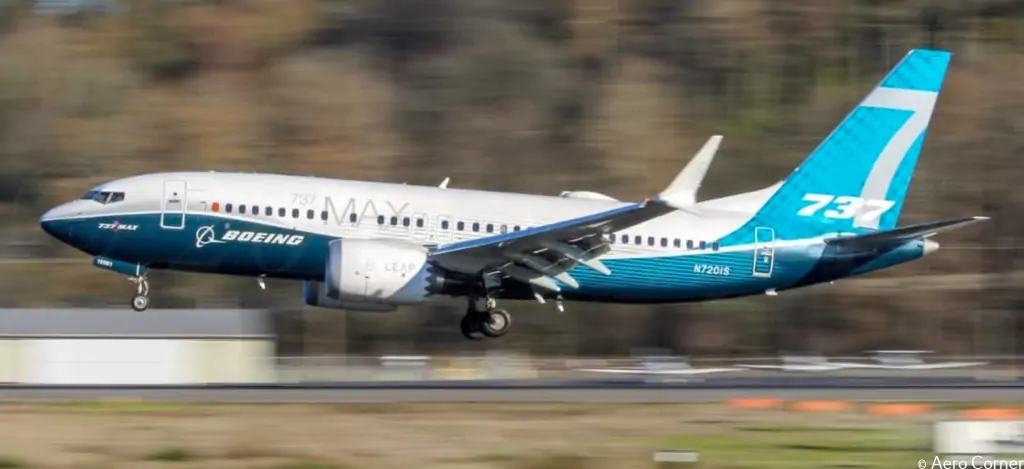
Boeing plans to push production of its bestselling 737 narrowbody jet to a record of at least 57 per month by July 2025, reflecting rising orders and the company's recovery after the 737 MAX crisis, according to two sources quoted by Reuters. The goal would hit the planemaker's unmet target from several years ago, which was scuttled in 2019 when the MAX was grounded globally following two deadly plane crashes.
Both Boeing and its European rival Airbus have laid out ambitious ramp-up goals as air travel and aircraft sales rebound, with Airbus producing in-demand single-aisle planes even faster than the U.S. planemaker.
Boeing laid out the plan in the latest version of its master schedule for suppliers, which was reaffirmed by the planemaker in mid-September, the sources told Reuters on condition of anonymity because the document is not public.
The schedule targets 737 production to reach 42 jets a month by December 2023, affirming statements made by Boeing Commercial Airplanes head Stan Deal to Bloomberg TV in June. From there, monthly 737 production - which includes the 737 MAX as well as earlier models used for military planes - is set to grow to 47.2 jets in June 2024 and 52.5 jets in December 2024 before hitting a steady rate of 57.7 aircraft per month in July 2025.
An earlier version of the plan, which Reuters reported in April, had seen 52 jets per month production a month later, in January 2025. Before the 2019 grounding of the 737 MAX, Boeing was producing 52 737s a month on its way to a target of 57. Boeing's formal 737 production target is 50 per month for the 2025-2026 timeframe, unveiled by the company last November during an investor day.
But Boeing CEO Dave Calhoun telegraphed a rate increase to 60 jets a month could be on the table as the company racks up orders, such as a deal with Air India for almost 200 MAXs booked this year. "I would love to get to 60 deliveries and the market is there for it. There's no doubt about it," Calhoun said in a July earnings call.
The Boeing CEO added the second half of 2024 would be a key moment for the company to prove it could keep its supply chain stable and maintain its ramp-up plan. "If we get through that well and we execute well, then we'll be talking to all of you about 60 deliveries," Calhoun said at the time. "But I don't want to get ahead of myself."
It is not uncommon for supplier schedules to change based on numerous factors, but it is an important signal to the supply chain that allows smaller companies to make necessary investments, the sources said.
Airbus in July reaffirmed a widely watched production goal for its best-selling A320neo family jets of 75 a month in 2026, with executives stating it was "progressing well."
Manufacturing Defect in B737 MAX
Boeing has recently identified a new 737 MAX quality problem involving supplier Spirit AeroSystems that has resulted in improperly drilled holes on the aft pressure bulkhead. Boeing said the defect will delay near-term deliveries and the company is evaluating whether it could cause it to miss its annual delivery target of at least 400 737s this year.
Boeing shares were down 2.7% and Spirit shares fell 6.1% in after-hours trading. It is the second year that Boeing's delivery targets are under review after supply-chain issues forced it to temper its goal last year. The latest quality issue is due to improperly shaped holes in the aft pressure bulkhead of some planes. The bulkhead is a structure that seals off the rear of the pressurized cabin. The parts in question were made by Spirit, whose shares were down 6% in premarket trading. However, not all 737 fuselages will be impacted as Spirit uses multiple suppliers for the aft pressure bulkhead.
The new supply-chain snag is the latest issue to impede deliveries of the cash-generating MAX following Boeing's disclosure of a problem in April that Spirit had improperly installed brackets joining the aft fuselage to the vertical tail.
The manufacturing glitch will cause some near-term 737 delivery delays, including snarling a plane going to the Malaysian Airline System, as Boeing conducts inspections and determines how many models were affected and what work they need, according to the company.
Boeing is evaluating whether it will be able to reach its target of delivering 400 to 450 of the 737-family jets this year. The uncertainty underscores the strain on planemakers Boeing and Airbus, and their global network of suppliers, as they accelerate manufacturing while contending with parts shortages and workforce turnover. The planemaker's ratio of enterprise value to sales for the next 12 months is 2, compared to 1.3 for rival Airbus, as per Refinitiv data. A low ratio implies a more attractive investment opportunity.
(With Inputs from Reuters)
Comment