

EasyJet, one of Europe's most recognizable low-cost airlines, is set to leave the London stock market after U.S. private equity titan Apollo Global Management agreed to acquire the carrier in a deal valuing it at approximately £5.70 billion ($7.7 billion).
A Bidding War That Finally Found Its Winner
The acquisition brings to a close months of uncertainty that had gripped the airline since rival suitor Castlelake first made its interest public on 28 May. Castlelake had tabled five separate bids — the last of which stood at £5.5 billion — before Apollo entered the race in July, outbidding its American rival and quickly securing board backing. On Thursday, Castlelake formally withdrew from the contest without explanation, clearing the runway for Apollo's deal to proceed.
Founder Breaks Silence, Board Follows
EasyJet's founder, Stelios Haji-Ioannou, whose family's support was widely considered pivotal to the deal's success, confirmed his backing in a separate statement. The airline's board, advised by investment bank Evercore, unanimously recommended the cash offer, describing its terms as fair and reasonable. Non-Executive Chair Stephen Hester called it a transaction that delivers "immediate, certain and attractive value for shareholders."
What Apollo Brings to the Table
Apollo, which manages roughly $1.05 trillion in assets and has previously invested in Sun Country Airlines, Aeromexico, and Atlas Air, stated it intends to accelerate easyJet's commercial strategy under private ownership — with particular emphasis on growing the airline's fast-expanding holidays business.
The Ownership Puzzle at the Heart of the Deal
The transaction, however, is not without complications. European Union rules require that airlines operating within the bloc remain majority-owned and controlled by EU interests. To satisfy this requirement, Apollo has structured the deal carefully: the Haji-Ioannou family and remaining shareholders will hold between 45.1% and 49.9% of the purchasing vehicle, an EU management trust will hold up to 5%, and Apollo's funds will retain the rest — capped at a maximum of 49.9%. Britain's Civil Aviation Authority confirmed it has engaged with the parties involved.
Markets Remain Cautious
Despite easyJet shares rallying more than 65% since the initial takeover interest emerged, the stock was still trading below Apollo's offer price at 670 pence as of Thursday afternoon. Aviation analyst James Halstead attributed the gap to investor concern over ownership execution risk, calling the current share price "unfair."
War, Fuel Costs, and the Case for Going Private
Analysts broadly agree that private ownership could prove advantageous as the aviation sector faces mounting pressure from the ongoing Iran war, which is driving up jet fuel costs. Transport consultant Andrea Giuricin noted that delisting would free easyJet from the scrutiny of quarterly earnings cycles, offering greater insulation from sector turbulence. Halstead added that Apollo could also unlock better financing and leasing arrangements for the carrier.
With Inputs from Reuters

Read next
India's Carbon Reporting Mandate Is Coming — And It Could Reshape International Aviation
Abhishek Nayar
04 Aug 2026

The Directorate General of Civil Aviation is preparing to introduce a sweeping emissions reporting mandate that would require both Indian and foreign airlines operating international routes to declare data covering at least 90 per cent of their annual carbon emissions from operations at all international airports in India.
A Level Playing Field in the Skies
Officials familiar with the development say the move is designed to prevent economic distortion and ensure competitive parity across all operators — domestic and foreign alike. The proposed rule would make emissions transparency a non-negotiable baseline for any carrier serving India's international network.
CORSIA: The Global Framework Driving India's Hand
The proposed mandate sits squarely within India's larger effort to align with the Carbon Offsetting and Reduction Scheme for International Aviation, or CORSIA — the ICAO-backed global framework compelling airlines to offset and reduce their carbon footprint on international routes. With CORSIA's mandatory phase commencing on 1 January 2027, India is moving to put its compliance architecture in place well ahead of the deadline.
The SAF Consultation That Started It All
Last week, Union Civil Aviation Minister Ram Mohan Naidu chaired a high-level stakeholder consultation on Sustainable Aviation Fuel, drawing officials from the Ministries of Civil Aviation, Petroleum and Natural Gas, and Environment, Forest and Climate Change, alongside DGCA, Bureau of Indian Standards, Bureau of Energy Efficiency, airlines, airport operators and Oil Marketing Companies.
The Minister confirmed that India has formally committed to CORSIA's SAF blending targets — one per cent blending in Aviation Turbine Fuel for international flights by 2027, two per cent by 2028, and five per cent by 2030. The consultation focused heavily on how prepared the country currently is to meet even the first milestone.
Domestic Refineries on the Cusp of Readiness
On the production front, the news is cautiously promising. Oil Marketing Companies are actively collaborating to scale up domestic SAF output, with refineries at Panipat and Mumbai described as being in the final stages of readiness. The government has simultaneously signaled its intention to bring private industry into the manufacturing fold, widening the supply base beyond public sector players alone.
Policy, Registry, and the Road to 2027
The consultation also reviewed the development of a national SAF registry, along with certification, accounting, and reporting frameworks aligned with ICAO and CORSIA requirements. India's draft SAF policy is now in its concluding stages, with officials emphasizing that the initial one per cent blending target must be achieved in a cost-effective manner — one that does not unnecessarily burden passengers or airlines.
What This Means for Aviation's Future in India
Taken together, the emissions reporting requirement and the domestic SAF push represent India's twin-track approach to CORSIA compliance — one focused on measurement and accountability, the other on supply and sustainability. As the 2027 deadline draws closer, the pressure on carriers, refiners, and regulators alike to deliver is only going to intensify.
Read next

India's civil aviation regulator and infrastructure body have been sounding the alarm for years: the country simply does not train enough pilots domestically to sustain its own growth. In a significant step toward addressing that gap, the Airports Authority of India completed a full tender cycle for 11 new Flying Training Organization slots across seven of its airports, under an e-tender round launched in February 2026. Technical bids were opened on 30 April 2026, financial bids followed on 22 May 2026, and AAI has since confirmed the process was successful across all sites.
Why the Urgency? India Needs 30,000 Pilots in a Decade
The scale of the challenge is formidable. The Ministry of Civil Aviation estimates India will require between 30,000 and 31,800 additional pilots over the next ten years. Indian carriers are expected to induct around 500 aircraft within the next five years alone, while the country's airport network is projected to expand by 50 more airports. As of April 2026, India operates 41 DGCA-approved FTOs functioning across 63 flying bases — a number that AAI has explicitly warned is insufficient to meet accelerating demand without faster domestic expansion.
A Pattern of Expansion: From 2021 to 2026
This is not AAI's first attempt at scaling up. In 2021, nine FTO slots were awarded across five airports. The following year, six more slots were allotted at five additional airports. Beyond tenders, the AAI Board had also approved land allotments on a card-rate basis for 25 years at 20 airports to stimulate FTO development organically. The 2026 tender round builds directly on that trajectory.
What the 11 New FTOs Will Actually Deliver
The newly awarded facilities are projected to bring 60 to 70 training aircraft into operation in their initial phase, scaling to a combined fleet of 110 to 120 aircraft at full capacity. Multiple simulators and training devices are also part of the plan. In terms of throughput, the initial phase is expected to produce 400 to 500 aviation professionals annually — cadets and technical trainees combined. At full maturity, that output could rise to approximately 1,500 professionals per year, with a core yield of 700 to 750 trained cadets and trainees.
The Licensing Numbers Confirm the Momentum
India's domestic licensing data supports the case for expansion. CPL issuances grew from 640 in 2018 to 1,628 in 2024. In one recent year, DGCA also issued 615 CPLs to foreign-trained cadets alongside 2,309 fresh Student Pilot Licenses — a reflection of surging domestic enrolment that now needs corresponding domestic infrastructure to absorb it.
By anchoring new FTOs at regional airports, AAI aims to make ab-initio training more accessible, reduce overseas training expenditure, and put underutilized airport infrastructure to productive use — quietly but meaningfully reshaping where India's future pilots learn to fly.
Read next

Singapore Airlines (SIA) posted a record quarterly revenue of USD 5.71 billion for the first quarter of FY2026/27 — yet walked away with a net loss of USD 76 million. The paradox is almost entirely explained by one word: fuel.
The Numbers Tell Two Stories at Once
The SIA Group carried a record 10.9 million passengers between April and June 2026, up 6.3 per cent year-on-year, with passenger revenue climbing 18.6 per cent to USD 4.58 billion. Cargo revenue surged 33.5 per cent to USD 708 million, driven by semiconductor and data centre-related freight movements. Group revenue rose 19.3 per cent to a historic USD 5.71 billion.
And yet, the Group's net loss deepened by USD 262 million compared to the same quarter last year, with operating profit collapsing 73.8 per cent to USD 106 million.
The Culprit: A Middle East Conflict and Its Fuel Surge
The Middle East conflict that erupted on February 28, 2026 sent jet fuel prices into a sharp upward spiral. Because aviation fuel is typically priced on a lagged basis, the full impact landed squarely on SIA's April–June books. Gross fuel cost more than doubled — a 118.7 per cent increase — on a combination of elevated prices (USD 1.46 billion) and higher consumption (USD 42 million). Net fuel cost rose 78.5 per cent to USD 2.25 billion, accounting for the bulk of total Group expenditure of USD 5.61 billion. A fuel hedging swing from a USD 60 million loss last year to a USD 376 million gain this year offered partial relief, but not nearly enough.
SIA and Scoot have adjusted fares and cargo rates in response, though the airline acknowledged these measures only partially offset the cost pressure. A prolonged conflict, it warned, could further disrupt supply chains and global trade.
Air India: Progress and Patience
Among the quarter's notable developments was SIA's deepening commitment to Air India. The Group's 25.1 per cent strategic stake — held alongside Tata Sons — contributed a USD 42 million share of losses this quarter, widening the net loss impact year-on-year. Despite this, SIA reaffirmed the partnership as a key pillar of its multi-hub strategy, citing tangible progress in Air India's fleet renewal, aircraft retrofit, and service enhancement programmes. SIA and Air India have also agreed to expand codeshare arrangements, deepen network connectivity, and collaborate on loyalty programmes, with rollouts expected across the remainder of 2026.
Looking Ahead
Demand for air travel remains robust, SIA said, and the Group's dual-brand portfolio — Singapore Airlines for premium travelers, Scoot for cost-sensitive segments — provides the flexibility to adjust capacity as demand patterns shift. Backed by a strong balance sheet and digital capabilities, SIA said it will continue investing in service excellence and network expansion to defend its competitive position through the turbulence.
The record revenue is real. So is the pressure.
Read next

Earlier this month, the United States Federal Aviation Administration issued an airworthiness directive targeting certain Boeing 787-8, 787-9, and 787-10 aircraft — not over engines, avionics, or structural fatigue, but over something far more tactile: door assist handles. Reports had surfaced of these handles detaching from their mounting points during routine pre-flight inspections, prompting the FAA to act swiftly.
The regulator's concern was pointed. A detached door assist handle poses a direct risk of injury to passengers, crew, or maintenance personnel during normal door operation. More critically, in an emergency evacuation scenario, a failed handle could slow or completely hinder an otherwise orderly exit — a scenario where seconds determine outcomes.
What the FAA Is Asking Airlines to Do
To resolve the issue, the FAA directed all operators of affected 787 variants to install redesigned retaining components on support brackets. Depending on the specific aircraft model, operators are also required to physically inspect each door assist handle, carry out corrective actions where deficiencies are found, and install identification markings or placards on certain assemblies — ensuring better traceability going forward.
Air India's Response: Phased, Methodical, and Already Underway
Sources familiar with the matter confirmed to reporters that Air India has already begun implementing the mandated modifications across its Boeing 787 Dreamliner fleet. The airline is proceeding in phases and has completed the required changes on several of its older Dreamliners. The exercise is described as fully precautionary, with no impact on current flight operations or passenger safety.
Air India currently operates 35 Boeing 787 Dreamliners — 26 legacy 787-8s and nine 787-9s. Of the nine 787-9s, three were acquired directly by Air India, while six entered the fleet following the Vistara merger. The carrier's overall fleet stands at 185 aircraft, spanning both narrow-body and wide-body operations.
While the exact number of Air India's Dreamliners falling under the FAA directive has not been publicly disclosed, sources confirmed the airline is fully aware of all requirements and is executing the changes in strict accordance with the regulator's instructions.
The Bigger Picture
The episode underscores a broader truth about modern aviation safety: the most consequential fixes are often the quietest ones. A door handle is not a headline — until it is. Air India's proactive compliance, before any incident occurs, reflects precisely the kind of operational discipline that regulators expect from major international carriers.
Read next
Could India's Airport King Be Planning to Fly? Adani's Airline Ambition Stirs a Storm
Abhishek Nayar
25 Jul 2026
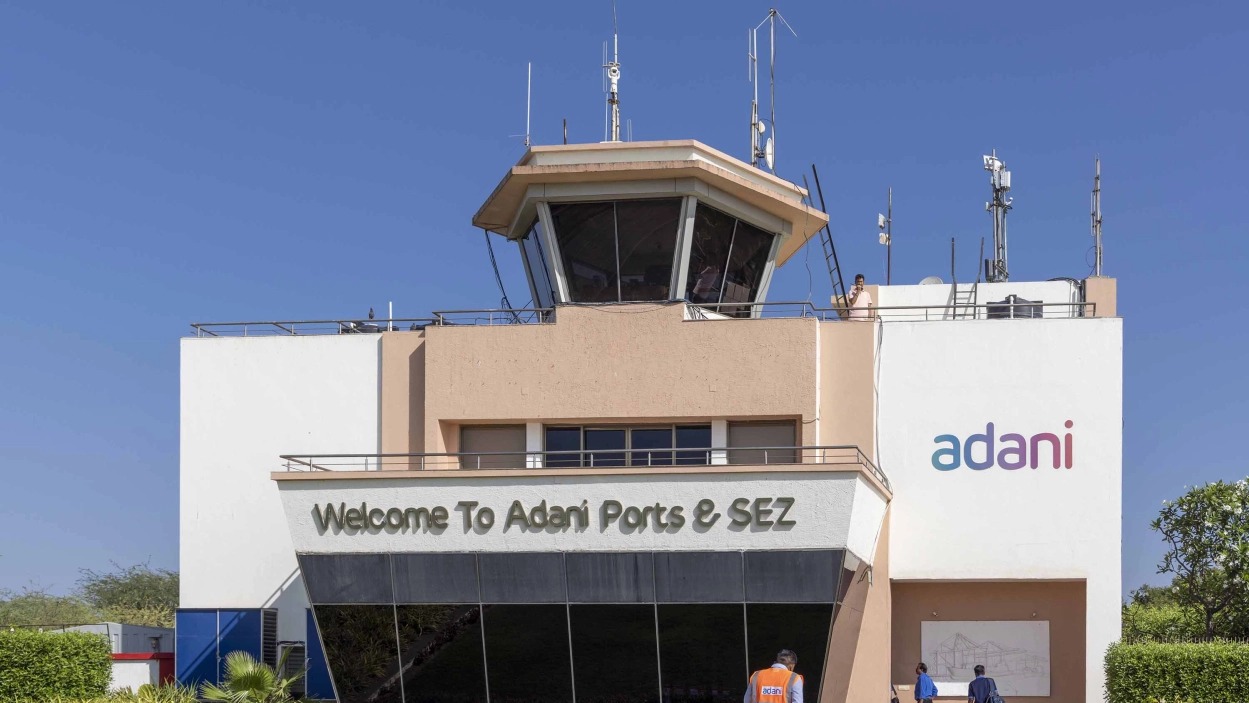
In June 2025, Arun Bansal, CEO of Adani Airport Holdings, wrote to the Airports Authority of India with an unusual request — lift the clause that bars the operator of Mumbai Airport from holding more than a 10% stake in a scheduled airline. The letter, reported by The Economic Times, also urged that similar restrictions be removed from future airport concession agreements.
The reasoning was pointed: Adani Defense & Aerospace, a wholly owned subsidiary, was evaluating an airline as a logical extension of an aviation ecosystem that already spans eight airports, pilot training, ground handling, and maintenance, repair and overhaul services.
The Case Adani Made
Bansal's letter framed the proposal as a pro-competition move. With IndiGo and Air India commanding close to 90% of the domestic market, he argued that a new, well-funded airline would sharpen competition, extend connectivity to underserved Tier-2 and Tier-3 cities, and reduce the kind of systemic risk that played out in December when IndiGo's operational disruption led to the cancellation of over 3,000 flights.
Adani also offered safeguards — governance structures, ring-fencing, and a commitment to non-discriminatory access for all airlines at its airports.
A Denial That Raised More Questions
The proposal landed in public view through media reports. Adani Enterprises promptly denied having any airline plans. What the company did not explain was why it had earlier told stock exchanges the same thing, while the group's letter to the AAI laid out a very different picture.
The inconsistency drew attention — and kept the story alive.
The Embraer Connection
Behind the airline idea sits another layer of strategy. The group's reported interest in launching a carrier is tied to its plans for an aircraft manufacturing facility with Brazilian aerospace firm Embraer. A captive airline, the thinking goes, could generate the initial aircraft orders needed to give that facility commercial momentum.
IndiGo Hits Back
The sharpest reaction came from IndiGo's founder and Managing Director Rahul Bhatia. Speaking on the airline's Q1 FY27 earnings call, Bhatia said the proposal would create a significant conflict of interest and ultimately hurt consumers.
"There is no global precedent. Typically, there is a massive conflict of interest, and over a period it will be against the interest of consumers," he said.
He flagged infrastructure access and slot allocation as areas where airport-owning airlines could extract unfair advantages. Asked whether IndiGo would consider buying airports if the rules changed, Bhatia said the airline would evaluate its options based on how policy evolves.
What Happens Next
Government officials are said to be examining the proposal as part of broader efforts to attract new operators and increase competition. Any rule change, however, would need Cabinet approval — and is expected to face resistance from existing carriers and scrutiny from competition regulators.
The debate is only beginning.
With Inputs from Business Today
Comment