

British Airways' parent company, International Airlines Group (IAG), delivered better-than-expected annual profits on Friday, yet its shares tumbled 6% by mid-morning trading. The paradox — strong numbers, weak investor reaction — set the tone for a story that reveals both the resilience and the uncertainty shadowing one of Europe's biggest airline groups.
Fuel Savings and Transatlantic Strength Drive the Numbers
IAG reported an operating profit before exceptional items of 5.02 billion euros ($5.93 billion), edging past the 4.97 billion euros forecast by analysts polled by LSEG and representing a 13% rise year on year. Lower fuel costs and robust demand on core transatlantic routes, particularly in premium cabins, were the chief drivers behind the outperformance.
The Premium Divide: Who Is Still Spending?
A clear pattern has emerged across European aviation: affluent travelers continue to spend freely, while price-sensitive passengers have pulled back. IAG has benefited from this trend, with Chief Executive Luis Gallego confirming on a media call that premium and corporate demand were performing particularly well at British Airways. He also noted that bookings for the first quarter of 2026 were strong, signaling a rebound since the third quarter of last year.
A November Warning That Shook Confidence
The road to Friday's results was not entirely smooth. In November, IAG warned of weakness in the economy segment of the transatlantic market — a disclosure that knocked its share price at the time. That softness was tied to tariff-related uncertainty and shifting U.S. demand signals, which caused price-conscious travelers to hesitate. The warning served as an early indicator of a two-speed market forming within the airline industry.
Shareholders Rewarded, but Guidance Remains Thin
To reward investors, IAG announced it would return 1.5 billion euros to shareholders over the next 12 months, beginning with a 500 million euro share buyback set to be completed by the end of May. The company also projected capacity growth of around 3%, with no delivery delays expected from either Airbus or Boeing. However, Finance Chief Nicholas Cadbury acknowledged limited visibility for the second and third quarters, which explained the absence of more detailed profit guidance — a gap that disappointed some analysts and contributed to the share price decline.
Rivals Closing the Gap
While IAG remains a European leader in transatlantic connectivity, it has recently ceded its position as the region's top share-price performer. Air France-KLM's shares have surged 50% over the past year, overtaking IAG's 36% gain. Lufthansa and Air France-KLM are both investing heavily in premium products, upgrading cabins, lounges, and onboard services, intensifying competition at the top end of the market.
Looking Ahead With Cautious Optimism
IAG enters 2026 with strong fundamentals but faces a clouded near-term outlook, particularly in the Africa and Middle East region, where Cadbury flagged some weakness. Whether premium demand can continue compensating for economy softness will be the defining question for the months ahead.
With Inputs from Reuters

Read next

The Supreme Court of India on Monday took a firm stance on the growing grievance of skyrocketing airfares, expressing serious concern over the sharp and unpredictable rise in ticket prices during festive seasons and holidays. The court made clear this was no ordinary petition — and that it warranted urgent attention from the highest levels of government.
The Court Takes a Rare Stand
A bench comprising Justices Vikram Nath and Sandeep Mehta was hearing a public interest litigation (PIL) that sought regulatory guidelines to control volatile airfare fluctuations. In a telling observation, the bench remarked, "This is a very serious concern. Otherwise, we don't entertain Article 32 petition" — a reference to the constitutional provision that allows citizens to directly approach the Supreme Court for enforcement of their fundamental rights. The court directed the central government to file an affidavit within four weeks detailing the steps being taken to address the concerns raised in the petition.
Government Responds, Asks for Time
Appearing on behalf of the Union government, Additional Solicitor General Anil Kaushik assured the court that the matter was being examined "at the highest level" given its significance for the general public. He informed the bench that the Solicitor General had already convened a meeting and that active discussions were underway with senior authorities. Requesting more time to file a comprehensive reply, Kaushik stated, "We will come up with a counter." The Supreme Court accepted this request and adjourned the hearing to March 23 — notably, after the Holi travel rush subsides.
What the Petition Actually Alleges
The PIL paints a troubling picture of how air travel, once a premium service, has become an essential mode of transport for millions — yet one that is rapidly slipping out of reach for ordinary citizens. The petitioner has accused airlines of arbitrarily fixing fares and contended that aviation now effectively functions as a basic service, bringing it within the scope of the Essential Services Maintenance Act. The plea argues that passengers are being systematically overcharged under the guise of dynamic pricing models.
Hidden Charges and Shrinking Services
Beyond ticket prices, the petition also flagged a quiet but significant erosion of passenger benefits. Airlines have reportedly slashed free baggage allowances from 25 kg to 15 kg, while simultaneously levying steep excess baggage fees — effectively converting what were once standard inclusions into new revenue streams. The petition further pointed out that there is currently no empowered regulatory body capable of imposing fare caps or reining in such ancillary charges.
What Petitioners Are Demanding
The petitioner has urged both the Centre and the Directorate General of Civil Aviation (DGCA) to introduce binding norms on airfare determination, set limits on surge pricing, regulate baggage and add-on fees, standardize cancellation and refund policies, and crucially, establish an independent aviation watchdog with real consumer protection powers. The matter will next be heard on March 23.
With Inputs from India Today
Read next
SpiceJet's Bold Sky Grab: Can India's Battered Budget Carrier Actually Pull Off a Capacity Comeback?
Abhishek Nayar
20 Feb 2026
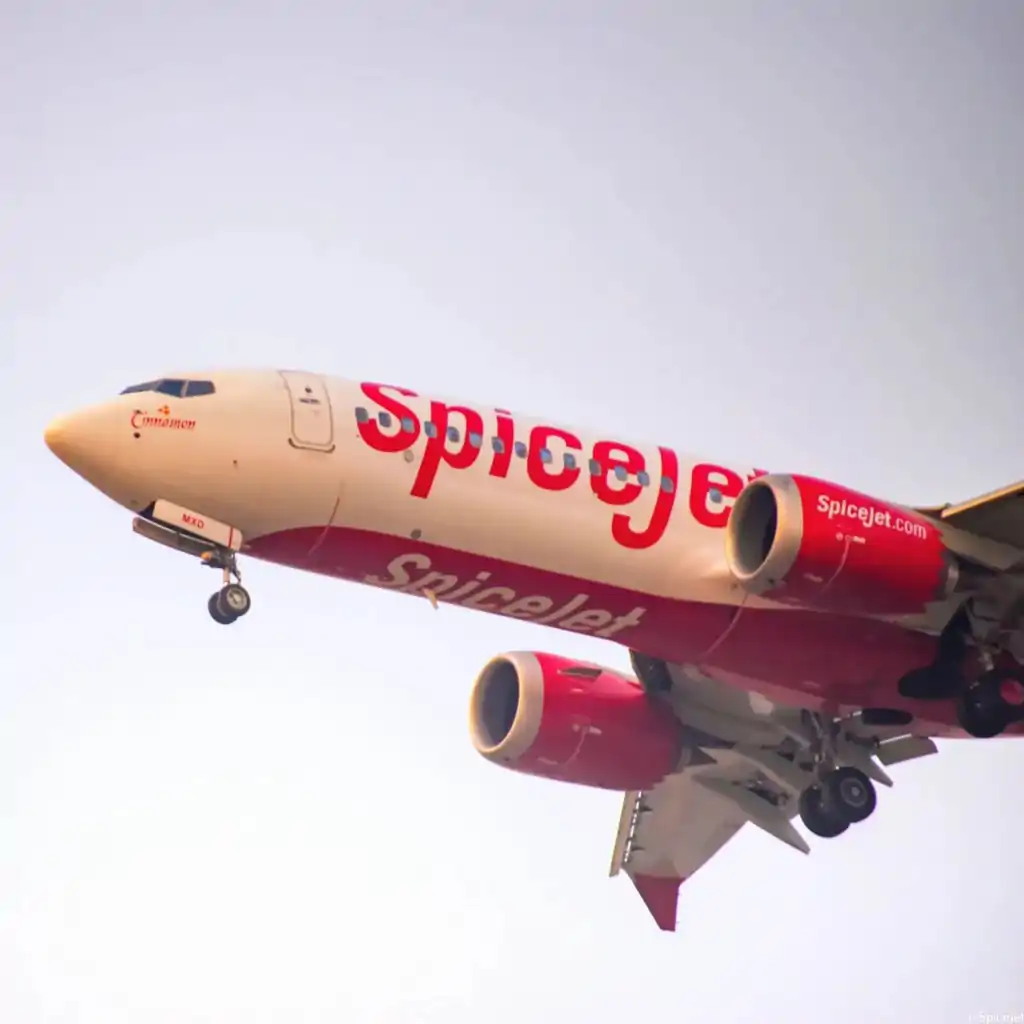
SpiceJet made waves on Thursday after the Indian budget carrier announced it had received a Memorandum of Understanding (MoU) for the induction of 10 new aircraft — a move that signals the airline is serious about clawing its way back into competitive relevance. The news sent SpiceJet's share price into positive territory, with the stock trading approximately one percent higher as of 11:08 a.m., offering investors a rare moment of optimism around the long-troubled carrier.
The Board Had Already Set the Stage
The Thursday announcement didn't arrive in isolation. Just days earlier, SpiceJet's Board had approved a calibrated fleet ramp-up strategy targeting 60 aircraft, to be achieved through a combination of wet and damp leases alongside the phased return of planes that had been sitting grounded. The MoU for 10 aircraft now gives concrete shape to that boardroom ambition, turning policy into measurable progress.
Capacity Has Already Been Doubling — and Fast
What makes this development particularly striking is that it builds on momentum that is already well underway. SpiceJet revealed that its Available Seat Kilometers (ASKMs) — the standard industry metric for measuring airline capacity — surged from approximately 55 crores to 105 crores in just the last quarter alone. That near-doubling of capacity in a single quarter reflects a sharp acceleration in the airline's recovery arc, one that had appeared uncertain not too long ago.
The Target: 220–225 Crore ASKMs by Winter 2026
With that foundation in place, SpiceJet is now setting its sights considerably higher. The airline has announced plans to more than double its current capacity over the course of the year, targeting between 220 and 225 crore ASKMs by Winter 2026. Alongside that, the carrier aims to operate over 300 daily flights across its network — a figure that would represent a dramatically expanded footprint compared to where it stood just months ago.
What SpiceJet Says It's Chasing
The airline framed its expansion around three pillars: stronger connectivity, improved operational reliability, and meeting what it described as robust passenger demand — all while maintaining what it called a "disciplined growth strategy." Debojo Maharshi, Chief Business Officer of SpiceJet, said in a statement that doubling capacity in the last quarter had been a significant milestone, and that the plans to more than double it further reflect growing confidence in the business and strong demand across the network. He also called the receipt of the MoU "an encouraging development."
Sustainability Remains the Long Game
Even as it eyes aggressive expansion, SpiceJet struck a note of caution, emphasizing that it will continue pursuing balanced growth through fleet restoration and selective additions as it works towards long-term sustainability — an acknowledgment, perhaps, that the road ahead still requires careful navigation.
Read next
Is Air India Finally Getting Its Act Together After Years of Fleet Troubles?
Abhishek Nayar
20 Feb 2026
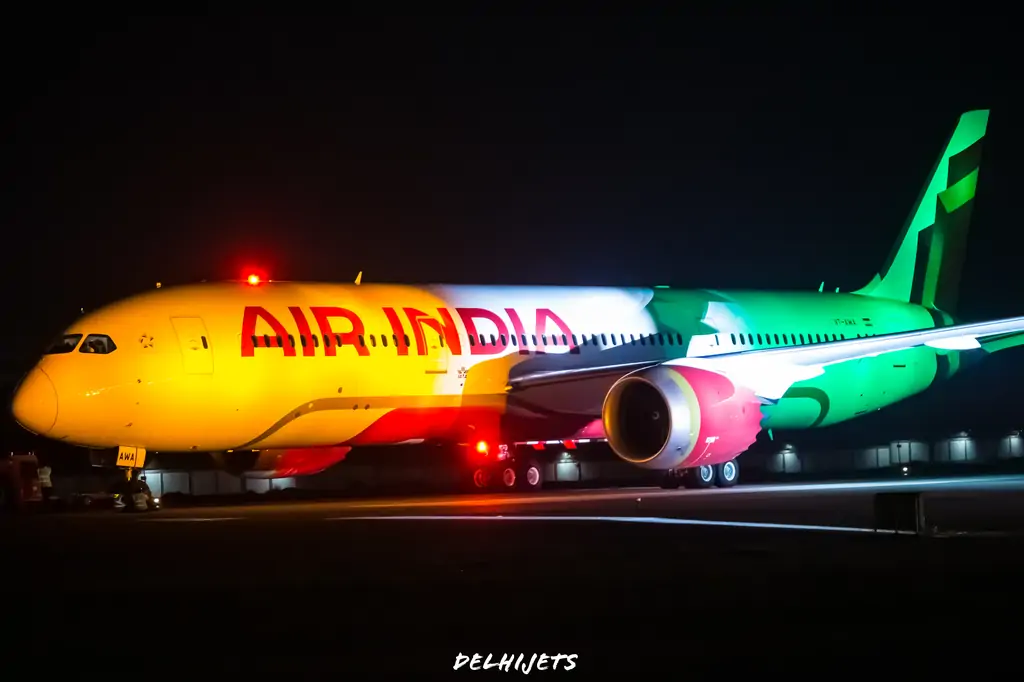
Air India, now under the stewardship of the Tata Group, has long grappled with reliability issues tied to its legacy wide-body fleet — specifically its aging Boeing 777 and 787 aircraft. These problems translated into visible consequences for passengers: flight cancellations, delays, and a dented reputation that the airline has been working hard to repair.
Wilson Addresses the Workforce Head-On
On Thursday, Air India's Chief Executive Officer and Managing Director Campbell Wilson took to a town hall with employees to deliver a progress report on the airline's transformation. Wilson identified operational resilience as a central pillar of Air India's current strategy, signaling to staff that the airline is not merely patching problems but building long-term reliability into its core operations.
Fleet Reliability Is Showing Measurable Gains
According to Wilson, both legacy Boeing fleets — the 777s and the 787s — are showing consistent improvements as reliability upgrade work continues to be carried out across the aircraft. The airline has been systematically replacing and upgrading components to reduce the risk of technical disruptions. Crucially, the inventory of spares and components has also been scaled up, which directly reduces downtime when parts are needed urgently. The upgradation of the legacy Boeing 787s, in particular, has already commenced, marking a concrete step forward in the modernization journey.
A Clear Timeline for Wide-Body Modernization
Wilson laid out a structured roadmap for the fleet's future. More than 50 per cent of Air India's wide-body fleet is targeted to be modernized by the end of 2026. The full wide-body modernization program is then expected to reach completion by December 2028 — giving the airline a firm, multi-year horizon against which both employees and passengers can measure progress.
Ambitions to More Than Double the Fleet by 2030
Perhaps the most striking announcement from the town hall was Wilson's growth ambition for the airline group. Air India currently operates a fleet of approximately 300 aircraft. Wilson revealed that the airline aims to expand that number to over 500 aircraft by 2030 — a target that would represent a near-doubling of capacity in just a few years, reflecting the Tata Group's confidence in India's booming aviation market.
What This Means for Air India's Future
Taken together, Thursday's town hall painted a picture of an airline in active transition — moving from fire-fighting legacy problems to executing a disciplined, phased modernization plan. With improved spare inventories stabilizing day-to-day operations, a concrete wide-body upgrade timeline in place, and an aggressive fleet expansion goal on the horizon, Air India appears to be laying the groundwork to compete seriously with both domestic rivals and international carriers in the years ahead.
Read next
Could Air India and Lufthansa's New Alliance Reshape the Future of India-Europe Travel?
Abhishek Nayar
18 Feb 2026

Air India and the Lufthansa Group signed a Memorandum of Understanding on February 17, 2026, laying the groundwork for a joint business agreement designed to expand connectivity between India and Europe.
The partnership brings together Air India and Air India Express on one side, and Lufthansa Group's full portfolio — Austrian Airlines, Brussels Airlines, ITA Airways, Lufthansa, and Swiss International Air Lines — on the other, promising travelers more seamless journeys across key intercontinental routes.
Building on an Existing Foundation
The agreement does not emerge from thin air. Air India and Lufthansa Group carriers already codeshare on 145 routes spanning 15 Indian and 29 European cities across 20 countries, a relationship further deepened in February 2025 when the two sides expanded codeshare arrangements between Air India, Lufthansa, SWISS, and Austrian Airlines. Both carriers are also longstanding members of Star Alliance, giving the new MoU a well-established diplomatic and operational foundation to build upon.
What the Partnership Will Cover
The proposed joint business framework will explore coordinated route planning and flight scheduling in specific markets, alongside joint sales, marketing, and distribution initiatives. The airlines also intend to collaborate on frequent flyer programmes, IT infrastructure, customer journey improvements, and quality assurance — all subject to regulatory and anti-trust approvals.
Initially, the MoU targets passenger traffic between India and Lufthansa Group's core European markets: Germany, Austria, Belgium, Italy, and Switzerland, with scope to expand later across the broader European continent and the Indian subcontinent.

Leaders Speak on the Vision
Carsten Spohr, Chairman of Deutsche Lufthansa AG, called the agreement "a strong signal of mutual determination to open a new chapter in aviation between the EU and India," particularly following the recent landmark trade agreement between both economic regions.
He also highlighted Lufthansa Group's premium product enhancements — including Lufthansa Allegris and SWISS Senses — as part of an elevated travel experience the partnership aims to deliver.
Campbell Wilson, CEO and Managing Director of Air India, described the MoU as "a milestone in our deepening relationship," noting that it enables closer cooperation across multiple fronts to serve growing trade, commerce, and people-to-people ties between India and Europe.
The Bigger Economic Picture
The scale of ambition behind this deal becomes clearer when viewed against the broader economic backdrop. India and the European Union together account for nearly 25 per cent of global GDP.
The EU is India's largest trading partner for goods, with bilateral trade exceeding €120 billion in 2024, while India ranks as the EU's ninth-largest trading partner. Since its privatization in 2022, Air India has grown its alliance network to 24 codeshare partnerships and nearly 100 interline agreements, reaching over 800 destinations globally.
Lufthansa Group, meanwhile, carried over 131 million passengers in 2024 across its five European national airlines. The final structure of the joint business agreement, including specific routes and markets, will be determined after regulatory clearances are obtained.
Read next
IndiGo's Massive Pilot Hiring Spree: Inside India's Aviation Crisis and Recovery Plan
Abhishek Nayar
16 Feb 2026
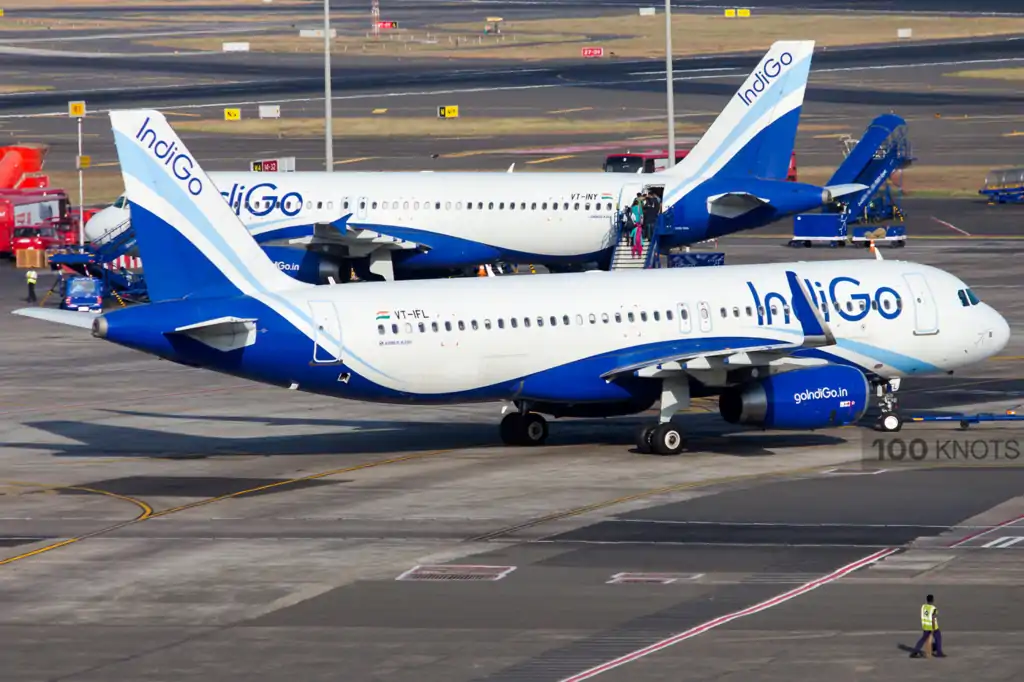
IndiGo, India's largest airline, is launching one of the most ambitious recruitment drives in Indian aviation history, seeking to hire more than a thousand pilots following a catastrophic operational meltdown that left thousands of passengers stranded last December. The hiring push represents a fundamental shift in how the carrier approaches crew planning after regulators exposed critical gaps in its staffing strategy.
The December Crisis That Grounded a Giant
The troubles began when India's aviation regulator implemented new fatigue management rules designed to protect pilot wellbeing. These regulations capped the number of landings pilots could perform during the crucial midnight to six in the morning window and mandated increased weekly rest periods. What seemed like a straightforward safety measure quickly spiraled into chaos for IndiGo, which cancelled over five thousand flights within just seven days as the airline discovered it simply did not have enough pilots to maintain its packed schedule under the new constraints.
The Directorate General of Civil Aviation launched an investigation that revealed uncomfortable truths about IndiGo's operations. The probe found that the airline had failed to hire adequate numbers of pilots ahead of the rule changes and had not accelerated its training programs to compensate. Instead, existing pilots were being stretched dangerously thin through frequent reassignments, longer working days, and extended periods of deadheading, where pilots travel as passengers to reach their next assignment rather than flying aircraft.
The Numbers Behind the Shortage
Aviation regulations in India require airlines to maintain three complete sets of pilots for each aircraft, including both captains and first officers. For IndiGo, which operates with exceptionally high aircraft utilization rates to maximize profitability, the actual requirement exceeds double this baseline. The regulatory investigation discovered that while IndiGo needed two thousand four hundred and twenty-two captains, it had only two thousand three hundred and fifty-seven available at the time of review.
The regulator's findings painted a picture of an airline that had become obsessed with maximizing every resource. Crew rosters were designed to push duty periods to their limits, with minimal buffer margins built into schedules. The system relied heavily on last-minute adjustments including deadheading, aircraft swaps, and extended duty patterns that looked efficient on paper but collapsed under regulatory constraints, leaving no room for operational resilience when new rules took effect.
Building for Tomorrow
IndiGo's hiring drive now targets trainee first officers, senior first officers, and captains, with the airline even accepting pilots without previous experience on its primary Airbus A320 family fleet. This marks a significant departure from typical airline hiring practices. The carrier inducts approximately four new aircraft monthly and promotes twenty to twenty-five first officers to captain rank through its internal training pipeline each month, creating constant demand for fresh talent.
The airline has implemented concrete changes beyond recruitment. Schedule buffers, which were virtually nonexistent in December, have been increased to three percent in February. Standby crew levels now maintain a minimum of fifteen percent, providing cushion for unexpected disruptions. With trainee first officers requiring roughly six months of training before becoming operational, the airline recognizes that continuous intake is essential to match its aggressive fleet expansion while meeting regulatory requirements and avoiding another December-style crisis.
With Inputs from Money Control
Comment