

Akasa Air is seeking to raise Rs.10.5 billion ($110 million) through a combination of equity and debt, according to people familiar with the matter who requested anonymity as the discussions remain private. The fundraise comes as India's youngest commercial carrier grapples with financial headwinds triggered by the ongoing conflict between Iran and the United States.
A Fundraise Built on Two Pillars
The airline has approached both existing and two new investors to mobilize approximately Rs.8 billion through equity. Simultaneously, it is in active discussions with state-run banks for a debt infusion of at least Rs.2.5 billion under a government-backed credit line designed specifically for carriers affected by the war.
For the equity portion, Akasa's existing shareholders will contribute Rs.5 billion, with the remainder expected from one Asian investor and one American investor, the sources said.
The War That Changed Everything
Akasa had raised funds from investors in June of the previous year under market conditions that subsequently deteriorated sharply. The Iran-US conflict triggered widespread flight disruptions and a steep surge in jet fuel prices — a cost that typically constitutes roughly 40% of an airline's total operating expenses — placing fresh and significant financial strain on the carrier.
The airline, which launched commercial operations in August 2022 and is operated by SNV Aviation Pvt., has not directly commented on its fundraising plans but stated it looks forward to availing the benefits of the government's credit line, "as appropriate, to further strengthen our growth plans."
An Industry Under Pressure
Akasa's situation is far from isolated. Across the Indian aviation sector, carriers are contending with the same war-induced financial turbulence. Tata Group-owned Air India recently reported its highest-ever loss and is actively seeking capital from its founders, including strategic partner Singapore Airlines. Budget carrier SpiceJet, meanwhile, is separately in talks with banks to raise as much as Rs.5 billion under the same government credit programme, according to local media reports.
Growth Against the Grain
Despite the considerable headwinds, Akasa has distinguished itself as the only Indian airline to meaningfully expand operations during this period. While overall industry capacity contracted by 6% in March and April, the Mumbai-based carrier bucked the trend and grew its flight count by 13.2% compared with the same period a year earlier.
Who Stands Behind Akasa
SNV Aviation's shareholder base includes Akasa's founder and Chief Executive Officer Vinay Dube, the family of the late billionaire Rakesh Jhunjhunwala, a private equity fund managed by 360 ONE Asset Management, and several other investors — a diverse group whose collective backing will now be tested against the pressures of a conflict neither they nor the airline anticipated.
With Inputs from Economic Times

Read next
Philippine Airlines Is About to End a 20-Year Boeing Drought — And It Could Reshape Asian Aviation
Abhishek Nayar
13 Jul 2026
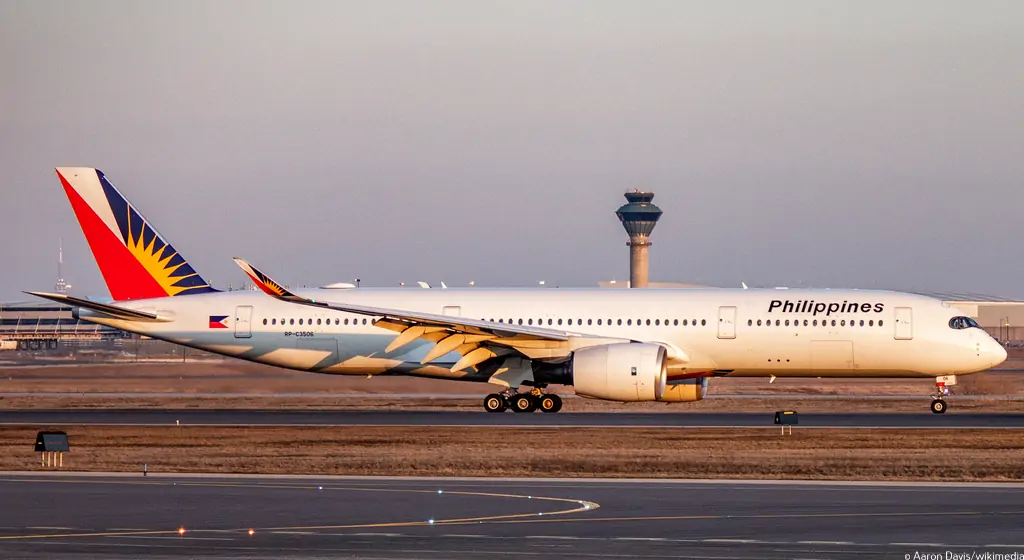
Philippine Airlines is on the verge of placing one of the most consequential aircraft orders in its recent history. Industry sources indicate that PAL is set to acquire 15 Boeing 787-10 Dreamliners and nine Airbus A350-1000 jets, splitting its widebody expansion between the world's two dominant commercial aircraft manufacturers. The announcement is expected at the Farnborough Airshow later this month.
The Boeing component of the deal would mark the Philippine flag carrier's first purchase from the American manufacturer in nearly two decades — a significant shift for an airline whose widebody fleet has long leaned on Airbus metal.
The President's Hint That Started It All
The deal did not emerge from thin air. PAL's president disclosed at an industry summit in June that the airline intended to place new aircraft orders within the next couple of months. Reports had since circulated that the carrier was leaning toward splitting an order for roughly 20 planes between Airbus and Boeing — a figure that the latest disclosures now appear to substantially exceed.
A Hidden Engine War
The 787-10 selection automatically triggers a separate competition that will play out behind the scenes: a head-to-head engine contest between Britain's Rolls-Royce and American powerhouse GE Aerospace. Both manufacturers offer engines certified for the 787 family, and PAL's eventual choice will carry significant commercial and diplomatic weight.
Retiring the Old Guard
PAL currently operates a mixed widebody fleet dominated by older-generation Airbus A330s and Boeing 777s, supplemented by a small number of the newer A350s. The incoming 787-10s will compete directly in the same market segment as the Airbus A330neo — the upgraded successor to the very jets PAL is seeking to eventually phase out.
Geopolitics in the Cabin
The timing of Boeing's return to PAL's order book is not incidental. Following a global showdown over tariffs, Washington has been actively working to reduce its trade deficit with the Philippines, which stood at nearly five billion dollars in 2024. Manila has publicly pledged to increase imports from the United States — and a major Boeing purchase fits neatly into that diplomatic calculus.
An Airline in Full Expansion Mode
PAL is not simply replacing ageing jets. The airline is growing. The Philippines is planning an entirely new international airport, providing the infrastructure backbone for expanded operations. Last month, PAL announced it would join the oneworld Alliance — ending years of isolation from the world's major airline groupings and opening the door to new codeshare and loyalty partnerships. The Boeing and Airbus orders, once formalized at Farnborough, would give PAL the fleet muscle to back that ambition.
With Inputs from Reuters
Read next
Will Etihad's Boeing Bet Reshape Middle East Skies Before the Farnborough Curtain Rises?
Abhishek Nayar
09 Jul 2026
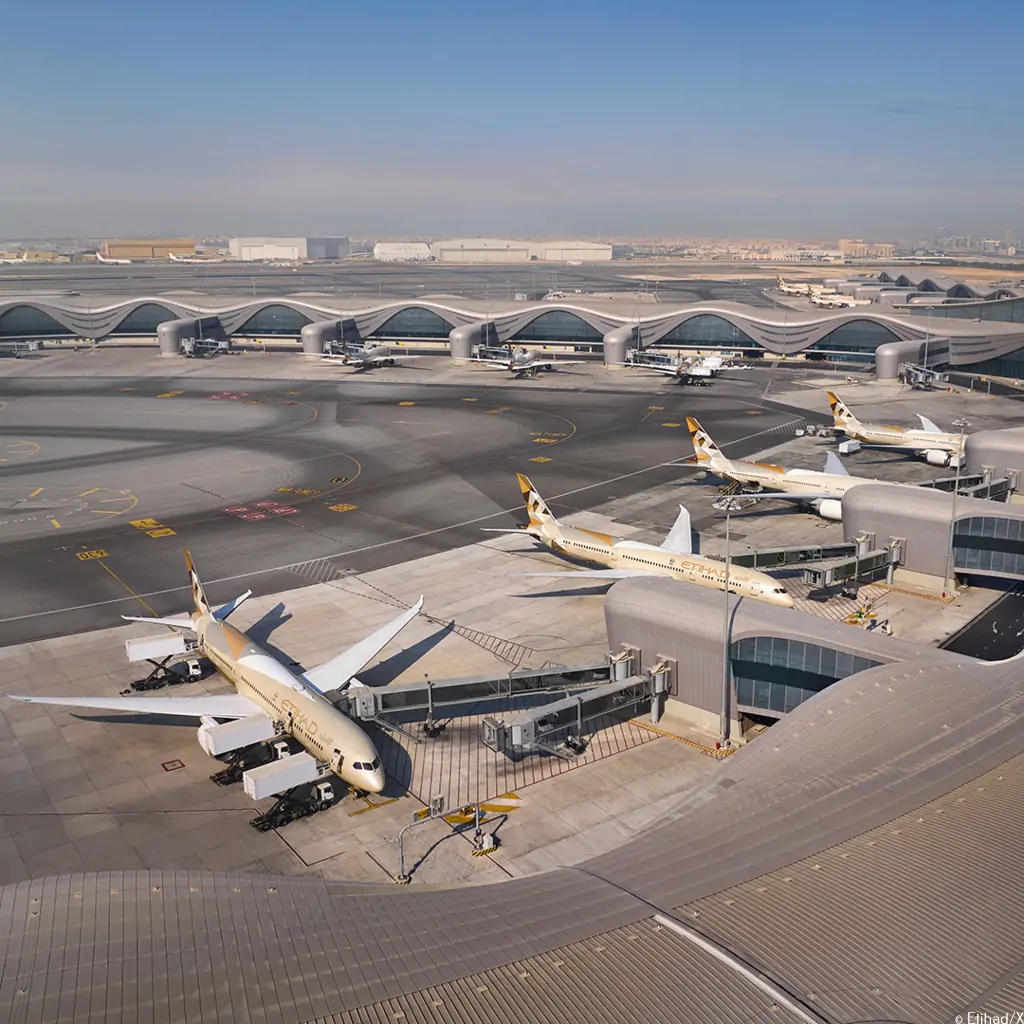
Abu Dhabi's Etihad Airways is edging closer to finalizing an order for 10 Boeing 787 wide-body jets, with industry sources revealing on Wednesday that an announcement could come as early as the Farnborough Airshow, scheduled for July 20 to 24 in Britain. The potential deal marks a significant move for the Gulf carrier as it rebuilds its long-haul network following a turbulent stretch earlier this year.
Nothing Is Signed Yet
Despite the optimism surrounding the talks, sources close to the negotiations were careful to temper expectations. They cautioned that no agreement is guaranteed, as discussions between Etihad and Boeing remain active in the lead-up to the high-profile British aviation event. Farnborough has historically served as the stage for some of the industry's most consequential aircraft orders, and this year's edition appears poised to follow that tradition.
The CEO's Hints
The groundwork for the speculation was quietly laid last month, when Etihad's Chief Executive Officer Antonoaldo Neves mentioned that the airline was actively evaluating the purchase of a double-digit number of wide-body aircraft. Neves did not identify a manufacturer or a specific model at the time, though the emerging Boeing 787 talks now bring considerably more shape to what had been a carefully worded declaration of intent.
The Shadow of the Iran Conflict
Etihad's fleet expansion plans come against a complicated operational backdrop. The airline was forced to cut flights in March after rising fuel prices followed the outbreak of the U.S.-Israeli war on Iran. Those fuel cost pressures hit carriers across the region hard, prompting schedule reductions and route adjustments at a time when Middle Eastern aviation was otherwise showing recovery momentum.
The Region Bounces Back
The broader Gulf aviation market, however, has been demonstrating resilience. Europe's Airbus noted earlier that Middle Eastern airlines were recovering strongly in the wake of the region's fragile ceasefire, with Gulf hubs gradually returning toward normal traffic volumes. That wider rebound appears to have given Etihad the confidence to resume service on affected routes and press ahead with long-term fleet investments.
The Road to Farnborough
As the Farnborough Airshow approaches, attention in the aviation industry will be fixed on whether Etihad and Boeing can close the remaining gaps in their negotiations. A confirmed 787 order would signal that the airline is not merely stabilizing but actively positioning itself for growth in a post-conflict, post-disruption landscape — one where wide-body capacity and long-haul ambition may once again define the region's carrier hierarchy.
With Inputs from Reuters
Read next
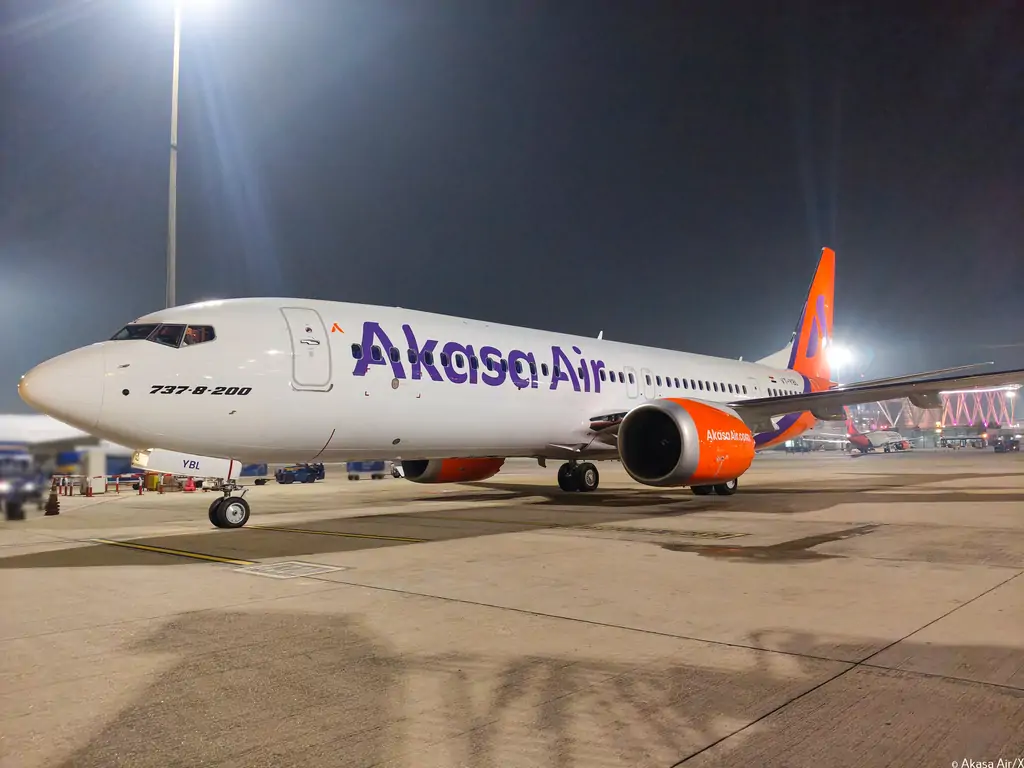
As Akasa Air approaches its fourth anniversary of commercial flying, the airline is preparing to spread its wings into India's regional connectivity mission — and its fleet is growing steadily to support that ambition.
Akasa Air CEO Vinay Dube confirmed that the carrier plans to operate flights under the government's UDAN (Ude Desh ka Aam Naagrik) scheme, which targets air connectivity to unserved and underserved destinations at affordable fares. Rather than making a blanket commitment, Dube said the airline would conduct a careful study on a sector-by-sector basis before identifying which routes to serve under the programme.
A Fleet That Keeps Growing
On the fleet front, Akasa Air has taken delivery of nine new Boeing 737 MAX aircraft so far this year, with Dube describing the pace of aircraft additions as "very steady and predictable." The airline has placed orders for 226 planes in total, and the remaining 186 aircraft are expected to join its fleet by the end of 2032.
The carrier is targeting a 30 per cent increase in capacity during the current financial year, with growth projected to remain in the range of 30 to 40 per cent annually over the next four to five years — a trajectory that positions Akasa as one of the more aggressively expanding carriers in the Indian aviation market.
UDAN Gets a Fresh Push
The timing of Akasa's regional ambitions aligns with a renewed government push for connectivity. A modified version of the UDAN scheme was launched on July 4, refreshing an initiative that originally took off in October 2016. Since its launch, the scheme has helped operationalize 669 routes, connecting 95 airports, heliports, and water aerodromes across the country.
The updated scheme continues to pursue the goal of making air travel accessible to ordinary Indians in cities and towns that have historically lacked reliable connectivity.
Where Akasa Flies Today
Currently, Akasa Air connects 28 domestic and 7 international cities — a network that has been built steadily since the airline began commercial operations. The upcoming anniversary marks four years of flying for a carrier that has grown from a market newcomer into a recognizable force in Indian aviation.
Watching the Fine Print on Government Schemes
Beyond UDAN, two other government-backed financial initiatives are also on Akasa's radar. Dube said the airline is studying the terms and conditions of the ATF Price Stabilization Fund and the Emergency Credit Line Guarantee Scheme (ECLGS) before arriving at a final decision on participation in either programme. The airline has not ruled out joining, but is proceeding with deliberation rather than haste.
A Carrier With a Plan
With a firm fleet order, a mapped-out capacity growth strategy, and a potential entry into regional routes, Akasa Air is signaling that its next chapter will be shaped by both scale and reach — flying more aircraft, to more places, for more Indians.
Read next

In a ruling that could reshape how insolvency cases across India handle employee dues, the National Company Law Appellate Tribunal (NCLAT) declared on Tuesday that workmen are entitled to their full provident fund and gratuity payments even when their employer never bothered to maintain separate accounts for these funds. The decision brings relief to hundreds of former Jet Airways employees who have spent years fighting for money owed to them after the airline's dramatic collapse.
How the Dispute Began
The case traces back to Jet Airways' liquidation, which followed the failure of the Jalan-Fritsch consortium's resolution plan in November 2024. Once the airline's revival hopes fell apart, its former employees turned to the tribunal, arguing that their provident fund and gratuity dues deserved special protection under Section 36(4)(a)(iii) of the Insolvency and Bankruptcy Code, which shields such statutory dues from being swallowed up by the liquidation estate.
State Bank of India, along with other financial creditors, pushed back hard. Their argument rested on a technicality: they claimed the protection under the IBC only applied if Jet Airways had actually maintained separate provident fund or gratuity accounts at the time liquidation began. Since no such dedicated funds existed, the lenders insisted, the employees' claims should be treated like any other debt within the liquidation estate.
The Tribunal's Verdict
The NCLAT was not persuaded. It firmly rejected the lenders' interpretation, ruling that statutory provident fund and gratuity dues must be paid in full regardless of whether a separate fund was ever set up. In doing so, the tribunal upheld an earlier February order from the National Company Law Tribunal (NCLT), which had directed the liquidator to pay these dues outside the liquidation estate altogether. The tribunal stated plainly that the liquidator remains liable to pay these amounts to workmen and employees, and that such dues cannot be counted as part of the liquidation estate.
A Partial Setback on Salary Claims
Not every part of the employees' case succeeded, however. The tribunal declined their request to exclude a recovery certificate issued by the Deputy Labor Commissioner covering salary dues from January to March 2019. Instead, it ruled that these unpaid salary claims would have to be handled under the IBC's standard waterfall mechanism, the same priority system used for other workmen's dues during liquidation.
A Win on Timelines Too
In a further boost for the employees, the NCLAT also addressed how delays in the insolvency process should be treated. It ruled that the 1,656 days consumed by litigation during the proceedings must be excluded when calculating the 24-month look-back period used to determine workmen's dues, effectively giving employees more breathing room in establishing their claims.
The ruling is expected to set an important precedent for how provident fund and gratuity protections are interpreted in insolvency cases well beyond the aviation sector.
Read next
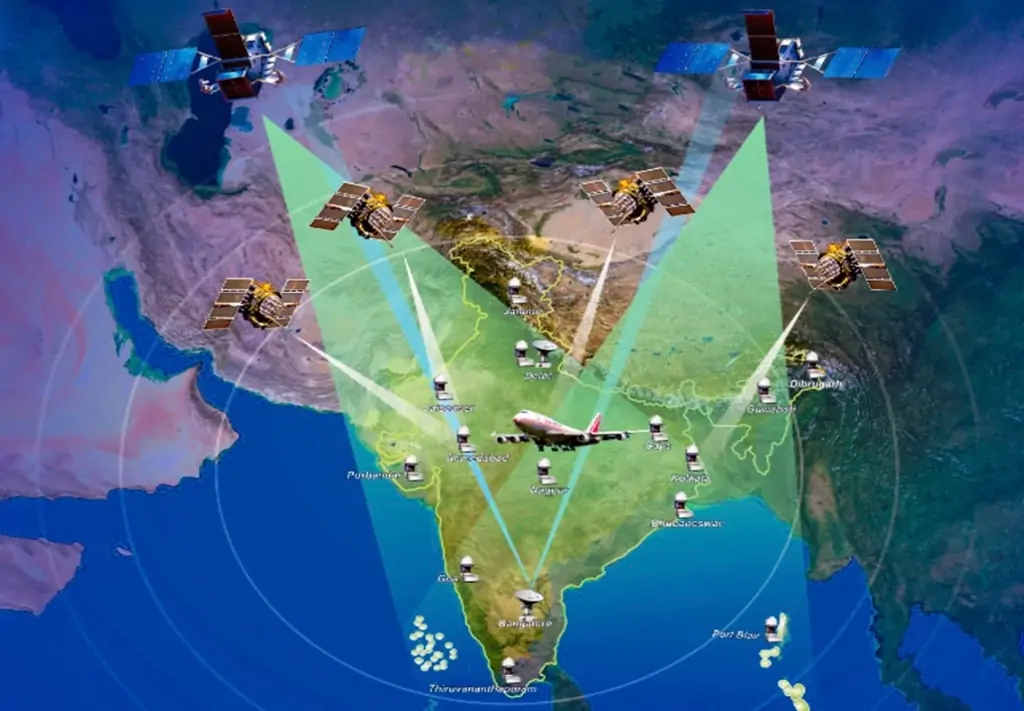
A quiet runway in Udaipur became the stage for a milestone in Indian aviation history, as the Directorate General of Civil Aviation (DGCA) conducted the country's first satellite-based landing system (SLS) approach on a jet engine aircraft.
The Aircraft And The Airport
The exercise was carried out on an IndiGo Airbus A320 at Udaipur airport, using the GAGAN (GPS-aided geo augmented navigation) system, a technology jointly developed by the Indian Space Research Organization (ISRO) and the Airports Authority of India (AAI). Officials confirmed that the aircraft successfully executed a Localizer Performance with Vertical Guidance (LPV) approach, a precision navigation procedure that had, until now, remained out of reach for jet operations in India.
A Procedure Once Reserved For Turboprops
Before this trial, such satellite-guided landing procedures had been limited strictly to turboprop aircraft operating in the country. Extending the capability to a jet engine aircraft like the A320 therefore represents a significant technical leap, opening the door for wider commercial adoption across India's jet fleets.
What Makes SLS Different
SLS allows aircraft to rely on satellite-based corrections for precision landings, reducing dependence on ground-based Instrument Landing Systems (ILS). This is particularly valuable at airports that lack expensive precision landing infrastructure, since satellite guidance can offer similar accuracy without the heavy ground equipment costs typically associated with ILS installations.
IndiGo's Earlier Steps With LPV
The airline's journey with this technology did not begin in Udaipur. IndiGo had first introduced LPV operations on its ATR fleet back in 2022, and has since steadily expanded satellite-based augmentation system (SBAS)-enabled navigation across a broader range of its aircraft. The Udaipur trial on the A320 marks the natural progression of that earlier groundwork, now reaching jet operations for the first time.
How Pilots Describe The Technology
Explaining the mechanics behind the system, a senior pilot said SBAS enhances the accuracy, integrity, and availability of standard GNSS signals by broadcasting correction data from geostationary satellites. Rather than depending solely on equipment installed at airports, the pilot noted, it allows crews to receive precise horizontal and vertical guidance while approaching the runway, a shift that could reshape landing procedures at airports with limited ground infrastructure.
What This Means For India's Aviation Future
Officials said the development places India among a select group of countries with indigenous SBAS capability, a distinction that carries weight in a global aviation landscape increasingly leaning on satellite navigation. GAGAN, they added, is expected to play a larger role in improving safety and efficiency at secondary airports in the coming years, many of which currently lack the infrastructure for traditional precision landing systems. As this technology moves from trial to wider rollout, it could quietly transform how India's regional connectivity story unfolds, one satellite-guided approach at a time.
Comment