
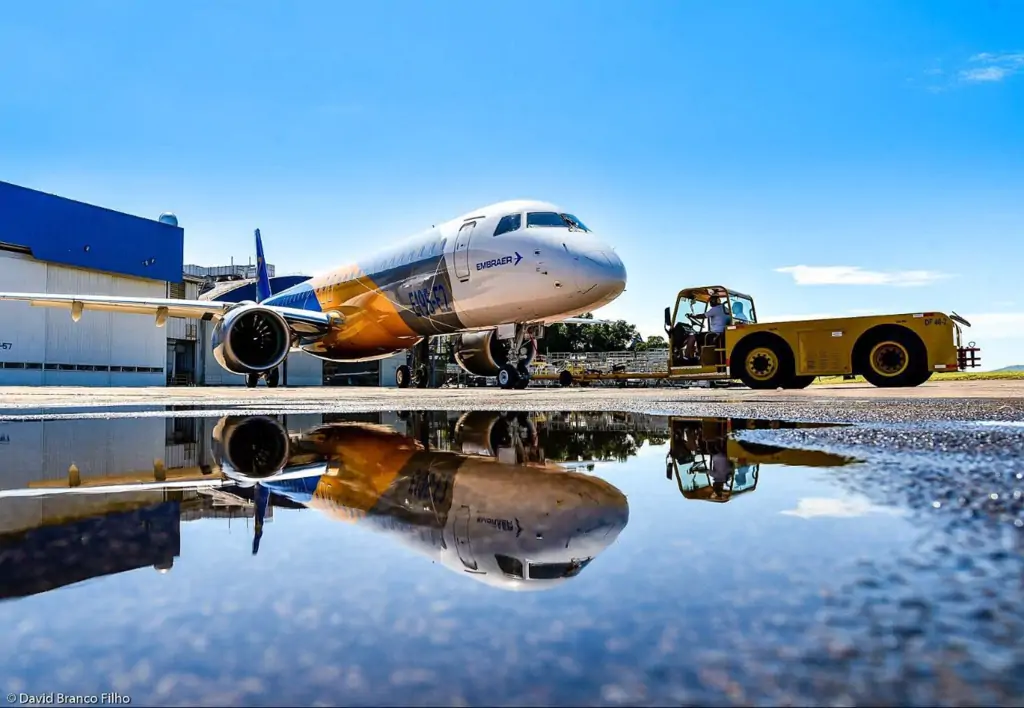
The Brazilian aircraft manufacturer Embraer is enjoying a robust uptick in demand for its aircraft, leading to a significant boost in its stock price. The company, recognized as the third-largest aircraft manufacturer globally after Boeing and Airbus, is riding high on the wave of substantial orders and deliveries.
American Airlines: A Game Changer for Embraer
A notable catalyst for Embraer's recent success is a massive order from American Airlines. The airline confirmed an order for 85 Airbus A321neos, 85 Boeing 737 MAX 10s, and an impressive 90 Embraer E175s, with an option to increase the total to 133 E175s. This order alone now constitutes 10% of Embraer's backlog, highlighting the growing confidence in Embraer's capabilities and the quality of its aircraft.
Record Backlog and Impressive Deliveries
Embraer's backlog has hit a seven-year high of $21.1 billion, marking a 13% increase over the previous quarter. This surge is not only attributed to passenger aircraft but also to the growing demand for Embraer's private jets. The Embraer E2 series, in particular, has seen a significant rise in orders, with a total backlog of 194 units, including 179 E19-E2s and 15 E190-E2s.
Deliveries have also been impressive. In Q1 2024, Embraer delivered 67% more aircraft compared to Q1 2023. This included 25 jets, with 18 from the executive aviation segment and seven passenger E-jets. Among the E-jets, four were E195-E2s and three were E175s, indicating a balanced demand across different models.
Key Customers: Azul Airlines, Porter Airlines, and Azorra

Several major airlines are contributing to Embraer's burgeoning backlog. Brazilian carrier Azul Airlines accounts for 30% of the E195-E2 backlog with 51 aircraft. Canadian carrier Porter Airlines is expecting another 43 jets, while Azorra has ordered most of the E190-E2s, with a total of 12 aircraft. These orders reflect the global appeal and reliability of Embraer's aircraft.
Competitive Edge in the Regional Aircraft Market
One of Embraer's competitive advantages is the availability of its production slots from 2026. In contrast, Boeing and Airbus are sold out until the end of the decade, making Embraer an attractive option for airlines seeking quicker deliveries. This timing advantage, combined with the impact of Boeing's troubled 737 MAX production, enhances Embraer's position in the market.
Financial Resurgence and Market Capitalization
Embraer's market capitalization has seen a remarkable recovery, increasing by around 70% this year. Rising from approximately $3.5 billion to over $5 billion, the company's stock is on an upward trajectory. This recovery is particularly notable compared to its low in 2020 when its market cap dipped below $1 billion. Although it remains below the 2007 high of almost $9 billion, the current growth trajectory is promising.
Diversified Portfolio: Beyond Commercial Aircraft
Embraer's success is not limited to commercial aviation. The company is also a key player in the defense sector, supplying aircraft such as the A-29 Super Tucano and the KC-390 Millennium. The first KC-390 Millennium for the Hungarian Air Force recently completed its maiden flight, showcasing Embraer's expanding global footprint. The defense and security backlog amounted to $2.4 billion in Q1 2024, underscoring the company's diversified and resilient business model.
Conclusion: The Sky is the Limit
Embraer's recent achievements underscore its strategic growth and resilience in a competitive industry. With a robust backlog, significant orders from major airlines, and a diversified portfolio, Embraer is well-positioned to continue its upward trajectory. As the company navigates the skies of commercial and defense aviation, its innovative approach and timely delivery schedules make it a formidable player on the global stage.
Stay tuned as Embraer continues to redefine the future of aviation, one flight at a time.

Read next

In a significant development for Canadian aviation, WestJet Airlines' mechanics have issued a 72-hour strike notice, signaling potential travel disruptions later this week. The Aircraft Mechanics Fraternal Association (AMFA) made the announcement on Tuesday, stating that approximately 681 aircraft maintenance engineers and other skilled employees would halt work by 9 p.m. ET on Thursday if their demands are not met.
What Triggered the Strike Notice?
The union's decision to strike comes in the wake of ongoing negotiations with WestJet, which have not yielded a satisfactory agreement for the mechanics. The primary concerns revolve around pay disparities and working conditions. The mechanics are pushing for improved wages and benefits to narrow the earnings gap with their higher-paid counterparts in the United States.
Impact on WestJet Operations
WestJet has sought to reassure passengers, emphasizing that the strike notice does not necessarily equate to immediate travel disruptions. The airline has formally requested intervention from the Canadian Industrial Relations Board and the Minister of Labor under the Canada Labor Code to prevent the strike and ensure continued operations.
Context: Recent Developments in WestJet Labor Relations
This strike notice follows closely on the heels of a successful negotiation between WestJet Encore's pilots and the airline. Last week, the pilots, represented by the Air Line Pilots Association (ALPA), ratified a new five-year contract, securing pay increases. WestJet Encore, the regional wing of WestJet Airlines, operates an extensive network of regional flights essential to the airline's overall operations.
The Competitive Landscape: WestJet vs. Air Canada
WestJet, owned by Onex Corp, is embroiled in a competitive struggle with Air Canada, particularly concerning labor relations. Both airlines are striving to meet employee demands and bridge the pay gap between Canadian aviation workers and their American peers. This labor dispute is a critical test for WestJet as it navigates these turbulent negotiations.
Potential Consequences for Travelers
Should the strike proceed, it could result in significant disruptions for passengers, particularly during the busy summer travel season. Travelers with upcoming flights are advised to stay updated on the situation and consider contingency plans. WestJet's proactive request for government intervention underscores the seriousness of the potential strike and its broader implications for the airline's operations and reputation.
Conclusion: Navigating the Uncertainty
As the clock ticks towards the Thursday evening deadline, both WestJet and its mechanics are under intense pressure to reach a resolution. The coming days will be crucial in determining whether a strike can be averted and what measures will be implemented to mitigate any impact on passengers. Stay tuned for further updates as this situation unfolds, and prepare for possible changes to your travel plans.
In the meantime, WestJet passengers should keep a close eye on communications from the airline and be ready to adjust their itineraries if necessary. The outcome of these labor negotiations will not only affect WestJet's operations but could also set a precedent for labor relations in the Canadian aviation industry.
With Inputs from Reuters
Read next

In a significant escalation of their contract dispute, Air Canada pilots, represented by the Air Line Pilots Association, International (ALPA), have taken their case to the Canadian Federal Mediation and Conciliation Service. Despite negotiations that began in June 2023, the two sides have yet to reach an agreement. The ALPA has filed a notice of dispute, triggering a mandatory intervention process.
Government Intervention: A Race Against Time
Following ALPA's filing, Canadian Minister of Labor Seamus O’Regan has a 15-day window to appoint a conciliation officer. This officer will then have 60 days to mediate discussions between the pilots and Air Canada. If no agreement is reached within this period, and without an agreed extension, a 21-day cooling-off phase will begin. Post this phase, ALPA could initiate a strike vote—a potential disruption that looms over the peak travel season.
CEO's Vision Versus Pilot's Reality
Michael Rousseau, President and CEO of Air Canada, highlighted the airline's progress during the Annual General Meeting in March. He emphasized cost control, revenue generation, network expansion, and improving passenger experience as key priorities. Additionally, Rousseau stressed the importance of employee unity, citing the hiring of over 8,000 new employees in 2023 and numerous town hall meetings aimed at fostering a cohesive company culture.
However, this optimistic vision sharply contrasts with the grievances expressed by the pilots. According to Charlene Hudy, chair of Air Canada’s ALPA Master Executive Council (MEC), the airline has consistently undervalued its pilots’ contributions. She pointed out that the proposed pay packages lag significantly behind those of pilots at American Airlines, Delta Air Lines, and United Airlines.
Pay Discrepancies: A Longstanding Issue
The crux of the dispute lies in the pay disparity. Hudy criticized Air Canada for failing to restore pilot salaries to pre-9/11 levels, a milestone that other North American legacy carriers have long surpassed. She noted that Air Canada's pilots earn roughly half of what their counterparts at U.S. legacy airlines make, a stark gap that has only widened over time.
Potential Impact: Strikes and Service Disruptions
The prospect of a strike during Air Canada's peak season is a significant concern. Should negotiations remain at an impasse, the resulting strike vote could lead to extensive service disruptions, affecting thousands of passengers and potentially tarnishing the airline’s reputation.
Conclusion: Seeking a Path Forward
As the clock ticks, the urgency for a resolution grows. Both sides must navigate this complex landscape, balancing the pilots' demands for fair compensation with the airline's operational and financial goals. The coming weeks will be critical in determining whether Air Canada can achieve a harmonious agreement or face a turbulent period of labor unrest.
The outcome of these negotiations will not only impact the airline's immediate operations but also set a precedent for labor relations in the Canadian aviation industry. All eyes are on Air Canada as it attempts to navigate through these challenging skies.
Read next

In recent weeks, speculation has been rife about Embraer's potential move into the narrowbody aircraft market, traditionally dominated by Boeing and Airbus. With reports from prestigious outlets such as the Wall Street Journal and Forbes hinting at imminent plans, and Brazil Journal suggesting an announcement as early as next year, industry watchers are abuzz with anticipation. However, is there any substance to these rumors?
CEO's Cryptic Confirmation
At Embraer’s annual media days in São José dos Campos, the company’s CEO, Francisco Gomez Neto, addressed the swirling rumors head-on. His initial response, "We were expecting this question," set the stage for a candid discussion about Embraer's future. Gomez Neto acknowledged that while Embraer possesses the capabilities to produce larger commercial aircraft, there are no concrete plans to launch a new narrowbody model in the immediate future.
"We are always studying opportunities for new products, not only in commercial but in all other business units as well," Gomez Neto explained. "We can do different products, but at this point in time, we don't have concrete plans to do a bigger airplane."
Strategic Vision for Growth
Embraer's focus, according to Gomez Neto, is on achieving the company’s ambitious revenue target of $10 billion by the end of the decade. Reaching this milestone will enable Embraer to improve its financial performance and generate the cash flow necessary to consider expanding its product lines.
"By doing that, we will further improve our financial performance and will generate more cash. Then we will be in a better condition to talk about the future," he concluded.
Capitalizing on Market Conditions
While a new narrowbody aircraft might not be on the horizon, Embraer is strategically positioned to capitalize on current market conditions. Both Airbus and Boeing are grappling with extensive backlogs and production delays, creating a window of opportunity for Embraer. The company’s agility and shorter delivery timelines present a compelling alternative for airlines needing to expand their fleets quickly.
"Because of the constraints in the delivery of big narrowbodies in the future, we are a great opportunity and a great solution for the airlines to add capacity more quickly to their fleets," Gomez Neto emphasized.
Rapid Deliveries: A Competitive Edge
A key example of Embraer's competitive edge is American Airlines' recent order of up to 133 E175s, with deliveries set to begin as early as next year. This rapid turnaround is in stark contrast to the industry giants. Forecast International estimates Boeing and Airbus have backlogs extending over 11 years. For instance, easyJet, which ordered narrowbodies from Airbus last October, does not expect deliveries to start until 2029.
Buying from Embraer could mean the difference between waiting nearly a decade for new aircraft and receiving them within a year. For airlines racing to meet burgeoning demand, this agility could be a decisive factor.
Embraer's Promising Position
Despite not diving into the narrowbody market just yet, Embraer remains a significant player with a unique value proposition. Its ability to deliver aircraft swiftly amidst the prolonged production schedules of its larger competitors makes it an attractive option for airlines worldwide.
The future might hold new ventures for Embraer, but for now, the company’s strategy focuses on leveraging its strengths and maintaining its position in the competitive aviation market. As Gomez Neto indicated, achieving financial goals and solidifying their market presence will pave the way for any future expansions, keeping industry insiders and observers eagerly awaiting Embraer's next move.
Read next
Global Airlines Set to Transform India's Aviation Landscape: What It Means for Passengers and Economy
Abhishek Nayar
20 Jun 2024

India’s aviation sector is on the cusp of a major transformation. The recent influx of foreign airlines expanding their operations in the country is poised to bring substantial benefits to both the international and domestic aviation markets. Air Canada, for instance, is set to increase its seat capacity by 40% starting October, while Etihad Airways is launching new services from Abu Dhabi to Jaipur, its 11th destination in India.
Sri Lankan Airlines, already operating 95 weekly flights from nine Indian cities, plans to increase flight frequencies and add new destinations. Japan Airlines (JAL) has signed a codeshare partnership with Indigo, enhancing connectivity between the two countries.
Boost to India's Aviation Market
India is currently the third-largest domestic aviation market in the world. Projections suggest that by 2024-25, the country will surpass the UK to become the third-largest air passenger market globally. The extensive network expansion plans of foreign carriers reflect their confidence in India’s growth potential, a sentiment echoed by aviation experts and industry leaders.
Economic Growth and Infrastructure Development
Jaideep Mirchandani, chairman of Sky One, underscores the broad economic and social benefits that increased foreign airline activity can bring. Enhanced connectivity will make air travel more accessible and affordable, promoting tourism and trade. This, in turn, will create jobs, support remote communities, and help meet the surge in demand, especially during peak seasons.
Strengthening Domestic Aviation through Code Sharing
Mirchandani also highlights the importance of codesharing agreements in bolstering domestic aviation. Codesharing allows airlines to book passengers on partner carriers, thereby offering more travel options and enhancing service offerings. This can open up new domestic and international networks, fostering socio-economic growth across the country.
Supporting Government Initiatives and MRO Sector Growth
The expansion of domestic networks aligns well with the Government’s Regional Connectivity Scheme (RCS-UDAN), aimed at making air travel accessible to isolated communities and promoting rural economic development. Furthermore, the anticipated growth of the Maintenance, Repair, and Overhaul (MRO) sector will provide strategic investors, original equipment manufacturers (OEMs), and leading global MRO players with new investment opportunities in India.
Navigating Regulatory Challenges
However, Mirchandani points out potential regulatory challenges that could impact the expansion plans of foreign airlines. The Directorate General of GST’s imposition of GST on services provided by foreign airline headquarters to their Indian branches has been opposed by the International Air Transport Association (IATA). Such measures could increase operational costs for foreign airlines in India, potentially hindering their expansion efforts. Mirchandani urges regulatory authorities to consider decisions that would benefit both Indian and foreign carriers.
Conclusion: A Bright Future for Indian Aviation
The confidence that global flag carriers are showing in India bodes well for the domestic aviation market. As these airlines expand their networks, they bring with them the promise of enhanced connectivity, economic growth, and infrastructure development. With strategic policy decisions and continued investment, India’s aviation sector is poised to soar to new heights, benefiting passengers, businesses, and the economy at large.
Read next
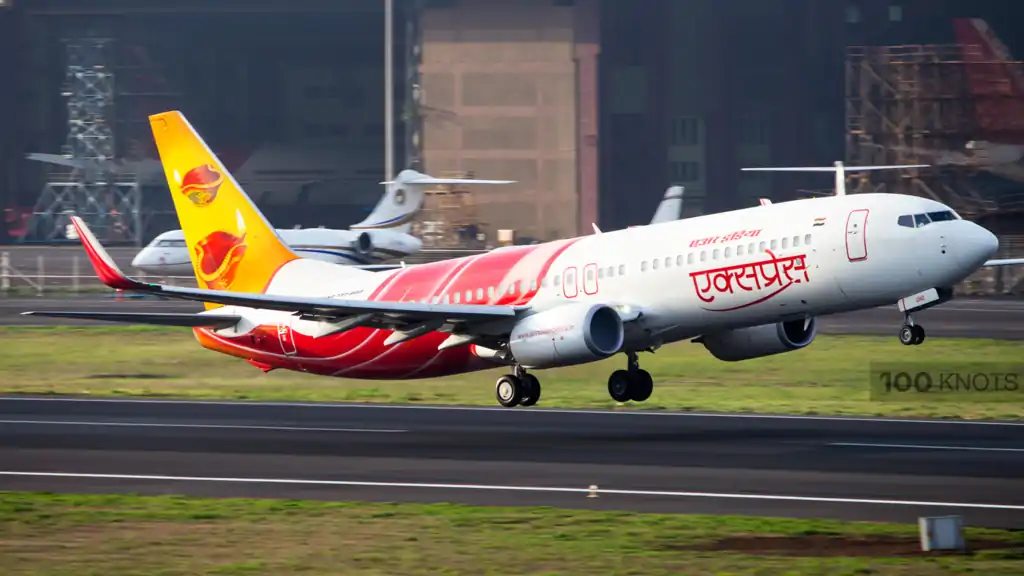
Air India Express, a prominent subsidiary of Air India and part of the Tata group, has recently made a significant move by relocating its headquarters to the Vatika One-on-One complex in Gurugram. This new state-of-the-art office not only aligns with the airline's commitment to innovation and sustainability but also promises to enhance productivity and employee satisfaction. Here’s an in-depth look at what this relocation entails and why it matters.
A Modern Workspace for a Modern Airline
Tech-Enabled and Future-Ready
The new Air India Express headquarters is designed to be at the forefront of technology and sustainability. The office is equipped with the latest technological advancements to streamline operations and improve efficiency. This commitment to being future-ready ensures that the airline can adapt to evolving industry demands and continue to provide top-notch service to its customers.
Sustainable and Energy-Efficient Design
In line with global trends towards sustainability, the new office is built to be energy-efficient. This not only reduces the environmental impact but also reflects Air India Express’s dedication to responsible corporate practices. Such measures are crucial in today's climate-conscious world and position the airline as a leader in sustainable business practices.
An Aesthetic Tribute to Indian Heritage
Themed Interiors: "The Patterns of India"
One of the standout features of the new headquarters is its interior design, which incorporates the theme "The Patterns of India." This aesthetic choice celebrates the rich cultural heritage of India, with intricate wall designs that bring a touch of tradition into a modern workspace. This blend of the old and the new creates an inspiring and visually appealing environment for employees.
Promoting Collaboration and Transparency
Open Floor Plan with Natural Light
The office boasts an open floor plan that is bathed in natural light. This layout is designed to promote transparency and teamwork among employees. Collaborative areas are strategically placed to encourage spontaneous interactions and creative brainstorming sessions, fostering a dynamic and cohesive work culture.
Versatile Workspaces for Privacy and Focus
While the open floor plan encourages collaboration, the new headquarters also caters to the need for privacy and focused work. Ample meeting rooms, phone booths, and enclosed spaces ensure that employees can work without distractions when necessary. This balance between openness and privacy makes the workspace versatile and adaptable to various work styles.
A Dynamic and Inclusive Work Environment
Gender-Inclusive Amenities
In a move towards inclusivity, Air India Express has ensured that the new headquarters features gender-inclusive amenities. This commitment to creating an inclusive environment is a significant step towards fostering equality and respect within the workplace.
Recreation Facilities
Recognizing the importance of work-life balance, the new office includes recreation facilities. These spaces provide employees with opportunities to relax and rejuvenate, contributing to a more dynamic and engaging work environment. Such facilities are essential for maintaining employee well-being and productivity.
A Growing Fleet and Expansive Network
Air India Express operates a robust network with over 380 daily flights, connecting 31 domestic and 14 international airports. The airline's fleet comprises 75 aircraft, including 47 Boeing 737s and 28 Airbus A320s. This extensive reach and capacity underline the airline's significant role in both domestic and international aviation markets.
Conclusion: A Strategic Move for Future Growth
The relocation of Air India Express’s headquarters to the Vatika One-on-One complex in Gurugram marks a strategic move aimed at supporting future growth and operational efficiency. The modern, sustainable, and inclusive design of the new office reflects the airline's commitment to innovation, employee well-being, and sustainability. As Air India Express continues to expand its network and enhance its services, the new headquarters will undoubtedly play a crucial role in driving the airline's success.
This new chapter for Air India Express not only highlights its dedication to progress but also sets a benchmark for modern corporate environments in the aviation industry. The future looks bright for this dynamic airline as it soars to new heights from its cutting-edge headquarters in Gurugram.
Comment