
How Did a Young Kuwaiti Airline Transform Into a Regional Aviation Powerhouse in Just Two Decades?

Abhishek Nayar
09 Dec 2025
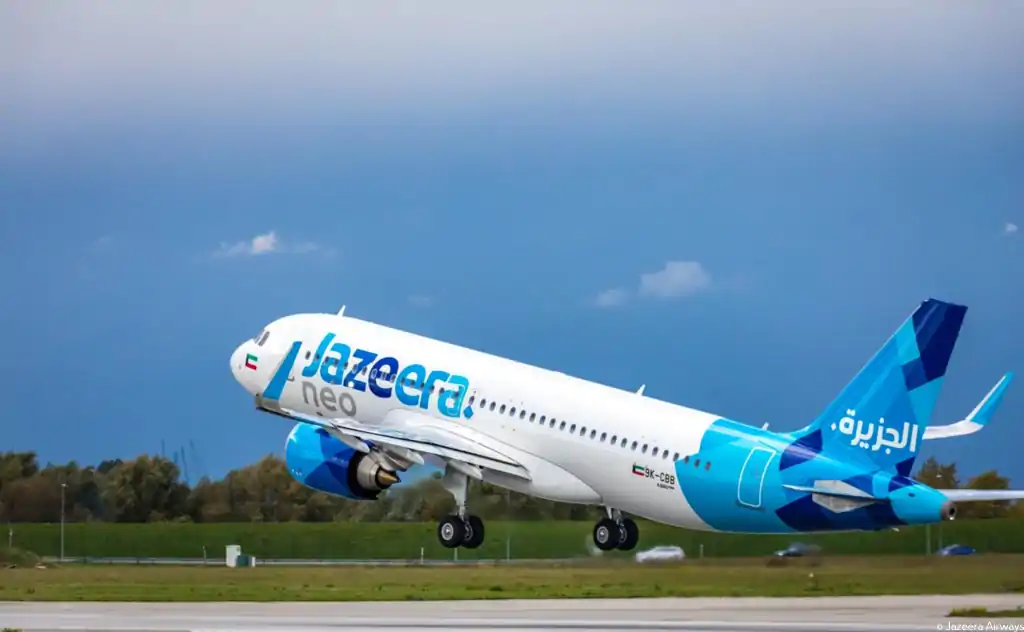
Jazeera Airways recently brought together government officials, industry leaders, and global partners to mark its 20th anniversary, celebrating a journey that has reshaped Kuwait's position in regional aviation. The celebration gathered representatives from the Kuwait Directorate General of Civil Aviation, the Ministry of Interior, Kuwait Customs, and the Public Authority for Manpower, alongside travel agencies, service providers, and major suppliers like Airbus and CFM, who have supported the airline's aircraft and engine operations throughout its growth.
A Vision Born from National Ambition
The airline's story began with an Amiri Decree that opened Kuwait's skies to privately owned carriers. This legislative milestone created the foundation for Jazeera Airways, which launched with a clear mission to advance the country's aviation sector and expand its global reach. The vision has driven the airline through twenty years of measured, sustainable expansion, establishing it as a key player in regional connectivity.
Marwan Boodai, Chairman of Jazeera Airways, reflected on the forces behind this success. "The success of Jazeera Airways over the past 20 years has been shaped by strong partnerships, the dedication of our people, and the trust of our customers," Boodai explained. He emphasized that these three pillars have built a resilient operation that strengthens Kuwait's global connections while contributing meaningfully to the national economy.
Building a Modern Aviation Ecosystem
The airline has systematically expanded its capabilities over two decades. Jazeera Airways now operates 23 Airbus aircraft, serving more than 70 destinations spanning the Middle East, Central and South Asia, Europe, and Africa. The carrier moves over five million passengers annually, creating vital economic links across continents. The strategic partnership with Airbus has proven particularly valuable, providing the airline with modern, efficient aircraft that support both operational reliability and passenger comfort.
CEO Barathan Pasupathi outlined the airline's forward trajectory with ambitious targets. "Jazeera Airways proudly marks twenty years of partnership and belief—belief in Kuwait, in opportunity, and in the power of aviation to connect people and drive growth," Pasupathi stated. He credited the airline's progress to collaborative ambition among partners and the dedicated efforts of the entire Jazeera team.
Preparing for Kuwait's Tourism Revolution
The celebration arrives as Kuwait advances its national vision for tourism and economic diversification. Industry projections indicate that airport infrastructure will need to accommodate 50 million passengers or more in coming years, reflecting expected demand growth. Jazeera Airways positions itself at the center of this transformation, planning to expand its fleet to 50 aircraft while targeting ten million passengers annually.
Pasupathi emphasized that growth will advance through innovation, digital transformation, and sustainability initiatives, all while maintaining the airline's core commitments to safety and customer experience. The airline views itself as both participant and catalyst in Kuwait's broader economic development, creating partnerships that generate shared value across its expanding network. The next twenty years promise transformative change for the carrier, its partners, and Kuwait's aviation landscape.
With Inputs from The Worldwide
Read next

IndiGo, India's dominant airline carrier, plunged the nation's aviation sector into unprecedented turmoil last week when the company cancelled at least 2,000 flights over seven days. The crisis stranded tens of thousands of passengers and exposed critical weaknesses in an aviation market where two carriers control over ninety percent of domestic routes.
How the Crisis Unfolded
The airline failed to prepare adequately for new regulations limiting pilot working hours, which created severe staffing shortages. Travelers watched their vacation plans dissolve and missed weddings while luggage mountains grew at airport terminals. Social media flooded with images that marked a historic low point for Indian aviation. The carrier's celebrated on-time performance collapsed from 91.4 percent in July to just 3.7 percent on Friday.
IndiGo commands 65 percent of India's domestic market, while Air India holds 27 percent. This concentration creates what analysts call a duopoly-like situation that leaves the market dangerously exposed. When IndiGo stumbles, the entire system trembles.
The Broader Market Context
India's aviation sector carried 174 million passengers in 2024, marking ten percent growth from the previous year. Prime Minister Narendra Modi has championed aviation expansion, famously declaring that those "in slippers should also be seen in aircraft." IndiGo became the vehicle for this democratic vision, offering low fares and reliable service since its 2006 founding by businessmen Rakesh Gangwal and Rahul Bhatia.
The airline now operates more than 400 aircraft, mostly Airbus A320s, serving 380,000 customers daily through over 2,000 flights. CEO Pieter Elbers, formerly of KLM Royal Dutch Airlines, leads the operation that generated $9 billion in revenues and $807 million in profits last fiscal year.

Systemic Risks Emerge
Harsh Vardhan, chairman of Starair Consulting, warned that IndiGo's size means operational failures now pose systemic risk. The government responded by temporarily relaxing pilot fatigue rules to ease disruptions. Customer refunds reached $68 million by Sunday and continue climbing.
The crisis mirrors Southwest Airlines' 2022 holiday meltdown, which cancelled 16,900 flights and cost at least $400 million. An IndiGo executive, speaking anonymously, called this the company's lowest point, noting that disruptions severely damage the brand built on punctuality promises.
Air India faces its own challenges after a June crash killed 260 people, intensifying regulatory scrutiny of the former state-owned carrier struggling with an aging fleet.
Competition Challenges Remain
Few airlines survive India's brutal market conditions. High taxes, fierce competition, and supply chain problems drove Kingfisher, Jet Airways, and Go First into bankruptcy recently. G.R. Gopinath, founder of defunct Air Deccan, argues that no country can grow robustly with effective monopolies in any sector.
IndiGo announced Sunday it would operate more than 1,650 flights and expects stabilization by Wednesday. The financial damage remains undisclosed, but the reputation cost looms larger for an airline that once made punctuality its anthem.
With Inputs from Reuters
Read next
Why Did Spirit Suddenly Cancel Hundreds of Pilot Furloughs After Bankruptcy Filing?
Abhishek Nayar
08 Dec 2025

Spirit Airlines reversed a major workforce reduction decision on Friday, scrapping plans to furlough 365 pilots and significantly reducing captain downgrades after months of aggressive cost-cutting measures tied to its Chapter 11 bankruptcy restructuring.
The Unexpected Reversal
The ultra-low-cost carrier announced it would no longer proceed with furloughs initially scheduled for the first quarter of next year. The airline also dramatically scaled back planned captain downgrades, reducing them from 170 to just 25 positions. Spirit currently employs approximately 2,400 pilots across its operations.
A company spokesperson confirmed the cancellation but offered no explanation for the sudden policy shift. The Air Line Pilots Association, however, provided clarity on what drove management's decision. The union revealed that Spirit revised its staffing model following detailed discussions about attrition assumptions that proved inaccurate.
When Projections Meet Reality
The pilots' union explained that the assumptions underlying Spirit's October announcement no longer reflected current conditions. The airline's attrition model, which predicted how many pilots would voluntarily leave the company, had become outdated as actual workforce trends diverged from initial projections.
The Air Line Pilots Association stated that the business case supporting large-scale furloughs simply did not align with current data. This disconnect between projected and actual attrition rates meant Spirit could maintain adequate staffing levels without implementing the originally planned workforce reductions.
The Bankruptcy Context
Spirit filed for Chapter 11 bankruptcy protection in August, marking the airline's second such filing as it struggled with dwindling cash reserves and mounting financial losses. The carrier has since implemented a comprehensive restructuring strategy focused on aggressive cost reduction.
The airline announced a series of furloughs affecting both pilots and flight attendants throughout the year. Spirit also revealed plans to shrink its fleet as part of broader efforts to stabilize its financial position. The October announcement of additional furloughs and downgrades represented one component of this multi-faceted restructuring approach.
Previous Workforce Reductions
Spirit had already furloughed approximately 600 pilots earlier in its restructuring process. The airline's cost-cutting measures extended beyond job eliminations to include compensation adjustments for remaining employees.
In November, the pilots' union agreed to accept an eight percent reduction in hourly pay rates. The agreement also slashed retirement account contributions by half, representing significant concessions from the pilot workforce as Spirit worked to reduce its operational expenses during bankruptcy proceedings.
The Friday announcement marks a rare positive development for Spirit's pilot workforce after months of uncertainty and sacrifice. While twenty-five captains will still face downgrades to first officer positions, the reversal prevents hundreds of pilots from losing their jobs entirely as the airline navigates its financial restructuring.
With Inputs from Reuters
Read next
What Makes President Putin's "Flying Kremlin" More Than Just a Presidential Jet?
Abhishek Nayar
07 Dec 2025
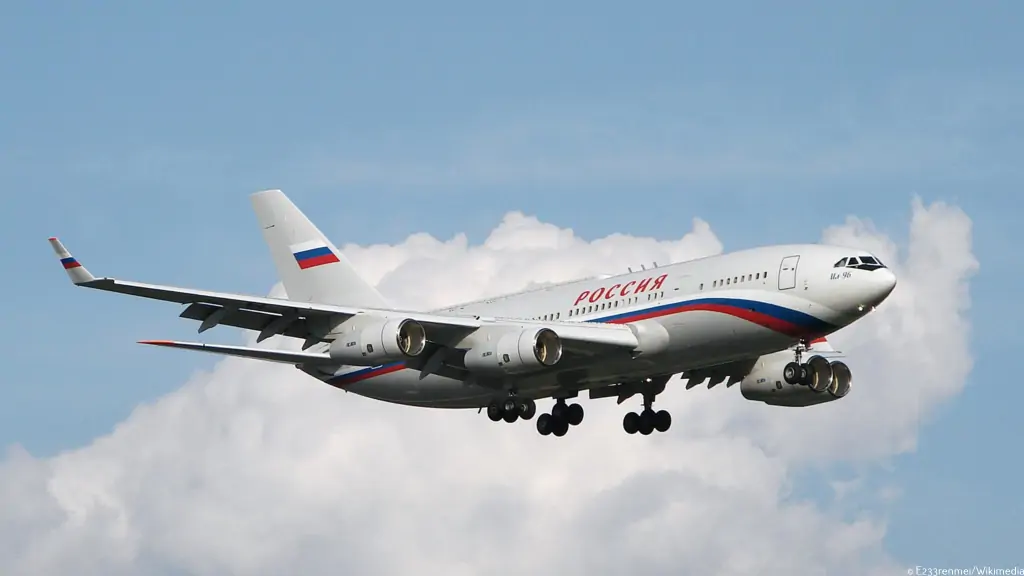
When Russian President Vladimir Putin touched down in New Delhi on December 4th, 2025 for the 23rd annual India-Russia summit, his arrival brought more than diplomatic protocol. The aircraft that carried him—the Ilyushin IL-96-300PU, nicknamed the "Flying Kremlin"—represents one of the most sophisticated mobile command centers ever built.
A High-Stakes Summit Amid Global Tensions
Prime Minister Narendra Modi prepared to host Putin for a private dinner before formal discussions began. The summit agenda covered critical ground: defense partnerships including the pending S-400 air defense systems and potential Su-57 fighter jet acquisitions, energy security arrangements despite US sanctions on Russian oil, and broader trade relationships. India positioned itself carefully as a neutral party while both leaders discussed the evolving situation in Ukraine and US policy developments.
The Aircraft That Doubles as a Flying Government
Putin's presidential aircraft originated from the IL-96-300, a four-engine long-range airliner that the Ilyushin Design Bureau developed during the 1980s. The prototype first took flight on September 28th, 1988, entering commercial service in the early 1990s. Russia's Special Flight Squadron, which manages all presidential travel, operates this specially modified version manufactured by the Voronezh Aircraft Production Association.
The designation IL-96-300PU carries significant meaning—"PU" translates to "Punkt Upravleniya," meaning "command post." This aircraft stretches 55.35 meters in length with a 60.12-meter wingspan. Four Aviadvigatel PS-90A turbofan engines power the jet, enabling it to cover approximately 11,000 kilometers without refueling stops.
Military Grade Protection in the Sky
The Flying Kremlin functions as a complete mobile command center during national emergencies. Encrypted communication systems maintain secure connections with military, intelligence, and government networks globally through protected satellite links and radio channels. The cockpit displays information across six multifunction LCD screens, while fly-by-wire controls enhance handling precision.
Defense systems include electronic countermeasures, radar-jamming technology, infrared decoy launchers, and anti-missile measures. Engineers reportedly hardened the aircraft's electronics against electromagnetic pulse attacks. The IL-96-300PU can support emergency command functions, allowing Putin to issue military orders mid-flight, with a nuclear command interface reserved for extreme circumstances.
Luxury Meets Functionality
Inside, the aircraft transforms into a mobile Kremlin residence. Gold-plated fittings complement rich Karelian birch woodwork and neoclassical furnishings. The presidential suite includes a private bedroom, while a large conference room accommodates high-level meetings. Putin maintains access to a private office, guest lounge, luxurious bathrooms with showers, dedicated kitchen and dining areas, medical facilities, and even fitness space for long journeys.
Unlike Western leaders who typically fly modified Boeing or Airbus aircraft, Putin's jet remains entirely Russian-made—a deliberate statement of technological independence and national pride soaring through international airspace.
With Inputs from NDTV
Read next
Saudia and GE Aerospace Forge Engine Partnership That Brings Advanced Aviation Technology Home
Abhishek Nayar
04 Dec 2025

Saudia Group has secured a comprehensive agreement with GE Aerospace that will power the national carrier's ambitious fleet expansion while establishing new technical capabilities within Saudi Arabia itself. The deal centers on equipping 39 Boeing 787 Dreamliners—a mix of 787-9 and 787-10 variants ordered in 2023—with GEnx-1B engines, marking a strategic shift in how the Kingdom approaches aviation maintenance and expertise.
Building Technical Independence Through Strategic Partnership

The agreement extends beyond simple engine procurement. GE Aerospace will supply the engines themselves, spare units for operational continuity, and a multi-year maintenance, repair, and overhaul program that addresses the complete lifecycle of these advanced powerplants. What distinguishes this arrangement is its focus on capability transfer rather than dependency.
Saudia Technic, the Group's maintenance and engineering division, will serve as the vehicle for developing domestic expertise. The partnership includes technical training programs and knowledge transfer initiatives designed to enable in-country maintenance of engines that previously required overseas servicing. This localization keeps investment capital, specialized skills, and operational value within Saudi borders.
Leadership Perspectives on Aviation Advancement
Engr. Ibrahim Al-Omar, Director General of Saudia Group, emphasized how the partnership serves multiple strategic objectives simultaneously. The agreement transforms the Group's long-haul operational capability while expanding air connectivity across international markets. More significantly, it accelerates the development of high-technology aviation expertise domestically, aligning with the economic diversification goals outlined in Saudi Vision 2030.
H. Lawrence Culp Jr., Chairman and CEO of GE Aerospace, highlighted the mutual benefits embedded in the collaboration. The GEnx engines will deliver reliability, fuel efficiency, and durability to support Saudia's expanding widebody operations. He noted that joint efforts to develop skilled aerospace workforces will create lasting value for both the Kingdom and the United States throughout the coming decades.
Proven Engine Technology Meets Regional Ambition
The GEnx engine family represents a significant advancement in commercial aviation propulsion. Since entering service in 2011, these engines have accumulated over 70 million flight hours across global operations. Advanced materials and engineering innovations deliver higher time-on-wing performance and enhanced reliability compared to previous generation engines. Today, GEnx powerplants equip two-thirds of all operational 787 aircraft worldwide.
GE Aerospace maintains a relationship with Saudi Arabia's aerospace sector spanning more than four decades. The company currently powers the Kingdom's four largest commercial carriers and supports the largest F110 military engine fleet outside the United States. This latest agreement deepens existing collaborations focused on developing local talent and strengthening technical capabilities.
Saudia Group's long-term strategy emphasizes fleet expansion, new international routes, and increased passenger capacity across global markets. The Group simultaneously expands technical capabilities through Saudia Technic, reinforcing aviation infrastructure while cultivating next-generation expertise. These initiatives support the Saudi Aviation Strategy and contribute to Vision 2030's objective of establishing a world-class aviation sector that strengthens the Kingdom's global connectivity.
Read next
What Made Indian Airlines Soar in 2025 When Others Just Added More Planes?

Jaideep Mirchandani
04 Dec 2025
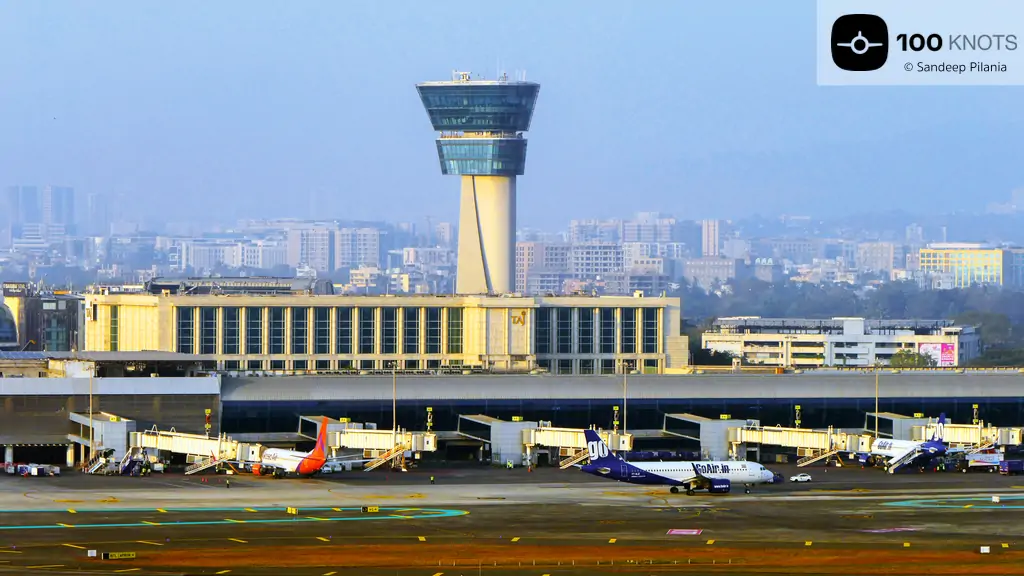
India's aviation sector reached a pivotal milestone in 2024 when it became the world's fifth largest air passenger market, according to the International Air Transport Association's World Air Transport Statistics report released in August. The country handled 211 million travelers, marking an 11.1 percent increase over the previous year and surpassing several traditional markets to position itself behind only the United States, China, the United Kingdom, and Spain.
The Strategy That Changed Everything
Jaideep Mirchandani, Group Chairman of Sky One, emphasizes that 2025 brought a fundamental shift in how Indian carriers approached growth. Airlines moved away from simply expanding fleet numbers and instead concentrated on modernizing existing aircraft while retiring older models. This strategic pivot improved both efficiency and service quality, marking a departure from the conventional expansion playbook.
The transformation aligned with global trends showing increased demand for premium class travel, particularly as the Asia Pacific region continued dominating the world's busiest air routes. Major Indian airlines responded by retrofitting nearly half of their narrow body fleets with redesigned interiors, enhanced seating, and contemporary inflight entertainment systems. These upgrades delivered greater passenger comfort while simultaneously improving cost efficiency through superior fuel consumption, extended operational range, and reduced maintenance requirements.
Rethinking International Operations
Indian airlines fundamentally reshaped their international strategies during this period. Major carriers including IndiGo, Air India, and Akasa Air began deploying long range single aisle aircraft on routes that traditionally required larger jets. This tactical shift enabled them to expand their international network while substantially reducing operating costs through a flexible hybrid model.
Mirchandani explains that this hybrid approach will continue defining fleet utilization in India's expansive market. Narrow body aircraft provide cost efficiency and better capacity balance for many routes, while wide body jets remain indispensable for passenger comfort on long haul journeys and cargo operations, since most freight travels in their belly hold space. Airlines are expected to increasingly adopt this mixed fleet strategy in coming years.
Beyond Leasing Models
The year's most successful carriers prioritized effective fleet utilization over sheer aircraft numbers. Several airlines moved beyond fully leased models by adopting hybrid approaches that combine leased and owned aircraft. This strategy helps carriers balance financial risk while building long term value in an intensely competitive market, positioning it as a defining factor in shaping India's aviation future.
Charting the Path Forward
These developments will significantly influence how airlines plan network expansion while pursuing sustainability goals. Fuel efficient narrow body aircraft are positioned to remain the foundation of regional and mid haul growth. Airlines are focusing on high yield, point to point international routes for selective expansion, emphasizing profitability over pure volume. This strategic evolution demonstrates how smart deployment and efficiency, rather than fleet size alone, defined India's remarkable airline growth trajectory in 2025.
Comment