

Indian Airlines will operate a total of 23,732 flights every week during the winter schedule, which is more than 8% higher than the year-ago period, amid rising air traffic demand. The winter schedule 2023 -- effective from October 29 to March 30 next year -- for the scheduled carriers has been approved by aviation regulator DGCA.
Go First, which stopped flying from May 3 and is undergoing an insolvency resolution process, will not be having any operations during the winter schedule. The DGCA data confirmed that the low-cost airline that shut operations in May this year will continue to remain on the ground until at least March 2024.
The Directorate General of Civil Aviation (DGCA) said there will be "23,732 departures per week which have been finalised to/from 118 airports" as the winter schedule 2023.
In the winter schedule of 2022, there were 21,941 weekly flights from 106 airports, reflecting an 8.16% increase in the number of flights. According to the DGCA, out of the 118 airports, Bhatinda, Jaisalmer, Ludhiana, Nanded, Shivamogga, Salem, Utkela, Hindon and Ziro are the new airports proposed for operations by the scheduled airlines.
In the summer schedule of 2023, there were 22,907 departures per week from 110 airports. Compared to these numbers, there will be an increase of 3.60% in the count of weekly flights in the winter schedule 2023.
Carriers Operating in Winter
IndiGo will be operating the maximum number of 13,119 weekly domestic flights in the winter schedule this year, marking a 30.08% jump compared to the year-ago period. Air India will have 18.94% more weekly flights at 2,367 in the latest winter schedule compared to the same period a year ago.
Air India Express and AirAsia India (now called AIX Connect) will together operate 1,940 weekly flights in this year's winter schedule. Both airlines are in the process of being merged. Vistara will be operating 1,902 flights every week. Air India Group comprising Air India, Air India Express, AirAsia India and Vistara, together will operate 6,209 weekly flights in the winter schedule.
While SpiceJet will operate 2,132 weekly flights, newly launched Akasa Air and government-owned Alliance Air will operate 790 and 914 weekly flights respectively. Star Air will operate 247 weekly flights, Fly Big will operate 191 weekly flights, IndiaOne Air 112 and Pawan Hans 18.
The latest winter schedule has been finalised by the DGCA after the slot conference meeting held in September. Also, the final clearance of slots has been received from respective airport operators on the eGCA portal.
DGCA is also expected to increase its technical staff count by 1,000 employees by 2030, up to 1,600-1,700. As India’s fleet size increases in the coming years, the DGCA will need more staff to strengthen its surveillance capabilities and maintain a good safety record in the country.

Read next
Australia Post Boosts Capacity and Sustainability with New A330 Freight Aircraft

Abhishek Nayar
25 Oct 2023
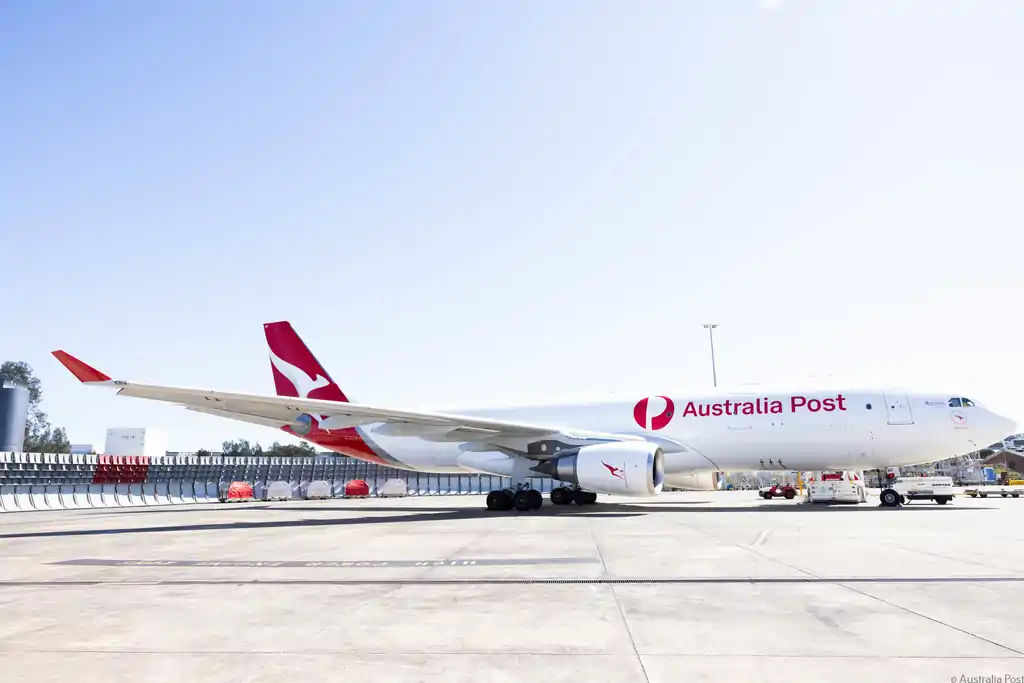
In response to the ever-growing demand for eCommerce deliveries and in preparation for the busy holiday season, Australia Post has introduced a new freighter to its fleet. This addition, operated in partnership with Qantas Freight, is set to significantly enhance Australia Post's delivery network, increase peak capacity, and reduce carbon emissions.
Doubling Capacity with the A330-200P2F
The star of this development is the newly converted A330-200P2F aircraft. This powerful addition is not just any aircraft; it's a game-changer. It effectively doubles the volume of Australia Post's largest current freighter and provides an impressive 130 tons of capacity each night.
Initial Operations Between East Coast and Perth
As it takes to the skies, the A330 freighter will focus on the bustling route between the east coast and Perth. This route is strategically chosen for its role in carrying StarTrack and Express Post parcels, meeting the growing demand of Australia's eCommerce industry.
A Leap Toward Sustainability and Reduced Emissions
Australia Post's commitment to sustainability and reducing carbon emissions is not lost in this endeavor. The A330 freighter is set to replace a B737F, a move that will reduce aircraft emissions significantly. In fact, the A330 produces a remarkable 42% less carbon emissions per kilogram of cargo than the retiring B737F. This represents a considerable step towards environmental responsibility, a key focus for Australia Post as it modernizes its operations.

Meeting the Holiday Rush
Australia Post CEO and Managing Director, Paul Graham, underlines the strategic importance of the new freighter. "Our new A330 freighter delivers increased flexibility within our freighter fleet, creating a sustainable, long-term solution to meet growing customer demand driven by eCommerce. This new freighter also builds on our longstanding partnership with Qantas Freight, which operates our existing freighter fleet."
Furthermore, the introduction of the A330 freighter is timely, as it directly boosts freighter capacity during the busiest time of the year. The increased volume expected during the holiday season and the cyber sales period will be more manageable, ensuring efficient and reliable deliveries.
Streamlined Services and a Reduced Carbon Footprint
The A330 not only offers increased capacity but also facilitates the streamlining of Australia Post's services. With this aircraft operating on their largest volume sectors, the company can reduce the number of aircraft in the air, thus reducing their carbon footprint. Fast and reliable deliveries remain at the core of their customer service, and this move enables just that.
Conclusion
Australia Post's investment in the new A330 freighter signifies a major milestone in their commitment to enhance their delivery network, particularly as eCommerce continues to reshape the landscape of parcel delivery. This move showcases a strong dedication to sustainability and a reduced carbon footprint. As Australia Post welcomes this new addition to its fleet, it is well-prepared to handle the holiday rush and offer its customers an efficient, reliable, and eco-conscious service.
With Inputs from Australia Post
Read next
Turkish Airlines Expands Fleet Through Key Agreement with AerCap Holdings
Abhishek Nayar
25 Oct 2023
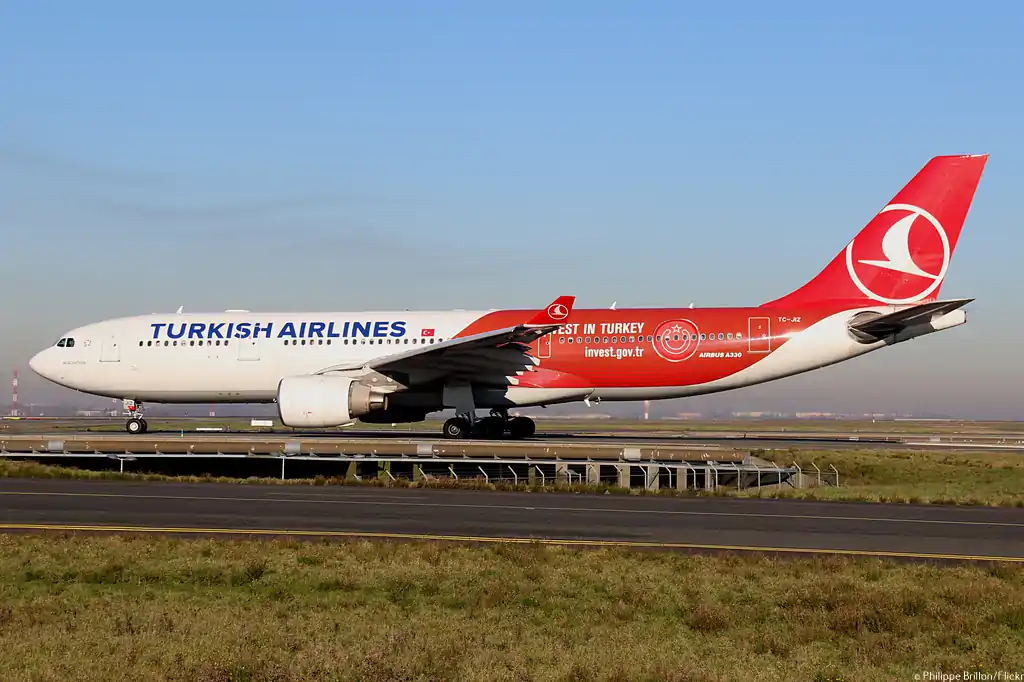
Turkish Airlines, one of the world's leading international carriers, has announced a significant expansion of its fleet through a strategic agreement with AerCap Holdings N.V. This major deal, unveiled on October 24, 2023, includes the lease of three new Boeing 787-9 aircraft, 25 new MAX-8 aircraft, and lease extensions for six used Airbus A330-200 aircraft. The partnership between Turkish Airlines and AerCap is set to enhance the airline's global presence and operational efficiency.
Strengthening a Long-Term Partnership
The agreement underscores the enduring collaboration between Turkish Airlines and AerCap, a global leader in aircraft leasing. Aengus Kelly, the Chief Executive Officer of AerCap, expressed his satisfaction with the transaction, stating, "AerCap is very pleased to announce this significant transaction with our long-term partner, Turkish Airlines. These aircraft will help Turkish Airlines continue to grow their already extensive route network, while improving the operational efficiency of their fleet."
In response to the deal, Turkish Airlines' Chief Investment & Technology Officer, Levent Konukcu, remarked, "We have a unique route network boasting the world's widest network in terms of the number of countries reached. We fly to more international destinations than any other airline, and in order to strengthen this position, we are always focused on extending our fleet."
A Closer Look at the Agreement
1. New Boeing 787-9 Aircraft

Turkish Airlines is set to receive three brand new Boeing 787-9 aircraft as part of this agreement. The Boeing 787-9 is known for its fuel efficiency and passenger comfort. These modern additions to the fleet are expected to commence delivery in the years 2024 through 2026. These aircraft will open up new horizons for Turkish Airlines in terms of long-haul travel and passenger experience.
2. 25 New Boeing MAX-8 Aircraft

The airline is also adding 25 new Boeing MAX-8 aircraft, known for their economic operation and advanced technology. This expansion in the narrow-body segment will bolster Turkish Airlines' capabilities to serve a wider range of destinations efficiently.
3. Lease Extensions for Airbus A330-200 Aircraft

In addition to acquiring new Boeing aircraft, Turkish Airlines will benefit from lease extensions for six Airbus A330-200 aircraft. This move allows Turkish Airlines to maintain a balanced fleet by utilizing proven and reliable aircraft for their routes.
Impact on Turkish Airlines' Growth
Turkish Airlines has gained global recognition for its extensive network, which connects more international destinations than any other carrier. By expanding its fleet through this agreement with AerCap, Turkish Airlines aims to reinforce its position as a key player in the international aviation industry. These new aircraft will not only enhance the airline's operational efficiency but also allow them to open up new routes and destinations for passengers.
Conclusion
The aviation industry has faced numerous challenges in recent years, but Turkish Airlines remains committed to growth and innovation. This agreement with AerCap is a testament to their vision for the future, as they continue to adapt and expand in a dynamic and ever-changing global market.
As the aviation world eagerly awaits the delivery of these new aircraft, Turkish Airlines and AerCap are poised to continue their successful partnership, providing passengers with a world-class travel experience while contributing to the airline's global prominence.
With Inputs from AerCap
Read next

Finland's national airline, Finnair, has recently announced a positive outlook for its 2023 results, expecting them to return to pre-pandemic levels or come very close. This optimistic forecast comes as the lingering impact of COVID-19 continues to recede, and the airline industry adapts to the challenges posed by the closure of Russian airspace. Finnair's journey towards recovery has been a testament to its resilience and adaptability.
Five Consecutive Quarters of Positive Operating Earnings
The Finnish carrier achieved positive operating earnings for the fifth consecutive quarter, marking a significant milestone in its recovery process. This remarkable achievement highlights Finnair's ability to weather the storm caused by the global pandemic and the subsequent closure of Russian airspace in the wake of Russia's invasion of Ukraine. This airspace closure significantly disrupted Finnair's previously Asia-focused strategy, prompting the airline to pivot and adapt to a rapidly changing global landscape.
Third Quarter Performance Soars
In the third quarter of 2023, Finnair reported a substantial surge in comparable operating profit, which rose to 94.3 million euros ($100.7 million). This marked an impressive 168% increase compared to the same period in the previous year, when the airline reported its first positive result since 2019. However, Finnair did acknowledge that higher fuel prices had an adverse impact on its earnings towards the end of the quarter.
Robust Revenue Expectations
Finnair has set its sights on achieving annual revenue in the range of 2.9 billion to 3.1 billion euros in 2023. The upper end of this range aligns with the airline's 2019 sales figure, signifying its intention to return to the levels of business it was accustomed to prior to the pandemic. This is a noteworthy shift from previous expectations that indicated 2023 sales would surpass the figures from the preceding year.
Revised Earnings Projections
In terms of profitability, Finnair has revised its forecast for comparable operating earnings, now expecting to achieve between 160 million and 200 million euros for the year. This adjustment is more optimistic than the previous guidance of 150 million to 210 million euros. To put this into perspective, in 2019, Finnair reported a profit of 162.8 million euros. This forecast indicates the airline's determination to regain and potentially surpass its pre-pandemic profitability levels.
Conclusion
Finnair's optimistic 2023 outlook reflects not only its remarkable recovery but also the resilience of the global aviation industry as it adapts to a post-pandemic world and evolving geopolitical challenges. The airline's ability to deliver consistent positive results over the past five quarters is a testament to its adaptability and determination. While challenges persist, the revival of Finnair is a promising indicator of the broader recovery of the travel and aviation sector, marking a return to normalcy for an industry that has faced unprecedented adversity in recent years.
With Inputs from Reuters
Read next
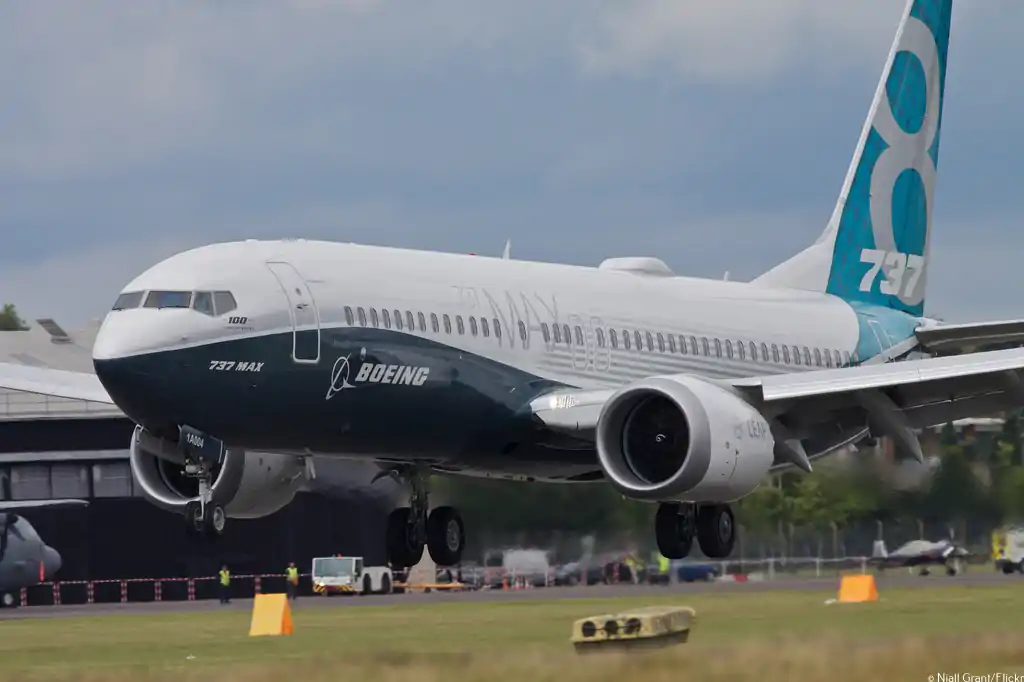
General Electric (GE), a key player in the aerospace industry, has announced a significant reduction in its growth forecast for LEAP jet engine deliveries for the year 2023. This decision reflects ongoing challenges in the global aerospace supply chain, which is struggling to keep up with the surging demand for these engines.
A Change in Growth Projections
In an interview, CEO Larry Culp disclosed that GE is now targeting a 20% to 25% year-on-year increase in deliveries for 2024. This represents a considerable adjustment from a revised projection of 40% to 45% annual growth for this year. Notably, the company had initially predicted a staggering 50% growth in LEAP engine deliveries for 2023. These engines are widely used in Airbus and Boeing medium-haul jets.
A Strategy Based on Higher Demand Expectations
The shift in growth targets for 2024 is primarily based on expectations that the demand will be built upon a higher base. However, Larry Culp acknowledges the considerable challenges that lie ahead in achieving this goal, as it necessitates quarter-on-quarter improvements in the strained supply chain.
Culp stated, "Our suppliers have work to do to continue to drive the sequential improvements. There's no silver bullet here."
The GE and Safran Collaboration
GE co-produces the LEAP engine in collaboration with France's Safran through their joint venture, CFM International. However, continuous shortages of labor and parts have left the company's suppliers grappling with production constraints.

Supplier Challenges
GE reported a significant increase in "supplier delinquencies" or production glitches, up by 25% in the third quarter compared to the previous quarter. This led to GE revising its delivery growth target for LEAP engines this year by at least 5 percentage points, pushing some deliveries into 2024 and 2025.
Impact on Boeing, Airbus, and Airlines
This slowdown in deliveries poses challenges for Boeing and Airbus, as it questions their plans to ramp up production. Furthermore, it is a setback for airlines that are striving to modernize their fleets. They are already contending with issues related to Pratt and Whitney's Geared Turbofan (GTF) engines, which have a rare manufacturing flaw that could potentially ground hundreds of Airbus jets in the coming years.
Commitment to Meeting Customer Expectations
Despite the challenges, GE has affirmed its alignment with Boeing and Airbus regarding the demand for LEAP engines through the end of 2024. Culp reiterated the company's commitment to meeting the expectations of its customers.
Easing Bottlenecks and the Way Forward
In an effort to mitigate supply chain bottlenecks, GE has deployed machinists and engineers to the facilities of its suppliers. These measures have contributed to improvements in output, although the issue is still far from being fully resolved.
Culp emphasized, "If we needed six of something per week from a certain supplier in the second quarter, that number probably went to seven in the third, goes to eight in the fourth. There's no simple solution here."
Conclusion
In summary, GE's decision to reduce its growth forecast for LEAP jet engine deliveries reflects the ongoing challenges in the aerospace supply chain. The company is working diligently to address these issues, but the complex nature of the supply chain and surging demand present formidable hurdles. This situation also has far-reaching implications for aircraft manufacturers and airlines, highlighting the need for innovative solutions to maintain the momentum of the aerospace industry.
With Inputs from Reuters
Read next
DGCA Suspends Flight Training Operations of All the Bases of Redbird Flight Training Academy
Radhika Bansal
24 Oct 2023
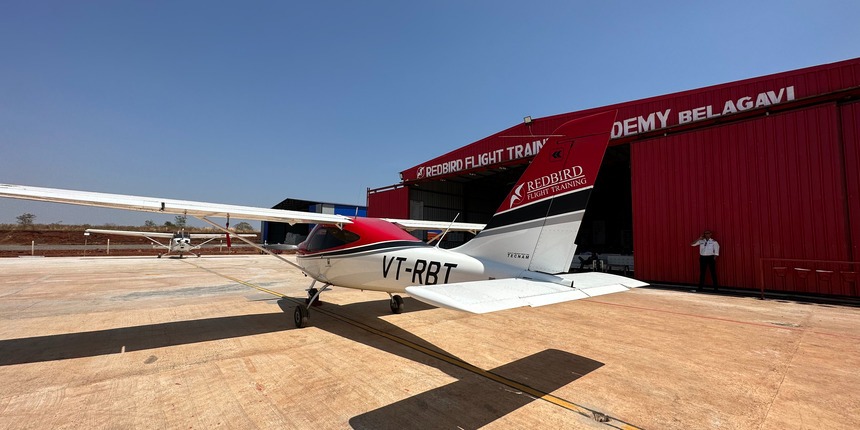
The Directorate General of Civil Aviation (DGCA) on October 23 suspended flight training operations across all bases of Redbird Flight Training Academy over repeated safety issues.
Highlighting that two accidents involving Redbird aircraft have been reported in the past week (one of them occurred on October 22), the regulatory authority said it will undertake maintenance audits and proficiency checks at the academy. The Redbird Academy will not resume the right to offer training in flying until it gets clearance from the DGCA.
The civil aviation authority said: “These occurrences indicate gaps in maintenance and operational elements. DGCA has accordingly, suspended the operations of M/s Redbird Flight Training Academy at all their bases in the country. The DGCA is also undertaking special maintenance audit and proficiency checks for the trainer/examiners of M/s Redbird Flight Training Academy before permitting the resumption of their operations.”
During the last week, Redbird Flight Training Academy’s aircraft have been involved in two occurrences leading to the crash landing of the aircraft. The first one took place on October 19 and involved a Tecnam P2008JC (single-engine) aircraft VT-RBC.
The aircraft took off from runway 11 at Baramati with only one occupant, i.e., CFI on board. During its initial climb at around 100ft, the crew experienced an engine-related snag and loss of power and decided to discontinue the sortie and crash-landed north of a nearby field. This sortie was undertaken to assess the snag (abnormal noise and brake issue) observed in the previous sortie. However, the snag was not notified of appropriate action by the AME.
The second incident took place on October 22 and involved a Tecnam P2008JC (single-engine) aircraft VT-RBT. This aircraft had two occupants including an instructor and a trainee. They were carrying out general flying training sortie at Baramati when the aircraft experienced loss of power at an altitude of 2,500 ft. The instructor discontinued the sortie and forced land in a field at around 2NM from the airport. Due to the impact, the aircraft turned upside down and suffered damages to the landing gear, propeller, wings and fuselage. Neither of the occupants, however, sustained any injuries.
The Redbird Flight Training Academy boasts a fleet of approximately 40 aircraft and reportedly plans to add another 20 planes by the end of March next year. Redbird has training bases spread across India and overseas in locations, such as Baramati (Maharashtra), Lilabari (Lakhimpur, Assam), Gulbarga (Karnataka), Belagavi (Karnataka), Seoni (Madhya Pradesh), and Colombo (Sri Lanka).
In August of the same year, Redbird Flight Training Academy partnered with European aircraft manufacturer Airbus to provide pilot training to its students on A320 aircraft. Under this partnership, Airbus was to deliver both theory and full flight simulator sessions for its jet orientation course (JOC) and multi-crew cockpit co-operation (MCC) to academy students.
DGCA’s Actions Against Flight Schools
This is not the first time the DGCA has cracked down on flight training academies in the country. In March 2022, the civil aviation regulator ordered a safety audit of all 30 flying training organisations (FTOs) after two training aircraft were involved in separate non-fatal accidents.
In an audit completed in June last year, the DGCA found FTOs violating multiple safety regulations. It observed that facilities at FTOs were not being maintained as per requirements — the runway surface was worn out, wind socks were torn or non-standard, and testing equipment was either not in compliance with requirements or not calibrated as required.
The regulator also found that pre-flight alcohol test regulations were not followed at multiple FTOs. Based on these findings, it issued suspension orders to two certified flying instructors for a year, two for three months, one deputy CFI for a year, two deputy CFIs for three months, one assistant flying instructor for three months, and one student for three months.
As of July 2023, India had 36 FTOs operating at 57 bases. The government aims to promote and regulate training infrastructure for India's civil aviation sector to make the country a global flight training hub and prevent Indian cadets from seeking training at foreign academies.
The Airports Authority of India (AAI) awarded nine FTO slots at five airports -- at Belagavi (Karnataka), Jalgaon (Maharashtra), Kalaburagi (Karnataka), Khajuraho (Madhya Pradesh), and Lilabari (Assam) in 2021. In 2022, six FTO slots were awarded by the AAI at five airports -- two slots at Bhavnagar (Gujarat), and one each at Hubballi (Karnataka), Kadapa (Andhra Pradesh), Kishangarh (Rajasthan), and Salem (Tamil Nadu).
Comment