

Since the Tata Group completed its takeover of Air India from the Indian government in January 2022, the full-service carrier has been executing an ambitious transformation plan — and at the heart of it is a sweeping, multi-layered embrace of artificial intelligence.
Starting From Scratch — and Turning It Into an Advantage
When privatization happened, Air India inherited virtually no modern digital infrastructure. Rather than working around outdated systems, the airline's leadership chose to treat the clean slate as an opportunity. Chief Digital and Technology Officer Satya Ramaswamy noted that the absence of legacy operating systems, old-generation agents, and ageing chatbots allowed Air India to leapfrog directly into next-generation AI solutions without friction.
A Virtual Agent That Handles Half of All Customer Calls
One of the earliest and most visible deployments is AI.g, the airline's generative AI-powered virtual agent. Currently handling approximately 50 percent of all customer contact volume — based on customer preference — AI.g has delivered significant savings in contact centre costs. Beyond customer service, the airline has extended similar AI-driven support tools to employee assistance, engineering workflows, and day-to-day operations.
Ramaswamy revealed that Air India has worked directly with all its CXOs to identify the highest-priority AI programmes for each department, with cost reduction emerging as a dominant theme across the board.
How AI Helped Crack a Complex Regulatory Challenge
A standout application came when India's aviation regulator, the DGCA, revised its Flight Duty Time Limitations (FDTL) norms for pilots — a notoriously complex regulatory update. Air India deployed generative AI to validate the mapping between the DGCA's rules, the airline's internal specifications, and the corresponding software implementation, ensuring both correctness and completeness.
Ramaswamy emphasized that this level of cross-document validation was simply not possible before generative AI. The technology also helped generate an exhaustive library of edge and corner-case test scenarios — precisely the kind of unusual situations most likely to produce compliance violations. The result was a smooth rollout of the revised FDTL norms.
Three Kinds of AI, One Unified Strategy
Air India currently operates across three distinct AI categories: predictive AI for data-driven forecasting, generative AI for content, communication, and validation tasks, and the emerging frontier of agentic AI. Ramaswamy, a holder of multiple patents, said the airline is actively identifying software systems it can build rapidly through agentic coding, reducing dependence on external vendors and cutting operating costs further.
Every Role Will Change — But Jobs Aren't Going Away Yet
On the question of whether AI will shrink Air India's workforce, Ramaswamy was measured. While it is too early to predict fewer hires overall, he was clear that the nature of every role will evolve. Cabin supervisors are already being equipped with AI tools to handle disruption-affected passengers with empathy and consistency. Commercial teams are using AI to reduce manual workload in route management.
For Air India, the message is clear: AI is not a supplement — it is the strategy.

Read next
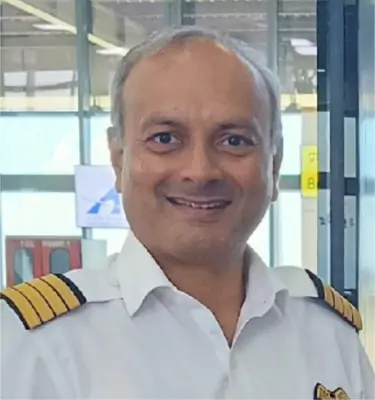
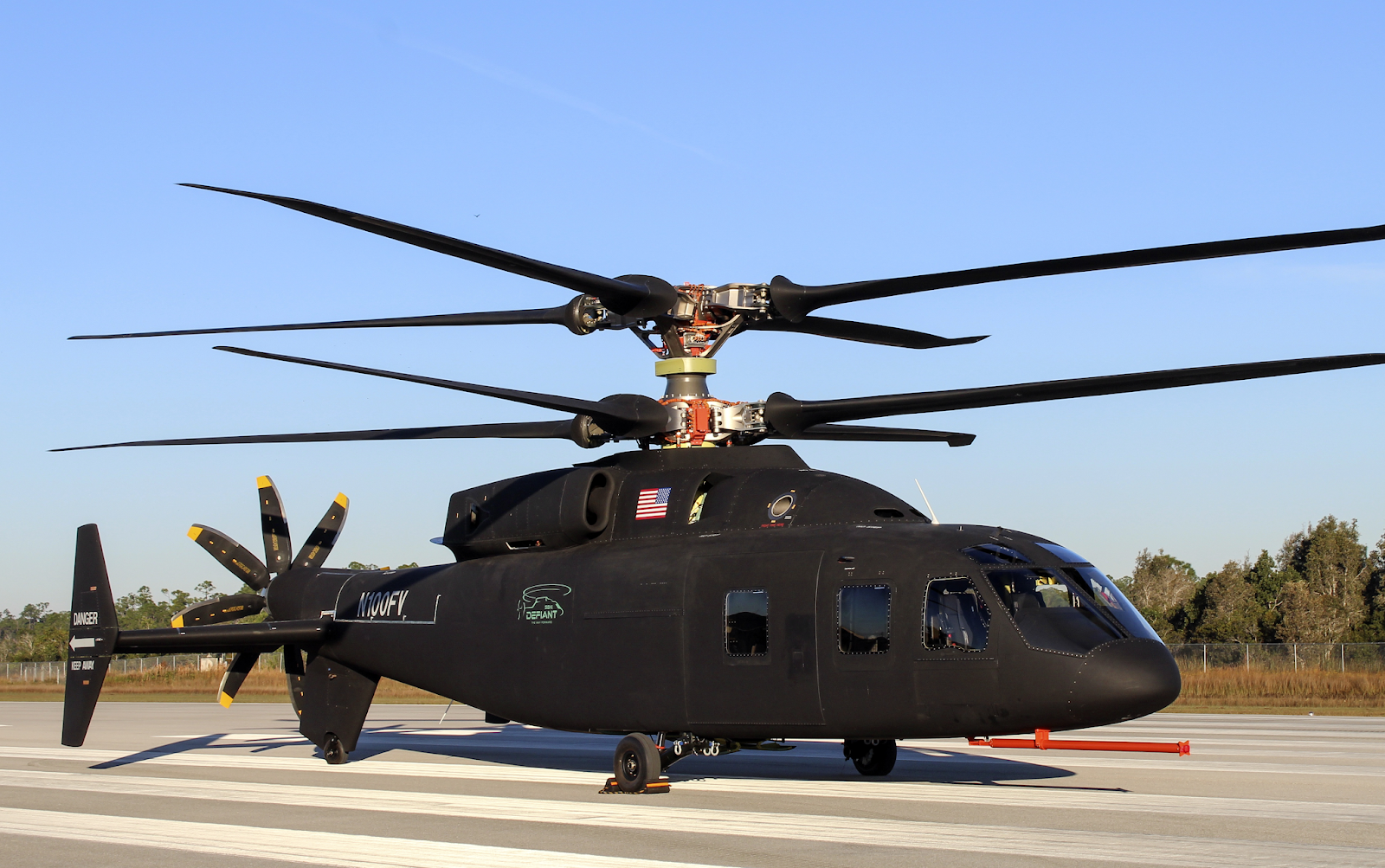
There is a widespread perception that multi-engine helicopters are safer than their more ‘efficient’ single-engine counterparts. It could be accurate but with associated disclaimer of ‘Conditions Apply’. It’s analogous to the caveat accompanying a motor car advertisement claiming extraordinary mileage ‘Under Test Conditions’. This write-up is an attempt to demystify said broad-brush perception where ‘Conditions Apply’ disclaimer is more complex in the specialised arena of aviation, more so for helicopters.
Helicopters Operate in a Different Ecosystem
Helicopters are different. Not merely because they provide ‘last-mile connectivity’ beyond airports, but because their operating ecosystem seems much less like the aeroplanes. Unlike aeroplanes, this ecosystem construct involves helicopter design itself to operate from temporarily prepared sites for short-duration and low-altitude flights. An infrastructure atypical to airports thus becomes the primary workplace for helicopters.
The Myth
A perception that multi-engine helicopter operations are always safer than single-engine operations is founded on an assumption. It is a myth that the remaining ‘live’ engine out of the two can recover the helicopter safely. Unfortunately, this does not hold true in most cases. Unless compliant to PC1 (Performance Class 1), the capability of ‘live’ engine in a multi engine helicopter does not guarantee safety.
In non-PC1 conditions, a multi-engine helicopter may thus be as vulnerable as a single-engine helicopter. Operations under IFR (Instrument Flight Rules) supplements flight safety over the operations under VFR (Visual Flight Rules), especially during poor weather conditions. Since operations under IFR are not feasible by single engine helicopters under Indian regulations, multi-engine operations can add to safety only when operating under IFR.
Thus, operations under IFR and PC1 together consolidate ‘Conditions Apply’ context for safety in multi-engine helicopter operations. Unless these two components are embedded in operations, pseudo assurance of additional safety in multi-engine helicopters holds on thin ice.
More on these two aspects follows-
Safety advantage of a multi engine helicopter = Operations under IFR + Operations under PC1

Operations by Helicopters under IFR
Challenging weather conditions seldom offer an advanced notice. Risks of low-flying helicopters under VFR in terrain/obstacle proximity during deteriorating weather conditions could be alleviated under IFR. Predicated on obstacle clearance, operations under IFR significantly enhance safety particularly when in-flight visibility isn’t ideal. Majority of aeroplane operations under IFR with much better safety record holds testimony to this statement.
Peculiarities of helicopter operations under IFR demands agility in planning. Short-sector lengths and operations between non-IFR certified heliports/airports impede feasibility of helicopter operations under IFR. Consider pilgrimage shuttles or a corporate flight of 15-20 minutes as examples. But these examples do not exclude IFR operations altogether. Remaining possibility of operations under IFR ‘between’ and ‘to’ an IFR certified airport significantly enhances safety of flight. Even when operating under VFR, multi-engine helicopters have compounded advantages in safe recovery. During unexpected weather conditions, a multi-engine helicopter can adopt IFR in-flight for a safer outcome. Envisioned advantages of operations under IFR hence requires an adaptive approach both by the operator and crew to embrace available safe practices.

Operations under Performance Class 1 (PC1)
Performance Class 1 (PC1) is a regulatory category that guarantees helicopter safety if one engine fails, even in most demanding phases of flight. In context of engine failures, PC1 operations are therefore the ‘Gold’ standard for safety in helicopters. Irrespective of operations under IFR or VFR (Visual Flight Rules), the helicopter is guaranteed a safe recovery if an engine quits in-flight under PC1. DGCA regulations mandate PC1 operations in ‘Congested Hostile’ environment applicable to a majority of helipads/heliports. [A ‘Congested Hostile’ environment is an area used for residential/commercial purposes with safety of occupants or people/property on-ground adversely affected during an emergency landing.]
Operations under PC1 is built on three components to optimally manage energy available from the remaining ‘live’ engine. Amongst these, most relevant to fare-paying passengers is the maximum permitted payload (Payload = Total Passenger Weight + Baggage Load). Usually, the permitted payload to comply with PC1 requirements is a reduction from full-load/max capacity of the helicopter. Simply put, a six-seater helicopter may not be able to operate under PC1 with six (06) passengers under many conditions. Resultingly, passengers would be restricted below the max seating capacity of a helicopter to accrue safety of operations under PC1. Conversely, selecting ‘full-load’ option without PC1 capability does not comply with ‘Conditions Apply’ analogy. The unseen safety disadvantage emerges from non-compliance with PC1.
Multi-engine helicopters are associated with higher costs to passengers. From the preceding, availing max seating capacity on a multi engine helicopter could offer safety of a single engine helicopter but at a higher cost. An informed acceptance by the end-user in limiting passengers for PC1 operations against availing max seats in a helicopter must therefore ensue.
Informed Options: Seats, Safety and Cost
Passenger subscribing to helicopter charter services must consciously evaluate between maximum seats and safety margins under PC1. When that selection is combined with crew using IFR wherever feasible, the simplistic myth of inherent twin-engine safety gives way to an informed risk management.
Read next

Air India has launched one of the most ambitious cabin overhaul programmes in Indian aviation history, committing $400 million — approximately Rs. 3,622 crores — to completely transform its long-haul fleet. The initiative begins with eight Boeing 787-8 aircraft and a set of legacy Boeing 777s, targeting a passenger experience that can genuinely compete with the world's leading carriers.
From the Ground Up: What the First Retrofitted Aircraft Looks Like
The first refurbished 787-8, completed at Boeing's dedicated Modification Center, introduces a three-class cabin configuration housing 20 private business suites, 25 premium economy seats, and 205 economy seats. The retrofit directly addresses years of passenger complaints about ageing interiors and worn seating — longstanding pain points that had dented Air India's reputation on international routes.
Inside the Cabin: Suite Doors, Smarter Seats, and Better Economy
The redesigned business class is the centerpiece of the upgrade, featuring suite-style seating with sliding doors, enclosed storage compartments, redesigned seat controls, and adjustable armrests with bottle holders. The premium economy and economy cabins have been equipped with RECARO PL3530 and CL3710 seats respectively — both recognized in the industry for comfort and ergonomic design.
On the Ground: Lounges That Match the In-Flight Ambition
The airline is simultaneously upgrading its on-ground experience, with new premium lounges being developed at key international hubs including San Francisco, New York, and Delhi. These facilities are being outfitted with upgraded seating and dining options, designed to attract higher-fare travelers from the moment they arrive at the airport.
A Global Strategy, Not Just a Cosmetic Upgrade
Air India's premium push mirrors a broader trend among global carriers. Airlines like United and Delta have been aggressively expanding their high-end offerings, recognizing that business and premium economy passengers generate disproportionately high revenue per seat. By modernizing both its cabins and lounges, Air India is deliberately repositioning itself to compete for this lucrative segment on long-haul routes to Europe, the United Kingdom, and Australia.
What Success — or Failure — Could Mean by 2027
If the retrofit programme completes on schedule by 2027, Air India stands to make meaningful gains in market share on some of the world's most profitable long-haul corridors. However, delays or cost overruns could blunt that advantage considerably, giving established rivals additional time to consolidate their hold. The airline's ability to sustain its competitive momentum will ultimately rest on consistent service delivery, timely fleet induction, and targeted marketing that convinces premium travelers to choose Air India over more familiar names.
With Inputs from MSN
Read next
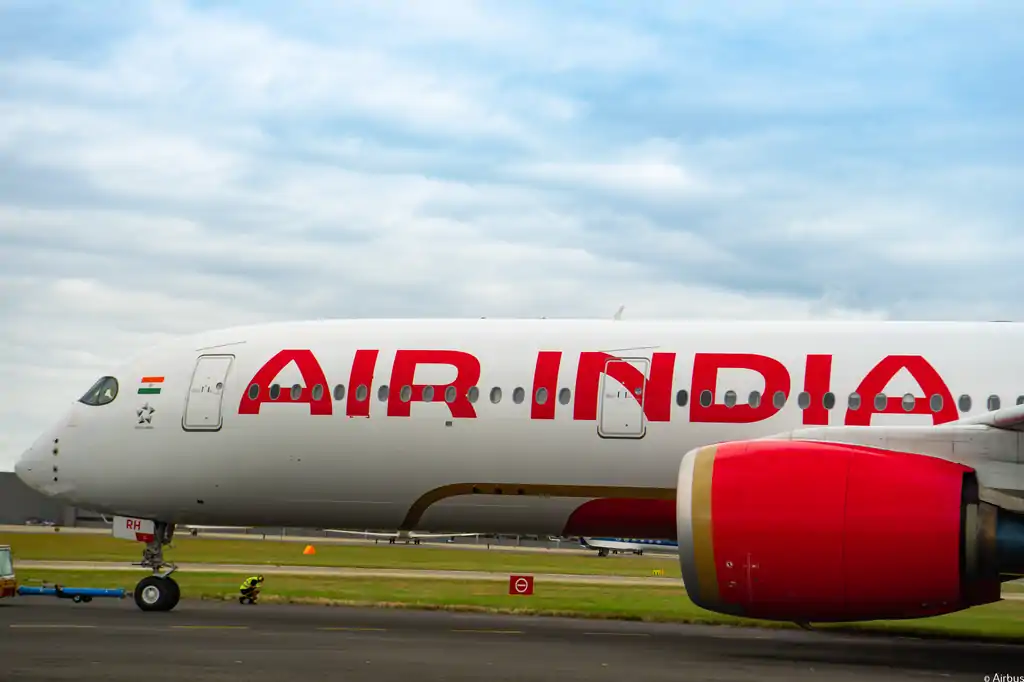
Air India's fiscal year ending March 31, 2025, opened on an optimistic note. The carrier posted operating profits in the first weeks of April 2025, suggesting that Tata Group's ambitious turnaround plan was gaining traction. Those early green shoots, however, would prove short-lived.
When Everything Went Wrong at Once
The turbulence began in May, when Pakistan shut its airspace to Indian carriers following a brief military conflict. The closure forced Air India onto longer, more expensive routes to the United States and Europe — an immediate blow to operating costs and yields.
Then came June's catastrophic event: the crash of a Boeing 787 Dreamliner that killed more than 240 people. The disaster shook the airline to its core, compelling it to scale back both international and domestic services at a time it could least afford to.
Losses Dwarf Internal Estimates
The compounding crises pushed Air India's annual loss to over 220 billion rupees — approximately $2.4 billion — far exceeding the $1.6 billion internal estimate Bloomberg News had reported in January. The record loss has now forced the airline to seek emergency financial support from its shareholders.
Tata Group, Air India's controlling shareholder, and Singapore Airlines — which holds a 25.1% stake acquired after merging its affiliate Vistara with the carrier in 2024 — are both in active talks to inject fresh capital. However, the infusion being discussed may fall short of what Air India actually needs, meaning the airline may have to explore additional financing options.

A Region on Fire, Fuel Costs Surging
The Middle East, which accounts for 16% of Air India's total capacity, has been virtually grounded due to the regional conflict. Flights to Europe and North America have been rerouted over longer, costlier paths precisely when jet fuel prices have spiked — a double blow to the bottom line.
Adding to the pressure, US President Donald Trump's tariffs on India and a crackdown on foreign worker visas further dampened passenger demand on key transatlantic routes.
Leadership Cracks at the Top
The financial crisis has also triggered a leadership rupture. CEO Campbell Wilson announced his intention to step down later this year, creating uncertainty at a critical moment. Meanwhile, the aviation regulator's latest annual audit ranked Air India worst among carriers for safety compliance — a reputational wound that compounds its financial pain.
The Stakes for Tata Group
The losses carry consequences beyond the airline itself. Bloomberg News reported in February that stemming Air India's bleeding had been set as a key condition for approving a third term for Tata Group Chairman Natarajan Chandrasekaran. Singapore Airlines has also seen its own earnings weighed down by Air India's deteriorating performance.
A Turnaround Still Waiting to Take Off
Despite aggressive fleet expansion plans and high ambitions, Air India has struggled to improve service quality and lift yields to competitive levels. The airline's target to break even operationally this fiscal year has now been firmly grounded — leaving its future course heavily dependent on shareholder resolve and market recovery.
With Inputs from Economic Times
Read next
SpiceJet Grounded by London Court: The $8 Million Debt That Exposes an Airline on the Edge
Abhishek Nayar
10 Apr 2026

London's Commercial Court has ruled against SpiceJet, ordering the Indian low-cost airline to pay approximately $8 million to Sunbird France 02 SAS, a French aircraft engine lessor, over unpaid rent and maintenance charges for three aircraft engines. The summary judgment, granted on Wednesday, found that SpiceJet had no viable defense against the claim — a damning legal verdict that further deepens the airline's already precarious financial position.
Debt Rooted in the Pandemic Years
The financial obligations in question stretch back to the height of the COVID-19 pandemic. The unpaid maintenance accruals date as far back as November 2020, while the overdue rent payments began accumulating from January 2022. These were not debts that emerged overnight — they represent years of deferred obligations that the airline failed to honor, even as the aviation industry slowly recovered from the pandemic's catastrophic blow to air travel.
Default Notices, Repossession, and a Silent Defendant
After months of non-payment, Sunbird France 02 SAS issued formal default notices in July 2022, signaling a breaking point in the lessor's patience. The repossession of all three engines followed progressively — beginning in late 2022 and concluding by mid-2023 — marking a tangible, physical consequence of the airline's inability to meet its financial commitments. What made the court's ruling particularly stark was SpiceJet's conduct during the legal proceedings: the airline did hire British solicitors, but never submitted a defense or responded to Sunbird's application. The court, left with an unopposed case, had no difficulty ruling in the lessor's favor.
A Strain Years in the Making
The Sunbird ruling is not an isolated incident but the latest chapter in a prolonged financial crisis. SpiceJet's troubles have compounded since the global grounding of the Boeing 737 MAX, which decimated its operational fleet, and the COVID-19 pandemic, which wiped out passenger demand entirely. Together, these events gutted the airline's revenue while costs continued to mount. Meanwhile, domestic competition has intensified with the rise of Akasa Air, which has steadily captured market share that SpiceJet can ill afford to lose.
Auditors Flag a Going Concern Warning
Perhaps most alarming of all is what SpiceJet's own financial disclosures reveal. The airline's auditors have formally flagged uncertainty over its ability to continue as a going concern — a warning that signals deep structural distress. Their concerns are anchored in mounting cumulative losses and a significant gap between the airline's current liabilities and its available assets. In plain terms, SpiceJet owes more than it currently has, and the runway ahead is narrowing with each passing quarter.
For an airline that once positioned itself as a budget-travel powerhouse in India's booming skies, the London court ruling is a stark reminder of how far SpiceJet has fallen — and how much further it may yet have to go before it finds stable ground.
Read next
Can a War Hundreds of Miles Away Ground Indian Airlines' Finances — And What's Being Done About It?
Abhishek Nayar
10 Apr 2026

India's airport tariff regulator, the Airports Economic Regulatory Authority of India (AERA), acting on directions from the central government, has ordered a 25% reduction in landing and parking charges at major airports for domestic flights. The relief measure, effective immediately, is set to last three months and is aimed squarely at easing the mounting financial burden on the country's airlines.
A Double Blow From Two Fronts
The financial strain on Indian carriers has been compounding from two separate but simultaneous shocks. The first is a longstanding restriction barring Indian airlines from flying over Pakistani airspace, a detour that significantly increases fuel consumption and operational costs on several key routes. The second, more recent blow has come from the ongoing Iran war, which has disrupted regional airspace and added further pressure on route efficiency and aviation costs.
India's two largest carriers, IndiGo and Air India, formally sought the rationalization of fees levied by airports, citing this convergence of pressures. Their appeal was among the key drivers behind AERA's swift intervention.
The Weight of Airport Charges
The significance of this relief becomes clearer when placed in a global context. According to the International Air Transport Association, the airline industry's leading lobby group, airport and air navigation service charges represent the third largest expense category for airlines worldwide, trailing only fuel and labour costs. For carriers already squeezed on the fuel front by conflict-driven disruptions, even a temporary reduction in infrastructure fees carries meaningful financial weight.
AERA acknowledged that the reduction would result in under-recoveries for airports — that is, revenue they would otherwise have collected — but clarified that these shortfalls will be addressed and compensated during future tariff reviews.
Markets React to a Ceasefire
On the same day news of the charge reduction circulated, IndiGo's shares surged as much as 10% on the stock exchange, hitting the upper circuit limit. The broader airline sector also rallied on the back of a separate development: the United States announced a two-week ceasefire with Iran, prompting investor optimism that airspace disruptions in the region may soon ease.
The convergence of regulatory relief and ceasefire news painted an unusually positive picture for a sector that has been navigating turbulent skies — both literally and financially — for months.
Comment