PHAPA: Revolutionizing Pilot Performance Through Advanced Physiological Analysis

Sakshi Jain
03 Oct 2025
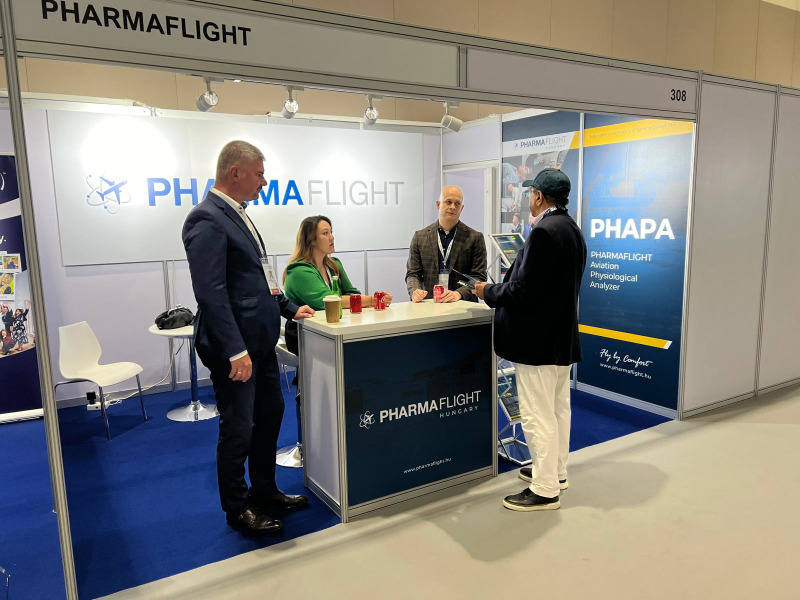
PHAPA, which stands for PharmaFlight Physiological Analyser System, represents a breakthrough in aviation performance diagnostics and optimisation. For over two decades, this innovative system has been dedicated to assessing and enhancing the physical and mental performance of pilots and flight crew members, ensuring they maintain peak condition throughout their training and careers.
Six-Minute Diagnostic Technology
At its core, PHAPA is a proprietary diagnostic method that delivers comprehensive performance insights in just 6 minutes. This world-unique technology provides an immediate, detailed overview of each participant's current physical and mental state, making it an invaluable tool for fatigue risk management in the aerospace industry. The system analyses physiological, cognitive, and physical performance markers, offering objective data that helps improve long-term performance while effectively reducing fatigue—a critical concern in aviation safety.
Non-Invasive and Preventive Approach
What sets PHAPA apart is its non-invasive approach and rapid assessment capability. During the brief six-minute resting evaluation, the system captures a complete picture of an individual's physiological state, allowing for timely interventions before performance issues can compromise safety or training outcomes. This preventive approach has made PHAPA an integral component of modern pilot training programs, where maintaining consistent high performance is essential.

How Can PHAPA Help with Pilot Training?
1. Addressing Aviation's Performance Challenges
The application of PHAPA in pilot training addresses one of aviation's most persistent challenges: ensuring that students and professionals maintain optimal physical and mental capabilities under demanding conditions. The system's impact on training effectiveness is both immediate and far-reaching.
2. Early Detection of Performance Vulnerabilities
The primary benefit lies in PHAPA's ability to identify performance vulnerabilities early in the training process. By continuously monitoring students' physiological states, instructors can detect signs of mental or physical overload before they impact learning outcomes or examination performance. This proactive approach allows for timely adjustments to training schedules, study intensity, or lifestyle factors that might otherwise lead to burnout or failure.
3. Personalised Mentorship and Support
Beyond simple monitoring, PHAPA enables truly personalised training experiences. The staff of the Physiological Centre provides individualised mentorship based on each student's diagnostic results. When the system identifies areas of concern, mentors can offer tailored lifestyle and recreational recommendations designed to prevent both mental and physical strain. These interventions may include adjustments to sleep patterns, nutritional guidance, stress management techniques, or modifications to study schedules—all tailored to each student's specific physiological profile.
4. Improved Success Rates and Well-Being
The results speak for themselves: students who participate in PHAPA-integrated training programs demonstrate greater well-being and significantly improved success rates during examinations. By maintaining students at their optimal performance level throughout the training process, PHAPA helps ensure that examinations truly reflect their capabilities rather than their fatigue levels or accumulated stress.
5. Dynamic and Adaptive Training Programs
Furthermore, the system's ability to adjust performance optimisation strategies in real-time means that training programs can be dynamic rather than static. As students progress and their physiological responses change, PHAPA provides the data needed to evolve their support protocols accordingly, ensuring continuous optimisation throughout their entire training journey.

PharmaFlight with PHAPA
1. Integrated Approach to Aviation Education
The integration of PHAPA into PharmaFlight's operations represents a comprehensive approach to aviation education and training. PharmaFlight, based in Debrecen, Hungary, has established itself as a leader in providing world-class training facilities and educational experiences for both current and aspiring professional pilots.
2. Mandatory Participation in Performance Optimisation
What makes PharmaFlight's approach distinctive is the seamless incorporation of PHAPA into their training curriculum. Unlike traditional flight schools, where physiological assessment might be an afterthought or external service, PHAPA is a mandatory and integrated part of the student experience. All students enrolled at PharmaFlight participate in this performance optimisation protocol, receiving regular assessments and ongoing support throughout their training.
3. Exceptional Value for Students
The value proposition is substantial. PharmaFlight provides PHAPA services—with an estimated value of approximately €8,000—free of charge to all enrolled students. This significant investment underscores the academy's commitment to producing not just competent pilots but thoroughly prepared aviation professionals who understand the importance of physiological performance management.
4. World-Class Training Infrastructure
Students at PharmaFlight benefit from one of the most modern training facilities available, combining traditional flight instruction with cutting-edge physiological monitoring. Whether pursuing helicopter pilot certification or the comprehensive 3.5-year professional pilot BSc program that includes type certification on Airbus or Boeing simulators, students receive continuous physiological support that enhances their learning experience and career preparation.

PHAPA Collaboration with NASA
The validation of PHAPA's scientific and practical effectiveness reached a significant milestone with its presentation before NASA.
While specific details of the NASA collaboration remain focused on research and presentation rather than operational integration, the mere fact that PHAPA has been reviewed and presented to NASA scientists and engineers speaks volumes about its credibility. NASA's interest in physiological performance systems aligns with their ongoing research into crew health and performance, particularly for long-duration missions where maintaining optimal physical and mental states becomes increasingly challenging.

Additionally, since 2015, PHAPA has maintained a formal collaboration with the International Civil Aviation Organisation (ICAO), the United Nations agency responsible for coordinating international air navigation principles and fostering safe, orderly growth of international air transport. This partnership, officially endorsed by ICAO's Secretary General, represents significant recognition of PHAPA's innovative contributions at the global level. ICAO's involvement suggests that PHAPA's methodologies may eventually influence international standards for pilot training and performance assessment.
These high-level collaborations validate PHAPA's approach to performance optimisation and position the system as a potential model for future developments in aviation physiological assessment. As the industry continues to grapple with challenges related to pilot fatigue, mental health, and performance optimisation, tools like PHAPA that provide objective, rapid, and actionable insights become increasingly valuable.
Read next
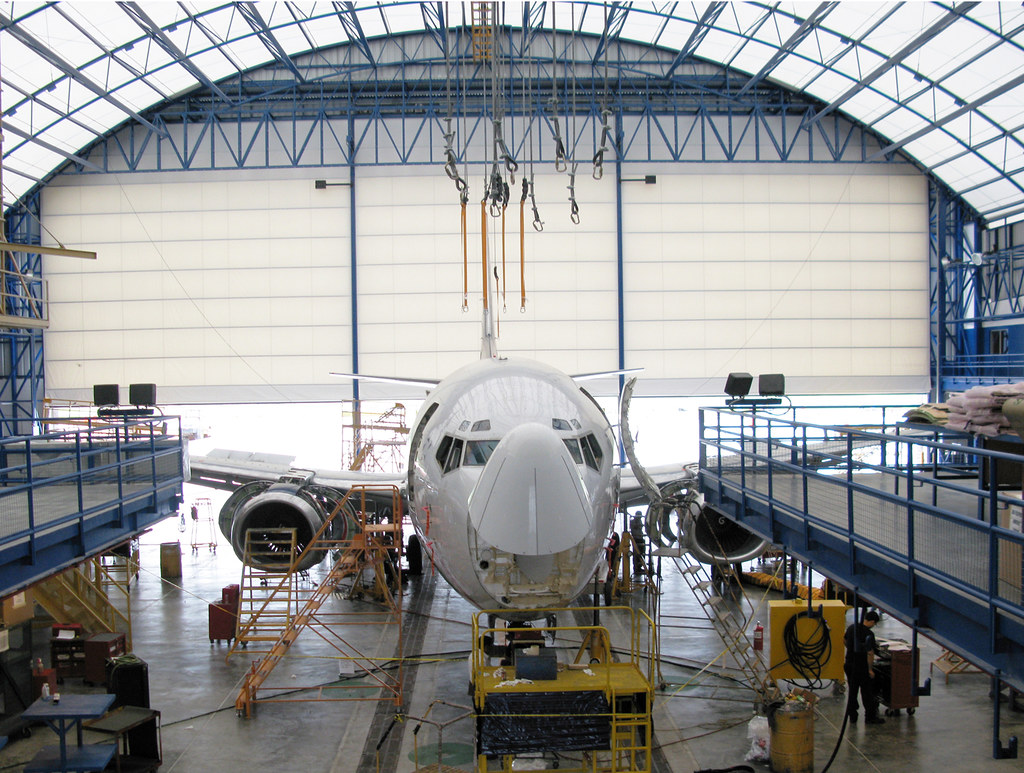
Aircraft maintenance is the backbone of aviation safety, ensuring that every flight operates with maximum reliability and passenger security. Unlike other vehicles, commercial aircraft follow rigorous inspection schedules that span from daily walkarounds to complete structural overhauls. This systematic approach, refined over decades, has made air travel one of the safest modes of transportation in the world.
Evolution of Aircraft Maintenance
Before the jet age, aircraft maintenance relied heavily on the experience of individual pilots and mechanics, with simple programs lacking standardised analysis. The introduction of large jet aircraft, such as the Boeing 707 and DC-8, revolutionised this approach, creating the need for comprehensive regulatory frameworks and scientifically developed maintenance programs.
Modern commercial aviation now operates under Continuous Airworthiness Maintenance Programs approved by aviation authorities such as the Federal Aviation Administration (FAA), Transport Canada Civil Aviation Directorate (TCCA), and European Aviation Safety Agency (EASA). These programs are built upon the Maintenance Review Board Report, which establishes initial maintenance requirements for each aircraft type using the MSG-3 methodology. This analytical approach uses parameters like flight hours, calendar time, and flight cycles to determine when specific maintenance tasks should occur, allowing airlines to schedule work efficiently while minimising aircraft downtime.

Daily Line Maintenance: The First Line of Defence
Every aircraft receives line maintenance around the clock—the most routine level of care, often called pre-flight or post-flight checks. Performed at airport gates between flights, these inspections cover fundamental safety items including wheels, brakes, fluid levels, and emergency equipment. This continuous monitoring ensures that minor issues are caught before they become major problems.
A Checks
The A Check represents the first level of detailed inspection, occurring approximately every 400 to 600 flight hours or every 200 to 300 flights, typically translating to 8-10 weeks of operation. This inspection requires 50 to 70 man-hours and takes a minimum of 10 hours to complete, though it can extend to 24 hours for narrowbody aircraft.
Airlines typically schedule A Checks overnight to minimise disruption to flight operations.
During this inspection, technicians change filters, lubricate critical systems, and conduct detailed examinations of all emergency equipment. The check can be delayed if certain predetermined conditions are met, giving airlines operational flexibility. For example, the Airbus A220 requires an A Check every 1,000 flight hours, while the Boeing 737 NG needs one every 150 to 600 hours, depending on the specific variant.

B Checks
Historically, B Checks occurred every 6-8 months, requiring 160 to 180 man-hours and taking one to three days to complete in an airport hangar. However, modern aircraft no longer require stand-alone B Checks. Airlines and manufacturers have integrated these necessary inspections and maintenance tasks into successive A Checks over the 6 to 8-month cycle, streamlining operations and reducing aircraft downtime without compromising safety.
C Checks
The C Check is substantially more intensive, performed approximately every 20 to 24 months or after specific flight hour thresholds defined by manufacturers. This inspection examines the majority of the aircraft's components and requires up to 6,000 man-hours to complete.
During a C Check, the aircraft remains out of service for one to four weeks and cannot leave the maintenance facility until completion. The work requires significant hangar space at a maintenance base, as technicians conduct in-depth examinations of structures, perform comprehensive lubrication of fittings and cables, and inspect components that aren't accessible during lighter checks.
For instance, the Airbus A320 family requires a C Check every 12,000 flight hours or 8,000 cycles or 36 months, while the Boeing 747-400 needs one every 7,500 to 10,000 flight hours.
Some airlines perform what's known as a 3C Check or Intermediate Layover, which includes light structural maintenance and corrosion inspections on high-load airframe sections. This check also presents opportunities for cabin upgrades, such as new seats, entertainment systems, and carpeting, allowing airlines to accomplish multiple objectives simultaneously.

D Checks
The D Check, sometimes called a "heavy maintenance visit," is the most comprehensive and demanding inspection an aircraft undergoes. Occurring approximately every 6-10 years, this check essentially disassembles the entire aircraft for inspection and overhaul.
Everything in the cabin—seats, toilets, galleys, overhead bins—is removed so engineers can inspect the aircraft's metal skin inside and out. Paint may be completely stripped to allow thorough examination of the fuselage. Engines are removed, landing gear is taken off, and aircraft systems are checked, repaired or replaced, and reinstalled. This monumental undertaking requires up to 50,000 man-hours and can take six months to a year to complete, depending on technician availability and aircraft complexity.
The D Check requires massive hangar space and costs several million dollars. Manufacturers often underestimate these costs; Boeing, for instance, underestimated D Check expenses for four of its aircraft models as of 2018. The actual costs significantly exceeded estimates: the Boeing 777-200ER was estimated at $2.5 million but actually cost $4.0 million, while the Boeing 747-400 was estimated at $4.0 million but reached $6.0 million.
Economic Considerations & Aircraft Retirement
Because of the extensive nature and tremendous cost of D Checks, airlines plan them years in advance. Most commercial aircraft undergo two or three D Checks before retirement. Often, older aircraft approaching their next D Check are either stored or scrapped, as the maintenance cost exceeds the aircraft's remaining value. This economic reality shapes fleet management strategies worldwide.
As of 2015, there were 731 foreign repair shops certified by the FAA performing critical maintenance for aircraft operating in the United States, including heavy D Check facilities like Aeroman in El Salvador. This global network allows airlines to access cost-effective maintenance while maintaining safety standards, though certification ratios vary significantly between facilities.

Flight Hours Maintenance Intervals
Maintenance check intervals by aircraft model
| Model | A Check | C Check | D Check |
|---|---|---|---|
| Airbus A320 family | 750 (or 750 cycles or 4 months) | 12,000 (or 8,000 cycles or 36 months) | 6/12 years |
| Embraer E-Jet E2 family | 1,000 | 10,000 | — |
| Boeing 747-400/747-8 | 600/1,000 | 7,500/10,000 | 6 years (systems) 8/8/6 years (most structures and zonal) |
| Bombardier Global 7500 | 850/36 months | 8,500 cycles / 12 years | — |
| Airbus A220 | 1,000 | 8,500 | — |
| Bombardier CRJ700 series | 800 | 8,000 | — |
| Bombardier Dash 8 | 800 | 8,000 | — |
| Embraer E-Jet family | 1,000 | 7,500 | — |
| Mitsubishi Regional Jet | 750 | 7,500 | — |
| Boeing 737 NG | 150/600 | 7,500 (or 730 days) | — |
| Boeing 767-300ER | 750 (or 300 Flight Cycles) | 6,000 (or 3,000 Flight Cycles or 18 Months) | — |
| ATR 42/ATR 72 | 750 | 5,000 | 2/4/8 years |
Bottom Line
Aircraft maintenance checks represent a sophisticated, scientifically grounded approach to aviation safety. From daily line maintenance to decade-spanning D Checks, each level serves a specific purpose in keeping aircraft airworthy. This tiered system balances operational efficiency with uncompromising safety standards, ensuring that commercial aviation remains one of humanity's safest achievements.
Read next
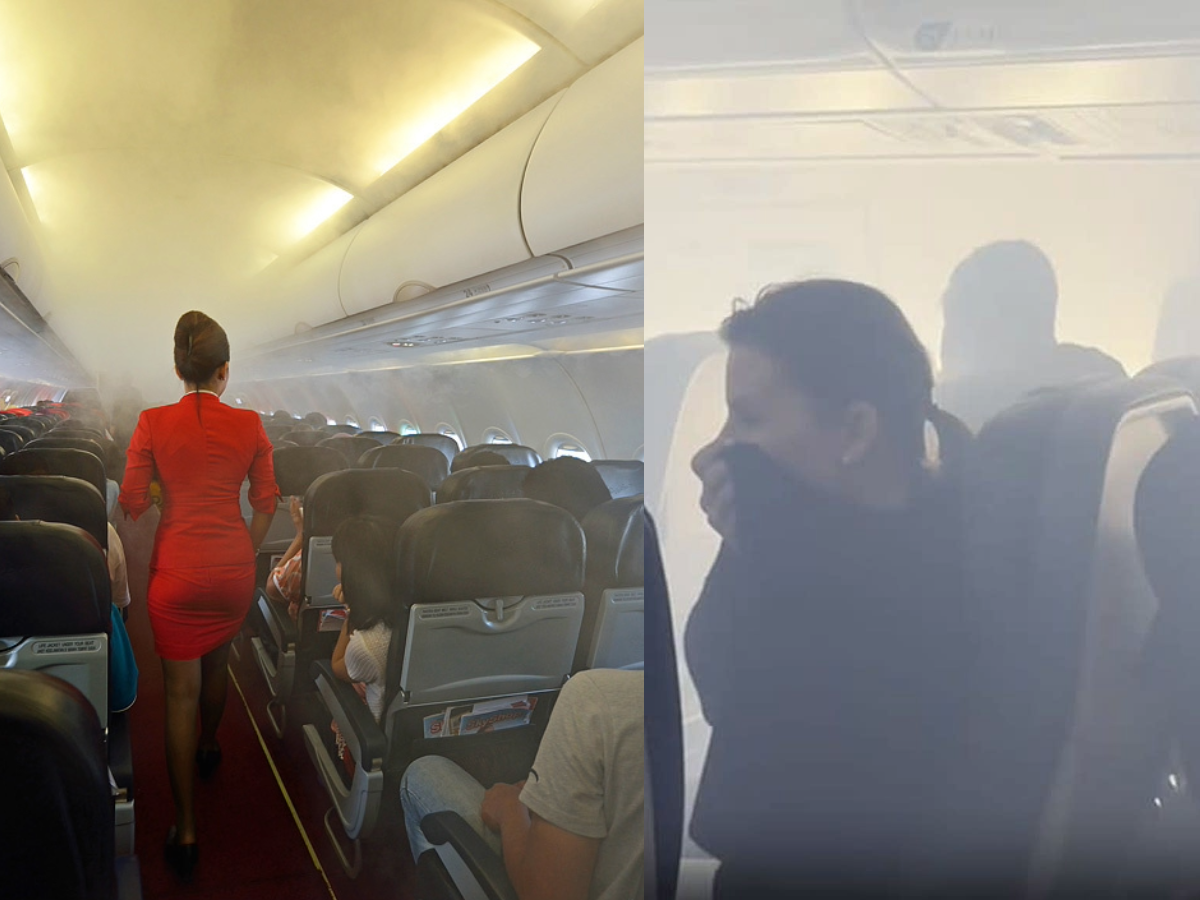
The last thing passengers expect when boarding a flight is to be exposed to toxic fumes that could potentially cause lasting neurological damage. Yet thousands of "fume events" have been plaguing commercial aviation for over a decade, with incidents surging dramatically in recent years.
A recent Wall Street Journal investigation has shed new light on this aviation safety crisis that airlines and regulators have been slow to address.
Understanding Toxic Fume Events
A fume event occurs when bleed air—the system used to pressurise aircraft cabins—becomes contaminated with hazardous fluids, including engine oil, hydraulic fluid, anti-icing compounds, and other toxic chemicals.
Most commercial aircraft rely on this "bleed air" system, which draws outside air through the jet engines where it's heated and pressurised before being pumped into the passenger cabin.
The problem arises when faulty engine seals leak, allowing toxic aviation oil containing neurotoxic chemicals, such as tricresyl phosphate, to contaminate the cabin air supply. The Airbus A320 family has emerged as the aircraft most affected by these incidents, largely due to specificities in its engine design.
FAA data shows these events occur at a rate that jumped from about 12 per million departures in 2014 to nearly 108 by 2024—a staggering 900% increase.
Notably, the Boeing 787 Dreamliner stands out as the only commercial aircraft immune to this problem, as it utilises electrical compressors rather than engine-derived bleed air for cabin pressurisation, thereby eliminating the contamination pathway entirely.

A Decade of Documented Incidents
Thousands of fume events have been reported to the FAA since 2010, but the human stories behind these statistics reveal the true scope of this crisis. Passengers and crew members consistently describe a distinctive "dirty socks" or "gym locker" odour that signals contamination.
In April 2025, a pilot experienced immediate symptoms after detecting "a dirty, musty gym sock odour followed by a burning rubber smell," becoming "momentarily lightheaded with moderate throat irritation" and requiring priority handling from air traffic control. A flight attendant in May 2024 reported "very strong and distinct bandage smell" that caused "watery eyes, congestion, and chest tightness," necessitating medical attention after the flight.
A NASA analysis of safety reports from 2018-2019 identified 362 voluntarily-reported fume events affecting nearly 400 pilots, flight attendants, and passengers who required medical attention. In 73 of these incidents, pilots were forced to use emergency oxygen, while four dozen pilots became so impaired they couldn't perform their duties.
The symptoms range from immediate effects like headaches, nausea, dizziness, and breathing difficulties to more severe long-term consequences. Neurologist Robert Kaniecki, who has treated over 100 flight attendants and a dozen pilots for fume-related brain injuries, warns that the toxic exposure can cause permanent damage to the peripheral nervous system, with effects resembling those seen in concussion victims.

Flight Attendants' Union Legislative Battles
The aviation industry's response to this crisis has been marked by resistance and delay. In 2017, the Association of Flight Attendants-CWA, representing 50,000 flight attendants across 20 airlines, took decisive action by advocating for comprehensive legislation to address fume events.
Their efforts led to provisions in the 2018 FAA Reauthorization Act requiring the agency to assess prevention tactics, including crew training and the installation of fume sensors on commercial aircraft. However, progress on these measures has been frustratingly slow. Airlines have refused to allow flight attendants to carry air samplers after Congress mandated chemical measurements, while Boeing has declined requests for air quality sensors due to litigation fears.
"We have known for decades that current bleed air systems can dump toxic chemicals and fuels into the aircraft cabin, poisoning the air for everyone on board," stated Sara Nelson, international president of the Association of Flight Attendants. “Instead of making simple changes to protect us, manufacturers and airlines have prioritised corporate profits.”
New Legislative Hope: The Safe Air on Airplanes Act of 2024
After years of industry stonewalling, renewed legislative momentum emerged in 2024 with the introduction of the bipartisan Safe Air on Airplanes Act. Spearheaded by Congressman Maxwell Frost (D-FL) and later endorsed by Congressman John Garamendi (D-CA), this comprehensive legislation takes a more aggressive approach than previous efforts.
The bill would require filters on all existing bleed air systems within seven years to prevent oil particulates from entering aircraft interiors. More significantly, it would ban bleed air systems entirely on newly manufactured aircraft and eventually phase out these systems on existing fleets.
This legislation represents the most ambitious attempt yet to address the root cause of fume events rather than merely studying the problem. The bill is currently moving through the House Transportation and Infrastructure Committee, building momentum among lawmakers who recognise that incremental measures have failed to protect public health.

Industry Response
While comprehensive solutions remain elusive, some airlines have begun taking proactive steps. The FAA has implemented stricter reporting protocols, contributing to the documented increase in reported incidents, though critics argue this reveals the problem's true scope rather than creating new issues.
Several airlines have developed monitoring programs.
United Airlines CEO Scott Kirby has personally focused on the issue for over a decade, implementing a "proactive maintenance program" that monitors engine oil consumption and pressure while replacing APU seals in advance to prevent leaks.
However, the industry's overall response has been characterised by resistance to meaningful change. Boeing has refused requests from airlines like Lufthansa to install air quality sensors, citing litigation concerns over crew and passengers sickened by detectable fume events.
Delta's Bold Move: APU Replacement Initiative
In a significant development, Delta Air Lines has emerged as an industry leader by taking concrete action to address fume events. The Atlanta-based carrier began replacing auxiliary power units (APUs) on more than 300 Airbus A320 family aircraft in 2022, with 90% of the fleet already completed.
This initiative, whose costs Delta has not disclosed, directly addresses one of the primary sources of cabin air contamination. APUs, small jet engines located in aircraft tailcones, can leak oil fumes into cabins through the bleed air system. By proactively replacing these units rather than waiting for failures, Delta is demonstrating that practical solutions exist when airlines commit to prioritising passenger and crew safety.
The replacement program covers Delta's entire A320 family fleet, including 127 A321-200s, 83 A321neos, 57 A319s, and 54 A320-200s. This comprehensive approach suggests that Delta recognises the systemic nature of the problem rather than treating it as isolated mechanical failures.

Looking Forward
The aviation industry stands at a crossroads regarding cabin air quality. JetBlue Airways and Spirit Airlines, which primarily operate Airbus aircraft, have experienced a 660% surge in fume incidents between 2016 and 2024, highlighting the urgency of comprehensive solutions.
The technical pathway forward is clear.
Implementation requires overcoming industry resistance rooted in cost concerns and litigation fears. As teaching assistant professor Jungho Suh of George Washington University notes, “Long-term trust in air travel relies not just on efficiency but on creating cleaner, safer environments where technology and humanity progress hand in hand.”
The skies may be friendly, but until comprehensive action addresses this hidden crisis, the air passengers breathe at cruising altitude remain a gamble with their long-term health.
Read next
Is Lufthansa about to trade office chairs for chatbots — and still expect better margins?

Abhishek Nayar
30 Sep 2025

Lufthansa’s board just dropped a strategic mixtape of cost-cutting, automation and fleet expansion that sounds like: “We’ll hire fewer people here, more planes there, and trust the algorithms.” The result? About 4,000 administrative roles are slated to disappear by 2030 — mostly in Germany — as the group chases fatter margins and cleaner spreadsheets.
What happened (the short version)
At its company-wide Capital Markets Day, Lufthansa confirmed a headline plan to cut around 4,000 non-operational/administrative jobs by 2030, push deeper into digitalization and automation, and set tougher mid-term financial targets: an adjusted operating margin of 8–10% (from 2028) and adjusted free cash flow of more than €2.5 billion annually later in the decade. The move is part of the turnaround programme the group unveiled last year.
The boardroom playbook: automate, integrate, repeat
Lufthansa’s plan is three-pronged:
- Digitize and automate repetitive administrative tasks so fewer humans are needed for paperwork and process duplication.
- Deepen integration between group airlines (Lufthansa, Austrian, Swiss, Brussels, ITA Airways, Eurowings, City Airlines etc.) so the whole group behaves more like one engine and less like several small, fuel-hungry ones.
- Invest in growth where returns are strongest — including adding over 230 aircraft by 2030 (about 100 long-haul jets among them) while shifting resources away from cost-heavy parts of the group.
Think of it as moving from a messy desk drawer of sticky notes to a minimalist file server that never loses your boarding pass. Romantic? Not always. Efficient? That’s the hope.
Where the cuts will bite — and the “but we’ll hire elsewhere” clause
Executives say most reductions will be in Germany, where labor and legacy structures make cost control harder. The CFO also signaled intent to hire roughly 1,500 administrative staff in other international locations to offset some work and cost footprint — i.e., some roles shift, others vanish. Earlier report plans to cut about 20% of non-operational staff in the group — which helps explain the 4,000 figure.
The unions and the political noise
Unions are not throwing confetti. Verdi — the union covering many Lufthansa employees — slammed the cuts, pointing out that heavier tax burdens and regulatory costs make firms look to staff reductions to protect margins. Meanwhile, Lufthansa’s pilots were voting on pension changes around the same time, a process that could spill into strike risk depending on the outcome. In short: boardroom strategy + shop-floor sensitivity = a headline-ready tug-of-war.
For investors: the carrot (margins) and the stick (credibility)
Lufthansa is explicit: they’ve lagged competitors on financial performance, and the Capital Markets Day was as much about reassuring investors as it was about internal housekeeping. The 8–10% adjusted margin target and the cash-flow goal are concrete numbers to hang investor optimism on — but they’ve been moved later in the decade after a rocky run of profit warnings and cost pressure.
If the group can genuinely get more productivity from fewer people and capitalize on a modernized fleet, shareholders win. If not, this becomes a textbook “promise now, deliver later” story.

For employees: it’s painful, but not blind
Management says operational roles (pilots, cabin crew, mechanics) aren’t the main target — this is administrative and duplicated function work — and they’ll consult social partners in Germany about how to implement changes. Still, moving work to cheaper group subsidiaries or international hubs is explicitly on the table — which makes the human angle unavoidable and headlines inevitable.
Can this actually work — a quick risk/benefit read
Benefits
- Lower structural costs and fewer duplicated admin processes — better margins.
- A modern fleet and integrated network could lift returns per aircraft.
Risks
- Industrial action from unions (or unhappy staff) could disrupt operations and erode short-term savings.
- Relocating admin tasks might attract regulatory and political pushback in Germany.
- Automation projects can be expensive and slow to implement; savings are rarely instant.
So yes, the plan can work — but it’s less of a sprint and more of a long haul: think marshalling a new fleet while repaving the runway at the same time.
A (good-natured) joke
If a spreadsheet and an AI walked into a bar, the spreadsheet would order “less paperwork, please,” and the AI would reply, “I’ll take your tab.” Everyone else at the bar would be whispering, “But who’s brewing the coffee?”
TL; DR
- 4,000 administrative jobs to be cut by 2030, mostly in Germany.
- Lufthansa now targets an adjusted operating margin of 8–10% from 2028 and >€2.5bn adjusted free cash flow later in the decade.
- The group plans to add 230+ aircraft by 2030 (including around 100 long-haul jets) as part of fleet modernization.
- Management may shift some admin work abroad and hire ~1,500 admin staff internationally to rebalance costs.
- Unions (Verdi) are critical; pilots’ pension vote adds strike risk — social and political pushback could complicate implementation.
With Inputs from Reuters
Read next
Boeing’s Next Act: Is the 737 MAX Getting a Midlife Crisis (and a Brand-New Body)?
Abhishek Nayar
30 Sep 2025
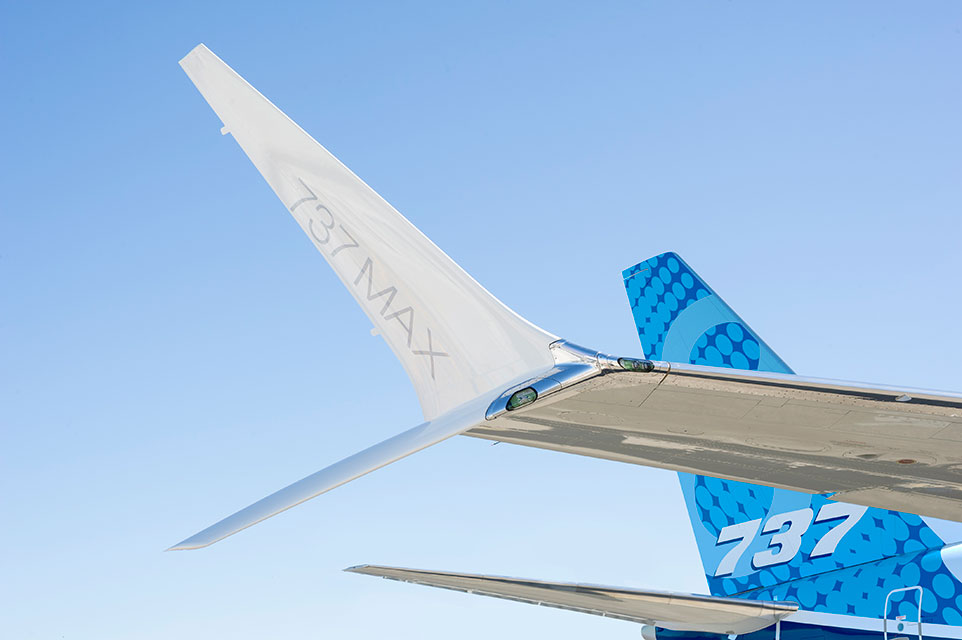
Boeing has quietly kicked off early work on a clean-sheet, single-aisle aircraft that could eventually succeed the 737 MAX — a long-term play to challenge Airbus and reset its single-aisle roadmap. The Wall Street Journal first reported the planning effort, and Reuters confirmed Boeing is in the “very early” stages of exploring designs, engines and cockpit concepts.
Why start now? Because airplanes take forever (and Boeing missed a few steps)
Designing a next-generation narrow-body is a decade-plus project. Boeing is juggling short-term priorities — delivering roughly 6,000 backlogged planes and certifying existing models — while quietly sketching a future jet to remain competitive in the 2030s market. Planning early gives time for new engines, better aerodynamics, and (ideally) fewer regulatory headaches than the last go-round.
Rolls-Royce in the lobby: new engines, new partners?
According to reporting, Boeing CEO Kelly Ortberg met with Rolls-Royce officials in the U.K. to explore engine options — a sign Boeing is at least entertaining suppliers beyond its traditional CFM partners for future propulsion tech. New engines could mean better fuel burn (read: airlines smile) and different maintenance ecosystems (read: supply chains reshuffle). Remember: meetings (not equal) contracts, but they are an excellent hint that Boeing is exploring options.
What Boeing is reportedly working on (so far)
- Flight-deck concepts: modernized cockpit designs and avionics, presumably with lessons learned from MAX-era challenges.
- Engine options: exploratory talks with Rolls-Royce for fuel-efficient engines that could be available in the mid-to-late 2030s.
- Internal planning: the effort is in early planning — lots of whiteboards, some CAD, and a few people nervously checking spreadsheets.
Regulatory context — not exactly smooth sailing
Boeing’s future plans arrive while the company is still under intense regulatory and public scrutiny. The FAA recently signaled it would allow Boeing to issue airworthiness certificates again for some 737 MAX and 787 jets under a new arrangement — a step toward normalizing deliveries after years of FAA oversight. But the FAA has not (yet) lifted the production cap on the 737 MAX that was imposed in early 2024 after a mid-air cabin panel blowout on an Alaska Airlines plane. That incident — where missing bolts were implicated — triggered fresh FAA audits and a U.S. Justice Department criminal inquiry and has left a bruised trust ledger.
So — a new airplane soon? Probably not. Here’s the realistic timeline
Expect conceptual studies now, follow-on detailed design in the next few years, engine selection sometime later, and certification + entry into service likely well into the 2030s if Boeing proceeds. Remember: big aircraft programs need safe, patient engineering — and buy-in from airlines, suppliers, and regulators.
What this means for airlines, passengers and the planet (short version)
- Airlines: potential for more fuel-efficient fleets and better trip costs decades from now.
- Passengers: marginally nicer cabins and lower emissions (slow-burn win).
- Planet: newer engines and airframes could help emissions targets — but only if airlines actually buy them.
All of which assumes Boeing gets its house in order on quality and regulatory compliance. (Hint: that’s the part the FAA and DOJ are watching closely.)

The corporate subplot — reputations, lawyers, and supply chains
Between lawsuits, regulatory probes, and production snags, Boeing is both trying to fix immediate operational problems and plan a strategic comeback. Launching a new airplane while under the microscope is bold — maybe courageous; maybe audacious — but done right, it’s how industry leaders stay relevant. Done wrong, and history reminds us it can be costly in cash and confidence.
A little aviation humor (because a new plane deserves a lighter aisle)
Imagine a focus-grouped flight attendant script for the new jet: “Welcome aboard the Boeing Future — please keep your seatbacks and tray tables in the upright position, and any spare bolts that may have wandered off should be returned to their rightful home under the wing.”
Bottom line — cautious optimism with a hard hat on
Boeing is laying early groundwork for a next-generation single-aisle aircraft that could eventually replace the 737 MAX family. It’s a strategic, long-range move that signals ambition — but the company still has to prove it can ship quality today, not just dream big for 2035. The world (and regulators) will be watching every rivet.
TL; DR
- Boeing is in early planning for a new single-aisle jet to eventually succeed the 737 MAX.
- CEO Kelly Ortberg has met Rolls-Royce officials to discuss possible engines; nothing final yet.
- FAA is easing certain certificate processes back to Boeing for some jets, but the production cap and enhanced oversight remain in place after safety issues.
- The Alaska Airlines cabin panel incident (missing bolts) spurred audits and DOJ/FAA scrutiny — Boeing still has work to rebuild regulatory trust.
- Timeline: concepts now — engines & design decisions over years — entry into service likely in the 2030s if the program proceeds.
With Inputs from Reuters
Comment