
Why Did Indian Airlines Lose Over Rs 5,000 Crore Despite IndiGo's Record Profits?

Abhishek Nayar
10 Feb 2026
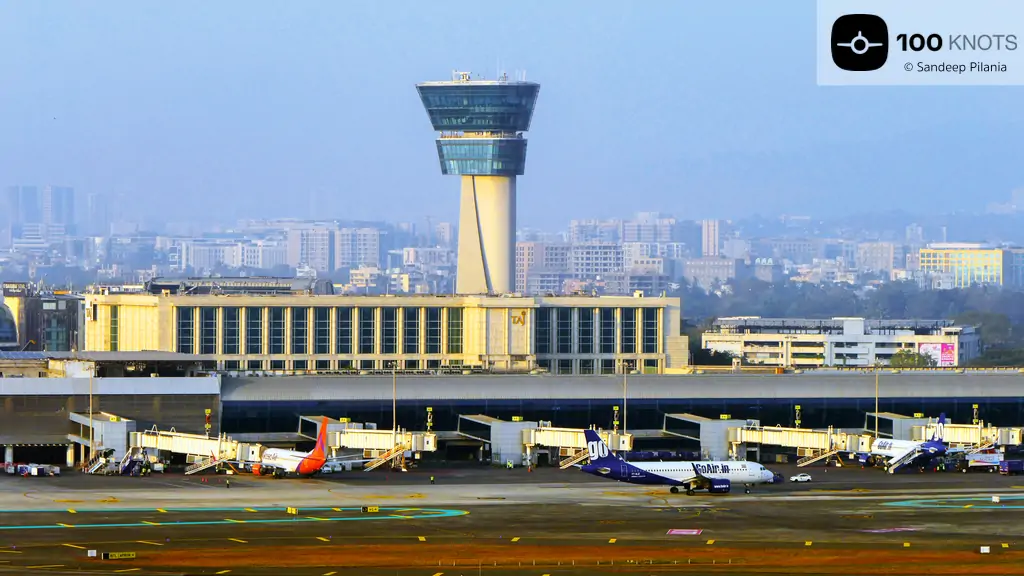
The Indian aviation sector presents a striking paradox of financial performance, with the industry recording cumulative losses of Rs 5,289.73 crore in the last financial year even as the country's largest carrier posted bumper profits. The figures, revealed by Minister of State for Civil Aviation Murlidhar Mohol in a written reply to the Rajya Sabha on Monday, paint a complex picture of an industry divided between thriving low-cost operators and struggling legacy carriers.
The Air India Group's Heavy Burden
The most significant contributor to the industry's red ink was the Air India Group, which alone accounted for losses exceeding Rs 9,808.12 crore during the 2024-25 financial year. This staggering figure actually surpassed the industry's net loss, indicating that without Air India's struggles, the sector would have posted an overall profit. Breaking down the group's performance, Air India recorded losses of Rs 3,975.75 crore while its subsidiary Air India Express fared even worse with losses of Rs 5,832.37 crore.
The newly launched Akasa Air also faced significant headwinds, reporting losses of Rs 1,986.25 crore as it invested heavily in fleet expansion and route development. State-owned Alliance Air continued its financial struggles with a loss of Rs 691.12 crore, while the beleaguered SpiceJet managed to limit its damage to Rs 55.67 crore. Smaller operators Fly91 and Quikjet Cargo posted losses of Rs 67.65 crore and Rs 1.34 crore respectively.
The Success Stories Stand Apart
Against this backdrop of losses, four airlines managed to turn profits during the financial year. IndiGo dominated the winners' circle with an impressive profit of Rs 7,253.30 crore, cementing its position as India's most successful airline. The budget carrier's lean operational model and extensive domestic network proved resilient despite challenging market conditions.
Regional carrier Star Air emerged as another profitable player, recording gains of Rs 68.75 crore, while cargo specialist Blue Dart earned Rs 0.71 crore and newcomer IndiaOne Air posted modest profits of Rs 0.33 crore. These figures, compiled after accounting for extraordinary items, were provided in response to questions raised by CPI-M member John Brittas.
Market Forces Determine the Future
The minister's reply also addressed the contentious issue of airfare regulation, clarifying that in India's deregulated aviation market, ticket prices are neither fixed nor controlled by the government. Airlines determine fares based on demand-supply dynamics and various commercial considerations, allowing market forces to shape pricing strategies. This regulatory framework, while promoting competition, has created an environment where operational efficiency and scale increasingly determine success or failure in the highly competitive Indian skies.
Read next
From Market to Maker: India's Aviation Sector Takes Flight at Wings India 2026
Abhishek Nayar
07 Feb 2026

Wings India 2026 concluded at Begumpet Airport on Friday after four days that showcased India's dramatic evolution in the aviation sector. The biennial civil aviation show, jointly organized by the Ministry of Civil Aviation, Airports Authority of India and FICCI, drew over 75,000 business visitors and one lakh general visitors, including 2,000 delegates with more than 200 international participants.
A Show of Scale and Spectacle

More than 150 exhibitors spanning airlines, aircraft manufacturers, helicopter makers, airport operators, technology firms and training institutions participated in the event. The business days saw over 500 structured meetings between businesses and government representatives, while the final two public days attracted more than 70,000 visitors who came for aircraft viewing and aerial performances. The Surya Kiran Aerobatic Team and international aerobatic pilot Mark Jefferies captivated audiences, with families clustering around the Surya Kiran stall where merchandise proved particularly popular. One memorable scene featured a child in a "Future Pilot" T-shirt playfully saluting in an Air Force pose as parents looked on.

Major Deals Reshape India's Aviation Landscape

Beyond the public spectacle, Wings India 2026 became the stage for announcements that signal India's shift from merely being an aircraft market to becoming a global manufacturing and services hub. Air India led the charge by expanding its order book with 30 fuel-efficient Boeing narrowbody aircraft, bringing its total commitment to 600 planes. The airline also signed a multi-year agreement with Boeing Global Services for a Component Services Program covering its entire fleet of Boeing 787 Dreamliners, including those yet to be delivered.
The partnership between Air India and Airbus saw transformation as well, with 15 A321neo orders converted into the longer-range A321XLR variant. The "Make in India" initiative received significant momentum when Sakthi Group and Omnipol signed a Memorandum of Understanding to introduce the L410 NG 19-seater aircraft domestically, with both companies currently assessing the feasibility of establishing a Final Assembly Line in India.

Indigenous Capabilities Take Center Stage
India's homegrown aerospace sector demonstrated its growing strength as Hindustan Aeronautics Limited secured a contract worth over Rs. 1,800 crores from Pawan Hans Limited for 10 Dhruv Next Generation helicopters. This agreement marks a pivotal transition to indigenously developed platforms for domestic utility and offshore operations. To support the sector's rapid expansion, the Airports Authority of India partnered with Airports Council International to launch a professional accreditation program that will train over 115 Indian aviation professionals to global leadership standards over the next five years.
Union Minister of Civil Aviation Rammohan Naidu captured the moment's significance during the Wings India Excellence Awards, stating that India is no longer just flying aircraft but designing, building and leading global aviation. Mallu Bhatti Vikramarka, Deputy Chief Minister of Telangana, shared the state's vision to become a premier aero-engine and MRO hub by 2047, noting that Hyderabad airport already operates on 100 percent renewable energy. The KPMG-FICCI report on India's aviation growth outlook was also released during the event. Organizers announced that Wings India will return in 2028, with dates and venue to be confirmed.
With Inputs from Deccan Chronicle
Read next
Air India Express Eyes Historic Profit as Tata's Budget Carrier Takes Flight
Abhishek Nayar
06 Feb 2026
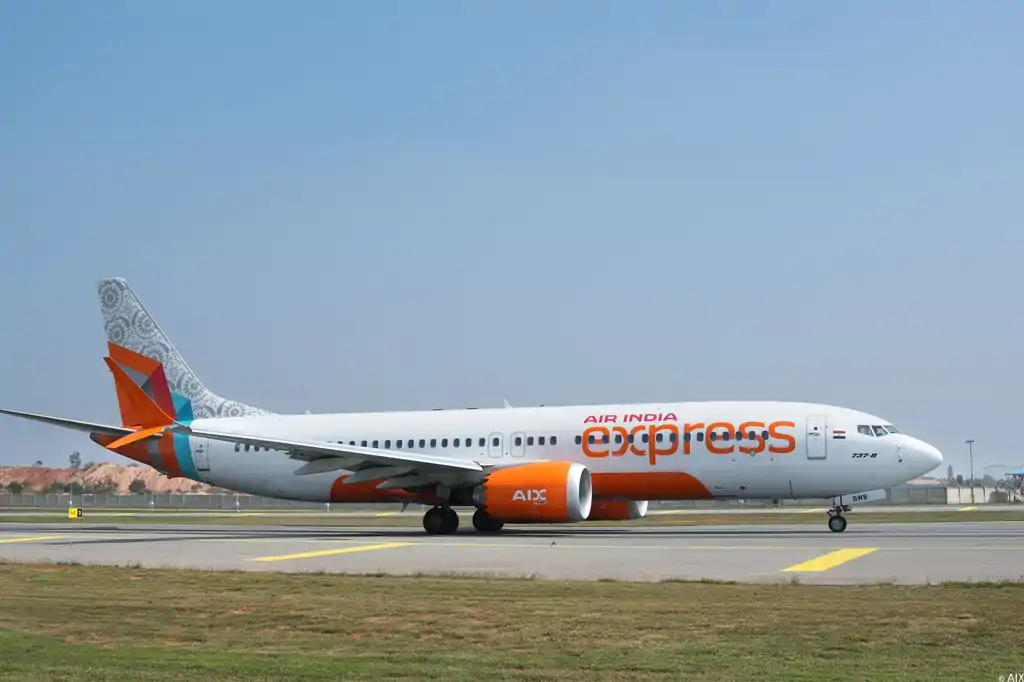
Air India Express stands on the brink of a significant milestone that could mark a turning point in its journey under new ownership. The low-cost airline is projected to achieve operating profitability during the second half of the current fiscal year, representing its first profitable period since the Tata Group acquired it as part of Air India in 2022. This anticipated success stems from strategic capacity expansion and growing market presence in India's competitive aviation sector.
A Glimmer of Hope Amid Challenges
The positive forecast arrives at a crucial moment for the broader Air India Group, which has been grappling with operational headwinds. The parent company, Air India's full-service division, has faced financial strain following Pakistan's decision to ban Indian airlines from its airspace. This restriction has forced carriers to take longer, more fuel-intensive routes, significantly impacting operational costs and profitability.
During a recent town hall meeting, Air India Express executives shared the encouraging profit projections with employees, according to highlights reviewed by Reuters and subsequently reported by Indian media outlets. The presentation revealed that the airline is committing more than seventy million dollars toward aircraft refurbishment initiatives, signaling confidence in its operational strategy and future growth trajectory.
Ambitious Expansion on the Horizon
Air India Express currently operates a fleet exceeding one hundred narrowbody aircraft from Boeing and Airbus. The airline's managing director outlined ambitious expansion plans in October, targeting a doubling of capacity within the next four to five years. This growth strategy envisions a fleet surpassing two hundred aircraft, positioning the carrier as a major player in the budget aviation segment.
The expansion received tangible momentum last month when Air India Express announced plans to incorporate thirty new Boeing 737 MAX jets into its operations. This fleet addition demonstrates the airline's commitment to modernizing its assets while scaling up service coverage across domestic and international routes.
Under the Microscope
Both Air India Express and its full-service parent company face intense scrutiny from industry analysts and government officials monitoring the turnaround progress. Air India itself is navigating a multi-billion-dollar transformation following decades of deterioration during government stewardship. However, the restructuring efforts encounter persistent obstacles, particularly ongoing delivery delays from aircraft manufacturers that constrain expansion timelines.
Industry expert Walsh acknowledged the nuanced pressure dynamics facing airlines globally. While immediate competitive pressures may have eased somewhat in certain markets, he emphasized that industry leaders remain concerned about long-term challenges. The fundamental question confronting carriers like Air India Express centers on sustainable growth strategies amid manufacturing bottlenecks, geopolitical disruptions, and evolving market conditions.
As Air India Express approaches this potential profitability milestone, stakeholders will watch closely to see whether the budget carrier can maintain momentum and deliver on its ambitious expansion blueprint in the years ahead.
With Inputs from Reuters
Read next
How Safe Are India's Skies When Nearly 400 Aircraft Show Recurring Problems?
Abhishek Nayar
06 Feb 2026
The Indian government revealed troubling figures in Parliament that raise questions about aviation safety standards across the country's commercial fleet. Speaking in Lok Sabha on Thursday, Minister of State for Civil Aviation Murlidhar Mohol disclosed that 377 aircraft operated by various scheduled airlines have been flagged for recurring defects during the period spanning from January last year through February 3 of this year.
IndiGo Bears the Largest Burden

The data presented to Parliament painted a concerning picture of maintenance challenges facing India's largest carrier. IndiGo, which dominates the domestic aviation market, had 405 aircraft undergo analysis for repetitive defects. Of these, 148 aircraft were identified as having recurring problems as of February 3 this year. This means that more than one-third of the analyzed IndiGo fleet showed patterns of repeated technical issues.
Air India's Fleet Shows Even Higher Defect Rates

The situation appears more severe for Air India, where the proportion of affected aircraft is considerably higher. Out of 166 Air India aircraft that underwent scrutiny for repetitive defects, a staggering 137 were identified as problematic. This represents more than 82 percent of the analyzed fleet showing recurring maintenance concerns. Meanwhile, Air India Express, the low-cost subsidiary, had 54 aircraft identified for repetitive defects from a total of 101 aircraft analyzed, marking just over half of its examined fleet.
Smaller Carriers Also Face Challenges

SpiceJet's analysis revealed that 16 planes out of 43 aircraft examined showed repetitive defects. The relatively newer carrier Akasa Air, despite operating a younger fleet, had 14 aircraft identified for repetitive defects out of 32 aircraft analyzed, indicating that even modern aircraft require constant vigilance.
Regulatory Response and Oversight Measures
The Directorate General of Civil Aviation has responded to these safety concerns with an extensive surveillance program. During the previous year, the aviation safety regulator conducted 3,890 surveillance inspections alongside 56 regulatory audits. Additionally, DGCA carried out 84 surveillance operations on foreign aircraft and performed 492 ramp checks as part of its planned oversight activities. Beyond these scheduled measures, the regulator also undertook 874 spot checks and 550-night surveillance operations as unplanned surveillance activities.
Addressing Future Safety Through Staffing
Recognizing the challenges ahead, Minister Mohol informed Parliament about significant structural changes within DGCA to strengthen its regulatory capacity. In 2022, the organization had 637 sanctioned technical posts. However, acknowledging the need to address anticipated manpower shortages, DGCA underwent restructuring that increased the number of sanctioned technical posts to 1,063, representing a 67 percent expansion in its technical workforce capacity to ensure more robust oversight of India's growing aviation sector.
With Inputs from NDTV
Comment