
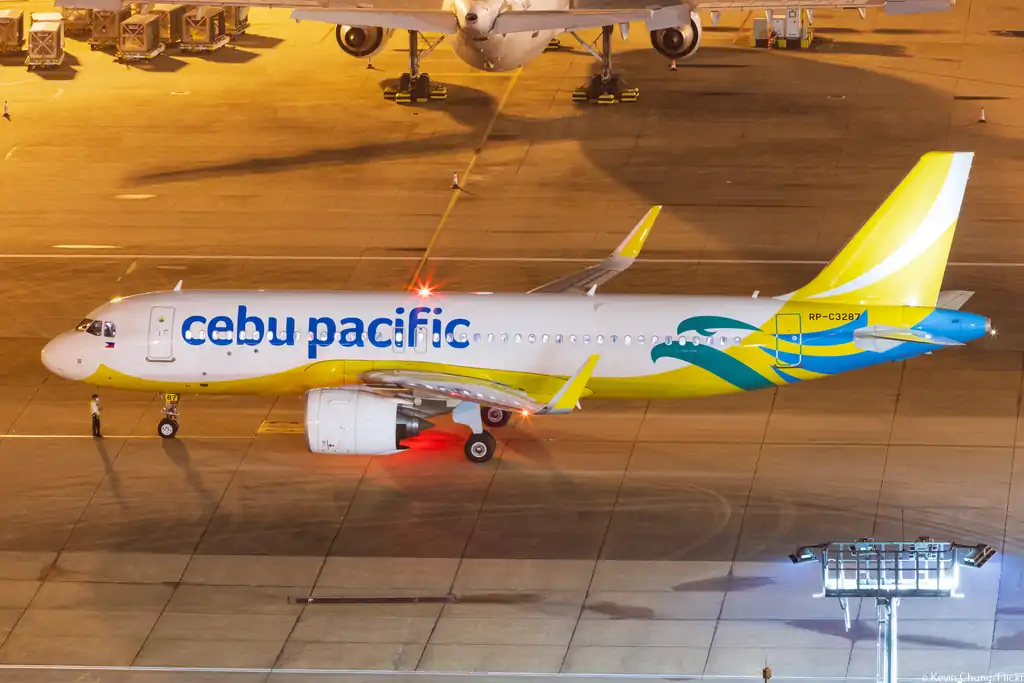
Cebu Pacific Air, one of the Philippines' leading low-cost carriers, is set to face operational challenges as it initiates mandatory inspections of its Pratt & Whitney PW1100G engines.
The airline plans to park ten A320neo Family aircraft in January 2024, with the possibility of the grounded fleet expanding to 20 throughout the year. In response to the impending groundings, Cebu Pacific is in discussions with Bulgaria Air for a wet-lease contract to mitigate the impact on its operations.
Engine Troubles Prompt Fleet Grounding
The decision to ground a portion of its A320neo fleet comes as Cebu Pacific grapples with issues related to the Pratt & Whitney PW1100G engines. The mandatory inspections are crucial for ensuring the safety and reliability of the aircraft. While the airline has not provided specific details about the inspections, it underscores the challenges airlines face in maintaining airworthiness standards.
Wet-Lease Contract with Bulgaria Air
Cebu Pacific is actively exploring a wet-lease contract with Bulgaria Air to offset the operational disruptions caused by the grounded aircraft. However, the airline has not disclosed the terms of the potential agreement, and responses to inquiries regarding the matter remain pending.
Current Fleet Composition and Orders
As of now, Cebu Pacific's fleet comprises fifteen A320-200Ns and twelve A321-200NX, along with additional A320s, A321s, and A330-900s. The airline has outstanding orders for six A320-200Ns, twelve A321-200NX, and ten A321-200NY(XLR)s, with plans to lease three more A320-200Ns in the near future. The challenges posed by the PW1100 engine issues led the airline to seek interim solutions, such as acquiring second-hand A320-200s.

Ambitious Growth Plans Amidst Challenges
Despite the engine-related setbacks, Cebu Pacific remains optimistic about its growth prospects. The Chief Executive, Michael Szucs, expressed the airline's intent to surpass pre-pandemic capacity levels by the end of 2023. Moreover, Cebu Pacific aims to achieve a 5-8% increase in total seat capacity in 2024.
Current Operational Status
Cebu Pacific's domestic network has already surpassed 2019 levels, showcasing the resilience of the airline in the face of the challenges posed by the COVID-19 pandemic. International services, while still in recovery, are operating at 93% of pre-COVID capacity.
Future Aircraft Procurement Plans
In anticipation of its continued growth, Cebu Pacific issued a Request for Proposal (RFP) for 100-150 new narrowbody aircraft. The airline expects responses from manufacturers by the end of the year, indicating its commitment to modernizing and expanding its fleet.
Conclusion
Cebu Pacific Air's decision to ground a portion of its A320neo fleet for engine inspections underscores the complexities airlines face in maintaining operational integrity. The potential wet-lease agreement with Bulgaria Air and the ongoing fleet expansion plans demonstrates the airline's resilience and determination to overcome challenges as it aims for sustained growth in the coming years. The response to its RFP for new narrowbody aircraft will likely shape the future trajectory of Cebu Pacific's fleet and operations.
With Inputs from ch-aviation

Read next
Boeing Partners with U.S. Government to Advance SAF in APEC Member Countries
Abhishek Nayar
17 Nov 2023

In a significant move towards addressing environmental challenges faced by Asia Pacific Economic Cooperation (APEC) member countries, Boeing Co. announced on November 16, 2023, its collaboration with the U.S. government in a pioneering project focused on developing and scaling the use of sustainable aviation fuel (SAF). This initiative aims to tackle carbon emissions in the aviation industry, utilizing SAF made from waste materials such as cooking oils, municipal waste, and agricultural residues.
The Significance of Sustainable Aviation Fuel (SAF)
SAF is recognized as a pivotal solution to reducing carbon emissions in the aviation sector. As the industry strives to meet its net-zero commitment, SAF offers a promising alternative to traditional jet fuel. However, the current production volume of SAF remains relatively low, and the cost is a significant impediment, ranging between three to five times that of regular jet fuel. Presently, airlines' use of SAF accounts for only 0.1% of global jet fuel demand.
Boeing's Commitment and Involvement
Boeing, a key player in the aviation industry, has taken a proactive stance by partnering with the U.S. Department of Transportation and the Federal Aviation Administration. The collaboration aims to address challenges faced by APEC economies, with a specific focus on identifying the availability of feedstocks for SAF and optimizing production processes. Boeing's Chief Sustainability Officer, Chris Raymond, emphasized the importance of SAF in achieving aviation's net-zero commitment, highlighting the need for increased production.
Current Usage and Boeing's Contribution
Boeing's commitment to sustainability is demonstrated by its substantial purchase of 7.6 million gallons of SAF for its U.S. commercial airplane operations since 2022. This proactive step underscores Boeing's dedication to reducing the carbon footprint of its operations and fostering a more sustainable aviation industry.
Challenges and Opportunities
The challenges faced by APEC economies in scaling the use of SAF are multifaceted. Issues such as feedstock availability, cost considerations, and the need for technological advancements pose hurdles to the widespread adoption of sustainable aviation fuel. However, this collaborative effort between Boeing and the U.S. government presents an opportunity to address these challenges systematically. By leveraging the expertise of both the private and public sectors, a pathway can be forged to make SAF more accessible, cost-effective, and integral to the aviation industry's environmental goals.
Conclusion
Boeing's partnership with the U.S. government to advance sustainable aviation fuel reflects a significant stride towards a greener and more environmentally responsible aviation sector. As the industry grapples with the imperative of reducing carbon emissions, initiatives like these underscore the importance of collaboration between industry leaders and government bodies. The success of this project could set a precedent for similar initiatives worldwide, propelling the aviation industry towards a more sustainable and eco-friendly future.
With Inputs from Reuters
Read next
American Airlines Passenger Service Employees Strike for Fair Collective Bargaining Agreement
Abhishek Nayar
17 Nov 2023

In a bold move to secure their rights and demand fair treatment, American Airlines (AA) passenger service employees, affiliated with the Communications Workers of America (CWA)-International Brotherhood of Teamsters (IBT) Association, engaged in a nationwide strike on November 14 and 15.
The Striking Objectives
The primary focus of the strike was to communicate with travelers and shed light on the continuous efforts to establish a fair collective bargaining agreement. The workers emphasized the importance of job security, enhanced safety measures, reasonable compensation, and improved overall working conditions.
Strike Locations
The strike unfolded at eight major airports across the nation, including Charlotte, Raleigh-Durham, Dallas-Fort Worth, Miami, Philadelphia, New York City, and Rhode Island. These locations served as battlegrounds for the passionate workers advocating for their rights.
Prioritizing Workers' Well-being Amid the Pandemic
CWA President Claude Cummings Jr. underscored the dedication of passenger service workers during the pandemic, emphasizing that they prioritized the industry's profits over their own health and safety. As frontline workers, their commitment to fair treatment remains unwavering.

Urgency for Fair Compensation
Heidi Andrews, chief steward for CWA Local 1171 and a customer service agent at American Airlines, highlighted the urgency for the airline to address its reputation for having one of the lowest pay rates among major U.S. carriers. As the airline industry evolves, the goal is to ensure that passenger service workers receive fair compensation and have a secure future in the industry.
Negotiations and Neglect
Negotiations between American Airlines and the CWA-IBT bargaining team have extended for over a year. Despite the prolonged discussions, the company has been accused of persistently neglecting the crucial importance of ensuring job security and fair wages for its passenger service workers.
The Crucial Role of Passenger Service Workers
In the constantly evolving landscape of the airline industry, a dedicated group of workers stands at the forefront. These individuals play a pivotal role in ensuring passengers receive top-notch service and the essential support required for their journeys to various destinations.
Conclusion
As the strike draws attention to the plight of American Airlines passenger service employees, the spotlight is on the need for a fair collective bargaining agreement. The ongoing negotiations and the workers' unwavering commitment underscore the significance of addressing job security, fair compensation, and improved working conditions in the airline industry. The outcome of these negotiations will not only impact the lives of the workers involved but also set a precedent for the treatment of frontline employees across the aviation sector.
Read next
airBaltic Soars to New Heights with Record-Breaking Financial Results in 2023
Abhishek Nayar
17 Nov 2023
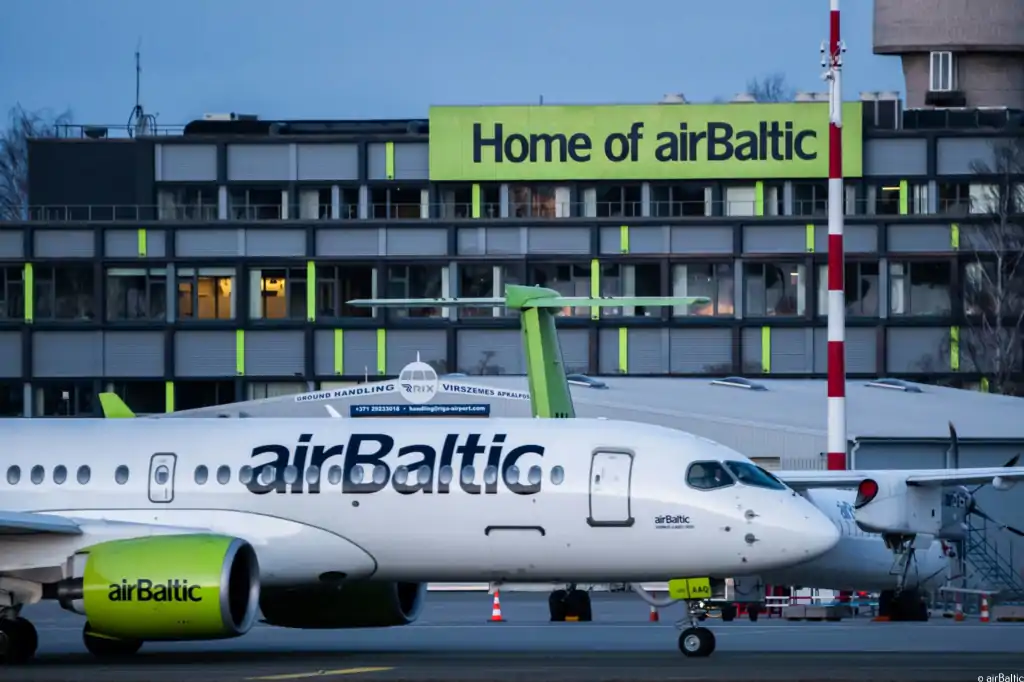
In a week marked by positive developments, airBaltic, the Latvian flag carrier, has announced stellar financial results for the first nine months of 2023. The airline reported its highest-ever revenue and a significant surge in passenger numbers, signaling a robust recovery from the challenges faced in the previous year.
Record Revenue and Growth
January-September 2023 Revenue Surpasses €510.6 Million
The financial report reveals that airBaltic achieved an impressive nine-month revenue of €510.6 million, marking a remarkable 41% increase compared to the same period in 2022. This milestone was attributed to a strong third quarter, where the airline's revenue alone rose by 28% to €219.3 million.
CEO Martin Gauss's Perspective
Strategic Expansion and Operational Excellence
Commenting on the outstanding performance, airBaltic's CEO, Martin Gauss, highlighted the airline's consistent financial and operational strength throughout Q3 and the first nine months of 2023. He pointed to a record-breaking summer, with monthly passenger numbers nearing half a million and a steady rise in overall demand. Gauss emphasized that the growth is reflected in the airline's revenues, surpassing the significant half-billion-euro milestone.
Net Profit and Improvement
Net Profit of €9.1 Million Represents a Turnaround

While the net profit for the first nine months of the year amounted to €9.1 million, a more modest figure in comparison to the revenue, it signifies a considerable improvement from the €125 million net loss reported during the same period in 2022. Gauss acknowledged that performance was impacted by engine supply and reliability issues, suggesting that without these challenges, the results could have been even stronger.
Key Factors Behind Success
Capacity Expansion and Passenger Growth
One key driver behind airBaltic's recent financial success is its ability to increase capacity by operating more flights. The number of non-ACMI flights operated during Q3 rose by 18% to 13,000, while passenger numbers surged by an impressive 28%. CEO Gauss attributed this growth to the escalating demand for both leisure and business travel, further amplified by the strategic expansion of airBaltic's network.
Summer Uplift and Operational Milestones
3.4 Million Passengers in January-September 2023
During the peak summer period of 2023, airBaltic experienced a notable uplift in demand, catering to both leisure and business travelers. The airline carried a total of 3.4 million passengers between January and September 2023, reflecting a substantial 41% increase compared to the same period in the previous year. Additionally, the number of non-ACMI flights operated in the first nine months rose by 19%, from 28,000 in 2022 to 33,000 in 2023.
Conclusion
AirBaltic's record-breaking financial results in 2023 underscore the airline's resilience and strategic prowess in navigating challenges. With increased capacity, growing passenger numbers, and a positive turnaround in net profit, airBaltic stands as a beacon of success in the aviation industry, signaling a promising trajectory for the Latvian flag carrier.
Read next

Airspace plays a crucial role in aviation, serving as the three-dimensional territory through which aircraft navigate. This article explores the history, boundaries, special use airspace, and the importance of pilots learning about different airspace classes. Additionally, we'll delve into the pros and cons of flight training within specific airspace categories.
History of Airspace
In the early days of aviation, the concept of national airspace lacked fixed boundaries. Customary laws prevailed, with many countries, including the United Kingdom and the United States, considering airspace as international above approximately 13,000 feet during times of peace. The establishment of the Karman Line in the 1950s marked a significant milestone, providing a clear demarcation between Earth's atmosphere and outer space.
Boundaries of Airspace

Airspace is subject to international law, granting a nation complete sovereignty over the airspace above its territory, extending to 12 nautical miles from its coastline. International airspace, analogous to the high seas in maritime law, exists beyond these territorial limits. Countries may assume responsibility for controlling parts of international airspace, forming Flight Information Regions (FIRs). Vertical boundaries lack international consensus, with suggestions ranging from 30 km to 160 km.

Special Use Airspace
Special Use Airspace includes Prohibited, Restricted, Warning, Military Operations Areas (MOAs), Alert Areas, and Controlled Firing Areas (CFAs). Prohibited areas are off-limits for security reasons, while Restricted areas may have hazardous activities. MOAs separate military training from other flights, and Alert Areas highlight high pilot training or unusual aerial activity. CFAs, though not on charts, involve activities suspended upon detection of approaching aircraft.
Importance of Learning Airspace Classes for Pilots
Understanding airspace classes is vital for pilots, influencing safety and compliance with regulations. Each class, from A to E, has specific weather minimums for Visual Flight Rules (VFR) flights. A deviation, such as entering Class B airspace without clearance, can lead to severe consequences, including the loss of pilot privileges. Awareness of Military Operations Areas is crucial to avoid unnecessary diversions.
Pros and Cons of Flight Training in Different Airspace
Flight training in various airspace types offers distinct advantages and challenges:
Class C Airport (Pros):
- Learn busy airport operations.
- Develop proficiency in radio communications.
- Gain heightened situational awareness.
- Prepare for professional careers.
Class C Airport (Cons):
- Increased likelihood of airport delays.
- Extended taxi times.
- Greater potential for deviation from ATC instructions.
- Overwhelmed by the larger, faster aircraft in a stressful environment.
Class D and Class G Airports (Pros):
- Quick access to runways with fewer delays.
- More flying and practice time.
- Easier-to-follow instructions.
- Laid-back environment for learning fundamentals.
Class D and Class G Airports (Cons):
- Limited exposure to large airport operations.
- Potential anxiety and stress when transitioning to larger airports.
Conclusion
In summary, a thorough understanding of airspace is paramount for pilots. Knowledge of boundaries, special use airspace, and the nuances of different classes ensures safe and compliant flight operations. Choosing a flight training environment aligned with individual preferences and career goals allows aspiring pilots to maximize their learning experiences and develop the necessary skills for successful aviation careers.
With Inputs from Skybrary, ATP Flight School, FAA
Read next


AirAsia plans to launch new routes to India as the airline boosts its robust presence there, linking millions of Indian travellers to an extensive network of 130 destinations across Asia and the Asia Pacific.
AirAsia Aviation Group Ltd group chief executive officer Bo Lingam said that India has always been a key market for the group and following recent changes to its operations in the country, the airline remains committed to serving the market.
"We have flown a remarkable 1.6 million guests from India between January and November this year, showcasing the enduring strength of our great value fares and connectivity. As we continue to strengthen our presence in India, we are excited to announce our expansion plans, including the launch of a new route to Thiruvananthapuram soon," said Lingam.
AirAsia now provides 10 international routes directly from India to Malaysia and Thailand with 104 flights weekly from short-haul airlines AirAsia Malaysia and AirAsia Thailand. Destinations served by AirAsia across India include Guwahati, New Delhi, Mumbai, Bengaluru, Chennai, Kolkata, Tiruchirappalli, Kochi, and Hyderabad.
Medium haul affiliate airline AirAsia X Malaysia provides two direct routes from New Delhi and Amritsar to Kuala Lumpur with eight flights weekly. The continued growth in AirAsia services to India ensures a comprehensive and seamless travel experience for AirAsia's guests across India to the widest low-cost network in Asia.
AirAsia head of regional commercial (India) Manoj Dharmani said it remains deeply committed to India, and while the airline no longer operates domestic flights, its guests should rest assured that India remains at the core of its operations. Over the years, Dharmani said AirAsia has witnessed tremendous growth, connecting countless cities and regions in India to the world.
AirAsia Head of Regional Commercial (India), Manoj Dharmani, added, “AirAsia remains deeply committed to India, and while we no longer operate domestic flights, our guests should rest assured that India remains at the core of our operations. Over the years, we have witnessed tremendous growth, connecting countless cities and regions in India to the world, and we are proud to share that AirAsia now serves 11 destinations in India. Our expansion in India has resulted in 104 weekly flights, making us a vital and reliable link between India and the globe. We look forward to serving the Indian market with the commitment to further enhancing connectivity and accessibility for our guests across the country. Our expansion in India has resulted in 104 weekly flights, making us a vital and reliable link between India and the globe.”
AirAsia's Global Expansion Plans
The AirAsia group also aims to capture connecting traffic to route through its network across Southeast Asia, Australia, and New Zealand with one booking. The group announced it is expanding the capacity of existing routes, including Australia's Gold Coast, and launching an entirely new subsidiary in Cambodia.
Recovery has been strong for the aviation group, which reported substantial load factors in its third-quarter results. The group as a whole recorded a 49% increase in passenger numbers over the same period last year and has now recovered to three-quarters of its pre-pandemic levels.
Comment