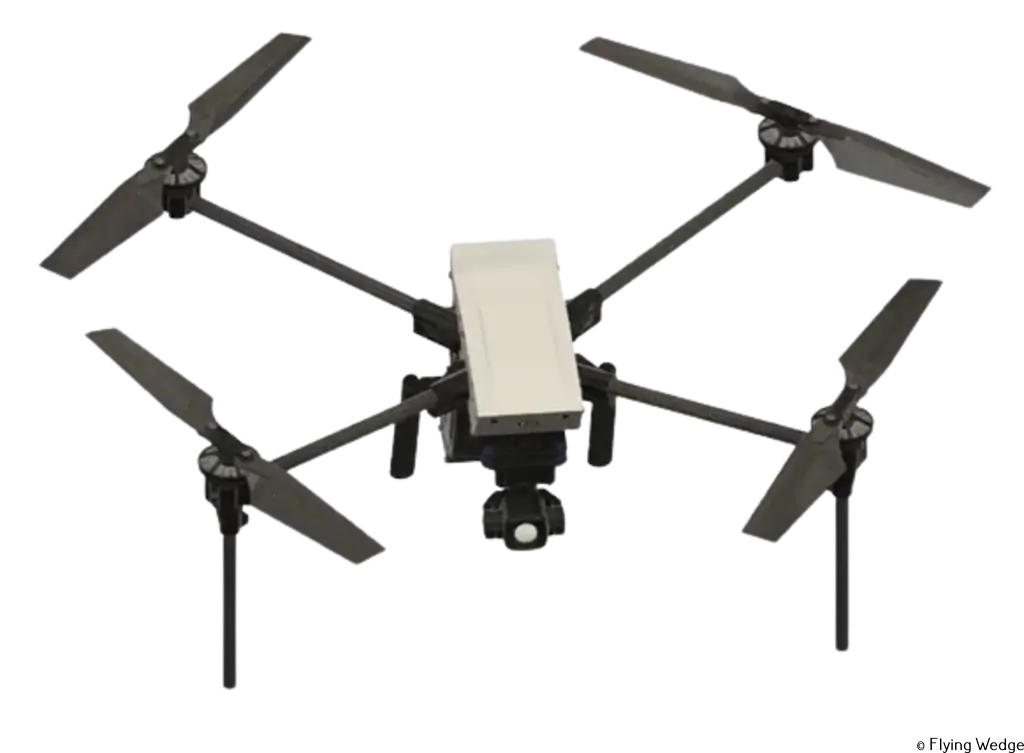
Flying Wedge, the defence and aerospace company has announced that it has become the first company to secure DGCA (Directorate General of Civil Aviation) Type Certification for indigenous Unmanned Aircraft technology. This certification is an important step in ensuring the safety and reliability of unmanned aircraft within the country. Till now, only a few companies have successfully obtained DGCA-type certification within this sector.
Two of the company’s surveillance drones are already deployed in the heart of New Delhi, carrying out observation of the airspace and grounds around the Prime Minister’s residence. The Indian firms that have successfully obtained DGCA-type certification within this sector have obtained technology from abroad, predominantly from China.
Under the DGCA’s regulatory framework, no drone, aircraft, or aeroplane can operate in India without DGCA-type certification. This stringent certification process is regarded as a vital step in ensuring the safety and reliability of unmanned aircraft within the country.
“A significant portion of these certified entities have obtained their technology through transfer of technology (ToT) agreements with companies based in China. Flying Wedge Defence and Aerospace, however, has set itself apart by achieving DGCA-type certification based on truly indigenous technology,” said the company in a press release on Tuesday, November 8.
“This accomplishment highlights the company’s commitment to self-reliance, innovation, and a mission to advance India’s standing in the global aerospace industry,” said the media statement, terming it “a new benchmark in the nation’s technological landscape”.
“Flying Wedge’s journey to becoming DGCA-type certified has been marked by a relentless pursuit of excellence and a dedication to ‘Make in India’ principles. The company’s state-of-the-art manufacturing unit in Bengaluru, along with their expertise in artificial intelligence and machine learning, played a pivotal role in this achievement,” said Suhas Tejaskanda, the company’s chief executive.
He said Flying Wedge’s fully autonomous, advanced modular drones have disrupted the UAV industry and significantly contributed to breaking China’s monopoly.
Importance of Modular Drones
Flying Wedge's advanced modular drones, fully autonomous, are backed by globally supported APIs. These drones have revolutionized smart farming in India, offering cost-effective solutions that enhance crop yield and reduce water consumption. Additionally, Flying Wedge is committed to promoting gender equality and empowerment, thus they especially focus on encouraging women entrepreneurs through drone technology applications.
Honouring with DGCA type certification, the company represents itself as a leader in the UAV industry and has reached a milestone in India's defence and aerospace technology sector. The company's commitment to innovation, independence, and excellence in the defence and aerospace industries is reaffirmed by its technological prowess.
Flying Wedge is now leading the way not only in defence but also in the agriculture sector with their autonomous agriculture drones. Its drones have transformed smart farming in India, offering cost-effective solutions that enhance crop yield and reduce water consumption.
Flying Wedge is already marketing its next wave of monopoly products, the Advanced Drone Catcher and Killer Drones. While the eponymous Drone Catcher physically captures hostile drones by throwing a net over them, the Killer Drone uses an explosive charge or a laser beam to damage or destroy the enemy drone and bring it down.
Flying Wedge claims its commitment to innovation is evident in its autonomous agriculture drones. These 25-150 kilogramme drones are revolutionising smart farming by reducing operating costs, spraying pesticides, improving crop yields, and conserving water resources.
(With Inputs from Business Standard)

Read next
Air India's Petitions Against Two 2016 Arbitral Awards Denied by Delhi High Court
Radhika Bansal
09 Nov 2023
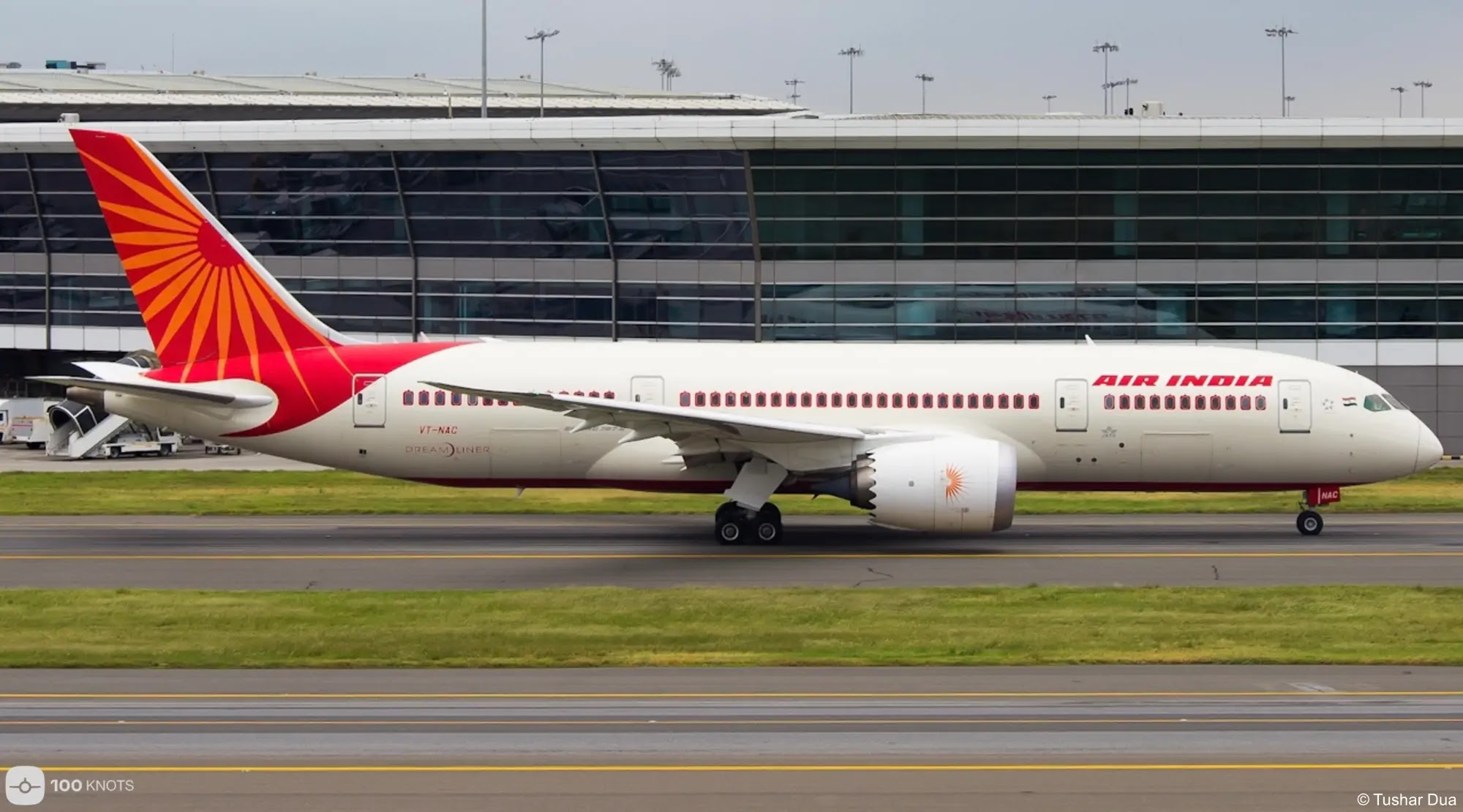
The Delhi High Court on Wednesday, November 8 dismissed Air India's petitions challenging the two arbitral awards of 2016 that ruled in favour of its two employee associations - All India Aircraft Engineers' Association and Indian Aircraft Technicians Association, according to a report by The Economic Times.
The report further mentioned that the arbitration related to a long-standing dispute that arose almost 15 years ago between Air India’s predecessor-in-interest Indian Airlines and its employees over issues of service conditions and wage revisions after the merger. Air India has now been privatised through its sale to the Tata Group.
"It is a settled position of law that presidential directives (PD) issued by the Administrative Ministry of a public enterprise bind the enterprise in question. Air India was undoubtedly bound by the PD and conducted itself in accordance therewith," Justice Rekha Palli said while rejecting Air India’s petitions. The HC said that it finds that “although its claim of the presidential directive having statutory force appears attractive on the first blush, it cannot be accepted.
No doubt, presidential directives hold significant weight and serve as clear instructions from the parent Ministry of the concerned enterprise. They are orders issued by the Administrative Ministry directing specific actions or policies within the enterprise but are ultimately, at their core, only instructions from the Administrative Ministry," it stated in its judgment.
The arbitration tribunal had asked Air India to pay INR 57.92 crore with interest and also the cost of arbitration proceedings to the All India Aircraft Engineers' Association, which represented 480 members who served as engineers either under Air India or Indian Airlines. It had also asked the carrier to calculate and pay wage arrears with interest to the Indian Aircraft Technicians Association, which represented about 2000 aircraft technicians, from January 1997 to July 2006.
Air India senior counsel Harish Salve and Rajiv Nayyar had submitted that the tribunal had committed a grave error in rendering a decision that the PD of July 21, 2006, under Section 9 of the Air Corporations (Transfer of Undertaking and Repeal) Act, 1994 was subject to being set aside.
Salve submitted that the tribunal lacked the authority to assert that a statutory directive was unlawful or ought to be disregarded, particularly when this issue was already a matter before the Industrial Tribunal. He further said that the association employees did in fact concede the validity of the Memorandum of Settlement of March 2007, which recorded their concession that any arrears related to wage revision will only be paid prospectively w.e.f. August 1, 2006.
Therefore, it was clear that no agreement existed between the concerned parties in this regard, he contended. Senior counsel Jay Savla, appearing for the respondents, on the other hand, argued that there was no contention concerning the duration for which the workers were to receive payment for their overdue wage revision, nor was there any dispute regarding their entitlement to said payment.
The sole subject of disagreement between the parties, as recorded in the Supreme Court order of May 2013, was restricted to the quantum/heads of arrears. Once the carrier had expressly undertaken to pay the accepted dues of its employees, if any, relating to claims for the period from January 1997 to December 2006, it was precluded from denying that any amount was payable for the aforementioned period. He said that Air India’s claim that under the presidential directive the revised wage arrears could only be paid prospectively to the trade union body members was wholly misconceived.
The PD must be taken as a whole as the Department of Public Sector Enterprise (DPE Guidelines) of 1999 stated that wage revisions were to be granted to all employees w.e.f. January 1997, Savla contended.
(With Inputs from The Economic Times)
Read next
Air India to Bring Back All of its "Long-Grounded" Aircraft in Operations Soon
Radhika Bansal
09 Nov 2023
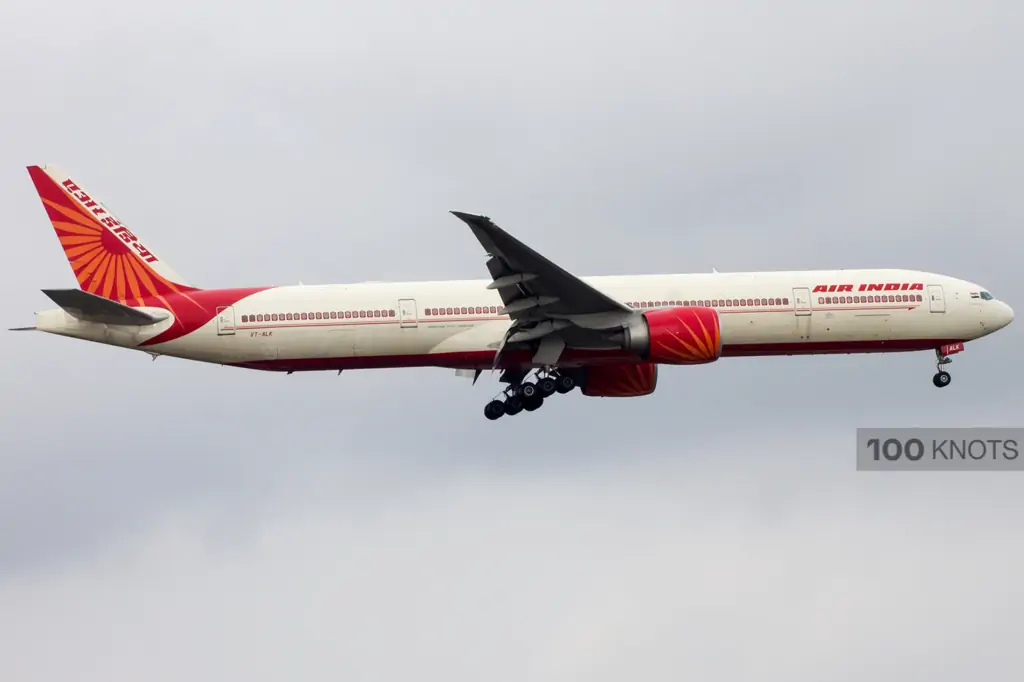
Air India is planning to reinstate 100% of its "long-grounded" fleet since the takeover by the Tata Group two years ago. According to a report in the Financial Express (FE), over 95% of the "long-grounded" fleet, which included Boeing 787s, 777s, and narrow-body Airbus A320 type aircraft, has been made airworthy.
Sources said that out of all the "long-grounded" aircraft, only two are left to be reinstated into the fleet. An official said, "Many of these aircraft were grounded due to lack of components and engine shortages. Now that we are witnessing an improvement in the supply chain, the remaining two will also be made airworthy soon."
During the takeover by the Tatas, Air India had over 30 "long-grounded" aircraft in its fleet. Apart from components, even the cabin interiors had to be given a makeover, according to the FE report.
The official said, "Thousands of seats in all these aircraft were fixed, and the inflight entertainment systems restored in as many old aircraft as possible. In some cases, over 30,000 spares per aircraft were required. The entire cabin space was also spruced up."
The official added that the airline has pledged over USD 400 million to completely refurbish its legacy widebody fleet of 43 Boeing 777s and 787s, starting in 2024. The reinstated fleet has helped Air India increase fleet utilisation levels, along with making the network more resilient. The plan is that by mid-2025, all of Air India’s twin-aisle planes will offer new cabins with onboard WiFi.
The restoration of the long-grounded Air India fleet has helped the airline increase flight frequency and also start operating on new routes. The new Air India Boeing 777 aircraft has already started offering services from the USA to Mumbai. The new Airbus A320neo inducted into the Air India fleet can also help the airline further improve connectivity on popular routes.
The need for reliable and efficient MRO capabilities is also not lost on Air India. Wilson says that they need to have a bit more capability in-house. The airline uses Air India Engineering Services Ltd (AIESL) for its maintenance needs and has also built its own engineering capabilities since becoming a private player.
Air India’s fleet revival has set in motion a chain of events that is likely to have a profound impact on the Indian MRO industry. During the process of making these aircraft airworthy, the importance of having domestic capabilities for spare supply became evident. This realization is expected to lead to investments and advancements in MRO capabilities within India.
Reinstated Fleet to Help in Network Expansion
Furthermore, sources said that the reinstated fleet has helped the airline increase fleet utilisation levels, along with making the network more resilient. In addition, the airline has increased capacity, restarted some old international routes and launched some new ones.
Air India has officially declared its intention to expand its flight operations significantly with 400+ weekly flights, new destinations, and 30+ aircraft in over six months. This expansion plan is set to encompass both its domestic and international routes until March 2024 under the Winter Schedule ’23.
Capitalizing on the anticipated arrival of new aircraft in the next half-year, Air India seeks to bolster its domestic network within India. This initiative involves the addition of more than 200 weekly flights across various routes, connecting major Indian cities like Mumbai and Delhi.
Simultaneously, the airline has plans to enhance its international route network, with over 200 weekly flights in the pipeline, of which more than 80 have already been incorporated into the schedule.
(With Inputs from Financial Express)
Read next

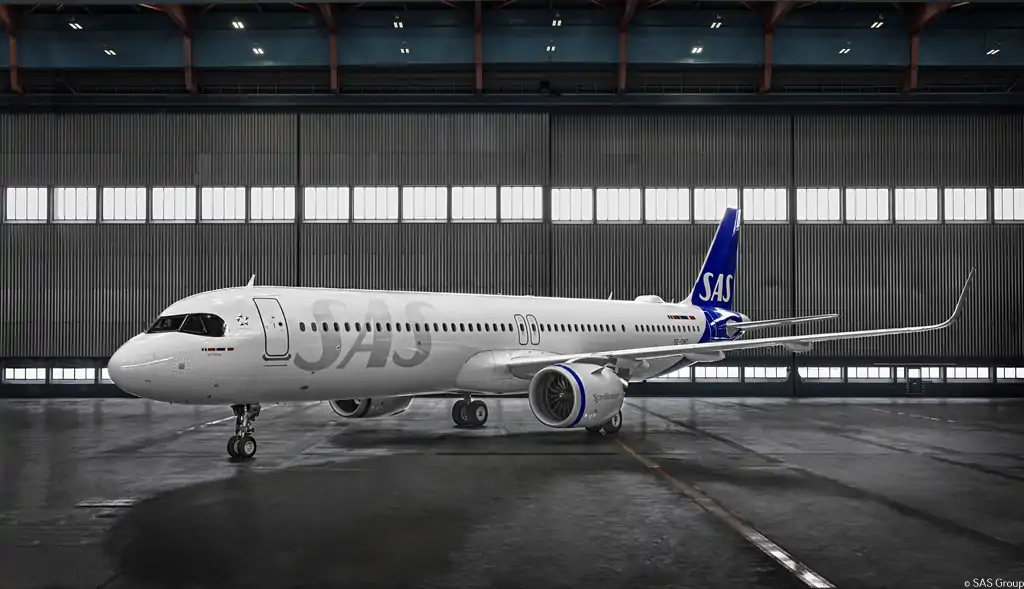
Scandinavian Airlines (SAS) has successfully negotiated a substantial investment deal of USD 1.2 billion as part of its Chapter 11 exit strategy. The winning consortium, led by Castlelake, Air France-KLM, Lind Invest ApS, and the Danish state, decided to enhance their initial offer of USD 1.175 billion. This strategic move aims to replace the existing debtor-in-possession financing provided by US private equity firm Apollo Global Management.
Winning Consortium Boosts Investment
In an announcement made on November 4, SAS revealed that the winning bidder consortium increased its proposed investment by USD 25 million. The revised total of USD 1.2 billion comprises USD 475 million in new unlisted equity and USD 725 million in secured convertible debt. Additionally, Castlelake is set to provide a USD 500 million facility to refinance SAS's existing debtor-in-possession financing.
Stake Distribution
As part of the agreement, Castlelake is slated to take a significant stake of approximately 32%, followed by the Danish state with 25.8%, Air France-KLM with 19.9%, Lind Invest with 8.6%, and the remaining 13.6% distributed among eligible creditors participating in a debt-to-equity swap.
Replacing Existing Financing
The newly secured debtor-in-possession financing is intended to refinance and replace SAS's current credit agreement of USD 700 million with funds managed by Apollo Global Management. SAS had drawn an initial tranche of USD 350 million from this agreement in September 2022.
Approval Process and Future Steps
SAS is now seeking approval from the US court for the investment agreement and the revised debtor-in-possession financing, with a target timeframe for November 2023. Subsequent steps include obtaining regulatory approvals and initiating a Swedish company restructuring (företagsrekonstruktion), to be filed by SAS AB in the coming year.
CEO's Perspective
SAS CEO Anko van der Werff expressed confidence in the airline's future, stating, "By entering into this investment agreement, SAS is taking the next step in its Chapter 11 process in the US. It shows that our new investors believe in SAS and our potential to remain at the forefront of the airline industry for years to come."
Conclusion
The successful negotiation of this investment agreement marks a significant milestone for SAS as it navigates through the Chapter 11 process. The increased commitment from the winning consortium underscores their belief in the airline's resilience and potential for sustained success in the evolving aviation landscape. With the approval process underway, SAS is poised to emerge stronger and more resilient in the post-restructuring phase.
With Inputs from ch-aviation
Comment