
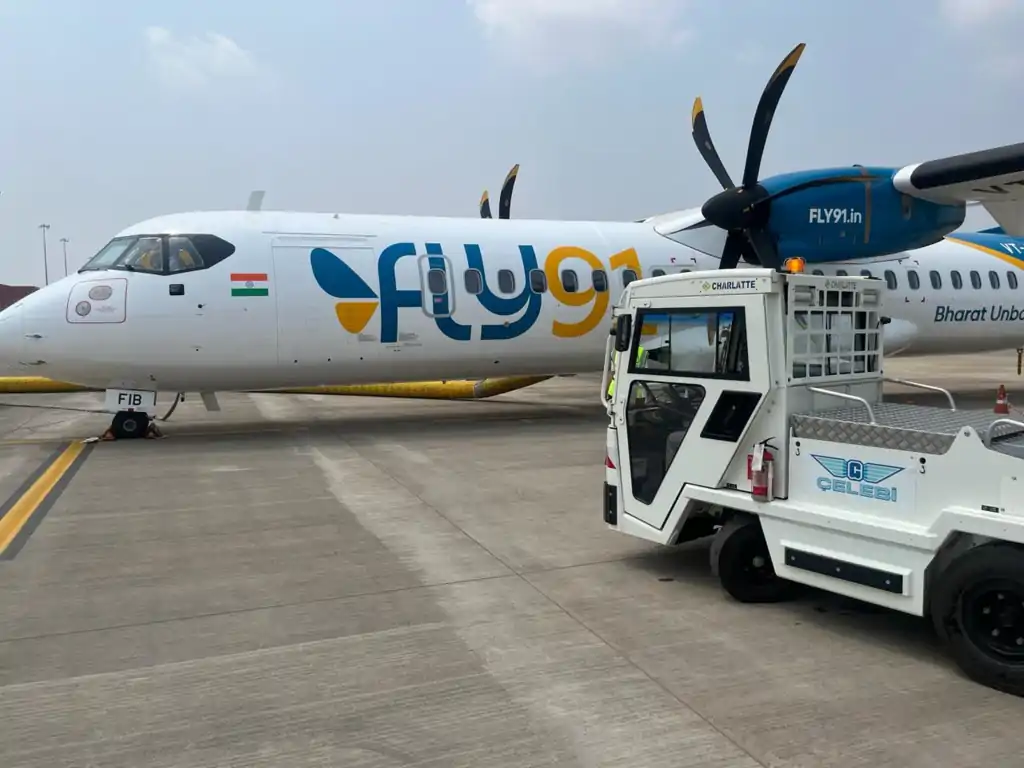
India is rapidly emerging as a key player in the global aviation industry, and ATR, the European turboprop manufacturer, is keen to seize the opportunities that the Indian market offers. A joint venture between Airbus and Leonardo, ATR specializes in building turboprops with up to 78 seats and freighters. With nearly 70 ATR aircraft already operational in India, there is a growing recognition of the country's potential to be a hub for regional air connectivity and even aircraft component sourcing.
India’s Growing Appetite for Regional Connectivity
India’s civil aviation sector is one of the fastest growing in the world, with an ever-increasing demand for domestic air travel. As the country opens more Tier 2 and Tier 3 cities to air traffic, the need for smaller, efficient aircraft for short regional routes is on the rise. ATR’s Chief Commercial Officer, Alexis Vidal, emphasized in a recent interview that India presents a tremendous growth opportunity for the company. Currently, India is served by three airlines—IndiGo, Alliance Air, and FLY91—that operate ATR aircraft, underscoring the aircraft's crucial role in regional flights.
According to Vidal, there could be as many as 300 new regional routes opened in India using ATR planes, helping connect underserved cities and towns with major hubs. He further added that the regional air route potential within 400 nautical miles is vast, with only 3% of current intra-city trips happening via air transport. Comparatively, other regions see this percentage double or even triple.
A Demand for 200 Additional ATR Aircraft?

With about 1,700 ATR planes delivered worldwide, India’s current fleet of 70 is expected to expand significantly. In fact, Vidal believes that there is potential for another 200 ATR aircraft to be deployed in India over the next decade. This anticipated demand growth is supported by favorable government policies aimed at enhancing regional connectivity, such as the UDAN scheme.
Vidal stated, “All this, I believe very well supported by policy making... will drive additional aircraft into the country." This sets the stage for ATR to strengthen its presence in India's aviation landscape, especially in the context of serving smaller operators and supporting regional routes.
A New Focus on Indian Component Sourcing
In addition to selling aircraft, ATR is also keen to explore opportunities in sourcing components from India. As part of its long-term strategy, the company is evaluating potential partnerships for local manufacturing. Despite being in India for 25 years, ATR does not yet have any major Tier 1 suppliers in the country. However, Vidal indicated that the company is actively considering more parts sourcing from India, noting, "As a partner for local manufacturing... we are looking at potential opportunities for sourcing components whenever it makes sense."
Such a move would not only align with India’s ambitions to boost its manufacturing capabilities under initiatives like "Make in India" but also provide ATR with cost-effective solutions for its global supply chain.
Will eVTOL Aircraft Challenge ATR’s Market?
One of the burning questions for aviation enthusiasts and experts alike is whether the rise of eVTOL (electric Vertical Takeoff and Landing) aircraft will disrupt traditional regional aircraft, such as ATR's turboprops. Vidal doesn’t see eVTOL as a threat but rather as a complementary solution to urban mobility. While eVTOL aircraft may serve intra-city travel, ATR’s aircraft continue to be the backbone for regional connectivity, bridging gaps between urban, regional, and non-regional segments.
“In the last five years, 200 routes have been opened by ATR, and some of them have upgraded to larger jets,” Vidal explained, emphasizing that ATR’s success lies in enabling airlines and governments to create new routes. He added, “I really see urban, regional, and non-regional domestic as three complementary segments.”
The Path Ahead for ATR in India

With strong growth in regional air traffic, favorable government policies, and the rising importance of Tier 2 and Tier 3 cities, ATR’s expansion in India seems inevitable. The prospect of introducing up to 200 more aircraft over the next decade signals a major leap forward for both ATR and India's aviation sector.
The potential for India to become a sourcing hub for aircraft components further underscores the strategic value the country holds for ATR. As the company continues to explore partnerships and opportunities in this thriving market, it remains well-positioned to capitalize on India’s growing need for regional air connectivity.
In the coming years, it will be fascinating to watch how ATR plays a pivotal role in enabling affordable and efficient air travel for the "common man" in India, while tapping into the country’s vast potential for innovation and component manufacturing.
Conclusion: Can India Propel ATR to New Heights?
As India's aviation sector expands at an unprecedented pace, ATR seems ready to ride the wave of regional air connectivity. With the potential for hundreds of new routes, strategic partnerships for local manufacturing, and an ambitious vision for the next decade, ATR could very well see India as its next big frontier. Will India become the linchpin of ATR’s global strategy? The answer seems to be unfolding, and the sky's the limit.

Read next

In a turbulent turn of events for India’s domestic aviation market, SpiceJet’s market share has plummeted to a mere 2.3%, as revealed in the monthly report by the Directorate General of Civil Aviation (DGCA) for August 2024. This marks a steep fall from its earlier 5.6% share at the beginning of the year. Let’s delve into the factors contributing to this significant decline, alongside an overview of India’s overall air travel landscape.
The Growing Domestic Aviation Market
According to the DGCA report, India’s aviation market has been on an upward trajectory. From January to August 2024, Indian airlines carried 1054.66 lakh passengers, marking a 4.82% increase compared to 1006.16 lakh passengers in the same period in 2023. Month-on-month, there was a 5.70% surge in passenger numbers, highlighting the robust demand for air travel in India.
Despite this overall growth, SpiceJet's dwindling market share stands in stark contrast to other carriers.
SpiceJet’s Market Share Decline
SpiceJet’s downward trend is evident from the start of the year, where its market share stood at 5.6%. Over the months, the airline experienced a continuous dip, ultimately dropping to 2.3% in August 2024. This significant loss is concerning, especially in comparison to its competitors:
- IndiGo: The market leader with a commanding 62.4% share.
- Air India: Holding a 14.7% share.
- Vistara: Possessing 10.3%.
- Air India Express: With a 5.3% share.
High Complaint Rates: SpiceJet in the Spotlight
The DGCA report highlights that SpiceJet had the highest rate of passenger complaints in August 2024, accounting for 16.1% of the total grievances. In comparison, Air India had 1.5% and IndiGo, with its much larger market share, had only 0.2%.
The complaints centered around three key issues:
- Flight problems: Delays, cancellations, and other operational disruptions.
- Baggage issues: Mishandled or lost luggage.
- Refund-related concerns: Delayed or unprocessed refunds.
Poor On-Time Performance: A Major Contributor to SpiceJet’s Troubles
SpiceJet’s on-time performance (OTP) also painted a bleak picture. Out of the scheduled domestic airlines operating at four major metro airports—Bangalore, Delhi, Hyderabad, and Mumbai—SpiceJet had the lowest OTP at 31%. This lagged far behind other carriers:

- Akasa Air: Topped the OTP chart with 71.3%.
- Vistara: Achieved 68.6%.
- IndiGo: Recorded 66%.
Delays are a significant factor behind passenger dissatisfaction. The DGCA report analyzed the causes of these delays and found that most were “reactionary”, meaning they were due to previous flight delays. Other reasons included air traffic control (ATC) issues and operational challenges.
Passenger Complaints: A Closer Look
The report further noted that the total number of passenger-related complaints received in August 2024 amounted to 1031. SpiceJet alone accounted for 437 of these complaints, a glaring 42% of the total, followed by Air India (294 complaints) and IndiGo (135 complaints). Despite the high complaint numbers, the report confirmed that all grievances were addressed and closed, providing some relief to customers.
Industry Outlook: Can SpiceJet Rebound?
SpiceJet’s dramatic fall raises important questions about its future in India’s aviation market. With rising competition and increasing passenger expectations, the airline needs to urgently address its operational challenges, improve its on-time performance, and reduce customer complaints to restore confidence.
As India’s aviation market continues to grow, airlines like IndiGo and Akasa Air are capitalizing on the demand surge. If SpiceJet fails to rectify its current issues, it risks further marginalization in a rapidly expanding market.
Conclusion: A Critical Juncture for SpiceJet
SpiceJet’s dwindling market share, high complaint rates, and poor OTP performance have placed the airline at a critical juncture. While the overall aviation market in India is thriving, the airline must undertake swift and decisive action to regain its foothold. Will SpiceJet soar again, or is it headed for a steeper descent?
The coming months will be crucial for determining the airline’s fate, as it contends with both external market pressures and internal operational hurdles.
Read next
Malaysia Airlines Sets Its Sights on India: Expansion Plans Unveiled for 2024
Abhishek Nayar
17 Sep 2024

Malaysia Airlines is setting its sights on significant expansion into India, a "very important market" for the carrier, according to the airline's top official. Currently operating flights to nine cities across India, Malaysia Airlines plans to add new destinations and increase frequencies to existing cities such as Trivandrum and Ahmedabad. With India's booming aviation sector, the airline is poised to capitalize on the growing demand for international connectivity.
Current Operations: A Strong Footprint in India
Malaysia Airlines, a key part of the Malaysia Aviation Group (MAG), already maintains a robust presence in India with daily flights to major cities like Delhi, Mumbai, Bengaluru, Amritsar, Chennai, Hyderabad, and Kochi. The airline also offers four weekly flights from Ahmedabad and Trivandrum, connecting Indian travelers to its vast global network.
With 71 weekly flights to India, Malaysia Airlines has shown its commitment to the region, recently increasing flights to Amritsar from four weekly to daily in August 2023. This growing interest in India underscores the airline’s strategic approach toward expanding its footprint in one of the world’s fastest-growing aviation markets.
India: A "Very Important Market" for Future Growth
"We continue to remain excited about the Indian market. It has been driven by robust economic movement," said Datuk Captain Izham Ismail, Group Managing Director of MAG, in a recent interview. He highlighted that India’s economic dynamism and increasing travel demand make it a key focus for future growth.
While acknowledging the current operational difficulties due to supply chain constraints and manpower challenges, Ismail confirmed the airline's ambition to expand its services to more Indian cities. "We aspire to expand more into India... that will happen only next year," he said, outlining plans to ramp up operations in 2025 once new aircraft become available.
Expansion Strategy: Eyeing New Destinations and Frequencies
Malaysia Airlines is looking to increase its presence in India by not only adding new routes but also boosting the number of flights to existing destinations. Trivandrum and Ahmedabad, in particular, are set to see increased flight frequencies in the near future.
"Once we get more aircraft, we have the appetite and desire to increase frequencies to Trivandrum, Ahmedabad, and a few new destinations we are eyeing," Ismail explained. While specific new cities remain undisclosed, this expansion aligns with the airline's broader goal of increasing its market share in India.
Codeshare Partnerships and Interline Arrangements: Strengthening Connectivity

In addition to direct flights, Malaysia Airlines has strengthened its network through strategic partnerships with Indian carriers. The airline has a codeshare agreement with IndiGo, India’s largest domestic airline, allowing passengers to book seamless travel to destinations across India where Malaysia Airlines has no direct presence.
Furthermore, Malaysia Airlines has interline arrangements with Air India and Vistara, enhancing its ability to serve more passengers through shared ticketing and operational collaborations. These partnerships enable smoother connectivity for travelers, offering a wide range of destinations under a single booking.
Bilateral Flying Rights: Opportunities Beyond Metro Cities
One of the major advantages Malaysia Airlines holds in its Indian expansion plan is the opportunity to focus on non-metro cities. The current bilateral flying rights between India and Malaysia, which regulate the number of seats airlines can offer between the two countries, are primarily utilized on metro routes in India. However, the carrier has more freedom to operate flights to non-metro cities, where there are fewer restrictions and untapped potential.
This focus on less congested cities will help Malaysia Airlines tap into new markets and enhance its presence in regions with growing travel demand.
Operational Challenges and Future Prospects: 2025 and Beyond
Despite its ambitious plans, Malaysia Airlines is facing operational challenges, including schedule reliability, supply chain issues, and manpower shortages. As a result, the airline has temporarily reduced its network until December 2023 to address these concerns.
However, Ismail remains optimistic about the future, with plans to emerge stronger in 2025. "We hope to put it in the past... in 2025, we will come out stronger and will continue to focus on India," he said, reaffirming the airline’s commitment to the Indian market.
Conclusion: A Bright Future Ahead for Malaysia Airlines in India
As one of the fastest-growing aviation markets in the world, India represents a crucial opportunity for Malaysia Airlines to expand its operations. With its plans to increase flights, explore new destinations, and strengthen partnerships with local carriers, the airline is well-positioned to meet the growing demand for international travel.
While operational challenges remain, Malaysia Airlines’ future in India looks promising, with expansion plans set to take off as early as 2024. For travelers in India, this means more options, better connectivity, and enhanced services from one of Southeast Asia’s leading airlines.
Read next
India and China in Talks to Revive Direct Flights: Will the Skies Reopen Soon?
Abhishek Nayar
14 Sep 2024

In a significant step toward mending strained ties, India and China are discussing the resumption of direct passenger flights after a four-year hiatus. The talks, initiated by India's Civil Aviation Minister Ram Mohan Naidu Kinjarapu, could signal the revival of air travel between the world’s two most populous nations. While direct flights have been halted since 2020, cargo flights have continued to operate. This article delves into the ongoing discussions and the implications for both countries.
The Backdrop: Border Tensions and Severed Ties
Relations between India and China have been tense since a deadly military clash along their undemarcated Himalayan border in 2020. The confrontation claimed the lives of 20 Indian and four Chinese soldiers, triggering a significant geopolitical fallout. Since then, India has tightened its stance on China, restricting Chinese investments, banning several Chinese apps, and suspending direct passenger flights.
Despite the halt in air travel, the two countries maintained essential cargo flights, ensuring supply chains between the two economic giants remained intact.
China’s Push for Resuming Flights
Earlier this year, Reuters reported that China had been urging India to restart direct passenger flights. However, New Delhi resisted, citing ongoing border disputes as a reason for the delay. The decision to sever passenger air routes has been part of a broader strategy to limit Chinese influence amid simmering tensions.
However, the latest talks between India's Civil Aviation Minister and China's top aviation authority suggest that both nations are looking to ease some of these restrictions.
Ministerial Talks: A Step Toward Resolution
On the sidelines of the Asia-Pacific Ministerial Conference on Civil Aviation in New Delhi, Ram Mohan Naidu Kinjarapu met with Song Zhiyong, head of the Civil Aviation Administration of China. The discussion, as Kinjarapu shared in a post on X (formerly Twitter), focused on "further strengthening civil aviation cooperation between the two countries, especially promoting early resumption of scheduled passenger flights."
The renewed talks suggest that both countries recognize the benefits of re-establishing air connectivity, although diplomatic hurdles still exist.
A Boon for China’s Struggling Aviation Sector?

China's eagerness to restart flights may stem from the uneven recovery of its aviation sector post-pandemic. While air travel in India has boomed, benefiting from a rapidly growing middle class and pent-up demand, China's recovery has lagged. The potential reopening of direct flights between the two nations could boost Chinese airlines, which are currently seeking new international routes to restore pre-pandemic capacity.
From a broader economic perspective, the resumption of flights would also support tourism, business travel, and student exchanges between the two countries.
India's Position: Proceeding with Caution
Despite the clear economic advantages of restarting flights, India is likely to approach the talks with caution. Given the unresolved border issues and the broader geopolitical context, New Delhi may seek assurances before fully reopening its skies to Chinese passengers.
For India, its booming aviation sector could benefit from the resumption of flights, especially as the country continues to position itself as a global hub for air travel. However, national security concerns and strategic interests will play a pivotal role in the decision-making process.
The Road Ahead: What’s Next for India-China Aviation?
While the resumption of direct flights is still under discussion, the dialogue between India and China marks an essential first step toward restoring normalcy in their civil aviation relationship. Whether these talks will lead to the rapid re-establishment of passenger flights remains to be seen, but they signal a willingness on both sides to explore mutual benefits.
Both nations stand to gain from resuming flights—China by boosting its slow-recovering aviation sector and India by expanding its rapidly growing air travel market. However, the delicate balance of diplomacy, security, and economic interests will determine how soon the skies between India and China reopen.
Conclusion
The potential revival of direct passenger flights between India and China could be a milestone in their bilateral relationship. While the border dispute remains a significant roadblock, the ongoing talks indicate a thaw in relations, at least in the civil aviation domain. As both countries weigh their options, the world will be watching closely to see if this development paves the way for broader diplomatic breakthroughs.
With Inputs from Reuters
Read next
Looming Air Canada Strike: Will Ottawa Intervene Before the Pilots Walk Out?
Abhishek Nayar
14 Sep 2024
A tense standoff between Air Canada and its pilots over a new labor contract is raising the prospect of a disruptive strike that could start as early as September 18, 2024. As the dispute intensifies, the airline has called for government intervention, while the pilots' union is firmly opposed, warning of long-term damage to labor relations.
With 670 daily flights at risk and 110,000 passengers potentially affected each day, the stakes are high. Here’s what’s happening behind the scenes.
Air Canada Urges Ottawa to Step In
On Thursday, Air Canada took the unusual step of calling for the federal government to be ready to step in, should negotiations fail. CEO Michael Rousseau emphasized that the airline is committed to reaching a deal but accused the pilots of demanding excessive wage increases.
"The federal government should be prepared to intervene if talks fail before any travel disruption starts," Rousseau said, stressing that even a brief strike could lead to prolonged chaos for travelers.
The airline, along with its subsidiary Air Canada Rouge, moves not only passengers but also significant amounts of freight daily. Any work stoppage could cause major economic ripples, particularly if the situation drags on for days or weeks.
Pilots Push Back Against Government Interference
In stark contrast, the Air Line Pilots Association (ALPA), representing Air Canada's 5,400 pilots, has made it clear they oppose any form of federal intervention before a strike begins. Charlene Hudy, a spokesperson for the union, warned that such a move would "tip the power balance in favor of the employer."
"We do not want to see any government interference in our collective bargaining. It would be incredibly disappointing if the government got involved before the process played out naturally," Hudy remarked.
The union's primary demand is pay equity. ALPA points out that the wage gap between Air Canada pilots and their American counterparts at major carriers such as United Airlines has grown alarmingly in recent years. Some U.S. pilots now earn 92% more than Air Canada's pilots, a gap that has widened from just 3% in 2013.
What's Driving the Wage Dispute?
Pilots across North America have been pushing for significant wage hikes as the airline industry rebounds from pandemic-related downturns. Amid a boom in travel demand and pilot shortages, U.S. airlines like United and Delta have successfully negotiated hefty pay increases. United's latest pilot contract, for instance, included pay raises of about 42%.
This has created mounting pressure on Air Canada's pilots to seek similar gains, especially as many feel their compensation hasn’t kept up with industry standards. Hudy stated that Air Canada executives had doubled their salaries over the past decade, leaving pilots feeling undervalued.
The airline, on the other hand, has proposed a 30% wage increase, along with enhanced pension and health benefits, but the union remains unsatisfied, describing the offer as insufficient given the massive pay gap with U.S. competitors.

Government’s Role: To Step In or Step Back?
Ottawa's potential involvement has sparked considerable debate. Labor Minister Steven MacKinnon, who holds significant power in resolving such disputes, has been meeting with both sides but insists that the resolution should come from the negotiating table. The government has previously intervened in labor disputes—such as in last month’s stoppage involving Canadian Pacific Kansas City and Canadian National Railway—but it has done so after strikes began, not preemptively.
Prime Minister Justin Trudeau also weighed in, stating, "The best deal happens at the bargaining table," suggesting a hands-off approach unless talks completely collapse.
However, pressure is mounting from outside stakeholders. Over 100 business groups have urged the government to prevent a strike, fearing the impact it could have on the economy, especially in sectors relying on air freight.
What’s Next?
With September 18 fast approaching, travelers, businesses, and even international markets are on edge. If no agreement is reached, a strike could disrupt tens of thousands of daily travelers and ground cargo services, creating lasting ripples across various industries.
Whether Ottawa will heed Air Canada's call to intervene remains uncertain. If the federal government steps in before a strike begins, it could set a controversial precedent. However, if it holds off and a strike ensues, the airline and passengers alike may face severe consequences.
As the clock ticks down, one thing is clear: the coming days will be crucial in determining whether Air Canada avoids a costly shutdown—or heads toward turbulence.
Conclusion: A Make-or-Break Moment for Air Canada and Its Pilots
The labor dispute between Air Canada and its pilots has reached a critical juncture. Both sides are entrenched, with pilots pushing for pay equity with U.S. peers and the airline warning that demands are excessive. The looming strike could create significant travel disruptions, and whether or not the government steps in preemptively could shift the balance in this high-stakes negotiation.
As negotiations continue, the public will be watching closely to see if a resolution can be reached before the strike deadline—because if not, the effects could be felt far beyond the airline itself.
With Inputs from Reuters
Read next

In a pivotal moment for Boeing's future, the company's West Coast factory workers have voted overwhelmingly to go on strike, marking their first walkout since 2008. With 96% of workers in favor of the strike, this decision comes at a crucial juncture for the aviation giant, already grappling with production delays and a staggering $60 billion debt. The strike threatens to further disrupt the production of Boeing’s strongest-selling jets, particularly the 737 MAX, and could have far-reaching impacts on the entire aerospace industry.
Why Are Workers Striking?

The International Association of Machinists and Aerospace Workers (IAM), Boeing’s largest union, represents around 30,000 factory workers in the Seattle and Portland areas. These workers are responsible for assembling Boeing’s commercial jets, including the popular 737 MAX, as well as the 777 and 767 models. The union members rejected Boeing’s contract offer by 94.6%, primarily due to dissatisfaction over wage increases and bonuses.
The proposed contract offered a 25% wage increase and a $3,000 signing bonus, alongside a promise to build Boeing’s next commercial jet in Seattle. Despite these terms, many workers were dissatisfied, demanding a 40% wage increase and the return of their annual bonuses. This led to a passionate vote, with workers emphasizing respect, addressing past grievances, and securing a better future.
Jon Holden, the lead negotiator for IAM, highlighted the importance of the strike, stating:
“This is about respect, this is about addressing the past, and this is about fighting for our future.”
What Does the Strike Mean for Boeing?

Boeing is already facing significant challenges with delayed production schedules and safety concerns, compounded by a door panel failure on a near-new 737 MAX earlier this year. The timing of the strike could not be worse, with new CEO Kelly Ortberg brought in just last month to steer the company through these troubled waters.
A prolonged strike would severely impact Boeing’s cash flow and potentially push its already precarious financial situation into more dangerous territory. Analysts from TD Cowen estimate that a 50-day strike could cost Boeing between $3 billion and $3.5 billion in lost cash flow. Historically, Boeing’s last strike in 2008 lasted 52 days and cost the company approximately $100 million per day in lost revenue.
S&P Global Ratings and Moody's have already warned that an extended strike could delay Boeing’s recovery and downgrade the company’s overall rating. Boeing’s financial health is of significant concern, with its stock down 36% this year due to ongoing production and safety issues, alongside its massive debt load.
What’s at Stake for Airlines and Suppliers?
Boeing’s troubles don’t end with the strike. Airlines that rely on Boeing jets could face delays in receiving new planes, disrupting flight schedules and expansion plans. Suppliers, who manufacture parts and components for Boeing's aircraft, will also feel the effects of reduced production, leading to potential layoffs and financial strain.
In a high-stakes situation, both Boeing and the IAM union understand that every day of the strike could cost billions—not just for the planemaker, but for the wider aerospace industry as well.
Could This Strike Last as Long as 2008?
While Jon Holden has expressed a desire to return to the negotiation table quickly, there is no clear indication of when talks might resume or how long the strike could last. Union members have been protesting at Boeing factories all week, emphasizing their resolve to continue until their demands are met.
“We’re going to get back to the table as quickly as we can,” Holden said, but added that the union is prepared to take things “one day at a time, one week at a time.”
What’s Next for Boeing?
The stakes are high. If the strike continues for an extended period, it could be a significant blow to Boeing’s already shaky recovery. Boeing's ability to negotiate a favorable contract while maintaining production schedules is critical to its future success. A prolonged strike could lead to a ripple effect in the industry, affecting not just Boeing but airlines, suppliers, and the broader economy.
Will Boeing be able to bounce back, or is this strike the beginning of a larger crisis for the aerospace giant? Only time will tell, but for now, both sides are standing firm as the world watches.
Conclusion
Boeing's West Coast factory strike is a pivotal moment for the company. As the first major walkout in 16 years, it threatens to disrupt production and further strain Boeing's financials at a time when the company is already struggling to regain its footing. The next few weeks will be crucial in determining whether Boeing can reach an agreement with its workers and avoid long-term damage to its business and reputation.
With Inputs from Reuters
Comment