

Lufthansa has confirmed plans to reactivate two more of its A380 superjumbos. The German flag carrier placed its entire fleet of 14 A380s into storage following the onset of Covid-19, and subsequently put six of the double-decker aircraft up for sale.
Lufthansa will also bring back the double-decker Airbus A380 on the Delhi route along with first-class service, to celebrate six decades of connecting the Indian capital with Germany. The German mega carrier has been flying to India for much longer, including doing so to Jodhpur in 1934 with a JU52. What is now about eight-hour Delhi-Germany nonstop, had begun on September 1, 1963, when a Boeing 720 operated from Frankfurt to the Indian capital with stopovers in Rome, Cairo, Kuwait and Karachi. This was the first connection between Delhi and Germany.
A report by The Times of India mentioned Lufthansa Group Senior Vice President of Global Markets & Stations, Frank Naeve also announcing the return of the A380 and first-class service to Delhi to mark 60 years of flying to the capital.
“An early believer in India’s growth story, Lufthansa has maintained strong ties for six decades, contributing to the expansion and enhancement of the growing economic, social & cultural ties between the two nations. While the world has changed significantly over the past 60 years, the relationship between these two nations has blossomed thanks to the deep connections established between Germany and India,” Lufthansa said in a statement. “Delhi was a very different place six decades ago and today is the capital of the most populous country on the planet, the highest GDP growth rate in APAC and the third largest aviation market in the world. Thanks to globalisation, interdependence and global trade, modern Germany and India are economic powerhouses who collectively represent two of the five largest economies on the planet,” it added.
Lufthansa Group, which today has over 1,000 staff in the country, has announced 64 weekly frequencies to India. “India was also one of the first intercontinental markets to surpass pre-pandemic levels with new routes announced including Bengaluru-Munich and Hyderabad-Frankfurt. Returning the A380 and reintroducing first class to Delhi are natural extensions of its strong ties to India. As one of the first to believe in India’s growth story, Lufthansa remains committed to India and looks forward to another 60 years of deepening partnerships and growth.”
Lufthansa Reactivating A380s
In June 2022 Lufthansa announced it would bring an undeclared number of its superjumbos back into service as travel demand returned following the lifting of Covid restrictions, and the first of the airline’s A380s was reactivated in January this year. The Airbus A380 remains a highly favoured aircraft that is cherished by both passengers and crews alike. Eight superjumbos are planned to be stationed at Lufthansa’s Munich hub, with each one expected to return to service between the years 2024 and 2025.
Lufthansa’s reintroduction of the A380 for international flight tickets after the COVID-19 pandemic commenced with service between Munich and Boston. The airline has also resumed A380 flights to New York since July. Furthermore, Lufthansa plans to deploy the A380 to Los Angeles during the upcoming winter season. The addition of these American cities is good news, especially for those travelling from the USA to India via Germany. And if you are one, you can get the best airfare by making use of the ongoing Indian Eagle deals.
The decision to reintegrate these superjumbos into the fleet is a necessity arising from the current travel demand, exacerbated by a shortage of available planes. The airline has also experienced delays in the delivery of new aircraft, such as the Boeing 777X and Boeing 787, which has disrupted its flight schedules.
Lufthansa’s decision to reactivate its fleet of Airbus A380s within the upcoming two years is a strategic move to address the soaring passenger demand. These iconic superjumbos, beloved by passengers and crews, will be stationed at the Munich hub and are set to return to the skies between 2024 and 2025. This move is crucial to meet current travel demands, especially given the delays in the introduction of new aircraft. The airline’s commitment to enhancing its capacity and ensuring the satisfaction of its passengers remains unwavering.
Following the lows of Covid-19 when almost all carriers grounded their A380 fleets, the superjumbo has been enjoying a renaissance in recent months. Etihad brought the first of four of its A380s back into operation in July, and last month Qantas announced plans to bring the last of its ten superjumbos back into service. Even secondhand A380s are finding themselves homes, with start-up transatlantic carrier Global Airlines having acquired four of the aircraft.
(With Inputs from The Times of India)

Read next
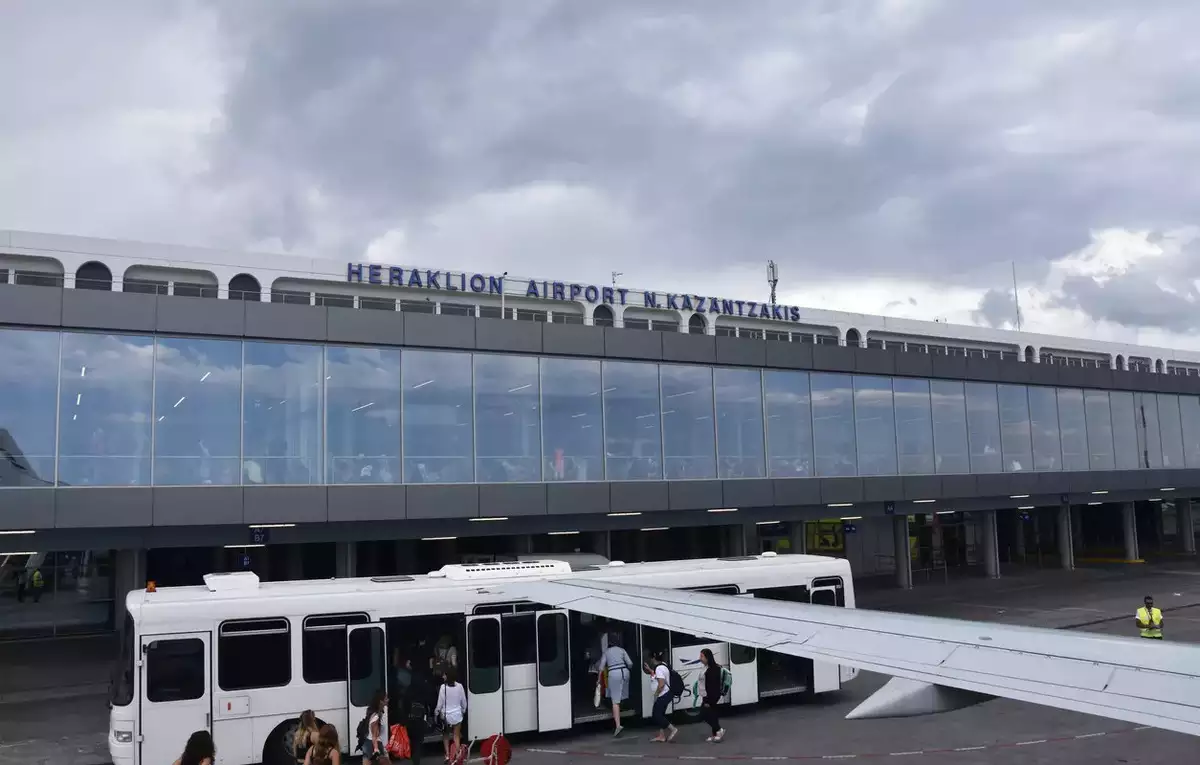
GMR group, the operator of Delhi, Hyderabad and Mopa airports, said it is actively looking for new investment opportunities in Greece, where it is already developing a greenfield airport in partnership with GEK TERNA. The announcement from the group came days after Prime Minister Narendra Modi's recent visit to the European nation, the first by an Indian Prime Minister in 40 years.
GMR Group's Business Chairman for energy and international airports Srinivas Bommidala was a part of the business leaders luncheon hosted by the Greek Prime Minister during the visit, according to a GMR statement. "GMR Group is already developing a greenfield airport at Crete in Greece in partnership with GEK TERNA. The Group is actively looking for new investment opportunities in Greece, which serves as a gateway to Europe for the Indians," the company said.
Greece has demonstrated a remarkable commitment to foreign investors like GMR Group from India, he said, adding that the Greek government's proactive approach and steadfast dedication to promoting foreign investments are truly impactful.
The company is "passionately exploring investment opportunities in the country, notably at Kalamata Airport," Bommidala stated. "Progress at the Heraklion airport in Crete has been commendable. Construction has advanced to about 25%, aligning with the project's timeline. Ongoing efforts include terminal building concreting, external access road development, runway, and taxiway construction," he added. Further, he said that "the ambition to double bilateral trade by 2030 set by India and Greece is commendable. Improved connectivity between India and Greece will undoubtedly drive mutual GDP growth and a myriad of business opportunities. Our discussions ranged beyond airports, exploring other potential collaboration areas.”
The Heraklion International Airport (HER) in Crete is Greece's second busiest airport after Athens Airport. GMR Group and partners have so far invested INR 6,000 crores in the development of Heraklion Airport, the sole greenfield airport project in progress in Europe by the group. Heraklion Airport in Crete has been commendable with construction having advanced to about 25%, aligning with the project's timeline. The airport is expected to be developed by February 2027.
GMR Group’s Presence in Aviation Industry
In June, the group qualified to participate in a tender to operate and maintain Kuwait International Airport’s terminal 2.
In FY2023, GMR group’s five operating airports handled 100 million passengers. Delhi, Hyderabad and Mopa (North Goa) airports handled 87% of the traffic and the remainder 13% was at Cebu (Philippines) and Medan airports (Indonesia). Plans have been drawn up to expand Medan Airport’s annual capacity from 10 to 15 million passengers and the special purpose vehicle (SPV) running the project is raising funds for the same.
GMR Airports Infrastructure Ltd’s revenue from operations rose nearly 40% on a year-on-year basis to INR 6,693 crore in FY2023 while net loss declined 25% to INR 839 crore in the same period. GMR group’s first overseas airport investment was in Turkey when it picked up a 40% stake in Sahiba Gokcen airport in 2007. Seven years later, it sold off its stake to its project partner MAHB for around INR 1,900 crore which was 3x of its investment.
GMR Airports Infrastructure Limited currently manages six airports across India and abroad in places like Medan, Indonesia, and Cebu, Philippines. In India, it operates airports in Delhi, Hyderabad and New Goa Airport. It is currently developing two major greenfield airport projects in India (Bhogapuram) and Greece.
Read next
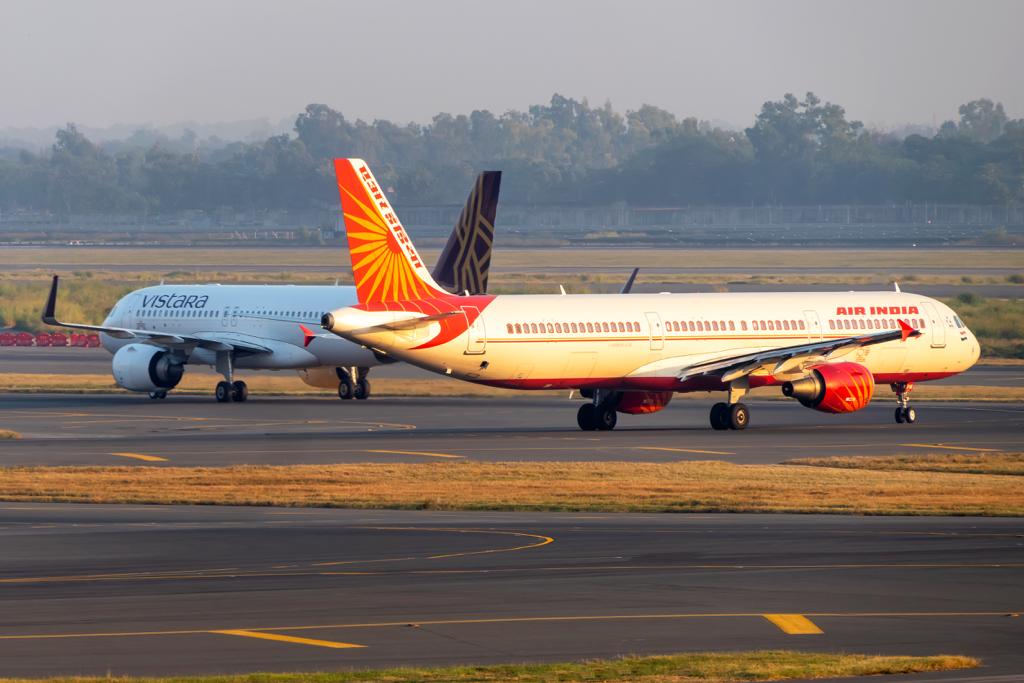
After many roadblocks, the Competition Commission of India (CCI) on September 1 approved the merger of Tata Group airlines Vistara and Air India, subject to certain conditions. With this approval, Air India can potentially become the country's largest international carrier and second-largest domestic airline after IndiGo. The approval comes amid growing concerns within the industry about a duopoly, with a merged Air India-Vistara and IndiGo controlling more than 75% of the domestic market, while smaller rivals such as SpiceJet and Go First struggle.
"CCI approves the merger of Tata SIA Airlines into Air India, and acquisition of certain shareholding by Singapore Airlines (SIA) in Air India subject to compliance of voluntary commitments offered by the parties," the anti-trust agency posted on X, formerly Twitter. It also added that the details will follow.
The approval comes after months when CCI in June issued a show cause notice to Air India, seeking clarification on why its proposed merger with Vistara should not be investigated over concerns about competition in the aviation sector.
Phase 1 approval is given by CCI within 30 days if it finds that the transaction is unlikely to hurt competition. If the body forms an opinion that the merger or acquisition is likely to hurt the competition scenario in the sector it sends show cause notice on further review which may take up to 210 working days. On April 19, the Tata-owned airline Air India approached for a merger.
Tata Sons Chairman N Chandrasekaran then said the merger is an important milestone in the group's "journey to make Air India a truly world-class airline." Air India is focusing on growing both its network and fleet, revamping its customer proposition, enhancing safety, reliability, and on-time performance, he said then.
Air India - Vistara Merger
The development is a major step forward for Tata Group in consolidating its aviation business. Vistara and Air India, two full-service airlines, are part of the Tata Group. Singapore Airlines (SIA) holds a 49% stake in Vistara. The airline was started in 2015. The Tata Group had said that it will merge Vistara with Air India and Air Asia India with Air India Express to eventually have one full-service carrier Air India and one Low-Cost Carrier Air India Express.
As a part of the deal, SIA would pump INR 2,059 crore in the expanded share capital of Air India for a 25.1% stake. Tata Sons would own the remaining 74.9% stake in the combined entity. The companies had then said that the consolidation of Vistara with Air India by March 2024. Tatas re-entered into the airline market in 2013 with Vistara & AirAsia India. Vistara is a 51:49 joint venture between Tata Sons Private Limited and Singapore Airlines Limited (SIA). Last year in January, the Tata Group also acquired Air India and Air India Express.
Tata Sons and SIA filed a merger application with the CCI in April this year, mentioning that the proposed merger of Vistara with Air India would not alter the competitive landscape or cause any adverse impact on competition in India. They had expressed hope to seal the merger deal by March 2024. The parties to the combination are Tata Sons Pvt Ltd (TSPL), Air India Ltd, Tata SIA Airlines Ltd (TSAL) and Singapore Airlines Ltd.
Through this transaction, SIA will reinforce its partnership with Tata and immediately acquire a strategic stake in an entity that is four to five times larger in scale compared to Vistara. The merger is expected to bolster SIA’s presence in India, strengthen its multi-hub strategy, and allow it to continue participating directly in a large and fast-growing aviation market.
Meanwhile, aviation research and advisory firm CAPA India had earlier said the merger would "redraw market and consumer power in the international arena to Indian carriers", which has historically been dominated by foreign carriers. Following the merger, CAPA India says, it expects to see the emergence of Air India as a global network carrier in terms of size, scale and quality "in the next six years". The airline could garner a market share of "50% in international traffic", it had added.
Merger's Impact on the Indian Aviation Industry
Tata Sons-run had conveyed to the antitrust regulator Competition Commission of India (CCI) that a proposed merger of the two will not impact competition adversely as rivals are present on most routes that the combined entity will fly, according to a report. With the CCI approval in place, Air India and Vistara will start the process of aligning schedules and networks. The two sides will also undertake alignment of reservation systems, and loyalty programmes among other things.
Approval will also be required from the National Company Law Tribunal and other regulatory authorities and a full merger is expected by next June. The CCI approval has come subject to compliance with voluntary commitments offered by the parties. Air India has committed to make tweaks to its plan, said a source.
According to the DGCA data for July, Vistara has an 8.4% market share whereas Air India has a market share of 9.9%. AirAsia has a 7.5% stake. Together, Air India could have over 30% market share of Indian skies, second to IndiGo which has a market share of 63%.
.As per the latest available Vistara has 5500+ employees including 2500 pilots and cabin crews. In the previous fiscal alone, the airline hired over 2,100 employees in the reporting fiscal. The airline currently has a fleet of 60 aircraft, including 46 Airbus A320neo, 10 Airbus A321neo and 4 Boeing 787-9 Dreamliner aircraft and has flown more than 42 million customers since starting operations. Earlier this year, the Tata-owned Air India, which recently announced a massive order of 470 aircraft with Boeing and Airbus, now plans to hire over 4,200 cabin crew trainees and 900 pilots this year.
In August, Tata Group was reported to be requesting some Air India Boeing 787 pilots to begin operating Vistara’s Dreamliner fleet. First reported by The Economic Times, the consent requests saw both carriers begin to integrate crew members based out of Mumbai’s Chhatrapati Shivaji Maharaj International Airport. A source said, "Most of Vistara's Dreamliner pilots have their base in Delhi and it needs some in its Mumbai base. Air India has some very senior Dreamliner captains in Mumbai, who are close to retirement. Captains are scarce in this market and so it's a good short-term fit.”
It remains unclear if Air India and Vistara will retain separate brand identities or merge into one airline. The Indian flag carrier notably unveiled new branding last month, overhauling its classic livery in favour of an updated and refreshed image under Tata Group. The first designs are set to be applied to its upcoming Airbus A350 widebodies, expected later this year.
Read next
Air India Recruited over 600 Pilots Since April'23; Inducts 2 B777 in September
Radhika Bansal
02 Sep 2023
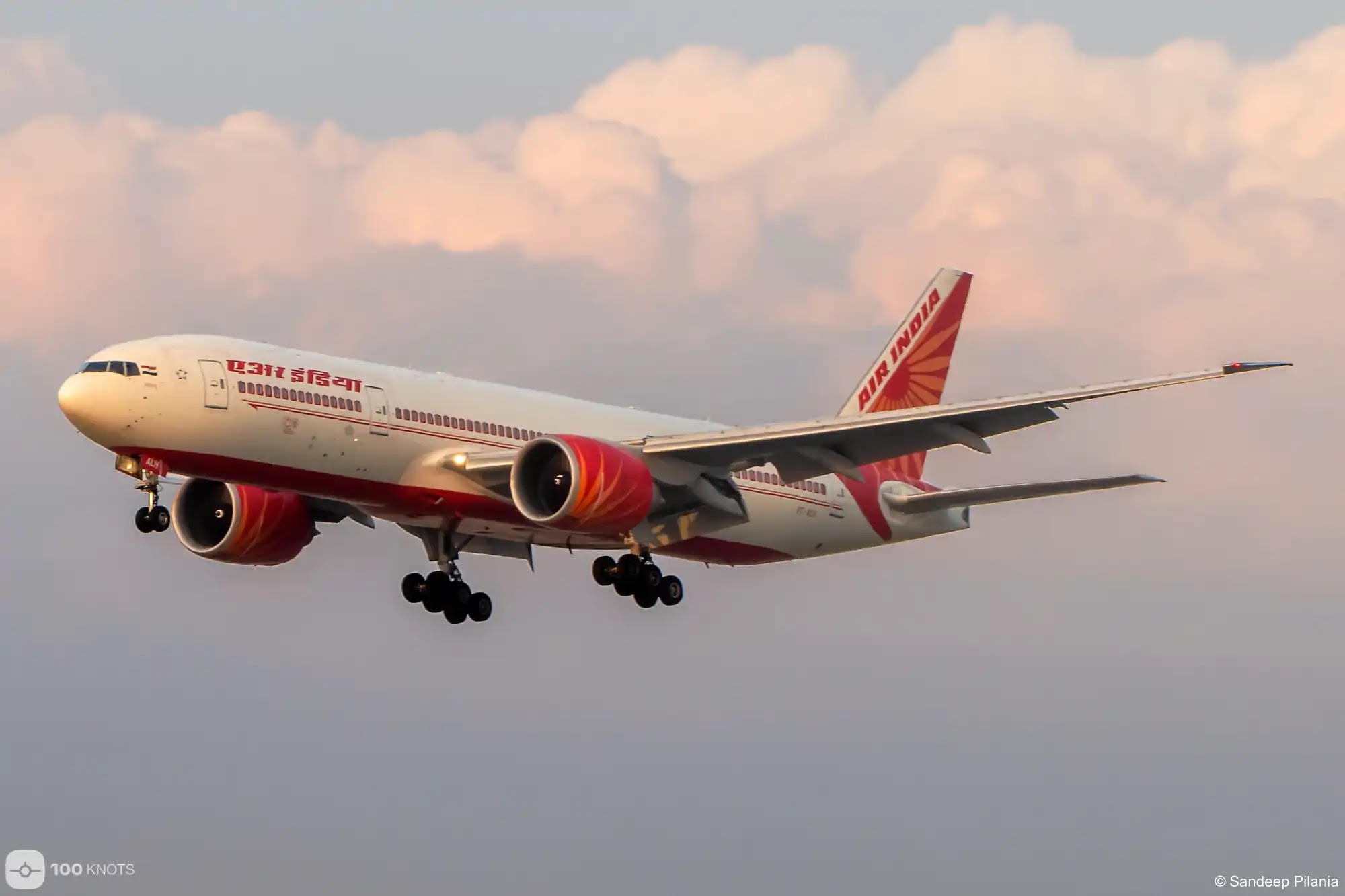
Air India group airlines have recruited and onboarded as many as 650 pilots since April this year, according to Air India CEO Campbell Wilson. "The Group Hiring Cell (GHC) has successfully recruited and onboarded more than 650 pilots since April 1," Wilson said in his weekly message to Air India employees. GHC is the airline's first integrated, cross-AOC (air operator certificate) and cross-functional team.
Besides, Air India's widebody Boeing 777 fleet will have two more B777s by the first week of this month, with one of them already added to the fleet, which will help the airline enhance services to the US and increase capacity, he said. Air India group comprises full-service Air India and its two wholly-owned subsidiaries -- Air India Express and AIX Connect (erstwhile AirAsia India).
Last year, Air India announced its plans to induct on lease 11 B777s -- six B777-300ER and five B777-200-LR, primarily to operate its flights on North American routes. He also said that two of the three long-grounded Boeing 787s have also returned to service.
Significantly all this comes amid the aviation safety regulator DGCA temporarily suspending all training at Air India's Mumbai and Hyderabad facilities after it found certain "lapses" during a spot check. The Mumbai facility imparts training to Boeing fleet pilots and the Hyderabad facility is used for training of operating the narrowbody Airbus A320 family fleet.
Induction of B777-300ER Aircraft
Executives from the three airlines came together to recruit pilots en masse, he said, adding that recruitment is (still) going on. Moreover, "the first week of September and this week saw the addition of not one but two new Boeing 777 aircraft to our fleet -- the fifth and sixth of the year so far," Campbell said.
Of these two, one is B777-200LR which will be deployed on North American routes, allowing Air India to upgrade more San Francisco and New York frequencies with a premium economy class as well, according to him. The other is the first of the six new B777-300ER that will be used to increase capacity on other routes, he said. Air India CEO also said that the first of six new B777-300ER will be used to upgrade capacity on the Delhi-London route starting today.
One of the long-grounded Boeing 787 is back in service, Wilson said, adding that Air India has opened bookings for new flights from Mumbai and Bengaluru to Male, Maldives, starting October 30. In March, the Air India CEO had said that more than 20 grounded aircraft had been restored to service and that all the grounded wide-body aircraft would be restored over the next few months. However, the refurbishment of existing aircraft and restoration of grounded planes is slower than expected due to supply chain issues, he had said at the CAPA India Aviation Summit.
Meanwhile, in August, Air India unveiled its new brand identity and new aircraft livery, featuring a palette of deep red, aubergine, and gold and a chakra-inspired pattern that goes even into its iconic mascot, Maharaja.
Read next
UPS Offers Early Retirement to Pilots Amidst Air Freight Challenges: What's Behind the Move?

Abhishek Nayar
02 Sep 2023
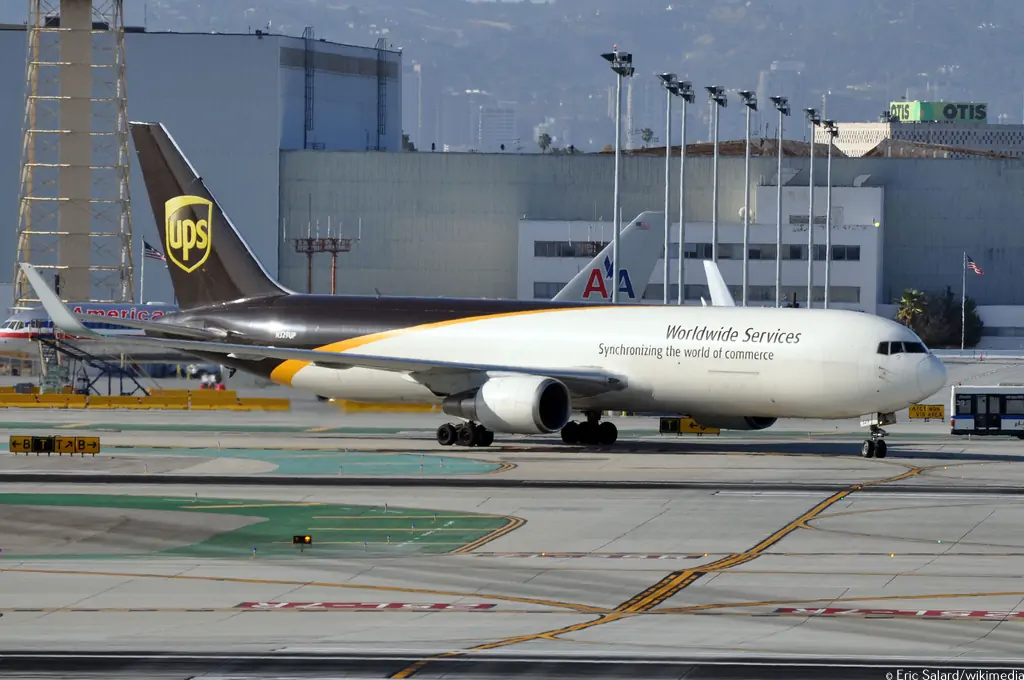
In a bid to adapt to the ever-evolving dynamics of the global air freight market and address soaring labor costs, United Parcel Service (UPS), the world's largest package delivery company, recently unveiled its early retirement program for pilots.
On Thursday, August 31, 2023, UPS announced its proactive strategy, hoping that 167 of its pilots will opt for this voluntary separation offer, which encompasses attractive financial incentives and comprehensive healthcare benefits. Currently, the company employs around 3,400 pilots.
Understanding UPS's Motivation
The Sluggish Air Freight Market
The first and foremost aspect that triggered this move by UPS is the sluggishness in the air freight market. In recent years, the aviation industry has been grappling with turbulence due to a myriad of factors, including the global economic landscape, pandemic-related disruptions, and supply chain challenges. These factors have collectively impacted the demand for air freight services, leading to reduced revenues for companies like UPS.
Soaring Labor Expenses
Another significant concern for UPS has been the escalating labor expenses. Attracting, training, and retaining skilled pilots can be a costly endeavor. The airline industry, in particular, faces a constant battle to strike a balance between competitive compensation packages for pilots and cost-cutting measures to remain profitable. UPS's decision to offer early retirement aims to address this ongoing financial challenge.
UPS's Voluntary Separation Offer
Financial Incentives
UPS has designed an enticing early retirement package for its pilots, featuring substantial financial incentives. This offer is aimed at motivating experienced pilots to consider retirement as a viable option. The financial benefits provided by UPS could act as a cushion for pilots as they transition into their retirement phase.
Comprehensive Healthcare Benefits
In addition to financial incentives, UPS is extending comprehensive healthcare benefits to pilots who choose the early retirement path. This commitment to healthcare coverage can alleviate concerns about post-retirement medical expenses, providing peace of mind to retiring pilots and their families.
UPS's Statement
In a statement regarding this strategic move, UPS asserted, "We regularly assess our operations and make adjustments to better serve our customers." This statement reflects the company's commitment to adapt to changing market conditions while prioritizing its customer-centric approach.
The Broader Implications
Impact on UPS's Operations
The acceptance rate of the voluntary separation offer will significantly impact UPS's operations. A successful outcome could lead to a leaner, more cost-effective pilot workforce. However, it may also pose challenges in terms of ensuring adequate staffing levels and maintaining operational efficiency.
Industry-Wide Reflection
UPS's decision to offer early retirement to its pilots serves as a reflection of broader trends within the aviation industry. Airlines across the globe are continually reassessing their strategies to remain competitive and financially resilient in a dynamic market.
Conclusion
In conclusion, UPS's offer of early retirement to its pilots is a proactive response to the challenges posed by a sluggish air freight market and escalating labor expenses. By offering attractive financial incentives and comprehensive healthcare benefits, UPS aims to strike a balance between cost-cutting and employee welfare. This strategic move may have broader implications for both UPS's operations and the aviation industry at large.
With Inputs from Reuters
Read next
London Company's Jet Engine Scandal: Deceptive Components Threaten Airbus A320 and Boeing 737 Safety
Abhishek Nayar
02 Sep 2023
Safety is critical in the ever-evolving world of aviation. The trust passengers place in aircraft manufacturers and regulatory bodies is immeasurable. However, recent revelations have shaken this trust to its core.
European aviation regulators have uncovered a disturbing truth - an obscure London-based company, AOG Technics, was involved in selling fraudulent components for jet engine maintenance, affecting numerous older-generation Airbus A320 and Boeing 737 flights.
The AOG Technics Scandal Unveiled
A Soaring Scandal Emerges

The scandal involving AOG Technics began to unravel when public regulatory filings and letters to operators were obtained by Bloomberg. These documents revealed a shocking web of deceit surrounding the maintenance of CFM56 engines, which are commonly used in older Airbus A320 and Boeing 737 aircraft. The allegations centered around forged certification documents and the distribution of unapproved parts by AOG Technics.
A Culprit in the Shadows
AOG Technics, a London-based company that had flown under the radar until now, was at the heart of this controversy. The company's involvement in supplying fraudulent components sent shockwaves through the aviation industry. Questions emerged about how a seemingly obscure entity could jeopardize the safety of countless flights.
In an industry where every component has verifiable provenance to ensure aircraft safety — it is difficult to assess whether uncertified components would be as durable under stress — the proliferation of undocumented or potentially counterfeit parts into the engine supply chain is rare and treated with utmost severity. Manufacturers and authorities issued the alert weeks ago, sparking a global scramble to track down AOG Technics-supplied parts and identify affected aircraft.
The Role of Manufacturing Partners
General Electric and Safran: Unlikely Investigators
Amid the turmoil, two major players in the aerospace industry, General Electric and Safran, stepped into the spotlight. These manufacturing giants were thrust into the investigation, leaving many to wonder how such established companies could become embroiled in this scandal.
Assisting in the Investigation
General Electric and Safran were not the perpetrators but rather the ones seeking justice. They played an instrumental role in assisting aviation regulators in their quest to unearth the truth. Their involvement showcased a commitment to ensuring the safety of the skies.
This month, EASA advised operators to quarantine parts backed by counterfeit paperwork. It stated on Thursday that AOG Technics has yet to provide details as to the precise whereabouts of the suspicious parts.
The Civil Aviation Authority of the United Kingdom stated in an August 4 safety notice that it was examining "a large number of Suspect Unapproved Parts" provided by AOG Technics. According to the filing, several components with fraudulent airworthiness release certificates were discovered on engines installed to aircraft registered in the United Kingdom.
Implications for Passenger Safety
The Unseen Threat
Passenger safety is non-negotiable in aviation. The fraudulent components supplied by AOG Technics posed a significant threat to the unsuspecting travelers on Airbus A320 and Boeing 737 flights. The potential consequences of using these counterfeit parts were dire, raising concerns about the industry's ability to maintain the highest safety standards.
Restoring Trust
As the investigation continues, the aviation industry must work tirelessly to regain the trust of passengers. Restoring faith in the safety of these older-generation aircraft will be no small task, but it is an essential one.
Conclusion
The AOG Technics scandal has shaken the foundations of aviation safety, revealing a shadowy world of fraudulent components and compromised aircraft maintenance. With General Electric and Safran leading the charge in the investigation, the industry is taking steps to rectify the situation. However, the road to restoring passenger trust will be challenging. Safety must always remain the top priority in aviation.
With Inputs from The Japan Times
Comment