

The Adani Group has halted the proposed INR 400-crore acquisition of maintenance, repair and overhaul (MRO) company Air Works owing to a major shareholder in the target entity being forced into liquidation, said a report by The Economic Times.
Adani Group could not close the deal as the Punj Lloyd Group, which holds a 23% stake in the company, went under liquidation, causing inordinate legal delays in closing the deal, reported Economic Times citing sources. The report said that a Memorandum of Understanding (MoU) signed between Air Works and the Adani Group to close the deal has already expired twice, and the latest deadline was set in Q4FY23.
Last year in October, Adani Defence Systems & Technologies Ltd. (ADSTL) signed definitive agreements to acquire Air Works, a highly diversified independent MRO with the largest pan-India network presence across 27 cities.
Air Works has developed extensive operational capabilities for key defence and aerospace platforms within the country. From the first P-8I aircraft Phase 32 checks to Phase 48 checks and MRO on the landing gear of the Indian Air Force’s 737 VVIP aircraft, Air Works undertakes base maintenance for ATR 42/72, A320 and B737 fleet of aircraft from its EASA and DGCA-certified facilities at Mumbai, Delhi, Hosur and Kochi.
Adani Group’s bonds and shares tumbled after Hindenburg Research released a critical report in January that accused it of fraud. Due to the scathing report, the listed Adani firms lost over USD 100 billion in market value. The ports-to-power conglomerate has vehemently denied the short-seller’s allegations.
About Air Works
Air Works is one of the oldest private MRO companies in the country. It was established in 1951 by P.S. Menon and B.G. It was done by two friends named Menon. It provides its service in 27 cities of the country. The group has recently completed 73 years of operations. The group aims to expand its business in two ways: by purchasing more airports and entering various segments of airport services, such as MRO, ground handling, and duty-free stores.
Air Works Group, with a pan-India presence across 27 cities, competes with 50 standalone Indian MRO players including Government-run AI Engineering Services Ltd and GMR Aero Technic. As of March 31, 2021, GTI Capital Group, an India-focused investment company, was the largest shareholder in Air Works Group with a 25.75% stake, followed by Punj Lloyd Aviation, a subsidiary of Punj Lloyd (23.24%), and the Menon family (15%), who founded the company in 1951.
Over the years, the Adani Group has signed a slew of deals in the defence sector including the acquisition of the Bengaluru-based Alpha Designs, a firm which also caters to the aerospace sector, and a joint venture with Israeli firm Elbit Systems. It also acquired a 51% stake in the small arms business of Gwalior-based PLR Systems in an all-cash transaction.
At the same time, the government-owned Air India Engineering Services Limited is the largest MRO company in the country. In 2021-22, it handled 450 aircraft and its profit was INR 840 crore. Tata Group has also formed a group in agreement with Germany’s Lufthansa and France’s Air France-KLM to buy this company. The company has 6 hangars.
According to a Deloitte report from November 2021, the Indian MRO industry is projected to expand from USD 1.7 billion in 2021 to USD 4 billion by 2031, with a CAGR of 8.9%. Indian airlines typically meet their aircraft maintenance needs abroad. However, the government has now eased taxation norms for the MRO sector. In March, it lowered the GST on domestic MRO services from 18% to 5%, attracting new companies. Furthermore, Safran Engineering announced in July that it is investing up to USD 200 million in an MRO facility in Hyderabad. At the same time, the government is also seeking to privatize AI Engineering Services by early 2023.
Have a look at Air Works' CEO and MD D Anand Bhaskar's talk about bringing the Indian MRO industry up to scale in the January edition of the 100 Knots magazine.
(With Inputs from The Economic Times)

Read next
Alaska Airlines and Condor, American Airlines and JetSmart, to Pursue Separate Code Sharing

Abhishek Nayar
22 Apr 2023

Code sharing in the airline business refers to an arrangement between two or more airlines in which one airline places its two-letter code on an aircraft operated by another airline. Code sharing enables airlines to extend their route networks and offer their passengers more travel alternatives. Alaska Airlines and Condor, as well as American and JetSmart, have recently sought independent code sharing.
Code Sharing Overview
A code-sharing agreement is an arrangement between two or more airlines to sell tickets on the same aircraft. For example, if Alaska Airlines and Condor have a code sharing agreement, Alaska Airlines can sell seats on Condor flights and Condor can sell seats on Alaska Airlines flights. This allows any airline to grow its route network and give more alternatives to its consumers.
Advantages of Code Sharing:
Possible Consequences of Code Sharing:
Alaska Airlines and Condor Code Share
Alaska Airlines and Condor have revealed that they are in the process of negotiating a code-sharing arrangement. According to the planned deal, Alaska Airlines would be permitted to sell tickets on Condor flights to Frankfurt, Germany, and beyond. Condor would then be permitted to sell tickets on Alaska Airlines flights to various Western US locations. The arrangement is subject to government clearance, but both airlines are certain it will be authorised. Condor requested in an April 21 filing with USDOT to begin code-sharing “on or around June 1.” According to Condor, “The Code Sharing Authorization requested herein is fully consistent with the applicable open skies air transport agreement between the US and EU.”
Alaska Airlines Benefits:
Condor's Benefits:
American Airlines and JetSmart Code Share
American Airlines and JetSmart have established a separate code-sharing arrangement to operate flights to and from Chile. Under the terms of the deal, American Airlines would be able to sell tickets on JetSmart flights to various Chilean locations, while JetSmart would be able to sell tickets on American Airlines flights to many US destinations. They received DOT approval on April 21 to enter into a 2-year agreement, effective immediately and running through April 21, 2025.
American Airlines Benefits:
Benefits for JetSmart:
What Does This Mean for Travelers
These code sharing agreements provide passengers with additional alternatives and maybe reduced pricing. Even though an airline does not travel to a certain location, it may be allowed to sell tickets on a flight operated by a code share partner. Travelers who would otherwise have to book separate tickets on various airlines may benefit from cheaper pricing as a consequence of this.
Conclusion
Airline code sharing agreements may provide various benefits, including larger route networks and additional alternatives for passengers. Alaska Airlines, Condor, American Airlines, and JetSmart are all exploring distinct code sharing agreements in order to grow their footprint in new areas. While these agreements can be advantageous to passengers, it is critical that they are aware of the possible negatives and conduct research on the airlines with whom they will be travelling.
With Inputs from FlightGlobal
Read next

The acting head of the Federal Aviation Administration (FAA), Billy Nolen, has announced his retirement from the agency. The FAA is the United States regulatory authority responsible for managing and regulating all areas of civil aviation in the country. Nolen, who has held this position for the past few months, is leaving the FAA to spend more time with his family.
Who is the Federal Aviation Administration's (FAA) Acting Administrator
The FAA's Acting Administrator is a critical member of the agency's leadership team, directing the organization's day-to-day operations. The Acting Administrator is nominated by the President of the United States and is in charge of implementing the FAA's objectives and plans, as well as ensuring compliance with federal rules.
Billy Nolen to Step Down as FAA Acting Administrator
The Federal Aviation Administration (FAA) has stated that Billy Nolen, the agency's current acting director, will step down soon. With the resignation of former FAA Administrator Steve Dickson, Nolen has been serving as temporary head since April 2022. The FAA has not yet announced who will take Nolen's job.
Current Scenario
On Friday, the acting head of the Federal Aviation Administration (FAA) revealed his intention to retire later this year. With the withdrawal of the initial nominee, the Biden Administration is left with a void that must be filled.
The Biden Administration's Next Step
Since President Biden's initial candidate, Phillip Washington, withdrew in March, the White House is under pressure to find a successor quickly. Washington, the CEO of Denver International Airport, was allegedly rejected by Republicans on the Senate Commerce Committee, giving Democrats a one-vote majority.
The Future of the FAA Following Nolen's Resignation
The FAA will need to act fast to fill the leadership void caused by the departure of the Acting Administrator. The agency will need to choose a new Interim or permanent head who will be accountable for ensuring the FAA's ongoing smooth functioning. The new leader will also have to address the agency's issues, including the ongoing investigation into the Boeing 737 Max aircraft and the possible impact of the Acting Director's resignation on the agency's broader purpose and objectives.
Concerns about safety and a lack of personnel
The FAA convened a safety conference last month, which was attended by many airline officials, pilot unions, and other industry stakeholders. According to the Associated Press, Nolen stated during the conference that aviation is safer than ever, citing the fact that no fatal disasters involving American carriers have occurred since 2009. But Nolen allegedly stated that the FAA could not get complacent. Nolen's retirement comes as the FAA faces labor shortages, prompting several airlines to reduce their summer schedules to accommodate them.
Plan for FAA Leadership Succession
In the event of a leadership vacancy, the FAA has a well-established leadership succession strategy in place that details the measures the agency will follow. The FAA will designate an interim chief who will serve until a permanent replacement is chosen and confirmed, according to the proposal.
Conclusion
Billy Nolen's departure is a significant development for the agency and the aviation sector as a whole. While the reasons for the resignation are unknown, the impact will be felt throughout the organization.
With Inputs from apnews
Read next
The Indian government has announced the commencement of the fifth cycle of the Regional Connectivity Programme (RCS), which seeks to make air travel more accessible and cheaper for individuals living in distant and regional locations. Since its debut in 2016, the plan, also known as Ude Desh Ka Aam Naagrik (UDAN), has been a game changer for the aviation sector.
What is the Regional Connectivity Scheme
The Regional Connectivity Scheme is an Indian government project to improve regional air connectivity by making air travel more inexpensive and accessible to the general public. The project was established in October 2016, and its main goal is to connect the country's unserved and underserved airports with major cities via a network of flights run by regional airlines.
What Exactly is the Fifth Round of RCS
The Ministry of Civil Aviation began the fifth round of RCS in January 2023. This round has identified 114 unserved and underserved airports for regional airline aircraft operations. The government has sought airline proposals to operate flights on these routes, and the bidding process will be available until May 31, 2023.
Current Implementation
The government announced the fifth phase of the regional air connectivity initiative on Friday in order to improve connection to rural and regional communities. Under UDAN 5.0, viability gap funding (VGF) would be restricted at 600 kilometers stage length for both priority and non-priority sectors, up from 500 kilometers before.
According to the announcement, under UDAN 5.0, airlines would be expected to submit an action/business plan two months following the issuing of the Letter of Acceptance (LoA), detailing their aircraft purchase strategy/availability of aircraft, personnel, and slots at the time of the technical proposal.
The Effect of the Fifth RCS Round on the Aviation Industry
The Regional Connectivity Plan has transformed the Indian aviation sector by opening up new markets for regional airlines and providing inexpensive air travel choices for those living in rural and regional locations. The fifth wave of RCS is anticipated to assist the country's aviation industry's expansion by enhancing connection in previously neglected locations.
The Regional Connectivity Scheme's Difficulties
While the Regional Connectivity Program has improved connection in rural and regional regions, it has also encountered a number of problems. The absence of infrastructure at unserved and underserved airports has been a key impediment to the scheme's successful running of flights. The government has taken many initiatives to solve this issue, including financial aid for airport infrastructure development.
Conclusion
The Regional Connectivity Program has been a game changer for India's aviation sector, opening up new markets for regional airlines and making air travel more accessible for individuals living in rural and regional locations. The fifth phase of RCS is intended to help the country's aviation industry's expansion and increase connectivity in underserved areas. The government's attempts to solve the scheme's difficulties, such as a lack of airport infrastructure and limited demand for air travel, are admirable.
Read next
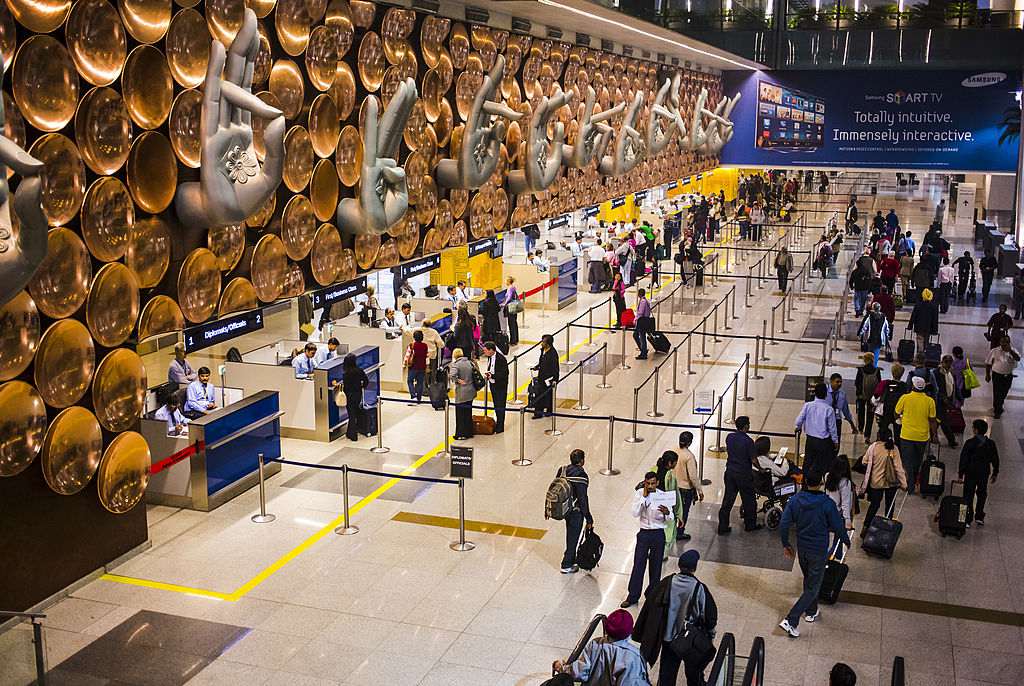
Delhi airport's new terminal and the fourth runway will become operational in September, Aviation Secretary Rajiv Bansal said on Thursday, April 20. The Indira Gandhi International Airport will become the only Indian airport with four runways. "September 2023 will witness Delhi airport getting a new terminal and the fourth runway becoming operational. The Indian aviation sector is growing rapidly and we are preparing for better infrastructure and better connectivity with a renewed focus on innovation," he said.
The aviation secretary commented at the EU-India Aviation Summit, which began on Thursday, April 20. According to officials familiar with the development, the fourth runway is expected to be around 4,400 metres long and 75 metres wide. It is slightly smaller than the third runway (known as 29/11).
"The fourth runway is expected to ease the pressure of a likely rise in flight operations. The new runway will considerably cut the waiting time for flights to land and take off," an official said. The new runway is part of Phase III-A of the Delhi airport's expansion plan. The original deadline for the plan was mid-to-end 2022. DIAL (Delhi International Airport Limited), a joint venture majority-owned by the GMR Group, had in 2019 announced an investment of INR 9,800 crore to upgrade the existing Terminal 1, build a fourth runway and for other development works to increase the airport's capacity to 100 million passengers a year from 66 million now.
The Work Progress
The work on the runway was affected due to the coronavirus, the official said. The EU-India Aviation Summit will focus on EU-India air transport relations and the mutually shared challenges and opportunities such as the post-Covid recovery of air traffic, increasing sustainability, maintaining safety and the development of unmanned aircraft systems. The summit will bring together top-level policymakers, industry executives and stakeholders from both the European Union and India. "There are several fronts on which India and the EU cooperate and this summit marks the beginning of that journey," he said.
The air traffic control at IGIA has begun preparing for use of the fourth runway and the corresponding increase in traffic. The vacant level below the main control deck on the ATC tower is being fitted to seat controllers. AAI will need to step up the hiring and training of controllers in a big way. Since the process has been slow so far, there is now a lot of pressure and stress on the air controllers. Airports have to synchronise capacity growth on the operational (runway, taxiway, apron) side with the terminal side to prevent a situation in which passengers remain stuck in check-in, security check, immigration and customs even when more flights can take off and land. Last winter, most airports in India and abroad faced congestion due to the revival in air traffic amid terminal constraints. The government tried to speed up the embarkation process and succeeded in terminals like IGIA’s T3 that had space for re-engineering and development of more infra.
Meanwhile, the IGI Airport was recently named among the world’s 10 busiest airports by passengers handled. As per the Airports Council International (ACI), Delhi Airport ranked at the ninth spot for 2022, ahead of Paris’s Charles de Gaulle Airport. The Delhi airport is India’s largest and is the only airport from South and Southeast Asia to feature in ACI’s list of the 10 busiest airports. As per ACI data, the Delhi airport handled almost 5.95 crore passengers in 2022. The airport was ranked as the 13th busiest for 2021 and 17th busiest for 2019. Five of the 10 busiest airports for 2022 are in the US such as Dallas, Denver, Chicago, Los Angeles and Atlanta. Dubai, Istanbul, and London Heathrow were the other airports in the top 10 list.
Comment