
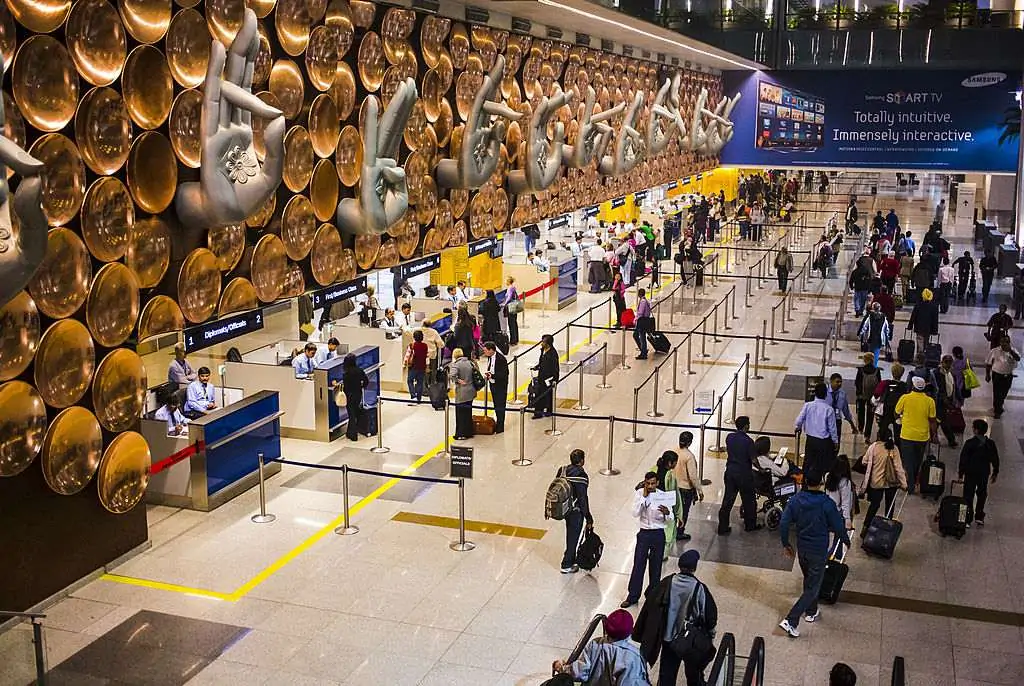
India has launched a sweeping strategic initiative to transform its three largest airports — Delhi, Mumbai, and Bengaluru — into global transit centres, directly challenging the dominance of Dubai, Doha, and Singapore. The government's opening move is deceptively simple: ease the friction of transit travel. Under the new framework, passengers flying from smaller Indian cities to international destinations will complete immigration and customs formalities at their origin airport, bypassing the bottleneck that has historically plagued major Indian transit hubs.
Air India Leads the Charge

Air India has been chosen to pilot this reimagined model on the Varanasi-to-international corridor, testing the immigration-at-departure concept in live conditions. If successful, the Varanasi route is expected to serve as the blueprint for extending the hub-and-spoke architecture across the national network, with Air India's wide-body fleet acting as the anchor carrier that stitches smaller cities to the world.
Delhi's Air Train: The Infrastructure Centrepiece
While policy reform sets the direction, concrete steel sets the pace. Delhi International Airport Limited (DIAL), operated by GMR Airports, has moved ahead with its long-delayed Automated People Mover (APM) — an airport-wide air train spanning 7.7 kilometres. The driverless rail system will link Terminal 1, Terminal 2, Terminal 3, Aerocity, and Cargo City into a single seamless corridor. Priced between Rs 3,000 crore and Rs 4,000 crore, the project is slated for completion within 30 months. Critically, DIAL plans to fund it entirely through internal resources, avoiding external concessionaires and keeping the service free for transit passengers.
The Revenue Case for Operators
For GMR Airports and Adani Airports — which manages Mumbai and Navi Mumbai — the stakes are financial as much as strategic. A significant volume of Indian international traffic currently routes through foreign hubs, draining passenger fees, retail spending, and duty-free revenue from domestic operators. Successfully capturing even a fraction of that diverted traffic would meaningfully lift passenger volumes, improve asset utilization rates, and unlock the high-margin non-aeronautical revenues that define truly profitable international airports.
The Road Ahead Is Steep
Ambition and execution, however, are two different terminals. Gulf hubs have spent decades perfecting seamless transit — automated baggage transfers, sub-60-minute connection times, and infrastructure built specifically around the transit passenger experience. Indian airports must not only match that efficiency but also manage the capital intensity of the upgrades while keeping debt levels in check. For investors tracking GMR Airports, the air train's 30-month timeline is a critical benchmark — delays would compound costs and delay the return on investment.
What To Watch
The early signals will come fast. Progress on Delhi's APM construction, early traffic data from the Varanasi pilot, and government updates on hub-and-spoke policy rollout will collectively reveal whether India's ambitions are on track. If the pieces fall into place — policy, infrastructure, airline capacity, and seamless inter-agency coordination — India's major airports may finally begin reclaiming the transit passengers that have long been lost to the Gulf.
With Inputs from Whalesbook

Read next
Behind Closed Doors in India: Why Boeing, Lockheed Martin, and GE Aerospace Are Suddenly in the Same Room With US Diplomats
Abhishek Nayar
22 Jun 2026

Senior officials from the United States State Department's Bureau of South and Central Asian Affairs (SCA) convened with representatives of three of America's most prominent aerospace and defense companies — Boeing, Lockheed Martin, and GE Aerospace — in India, in what marks a significant convergence of diplomatic intent and commercial ambition in the civil aviation sector.
The purpose of the high-profile meeting, as disclosed publicly, was to explore and advance US-India civil aviation commercial opportunities — a sector that has seen explosive growth on the Indian side, even as supply chain pressures and aircraft delivery backlogs continue to test the limits of the world's fastest-growing aviation market.
Kapur Breaks the News on X

The development was first brought to public attention by S. Paul Kapur of the Bureau of South and Central Asian Affairs through a post on X (formerly Twitter). Kapur, who has been active in the SCA's diplomatic outreach in the region, confirmed the meeting and outlined its intent in clear terms.

"Met with Boeing, Lockheed Martin, GE Aerospace reps to discuss U.S.-India civil aviation commercial opportunities. American innovation and private sector participation are making the United States, India, and the region more prosperous and secure," Kapur wrote.
The statement notably frames the meeting not merely as a business engagement but as one with strategic depth — tying American private sector participation directly to regional prosperity and security.
Why India, and Why Now?
India's civil aviation landscape is, by most global benchmarks, an extraordinary opportunity. Indian carriers have collectively placed orders for over a thousand aircraft in recent years, with Air India and IndiGo leading the charge in fleet expansion. The presence of GE Aerospace at the meeting is particularly telling — GE engines power a significant share of narrowbody jets operating in the Indian market, and the company has long-standing maintenance and manufacturing interests in the country.
Boeing, meanwhile, is navigating a crucial phase in its relationship with India — one marked by both historic orders and delivery delays, alongside the shadow of its MAX certification controversies. Lockheed Martin's inclusion signals that the conversations are not limited to commercial jets alone, touching perhaps on wider aerospace cooperation in which defense and civil programmes increasingly share technology and infrastructure.
Innovation, Diplomacy, and the Road Ahead
The SCA bureau's direct involvement underscores that this meeting was not a routine industry interaction. It is a signal that the United States views aviation as a pillar of its broader strategic and economic engagement with India — one that aligns with the evolving Indo-Pacific framework and bilateral trade discussions that have gained momentum in recent years.
As India's aviation infrastructure races to keep pace with surging passenger demand, American firms are clearly positioning themselves to be at the centre of that transformation — not just as suppliers, but as long-term partners in one of the world's most consequential aviation stories.
Read next
Is SpiceJet Finally Turning the Corner — Three New Airbus Jets, One Revived Boeing, and a Growth Plan for the Busy Season?
Abhishek Nayar
09 Jun 2026
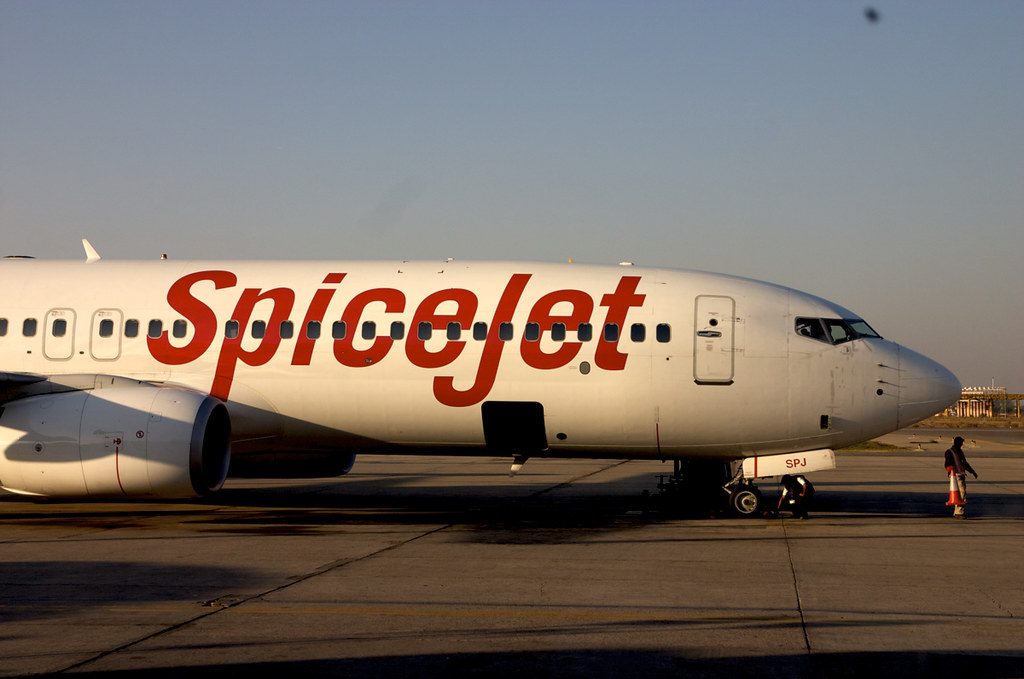
SpiceJet has finalized a lease agreement to induct three Airbus A320 aircraft into its fleet on a damp lease basis, the Gurugram-based carrier announced on Sunday. The three narrowbodies are scheduled to join operations in July 2026, arriving ahead of what the airline expects to be a high-demand travel period across its domestic and international network.
A Grounded Boeing 737 MAX Flies Again
In a concurrent development, SpiceJet has successfully ungrounded a Boeing 737 MAX and returned the jet to commercial service. The carrier confirmed this in an official statement released alongside the A320 lease announcement, signaling a broader push to restore and expand its operational fleet strength after a period of capacity constraints.
Capacity Built for a Busy Travel Season
The airline stated that the additional aircraft capacity would directly support its network requirements during the upcoming busy travel season. SpiceJet said the expanded fleet would also provide greater operational flexibility across both domestic and international routes, allowing the carrier to better absorb demand spikes and reduce disruptions caused by tight aircraft availability.
What the CBO Said
Debojo Maharshi, Chief Business Officer of SpiceJet, framed the move as part of a deliberate and steady recovery strategy. He said the new aircraft would help the airline meet growing passenger demand, strengthen operational resilience, and enhance network flexibility during a busy travel period. Maharshi added that the airline remains focused on steadily expanding its fleet and improving operational readiness as it moves forward with its broader growth plans.
SpiceJet’s Current Fleet and Regional Role
SpiceJet currently operates a mixed fleet of Boeing 737s and Bombardier Q-400 turboprops. The carrier is among India’s largest regional operators under the government’s UDAN scheme, which supports affordable connectivity to underserved destinations across the country. The induction of the A320s on a damp lease — under which the aircraft comes with crew and maintenance provided by the lessor — marks a notable shift in the airline’s fleet composition and reflects its intent to shore up capacity without the immediate burden of full ownership.
Read next
Will Soaring Jet Fuel Prices Ground the Global Airline Industry for Good?
Abhishek Nayar
08 Jun 2026
Soaring jet fuel prices, driven by the ongoing U.S.-Israel conflict with Iran, are threatening to push more airlines into bankruptcy and accelerate consolidation across the global aviation industry. Willie Walsh, Director General of the International Air Transport Association (IATA), delivered that sobering assessment on Saturday at IATA's annual summit in Rio de Janeiro, warning that the worst may not be over.
Budget Carriers Bear the Brunt
The fuel crisis has hit low-cost carriers especially hard. Unlike full-service airlines, budget operators lack the financial cushion of premium cabins, high-yield travelers, and lucrative credit card loyalty programmes. The strain has already claimed its first major casualty — U.S. budget airline Spirit Airlines collapsed last month. Walsh made clear that Spirit would not be the last to fall, predicting that some carriers would shut down entirely while others would be absorbed by larger rivals.
Routes Cut, Fares Up
As airlines scramble to protect margins, unprofitable routes face the axe. Airfares, which have already surged since the Iran conflict erupted, are unlikely to soften anytime soon, Walsh cautioned. The low-cost model, however, is not dead — Ryanair's robust European performance stands as proof. "I don't see that the low-cost model is broken; in fact, quite the opposite," Walsh said.
The United-American Megadeal That Won't Happen

One headline-grabbing proposal Walsh firmly ruled out: United Airlines CEO Scott Kirby's bid to acquire arch-rival American Airlines and create a U.S. aviation giant. Despite Kirby reportedly raising the idea with President Donald Trump, Walsh said the regulatory obstacles were simply too formidable — and questioned whether the proposal was ever a serious one.
Gulf Hubs Disrupted, But Not Finished
The Iran conflict has upended traffic flows through Middle Eastern aviation hubs — Dubai, Doha, and Abu Dhabi — creating acute challenges for Emirates, Qatar Airways, and Etihad. Yet Walsh expressed confidence in the Gulf's long-term recovery, noting that Gulf carriers account for 14% of global capacity — a share no other region can readily replace.
Supply Chain Woes Compound the Pain
Compounding the fuel crisis are persistent delays in aircraft and engine deliveries from Boeing, Airbus, GE Aerospace, and Pratt & Whitney. Walsh estimated that supply chain disruptions cost airlines approximately $11 billion last year, and expressed frustration that manufacturers continue posting strong profits while airlines suffer.
China on the Horizon, Net Zero in Question
Looking further ahead, Walsh flagged China's Comac as an emerging competitor to Boeing and Airbus — though certification hurdles remain. On sustainability, he acknowledged that achieving net-zero emissions by 2050 had become significantly more difficult, largely due to sluggish progress on sustainable aviation fuels. IATA, however, is not ready to abandon the target.
With Inputs from Reuters
Read next
Will Rs 10,000 Crore Save India's Airlines From a Fuel Crisis That Has Already Doubled Their Costs?
Abhishek Nayar
04 Jun 2026

The Union Cabinet on Wednesday cleared a one-time budgetary support of up to Rs 10,000 crore for oil marketing companies (OMCs), marking the government's most significant intervention yet in the aviation fuel crisis gripping India's airline industry.
A Crisis Born in West Asia
The trigger is unmistakable. International Aviation Turbine Fuel (ATF) prices have surged nearly 2.5 times — from Rs 60.5 per litre in March 2026 to Rs 142 per litre by May 2026 — driven by the ongoing conflict in West Asia. Since ATF accounts for nearly 40% of airline operating costs under normal conditions and can climb to 60% during periods of extreme volatility, the sustained price surge has left both carriers and OMCs under severe financial strain.
What the Fund Actually Does
Union Minister Ashwini Vaishnaw, announcing the decision, explained that the support will be channeled as interest-free advances to OMCs through the Ministry of Petroleum and Natural Gas. All willing scheduled Indian carriers — for both domestic and international operations — will be eligible to participate. The mechanism introduces a fixed-price arrangement for fuel procurement, providing airlines with the cost predictability they have been unable to find in the open market.
A Self-Correcting Design
The scheme is structured to be financially self-sustaining. When international ATF prices moderate, the differential recovered will be returned to the Consolidated Fund of India. Participating airlines will procure ATF exclusively from OMCs for up to three years, with the arrangement subject to annual review or until the advance is fully recovered — whichever comes first.
The Pakistani Airspace Problem Makes It Worse
The fuel crisis has been compounded by the continued closure of Pakistani airspace, which has forced Indian carriers onto significantly longer flight paths to Europe, North America, and Central Asia. The extended routes directly increase fuel burn per flight, amplifying the cost impact already created by surging ATF prices.
Jobs, Connectivity, and the UDAN Promise
The government framed the intervention in broader economic terms. The stabilization fund is intended to protect the roughly 77 lakh jobs that depend on the aviation ecosystem and to ensure uninterrupted air connectivity to Tier-II and Tier-III cities — including airports that were operationalized under the UDAN regional connectivity scheme. While ATF prices for domestic operations are already capped, airlines have continued purchasing fuel for international routes at import parity prices, leaving them fully exposed to global price shocks.
Who Watches the Fund
A dedicated monitoring committee, comprising representatives from the Ministries of Civil Aviation and Petroleum and Natural Gas alongside the Department of Expenditure, will oversee implementation, verify claims, and conduct audits throughout the 36-month support period.
Read next
From India to Europe: Pharmaflight’s Growing Role in Pilot Training ecosystem

Editorial Team
03 Jun 2026
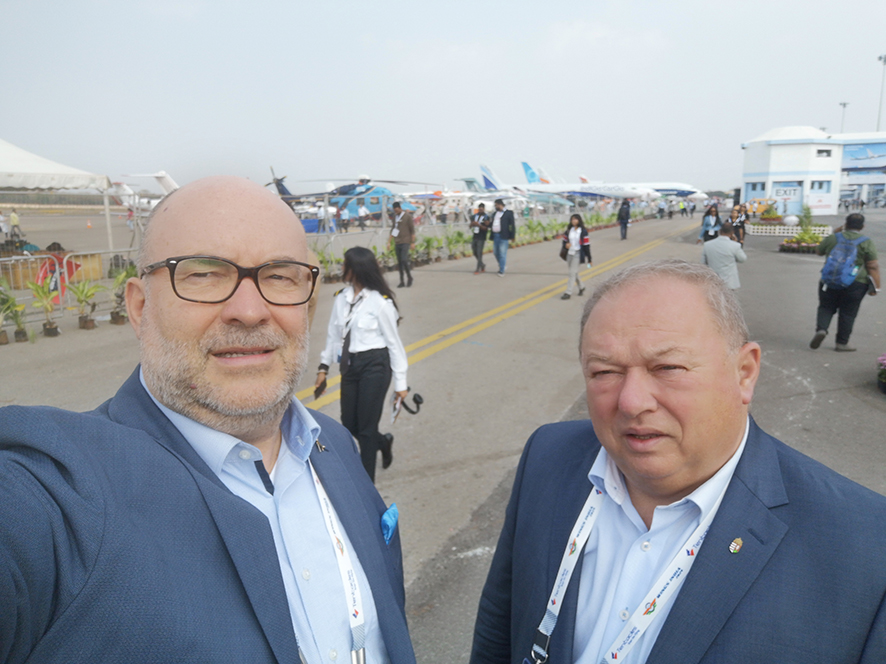
In May 2025, a new chapter began in the history of the Pharmaflight Aviation Academy in Debrecen when the first Indian pilot trainees arrived for the institution’s integrated EASA CPL training program. Almost a year has passed since then, and we asked Zoltán Sajtos, the international training director at the Pharmaflight Aviation Academy, about his experiences so far.
Where did the idea come from for the academy to launch a commercial pilot training course for Indian applicants?
Gyula Gyori, chairman of Pharmaflight’s board of directors, pointed out in 2024 that India is experiencing explosive growth in air travel, as the country’s two largest airlines have ordered more than a thousand new aircraft, and India will need approximately twenty thousand new pilots to operate them in the coming years. Pharmaflight Aviation Academy has gained significant experience over the past few years, as it operates as an affiliated aviation engineer department of the Faculty of Engineering at the University of Debrecen. To date, more than two hundred students have graduated from the University of Debrecen’s Faculty of Aeronautical Engineering, who, in addition to their B.S. degrees, have obtained a Commercial Pilot License (CPL) approved by the European Union Aviation Safety Agency (EASA) and a type rating for the Airbus A320 aircraft under the auspices of the Pharmaflight Aviation Academy. Over the past eight years, applicants from more than forty countries have come to Debrecen for professional pilot training, enabling the Pharmaflight Aviation Academy to prepare for the arrival of Indian pilot candidates. This was followed by a major
marketing effort in India, during which we sought out local professional partners through whom the admissions process was launched. As a result, the first students arrived last May.

Through which Indian partners can interested young people from India come to Debrecen?
There are several pilot training organizations in India that provide theoretical training for applicants approved by the local aviation authority, the DGCA. In addition, numerous flight schools offer courses, but local training organizations can only meet the sudden surge in interest to a limited extent. That is why they are seeking partners abroad, including in the United States, South Africa, Australia, and now in Europe through Pharmaflight Aviation Academy. I am proud to say that our training organization is a pioneer in the Indian market, where previously students were sent primarily to the United States for FAA training, but India has also realized that the commercial pilot license issued by EASA is currently the most valuable in the industry, as it is accepted by more than seventy airlines in over forty countries worldwide. Thanks to this, and to a media campaign launched in collaboration with local partners, an increasing number of young Indians have decided to pursue an EASA CPL and complete the required training in Debrecen.
What requirements must applicants meet?
The basic admission requirements are a valid aeromedical certificate, high school graduation exam scores at the required level in mathematics and physics, and a valid passport for travel. Successful applicants will then receive a Hungarian and EU temporary residence permit valid for 18 months, following review and approval by the Migration Office of the Hungarian Ministry of the Interior, which allows them to enter Hungary and begin their flight training.
Where are the students who started in Debrecen last June now?
All of them have already completed the theoretical training, which is based on the ATP (Air Transport Pilot) curriculum; that is, students in the EASA CPL course study the ATP theoretical subjects across a total of thirteen topics and take exams before their 18-month full training program concludes. In addition, starting in the third month, their practical training begins on the academy’s Tecnam P2008JC single-engine glass-cockpit training aircraft. On these, they first fly with an instructor and performing training patterns and cross country flights; later, when their instrument flight training begins, they switch to the twin-engine Tecnam 2006P, which also features a glass cockpit. Several students in the first group are already at this stage.
How many aircraft are there in the Pharmaflight Aviation Academy’s fleet?
Currently, three single-engine Tecnam P2008JCs and three twin-engine Tecnam 2006Ps are available to the students, but we just returned from the Aero Expo 2026 exhibition in Friedrichshafen, Germany, where we held advanced negotiations with the Italian manufacturer Tecnam regarding the purchase of three additional Tecnam P2008JC NG next-generation training aircraft. With this, we plan to increase the number of aircraft in the Tecnam fleet to nine by the end of the year. However, the current fleet is sufficient for training Indian pilot candidates, as we maintain the aircraft under a Continuous Airworthiness Management Organization (CAMO) and perform the necessary maintenance tasks on them. To ensure this runs smoothly, we maintain constant communication not only with our maintenance organizations (MRO) but also with the aircraft manufacturer Tecnam and the engine manufacturer Rotax. With this fleet, we can seamlessly provide training for more than 100 students annually. In addition, other aircraft can be used if necessary.
How many Indian students are currently enrolled at the Pharmaflight Academy?
Following the first group that arrived last May, additional students from India arrived in November and January, and now a new group—the fourth—is set to arrive in May. This means that nearly fifty students are participating in the training. Most applicants have already completed the DGCA ground school course offered by our partner Indian academies back home, so they arrive in Debrecen with a solid foundation of theoretical knowledge. Most of the Indian applicants will remain in Hungary for a while after obtaining their EASA CPL to accumulate the required flight hours in accordance with the commercial pilot license requirements set by the Indian authorities; there are also those who have enrolled in the flight instructor course to gain even more flight experience—whether at the Pharmaflight Academy or at another flight school, before applying to become a commercial pilot with an airline.
Why should Indian and other international applicants choose Pharmaflight ?
As I mentioned, the Pharmaflight Aviation Academy has gained significant professional experience in international pilot training over the past few years. In addition, we have five different level training simulators that allow us to provide instruction from the basics all the way up to the highest level, including MCC (Multi-Crew Cooperation) training, not to mention that the Pharmaflight Pilot Academy has its own Airbus A320 FFS (Full Flight Simulator), on which, following EASA CPL training, an Airbus A320 type rating can be obtained through a five-week course. Another unique feature among training organizations is that our academy has its own EASA-approved aeromedical centre and we also operate an aviation physiology laboratory in house, so students can obtain the Class 1 EASA aeromedical certification required for flight training directly from our institution. In addition, Pharmaflight has developed its own physiological monitoring program called the PHAPA Aviation, which plays a major role in ensuring that, throughout the 18-month training program, trainees remain in the optimal mental and physical condition successfully complete the theoretical course and pass the required regulatory exam, as well as ensuring they are adequately prepared and fit during flight training to perform various flight tasks.
Comment