
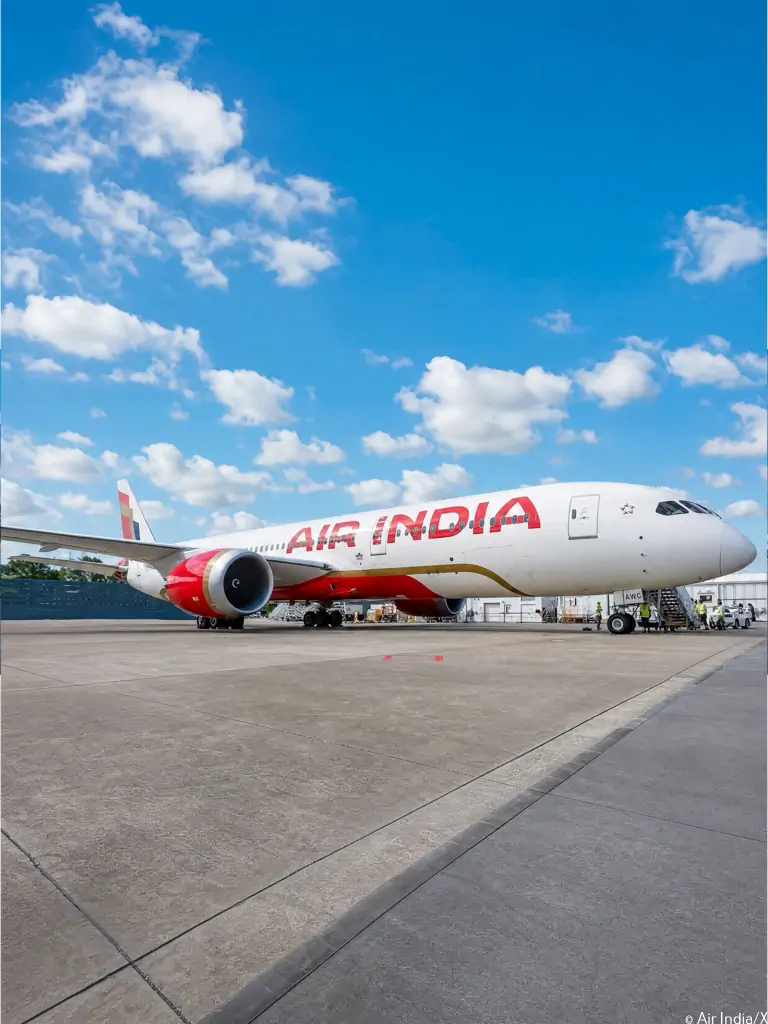
What began as a high-stakes bet on India's aviation resurgence is rapidly becoming a source of political discomfort in Singapore. Air India, the Tata-owned carrier that Singapore Airlines (SIA) has backed since November 2024, is now reportedly seeking $1.5 billion in fresh equity from its stakeholders — and the fallout is echoing in Singapore's parliament.
The $1.5 Billion Question
Air India has formally approached both Tata Sons and Singapore Airlines for a fresh capital infusion, expected to be disbursed in tranches. SIA, holding a 25% stake in the Indian carrier, would be required to contribute its proportionate share for any funding round to proceed. Discussions remain ongoing and no final decision has been reached. The request is among the largest publicly reported shareholder funding appeals in Indian aviation history.
The urgency stems from Air India and its budget arm, Air India Express, posting combined losses of $2.33 billion in the fiscal year ended March 2026 — more than double the losses recorded the prior year.
A Singaporean Politician Draws the Line
The capital call triggered an immediate political reaction in Singapore. Workers' Party MP Kenneth Tiong Boon Kiat wrote to Transport Minister Jeffrey Siow, questioning the commercial logic of SIA's continued exposure to Air India. He sought an oral answer in the September 8 parliamentary session.
Tiong's concern centred on Temasek Holdings — Singapore's government-owned investment firm and SIA's largest shareholder — potentially absorbing Air India's losses through SIA.
"No one, least of all Singaporeans, owes Air India a living," he wrote, stating he would not support any future use of Temasek funds to prop up the Indian carrier via SIA.
How SIA Got Here
SIA's Air India chapter opened in November 2024, when it folded its longstanding Vistara joint venture — a 2013 investment — into Air India, simultaneously committing S$822 million ($642 million) in fresh capital. Just five months after the deal was signed, SIA was called upon to inject a further S$167 million, bringing total capital invested to S$989 million ($772 million).
In its most recent quarter, SIA reported its first net loss since 2022, dragged down by Air India's underperformance and elevated jet fuel costs linked to the US-Iran conflict — despite posting record revenue at the group level. Cumulatively, the Air India investment has resulted in operating losses of approximately S$1.3 billion, an improvement from S$2.02 billion a year earlier.
Leadership Chaos at the Top
Air India's financial woes are compounded by leadership instability. CEO Campbell Wilson departed earlier in 2026, prompting Tata Sons chairman N. Chandrasekaran to take a more direct operational role. Tewolde Gebremariam, former head of Ethiopian Airlines, was shortlisted as Wilson's successor in August — though he had most recently declined a similar role at Pakistan International Airlines. Days later, Chandrasekaran himself announced he would not seek a third term as chairman of Tata Sons' holding company.
With leadership in flux and losses mounting, the question in both Mumbai boardrooms and Singapore's parliament remains the same: how much longer can this turbulence be absorbed?
With Inputs from Economic Times, Business Standard

Read next
India's Airport War Heats Up: GMR Quietly Bets ?194 Billion on the World's Next Aviation Boom
Abhishek Nayar
25 Aug 2026

GMR Airports Ltd., India's largest airport operator by passenger footfall, has unveiled plans to pump as much as Rs.194 billion ($2 billion) into expanding its flagship facilities in New Delhi and Hyderabad — a direct response to what the company sees as an unprecedented surge in Indian air travel over the coming decade.
The investments, confirmed by Executive Director for Finance and Strategy Saurabh Chawla in a recent interview, will be deployed over the next five to seven years and funded through a mix of debt and equity at the individual airport-venture level, not at the GMR Airports holding company level.
Where the Money Goes
The lion's share — roughly Rs.138 billion — is earmarked for Rajiv Gandhi International Airport in Hyderabad, the southern industrial hub. The remaining Rs.56 billion will go toward the New Delhi airport. Once Hyderabad's expansion is complete, the airport will be capable of handling approximately 80 million passengers annually, more than double its current capacity of 34 million fliers.
Why Now? India's Passenger Numbers Tell the Story
The timing is no coincidence. India is already the world's third-largest domestic aviation market, behind only the United States and China. Government projections paint an even more dramatic picture ahead: passenger traffic is expected to grow six-fold to roughly 1.1 billion fliers over the next 14 years, while the country's commercial fleet is forecast to swell from 400 aircraft in 2014 to over 2,350 planes by 2040.
GMR vs. Adani: A Rivalry Taking Shape at 30,000 Feet
GMR's announcement arrives as its chief rival, Adani Airport Holdings Ltd., is already planning a $15 billion infrastructure push across its own network — the biggest by number of airports in India. The two conglomerates now find themselves locked in a race to capture India's aviation upswing, with GMR holding the edge in annual passenger volumes and Adani dominating sheer portfolio breadth.
Beyond Delhi and Hyderabad: A Bigger Expansion Blueprint
Chawla hinted that the current investment round may only be the opening chapter. GMR's portfolio already spans six Indian airports, one in the Philippines, and another under construction in Greece. The group took over the Nagpur airport in June 2026, and investment plans for that facility are currently under discussion.
On overseas airport redevelopment, however, Chawla was clear: no such discussions are on the table.
No Airline Ambitions, No Distractions
Despite India's government reportedly exploring a policy change that would allow airport operators to enter the airline business — a move aimed at breaking the near-duopoly of IndiGo and Air India, who together control close to 90% of the domestic market — GMR remains firmly uninterested.
"We're not interested," Chawla stated plainly, emphasizing that the group intends to stay focused on airports, aircraft maintenance, and real estate development around its aviation hubs.
For GMR, the runway ahead is long — and they are fully committed to building it.
With Inputs from Economic Times
Read next
India's Aviation Watchdog Eyes Stricter Drug Testing for Pilots After Mid-Air Scare
Abhishek Nayar
20 Aug 2026

The Directorate General of Civil Aviation is preparing to significantly raise the bar on substance testing for Indian flight crews, with top official sources indicating that random screening may soon cover more than 25% of applicable personnel annually — more than double the current 10% mandate.
The trigger for this regulatory push traces back to Air India flight AI-2379, a Phuket-to-Delhi service that suffered a sudden loss of altitude over Odisha, injuring 20 passengers and four cabin crew members. The aircraft reportedly dropped around 300 feet during the episode. The pilot operating the flight has since been de-rostered pending investigation.
Airlines Move Swiftly as Scrutiny Mounts
Air India wasted no time responding to the fallout. Beginning August 13, the carrier launched a comprehensive screening exercise for all its group pilots, testing for substances and medications currently prohibited under Indian aviation regulations. The results have been submitted to the DGCA for examination. The regulator is expected to release its preliminary findings on the AI-2379 incident within the next ten days. Separately, the DGCA and the Aircraft Accident Investigation Bureau are examining reports of a triple hydraulic failure aboard the same aircraft.
Pilots' Federation Pushes for Smarter, Not Just Wider, Testing
The proposed expansion follows a formal representation by the Federation of Indian Pilots, which has called for a more sophisticated, hybrid approach to substance screening. FIP has recommended oral-fluid tests as a complement to existing urine-based testing — deploying them for large-scale random checks and airport screenings, while retaining urine tests for cases requiring longer detection windows or detailed medical assessments.
Crucially, the federation has argued that a positive test result should not automatically be treated as proof of impairment. Instead, FIP has proposed a structured four-step process: initial screening, confirmatory laboratory analysis, medical assessment, and a final regulatory decision — a safeguard intended to protect pilots from being penalised for medications that may not have affected their performance.
The federation has also proposed a 12-month controlled pilot programme to evaluate oral-fluid testing before any wider rollout.
Awareness, Not Just Accountability
Beyond testing reform, FIP has called for a mandatory Pilot Psychoactive-Substance and Medication Awareness Programme. The initiative would educate cockpit crew on risks associated with prescription drugs, over-the-counter medicines, and even herbal remedies — built around a practical "Check Before You Take" philosophy.
What Comes Next
The DGCA's expected move to a 25%-plus random testing threshold — now confirmed through official sources — signals a shift from compliance-as-checkbox toward a more proactive safety culture. As India's aviation sector continues its rapid expansion, the AI-2379 incident appears to have accelerated a reckoning that regulators, airlines, and pilot unions alike can no longer defer.
Read next
India's Supreme Court issued a stern warning to domestic airlines on Monday, stating that carriers failing to comply with airfare regulations could face grounding. The sharp remark came after the civil aviation ministry admitted that airlines had been ignoring its office memorandums on pricing — directives issued while permanent rules remained pending.
A Petition That Triggered Change
The case stems from a public interest plea filed by social activist S. Laxminarayanan, who approached the court seeking a robust, independent aviation regulator capable of ensuring transparency and passenger protection. His petition specifically targeted what he described as "unpredictable fluctuations" in airfares and ancillary charges levied by private airlines, calling the current system "arbitrary, opaque, and exploitative."
The plea also flagged that airlines had quietly slashed free check-in baggage allowances for economy passengers from 25 kg to 15 kg, effectively converting a standard service into a new revenue stream with no compensatory benefit for passengers who don't use check-in baggage at all.
Government Promises, Court Pushes Back
A bench comprising Justices Vikram Nath and Sandeep Mehta heard Additional Solicitor General Anil Kaushik represent the Centre. Kaushik informed the bench that the government had fast-tracked the framing of rules under the Bharatiya Vayuyan Adhiniyam, 2024 — a legislation that came into effect in January 2025 and is designed to modernize India's aviation sector.
The government submitted draft rules before the bench in a sealed cover, indicating that final discussions were still underway. Kaushik requested three weeks to present the finalized version.
The bench was unambiguous in its response: "You publish this within seven days. If airlines are not complying, ground them."
Petitioner Questions Regulatory Will
Senior advocate Ravindra Srivastava, appearing for the petitioner, argued that until new rules take force, existing rules remain operative — and yet airlines continue charging exorbitant fares unchecked. He pointed to a parliamentary statement by the civil aviation minister suggesting the government lacked authority to cap airfares, questioning both the regulatory will and the effectiveness of current mechanisms.
A Long Road to This Moment
The court's journey on this issue stretches back several months. In November 2024, the top court sought responses from the Centre on Laxminarayanan's plea. By January 2025, the court flagged the steep rise in airfares during festivals as "exploitation." In May, it called for fare rationalization. On July 13, it directed the government to place draft rules before it — sealed or otherwise.
Monday's hearing marked the sharpest intervention yet.
What Comes Next
The Supreme Court has scheduled the next hearing for September 7, by which time the Centre is expected to present the finalized airfare rules. Until then, the government's three-week commitment — and the court's grounding threat — hangs over India's airline industry like a storm cloud that refuses to pass.
With Inputs from Economic Times
Read next
A Fleet of 100, A Farewell in the Wings: Air India's Turbulent Crossroads
Abhishek Nayar
14 Aug 2026
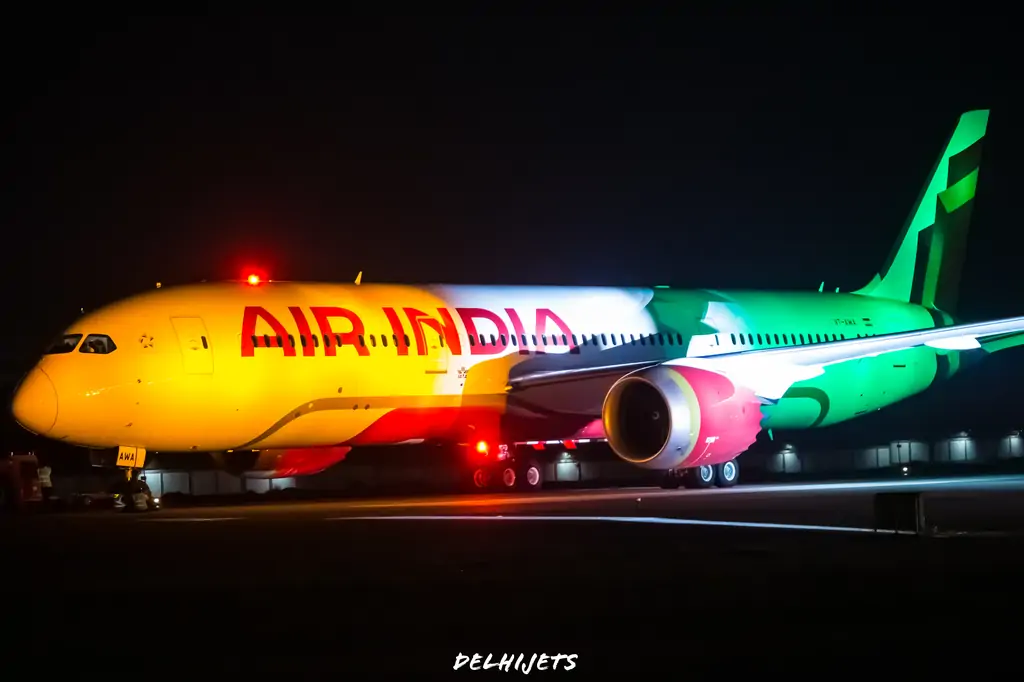
Air India finds itself navigating a pivotal moment — not just operationally, but at the very top. CEO Campbell Wilson, widely credited with steering the Tata-owned carrier through its post-privatization transformation, is expected to step down next month. His successor, former Ethiopian Airlines Group chief Tewolde Gebremariam, is set to take charge as CEO and Managing Director, inheriting both the airline's ambitions and its headwinds.
Wilson addressed airline staff at a quarterly townhall on Thursday, offering a candid assessment of where Air India stands — and where it is headed.
Pay, Pilots, and Promises
In a move likely to lift staff morale, Wilson confirmed that annual salary increments will take effect from October 1. A revised pay structure for pilots will also kick in on the same date. The announcement carries significance given that the increment cycle had been pushed back by one quarter earlier this year amid disruptions caused by the West Asia conflict, which had materially impacted flight operations and costs.
100 New Planes and a Retrofitting Push
On the expansion front, Wilson struck an optimistic chord. The Air India Group — comprising Air India and Air India Express — currently operates a fleet of nearly 300 aircraft. Air India alone fields over 185 planes, including wide-bodies such as 35 Boeing 787s, 19 Boeing 777-300ERs, and 6 Airbus A350-900s.
Wilson told employees the group plans to induct over 100 new aircraft over the next two years. In 2026, two new Airbus A350-1000s are scheduled for delivery. Additionally, 16 Boeing 787-8 aircraft are slated for retrofitting in 2027 — a signal that the airline is investing in passenger experience alongside raw capacity growth.
A Gauntlet of Headwinds
Wilson did not shy away from the turbulence. Over the past six months, Air India — like carriers worldwide — has faced a bruising operating environment. A surge in jet fuel prices between March and May hit costs hard. The closure of Pakistani airspace added up to three hours of additional flight time on several Europe and North America routes.
Further compounding matters, disruptions stemming from the Iran conflict raised operational complexity and fuel burn. A depreciating rupee and softened demand on the India-US corridor — attributed to visa restrictions and trade-related uncertainty — added yet more pressure. Wilson noted that during periods of network curtailment caused by airspace restrictions, the airline used the downtime productively to carry out fleet improvement initiatives.
Regulatory Shadow Over the Townhall
The townhall unfolded against a tense regulatory backdrop. Air India is currently under scrutiny following an incident aboard a Phuket-Delhi flight on August 4, in which the aircraft abruptly lost 300 feet of altitude. The pilot-in-command subsequently tested positive for a psychoactive substance. The Aircraft Accident Investigation Bureau has launched a formal probe. Whether Wilson addressed the incident during the townhall could not be immediately confirmed.
Despite the noise, Wilson maintained that Air India continues to make steady progress on its transformation — even if the skies ahead remain anything but clear.
With Inputs from Business Standard
Read next

The Adani Group's ambitions in Indian aviation moved into contested territory on Monday when the government confirmed before Parliament that the Airports Authority of India (AAI) had formally received a request for a waiver from provisions that explicitly bar cross-ownership between airports and airlines.
What Happened on the Floor of the Rajya Sabha
Minister of State for Civil Aviation Murlidhar Mohol disclosed the development while responding to a question from Communist Party of India (Marxist) MP John Brittas. "Request seeking waiver of the relevant agreement provision has been received by Airports Authority of India," the minister stated, giving parliamentary weight to what had previously circulated only as media speculation.
Denial, Then a Letter
Adani Enterprises had publicly denied reports of any airline entry plans. However, a leading business daily subsequently cited a letter from Adani Airports CEO Arun Bansal directly addressed to the government, seeking the regulatory relaxations in question. Adani Airports Holding Limited currently manages eight airports across India, making it one of the country's largest private airport operators.
The Rules That Stand in the Way
Concession agreements governing Delhi and Mumbai airports cap aggregate airline ownership in an airport operator at 10%, effectively cutting both ways — airport operators face equivalent restrictions on acquiring meaningful stakes in airlines. Agreements for the upcoming Noida International Airport at Jewar and Navi Mumbai Airport carry relatively relaxed provisions, permitting ownership stakes of up to 26% in an airline.
Questions the Ministry Has Not Yet Answered
MP Brittas pressed the government on whether it had assessed downstream risks — covering competition, conflicts of interest, slot allocation, airport charges, ground handling fairness, and equal infrastructure access for rival carriers. He also sought confirmation that the Competition Commission of India, the Directorate General of Civil Aviation, and AAI had been formally consulted.
Minister Mohol's response was brief and notable for what it left unresolved: "The matter has not yet been examined by the Ministry of Civil Aviation."
Why the Industry Is Watching Closely
An entity controlling eight major airports and simultaneously operating an airline would hold unparalleled influence over route access, slot timings, ground handling logistics, and infrastructure pricing — advantages that no rival carrier could structurally match. Regulators and competing airlines have yet to publicly respond, but the government's confirmation that a waiver request is on the table signals that the question is no longer hypothetical.
With Inputs from The Hindu
Comment