
Unveiling Pune's Enigmatic Skies: A City Without a Civilian Airport, Yet Home to India's Thriving Helicopter Haven

Abhishek Nayar
18 Aug 2023
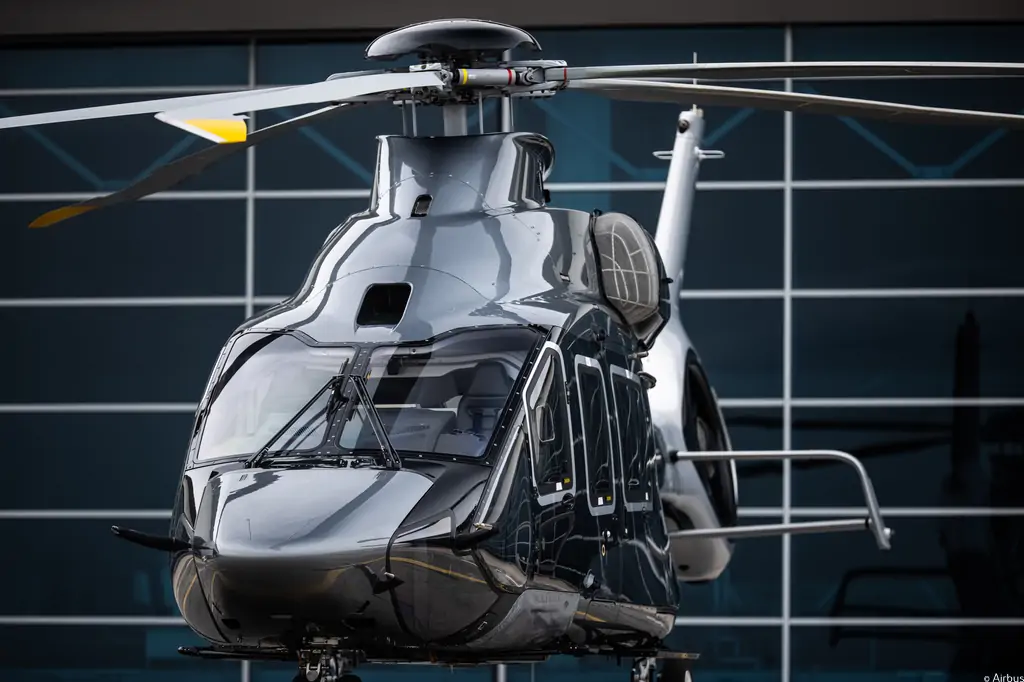
If you thought that a bustling city like Pune lacked a dedicated civilian airport, you might be surprised to learn about the city's extraordinary helicopter fleet. While the projected civilian airport is still under construction and far from completion, Pune boasts one of the most significant helicopter fleets in the country.
These helicopters are not owned by commercial airlines but by individuals and private enterprises. This unique mode of air travel caters to a variety of needs, from joyrides to temple visits to regular travel.
Unconventional Air Travel in Pune
Taking Flight Amidst Challenges
While many metropolitan cities rely on well-established airports to handle their air traffic, Pune has taken a rather unconventional approach. The city has been facing challenges in completing its dedicated civilian airport project, leaving citizens and businesses to seek alternative solutions. This situation has given rise to an unexpected yet fascinating phenomenon – a thriving helicopter fleet that serves the city's air travel needs.
A Fleet in Private Hands
Unlike the usual perception of air travel being linked to airlines, Pune's helicopter fleet predominantly belongs to private individuals and businesses. These helicopters aren't just symbols of luxury; they offer practical solutions for transportation in a city grappling with aviation infrastructure development.
The Many Facets of Helicopter Usage
Sky-High Joyrides
One of the most exciting uses of the helicopter fleet is for joyrides. Pune's residents have the unique opportunity to experience their city from a bird's-eye view, taking in panoramic views of iconic landmarks and picturesque landscapes. Helicopter joyrides have become a popular way to celebrate special occasions and create lasting memories.
Spiritual Sojourns
Pune's helicopter fleet isn't just about leisure; it's also about spiritual experiences. Many people utilize helicopters to visit nearby temples and religious sites quickly and conveniently. This efficient mode of travel has made pilgrimage journeys more accessible and time-efficient for both locals and tourists.
Swift Business Commutes
Businesses in Pune have found a valuable asset in the city's helicopter fleet. With congested roads and uncertain traffic conditions, helicopters provide an efficient solution for quick business commutes. Executives can travel to important meetings and locations without the stress of traffic delays.
The Data Behind the Fleet
DGCA Insights
According to data provided by the director general of civil aviation (DGCA), Pune stands out as a significant hub for helicopters in India. Out of the 231 helicopters registered in the country, 16 are stationed in Pune. This figure highlights the city's reliance on helicopters for various purposes and underscores its unique air travel landscape.
The Future of Air Travel in Pune
Awaiting the Dedicated Airport
While Pune's helicopter fleet is a testament to the city's resourcefulness and adaptability, residents and travelers still await the completion of the dedicated civilian airport project. Once finished, the airport is expected to provide more comprehensive air travel options, complementing the existing helicopter services.
Comments
"While Mumbai has the largest fleet of helicopters, the majority of them serve Oil and Natural Gas Corporation (ONGC) operations." Few are available to the general public. "By contrast, many citizens in Pune utilize helicopters for temple visits, joyrides, and so on," said Captain Nitin Welde, an aviation veteran and member of the Rotary Wing Society of India who is also affiliated with a firm that offers private charter helicopter services in Pune.
Conclusion
Pune's unconventional approach to air travel showcases the city's ability to innovate and find solutions in the face of challenges. The bustling helicopter fleet, owned by individuals and private entities, provides a range of services, from joyrides to business commutes. As the city eagerly anticipates the completion of its dedicated civilian airport, the helicopter fleet continues to shape the way people travel in and around Pune.
With Inputs from Hindustan Times
Read next
Unmasking the Sky: Investigating Corrosion Challenges in Airbus A330ceo Engine Inlets
Abhishek Nayar
18 Aug 2023
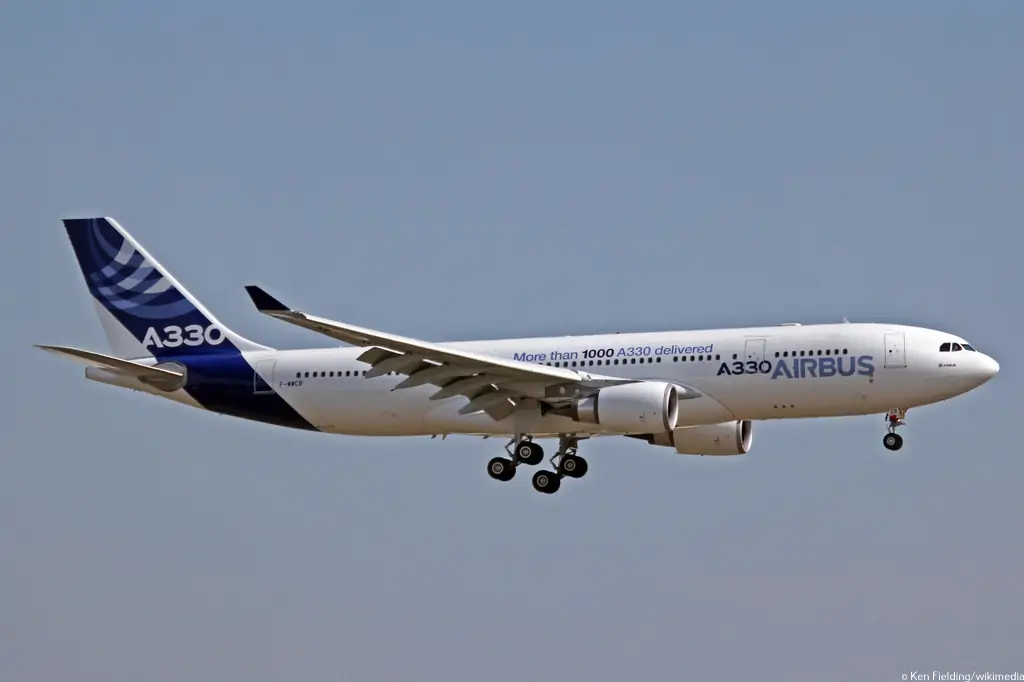
In a recent development in the aviation industry, the Federal Aviation Administration (FAA) of the United States has taken a significant step to ensure the safety and airworthiness of the Airbus A330ceo aircraft. This move comes in response to an unsafe condition associated with engine inlets on the Airbus A330ceo, and it aligns closely with the approach taken by the European Union Aviation Safety Agency (EASA).
The Background
The Airbus A330ceo is a widely used and respected aircraft known for its performance and reliability. However, like any complex machinery, it is not immune to potential issues. The EASA, a key player in aviation safety, identified a concerning problem related to corrosion and cracks on engine inlet attach fittings of the Airbus A330ceo. This issue raised serious safety concerns, prompting the EASA to issue an Airworthiness Directive (AD) to address it.
"It was determined that the affected fittings are susceptible to stress corrosion cracking due to the material used for the fittings," the FAA stated, adding that if the condition is not corrected, “It could result in failure of one or more fittings, potentially resulting in damage to the aircraft or injury to occupants."
The FAA's Response
Recognizing the global nature of aviation and the importance of harmonized safety measures, the FAA decided to adopt the EASA's approach. In line with the EASA's AD, the FAA issued its own Airworthiness Directive to address the same unsafe condition on the Airbus A330ceo. This cross-agency collaboration underscores the commitment of international aviation authorities to maintaining the highest safety standards.
On July 5, 2023, the EASA issued its AD, and the FAA followed up with a notice of proposed rulemaking (NPRM). On August 16, 2023, the FAA issued the final form of the directive. According to FAA estimates, 11 aircraft of this kind are impacted in the United States.
The Significance
The issuance of the FAA's Airworthiness Directive emphasizes the gravity of the situation. Corrosion and cracks on engine inlet attach fittings can compromise the structural integrity of the aircraft, potentially leading to catastrophic consequences. By acting swiftly and decisively, both the FAA and the EASA are ensuring the continued safety of passengers, crew, and aircraft operations.
Operators must check the engine inlet attach fittings and either replace them or replace the inlet with unaffected engine inlet attach fittings to comply with the AD. The checks, which will last five hours and cost $85 per hour of labor, will cost $425 each aircraft. According to the FAA's anticipated costs of compliance, a replacement nacelle will cost $27,986, including components ($10,136) and labor ($17,850).

The Airbus A330ceo Design
To fully comprehend the implications of the Airworthiness Directive, it's crucial to understand the Airbus A330ceo's design. This model represents an evolution of the A330 aircraft family, incorporating improvements in fuel efficiency, performance, and passenger comfort. The engine inlets play a vital role in the aircraft's aerodynamics and performance, making their structural integrity paramount.
The Corrosion and Cracking Issue
Corrosion is a common challenge faced by aircraft, given their exposure to various environmental factors during flight and while on the ground. Cracks can develop over time due to stress and fatigue. Engine inlet attach fittings are critical components that require meticulous maintenance and inspection to prevent such issues.
The Impact on Safety
The FAA's Airworthiness Directive is a proactive step to mitigate the risks associated with engine inlet corrosion and cracking. By mandating inspections, maintenance, and potentially replacement of affected parts, the directive aims to ensure that the Airbus A330ceo remains safe and airworthy throughout its operational life.
Collaborative Safety Efforts
The collaboration between the FAA and the EASA exemplifies the global commitment to aviation safety. In an industry where safety is paramount, regulatory agencies from different parts of the world come together to share insights, best practices, and solutions to ensure the safety of air travel.
Conclusion
The FAA's issuance of an Airworthiness Directive addressing engine inlet corrosion and cracking on the Airbus A330ceo demonstrates the unwavering dedication to aviation safety. By aligning with the approach of the EASA, the FAA underscores the importance of a unified response to potential safety risks. This directive not only ensures the safety of the aircraft but also serves as a testament to the collaborative efforts of international aviation regulatory bodies.
Read next
Enhancing Horizons: Royal Air Maroc's 2024 Fleet Expansion Revealed in New Boeing 737 Lease Deal
Abhishek Nayar
18 Aug 2023
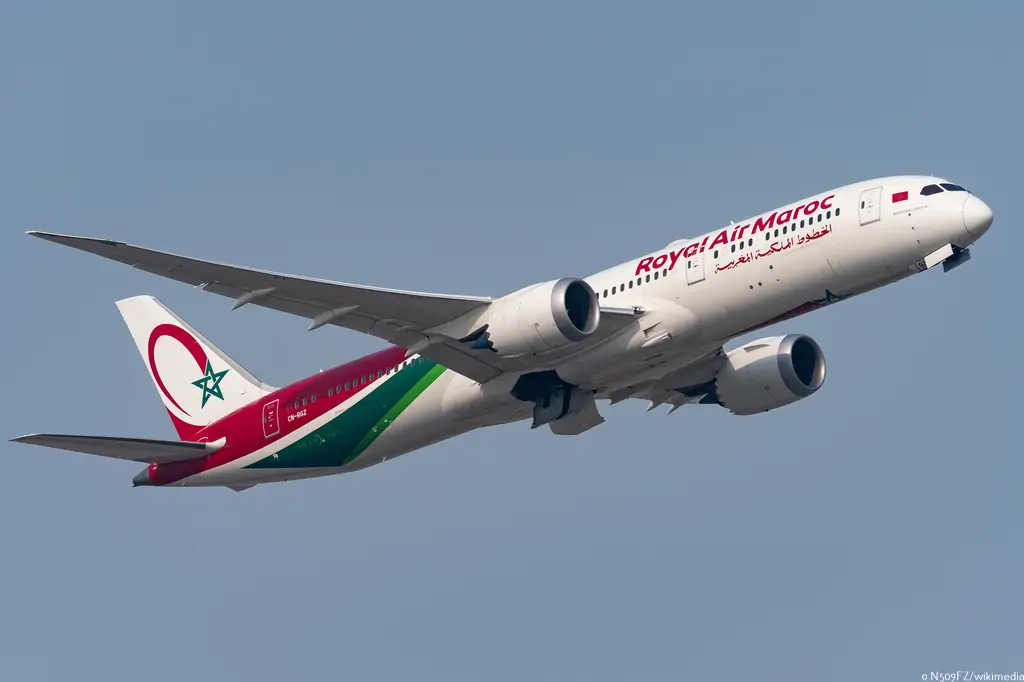
In a significant development for the aviation industry, Air Lease Corporation (ALC) recently announced a strategic long-term lease agreement with Royal Air Maroc (RAM) on August 16, 2023.
This collaborative arrangement involves the leasing of five Boeing 737 aircraft, including four state-of-the-art Boeing 737-8s and one Boeing 737-800. The scheduled delivery of these brand-new aircraft to the Moroccan national carrier is set for 2024, as confirmed by ALC's existing order book in collaboration with Boeing.
A Leap Forward in Collaboration
Strengthening Fleet with Cutting-edge Aircraft
Royal Air Maroc's decision to partner with Air Lease Corporation underscores its commitment to enhancing its fleet with technologically advanced aircraft. The inclusion of four Boeing 737-8s, known for their fuel efficiency and innovative features, showcases RAM's dedication to providing an exceptional travel experience for its passengers. Moreover, the addition of a Boeing 737-800 further diversifies the airline's fleet and enables greater operational flexibility.
Addressing Growing Passenger Demand
As the aviation industry rebounds from the challenges posed by the global pandemic, airlines like Royal Air Maroc are strategically positioning themselves to cater to the increased demand for air travel. The Boeing 737 series is renowned for its reliability, fuel efficiency, and passenger comfort – qualities that align perfectly with the evolving needs of modern travelers. This partnership allows RAM to efficiently scale its operations while maintaining a high standard of service.
ALC's Proven Expertise in Aircraft Leasing
A Leading Aircraft Leasing Company
Air Lease Corporation, a prominent player in the aircraft leasing sector, brings a wealth of experience to this collaboration. With a track record of successfully partnering with airlines worldwide, ALC has established itself as a trusted source of cutting-edge aircraft solutions. By leveraging their industry expertise, RAM is well-positioned to access the latest advancements in aviation technology without the burden of aircraft ownership.
Customized Solutions for RAM
One of the key advantages of partnering with ALC is the ability to tailor aircraft leases to meet specific operational requirements. The lease arrangement with Royal Air Maroc is a testament to ALC's ability to offer flexible solutions that align with the airline's business goals. This tailored approach ensures that RAM can efficiently integrate the new aircraft into its existing fleet and route network.
Bolstering RAM's Competitive Edge

Enhancing Passenger Experience
The Boeing 737 aircraft are renowned for their passenger-centric design, featuring spacious cabins, advanced entertainment systems, and modern amenities. By introducing these aircraft into its fleet, Royal Air Maroc aims to elevate the travel experience for its passengers, making air travel not only a means of transportation but also an enjoyable part of the journey.
Fuel Efficiency and Sustainability
In an era of increased environmental consciousness, airlines are under pressure to reduce their carbon footprint. The Boeing 737-8's fuel efficiency and reduced emissions align with RAM's commitment to sustainability. By embracing these modern aircraft, the airline takes a step forward in its efforts to contribute to a more sustainable aviation industry.
Comments
"ALC is pleased to announce this lease placement for five Boeing 737 aircraft with Royal Air Maroc," stated Air Lease Corporation Executive Chairman Steven F. Udvar-Házy. "We look forward to continuing to build our long-term relationship with RAM as they continue to modernize their fleet and expand their network, as well as maximize their competitive advantage with the most fuel-efficient aircraft on the market."
"Through this agreement with esteemed partners such as ALC, Royal Air Maroc will receive additional aircraft that will strengthen and modernize our operational fleet, allowing us to consistently improve the quality of service for our customers while also reducing our carbon footprint in line with our environmental commitment," said Abdelhamid Addou, CEO of Royal Air Maroc.
Conclusion
The partnership between Air Lease Corporation and Royal Air Maroc signifies a significant leap forward in the airline's journey to enhance its fleet and provide an elevated travel experience. With a focus on cutting-edge technology, operational efficiency, and passenger comfort, RAM is poised to meet the demands of a dynamic aviation landscape. As the industry continues to evolve, collaborations like these showcase the remarkable possibilities that arise when expertise and innovation converge.
With Inputs from Air Lease Corporation
Read next
From Classic to Cutting-Edge: Boeing's MD-90 Journey to Shape the Future of Sustainable Flight
Abhishek Nayar
18 Aug 2023
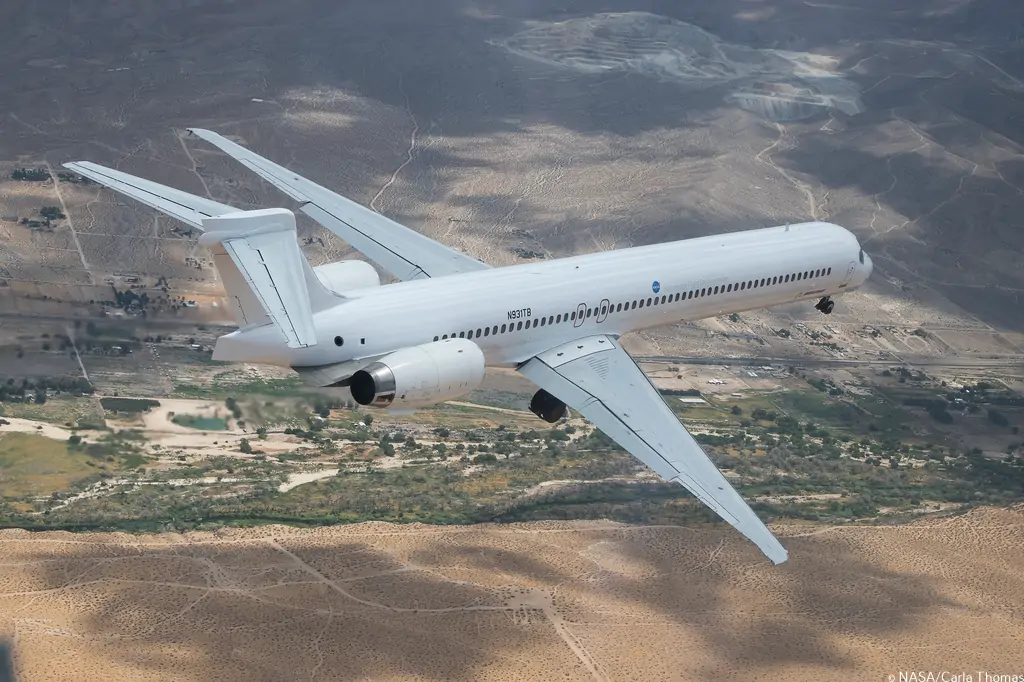
In a remarkable stride towards sustainable aviation, Boeing has embarked on an extraordinary project that involves modifying a McDonnell Douglas MD-90 aircraft for groundbreaking tests of the Transonic Truss-Braced Wing (TTBW) configuration.
Unveiling the Project

Boeing's recent move to ferry a McDonnell Douglas MD-90 from Victorville, California, to Palmdale, California, has sent ripples of excitement throughout the aviation world. The focal point of this operation is the aircraft's imminent transformation into a testbed for the Transonic Truss-Braced Wing configuration. This innovative wing design promises enhanced aerodynamic efficiency and reduced environmental impact, aligning perfectly with the industry's ongoing sustainability efforts.
Boeing introduced the TTBW concept in 2019, but development on it has been going on for more than a decade as part of the Subsonic Ultra Green Aircraft Research (SUGAR) Program.
The TTBW's ultrathin wings, which are supported by struts, offer a larger wingspan and higher aspect ratio, which Boeing and NASA hope will culminate in the X-66A aircraft consuming up to 30% less fuel than existing narrowbody aircraft like the 737 MAX or the Airbus A320neo. In wind tunnel testing, the wings alone reduced fuel consumption by 9-10%, underscoring the potential contribution the aircraft may make to the future of commercial flying.
The Role of NASA
Collaboration forms the cornerstone of this endeavor, as Boeing joins forces with the National Aeronautics and Space Administration (NASA). Together, they aim to propel the aviation sector into a greener future. The partnership underscores NASA's commitment to fostering advancements in aeronautics technology and Boeing's dedication to pushing the boundaries of aviation innovation.
A Glimpse into the Future
The anticipated modifications to the aircraft are set to kick-start shortly, with both ground and flight testing projected to commence in 2028. This ambitious timeline reflects the urgency and determination with which Boeing and NASA are approaching this project. The modified aircraft will serve as a critical stepping stone in the journey towards revolutionizing aircraft design for improved fuel efficiency and reduced carbon emissions.
A Piece of NASA's Larger Puzzle
The Transonic Truss-Braced Wing project takes its place within NASA's broader Sustainable Flight Demonstrator initiative. This initiative aspires to showcase cutting-edge technologies that redefine the way aircraft are built and operated. By embracing innovation and sustainability, NASA is working towards establishing a new norm for aviation, setting the stage for a future where air travel and environmental responsibility go hand in hand.
The X-66A Aircraft: Paving the Way
Boeing's vision extends beyond the TTBW project. The modified MD-90 will also play a pivotal role in the development of the experimental X-66A aircraft. This aircraft holds the promise of contributing significantly to the United States' ambitious goal of achieving net-zero greenhouse gas emissions in aviation by 2050. With its hybrid-electric propulsion and advanced aerodynamics, the X-66A represents a bold leap towards a cleaner and more sustainable aviation industry.
Comments
Todd Citron, the manufacturer's Chief Technology Officer, praised the achievement, stating, "This marks an important step in the Sustainable Flight Demonstrator project, advances Boeing's commitment to sustainability, and brings us closer to testing and validating the TTBW design."
Meanwhile, Ed Waggoner, Deputy Associate Administrator for Programs in NASA's Aeronautics Research Mission Directorate, stated, "We at NASA are excited to be working with Boeing on the X-66A Sustainable Flight Demonstrator, making critical contributions to accelerate aviation towards its 2050 net-zero greenhouse gas emission goal."

Conclusion
Boeing's decision to convert a McDonnell Douglas MD-90 into a test platform for the Transonic Truss-Braced Wing configuration showcases its dedication to redefining aviation's future. The collaboration with NASA amplifies the project's significance, as does its alignment with NASA's Sustainable Flight Demonstrator initiative. As modifications begin and testing approaches, the aviation world eagerly anticipates the strides this partnership will make in shaping a greener, more sustainable future for air travel.
With Inputs from NASA
Read next

The country's first Common Testing Centre for Unmanned Aerial Systems (drones) would be established in Tamil Nadu at an outlay of INR 45 crore, the state government said on Wednesday, August 16. Tamil Nadu Industrial Development Corporation (TIDCO) is the nodal agency for the implementation of the TN Defence Industrial Corridor, and one of the strategies of the corridor is to provide an ecosystem for the aerospace and defence industry.
Under the Defence Testing Infrastructure Scheme (DTIS), the facility will come up over 2.3 acres at the SIPCOT industrial park in Vallam Vadagal near Sriperumbudur. As per a statement, the test centre would enable Tamil Nadu to be a significant contributor to the country’s self-reliance in the aerospace and defence sector.
The non-availability of a Common Testing Centre is an 'entry barrier' for organisations engaged in the aerospace and defence industry, and TIDCO has planned to set up such test centres under the Centre's Defence Testing Infrastructure Scheme in Tamil Nadu. For setting up such a Common Testing Centre, TIDCO has floated a Request for Proposal (RFP) for identifying industrial partners.
"A consortium of companies consisting of Keltron, Sense Image Technologies, Standards Testing, and Compliance, and Avishka Retailers had been chosen based on the response to the transparent bid process to partner with TIDCO for establishing the facility at an estimated cost of INR 45 crore," an official release said.
The proposed facility would come up at the State Industries Promotion Corporation of Tamil Nadu (SIPCOT) Industrial Park, Vallam Vadagal, near Sriperumbudur. Minister for Industries TRB Rajaa said, "Setting up India's first Unmanned Aerial Systems (Drone) Common Testing Centre here in Tamil Nadu showcases Chief Minister MK Stalin's commitment towards building a thriving defence and aerospace manufacturing ecosystem."
The test centre would enable the state to be a significant contributor to the self-reliance of the country in the aerospace and defence sector, it said. "We are attracting investors in this sector by addressing the needs of the industry innovatively. This testing centre will enable Tamil Nadu to become a preferred destination for aerospace and defence companies to set up their Indian operations," he added.
It noted that the absence of test centres supporting the aerospace and defence standards outside defence public sector undertakings or Defence Research and Development Organisation (DRDO) is an entry barrier for many organisations. TIDCO planned to lower this barrier by establishing test centres for multiple sub-domains, including unmanned aerial systems (UAS), it added. A consortium of companies, such as Keltron, Sense Image Technologies, Standards Testing and Compliance and Avishka Retailers, had been chosen based on their response to the transparent bid process to partner with TIDCO for establishing the facility, the statement said.
TIDCO had planned to lower this barrier by establishing test centres for multiple sub-domains, which include Unmanned Aerial Systems (UAS). The testing for UAS (Drone) is currently done component-wise at different test centres which reduces the efficiencies of the organisations and also increases the cost. Such an integrated facility is available only with DRDO at Chitradurga, Karnataka, for its use. “The testing for UAS (drone) is currently done component-wise at different test centres which reduces the efficiencies of the organisations and also increases the cost. Such an integrated facility is available only with DRDO at Chitradurga, Karnataka, for its use,” it added.
Industries Minister T R B Rajaa noted that setting up the drone common testing centre showcases Chief Minister M K Stalin’s commitment towards building a thriving defence and aerospace manufacturing ecosystem in the state. Currently, the non-availability of defence test centres outside of the defence PSUs or DRDOs is often an entry barrier for innovators in the critical sector. The testing for UAS (drones) is currently done component-wise at different test centres which reduces the efficiencies of the organisations and increases the cost.
Read next
Tata Group Asks Air India’s Boeing 787 Pilots to Fly Vistara’s B787 Aircraft Ahead of Merger

Radhika Bansal
17 Aug 2023
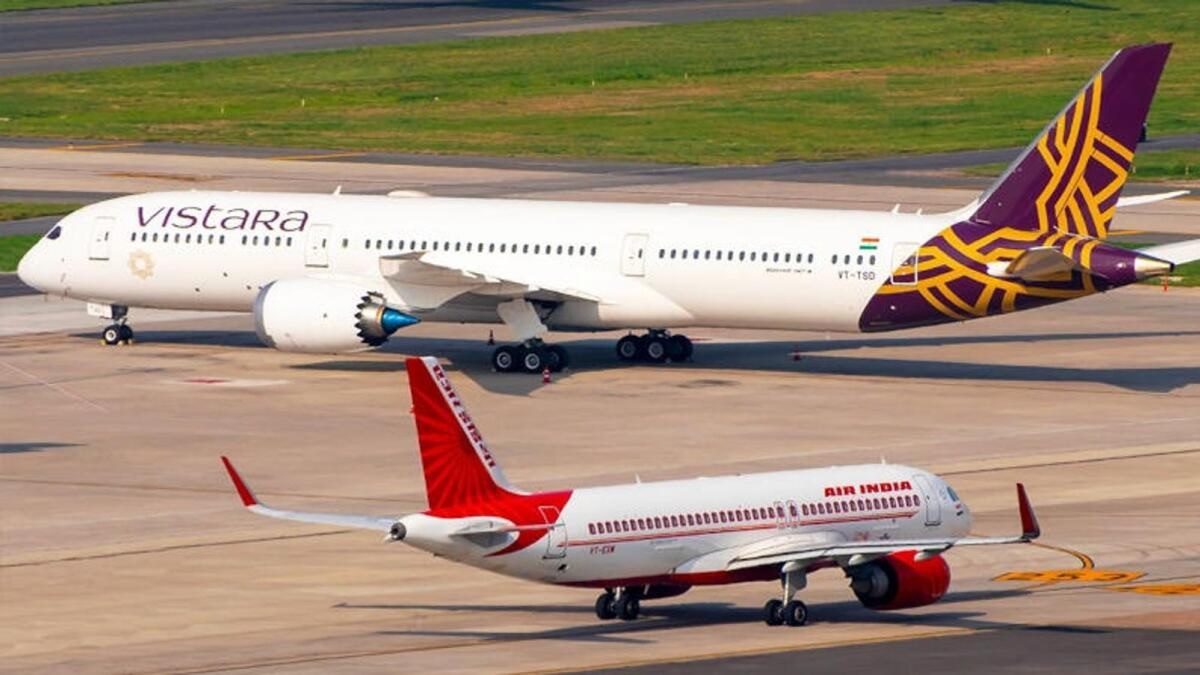
Ahead of the Air India and Vistara merger later this year, Tata group has requested several of Air India’s Boeing 787 pilots to fly Vistara’s B787 aircraft, according to a report by The Economic Times. This move is the first step in integrating the airline businesses within the group and aims to create a shared pool of resources for increased synergy.
The pilots will only transfer once the merger receives approval from the Competition Commission of India (CCI). Currently, Air India and Vistara are the only Indian carriers operating Boeing Dreamliner. Air India has sent a consent form to its Dreamliner pilots to gauge their interest in being deployed to Vistara as line captains on their current salaries, the report mentioned. The captains have been informed that they will be flying Vistara’s Boeing 787 planes and will be based in Mumbai. The deadline for completing the consent form was August 15.
“A majority of Vistara’s Dreamliner pilots are based in Delhi, and they require additional pilots at their Mumbai base. Air India has some highly experienced Dreamliner captains based in Mumbai who are nearing retirement. Given the scarcity of captains in the market, it is a good short-term solution,” said an individual familiar with the matter. Some pilots have already agreed to the transfer.
Air India & Vistara’s Dreamliner Fleet
Currently, Vistara operates a fleet of 60 planes, including 4 Dreamliner 787-9 aircraft, with one on lease and 3 owned by the airline. By March 2024, an additional three aircraft will be added to their fleet, increasing the total to 70 planes.
Air India pilots operate the 787-8s. Pilots consenting to be deputed to Vistara will undergo ground training and conversion simulator training for the 787-9 aircraft. They will also need to obtain a 787-9 endorsement from the DGCA for their licenses.
The 787-9 has a longer fuselage, and Air India pilots who agree to go on deputation will also have to take brief ground classes and conversion simulator training for the 787-9 type. They will also require a 787-9 endorsement from India’s aviation regulator, the Directorate General of Civil Aviation (DGCA).
Air India CEO Meets India's Antitrust Head
Air India Chief Executive Campbell Wilson has held talks with India's antitrust head on its pending merger with sister airline Vistara, weeks after the watchdog raised concerns about market power, people familiar with the matter said. The Competition Commission of India has been scrutinising the planned merger of Air India, which Tata Group took over last year, with Vistara, a joint venture between Tata and Singapore Airlines. The merged airline would challenge local rival and market leader, IndiGo.
Sharing new details of CCI's concerns, the first source said the watchdog's confidential notice to the airline has raised worries about the combined entity's market power on many international and domestic routes. The CCI also said its initial review showed the market share of the Tata Group could be more than 50% in at least seven domestic markets, raising competition concerns, the person added.
Following a request by the company, CEO Wilson and the General Counsel of Tata Group, Sidharth Sharma, in recent days met India's antitrust chief, Ravneet Kaur, to discuss the ongoing merger process, said two of the four sources. Such meetings are typically held to find a way forward and assuage the CCI's concerns, sources said, declining to elaborate further or be named as the talks are confidential.
It was reported in June that the CCI has been concerned that some Air India-Vistara merged routes and categories - such as business class travel - could have a monopoly. The "CCI has asked how Tata plans to think about pricing strategies ... The (market) power they will have, how will all this affect pricing," said the first person.
The CCI's scrutiny comes amid growing concerns within the industry about a duopoly, with a merged Air India-Vistara and IndiGo controlling more than 75% of the domestic market as smaller rivals such as SpiceJet and Go First struggle. For the first half of 2023, IndiGo's market share stood at 58%, while the Tata Group airlines, including AirAsia India, accounted for 25%.
(With Inputs from The Economic Times)
Comment