
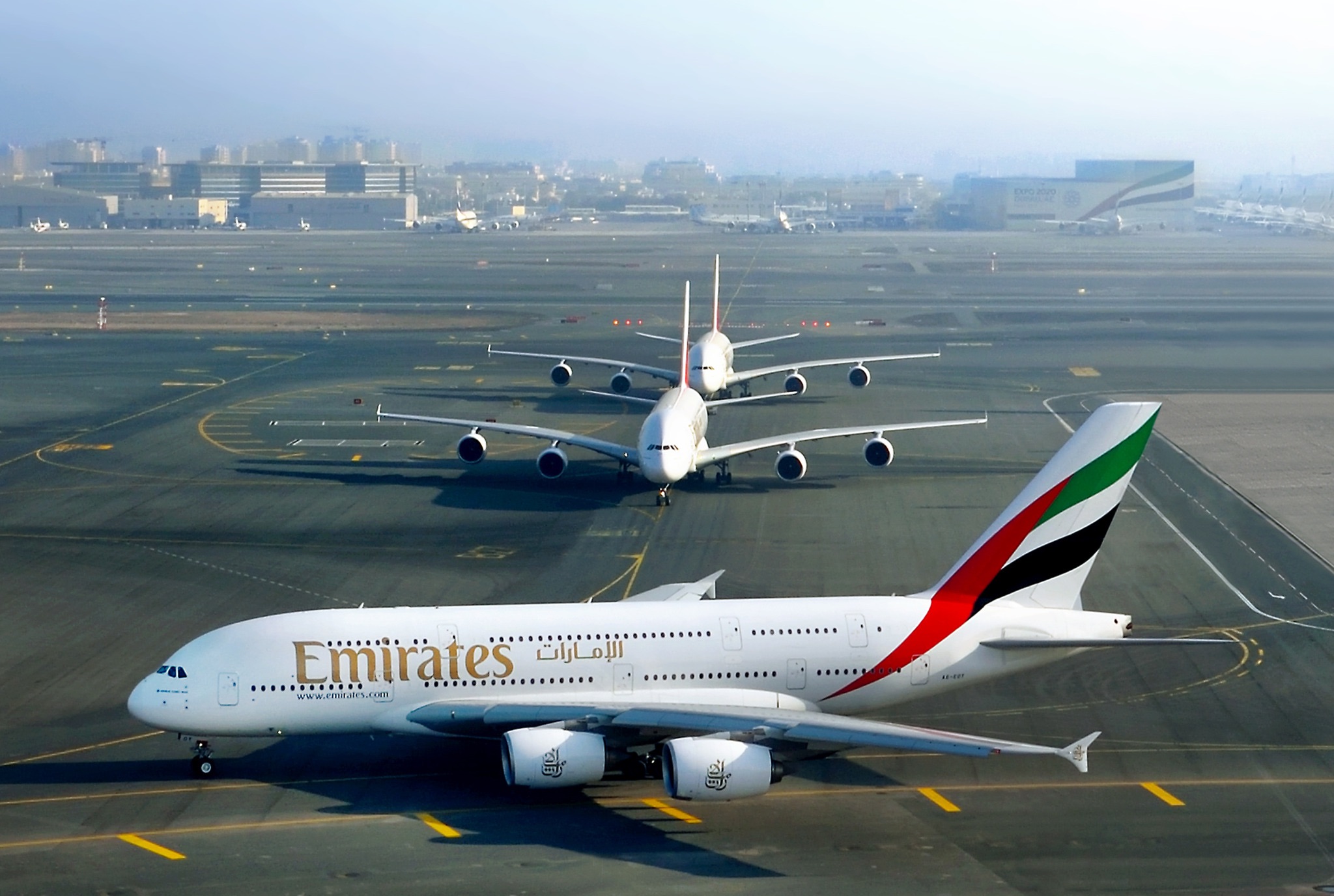
Ever wondered why you've never seen an Emirates Boeing 737 or Airbus A320 taxiing around an airport? Have you noticed that Emirates seems to have an allergic reaction to anything smaller than a Boeing 777, treating narrowbody aircraft like they're the aviation equivalent of economy cars at a luxury dealership?
What drives the world's most recognisable airline to maintain such an exclusive relationship with only the largest commercial aircraft available? This comprehensive analysis explores Emirates' strategic decision to operate the world's largest all-widebody fleet, examining how geographic positioning, operational philosophy, and a peculiar obsession with aircraft size have created an aviation empire that refuses to think small.
From their record-breaking fleet of Airbus A380s and Boeing 777s to their strategic partnership with flydubai that handles the "smaller" aircraft duties, we'll uncover why Emirates has turned aviation exclusivity into both an art form and a highly profitable business model.
History
Emirates' commitment to large aircraft didn't happen overnight – it evolved from a combination of geographic necessity and corporate ambition!
Emirates currently has 116 Airbus A380s and 141 Boeing 777s, including 22 777-200LRs and 119 777-300ERs, making it the largest operator of both types. They have recently received Airbus A350 and now operate 8 of them. This represents more than just impressive numbers; it's a deliberate strategy that began when Emirates recognised that Dubai's position as a global crossroads demanded aircraft capable of connecting distant continents without intermediate stops.
The airline's founders essentially looked at the aviation world and declared, "If we're going to fly, we're going to fly big or go home."
This philosophy has remained unchanged for decades, even as other airlines have embraced more flexible fleet strategies. The commitment is so absolute that Emirates treats narrowbody aircraft like some airlines treat first-class service – theoretically possible but practically unthinkable.

Fleet Composition
Emirates' fleet of 266 wide-body aircraft comprises the largest fleet of Airbus A380 Superjumbos and the world's largest fleets of Boeing 777-300ERs and Boeing 777-200LRs. This also includes 8 A350s. The second-largest wide-body fleet is operated by United Airlines, with approximately 226 wide-body aircraft in its inventory. This comparison reveals the sheer scale of Emirates' commitment to large aircraft, surpassing even United Airlines, which operates a mixed fleet including smaller widebodies.
The Boeing 777-300ER is the best-selling 777 variant, and Emirates is the world's largest operator with 123 examples in service. Qatar Airways has the second-largest fleet with 57 Boeing 777-300ERs in service.
What makes this even more remarkable is that Emirates shows no signs of downsizing. As of late 2023, Emirates has orders for 205 Boeing 777X family aircraft (including 777-8 and 777-9s), 35 Boeing 787 Dreamliner aircraft (20 x 787-8 and 15 x 787-10) and 65 Airbus A350-900 aircraft. These orders suggest that Emirates' love affair with large aircraft will continue well into the future, with the Boeing 777X representing the next generation of giant passenger jets.
Why Emirates Needs flydubai
Here's where Emirates' strategy becomes particularly clever – and slightly devious. Rather than operating narrowbody aircraft themselves, Emirates has essentially outsourced this responsibility to flydubai. Famously, Emirates is the world's largest airline to not operate narrowbody aircraft, although that is also partly thanks to the niche being filled by Dubai's other airline, flydubai.
When combined, Emirates and flydubai had 337 aircraft last year. Key to the partnership is, of course, each carrier's different equipment and what can be done with it. flydubai is a narrowbody-only operator. It has B737-800s and MAX aircraft, the latter with lie-flat seats, and has a significant number of aircraft on order. In contrast, Emirates only uses widebodies, and the smallest, for now, are 302-seat B777-200LRs.
This arrangement allows Emirates to maintain its widebody-only image while flydubai handles the regional routes that would require smaller aircraft. It's like having a luxury hotel that refuses to acknowledge budget accommodations exist, while quietly operating a chain of boutique inns under a different name. Emirates and flydubai set the gold standard in airline partnerships, hitting a milestone 5 million travellers flying on their joint networks.

Hub-and-Spoke Mastery
Emirates' all-widebody strategy works because Dubai International Airport functions as the world's most successful aviation living room – everyone passes through, stays briefly, then continues to their final destination.
This hub-and-spoke model, centred strategically between Europe, Asia, Africa, and Australia, creates natural demand for large-capacity aircraft on long-haul routes.
The airline's geographic positioning allows it to justify deploying 400+ seat A380s and high-capacity 777s on routes where other airlines might struggle to fill such large aircraft.
By complementing Emirates' long-haul network, FlyDubai ensures connectivity for passengers travelling to and from Dubai, enhancing its overall accessibility and supporting its status as a central global hub. This partnership ensures that passengers can connect seamlessly between flydubai's regional network and Emirates' international routes without Emirates having to compromise their widebody-only philosophy.
Economics
The economics behind Emirates' strategy reveal a sophisticated understanding of aviation profit margins. Large widebody aircraft, while expensive to purchase and maintain, offer superior economics on high-density routes when operated at high utilisation rates. Emirates has mastered the art of filling these massive aircraft consistently, turning what other airlines might see as excessive capacity into a competitive advantage.
The airline's focus on premium services, including their famous first-class suites and extensive business-class offerings, generates higher per-passenger revenue that helps justify the operational costs of large aircraft. It's essentially the aviation equivalent of selling premium real estate – fewer units, but each one commands significantly higher prices.

Operational Challenges
Operating an all-widebody fleet isn't without challenges, though Emirates has turned these complications into competitive advantages. Airport slot restrictions, gate availability, and maintenance requirements for large aircraft create operational complexities that smaller airlines might find overwhelming. Emirates has invested heavily in infrastructure and partnerships to manage these challenges, essentially building an ecosystem around its large aircraft operations.
The airline's commitment to large aircraft also creates interesting scheduling challenges. Unlike airlines with mixed fleets that can adjust capacity based on seasonal demand, Emirates must consistently fill large aircraft or face significant operational losses. This constraint has forced the airline to become exceptionally skilled at revenue management and route planning.
Bottom Line
Emirates' refusal to operate narrowbody aircraft represents one of commercial aviation's most successful examples of strategic focus taken to an almost absurd extreme. By committing exclusively to widebody aircraft, the airline has created a unique market position that competitors find difficult to replicate, while their partnership with flydubai provides the operational flexibility that narrowbody aircraft might otherwise offer.
This strategy has transformed what could have been a limiting constraint into a defining competitive advantage, proving that in aviation, as in many industries, sometimes the most counterintuitive decisions produce the most spectacular results. Whether viewed as brilliant strategic focus or elaborate corporate stubbornness, Emirates' all-widebody approach has undeniably worked, creating the world's most recognisable airline brand while demonstrating that success in aviation doesn't always require following conventional wisdom.

Read next

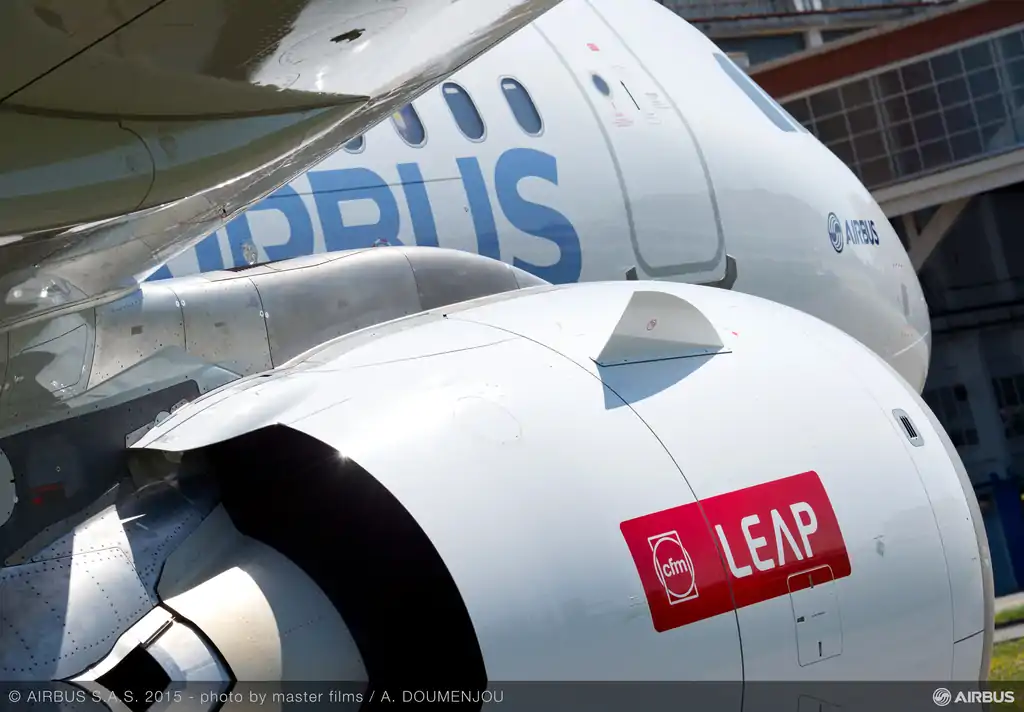
Airbus and Boeing have been trading punches for decades. But this summer the long running rivalry reached a new cliffhanger: according to industry data the Airbus A320 family is literally breathing down the neck of the Boeing 737 for the title of the most delivered commercial airliner in history. As of early August, Airbus had closed the delivery gap to just a few dozen aircraft, putting the A320 family on the verge of overtaking the 737.
How a Latecomer Became a Challenger
When Airbus announced in 1981 that it would build a single aisle jet to go after Boeing, few expected it to become the global blockbuster it is today. The very first A320 was delivered to Air France in 1988 and began commercial service that year. That arrival launched a decades long chase that only recently turned into a photo finish.
Why the race matters
Single aisle jets sit at the heart of global aviation. They connect city pairs, fill up the majority of airline schedules, and by being economical to fly they set the economics of short and medium haul travel. So which family holds the record is not just trivia it is a signal about manufacturing muscle supply chain resilience and where airline demand has landed.
Airbus’s daring bets and Boeing’s conservative tweaks

Airbus distinguished its A320 early by taking technological risks. It embraced digital fly by wire flight controls and put a side stick rather than a central yoke in front of pilots. Those moves changed cockpit ergonomics and allowed Airbus to offer a fresh baseline for future upgrades.

Boeing by contrast kept refining the 737’s original low to the ground layout and focused on iterative engine and systems improvements rather than a full clean sheet replacement. That strategy delivered speed to market but eventually created constraints when much larger new engines were required. The tradeoff between evolutionary change and revolutionary redesign has shaped both companies’ choices for decades.
When upgrades went wrong
Both families scored huge commercial wins with reengined versions. Airbus turned the original A320 into the A320neo family and booked massive airline appetite for better fuel burn. But the A320neo program has not been without trouble. Engines from Pratt and Whitney that power many A320neo jets required extensive inspections and maintenance after production problems and microscopic material contaminants were discovered in some parts. Those issues forced fleet checks and created bottlenecks for airlines and repair shops.
Boeing’s attempt to squeeze bigger engines onto the older 737 frame produced the 737 Max. That solution came with a serious cost. Regulators and investigations found that the MCAS flight control feature was a contributing factor in two fatal crashes that led to a global grounding of Max jets and a long painful recovery for Boeing. The Max crisis reshaped public trust engineering oversight and the company’s finances.
The numbers and the moment
Industry trackers show how close the race has become. Cirium and major news outlets reported that by early August Airbus had recorded roughly 12 155 A320 family deliveries versus roughly 12 175 737 family deliveries a lead that could vanish within weeks given current production paces. That shift is decades in the making and a milestone for Airbus.
What is next for the narrow aisle market
With both programs approaching the limits of what their original airframes can yield engineers and airline customers are asking about true successors.
Airbus leaders have publicly discussed preparing a next generation single aisle jet for the mid 2030s and have considered technologies such as open rotor engines or even hydrogen power for the longer term. At the same time the company says the new jet will likely start as an evolutionary step focused on efficiency gains from new engines and aerodynamics rather than an immediate leap to radical airframe forms.
Boeing has said it is studying options internally but is cautious about launching a full replacement until engine and other technologies mature and its own balance sheet recovers from recent setbacks.
China’s COMAC is also in the field with the C919 program attempting to win domestic and eventually international customers. So the duopoly could become a trio over time but regulatory certification and global airline acceptance remain hurdles for any new entrant.

Why this story is not just about bragging rights
A change in the most delivered title is symbolic but it also illuminates deeper trends.
- Production scale matters more than ever Airlines want high cadence and on time delivery to sustain growth.
- Supply chain quality is now a competitive edge engine makers and parts suppliers can make or break airline schedules.
- Safety culture and regulatory trust are central to market standing Boeing’s Max saga shows how reputational damage cascades into finance and strategy.
- Technology choices shape future flexibility Airbus’s early embrace of digital controls and its openness to new engine concepts helped it scale quickly.
Final thought
If the A320 family does overtake the 737 on the delivery ledger it will be both a validation of Airbus’s long term program building and a reminder that in aviation small technical choices made decades ago ripple into multibillion dollar outcomes. The crown may change heads but the real winner for passengers and airlines will be whichever maker can keep aircraft safe reliable and affordable while moving toward lower emissions.
TL; DR
- Airbus A320 family is on the verge of surpassing Boeing 737 in lifetime deliveries with the gap down to a few dozen aircraft as of early August 2025
- The first A320 entered service in 1988 and Airbus used innovations such as fly by wire and a side stick to differentiate the jet.
- Boeing’s iterative approach culminated in the 737 Max which suffered two fatal crashes tied in part to MCAS and caused a global grounding and reputational damage.
- Airbus faced engine supply pain for the A320neo as Pratt and Whitney GTF engines required inspections and repairs after material issues were found.
- Both planemakers are now eyeing next generation single aisle designs for the 2030s with Airbus publicly preparing a successor and exploring open rotor and hydrogen concepts while Boeing watches for engine and supply chain readiness.
With Inputs from Economic Times
Read next
Who Watches the Digital Cockpit: The Fight for Cybersecure Skies in India

Jaideep Mirchandani
18 Aug 2025

Sky One chairman Jaideep Mirchandani argues that data protection, privacy and cybersecurity are the pillars of digital independence for Indian aviation
The airplane you board is no longer only metal and fuel. It is a moving network of sensors, software and data. As India expands airports, adds planes and welcomes more flyers, the industry is racing not just to connect cities but to protect the systems that make those connections possible. On Independence Day Jaideep Mirchandani reminded the nation what is at stake. Data protection, privacy and cybersecurity are the pillars of digital independence, he said. If those pillars fail, freedom to fly will not be far behind.
Why this moment is critical
Air travel is growing fast in India. Every part of the aviation chain from ticket booking to maintenance schedules is digitized. That efficiency brings scale and convenience. It also concentrates risk.
- Since June 2025 three major airlines reported cyber incidents where attackers targeted passenger and operational data and the incidents were assessed as data theft.
- Global signals matter too. Between January 2024 and April 2025 Thales Group recorded 27 major ransomware attacks by 22 groups and found that 71 per cent involved stolen credentials or unauthorized access to critical systems.
Those numbers are not abstract. They translate into flight disruption, loss of passenger trust, regulatory scrutiny and potential safety hazards if critical systems are compromised.
What attackers are trying to do
Attackers aim for value and leverage. In aviation that means data that can be sold or weaponized and systems that, if disrupted, cause high impact.
Typical attacker goals include:
- Stealing passenger personal data and credentials.
- Gaining unauthorized access to operational systems.
- Holding systems for ransom or leaking sensitive files.
- Using social engineering to loop employees into breaches.
Mirchandani highlights the logic: aviation is a complex web of interconnected digital technologies. That complexity equals attack surface.
What industry leaders are recommending
Experts and industry leaders are aligned on one practical truth: defense must be proactive, layered and constantly updated.
Key recommendations Mirchandani and others emphasize include:
- Build an updated digital security framework with real time threat monitoring and strict access controls.
- Prioritize human awareness through frequent training on scams and social engineering.
- Maintain secure offline backups so operations can be restored quickly if systems are hit.
- Adopt credential hygiene and least privilege access to reduce the success of stolen credentials.
- Invest in indigenous solutions that reduce dependency on external suppliers for critical functions.
India first solutions and national resilience
Mirchandani points to home grown capabilities as part of digital independence. He mentions solutions already in the ecosystem such as Vastav AI a deepfake detection platform with 99 per cent accuracy, Maya OS a secure Indian operating system and defense platforms like Akashteer that focus on airspace protection. He also cites initiatives like Bharat NCX and rising investments in research and development as momentum that can be channeled into national resilience.
Indigenous tools matter for two reasons. First, they can be tailored to local operational realities. Second, they reduce supply chain exposure to foreign vulnerabilities and geopolitical pressure.
A practical roadmap for airports airlines and vendors
Companies and regulators must move from checklist thinking to continuous readiness. A simple actionable roadmap:
- Assess critical systems and map interdependencies so the true impact of an attack is visible.
- Detect deploy monitoring that can spot anomalies in real time.
- Protect enforce least privilege credentials multi factor authentication and secure offline backups.
- Respond create tested playbooks with clear incident roles and communication protocols.
- Recover verify backups and recovery paths and run recovery drills regularly.
- Train run frequent staff awareness exercises and phishing simulations.
- Collaborate share threat intelligence across airlines airports vendors and regulators.
- Invest fund R&D and support indigenous cyber security startups and home grown platforms.
The human factor cannot be ignored
Technology alone will not secure the skies. Mirchandani reminds us that human error remains a key vulnerability. Regular training on spotting scams and clear accountability for access management can reduce breaches dramatically. Invest in people as much as in platforms.
Closing note
Independence Day is a reminder that freedom has many dimensions. For modern aviation digital freedom is as vital as physical control of runways and radars. If India wants to claim a Viksit Bharat that thrives on global connectivity it must guard that connectivity with robust data protection privacy and cyber security.
TL; DR
- Aviation is highly digitized which increases cyber risk.
- Since June 2025 three major airlines reported data theft related incidents.
- Between January 2024 and April 2025 Thales Group logged 27 major ransomware attacks with 71 per cent involving stolen credentials.
- Industry experts call for proactive multi layered defense real time monitoring strict access controls and regular staff training.
- Indigenous solutions such as Vastav AI Maya OS and Akashteer are cited as building blocks of digital independence.
- Practical steps for organizations include assess detect protect respond recover train collaborate and invest.
- Human awareness and secure offline backups are critical to resilience.
Read next
Project Sunrise: Qantas’s Revolutionary Ultra-Long-Haul Vision with A350-1000
Sakshi Jain
17 Aug 2025
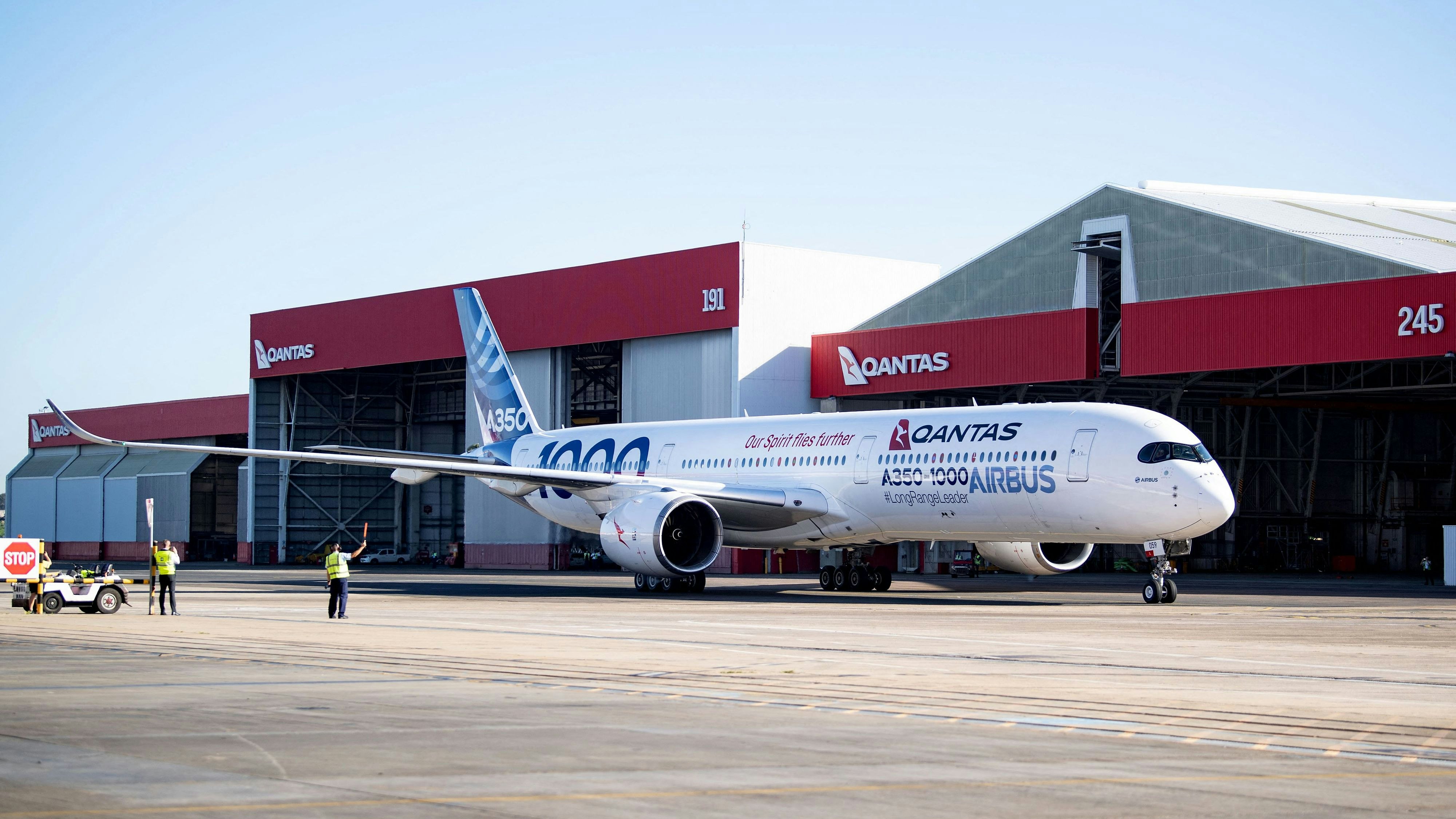
Australia’s national carrier Qantas is on the brink of making aviation history with Project Sunrise, an ambitious initiative designed to connect Australia directly to major global destinations through ultra-long-haul flights. This groundbreaking project promises to revolutionize international travel by eliminating stopovers and reducing journey times, while introducing innovative passenger comfort features for flights lasting up to 20 hours.
This article explores the evolution, challenges, and prospects of Project Sunrise, examining how Qantas plans to redefine the boundaries of commercial aviation.
History
Project Sunrise emerged in August 2017 as Qantas’s bold response to Australia’s geographical isolation.
The project’s core objective was deceptively simple yet technically complex: establish non-stop flights from Australia’s eastern seaboard cities—Sydney, Melbourne, and Brisbane—to major international destinations including London, Paris, Cape Town, Rio de Janeiro, and New York City.
The initiative’s name pays homage to the airline’s historic achievement in 1989, when Qantas operated the first commercial non-stop flight from London to Sydney aboard a Boeing 747-400. Project Sunrise aimed to recreate this pioneering spirit while pushing the boundaries of modern aviation technology!
The challenge was unprecedented. Qantas essentially threw down the gauntlet to aircraft manufacturers Boeing and Airbus, demanding they develop aircraft capable of covering distances exceeding 17,000 kilometers without refueling—a feat that would require significant advances in fuel efficiency, aircraft design, and passenger comfort systems.

Trial Flights
Before committing to aircraft orders, Qantas conducted a series of remarkable test flights to validate the feasibility of ultra-long-haul operations.
In October 2019, the airline operated flight QF7879, a 19-hour journey from New York to Sydney using a Boeing 787-9 Dreamliner. This was followed by another test flight from London to Sydney, pushing the aircraft and crew to their operational limits.
These flights served multiple purposes beyond mere distance validation. Qantas collected crucial data on passenger comfort, crew fatigue, fuel consumption, and aircraft performance. The insights gained from these trial runs proved invaluable in shaping the project’s final configuration and operational procedures.
Aircraft Selection
Following extensive evaluation, Qantas announced in December 2019 that the Airbus A350-1000 had been selected as the preferred aircraft for Project Sunrise. This decision came after both Boeing and Airbus submitted competing proposals, with Boeing’s 777-8X facing development delays that impacted its competitiveness.
The A350-1000 chosen for Project Sunrise features significant modifications, including an additional fuel tank and increased maximum takeoff weight (MTOW) to achieve the required range performance.
The aircraft’s cabin will accommodate 238 passengers across 4 classes: six first-class suites arranged three-abreast, 52 business-class suites in a four-abreast configuration, 40 premium economy seats with 40-inch pitch in an eight-abreast layout, and 140 economy seats with 33-inch pitch arranged nine-abreast.
Delays and Recovery
The COVID-19 pandemic significantly impacted Project Sunrise, forcing Qantas to place the initiative on hold for two years. However, in May 2022, the airline demonstrated its unwavering commitment by placing a formal order for 12 Airbus A350-1000 aircraft, with services initially planned to commence in late 2025.
Unfortunately, manufacturing delays attributed to regulator-required fuel tank redesigns pushed the timeline further. By February 2024, Qantas announced a six-month delay, shifting the launch to mid-2026. The certification of the third center fuel tank by June 2024 provided renewed confidence, with deliveries expected from the third quarter of 2026.
Passenger Experience
Project Sunrise isn’t just about covering distance—it’s about redefining the ultra-long-haul passenger experience. Qantas has unveiled plans for innovative features designed to combat the challenges of 20-hour flights. The “Wellness Zone” will provide passengers with dedicated space for stretching and movement, addressing concerns about deep vein thrombosis and general discomfort associated with extended flights.
Additionally, the airline promises “fast and free” Wi-Fi connectivity throughout the journey, ensuring passengers remain connected to the digital world during their marathon flights. These amenities reflect Qantas’s understanding that passenger comfort is paramount when asking travelers to spend nearly a full day aboard an aircraft.
Economic Impact
Beyond the technological achievement, Project Sunrise represents a significant economic opportunity for Qantas.
The airline projects that these ultra-long-haul flights will generate an additional A$400 million ($261 million) in annual earnings during the first full year of operation with all 12 aircraft in service.
The strategic importance extends beyond financial gains. Project Sunrise positions Australia as a more accessible destination for international travelers while providing Australians with unprecedented direct connectivity to major global cities. This enhanced connectivity could stimulate tourism, business travel, and cultural exchange.
Future Prospects
Project Sunrise stands to fundamentally alter the competitive landscape of international aviation. By eliminating the need for stopovers in traditional hub cities like Dubai, Singapore, or Hong Kong, Qantas could capture significant market share from competitors operating multi-stop services.
The project’s success could inspire other airlines to pursue similar ultra-long-haul routes, potentially leading to a new era of point-to-point connectivity that bypasses traditional hub-and-spoke models.
As Qantas prepares for its mid-2026 launch, the aviation industry watches with keen interest, knowing that Project Sunrise could set new standards for long-distance air travel and passenger experience innovation.
Read next
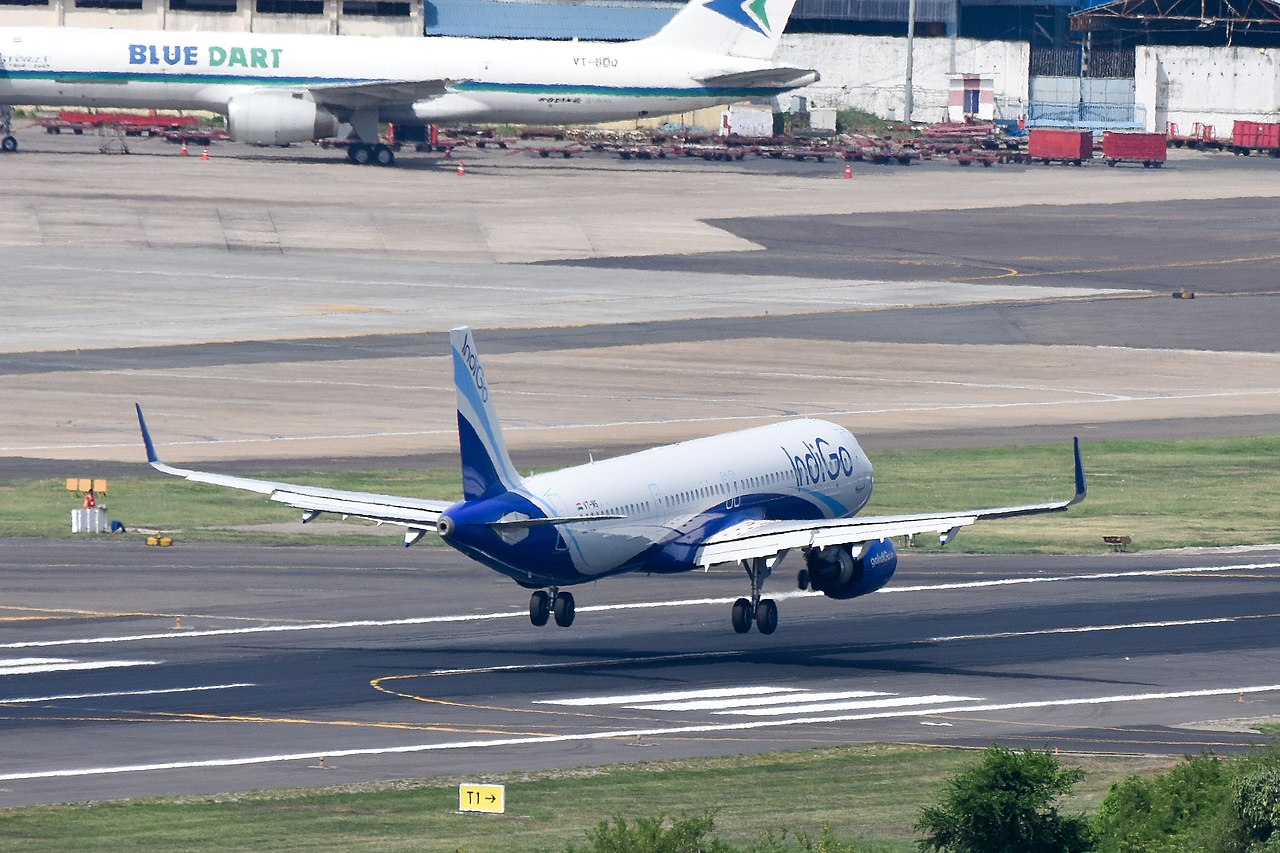
An IndiGo Airbus A321 aircraft experienced a tail strike incident at Mumbai's Chhatrapati Shivaji Maharaj International Airport (CSMIA) on Saturday, August 16, 2025, while executing a low-altitude go-around procedure amid severe weather conditions. The incident highlights the challenges faced by airlines operating during Mumbai's intense monsoon season.
Incident Details
The IndiGo Airbus A321, operating from Bangkok, experienced the tail strike while executing a low-altitude go-around due to unfavourable weather conditions at Mumbai airport. The aircraft's tail touched the runway during the very low-level go-around maneuver amid consistent heavy rainfall.
Despite the incident, the aircraft later made a safe landing on its second approach, with the aircraft circling back and making a safe landing in the second attempt. IndiGo confirmed that all passengers and crew members on board remained safe throughout the incident.
Weather Conditions
The tail strike occurred during a period of severe weather that significantly disrupted operations at Mumbai airport. Mumbai Airport reported minor disruptions in air travel due to low visibility and water logging in surrounding areas amid uninterrupted rainfall.
The challenging weather conditions extended beyond this single incident. Heavy rain in the Maharashtra capital led to disruption in ground and aerial traffic alike, with more than 350 flights delayed due to bad weather. The widespread impact demonstrates the severity of the weather system affecting the region during the incident.

Airline Response and Safety Measures
IndiGo confirmed in its statement: "On August 16, 2025, an Airbus A321 aircraft experienced a tail strike while executing a low-altitude go-around due to unfavourable weather in Mumbai". The airline emphasized that safety protocols were followed and that all passengers and crew remained unharmed.
Following standard procedures for tail strike incidents, the aircraft has been grounded for thorough inspection and assessment. IndiGo confirmed the tail strike and said the aircraft will undergo thorough inspections and repairs before being cleared for service. This precautionary measure ensures that any potential structural damage is identified and addressed before the aircraft returns to service.
Bottom Line
Tail strike incidents, while relatively uncommon, require immediate attention due to potential structural damage to the aircraft's pressure bulkhead and fuselage. The inspection process typically involves detailed examination of the tail section, pressure testing, and comprehensive structural assessment to ensure the aircraft's continued airworthiness.
Read next
Joby Takes Flight: Historic International Air Taxi Demonstration Marks New Era in Urban Mobility

Pragya Chauhan
16 Aug 2025
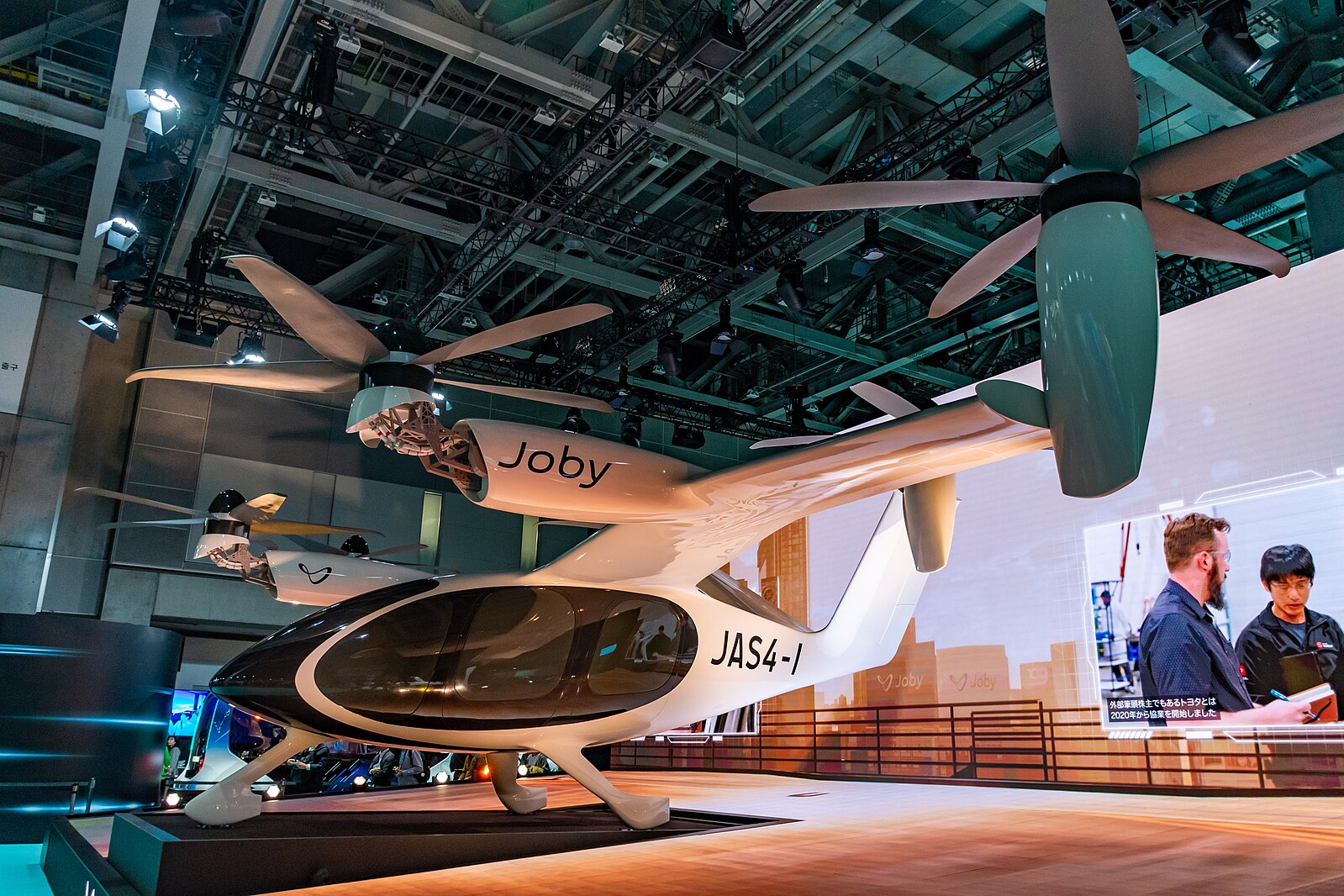
The future of urban transportation took a significant leap forward in November 2024 as Joby Aviation successfully completed its first international air taxi flight in Japan, partnering with automotive giant Toyota in a demonstration that showcased the commercial viability of electric vertical takeoff and landing (eVTOL) aircraft.
A Historic Flight Above Mount Fuji
Joby Aviation's first international exhibition flight took place at Toyota's Higashi-Fuji Technical Center in Shizuoka, Japan, against the dramatic backdrop of Mount Fuji. The gathering included executives from both companies, Akio Toyoda, chairman of the Toyota Group, and Joby CEO and founder JoeBen Bevirt, marking a pivotal moment in the partnership between the aviation startup and the automotive industry leader.
This demonstration flight represents more than just a technological showcase—it signals the maturation of air taxi technology and the growing confidence of major industrial partners in the commercial potential of urban air mobility.
The Toyota Partnership
The successful Japan flight builds upon a substantial financial commitment from Toyota, which recently made a $500 million investment in Joby Aviation. This partnership represents one of the most significant automotive-aviation collaborations in the emerging eVTOL sector, combining Toyota's manufacturing expertise and global reach with Joby's innovative air taxi technology.
Toyota's involvement goes beyond financial backing. The automotive giant brings decades of experience in mass production, quality control, and global logistics—capabilities that will be crucial as Joby scales from demonstration flights to commercial operations. The partnership also positions both companies to capitalize on Japan's growing interest in advanced air mobility solutions.
Expanding Operations
The Japan flight marks just one milestone in Joby's accelerating flight test program. The company has been steadily building its operational capabilities across multiple locations and partnerships. Joby has delivered its first eVTOL aircraft to Edwards Air Force Base to begin joint on-base operations with the US Air Force, approximately six months ahead of schedule.
This military partnership, part of Joby's $131 million contract with the U.S. Air Force, involves demonstrating a range of potential logistics use cases, including cargo and passenger transportation. The early delivery demonstrates Joby's ability to meet demanding timelines while maintaining the high standards required for military applications.

Technology and Design
Joby's air taxi represents sophisticated engineering designed specifically for urban air mobility. The aircraft is an all-electric, vertical takeoff and landing vehicle that promises to deliver fast, quiet, and convenient transportation services in cities worldwide. The company has focused on creating an aircraft that can seamlessly integrate into urban environments while meeting strict safety and noise requirements.
The vehicle's design prioritizes passenger comfort and operational efficiency, featuring multiple rotors for redundancy and safety, electric propulsion for environmental sustainability, and advanced flight control systems for autonomous or pilot-assisted operations.
Commercial Timeline
Joby Aviation expects to begin carrying its first air taxi passengers in late 2025 or early 2026, marking an ambitious timeline for commercial operations. This aggressive schedule reflects the company's confidence in both its technology and regulatory approval processes.
To support this timeline, the company reported receiving more than $1 billion of additional funding and commitments in the fourth quarter of 2024, providing substantial financial resources for scaling operations and meeting certification requirements.
Regulatory Progress
The path to commercial air taxi operations involves navigating complex regulatory requirements across multiple jurisdictions. The FAA has released an updated blueprint for airspace and procedure changes to accommodate this type of aircraft and proposed a comprehensive rule for training and certifying pilots, indicating steady progress toward regulatory framework completion.
The international nature of Joby's Japan flight also demonstrates the company's commitment to meeting diverse regulatory requirements across global markets, positioning it for international expansion once commercial operations begin.
Industry Impact
Joby's successful international demonstration flight comes at a critical time for the eVTOL industry, as multiple companies race to achieve commercial operations. The company's partnership with Toyota, substantial funding, and aggressive timeline place it among the frontrunners in what has become an increasingly competitive market.
The aviation industry and urban planners worldwide are watching these developments closely, as air taxis promise to address growing urban congestion while providing new transportation options for cities struggling with traditional infrastructure limitations.
Comment