
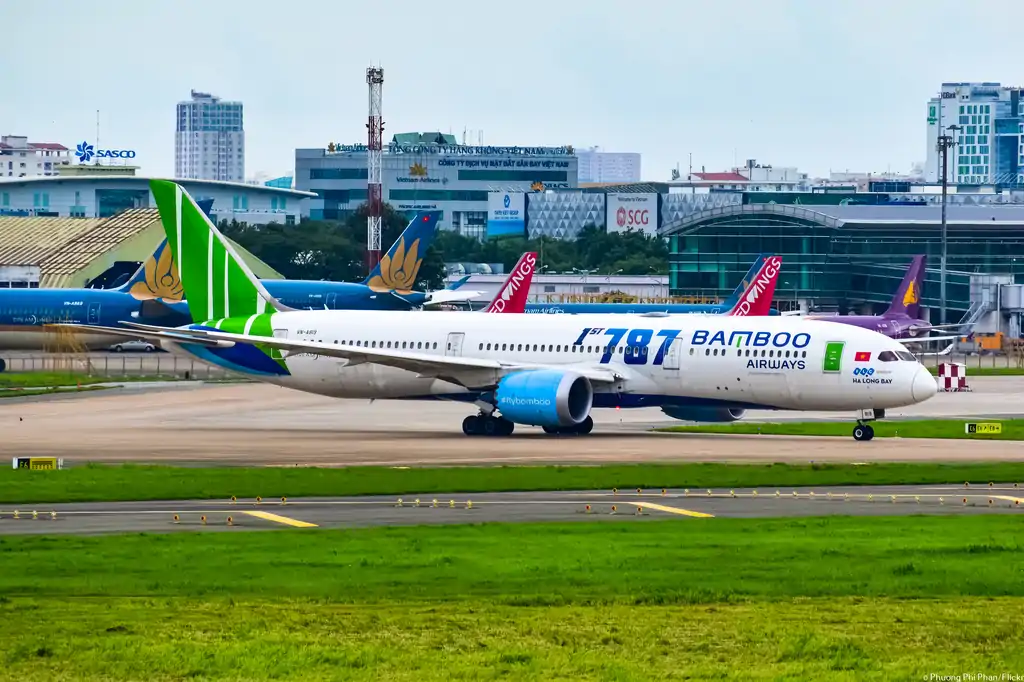
In a recent announcement, the Director General of Bamboo Airways, Luong Hoai Nam, outlined the carrier's ambitious plans for the next three to four years. The airline, currently undergoing financial and operational restructuring, aims to return to operating 30 aircraft within the specified timeframe. This move comes as part of Bamboo Airways' strategic efforts to position itself for sustained growth and stability in the competitive aviation industry.
Near-Term Goals: 18 Aircraft by End of 2024
While acknowledging the challenges faced during the restructuring process in 2023, Luong Hoai Nam expressed optimism about the near-term future. The director hopes to see the restructured airline operating around 18 aircraft by the end of 2024. This goal reflects Bamboo Airways' commitment to gradually rebuilding its fleet capacity and reclaiming its position in the Vietnamese aviation market.
Aircraft Fleet Transformation
During the course of 2023, Bamboo Airways executed significant changes to its aircraft fleet composition. As part of the restructuring efforts, the airline returned 19 aircraft to their lessors. Notably, this included the surrender of their sole widebodies, three B787-9s. The current fleet comprises eleven aircraft, featuring narrowbody Airbus types and ERJ 190-100LRs. The strategic decision to remain an all-Airbus airline underscores Bamboo Airways' commitment to streamlining operations for increased efficiency.
Cost-Cutting Measures and Workforce Adjustments
To navigate the challenges posed by the aviation industry's recent turbulence, Bamboo Airways implemented substantial cost-cutting measures. Payroll costs were slashed by approximately 60%, a move that involved terminating foreign pilot contracts. These measures reflect the airline's proactive approach to financial sustainability, ensuring that operational costs align with the evolving market dynamics.
Lease Agreements to Boost Capacity
In a bid to enhance its operational capacity, Bamboo Airways confirmed its intention to lease two A320 family aircraft starting from January 1, 2024. This strategic move aims to bolster seat capacity on key domestic routes, providing a 20% increase during the upcoming New Year period. The lease agreements signify Bamboo Airways' commitment to adapt to changing market demands and capitalize on potential growth opportunities.
Conclusion
Bamboo Airways' journey through financial and operational restructuring marks a pivotal phase in the airline's evolution. The strategic decisions, from fleet composition adjustments to cost-cutting measures and lease agreements, reflect a comprehensive approach to revitalizing the carrier. As Bamboo Airways navigates the dynamic aviation landscape, stakeholders will be keenly watching its progress towards the goal of operating a 30-aircraft fleet within the next three to four years.
With Inputs from ch-aviation

Read next
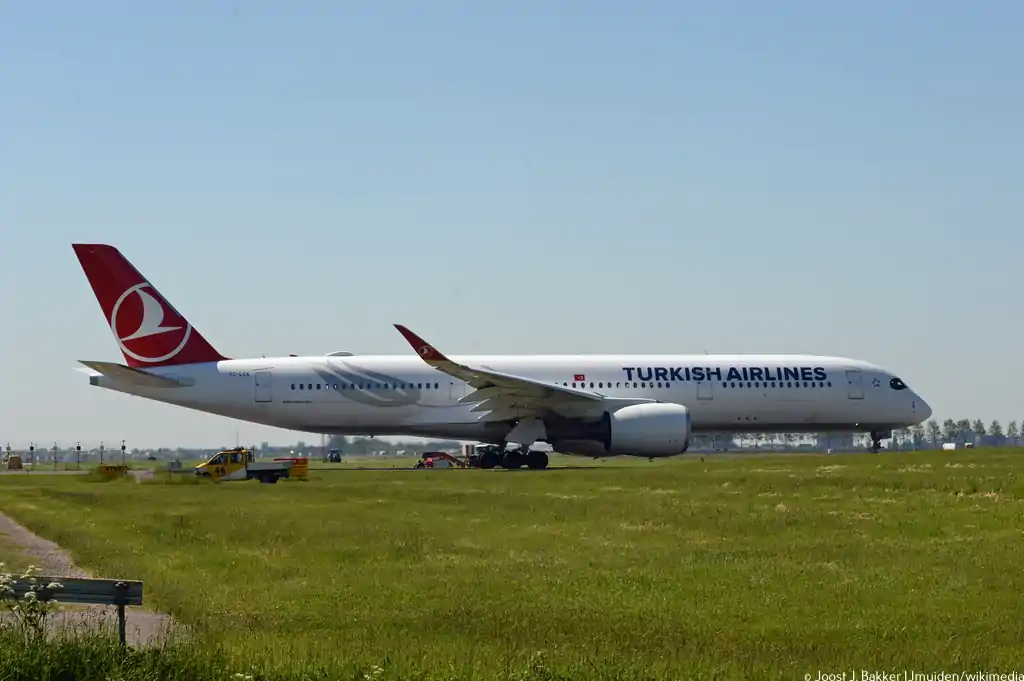
In a strategic move, Turkish Airlines has announced the transfer of five of its Boeing 737-800s to its wholly-owned subsidiary, AJet (formerly AnadoluJet). This significant development is aimed at facilitating AJet's certification and subsequent launch as an independent airline in March 2024. This move marks a crucial step in the evolution of AJet, which currently operates as a division of Turkish Airlines.
Fleet Overview
Turkish Airlines, a prominent player in the aviation industry, currently operates a fleet of eighty-six Boeing 737-800s. Out of these, 46 are dedicated to AnadoluJet's network. The carrier owns the majority of this sub fleet and dry-leases 28 aircraft, including 12 units operated by AnadoluJet. This transfer of five B737-800s to AJet underscores Turkish Airlines' commitment to nurturing the growth of its subsidiary.
Distinct Configurations and Livery
One notable difference between Turkish Airlines and AnadoluJet lies not only in their distinct liveries but also in the configuration of their B737-800 aircraft. Turkish Airlines' units can accommodate up to 151 passengers, featuring 16 in a dedicated business class. In contrast, AnadoluJet's B737-800s are configured for up to 186 or 189 passengers, adopting a single-class layout. This variance in configurations reflects the diverse operational strategies of the two divisions.
Operational Distinctions
As of now, AnadoluJet operates under Turkish Airlines' 'TK' code and does not possess a separate Air Operator Certificate (AOC). However, with the upcoming transfer of aircraft and the targeted launch in March 2024, AJet is poised to operate as a standalone airline, potentially acquiring its own distinct identity in the industry.
AnadoluJet's Current Fleet
In addition to the B737-800s, AnadoluJet boasts a diverse fleet, including nine Airbus A320-200Ns, fourteen Airbus A321-200NXs, and seven Boeing 737-8s. This comprehensive fleet enables AnadoluJet to serve various routes and meet the dynamic demands of the market.
Future Prospects
The decision to transfer aircraft to AJet aligns with Turkish Airlines' strategic vision and commitment to nurturing the growth of its subsidiaries. As AJet transitions into a standalone airline, it is likely to gain more autonomy in route planning, operational decisions, and branding, contributing to a more diversified and competitive aviation landscape.
Conclusion
Turkish Airlines' move to transfer five B737-800s to AJet represents a significant milestone in the development of its subsidiary as a standalone airline. The distinct configurations, liveries, and upcoming launch in March 2024 signal a new chapter for AJet, emphasizing its potential to emerge as a formidable player in the aviation industry. As the airline industry continues to evolve, this strategic decision positions Turkish Airlines and AJet to adapt to changing market dynamics and capitalize on new opportunities.
With Inputs from ch-aviation
Read next

In a groundbreaking announcement during the COP28 Summit, French startup Flying Whales unveiled plans to construct an airship factory in the United Arab Emirates (UAE). This strategic move aims to accelerate the production of its innovative airship, LCA60T, designed for crewless air cargo services with a minimal carbon footprint, particularly in regions with limited ground infrastructure.
The Airship Factory in UAE
Flying Whales anticipates the completion of the airship factory by 2027, a facility that is poised to create 300 direct jobs and an additional 1,000 indirect employment opportunities. Emirati media reported that the company envisions establishing a final assembly line in Abu Dhabi, strategically positioned to supply the Middle East, India, and Africa.
LCA60T: A New Era in Air Cargo
At the heart of Flying Whales' venture is the LCA60T airship, a marvel of engineering with a length of 200 meters and an impressive payload capacity of 60 tons. Unlike conventional cargo transport methods, the LCA60T utilizes helium as a lifting gas, offering an environmentally friendly alternative. The airship's unique ability to hover over specific locations eliminates the necessity for purpose-built facilities for loading and unloading, revolutionizing cargo logistics.
Crewless Operation and Low Carbon Footprint
A defining feature of the LCA60T is its crewless operation, eliminating the need for onboard personnel. This not only reduces operational costs but also positions Flying Whales at the forefront of autonomous cargo transport technology. Moreover, the airship's low carbon footprint aligns with global efforts to promote sustainable and eco-friendly transportation solutions.
Applications in the Freight Sector
Flying Whales is exploring a diverse range of applications for its airship in the freight sector. The flexibility of the LCA60T makes it suitable for transporting various types of cargo over challenging terrains, offering a versatile solution for industries ranging from logistics to space exploration.
Strategic Agreements with Arianespace and Louis Dreyfus Armateurs
In a series of strategic partnerships, Flying Whales has recently signed agreements with prominent entities. One such collaboration involves European space company Arianespace, with plans to transport rocket components. Additionally, the startup has partnered with Louis Dreyfus Armateurs, a French shipping company integral to Airbus' supply chain. These partnerships underscore Flying Whales' commitment to exploring low-carbon ways to transport cargo efficiently over long distances.
Conclusion
Flying Whales' ambitious venture into airship technology heralds a new era in cargo transport, aligning with global efforts to transition towards sustainable and eco-friendly solutions. The establishment of an airship factory in the UAE, coupled with strategic collaborations, positions Flying Whales as a pioneer in revolutionizing the freight sector. As the world looks towards innovative and environmentally conscious transportation, the LCA60T airship stands out as a promising solution for the future of cargo logistics.
Read next
Tibet Airlines and COMAC Collaborate on High-Altitude C919 Variant Development
Abhishek Nayar
18 Dec 2023
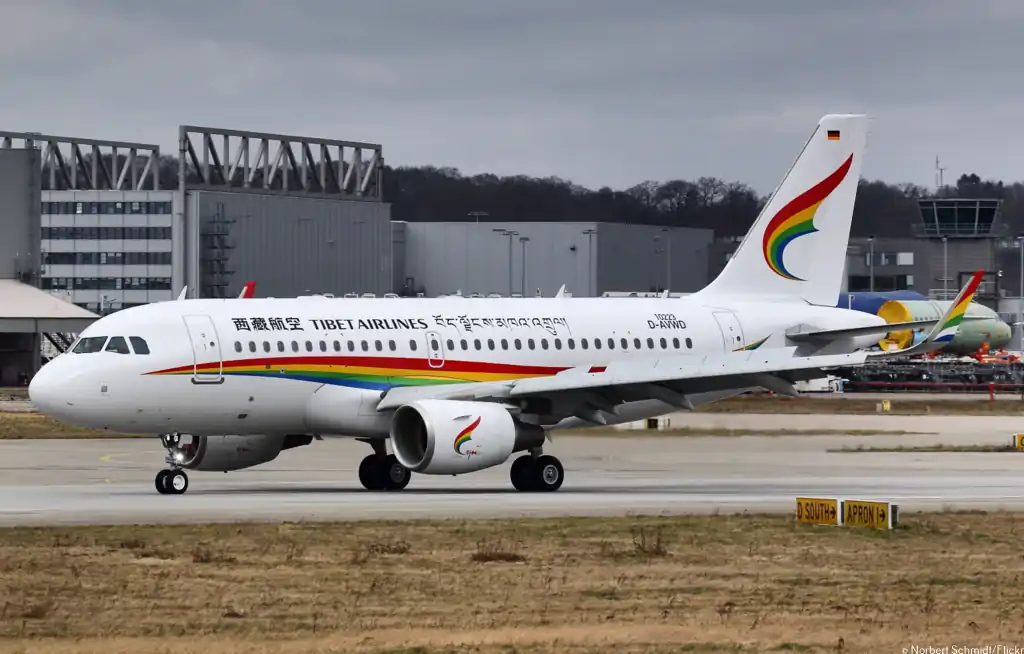
On Sunday, December 17, 2023, Tibet Airlines and the Commercial Aircraft Corporation of China (COMAC) signed a pivotal agreement to collaboratively research and develop a variant of China's narrow-body C919 jet designed specifically for high-altitude plateaus.
The partnership aims to contribute to the advancement of domestically produced passenger jets, emphasizing the importance of safeguarding national security and border stability. This development comes as a significant step forward for the Chinese aviation industry, with potential implications for global competition against established players like Airbus and Boeing.
Partnership Objectives
Tibet Airlines, in a statement shared on its WeChat account, highlighted the strategic significance of the collaboration with COMAC. The partnership is expected to yield a specialized variant of the C919, addressing the unique challenges posed by high-altitude plateaus. The statement quoted Tibet region's vice-chairman, Wei Xiuchang, who emphasized the importance of this initiative in bolstering domestic capabilities in passenger jet manufacturing.
National Security and Border Stability
Tibet Airlines underscored the role of the new C919 variant in enhancing national security and border stability. Given Tibet's unique geographical characteristics, which include high-altitude plateaus, having an aircraft tailored to such conditions is crucial. The collaboration between Tibet Airlines and COMAC aligns with broader national interests, emphasizing the strategic importance of this venture beyond commercial considerations.
Development Plans

While the agreement has been formalized, no specific timeframe has been provided for the development of the new C919 variant. The absence of a timeline suggests that both companies are committed to thorough research and development, prioritizing precision over expediency. The careful approach is indicative of the complexities involved in adapting the C919 for high-altitude operations.
COMAC's Recent Showcases
Recent reports from Chinese media indicate that COMAC, a state-backed enterprise, has showcased two variants of the C919 at an aviation exhibition in Shanghai. These include a stretched model and a shortened version designed specifically for plateau operations. The unveiling of these variants showcases China's dedication to diversifying its commercial aircraft offerings and competing on a global scale.
Global Competition
The C919, often touted as a formidable rival to established single-aisle jet families such as the Airbus A320neo and Boeing 737 MAX, underscores China's ambition to become a major player in the global aviation market. The collaboration between Tibet Airlines and COMAC further positions China as a serious contender, with a focus on developing aircraft tailored to specific regional needs.
Conclusion
The collaboration between Tibet Airlines and COMAC to develop a high-altitude plateau variant of the C919 represents a significant milestone in China's pursuit of a robust and competitive domestic aviation industry. As the partnership progresses, it will be essential to monitor developments, including the unveiling of a detailed timeline for the new variant's development and eventual commercial availability.
The implications of this collaboration extend beyond commercial interests, highlighting the intersection of aviation, national security, and regional adaptability in the dynamic landscape of global aerospace.
With Inputs from Reuters
Read next
Shanghai Airlines' All-Boeing Fleet Transition and Potential for Chinese-Made Aircraft
Abhishek Nayar
18 Dec 2023
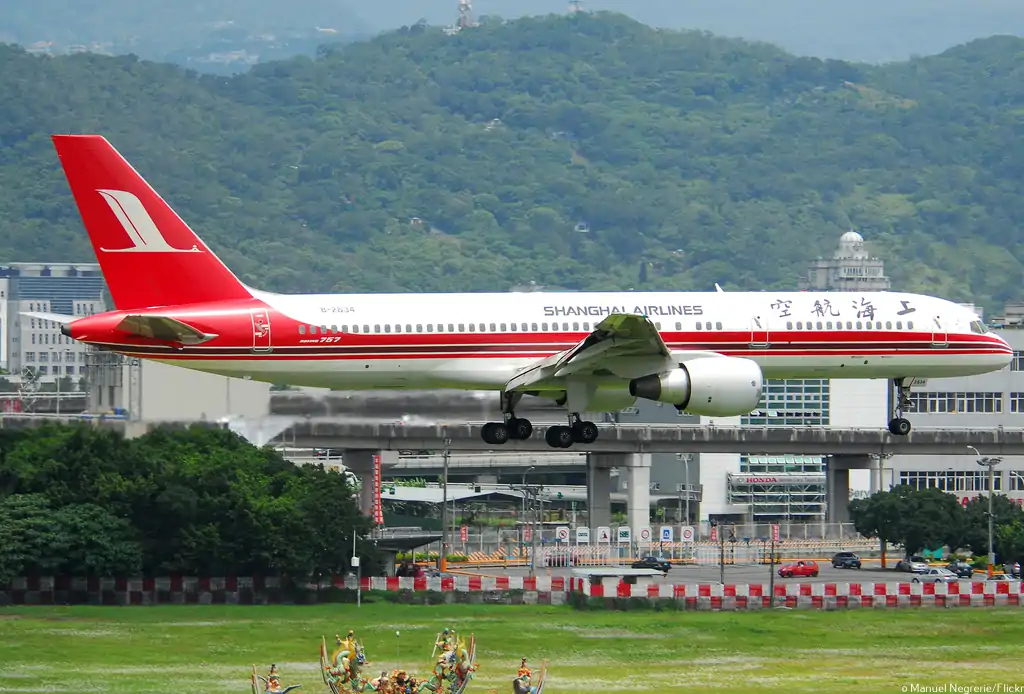
Shanghai Airlines, a prominent Chinese carrier based at Shanghai's Pudong International Airport (PVG), has recently undergone a significant transformation in its fleet composition, bidding farewell to its Airbus A330-300s. This move signals a shift towards an all-Boeing fleet and holds implications for the airline's long-haul strategy.
Shanghai Airlines: A Brief History
Established in 1985, Shanghai Airlines quickly became a leader in premium services and maintained an exemplary safety record. However, the airline underwent a substantial change in 2009 when it was acquired by the Chinese aviation giant, China Eastern Airlines. While Shanghai Airlines retained some autonomy, the acquisition led to a comprehensive overhaul of its route network, fleet structure, and alliance affiliations, shifting from Star Alliance to becoming a SkyTeam Alliance affiliate member.
Fleet Evolution and the Airbus A330 Retirement
Historically, Shanghai Airlines operated a diverse fleet comprising aircraft from both Boeing and Airbus. Recently, the carrier bid farewell to its Airbus A330-300s, marking a transition to an all-Boeing fleet. The retirement of the A330s is part of the airline's broader strategy to simplify its fleet and replace aging aircraft with more fuel-efficient and modern jets.
In October, the airline retired its final A330-300 (B-6083), transferring official ownership to parent company China Eastern. Notably, this aircraft continues to serve Shanghai Airlines routes through a wet-lease (ACMI) arrangement. In total, four A330s were returned to China Eastern, with one converted into a freighter for Air Hong Kong.
Boeing 787 Dreamliner: A Key Element in Long-Haul Strategy

Shanghai Airlines' long-haul strategy revolves around the Boeing 787 Dreamliner. The carrier has an order for 10 Dreamliners, and seven have already been delivered. As new 787s join the fleet, the retirement of A330s accelerates. The Dreamliner's fuel efficiency and advanced features align with Shanghai Airlines' commitment to modernizing its operations.
The All-Boeing Fleet and Future Orders
As of now, Shanghai Airlines is poised to operate an all-Boeing fleet, consisting of Boeing 787 and 737 family jets. In addition to the 787, the carrier maintains outstanding orders for the Boeing 737 MAX 8, reinforcing its commitment to Boeing's modern and technologically advanced aircraft.
Potential Disruption: Chinese-Made Aircraft from COMAC

While Shanghai Airlines appears set on an all-Boeing future, a potential disruption looms. The Commercial Aircraft Corporation of China (COMAC) is set to deliver ARJ21-700 regional jets to the airline. With parent company China Eastern already operating the C919, there is a possibility that domestically manufactured narrowbodies could find a place in Shanghai Airlines' fleet, challenging the carrier's all-Boeing trajectory.
Conclusion
Shanghai Airlines' transition to an all-Boeing fleet marks a significant chapter in its corporate history. The retirement of Airbus A330s aligns with the carrier's commitment to modernization and efficiency. However, the pending delivery of COMAC's ARJ21-700 introduces an intriguing element, potentially diversifying the airline's fleet with Chinese-made aircraft. As the aviation industry continues to evolve, Shanghai Airlines' strategic choices will play a crucial role in shaping its future trajectory.
Read next

Russia plans to produce more than 1,000 passenger planes by 2030, President Vladimir Putin told an annual press conference on Thursday, December 14. He added that the Russian market is currently "overloaded" with foreign-made aircraft.
The rouble climbed to a near two-week high on Thursday, December 14, approaching the 89 threshold to a weaker dollar after dovish comments from the U.S. Federal Reserve, while the Russian market awaited an expected interest rate hike to 16 per cent on Friday.
The dollar was under pressure on December 14 after the Fed's latest economic projections indicated that the interest rate hike cycle has come to an end and lower borrowing costs are coming in 2024.
According to Russian news outlet Tass, Putin plans to produce Irkut MC-21 passenger jets and switch over to Russian engines for certain aircraft.
Impact of Sanctions on Russia
The Russian aviation industry has struggled to operate effectively since Western sanctions were put in place after Putin launched an invasion of Ukraine. Russian airlines have been unable to legally obtain the Boeing and Airbus parts that are desperately needed to keep their aircraft in good order. It is understood that, until now, Russia has relied on the black market to source parts and has even set out plans to manufacture replica Boeing and Airbus components.
The impact of sanctions extends beyond seized aircraft, affecting the overall capacity of the Russian airliner fleet. Boeing and Airbus halted servicing Russian operators, compounding the challenges. At the onset of the conflict, over half of Russian airlines' airliners were leased, with a significant number registered in Bermuda or Ireland. Russia's refusal to return these leased aircraft has resulted in a legal battle, further restricting the operational capabilities of Russian carriers.
As of November 2023, Russian airlines find themselves severely constrained in terms of international operations. Only 11 countries, which have provided guarantees against potential seizures, are accessible for Russian carriers. This limited scope has significantly curtailed the global reach of Russian airlines, impacting both their profitability and connectivity.
The Russian commercial aircraft fleet, comprising 1,302 aircraft, with 1,176 dedicated to passenger transportation, has undergone significant changes since 2022. Over 800 aircraft have been re-registered in Russia, reflecting the industry's efforts to navigate the challenges posed by sanctions and ownership disputes. However, the process of re-registration is a complex and time-consuming endeavour.
Lower capital outflows since October
Ensuring stability and predictability in financial markets is the priority, President Vladimir Putin said, whose decree obliging some exporters to convert a portion of their foreign currency revenues into roubles has reduced capital outflows since October.
The capital controls, which he said were temporary, were needed because Russia now receives limited information about the movement of capital concerning exports.
"The government and central bank do not see what is happening with the volumes of funds our exporters are making from exports," Putin said. "We ... have a legitimate desire to see how roubles are accumulated, how they move around, where they go and in what volumes." Putin, who last week said he would run again for election next year, faces numerous economic challenges.
Comment