
European Commission Re-authorizes SAS Recapitalization Amid Chapter 11 Restructuring

Abhishek Nayar
01 Dec 2023
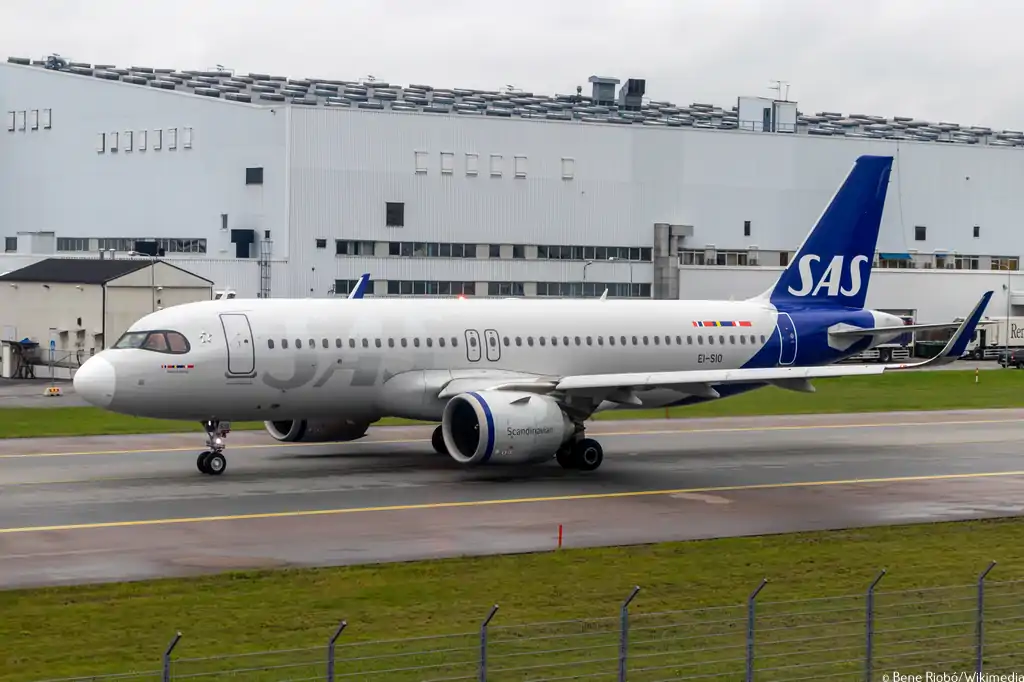
In a recent development, the European Commission has re-authorized the 2020 Covid-era EUR833 million ($911 million) recapitalization of SAS (Scandinavian Airlines) by Sweden and Denmark. However, the re-authorization comes with a new directive, mandating the inclusion of a step-up provision that incentivizes the governments to exit the shareholding. This decision follows the annulment of the previous European Commission authorization in May 2023 due to the absence of a step-up mechanism.
Re-Authorization with a Twist
The European Commission's re-authorization maintains the original aid amount of EUR833 million, which SAS received in 2020. This financial assistance comprised approximately EUR175 million in fresh equity, SEK6 billion in newly issued state hybrid notes, and approximately EUR131 million in equity participation through the subscription and underwriting of new shares. Both Sweden and Denmark currently hold a 21.8% stake each in the airline.
The new step-up provision requires the two governments to amend the terms of the aid within two months of formal notification. The proposed mechanism involves unilateral commitments from SAS to issue new hybrid notes to the governments without any consideration. Crucially, this provision must be approved by SAS's general meeting of shareholders, considering the airline's relationship with the Swedish government as related parties under the Swedish Companies Act.
Legal Turbulence and Uncertainty
The European Union General Court annulled the previous authorization in May 2023 due to the absence of a step-up mechanism. This decision created significant uncertainty, as SAS faced the possibility of legally returning the funds. The step-up mechanism was introduced into the temporary framework governing state aid to airlines during the pandemic, temporarily relaxing the otherwise strict rules about government assistance in the European Union.
Impact on SAS Restructuring
SAS has clarified that the re-authorization does not affect its ongoing Chapter 11 restructuring, which is a crucial aspect of the airline's financial recovery. The airline recently secured USD1.2 billion in funding from new investors. CEO Anko van der Werff confirmed that SAS is on track to obtain US court approval for its restructuring in early 2024. Following this, the company will undergo a Swedish reorganization, with necessary European Commission approvals expected to be secured in the subsequent months. The CEO anticipates concluding the Chapter 11 process by June 2024.
Conclusion
The European Commission's re-authorization of SAS's recapitalization, coupled with the introduction of the step-up mechanism, reflects the evolving regulatory landscape in response to the economic challenges posed by the COVID-19 pandemic.
SAS remains committed to its restructuring efforts, navigating both legal and financial complexities with the goal of emerging from Chapter 11 by mid-2024. The airline's ability to secure continued support from both governments and new investors underscores its strategic importance and the collaborative efforts to ensure its financial stability amidst the ongoing global uncertainties.
With Inputs from ch-aviation
Read next
FAA Proposes Significant Extension to Cockpit Voice-Recording Requirement
Abhishek Nayar
01 Dec 2023
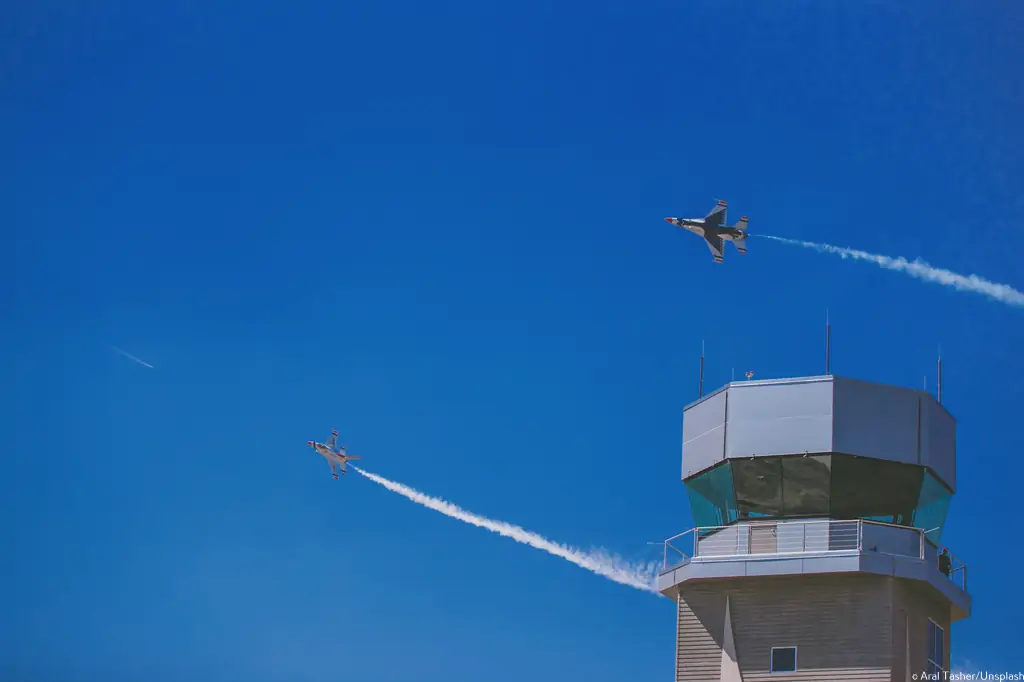
In a move aimed at enhancing aviation safety measures, the Federal Aviation Administration (FAA) announced on Thursday, November 30, 2023, its proposal to extend the cockpit voice-recording requirement for all new airplanes from the current two-hour loop to an impressive 25 hours. This decision, long advocated by the National Transportation Safety Board (NTSB), aims to align the United States with global standards and provide a more comprehensive understanding of aviation incidents.
Background
The NTSB has been urging for this change since 2018, emphasizing the crucial role cockpit voice recorders play in investigating airplane crashes. The voice recorder captures transmissions, pilots' voices, engine noises, and other crucial information, offering insights into the sequence of events leading to an incident.
Global Standards and Urgency
While Europe had already adopted the 25-hour cockpit voice-recording requirement in 2021, the United States lagged behind. The International Civil Aviation Organization (ICAO) set a new standard in 2016, calling for the installation of recorders capable of recording the last 25 hours on all new aircraft, effective from 2021. The urgency of this matter escalated after a series of near-miss incidents raised concerns about U.S. air safety.
FAA Administrator's Perspective
FAA Administrator Mike Whitaker expressed the significance of this change, stating that it would provide substantially more data to identify the causes of incidents. This move aligns the U.S. aviation sector with global practices and acknowledges the importance of a comprehensive data collection approach.
NTSB's Push for Retrofitting
In addition to the proposal for new airplanes, the NTSB has been calling for the FAA to mandate retrofitting existing airplanes with new cockpit voice recorders. However, the FAA expressed reservations, citing significant costs of $741 million compared to the $196 million incremental upgrade costs under its current proposal.

NTSB's Response and Support
NTSB Chair Jennifer Homendy praised the FAA's announcement, highlighting that more data would not only help identify causes but also enable operators to address safety deficiencies more effectively. The NTSB's emphasis on proactive safety measures underscores the importance of staying ahead of potential risks in the aviation industry.
Timeline and Public Input
The FAA will accept public comments until early February, encouraging stakeholders and experts to contribute their perspectives. The proposed regulation's adoption is expected to be effective one year after its finalization, allowing for a gradual transition to the extended recording requirement.
Historical Context
Reflecting on the history of cockpit voice recorders, the FAA noted that when first implemented in 1966, they could only record 30 minutes. This technological advancement over the years showcases the ongoing commitment to improving aviation safety through enhanced data collection capabilities.
Conclusion
As the aviation industry evolves, the proposed extension to the cockpit voice-recording requirement represents a crucial step toward aligning with global standards and improving safety protocols. The FAA's decision, if implemented, will contribute to a more thorough understanding of incidents, ultimately enhancing the safety of air travel for passengers and industry stakeholders alike.
With Inputs from Reuters
Read next
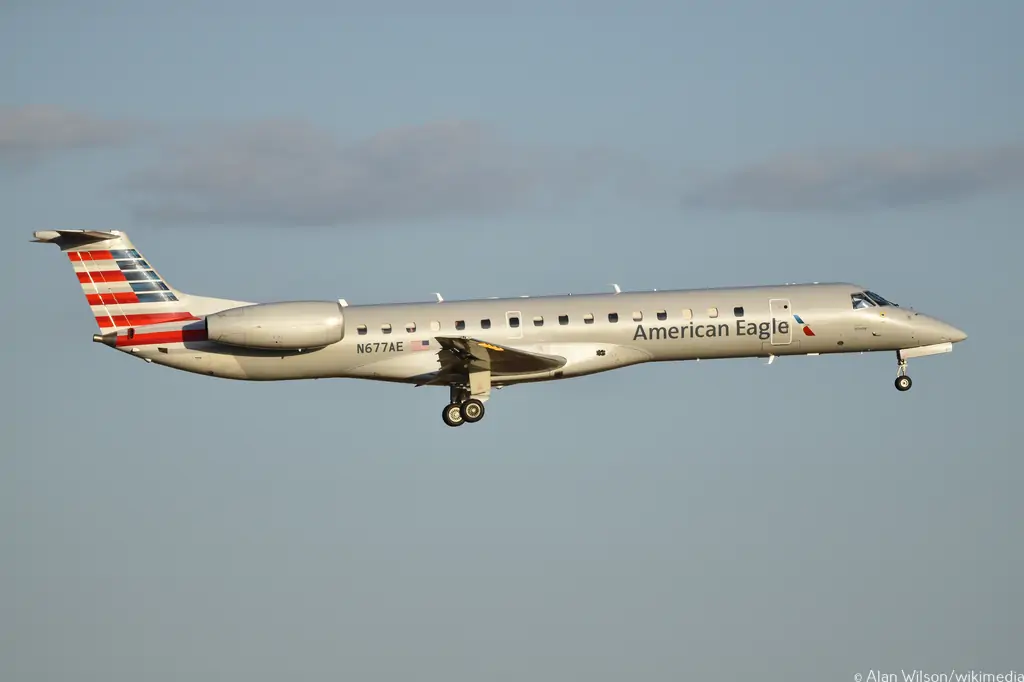
American Airlines, one of the leading carriers in the aviation industry, is set to enhance the in-flight experience for passengers on its regional flights. The airline has announced plans to install WiFi capabilities on more than 500 regional aircraft, collaborating with Intelsat, a prominent satellite communication provider. This move aims to bring high-speed WiFi to regional flights, offering passengers the convenience of internet browsing, messaging services, video streaming, and VPN connectivity.
Technology Advancements
American Airlines plans to leverage the latest technology for high-speed WiFi, incorporating Intelsat's Electronically Steered Array (ESA) antennae. What sets this technology apart is its compatibility with both geostationary and Low-Earth Orbit (LEO) satellites, ensuring a wide-reaching network for seamless connectivity.
Rollout Schedule
The rollout of WiFi on regional aircraft is scheduled to commence in 2024 and is expected to span over two years, marking a significant step in improving the overall passenger experience during regional flights.
Previous Milestones
Earlier this year, American Airlines achieved a milestone by becoming the first carrier to offer high-speed WiFi on 100% of its mainline fleet. The mainline fleet, comprising a diverse range of aircraft, now provides passengers with the convenience of staying connected during their journeys.
Pricing Model and Options
While the onboard WiFi service enhances passenger connectivity, American Airlines does charge for this amenity. The pricing model varies depending on the flight, with packages starting at $10. Passengers can also opt for all-day passes to cover multiple connecting flights without incurring additional charges. For frequent flyers, monthly and annual plans are available, with the latter priced at $599 for one device and $699 for two devices.
Industry Comparisons
American Airlines' approach to charging for WiFi stands in contrast to that of some global carriers. For instance, Malaysia Airlines recently made in-flight WiFi free for all passengers. In the U.S., Delta Air Lines offers complimentary WiFi to its SkyMiles members, while JetBlue provides the service with no additional cost on the majority of its flights.
Regional Services and Aircraft Fleet
American Airlines operates regional services under the American Eagle brand through six different airlines. Three of these carriers—Envoy Air, Piedmont Airlines, and PSA Airlines—are wholly-owned subsidiaries, while the others—Air Wisconsin, Republic Airways, and SkyWest Airlines—are independently owned. The combined fleet consists of more than 500 aircraft, featuring Embraer ERJ145s, E170s, and E175s, as well as Bombardier CRJ 200s, CRJ700s, and CRJ900s. These aircraft, accommodating between 50 and 80 passengers, often include a first-class cabin alongside economy class seating.
Conclusion
American Airlines' initiative to expand WiFi capabilities on its regional aircraft demonstrates the airline's commitment to providing an enhanced travel experience for passengers. As technology continues to evolve, such advancements contribute to the growing expectations of modern air travel. The rollout of high-speed WiFi on regional flights aligns with the broader industry trend of offering connectivity options to meet the demands of today's connected travelers.
Read next
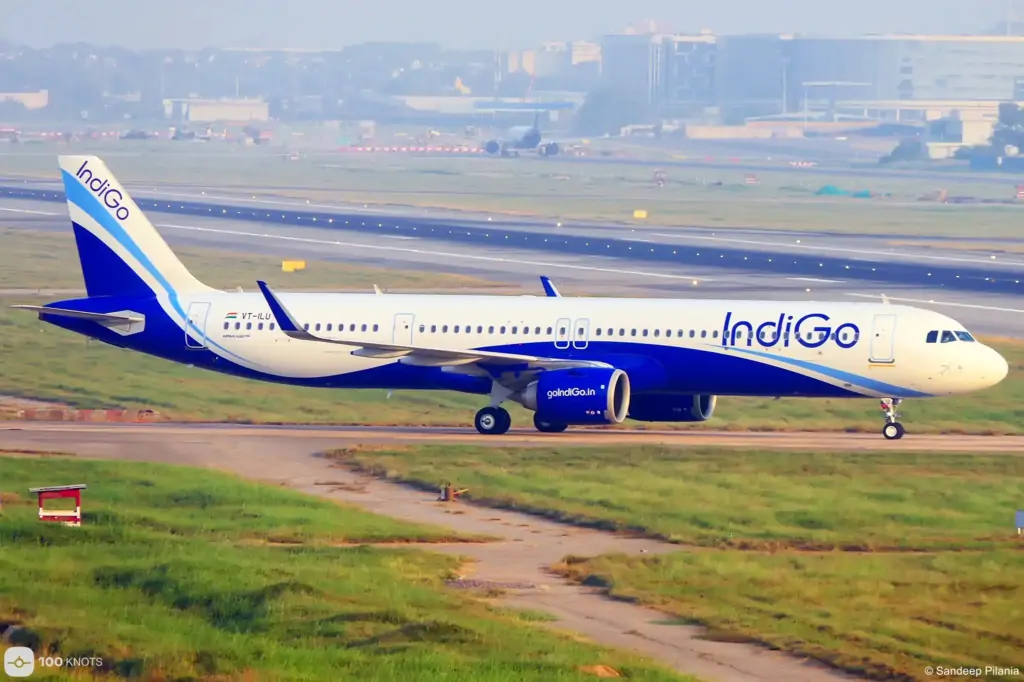
IndiGo may venture away from its low-cost carrier roots and start installing business-class cabins in some of its A321neo aircraft. The Economic Times has reported that the airline plans to put 16 such seats into each of 35 aircraft by the end of 2024.
“Four rows of extra-legroom seating will be installed in those aircraft, providing 36 inches of legroom for guests to stretch out or work comfortably," a source told the outlet.
If correct, the move would be a departure from IndiGo's successful operating model, which has seen it become India's biggest airline. However, the newspaper also suggested that the move could be a response to the overhaul of Air India and a broader trend towards more premium travel in India.
IndiGo’s legroom, or seat pitch in industry jargon, currently amounts to an average of 30 inches on its Airbus A320 and A321 aircraft with three on each side. IndiGo is yet to determine how much more it will charge for the premium seats but customers who pay extra will receive priority boarding, complimentary in-flight food, priority boarding and greater flexibility to make changes to their itinerary.
“The airline believes that there is a section of high-end leisure travellers and small business owners looking for a business-class product at fares lower than those charged by legacy airlines," the source claimed.
According to ch-aviation fleets advanced data, IndiGo's existing 342-strong fleet is now dominated by A320 and A320N types, but it is also operating ninety-four A321-200NXs. It also has 942 aircraft on order, including 677 A321neo types, specifically 384 A321-200Ns, 224 A321-200NX, and sixty-nine A321-200NY(XLR)s.
The newspaper's source did not say exactly which kind of A321neo the carrier was considering installing the business seats on. However, the long-range A321-200NY(XLR) will target markets in Europe and elsewhere with flying times of seven hours plus and are possible contenders. Airbus will start their first deliveries of the type to IndiGo in 2025.
IndiGo to Indict its first A321XLR
IndiGo is also preparing to fly longer routes with the induction of the Airbus A321 XLR aircraft which will start joining the fleet from 2025. The airline will use those to expand to European markets where flying time is over seven hours. Those planes will also come with business class seats and have more leg space in the economy with 190 seats.
The no-frills model to pack more passengers in dense cabins and charge extra for food, priority boarding and seat allocation has served IndiGo well helping it to grab a 60% share of India’s domestic market and stay profitable where airlines struggle to increase the price of tickets. Since 2012, three Indian carriers have gone bankrupt failing to keep costs in tandem with expenses.
The airline’s parent company, InterGlobe Aviation, posted a net profit of INR 189 crore in Q2FY24 as against a net loss of INR 1,583.33 crore in the July-September quarter last year. The airline's revenue from operations surged almost 20% to INR 14,943 crore, from INR 12,497 crore in the year-ago period.
(With Inputs from The Economic Times)
Read next
India Exploring Joint Collaborations With Boeing, Blue Origin, Voyager Space for Space Partnerships

Radhika Bansal
30 Nov 2023

India’s space agency is exploring joint collaborations with Boeing Co., Jeff Bezos’s Blue Origin LLC and Voyager Space Holdings Inc., as an official visit by the head of NASA highlights the growing level of cooperation between the US and India in outer space. The potential partnerships could also involve Indian commercial entities, India’s Department of Space said in a statement on Wednesday, November 29.
NASA administrator Bill Nelson is visiting several locations in India this week, including Bengaluru-based facilities that are testing and integrating spacecraft for a joint US-Indian Earth-observing mission scheduled for launch in 2024. Nelson’s visit underscores NASA’s deepening space alliance with the Indian Space Research Organization, which this year notched several accomplishments including the landing of a spacecraft near the moon’s south pole in August.
The two space agencies are planning to send an Indian astronaut to the International Space Station next year. In June, Nelson joined a ceremony in Washington when India signed the Artemis Accords, a US-backed initiative with more than two dozen other countries to establish principles for space exploration.
ISRO and NASA have also formed a Joint Working Group (JWG) on Human spaceflight cooperation and are exploring cooperation in radiation impact studies, micrometeorite & orbital debris shield studies; and space health and medicine aspects. The 8th meeting of the India-US Joint Working Group on Civil Space Cooperation (CSJWG) was held in Washington DC in January 2023.
The Indian side informed that a concept paper on the Implementing Arrangement (IA) is under consideration between ISRO and NASA. After a few iterations, both sides arrived at a mutually agreed draft and the same was processed for intra-governmental approvals.
Space Companies Interested in Collaboration with India
Blue Origin is “very keen” on considering using an Indian rocket as a crew capsule to service its proposed space station Orbital Reef in low-Earth orbit, ISRO chairman S Somanath told the Times of India in June. Larsen & Toubro Ltd., an Indian manufacturer of engineering equipment, is in early discussions with Blue Origin to supply orbital launch capabilities, according to local media.
Denver-based Voyager in July announced a preliminary agreement with ISRO’s commercial arm, NewSpace India Ltd., to explore using Indian rockets to launch and deploy small satellites. Voyager in July also signed a memorandum of understanding with ISRO and the Indian national space promotion and authorization center regarding the use of Gaganyaan, the space agency’s crewed spacecraft now under development, to service a proposed space station, Starlab. Boeing is considering designing and manufacturing a space capsule simulator for India’s human spaceflight project but hasn’t signed a contract yet, according to local media.
India’s upcoming projects include its first launch of astronauts on a crewed mission, scheduled for 2025. To boost its lunar ambitions, the country plans to develop a next-generation launch vehicle and a new launchpad, to land people on the moon by 2040. ISRO’s to-do list also includes establishing a space station by 2035, launching a Venus orbiter and landing on Mars.
(With Inputs from Bloomberg)
Read next

Mobile phones have become an indispensable part of our daily lives, allowing us to communicate with anyone, anywhere. However, one notable exception to this ubiquitous connectivity is the prohibition of using mobile phones on commercial flights. The requirement to switch to 'Airplane Mode' is a familiar announcement before takeoff, but have you ever wondered why this restriction exists and whether your tiny smartphone could truly pose a threat to a giant airliner?
Regulations Behind the Ban: FCC and FAA Collaboration
The Federal Communications Commission (FCC) plays a pivotal role in enforcing the ban on cell phone use during flights. The primary concern is the potential Electromagnetic Interference (EMI) on an airplane's navigation, communication, and data reporting systems. While there's no direct evidence linking mobile phones to flight safety issues, the FCC prioritizes precaution to ensure passenger and aircraft safety.
The Federal Aviation Administration (FAA) acts in accordance with the FCC's rulings, overseeing the implementation and enforcement of these regulations. The collaborative efforts of these regulatory bodies aim to maintain the integrity of an aircraft's critical systems.
Reasons Beyond EMI: Passenger Comfort, Attention, and Noise Reduction
Beyond the potential EMI, several other reasons contribute to the ban on cell phone use during flights:
- Preventing Passenger Confrontations: The goal is to create a serene atmosphere for passengers, avoiding confrontations that could arise from prolonged loud phone conversations.
- Ensuring Passenger Attention: Flight attendants need passengers attentive during safety briefings and in case of emergencies, ensuring compliance with instructions.
- Noise Reduction: The constant influx of notifications and phone calls could disrupt the quiet atmosphere needed for passengers to rest during flights.
How Cell Phones Could Cause Interference with Aircraft Systems
Airplanes boast extensive electrical wiring within their fuselage, making them susceptible to Electromagnetic Interference. Cell phones transmit signals as radio waves, and an airplane's wiring can inadvertently act as antennas, intercepting these signals and potentially corrupting data, leading to false readings or interference with flight control inputs.

To mitigate these risks, modern airplanes utilize shielded data cables, designed to absorb and redirect external radio signals away from internal conductors. This shielding, combined with advancements in technology and the allocation of specific frequency bands, has significantly reduced the likelihood of interference.
Ground Network Interference: A Concern for Cell Phone Use in Flight
While in-flight cell phone usage is not only about EMI, the ground network interference poses a significant challenge. The frequent switching of signals between cell towers as the aircraft moves creates network overload potential. Lifting the ban could lead to thousands of users simultaneously pinging off multiple towers, requiring a costly network upgrade to handle the increased load.
Airplane Mode: A Necessary Precaution
Activating 'Airplane Mode' isolates a device's signal transmitting and receiving capabilities while allowing the use of Bluetooth and Wi-Fi. This precautionary measure ensures that the device no longer functions as a radio transmitter and receiver, addressing potential interference issues.
In-flight Cell Services: Picocells and Voice Over Wi-Fi
In recent years, technological advancements have paved the way for in-flight cell services on certain private and business jets. Picocells, miniature cell antennas on airplanes, route voice calls and messages through a satellite network, avoiding interference with ground-based networks. This technology, known as Voice Over Wi-Fi, is available on premium private aircraft but comes at a significant cost.
Why Private Jets Can and Commercial Flights Cannot?

Private jets are subject to different regulations than commercial flights. The limited number of passengers on private jets allows for more controlled use of communication equipment, certified not to interfere with aircraft systems. Voice Over Wi-Fi capabilities on private jets have facilitated messaging during flight, providing a glimpse into the potential future of in-flight communication.
Conclusion: Balancing Connectivity and Safety
While reports from various studies suggest that modern technology has mitigated the risks associated with in-flight cell phone use, regulatory bodies like the FCC and FAA remain cautious. Safety concerns, potential interference, and the need for passenger comfort continue to drive the decision to uphold the ban on cell phones during flights.
As technology evolves, the balance between connectivity and safety will likely be revisited, as seen with Europe's adoption of new rules. Until then, adhering to the 'Airplane Mode' requirement remains a small sacrifice for the assurance of a safe and comfortable flight experience.
With Inputs from Pilot Teacher, How Stuff Works
Comment