
IndiGo Extends its Codeshare Partnership With Qantas; Adds 4 New Australian Destinations

Radhika Bansal
11 Nov 2023

IndiGo announced the extension of its codeshare agreement with Australian flag carrier Qantas. Under this agreement, IndiGo customers will now be able to access four new destinations in Australia - Sydney, Melbourne, Perth and Brisbane, an airline spokesperson said.
It will start with Melbourne, after which Sydney, Perth and Brisbane will go online in the coming weeks. With the new codeshare routes, IndiGo customers can now also fly to Singapore and connect seamlessly to Qantas’ flights between Singapore and Melbourne.
“With the new codeshare routes, IndiGo customers can now fly to Singapore and connect seamlessly to Qantas’ flights between Singapore and Melbourne. This partnership signifies the strengthening of the relationship between the two countries, as a part of the Australia-India Economic Cooperation and Trade Agreement,” said the spokesperson.
In 2022, Qantas and IndiGo finalised a codeshare partnership enabling the Australian carrier's customers flying on non-stop flights between the two nations to connect to 21 destinations in India on IndiGo.
Speaking on the partnership, IndiGo CEO Pieter Elbers said: “We are excited to introduce these new connecting flights to Australia, in partnership with Qantas, connecting on IndiGo’s flights from India to Singapore. The two airlines are the market leaders in their respective countries and this agreement will strengthen the bond between the two countries. For IndiGo, placing its code on another airline and connecting over a mid-point (Singapore) is only the second one of its kind. With this we are now enabling the vast IndiGo network to connect with Qantas’ unmatched reach, we create more opportunities for trade and tourism between both nations. With the thriving growth of the Indian aviation industry, this agreement will also enhance our international connectivity and remain committed to our promise of providing on-time, affordable, courteous, and hassle-free travel experiences to our customers across our wide network."
IndiGo – Qantas Partnership
The national carrier launched the first phase of its codeshare agreement with India’s largest domestic carrier in August last year, offering customers seamless connections from Qantas flights in Bengaluru and Delhi onto IndiGo services to other major Indian cities, including Mumbai and Chennai, as well as smaller destinations such as Pune and Goa.
Under the second phase of the agreement, Qantas customers can now travel to an additional eight cities, bringing the total number of Indian destinations available for connection from Delhi and Bengaluru to 21. Qantas customers will also have more choices across IndiGo’s domestic network with more than 250 new flights available for booking.
Qantas Frequent Flyers can earn and redeem points on connecting IndiGo flights (with the QF code) and IndiGo recognises Qantas Frequent Flyer benefits for tiered members (Silver, Gold, Platinum and Platinum One) including priority check-in and priority baggage.
The airline has been actively seeking additional international partners to broaden its reach to destinations worldwide. Currently, it has established codeshare partnerships with various global airlines, including Turkish Airlines, Qatar Airways, Qantas, Virgin Atlantic, KLM, American Airlines, and Air France.
IndiGo is also aiming to double its fleet size by 2030. The airline has already placed orders for approximately 970 aircraft and is scheduled to receive one new aircraft every week, totalling 50 aircraft, in the coming year. This was revealed by Indigo’s CEO, Pieter Elbers, during a recent media roundtable.
Apart from IndiGo, Air India has also announced flights to Australia, with the airline set to debut on the Mumbai-Melbourne route on December 15. Air India currently operates daily flights to Melbourne and Sydney from Delhi, flying 28 times every week between India and Australia. Qantas operates non-stop flights on Delhi-Melbourne (three flights per week) and Bengaluru-Sydney (five flights per week).
Read next
Air India to Get a New Aircraft Every 6 Days in Next 18 Months as Air Travel Demand Increases
Radhika Bansal
11 Nov 2023

Air India has ordered 470 aircraft to serve the Indian economy and is set to receive a new aircraft every six days over the next 18 months, CEO and MD Campbell Wilson said on Friday, November 10. He was speaking at the 67th Assembly of Presidents of the Association of Asia Pacific Airlines here.
"We have new aircraft, we are recruiting many, many new crew and staff, improving the training regime and there is more work to do and we are making good progress," he said.
Speaking at a session, Wilson said a vast majority of Air India customers want reliability and punctuality, and the challenge is to satisfy customers' requirements. Moreover, new aircraft are being put on international flights and most of the grounded planes have been restored, Wilson added.
Tata-owned Air India has ordered 470 aircraft to serve the Indian economy which is growing at a compound annual growth rate (CAGR) of 8% and it is set to receive a new aircraft every six days over the next 18 months, he said. He also exuded confidence in competing with other airlines and increasing traffic for Air India.
Air India Reinstating Grounded Fleet
Air India is planning to reinstate 100% of its "long-grounded" fleet since the takeover by the Tata Group two years ago. According to a report in the Financial Express (FE), over 95% of the "long-grounded" fleet, which included Boeing 787s, 777s, and narrow-body Airbus A320 type aircraft, has been made airworthy.
Sources said that out of all the "long-grounded" aircraft, only two are left to be reinstated into the fleet. An official said, "Many of these aircraft were grounded due to lack of components and engine shortages. Now that we are witnessing an improvement in the supply chain, the remaining two will also be made airworthy soon."
During the takeover by the Tatas, Air India had over 30 "long-grounded" aircraft in its fleet. Apart from components, even the cabin interiors had to be given a makeover, according to the FE report.
The official said, "Thousands of seats in all these aircraft were fixed, and the inflight entertainment systems restored in as many old aircraft as possible. In some cases, over 30,000 spares per aircraft were required. The entire cabin space was also spruced up."
The official added that the airline has pledged over USD 400 million to completely refurbish its legacy widebody fleet of 43 Boeing 777s and 787s, starting in 2024. The reinstated fleet has helped Air India increase fleet utilisation levels, along with making the network more resilient. The plan is that by mid-2025, all of Air India’s twin-aisle planes will offer new cabins with onboard WiFi.
The restoration of the long-grounded Air India fleet has helped the airline increase flight frequency and also start operating on new routes. The new Air India Boeing 777 aircraft has already started offering services from the USA to Mumbai. The new Airbus A320neo inducted into the Air India fleet can also help the airline further improve connectivity on popular routes.
Rise in Air travel Demand
Current air travel demand in India is 20% above 2019 levels as India reopened sooner, according to Subash Menon, director general of the Association of Asia Pacific Airlines. As the region's borders reopened after the rest of the world, Asia Pacific air travel recovery at 69%, trails other regions, for the year to September, he said.
But growth is still dramatic. Asia Pacific passenger traffic increased 171% over the same period in 2022, while capacity growth was slower by 130%. As air travel recovered later in Asia than other regions, many Asian airlines could not resume services to Europe to use slots as required by the EU, he added. The loss of these slots affects connectivity between the two regions.
International air transport exists under a shared framework of rules and norms at the International Civil Aviation Organization (ICAO). Any unilateral departure from this framework detracts from its pillars, namely safety, sustainability, security and cross-border mobility, he said.
Read next
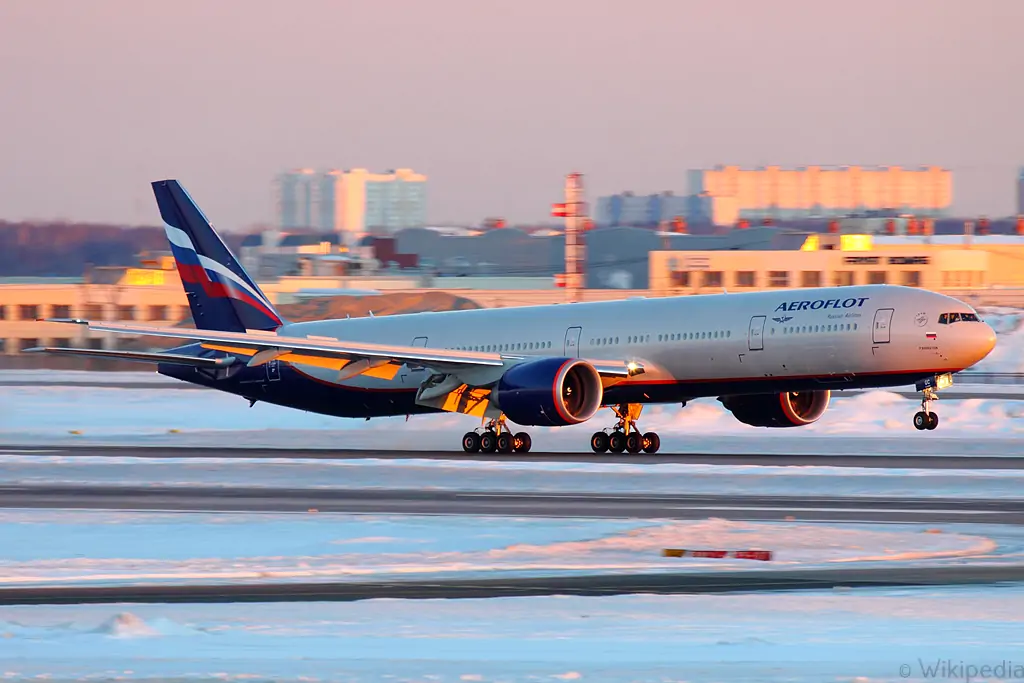
In a recent development, global aircraft operating leasing company BOC Aviation has successfully secured a financial settlement for its stranded planes in Russia. The leasing firm confirmed on November 10, 2023, that it received a substantial cash payment of approximately $208 million as part of an agreement with the Russian insurance company, NSK.
Background
BOC Aviation had leased eight aircraft to Pobeda, a low-cost subsidiary of the Russian flag-carrier Aeroflot. An additional aircraft managed, but not owned, by BOC Aviation was also included in the resolution. The prolonged detention of these aircraft in Russia was a consequence of Moscow's refusal to release them amid Western sanctions triggered by the invasion of Ukraine.
Details of the Settlement
Under the terms of the settlement, BOC Aviation has formally concluded its claim against NSK, marking the end of a protracted legal dispute. As part of the agreement, the nine aircraft will be handed over to the Russian state insurance firm. The cash payment of $208 million represents a significant step in mitigating the financial impact on BOC Aviation resulting from the prolonged grounding of its aircraft in Russia.
Ongoing Pursuit of Recovery
Despite the settlement with NSK, BOC Aviation affirms its commitment to pursuing all opportunities for the recovery of the full value of its detained aircraft from all available sources. The leasing company, however, acknowledges the current uncertainty in ascribing a specific value to potential future recoveries.
Legal Precedent in Aircraft Leasing Disputes
This settlement comes on the heels of a similar case involving Volga-Dnepr Group, where a United States judge ordered the Russian-based company to pay BOC Aviation over $400 million after defaulting on the leases of three Boeing 747-8Fs. Additionally, in September 2023, AerCap, another major lessor, announced a cash settlement of $645 million for 17 aircraft and five engines leased to Aeroflot and its subsidiary, Rossiya Airlines.
Implications for the Aircraft Leasing Industry
The resolution of BOC Aviation's dispute with NSK adds a layer of complexity to the challenges faced by leasing companies dealing with aircraft detained in Russia. The geopolitical tensions and subsequent sanctions have created a unique set of circumstances, testing the legal frameworks governing international leasing agreements.
Conclusion
BOC Aviation's successful financial settlement with NSK represents a significant milestone in resolving the issue of stranded aircraft in Russia. The ongoing pursuit of recovery, coupled with recent legal precedents, sheds light on the complexities faced by aircraft lessors in the current geopolitical landscape. As the aviation industry continues to navigate these challenges, the outcome of such cases will undoubtedly influence the strategies and risk assessments of leasing companies operating on the global stage.
Read next
Challenges Confronting Asia-Pacific Airlines: Fuel Prices, Inflation, and Slow Recovery

Abhishek Nayar
11 Nov 2023
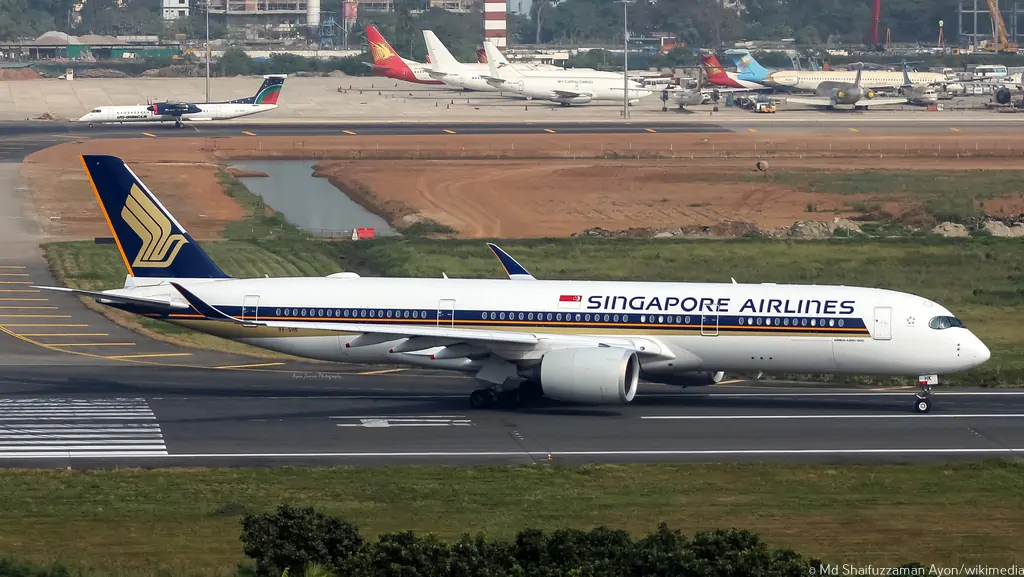
The Asia-Pacific aviation industry is grappling with a multitude of challenges that continue to impede its recovery from the pandemic-induced downturn. Rising fuel prices, high inflation, and supply chain constraints are among the factors contributing to a sluggish resurgence in a sector where travel demand struggles to reach pre-pandemic levels.
Current State of Air Travel in Asia-Pacific
As of September 2023, the region's air travel has only managed to recover to 69% of 2019 levels, lagging behind other global regions. This subdued recovery can be attributed in large part to China's cautious approach to reopening its borders post-COVID-19, as reported by the International Air Transport Association (IATA).
Factors Hampering Industry Recovery
Fuel Prices and Inflation
The Asia-Pacific airline industry is grappling with the impact of soaring fuel prices, which remain higher than pre-pandemic levels. Subhas Menon, Director General of the Association of Asia Pacific Airlines, highlighted how inflation, coupled with a tight job market, is hindering the industry's recovery.
Non-Oil Costs and Profit Margins
Menon pointed out that non-oil costs, including ground handling and taxation, are escalating. This puts further pressure on airlines' profit margins, making it challenging for them to navigate the already tough economic landscape. Supply chain disruptions are also affecting the timely delivery of new aircraft and spare parts, hampering maintenance efforts.
Financial Snapshot: Singapore Airlines
Singapore Airlines (SIA), a major player in the region, recently reported a record profit for the six months ending September 2023. However, a 3.7% dip in profit during the second quarter underscores the growing cost pressure faced by airlines. SIA CEO Goh Choon Phong noted that despite adding capacities, yields have decreased, hinting at the financial strain experienced by airlines.
Outlook and Hopes Pinned on Chinese Travelers
The industry is looking to the return of Chinese travelers as a catalyst for renewed growth. China, once the largest air travel market globally, has seen a significant drop in its share of international travel within the Asia-Pacific region and globally. This is primarily due to the focus on domestic travel and slow easing of restrictions on group tours to overseas destinations.
Subhas Menon expects a fresh wave of growth by the first half of the coming year, expressing optimism that the downturn will be more of a "soft landing" than a drastic decline. However, independent aviation analyst Brendan Sobie cautions that while the economic situation is not dire, there are still notable supply constraints, contributing to the overall uncertainty.
Conclusion
The Asia-Pacific aviation industry is navigating a challenging landscape marked by fuel price hikes, inflation, and lingering supply chain disruptions. As the region's air travel struggles to regain its pre-pandemic momentum, industry players must remain vigilant and adaptive, with hopes pinned on the anticipated return of Chinese travelers to reignite growth in the coming year.
With Inputs from Reuters
Read next
Southwest Airlines Anticipates Boeing 737 MAX 7 Certification by April 2024
Abhishek Nayar
11 Nov 2023

Southwest Airlines, the largest customer of Boeing's 737 MAX 7, is gearing up for the certification of the aircraft by the U.S. Federal Aviation Administration (FAA) by April 2024. This development is eagerly awaited, as it marks a significant milestone for both Southwest and Boeing, allowing the carrier to integrate the latest addition to Boeing's MAX family into its fleet.
Certification Expectations
Andrew Watterson, Chief Operating Officer at Southwest, expressed confidence that the 737 MAX 7 would receive FAA certification by April 2024. While this estimate includes a buffer, he indicated that certification might occur earlier, possibly within this year or early 2024. Boeing has also echoed these sentiments, with company executives anticipating MAX 7 certification by the end of the current year.
Southwest's Strategic Orders
Southwest's commitment to the 737 MAX 7 is evident in its recent order for an additional 108 planes, scheduled for deliveries through 2031. The airline's strategic move reinforces its confidence in the aircraft and highlights the significance of the MAX 7 in Southwest's long-term operational plans.
Operational Timeline
Assuming certification in April, Southwest aims to start operating the 737 MAX 7 in the October-November 2024 timeframe. Watterson emphasized the need for flexibility in their internal planning, acknowledging the potential for certification before the projected date. This flexibility is crucial for Southwest as it seeks to align its operations with the evolving demand in the aviation market.
Progress and Challenges
Watterson expressed optimism about the progress Boeing is making in resolving open items on certification with the FAA. While the company is nearing the end of the certification process, challenges have necessitated Southwest to adapt. Delays in certification prompted the airline to convert several orders for the 150-seater MAX 7 into the larger 175-seater MAX 8 variant.
Strategic Importance of MAX 7
The MAX 7's introduction is expected to enhance Southwest's operational flexibility, allowing the airline to adjust capacity in response to varying passenger traffic. With the ability to cater to demand fluctuations based on time and day, the MAX 7 represents a strategic asset for Southwest as it seeks to optimize its fleet composition.
Conclusion
As Southwest Airlines anticipates the certification of Boeing's 737 MAX 7, the aviation industry watches closely, recognizing the significance of this milestone for both the airline and Boeing. The expected operational debut of the MAX 7 in late 2024 underscores Southwest's commitment to this aircraft model, positioning it strategically for the evolving dynamics of the aviation market.
With Inputs from Reuters
Read next
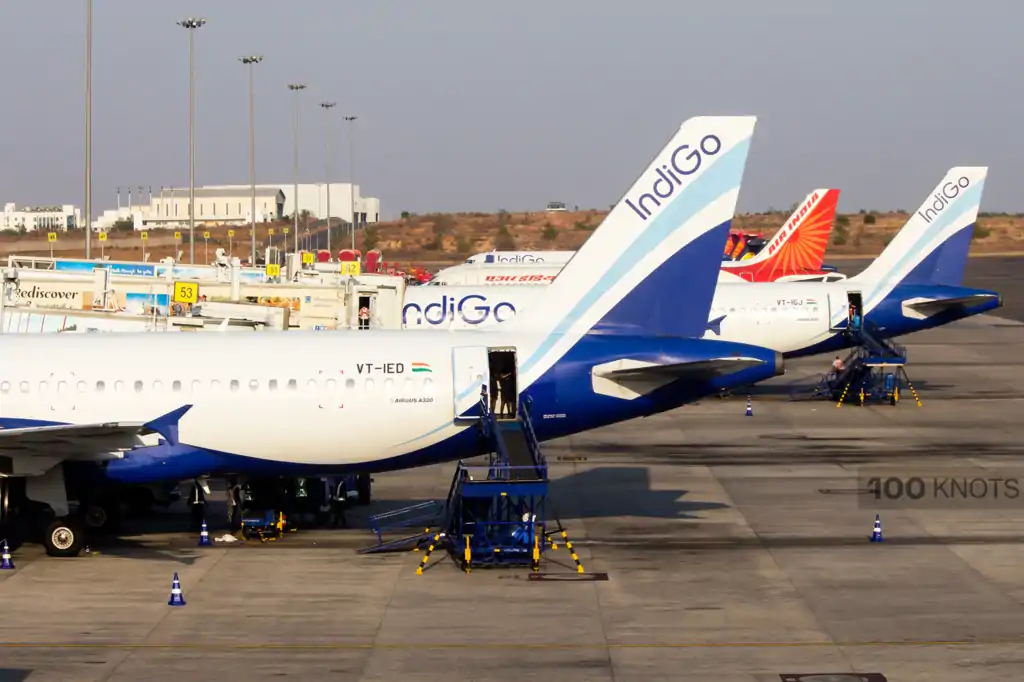
In a landmark ruling, the Court of Chief Commissioner of Persons with Disabilities has emphasized the crucial responsibility of all airlines, including foreign carriers operating in India, to implement the provisions of the Rights of Persons with Disabilities Act, 2016.
The court's intervention was prompted by a concerning incident at Bangalore airport involving SriLankan Airlines, where a child with Autism was allegedly ill-treated. This incident shed light on a broader issue of lack of awareness and sensitivity towards the needs of individuals with disabilities, not only on the part of the airline's employees but also the Directorate General of Civil Aviation (DGCA).
The Incident and Court's Findings
The court's inquiry into the incident revealed a distressing lack of awareness and empathy among SriLankan Airlines' employees regarding the unique needs of passengers with disabilities. Additionally, it pointed out a potential inconsistency in the airline's policy requiring medical clearance for select categories of persons with disabilities before boarding, stating that such a requirement is at odds with global civil aviation standards.
Universal Responsibility
The court unequivocally stated that all airlines, whether of Indian or foreign origin, are accountable for implementing the provisions of the Rights of Persons with Disabilities (RPwD) Act, 2016. Specifically referring to sections 40 and 41 of the acts, along with relevant rules and instructions, the court emphasized the importance of adherence to both the letter and spirit of the law. This ruling underscore the need for a unified commitment to protecting the rights and dignity of people with disabilities.
Global Civil Aviation Standards
Highlighting the inconsistency in SriLankan Airlines' policy, the court emphasized that it is essential for airlines to align their procedures with global civil aviation requirements. Any policy that may hinder the seamless travel of people with disabilities, including the imposition of additional medical clearances, should be reconsidered in light of international standards.
DGCA's Oversight Role
The court firmly asserted that the DGCA cannot be absolved of its responsibility to ensure the effective implementation of the RPwD Act. The regulatory body is tasked with ensuring that airlines, both domestic and foreign, adhere to the legal framework designed to protect the rights of persons with disabilities. This ruling serves as a reminder of the DGCA's pivotal role in upholding inclusivity in air travel.
Conclusion
In conclusion, the recent ruling by the Court of Chief Commissioner of Persons with Disabilities serves as a crucial step towards ensuring that the rights of persons with disabilities are safeguarded in the realm of air travel. The incident involving SriLankan Airlines has prompted a reevaluation of policies and practices within the aviation industry, emphasizing the need for heightened awareness and sensitivity. It is imperative for all stakeholders, including airlines, regulatory bodies, and airport authorities, to work collectively to create an inclusive and accommodating environment for all passengers, irrespective of their abilities.
Comment